HHC vs THCP: Novel Cannabinoids Head-to-Head
HHC vs THCP: one is hydrogenated and stable, the other binds CB1 33x tighter than THC. Professor High breaks down potency, legality, and safety.

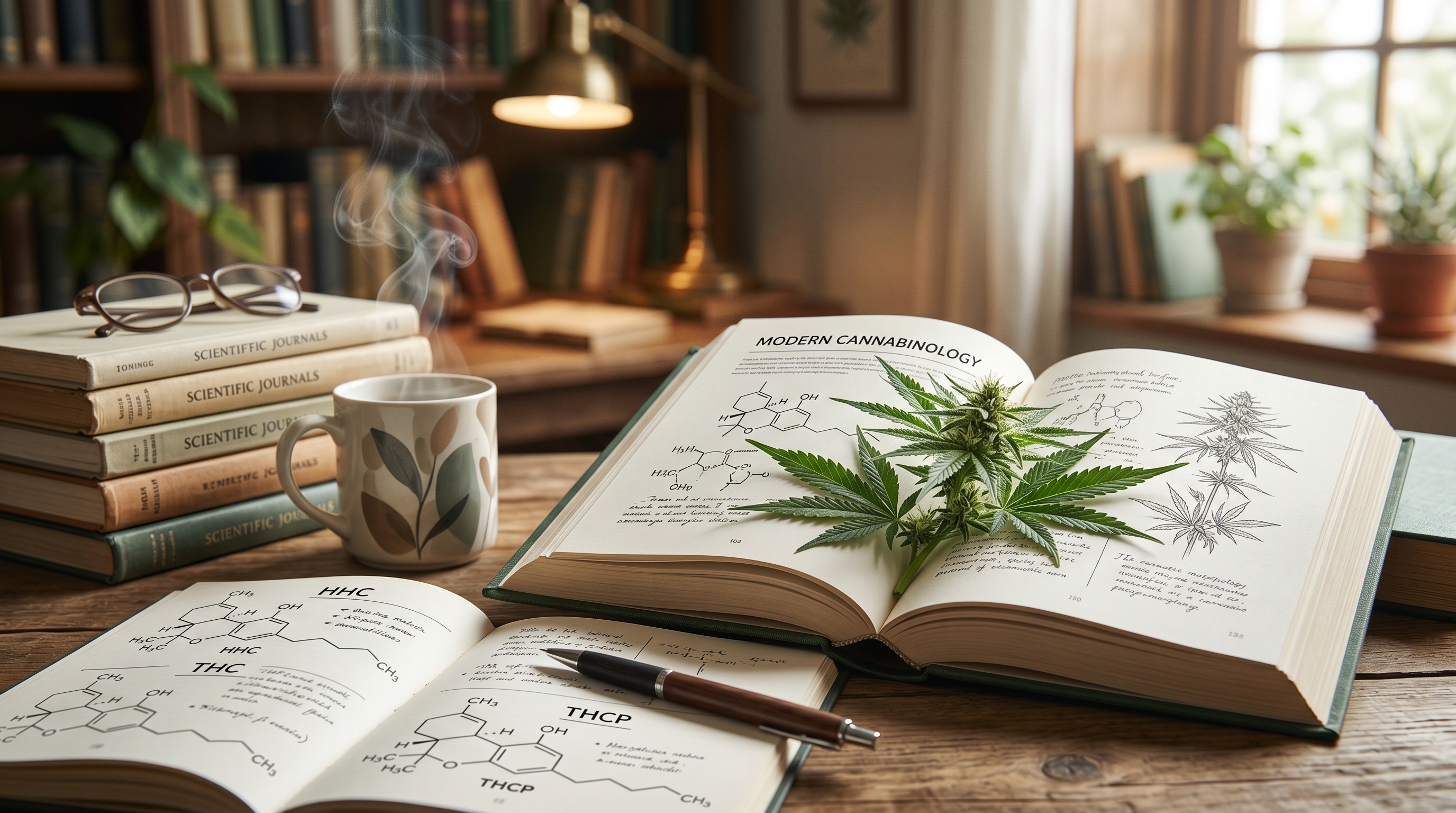
Two Letters Apart, Worlds Apart
Walk into a hemp shop or scroll a vape site lately and you’ve seen them: HHC and THCP, right on the shelf next to old-school delta-9. The marketing copy practically shouts—“smoother than THC,” “33 times stronger than THC,” “federally legal.” That’s a lot of confident language for two compounds we barely understood a decade ago.
Here’s the honest truth up front: HHC and THCP are among the least-studied cannabinoids you can buy right now. Most of what we know comes from a few lab studies, animal experiments, and the chemistry textbook. Large human trials? We don’t have them. So treat this as a science briefing, not a green light. I’ll walk you through what each one actually is, why “33x” doesn’t mean what the ads imply, where they sit legally (which changed a lot in 2026), and what the thin safety data does and doesn’t tell us.
Let’s break it down.
What Is HHC? (The Hydrogenated One)
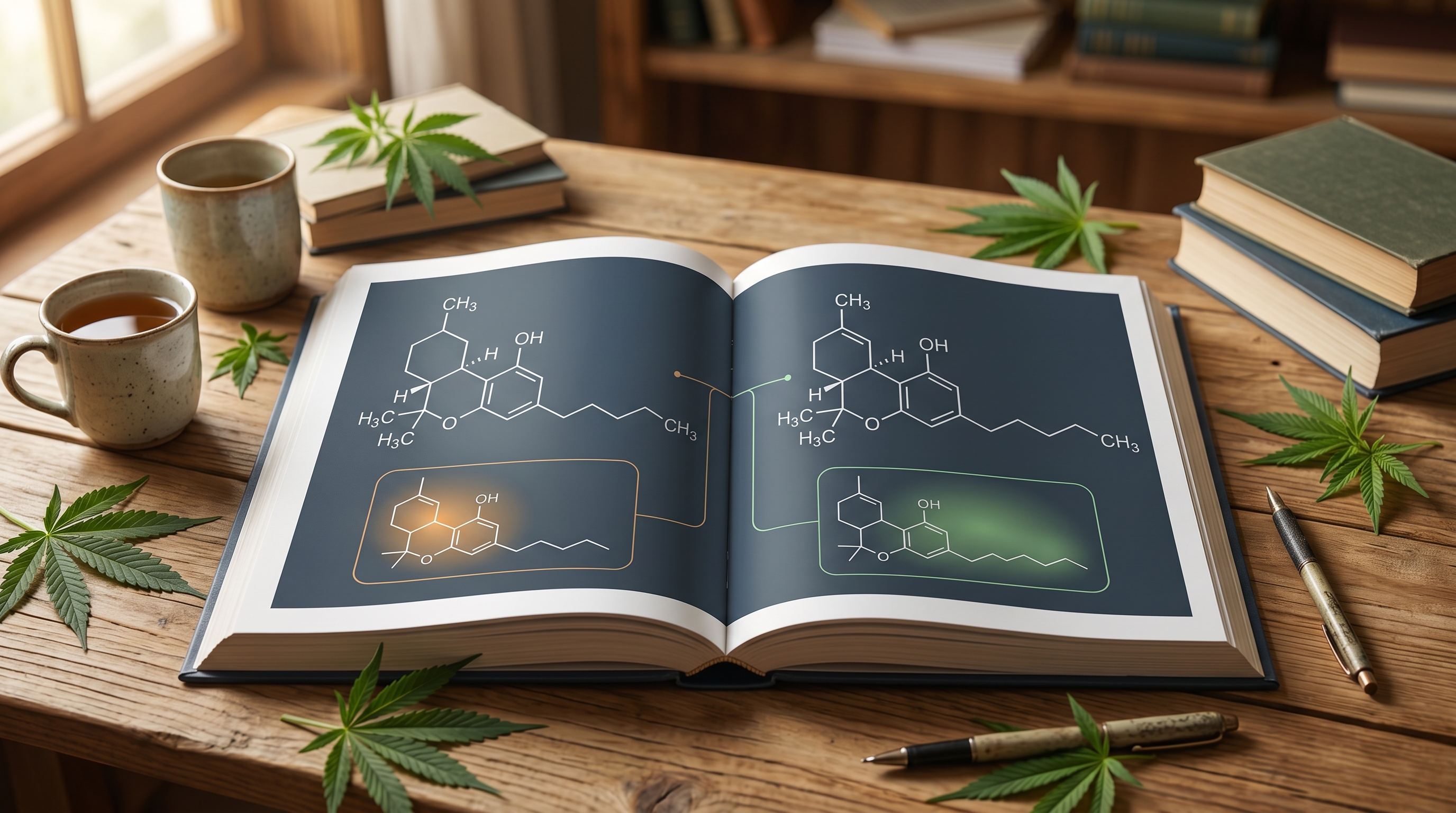
HHC stands for hexahydrocannabinol. The simplest way to picture it: take a THC molecule and chemically add hydrogen atoms to it—a process called hydrogenation. It’s the same basic reaction used to turn vegetable oil into margarine. That added hydrogen swaps out a double bond for a more stable, saturated structure.
HHC does occur naturally in cannabis, but only in trace amounts—nowhere near enough to extract for products. So almost everything sold as HHC is semi-synthetic. It’s made in a lab, usually by hydrogenating hemp-derived CBD. That origin matters a lot for both legality and safety, as you’ll see.
Two quirks make HHC interesting:
- It comes in two forms (epimers). Synthesis makes a mix of (9R)-HHC and (9S)-HHC. Research consistently shows the (9R) form is the active one. Lab work found (9R)-HHC binds CB1 about as well as delta-9 THC, while the (9S) form binds far more weakly [Durydivka et al., 2024]. So a product’s strength depends on its R-to-S ratio—and buyers can’t see that on a label.
- It’s chemically stable. Because it’s hydrogenated, HHC resists oxidation and degradation better than THC, giving it a longer shelf life. That stability is the single biggest reason manufacturers like it.
On potency, the active (9R)-HHC sits roughly in the same range as delta-9 THC—often called a touch milder. Want the deeper dive? I wrote a full piece on HHC and whether it’s safe. It helps to compare this lab-made route with raw-plant cannabinoids like THCA, which turns into THC only when heated. How a cannabinoid is made shapes both its legality and its risk.
What Is THCP? (The Long-Tail One)
THCP stands for tetrahydrocannabiphorol, and its story is genuinely different. In 2019, a team led by Cinzia Citti published a paper in Scientific Reports announcing they’d isolated a brand-new cannabinoid from a cannabis plant [Citti et al., 2019]. Its structure is nearly identical to delta-9 THC—with one crucial change: the alkyl side chain is seven carbons long instead of five.
That sounds trivial. It isn’t. Decades of research show the side chain’s length is the key part that drives how tightly a cannabinoid grips the CB1 receptor. Binding climbs as the chain gets longer, peaking around eight carbons. Before THCP, the five-carbon chain on THC was the longest anyone had found in the plant.
The headline finding: THCP’s CB1 binding affinity (Ki) measured 1.2 nM, versus about 40 nM for delta-9 THC—roughly 33 times tighter binding [Citti et al., 2019]. In mouse “tetrad” behavioral tests, THCP produced THC-like effects (less movement, pain relief, lower body temperature) at lower doses than THC needed.
One catch worth repeating: THCP exists in cannabis only in tiny amounts. One 2021 analysis found it at roughly 0.002% to 0.014% by weight. That’s far too little to harvest. So just like HHC, most THCP sold in products is made in a lab, even though the molecule itself is natural. For the full breakdown, see my article on THCP, the cannabinoid 33x stronger than THC.
The “33x” Reality Check
This is the part the marketing gets dangerously wrong, so read carefully.
“33x the binding affinity” is not “33x the high.” Binding affinity (Ki) measures how tightly a molecule grabs a receptor in a test tube. It does not mean a high that’s 33 times stronger per milligram. The link between receptor binding and how a drug actually feels is messy and far from a straight line.
What the tighter binding likely does mean is that THCP works at much lower doses. You might use 5–10 mg of THC. With THCP, reports and product dosing suggest effects can show up at just 1–3 mg. So the real danger isn’t a mythical “33x trip.” It’s that a normal-looking gummy can hold several doses of a very potent compound. That makes it easy to overshoot.
HHC is the opposite story: its active form is roughly comparable to THC, so dosing feels more familiar (think 10–25 mg ranges in products). Here’s the side-by-side I always come back to:
| HHC | THCP | |
|---|---|---|
| Full name | Hexahydrocannabinol | Tetrahydrocannabiphorol |
| Key structural feature | Hydrogenated (extra hydrogen, saturated ring) | 7-carbon side chain (vs 5 in THC) |
| Origin | Trace in plant; sold product is semi-synthetic (hydrogenated CBD) | Trace in plant; sold product usually lab-synthesized |
| CB1 binding vs THC | Active (9R) form ~comparable to delta-9 | ~33x tighter binding (Ki 1.2 nM vs ~40 nM) |
| Relative potency per mg | Similar to / slightly milder than THC | Far more potent; active at very low doses |
| Typical effective dose | ~10–25 mg | ~1–3 mg |
| Shelf stability | High (resists oxidation) | Similar to THC |
| Human research | Very limited | Very limited |
What Do They Actually Feel Like?
Honest answer: the high-quality human data barely exists. Almost everything below is anecdotal user reporting plus inference from the receptor science, so hold it loosely.
HHC is commonly described as a relaxed, clear-headed, THC-like experience—often called slightly milder or “smoother” than delta-9, with users reporting less anxiety for some. Whether that’s a real pharmacological difference or just dose and expectation, we don’t know.
THCP is described as a heavy, long-lasting, intensely psychoactive experience precisely because so little is needed to feel it. Experienced consumers tend to treat it with caution; for newcomers, the overshoot risk is real. If you’ve ever had a too-strong edible, THCP magnifies the odds of that happening because the active dose is so small.
Neither compound has the body of research behind it that even the minor cannabinoids like THCV or CBN now enjoy—and those are still emerging fields. This is also why these molecules sit outside the well-studied entourage effect framework that governs whole-plant cannabis; we simply don’t have the synergy data.
The Legality Gray Area (That Just Got Less Gray)
For years, HHC and THCP rode the same legal logic as delta-8 THC: the 2018 Farm Bill legalized hemp and its derivatives containing under 0.3% delta-9 THC, and sellers argued that hemp-derived novel cannabinoids therefore qualified. That argument built the entire “intoxicating hemp” market—the same loophole that put unregulated THCA flower next to traditional delta-9 flower on store shelves nationwide.
In 2026, that gray area narrowed sharply:
- HHC is federally Schedule I. On May 4, 2026, the DEA published a final rule giving HHC its own Schedule I drug code (7220). The agency’s position: HHC “does not occur naturally in the cannabis plant and can only be obtained synthetically, and therefore does not fall under the definition of hemp.” In the DEA’s reading, lab-made tetrahydrocannabinols never counted as legal hemp—even when the starting material came from hemp.
- The courts disagree—sometimes. Federal appeals courts have pushed back. The Ninth Circuit (AK Futures v. Boyd Street) and the Fourth Circuit (Anderson v. Diamondback) both ruled that hemp-derived converted cannabinoids fit the Farm Bill’s plain text. And after the Supreme Court ended Chevron deference in Loper Bright, courts no longer have to defer to the DEA’s reading. So the fight is genuinely unsettled.
- A federal cliff looms. A provision signed in late 2025 redefines legal hemp effective November 12, 2026, capping products at 0.4 mg of total THC per container and explicitly excluding synthetic and converted cannabinoids. If it holds, most of today’s HHC and THCP market would fall outside legal hemp.
The takeaway: do not assume these are “legal” where you live. State law varies, federal enforcement risk is rising, and the entire framework is mid-rewrite. This is the same confusing terrain I mapped in hemp vs cannabis regulations.
What the Safety Data Actually Says
I’ll be blunt: we don’t have enough. No large human safety trials exist for either compound. What we can say responsibly:
- The molecules themselves activate the same CB1 system as THC, so the short-term risks broadly resemble THC’s—impairment, anxiety or paranoia at high doses, rapid heart rate, and the very real possibility of overconsumption (especially with THCP’s tiny effective dose).
- The bigger near-term concern is the product, not just the molecule. Both are usually made by chemically converting hemp CBD. The real-world risk often comes from synthesis byproducts, leftover reagents, and uneven purity. The (9R)/(9S) ratio in HHC isn’t on the label, and the conversion can leave behind compounds no one tested for inhalation safety. We’ve seen this exact problem with acetylated cannabinoids and toxic ketene from vaping.
- Unregulated products and kids don’t mix. The intoxicating-hemp market’s lax controls have led to genuine harm, including hemp-derived THC sending children to the ICU. Potent, candy-like THCP products amplify that risk.
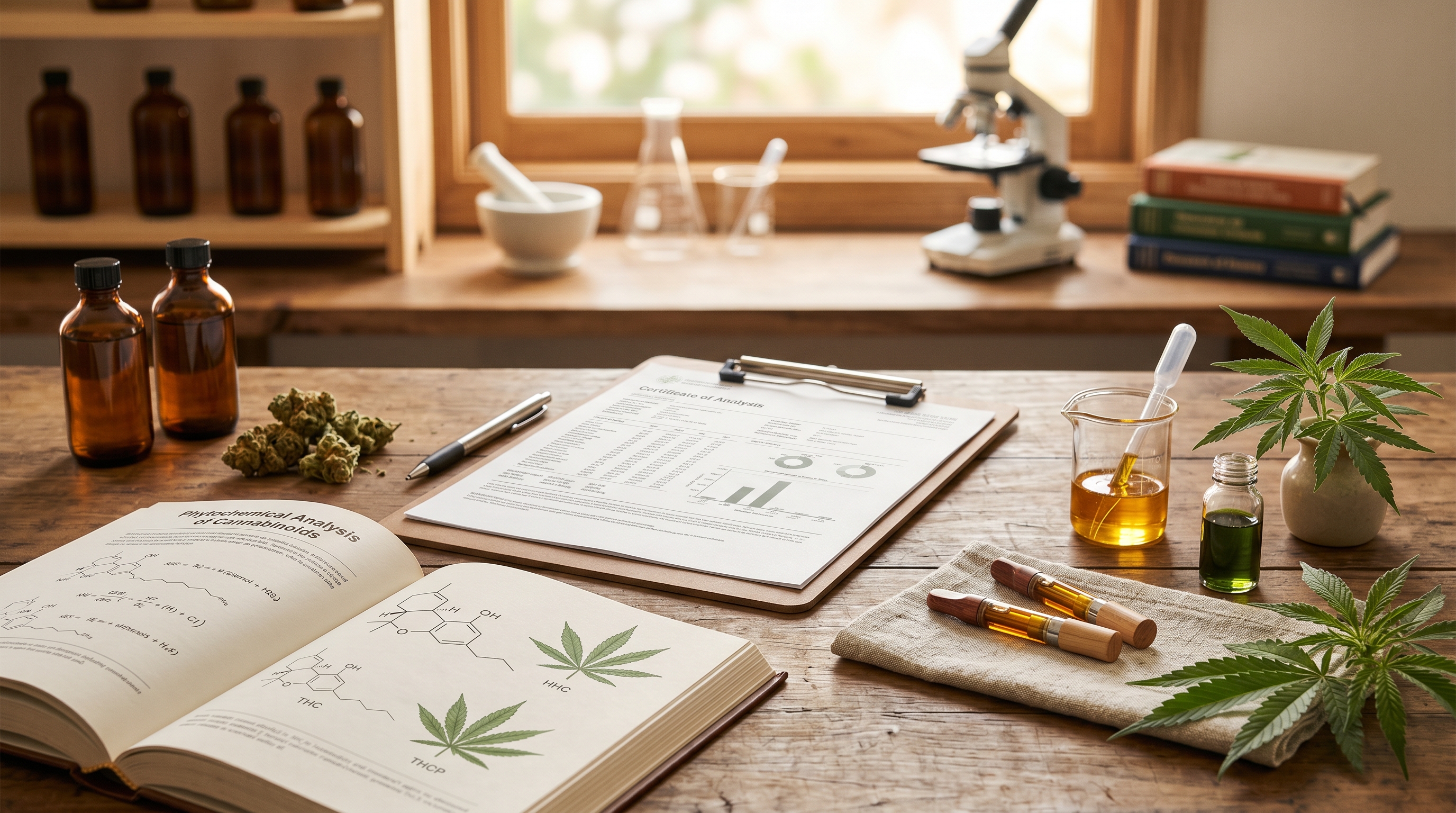
If you choose to use these despite the thin data, treat third-party lab testing (a Certificate of Analysis) as non-negotiable, start at the lowest possible dose, and never assume a “legal” label means “safe” or “tested.” None of this is medical advice—it’s harm reduction for an under-researched space.
Will They Show Up on a Drug Test?
Most likely yes—for both.
Standard urine drug tests don’t look for HHC or THCP by name. They look for THC-COOH, the byproduct your body makes when it breaks down THC-like cannabinoids. HHC and THCP are close cousins of THC and get processed in similar ways. So they can plausibly create byproducts that trip a positive THC screen.
The honest caveat: metabolism data for these compounds is thin, so no one can promise a clean test. Some early HHC claims said it might not break down into the usual THC-COOH marker. But that’s not well established, and betting your job or probation on it would be reckless. Assume any THC-like cannabinoid can flag a drug test until proven otherwise.
The Verdict
These two get lumped together as “novel cannabinoids,” but they’re solving different problems:
- HHC is the stability play—a hydrogenated, shelf-stable, roughly THC-strength compound whose effects feel familiar. Its catch is the hidden (9R)/(9S) ratio and its semi-synthetic origin.
- THCP is the potency play—a genuinely natural molecule (in trace amounts) whose long side chain makes it active at tiny doses. Its catch is that “33x binding” is wildly easy to misread, and overshooting is easy.
Both share the same three asterisks: limited human research, a legal status that turned hostile in 2026, and product-quality risks that often outweigh the molecule itself. My real advice? The best-studied path to understanding your cannabis experience is still whole-plant THC and its terpene profile. There you can track what works for your body. With these novel compounds, you’re mostly guessing.
The strain matters less than how you respond to it. With novel cannabinoids, we don’t even have the map yet. Stay curious, stay skeptical, and let the science catch up.
Key Takeaways
- HHC is hydrogenated, stable, and roughly THC-strength. It’s almost always semi-synthetic—made by hydrogenating hemp CBD—and its active (9R) form does the work.
- THCP is naturally occurring but only in trace amounts, so sold products are usually lab-made. Its seven-carbon chain binds CB1 about 33x tighter than THC.
- “33x binding” is not “33x high.” It means THCP works at tiny doses (1–3 mg), which makes overconsuming easy.
- Legality flipped in 2026. HHC is now federally Schedule I, courts disagree, and a November 2026 rule may exclude most synthetic cannabinoids from legal hemp.
- Safety data is thin for both. The biggest real-world risk is often product purity, not the molecule. Demand a Certificate of Analysis and start low.
- Both will likely flag a drug test. Don’t assume otherwise.
Frequently Asked Questions
Is THCP really 33 times stronger than THC? No—not as a “high.” The 33x figure refers to binding affinity in a lab assay (Ki of 1.2 nM vs ~40 nM for THC). It means THCP is active at much lower doses, not that one milligram gets you 33 times higher. The easy mistake is overconsuming because the effective dose is so small.
Is HHC natural or synthetic? Both, technically. HHC occurs in trace amounts in cannabis, but nearly all HHC products are semi-synthetic—made by hydrogenating hemp-derived CBD in a lab. The DEA points to that synthetic origin as its reason for treating HHC as a controlled substance rather than legal hemp.
Are HHC and THCP legal? It’s contested and changing fast. As of May 2026 the DEA lists HHC as Schedule I, while some federal courts have ruled hemp-derived converted cannabinoids are legal. A November 12, 2026 federal hemp redefinition would exclude most synthetic and converted cannabinoids. Check current state and federal law before buying.
Which is safer, HHC or THCP? Neither has adequate human safety data, so no one can rank them confidently. The largest practical risk for both is product quality—synthesis byproducts and undisclosed purity—rather than the molecule alone. THCP’s very low effective dose adds an overconsumption risk.
Will HHC or THCP fail a drug test? Probably. Drug tests detect THC metabolites (THC-COOH), and these THC-like cannabinoids may produce similar metabolites. Metabolism data is thin, so don’t assume you’ll pass.
Sources
- Citti, C., et al. (2019). A novel phytocannabinoid isolated from Cannabis sativa L. with an in vivo cannabimimetic activity higher than Δ9-THC: Δ9-Tetrahydrocannabiphorol. Scientific Reports, 9, 20335. (THCP isolation; CB1 Ki 1.2 nM vs ~40 nM for THC; seven-carbon side chain.)
- Durydivka, O., et al. (2024). Hexahydrocannabinol (HHC) and Δ9-THC driven activation of cannabinoid receptor 1 results in biased intracellular signaling. Scientific Reports, 14, 9181. (HHC epimer pharmacodynamics; (9R) similar to THC.)
- Synthesis and pharmacological activity of the epimers of hexahydrocannabinol (HHC). (2023). Scientific Reports. ((9R)-HHC active; (9S) minimal activity.)
- In vitro activation of the CB1 receptor by HHC, HHC-O and HHC-P. (2024). Drug Testing and Analysis. (Semi-synthetic cannabinoid potency and epimer differences.)
- World Health Organization, ECDD 47th Critical Review: Hexahydrocannabinol (HHC) — receptor binding and pharmacology summary.
- U.S. DEA Final Rule, Federal Register Vol. 91 (May 4, 2026): Schedule I listing and drug code 7220 for hexahydrocannabinol.
- Congressional Research Service, R48637 (2025): The 2018 Farm Bill’s Hemp Definition and Legal Challenges (AK Futures, Anderson v. Diamondback, Loper Bright).


