15 Edible Mistakes Almost Everyone Makes—and Easy Fixes
Avoid 15 common cannabis edible mistakes with practical fixes for label math, delayed effects, mixing substances, storage, driving, and emergencies.

Edibles can turn one tiny decision into a very long evening. The problem usually is not recklessness. Edible cannabis combines delayed effects, confusing labels, variable absorption, and food that looks harmless enough to eat twice.
The most common mistakes are preventable: read THC per piece and per package, take a low amount, record the time, resist early redosing, avoid mixing intoxicants, clear your schedule, and lock leftovers away from children and pets. For exact amounts, use our beginner THC dosing chart. For timing, read the edible beginner’s two-hour guide. This article finds the little errors that happen around those two decisions.
Key Takeaways
- A package can contain several servings, and one gummy is not automatically one serving.
- Oral THC is delayed and variable. Controlled research found effects beginning after 30–60 minutes and peaking around 1.5–3 hours, but an individual session may not follow the average [Schlienz et al., 2020].
- Smoking or vaping experience does not provide a clean conversion to edible milligrams.
- Food can change absorption, but a fatty snack is not a magic accuracy switch.
- Homemade edibles require calculation, thorough mixing, and conservative portions; appearance cannot confirm potency.
- Do not combine cannabis with alcohol or other sedating substances, and do not drive while impaired.
- Store edibles locked, in their original child-resistant packaging, away from ordinary snacks.
- Trouble breathing, a seizure, or unresponsiveness is an emergency. In the United States, call 911; for a responsive person, Poison Help is available at 1-800-222-1222.
1. Reading the Package Total as the Serving Size
The front of a package might announce its total THC in large type while the per-serving amount hides in smaller print. A chocolate bar labeled “100 mg THC” could be divided into ten servings—or into a different number under local rules. Eating “one bar” is not a dose calculation.
Serving confusion is not hypothetical. In an experiment with 26,894 participants, only about half of those viewing a multi-serving brownie correctly identified the standard serving; separate unit-dose packaging improved recognition, but did not make everyone correct [Goodman & Hammond, 2020].
The fix: Before opening the package, find three numbers: total THC in the package, THC per serving, and number of servings. Check that the arithmetic agrees. If the label is missing or internally inconsistent, do not guess. Legal requirements vary, so buy through a licensed source and ask staff to explain the label.
2. Assuming One Piece Always Equals One Serving
A single cookie, brownie, gummy, or drink can contain multiple servings. Scored lines help, but they do not turn food into laboratory glassware. A “sip” is not a unit, and a diagonal chunk of chocolate is not reliably half.
The fix: Prefer products manufactured as individually dosed units when available. For a multi-serving product, use the labeled divisions and do the math before consuming anything. Our edible dosing math guide walks through the calculation. If accurate subdivision is impossible—a sticky candy with no marks, for example—choose a product that is easier to portion rather than improvising.
3. Redosing Because “Nothing Is Happening”
This is the classic edible trap. In a controlled study of 17 infrequent consumers, active oral THC effects did not appear until 30–60 minutes and peaked 1.5–3 hours after dosing. The higher tested doses produced marked cognitive and psychomotor impairment compared with placebo [Schlienz et al., 2020]. That study describes group averages under controlled conditions—not a countdown clock for every body and product.
The mistake is treating “I do not feel it yet” as proof that the first amount failed. A second serving can be swallowed while the first is still being absorbed, and the two can arrive together.
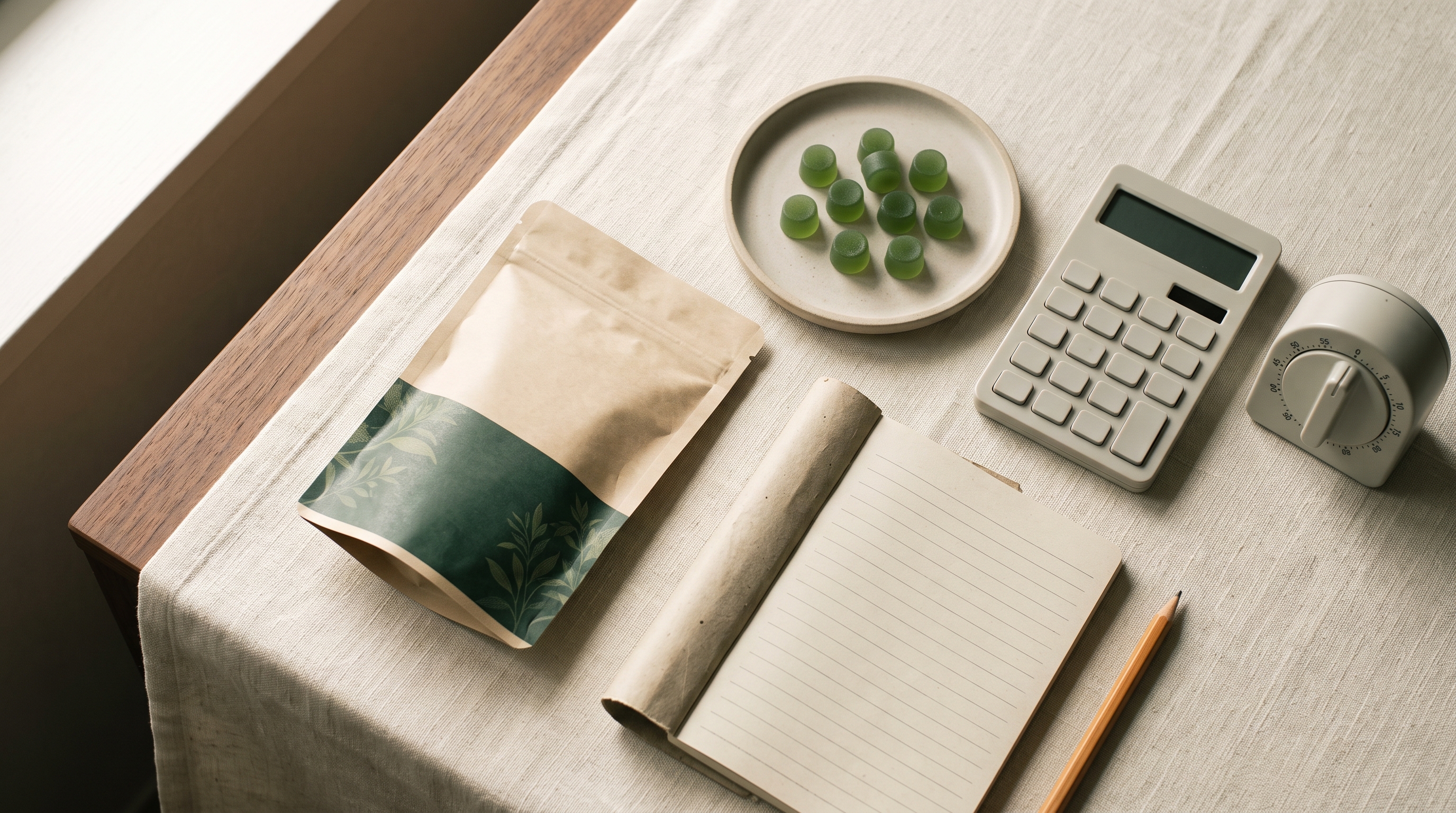
The fix: Decide your amount and waiting rule while sober, set a timer, and do not renegotiate with yourself halfway through. Follow the product’s regulated directions and the more conservative guidance that applies where you live. Our two-hour-rule explainer covers timing in depth. When uncertainty remains, make the next adjustment on a different day rather than stacking more into the current session.
4. Treating 10 Milligrams as a Universal Beginner Dose
Ten milligrams is a common retail unit in parts of North America. That does not make it a biologically universal starter amount. Health Canada advises new or occasional consumers to look for edible products with 2.5 mg THC or less. Sensitivity, medications, experience, product formulation, and the circumstances of the session all matter.
The fix: Treat package conventions as packaging conventions—not personal instructions. Start at the low end of applicable official guidance, especially if you are new, have had a long break, or are changing products. The first-time cannabis guide can help you plan the setting without pretending there is one perfect milligram number for everyone.
5. Converting Smoking or Vaping Tolerance Directly Into Edible Milligrams
“I can finish a joint, so this gummy should be easy” sounds logical and fails pharmacology. Inhaled THC reaches the bloodstream through the lungs; swallowed THC passes through the digestive system and liver, producing the active metabolite 11-hydroxy-THC. Onset, peak, duration, and bioavailability differ by route. A flower percentage, number of puffs, and edible milligram label are not interchangeable units.
The fix: Treat a new route as a new experiment. Do not use inhaled-product tolerance to leap over conservative oral guidance. Read why edibles can feel different and harder, then compare the limits of each route in our consumption-method bioavailability ranking. If you change from a swallowed product to a tincture, see the sublingual-versus-edible comparison; “liquid” does not automatically mean the same route.
6. Using an Old Dose After Your Tolerance or Health Changed
Last year’s comfortable serving is not a lifetime membership card. Tolerance can decline during a break. Illness, sleep loss, aging, new medications, or a different pattern of use may change how a session feels. Even experienced consumers can be surprised after time away.
The fix: After a break or meaningful health change, step back rather than trying to prove your old tolerance. Review our science-backed tolerance-break guide. If you use cannabis medically, are pregnant or breastfeeding, have a significant health condition, or take prescription medicines, discuss cannabis use with a qualified clinician or pharmacist instead of rebuilding a regimen from an online article.
7. Expecting Homemade Edibles to Be Even Because the Batter Looked Even
Home cooking adds several opportunities for error: the starting material may be uncertain, decarboxylation and infusion are imperfect, some infused fat can remain on equipment, batch weight can change, and mixing can be uneven. Cutting a pan into twelve visually equal squares only divides the food’s size. It does not prove each square contains one-twelfth of the active THC.
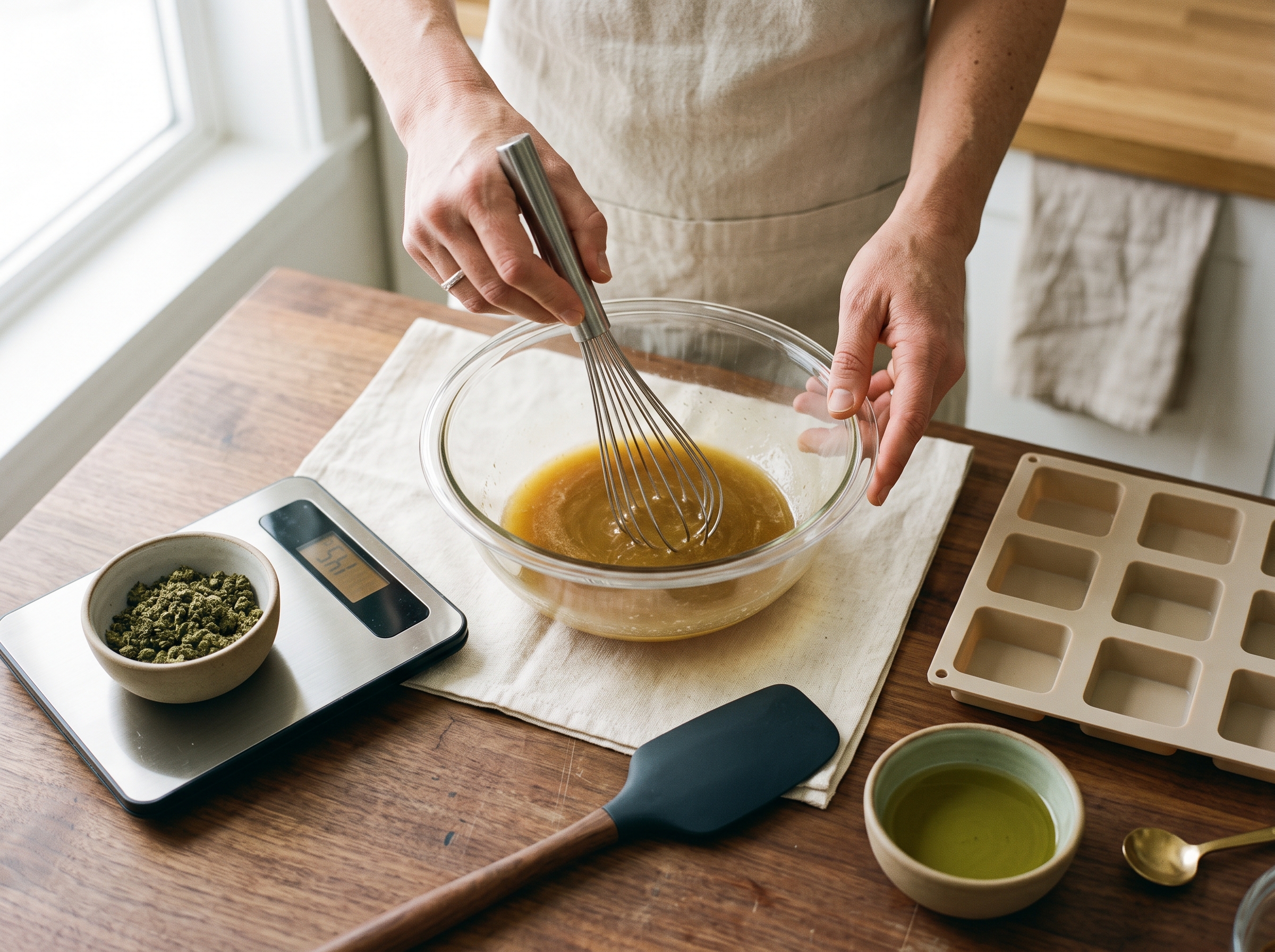
The fix: Calculate from conservative inputs, mix the infusion thoroughly into a recipe that distributes fat evenly, weigh the finished batch when practical, portion consistently, and label the result with the date and estimated amount. Our home-cook edible math guide explains the model, while home potency testing explains why home estimates remain estimates. For a process example, the cannabis gummy guide emphasizes emulsification and portioning. When serving someone else, disclose that the product is infused and that potency is estimated; never surprise-dose anyone.
8. Trying to “Hack” Absorption With a Fatty Meal
Food matters, but internet advice often turns a variable into a promise. In a randomized crossover study of 28 healthy adults taking 5 or 10 mg THC capsules, a high-fat meal delayed the time to peak concentration and increased total THC exposure compared with fasting [Lunn et al., 2019]. That does not prove that one spoonful of peanut butter makes every gummy faster, stronger, or more predictable. The study used capsules, a controlled meal, and specific participants.
The fix: Aim for repeatable conditions rather than a potency hack. Note whether you took the product with or without food, follow its directions, and avoid making large dose changes because today’s meal differed from last week’s. Health Canada similarly recommends consistent conditions for people using oral cannabis medically. If a product seems unusually slow, do not use extra food as an excuse to redose early.
9. Treating Every “Edible” as the Same Technology
A conventional brownie, a nano-emulsified drink, a lozenge dissolved in the mouth, and a capsule may all sit near one another on a menu, but they may not share the same onset pattern. Marketing terms like “fast acting” also do not erase individual variability.
The fix: Read the route and directions, not just the flavor. Do not carry the timing of one format over to another. Our fast-acting edible science guide explains what water-dispersible technology may change and what it cannot guarantee. When switching brands or formats, return to a conservative amount and observe before making comparisons.
10. Mixing Edibles With Alcohol, Sedatives, or Other Cannabis Products
Combining substances makes it harder to know what is causing dizziness, vomiting, anxiety, or heavy sedation. Health Canada warns that alcohol plus cannabis greatly increases impairment and that combining cannabis with sedating psychoactive substances, including opioids and benzodiazepines, can increase effects. Even CBD products can interact with medications, according to the FDA.
The fix: Keep the experiment single-variable. Skip alcohol and do not layer an edible on top of smoked cannabis because the edible seems late. If you take prescription or over-the-counter medicines—particularly ones that cause drowsiness—ask a pharmacist or clinician about interactions. For the evidence on the alcohol combination, read cannabis and alcohol: what happens when they mix.
11. Trusting an Unregulated Product Because the Package Looks Professional
Bright printing and a laboratory-themed sticker are not regulated testing. Copycat candy packaging can obscure serving information and appeal to children. A 2015 study tested 75 medical edible products bought in three US cities: 17% were within 10% of their THC labels, 23% contained more THC than labeled, and 60% contained less [Vandrey et al., 2015]. Those markets do not represent every regulated product today, but the result still warns against blind trust.
The fix: Buy from a licensed retailer where legal, keep the receipt and original package, check the required testing or batch information in your jurisdiction, and avoid products impersonating familiar snack brands. Our dispensary buyer’s guide explains what to verify, and why cannabis labels can be wrong explores the testing problem without implying every label is equally unreliable.
12. Relying on Memory Instead of Writing Down the Time
Edible time is slippery. Conversation, a movie, or the first subtle effects can make “about an hour ago” feel convincing when it was actually 35 minutes—or two hours. Memory also blurs product names and serving sizes across sessions.
The fix: Photograph the label, write the amount and time in your phone, and start a timer immediately. Record food, other substances, onset, peak, and how you felt the next morning. This is not obsessive bookkeeping; it is a tiny personal dataset. Change one factor at a time. A consistent record is more useful than copying a friend’s dose or chasing a dramatic experience.
13. Scheduling Driving, Childcare, Cooking, or Work Around a Best-Case Clock
“I should be fine in four hours” is not transportation planning. CDC notes that cannabis can impair reaction time, coordination, decision-making, and perception. Edible effects can last longer than expected, and Health Canada says some effects such as drowsiness can persist up to 24 hours. There is no universal clock or home test that proves an individual is safe to drive.
The fix: Arrange transportation and responsibilities before consuming. Do not drive, cycle in traffic, operate machinery, supervise a child alone, or handle high-heat cooking equipment while impaired. Leave a generous overnight buffer when you need to be sharp early. Our cannabis and driving guide explains why elapsed time is not a permission slip. If your plan depends on the edible ending at a precise hour, choose another day.
14. Storing Edibles Like Ordinary Snacks
A gummy in a zip bag still looks like a gummy. A brownie on a counter still looks like dessert. Children and pets cannot read a handwritten THC note, and guests may never see it. America’s Poison Centers reported 39,497 cannabis-edible exposure cases involving people ages 0–19 from 2019 through April 30, 2025; those data reflect reported calls, not every exposure.
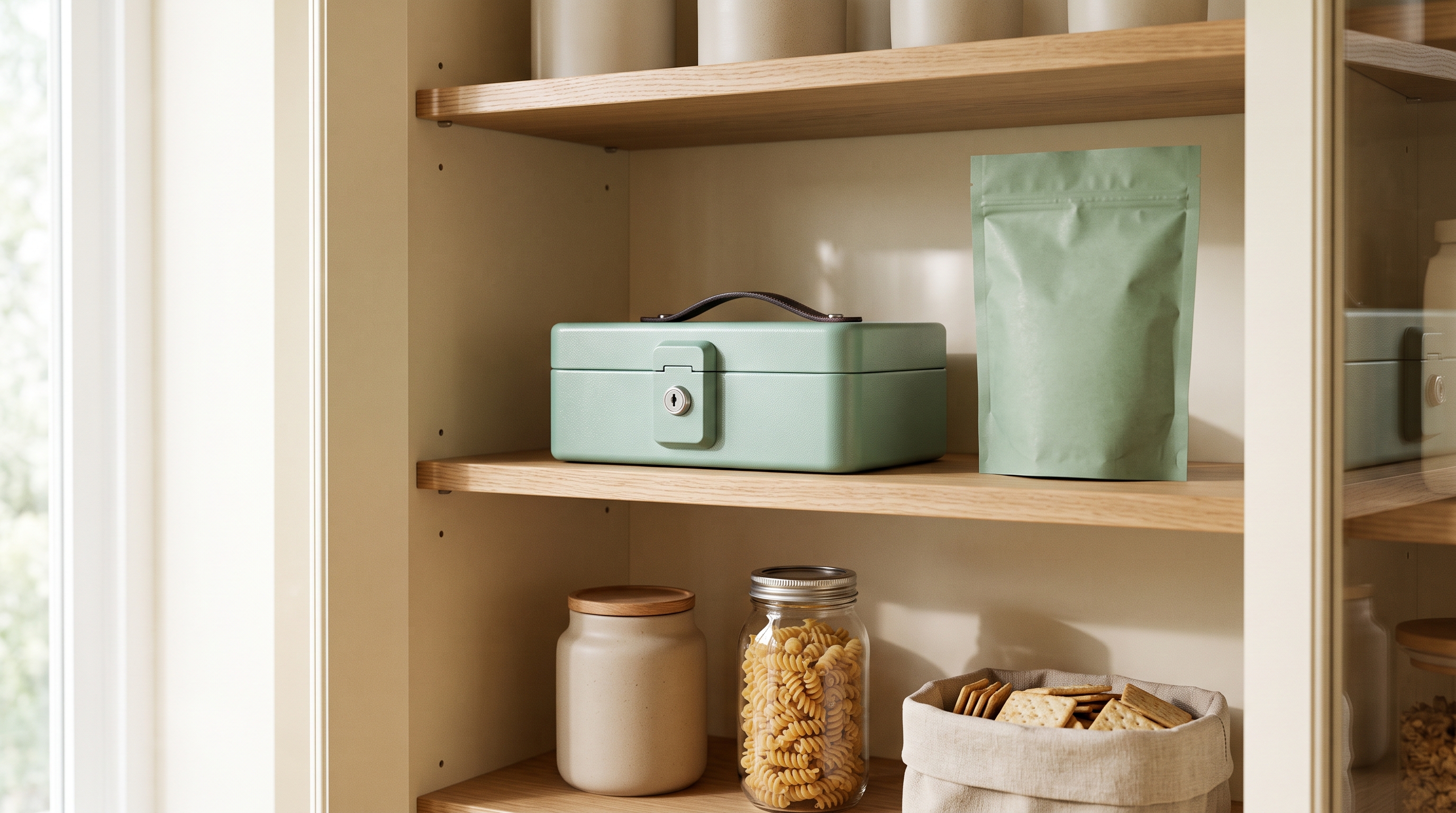
The fix: Keep edibles in their original child-resistant package, then put that package in a locked container, out of sight and reach of children and pets. Store it separately from ordinary food. Do not transfer infused gummies into a candy jar or reuse a familiar snack wrapper. Dispose of waste so an animal cannot retrieve it. Our edible shelf-life and storage guide covers freshness; safety storage comes first even if the edible is shelf-stable.
15. Treating Every Bad Reaction as Something to “Ride Out” Alone
Many uncomfortable adult experiences improve with time and a calm environment, but “edibles cannot hurt anyone” is not a safe rule. Vomiting, confusion, profound drowsiness, and loss of coordination can occur in poisoning. Children can have more severe reactions. A person who is unresponsive, has trouble breathing, or has a seizure needs emergency help.
The fix: If someone has difficulty breathing, is unresponsive, or is having a seizure, call 911 immediately in the United States. If the person is breathing and responsive, call Poison Help at 1-800-222-1222 for case-specific advice; outside the US, use your local poison center or emergency service. Keep the package for responders, state honestly what was taken, and do not induce vomiting unless a medical professional instructs you to do so. For a responsive adult experiencing anxiety or discomfort without emergency signs, use our guide to feeling too high—and stay with them.
The Professor High Pre-Bite Check
Before an edible, ask six questions:
- What exactly is it? Product, route, source, THC per serving, and total package THC.
- How much am I taking? A number in milligrams, not “one snack.”
- When did I take it? Write the time and start a timer.
- What else is in my system? Avoid alcohol and other intoxicating or sedating substances; check medication interactions.
- What do I have to do later? No driving, machinery, solo childcare, or time-sensitive work while impaired.
- Where will the rest go? Back into original packaging and into locked storage immediately.
That checklist is less exciting than gummy roulette, which is why it works. The goal is to make edibles boringly predictable—and to respect the limits of prediction.
FAQs
What is the biggest edible mistake?
Redosing before the first amount has had time to develop is the mistake most directly created by oral THC’s delayed onset. Package-serving confusion often sets it up. Decide the amount and waiting plan in advance, then record the time.
Does eating an edible on an empty stomach make it stronger?
Not reliably. Food can change the timing and total exposure of oral THC, but the direction and size of the experience are not predictable from a simple “empty equals stronger” rule. Be consistent, follow product directions, and do not use a meal as a reason to take extra.
Can an experienced smoker start with a stronger edible?
Smoking experience does not translate cleanly into swallowed THC milligrams. The routes have different absorption and metabolism. Someone experienced with inhalation should still approach a new oral product conservatively.
What should I do if I ate too much but I am awake and breathing normally?
Stop consuming cannabis and alcohol, move to a calm safe place, stay with a trusted sober person, and avoid driving. In the US, Poison Help at 1-800-222-1222 can give individualized guidance even when the situation is not an emergency. Call 911 for trouble breathing, a seizure, or unresponsiveness.
How should I store cannabis gummies around children or pets?
Keep them in the original child-resistant packaging inside a locked container, out of sight and reach, and separate from ordinary snacks. Child-resistant does not mean childproof, and a high shelf alone is not a lock.
Are homemade edibles safe if I cut every piece the same size?
Equal size does not establish equal potency. The estimate also depends on starting potency, conversion, infusion losses, batch weight, and mixing. Use conservative math and uniform preparation, label the batch clearly, and remember that only appropriate laboratory analysis can confirm cannabinoid content.
Sources
- Schlienz, N. J., Spindle, T. R., Cone, E. J., Herrmann, E. S., Bigelow, G. E., Mitchell, J. M., Flegel, R., LoDico, C., & Vandrey, R. (2020). “Pharmacodynamic dose effects of oral cannabis ingestion in healthy adults who infrequently use cannabis.” Drug and Alcohol Dependence, 211, 107969. PubMed · DOI
- Lunn, S., Diaz, P., O’Hearn, S., Cahill, S. P., Blake, A., Narine, K., & Dyck, J. R. B. (2019). “Human Pharmacokinetic Parameters of Orally Administered Δ9-Tetrahydrocannabinol Capsules Are Altered by Fed Versus Fasted Conditions and Sex Differences.” Cannabis and Cannabinoid Research, 4(4), 255–264. PubMed · DOI
- Goodman, S., & Hammond, D. (2020). “Does Unit-Dose Packaging Influence Understanding of Serving Size Information for Cannabis Edibles?” Journal of Studies on Alcohol and Drugs, 81(2), 173–179. PubMed · DOI
- Vandrey, R., Raber, J. C., Raber, M. E., Douglass, B., Miller, C., & Bonn-Miller, M. O. (2015). “Cannabinoid Dose and Label Accuracy in Edible Medical Cannabis Products.” JAMA, 313(24), 2491–2493. PubMed · DOI
Official safety guidance
- Centers for Disease Control and Prevention. (2024). Cannabis and Poisoning.
- Health Canada. (2025). Consumer information: Cannabis.
- Health Canada. (2025). Cannabis for medical purposes: Using a cannabis product.
- America’s Poison Centers. (2025). Edible Cannabis.
- US Food and Drug Administration. (2022). What You Need to Know About Products Containing Cannabis or Cannabis-Derived Compounds, Including CBD.

