15 Dispensary Red Flags to Spot Before You Buy Weed
Spot 15 dispensary red flags—from fake licenses and bad lab data to pushy sales tactics—before you spend money on cannabis.


A store can have polished glass cases, a neon leaf in the window, and 500 five-star reviews—and still leave you with a product you cannot trace, a charge you did not expect, or a “lab report” for somebody else’s batch.
The good news is that you do not need to become a cannabis compliance lawyer before buying a gummy. Most warning signs are visible in less than a minute if you know where to look. The key is to evaluate the store, the specific package, and the transaction as three separate layers. A legitimate-looking storefront does not rescue an untraceable product. A real product does not excuse a checkout that feels unsafe.
This guide is mainly for adults shopping in regulated U.S. markets. Laws and product rules vary by location. So do testing panels, return policies, and license designs. Check your state, provincial, tribal, or local regulator before trusting any one visual symbol. Our state-by-state cannabis laws guide can help you start. The regulator’s live database is still the source of truth.
Professor High’s rule: A single odd detail may have an innocent explanation. Two or three unresolved red flags are a pattern. You never owe a store a purchase just because you walked in.
Key Takeaways
- Verify the retailer in an official government database. A decal, screenshot, QR code, or license number is only a lead until the regulator confirms it.
- Match the product to its batch record. The product name, producer, lot or batch number, and potency should agree with the Certificate of Analysis when your market provides one.
- Treat pressure as information. A trustworthy seller can explain the label, price, testing, defect policy, and data request without rushing you.
- Cash-only is not automatically suspicious. Cannabis businesses can face unusual banking constraints; unexplained fees, personal payment accounts, and missing receipts are the stronger warnings.
- Leave when safety feels wrong. Smoke, sparking equipment, blocked exits, threats, or a product with broken seals are not “vibes” to negotiate with.
The 30-Second Dispensary Check
Before joining the line, ask yourself:
| Check | Green flag | Red flag |
|---|---|---|
| Store | Active license matches name and address | No record, expired status, or mismatched location |
| Package | Sealed, readable, traceable, required warnings present | Torn seal, missing lot number, imitation candy branding |
| Testing | Batch-specific result from an identifiable licensed or certified lab | Generic PDF, wrong batch, broken QR code, unexplained values |
| Sale | Price and fees disclosed, itemized receipt available | Surprise total, personal payment handle, refusal to document sale |
| Staff | Answers questions and admits limits | Guarantees outcomes, pressures, mocks, or evades |
If you are new to regulated shopping, read our first dispensary visit walkthrough before you go. Then use the following list at the counter.
15 Dispensary Red Flags
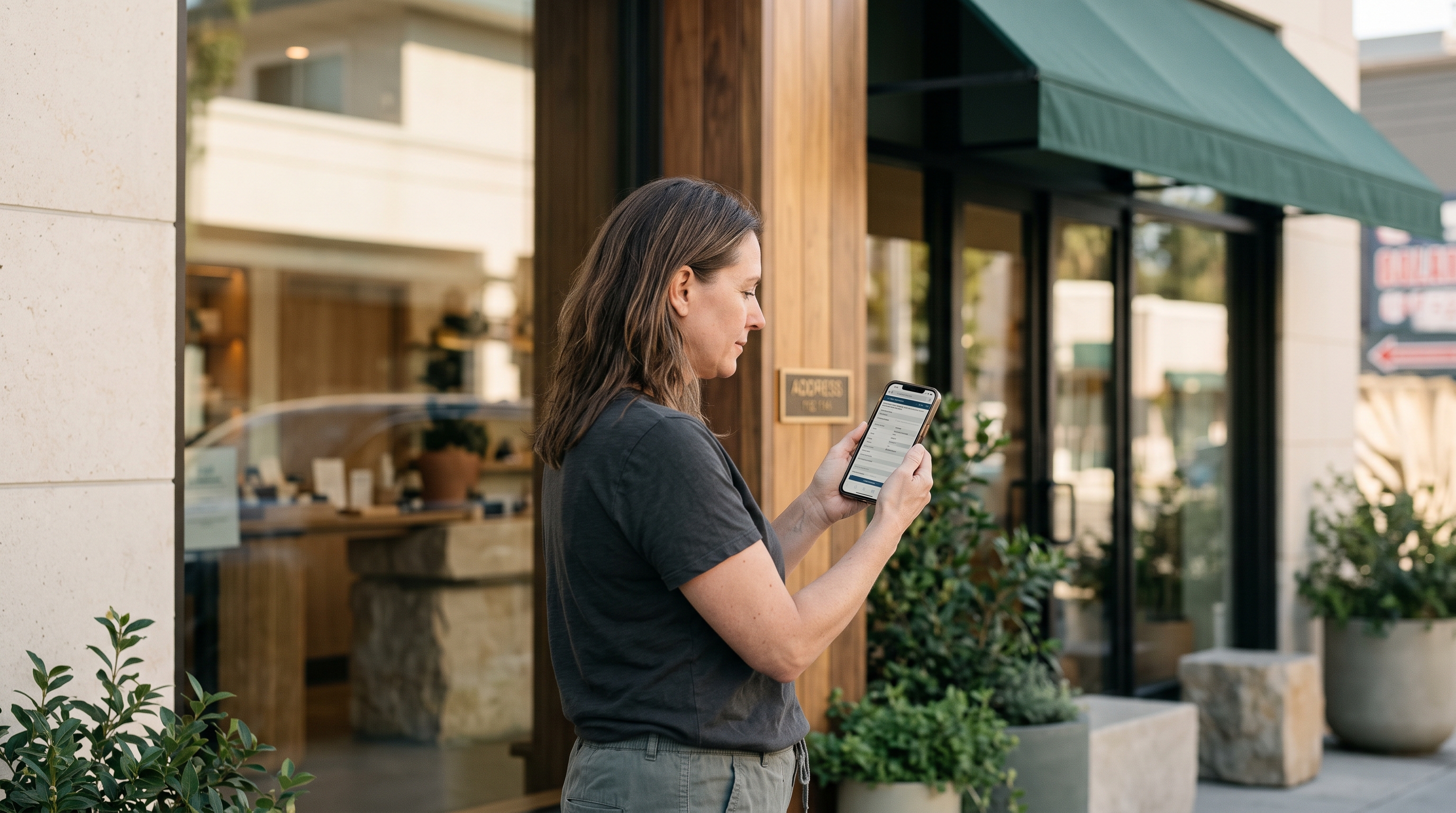
1. The Store Is Missing From the Regulator’s License Search
A framed certificate is not enough. Licenses can expire or be suspended. A license may belong to another company or address. Some unlicensed stores copy numbers or mimic official decals. California warns that a store can look real and still lack a license. Its Department of Cannabis Control provides a license search updated daily. New York also publishes a dispensary verification list.
What it means: You have not established that the retailer participates in the regulated supply chain. Products in an unlicensed shop may not have gone through that jurisdiction’s testing, tracking, packaging, or recall process.
What to do: Search the regulator’s database yourself. Match the legal or trade name, street address, license type, and active status. Do not trust only the first search result or a link from the store. Leave if the record is absent or the details conflict. You can also use the regulator’s complaint channel when appropriate.
2. The Storefront Uses Word Games Instead of a Clear Retail License
“Private club,” “membership gift,” and “wellness market” do not grant a right to sell cannabis. Neither does a “free cannabis with purchase” offer. A hemp registration is also not always the same as a cannabis retail license. Hemp-derived products and state-regulated cannabis can follow different rules. Our hemp-versus-cannabis regulation explainer maps the basic fault lines.
What it means: The operator may be trying to make an unlicensed transaction sound like something else. It could also be a lawful business using awkward marketing, so the phrase itself is not proof. The missing answer is the red flag.
What to do: Ask which regulator issued the retail license. Then ask for its number. Verify both on your own. Make sure the license covers the type of sale you want. Storefront, medical, adult-use, and delivery rights may differ. Rules can even differ within one state.
3. The Product Has No Traceable Producer or Lot Identity
A regulated package should identify what it is and who made it. Exact rules vary. Common fields include product identity, net contents, maker details, license information, a lot or batch ID, and warnings. New York’s current packaging and labeling guidance is one example. It requires a lot ID, processor contact details, and an expiration date for adult-use products.
What it means: Without a lot or batch identity, you cannot reliably match the package to testing or a recall. Without a responsible producer, you may have nowhere to direct a defect or contamination question.
What to do: Compare the outer package, inner container, receipt, and lab record before paying. The names and numbers should tell one clear story. A brand sticker should not hide required details. A handwritten note should not replace production data. If the seller says “all batches are basically the same,” choose another product.
4. The Certificate of Analysis Is Missing, Broken, or for the Wrong Batch
A QR code is not a magic safety shield. It must open and lead somewhere credible. It must also describe the package in your hand. New York says regulated products carry a QR code or link to a Certificate of Analysis. Washington says buyers may ask a retailer for a product’s test results. Other markets share results in other ways, so know your local rule.
What it means: A generic “tested” badge or brand-wide PDF cannot prove that this production batch received the required tests. A mismatched lot number may be a stocking mistake—or evidence that the report is being recycled.
What to do: Use our guide to reading cannabis lab results. Match the product and producer. Then match the batch or lot, report date, and cannabinoid values. Identify the lab. Confirm its standing if your regulator lists approved labs. Do not buy the item if staff cannot find the right record.
5. The Lab Report Looks Too Perfect to Be Plausible
Lab reports are technical, but some conflicts are easy to spot. Perhaps the totals do not add up. Maybe unrelated batches show the same numbers. A report may even predate the batch. A “full panel” may show potency but omit tests required by your market. A very high THC number does not prove fraud. It also should not be your only quality signal. Learn why in THC percentage is a terrible way to choose cannabis and our review of flower and concentrate label data.
What it means: The document may be incomplete, misread, attached to the wrong product, or manipulated. It can also reflect jurisdiction-specific reporting conventions, so do not accuse a clerk based on one unfamiliar field.
What to do: Ask what was tested. Ask what “ND,” “LOQ,” and “pass” mean on that report. Find out whether the displayed value is delta-9 THC, THCA, or total THC. Compare the answers with regulator guidance. Leave the product if the numbers conflict and nobody can explain why.
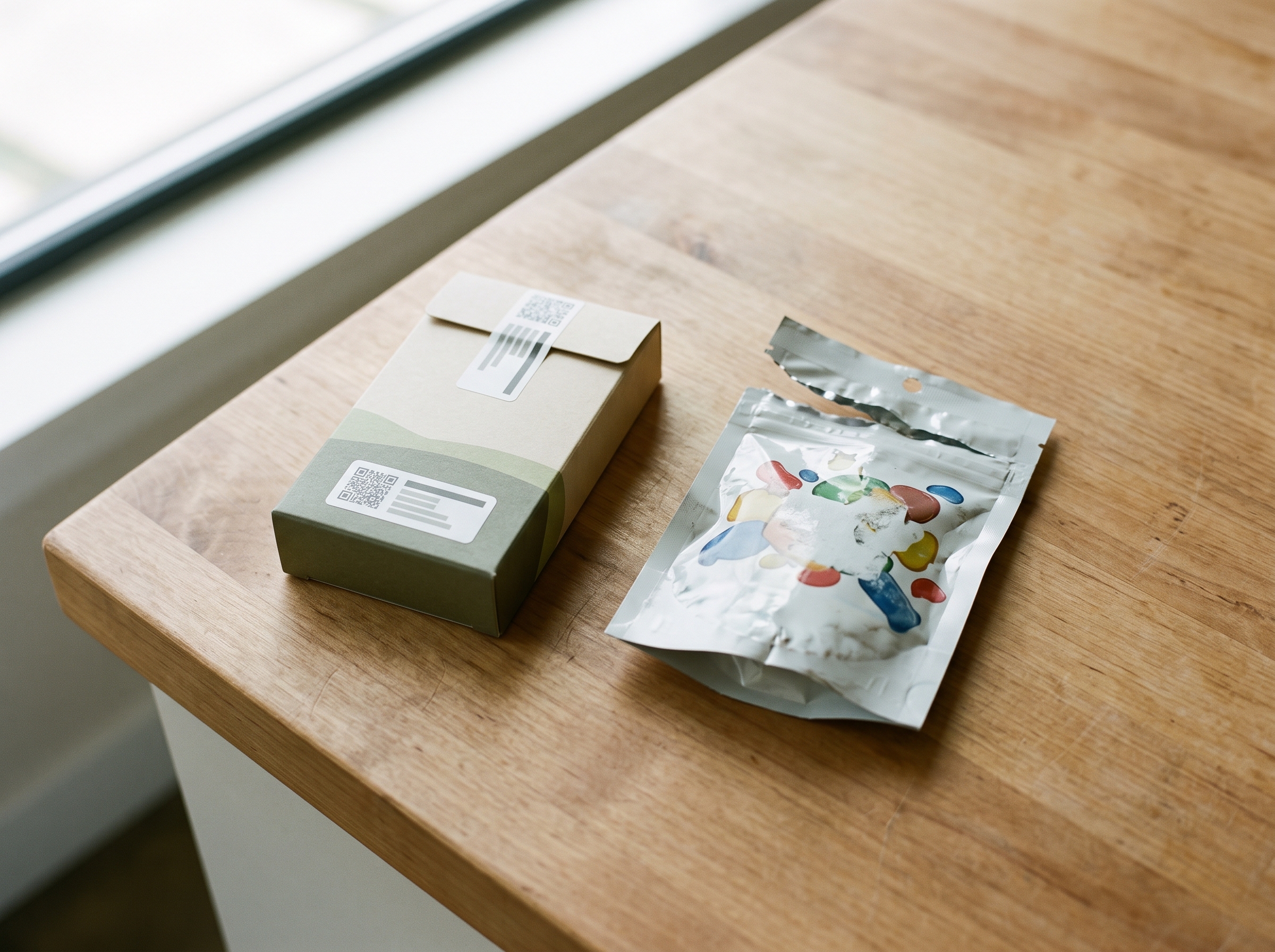
6. The Package Copies Candy, Uses Child-Appealing Art, or Has a Broken Seal
Imitation snack packaging is not just tacky. It may raise the risk of someone eating the product by mistake. It may also break local rules. New York bars adult-use packaging that mimics products linked to young people. It also requires child-resistant and tamper-evident packages. Rules differ elsewhere. Yet a torn seal, loose cartridge, leak, or open package is always a reason to pause.
What it means: The product may be outside the regulated channel, noncompliant, damaged, returned, or poorly handled. Familiar candy imagery can also make a THC product dangerously easy to mistake for ordinary food.
What to do: Do not buy a package that is open, leaking, punctured, or changed. Compare its cannabis symbol with the regulator’s current example. After purchase, keep cannabis in its original package and away from children and pets. Does the substance itself look strange? Use our mold-versus-trichomes safety guide rather than guessing.
7. The Dose, Serving Size, or Product Type Is Hard to Understand
“100 mg” might describe a package, serving, or concentration. The label and product type provide the context. Milligrams are not percentages. THC is not the same as total cannabinoids. Beverages, tinctures, topicals, and edibles also use different directions. The product is not ready for your cart if staff cannot show the amount per serving.
What it means: Label confusion increases the risk of taking more than intended, especially with delayed-onset products. It may also signal a noncompliant or poorly designed package.
What to do: Ask the clerk to show the amount per serving and per container on the sealed label. Use the cannabis quantity visual guide for weights. Check the beginner THC dosing chart for careful context. Read our edible mistakes checklist before consuming. If you cannot explain the dose in plain words, do not buy it yet.
8. The Budtender Pushes “Highest THC,” a House Brand, or a Flash Deal
A suggestion is not always a scam. The red flag appears when every answer leads to the same costly product. It may also be the highest-THC item, aging stock, or a deal that expires before questions. Beware the claim that only novices buy lower-potency products. A premium tier cannot promise a premium experience. Our cannabis flower grades explainer shows why shelf labels are not standard grades.
What it means: The advice may be driven by inventory or margin rather than your preferences, experience, budget, or risk factors. The clerk may also have inadequate training.
What to do: Set a budget and goal before entering. Ask why the product fits. Request two other options and the main tradeoff. A good answer can include doubt. Decline an upsell without saying sorry. For a fuller way to compare shops, use our dispensary buyer’s guide.
9. Staff Make Unproven Medical Promises
A seller should not guarantee a health outcome. The same goes for a promise of zero risks or drug interactions. Those claims turn product education into unsupported certainty. The FDA says most nonprescription CBD products have not been reviewed for claimed disease treatment. That review gap also covers proper dose, drug interactions, and other safety issues. New York bars cannabis ads from making curative or therapeutic claims in its marketing guidance.
What it means: The seller is overstating evidence and may be encouraging you to substitute retail advice for medical care. Individual responses vary, and product effects cannot be guaranteed from a name, category, or terpene alone.
What to do: Treat a budtender as a product guide, not a prescriber. Speak with a qualified clinician for health questions. This is vital with pregnancy, breastfeeding, surgery, heart risk, or drug interactions. Our cannabis and medication interactions guide can help you prepare questions. It does not replace care.
10. Products Look Old, Heat-Damaged, Sun-Baked, or Recalled
Flower may lose aroma and moisture over time. Oils may darken or change texture. Edibles can age like other foods. A hot window, damp shelf, dusty package, expired date, or bulging container deserves a closer look. Some changes are normal for a given product. Still, staff should know how it was stored and where to find its dates. California’s cannabis recall portal lets buyers search recalls by product and issue.
What it means: The inventory may be stale, improperly stored, damaged, or subject to a safety notice. A package date alone does not define quality, but evasiveness about age and storage removes information you need.
What to do: Check any package, make, harvest, expiration, or best-by dates. Ask how the store protects items from light and heat. Some products may need cold storage. Search the regulator’s recall page by brand, product, UID, lot, or batch. See our complete cannabis storage guide and vape cartridge shelf-life guide for more clues.
11. The Defect, Return, and Receipt Policy Is a Mystery
Cannabis return rules differ widely. Some regulators limit what can go back into stock. A store may accept broken hardware but not an opened edible. A recall may tell buyers to return a matching batch. So “final sale” does not prove a store is illicit. The real warning is finding out the policy only after you pay. A refusal to give an itemized sales record is another.
What it means: You may have no practical path for a clogged cartridge, mislabeled item, recall, overcharge, or wrong product. A store that cannot explain its process may also handle complaints inconsistently.
What to do: Ask what happens if the product is broken, wrong, or recalled. Find out what proof you need and how fast you must report it. Request an itemized receipt with the store, date, product, taxes, discounts, and fees. Photograph and save the package if you report a problem. Do not use a product that may be unsafe or mislabeled.
12. The Store Collects More Personal Data Than It Can Explain
Local law may require proof of age or patient status. A loyalty account is a separate choice. So are a marketing profile, contact upload, and long-term ID storage. The FTC tells businesses to collect only what they need. It also tells them to protect that data and discard it safely. “The system needs everything” is not a useful answer.
What it means: Your purchase history, identity information, phone number, or email may be retained or shared in ways you did not expect. Requirements and privacy rights vary by state and by medical versus adult-use program.
What to do: Ask whether staff only view your ID or also scan and save it. Which fields remain? For how long? Who gets them? Is the loyalty plan optional? Read the privacy policy before making an online account. Skip optional marketing fields. Stop if the store seeks a Social Security number, contact list, unrelated health record, or phone access without a clear lawful reason.
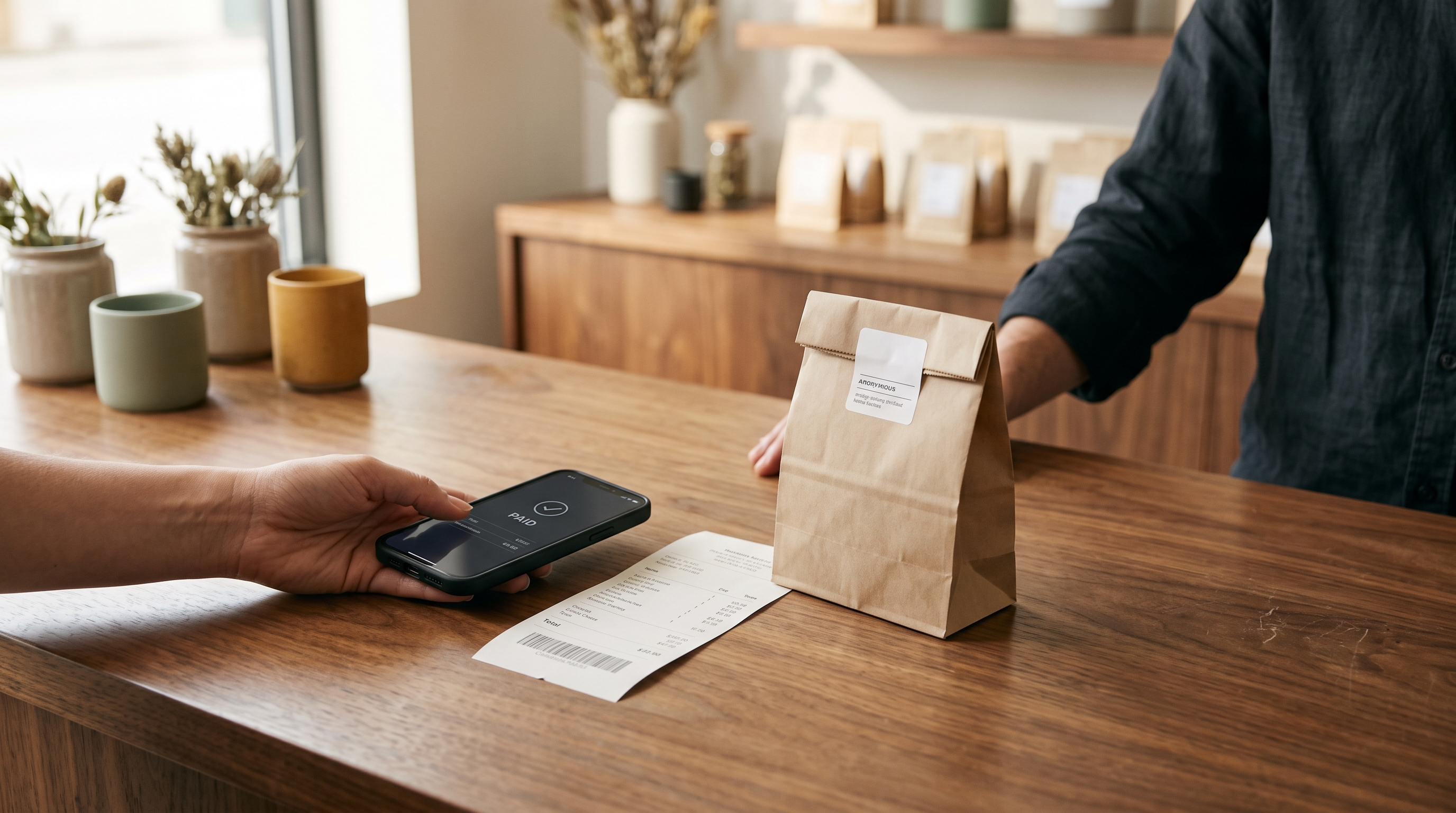
13. Checkout Uses Surprise Fees or a Personal Payment Account
Cash-only checkout can be normal in this industry. Banks apply special rules when they serve cannabis businesses. FinCEN guidance explains the checks and reports expected of those banks. The stronger warnings are more specific. Look for a hidden fee, a total that changes at the terminal, or a transfer to an employee’s personal account. A request for your bank login, security code, or PIN is also a red flag. So is a refusal to give a receipt.
What it means: You may be facing an improperly disclosed fee, an insecure workaround, an impersonation scam, or a transaction that will be difficult to dispute. Payment method alone does not establish whether the cannabis retailer is licensed.
What to do: Ask for the full total before you pay. Check the merchant or ATM name and read the receipt. Never give staff a PIN, password, or one-time code. The FTC warns that payment-app transfers can be hard to reverse. Confirm the recipient inside the app. Leave if checkout sends you to crypto, gift cards, or a stranger’s account.
14. The Premises Have Blocked Exits, Smoke, Sparks, or Chaotic Security
A small store is not always unsafe. Visible security may also be required. Yet blocked doors, sparking power strips, active smoke, a strong solvent smell, or a wild crowd are reasons to leave. So is a guard who turns harmless questions into threats. OSHA says an exit route must provide a clear path to safety. It also calls for working safeguards such as exit lights and alarms.
What it means: The business may have immediate fire, electrical, evacuation, or violence risk. You cannot determine code compliance from a quick visit, but you can respond to hazards you can see, hear, or smell.
What to do: Do not inspect a gas leak, fire, or exposed wire. Move to safety and call emergency services when danger is near. For a nonurgent issue, take notes only from a safe and lawful place. Report it to the right fire, building, workplace, or cannabis agency. No locked lobby or security rule should stop an emergency exit.
15. The Reviews Look Manufactured—or Criticism Keeps Disappearing
Perfect ratings do not equal trust. Watch for a burst of the same praise or reviewers with no history. Beware scripts that repeat one product claim. A reward offered only for five-star feedback is another warning. So is a threat aimed at a critic. The FTC’s Consumer Reviews and Testimonials Rule took effect on October 21, 2024. It covers fake reviews, rewards tied to a certain view, hidden insider reviews, review suppression, and fake social signals.
What it means: The store may be manipulating the social proof you use to judge licensing, staff, product quality, or complaint handling. A few enthusiastic reviews—or a discount for an honest review regardless of sentiment—do not prove manipulation.
What to do: Read new, low, and middle-rated reviews. Look for details that repeat over time. Common themes include wrong orders, broken items, hidden fees, helpful staff, or fair resolutions. Check claims against regulator license and enforcement records. Let reviews create questions. Do not let them replace proof.
What a Good Dispensary Does Instead
A good shop does not need to be fancy. It needs to be accountable. Its license points to the right place. A sealed product names its maker and batch. The label is easy to read. Test data connects to that batch in the way local rules require. Staff can explain dose, price, limits, and defects without promising your result.
A good store can turn “I don’t know” into a useful answer. The worker finds a manager, maker contact, regulator page, or correct lab report. That matters more than knowing every cannabinoid by heart. Do you order ahead? Our guide to cannabis delivery convenience and regulation applies the same license and address check to delivery.
If You Already Bought a Questionable Product
- Do not use it if the seal is broken, the product is leaking, the label conflicts with the contents, or you suspect contamination or a recall.
- Preserve evidence: package, receipt, batch or UID, COA, photos, order confirmation, and a note of what staff said.
- Check the regulator’s recall and license pages. Match exact batch identifiers rather than relying on a brand name alone.
- Contact the retailer and producer through verified channels. Ask for the written defect or recall process.
- Report the issue to the state cannabis regulator or consumer-protection authority. Report payment fraud to the payment provider and appropriate agency.
- Get medical help for symptoms. For severe reactions, trouble breathing, chest pain, loss of consciousness, or another emergency, call emergency services. In the United States, Poison Control is available at 1-800-222-1222.
FAQs
How can I tell whether a dispensary is legal?
Use the official license search maintained by the regulator where the sale occurs. Match the business name, address, license type, and active status. A map listing, review profile, store decal, QR code, or license photo should not be your only proof.
Does every legal cannabis product have a QR code?
No. Some jurisdictions require a QR code or link to a Certificate of Analysis; others use labels, retailer systems, or regulator databases differently. A missing QR code is a red flag only when local rules require one. Traceability to the correct product and batch is the broader test.
Is a cash-only dispensary illegal?
Not necessarily. Cannabis businesses can face banking and payment-processing constraints. Verify the retail license independently, ask for the complete price before paying, use the store’s official checkout, and get an itemized receipt. Personal payment handles and unexplained fees deserve more concern than cash itself.
Can a dispensary scan and keep my ID?
Rules vary. A store may need to verify age or patient eligibility, but viewing, scanning, retaining, and using data for marketing are different actions. Ask what is collected, whether enrollment is optional, how long data is kept, and where the privacy policy is posted. Consult your jurisdiction’s cannabis and privacy regulators for your rights.
Should I trust a product with a very high THC percentage?
Treat potency as one data point, not a quality grade. Confirm the result belongs to the batch and learn whether the label reports delta-9 THC, THCA, or total THC. Effects vary with dose, route, tolerance, product chemistry, and the individual.
Can a dispensary refuse all returns?
Return and inventory rules vary, and consumable products are often treated differently from defective hardware or recalled goods. Ask for the written policy before paying. A store should still have a process for complaints, wrong items, defects, and regulator-directed recalls.
Where should I report an unlicensed store or unsafe product?
Start with the cannabis regulator responsible for the location of sale. Many provide complaint forms, license searches, and recall portals. For immediate danger contact emergency services; for suspected payment fraud contact your financial provider promptly; and for adverse health effects contact a clinician or poison center.
Conclusion: Verify, Match, Ask, Then Buy
The safest dispensary decision is not based on marble counters or a viral review. It is a chain of evidence:
Verify the retailer. Match the sealed package to its batch information. Understand the label and total price. Ask what happens when something goes wrong.
If any link in that chain stays unresolved, walking away is not rude. It is the most powerful consumer-protection tool you have. For a positive companion checklist, continue with how to choose the right cannabis dispensary, then use a cannabis journal to track what you bought and how you responded rather than relying on marketing labels alone.
Authoritative Sources
- California Department of Cannabis Control: What’s legal
- California Department of Cannabis Control: Search for a licensed business
- California Department of Cannabis Control: Cannabis recalls and safety notices
- New York Office of Cannabis Management: Consumers and dispensary verification
- New York Office of Cannabis Management: Packaging and labeling guidance
- Washington State Liquor and Cannabis Board: Understanding test results
- U.S. Food and Drug Administration: Cannabis and cannabis-derived products
- Federal Trade Commission: Consumer Reviews and Testimonials Rule Q&A
- Federal Trade Commission: Privacy and Security
- Financial Crimes Enforcement Network: BSA expectations for marijuana-related businesses
- Occupational Safety and Health Administration: Exit route safeguards
This article provides general educational information, not legal, medical, financial, or regulatory advice. Laws and product requirements change; verify current rules with the authority where you shop.

