Cured Resin vs Live Resin: What Fresh Material Changes
Cured resin vs live resin comes down to one thing: when the flower was frozen. Here's how fresh-frozen material reshapes flavor, aroma, and price.

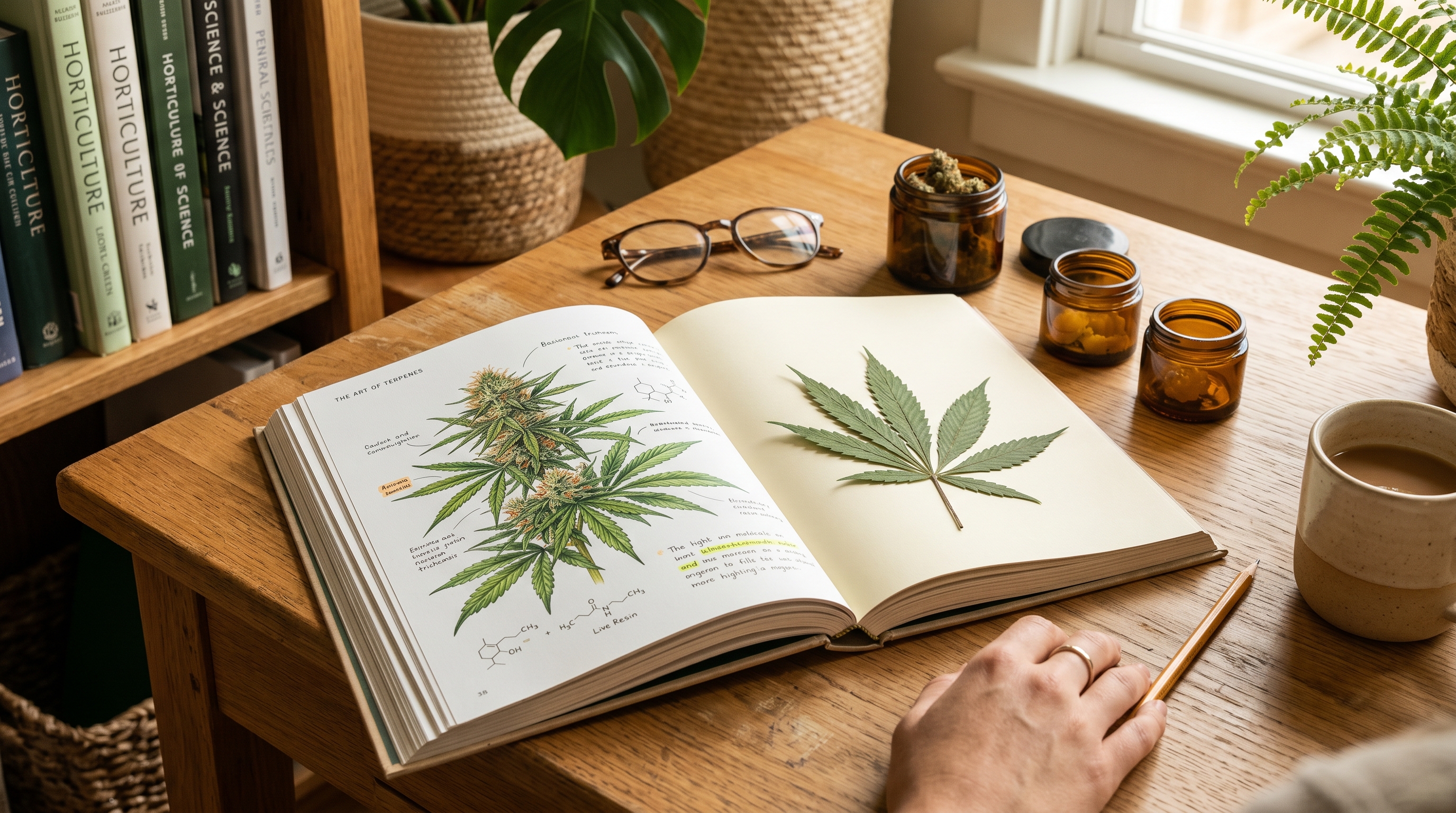
Cured resin and live resin look almost identical on the shelf, yet one routinely costs far more. The reason traces back to a single choice made on harvest day — and it reshapes flavor, aroma, and price. Here’s exactly what changes, and why.
Two Jars, One Decisive Difference
Stand at the concentrate counter and you’ll see them lined up. Amber slabs. Golden saucy goop. Glittering little jars with eye-watering price tags. Two of the most common labels are cured resin and live resin. They look related. They’re often made on the same gear. They sit on the same shelf. Yet one usually costs more, and the budtender keeps steering flavor-chasers toward it.
The whole gap between them comes down to one decision made on harvest day: when the plant gets frozen. That single choice shapes everything you taste, smell, and pay for. Let me walk you through what changes, why it changes, and how to pick the right jar.
If you’re newer to dabbing altogether, start with our beginner’s guide to cannabis concentrates and the broader complete guide to cannabis concentrates — this article assumes you know roughly what a dab is.
The Key Variable: Cured Flower vs Fresh-Frozen Flower
Almost every difference between these two products traces back to the starting material.
Cured resin is made the traditional way. After harvest, the flower is dried for about 7 to 14 days. Then it’s jar-cured for another three to six weeks. This is the same process that makes the smokable bud you buy as flower. Only after the material is fully dried and cured does it head to the extractor. By then the plant is dry and “dead,” so you’ll sometimes hear cured resin called “dead resin.” That’s just marketing, not a knock on quality.
Live resin skips drying and curing. Within hours of being cut down, the fresh flower is flash-frozen at cryogenic temperatures — usually around -40°F or colder. The frozen, still-fresh material goes straight into extraction. That’s where the word “live” comes from: the plant was fresh, not dried, when it entered the process. This same fresh-frozen approach is the foundation of solventless live rosin too. So “live” is a starting-material label, not an extraction method.
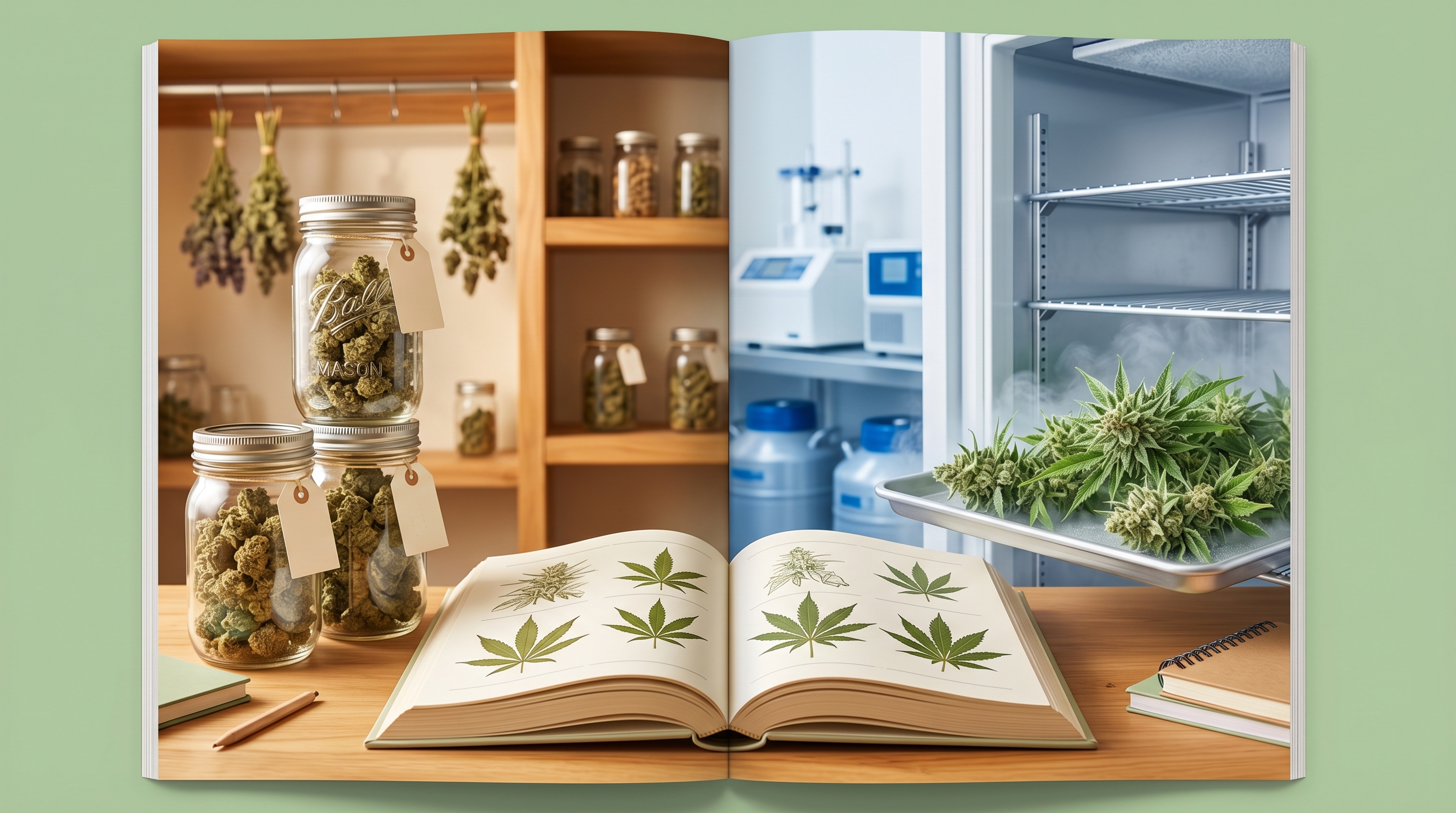
So the headline is simple: cured resin = dried, cured flower. Live resin = fresh-frozen flower. Everything below is a downstream consequence of that one fork.
Why Fresh-Freezing Preserves Terpenes
To understand why this matters, you have to understand terpenes — the aromatic compounds that give every strain its distinctive smell and contribute to its character. They’re produced in the same trichome glands that make THC and the other cannabinoids.
The catch is that terpenes are volatile compounds. They evaporate at fairly low temperatures. That big burst of aroma when you crack open a fresh jar? That’s terpenes leaving the building. The lightest and most fragrant ones — the monoterpenes like myrcene, limonene, and pinene — are the first to escape. Heat, oxygen, light, and time all speed up that loss. And that’s exactly what a drying and curing cycle delivers over several weeks. (Want the deeper chemistry of why strains smell so different? See the science of cannabis aromas.)
Estimates vary, but many producers and reviews suggest drying and curing can cost a flower roughly half its original terpene content — a figure often cited near 55% or more [Veriheal, 2024]. The volatile monoterpenes get hit hardest. Treat that number as a widely repeated industry estimate, not a precise law. The real loss depends on strain, drying method, and handling.
Fresh-freezing hits pause. Producers drop the flower to cryogenic temperatures within hours of harvest. That slows the enzymatic and evaporative processes that would strip those compounds away. One often-cited 2018 paper in the Journal of Cannabis Research [RethinkTHC, 2026] found that flash-freezing before extraction kept much higher levels of monoterpenes like myrcene, limonene, and linalool than dried-material extracts did. Done well, the cold chain holds that profile close to what the plant smelled like in the field.
One practical wrinkle worth knowing: freezing speed matters. Fast freezing creates small ice crystals; slow freezing creates large ones that can rupture the delicate trichome heads where terpenes live. This is why serious live-resin operations obsess over their freezers and never let the material thaw before extraction.
Flavor, Aroma, and Effect: What You Actually Notice
Here’s how the lab difference shows up in your lungs.
Live resin tastes and smells loud. The volatile monoterpenes survived, so the product reads as bright, fresh, and complex — vivid fruit, sharp citrus, pine, gas, or herbal notes, depending on the cultivar. Many connoisseurs can name the strain by nose alone. Terpene content commonly lands in the 4–12% range [Verilife, 2026], well above most dried-flower extracts.
Cured resin tastes mellower. The dominant flavor notes still come through, but the high-pitched, fresh-from-the-garden top notes are softer. Cured material often reads as earthier, deeper, or more “classic cannabis” — familiar and pleasant to anyone who already loves the taste of cured flower. Terpene content typically sits lower, often in the 2–5% range for standard dried-material extracts.
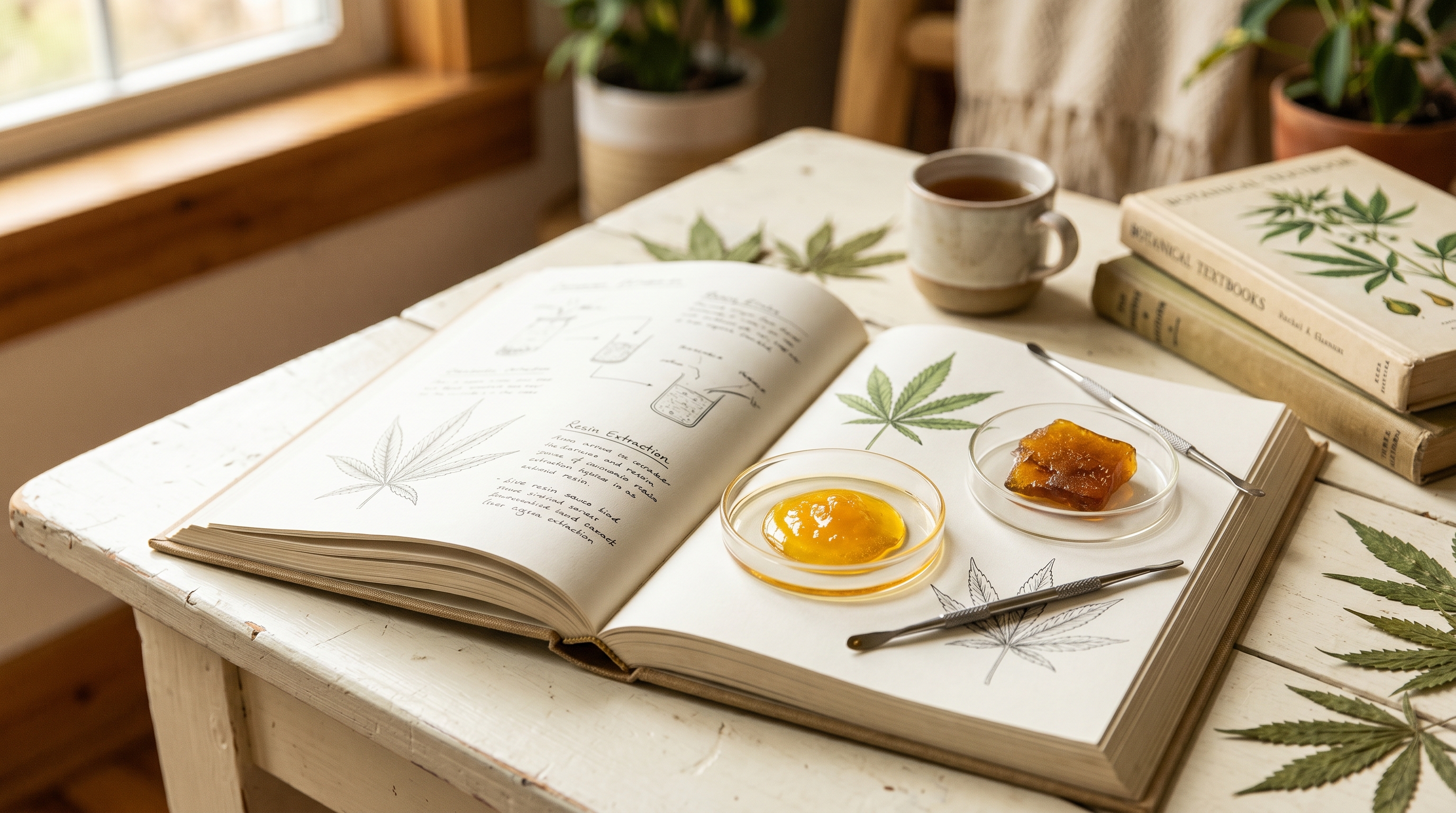
Now the part people get wrong: live resin is not automatically “stronger.” Curing concentrates cannabinoids by the time the material hits the extractor. So cured resin can sometimes test higher in raw THC per gram. Live resin’s edge is breadth, not just potency. It carries a fuller, more plant-accurate terpene-and-cannabinoid profile. That may produce a more nuanced, sensory-rich experience through the entourage effect. Whether that adds up to a “better” high is personal.
A hedged way to think about it: research and consumer reports suggest terpene-rich profiles may shape the feel of an experience. But cannabis affects everyone differently, and none of this is medical advice. The profile that lands as “uplifting” for one person can read as overstimulating for another. That’s the whole reason we built High Families — to describe effect tendencies instead of leaning on indica/sativa myths.
Extraction and Textures: Where They Overlap
Here’s something that surprises people: the extraction method is usually the same. Both cured resin and live resin are typically made with hydrocarbon solvents — butane (BHO) or propane, often blended — run through a closed-loop system. The difference is the input (dried vs fresh-frozen), not the solvent.
Live resin runs do demand a strict cold chain. That means subzero solvents, frozen biomass held below about -40°C through the wash, and low-temperature vacuum purging to protect those fragile monoterpenes. Cured material is easier to handle. It’s already dry, so it doesn’t fight the gear with ice and water. Both need the same licensed, code-compliant facilities. Both must be purged of residual solvent and tested below state limits. Always buy from licensed dispensaries that provide a Certificate of Analysis (COA).
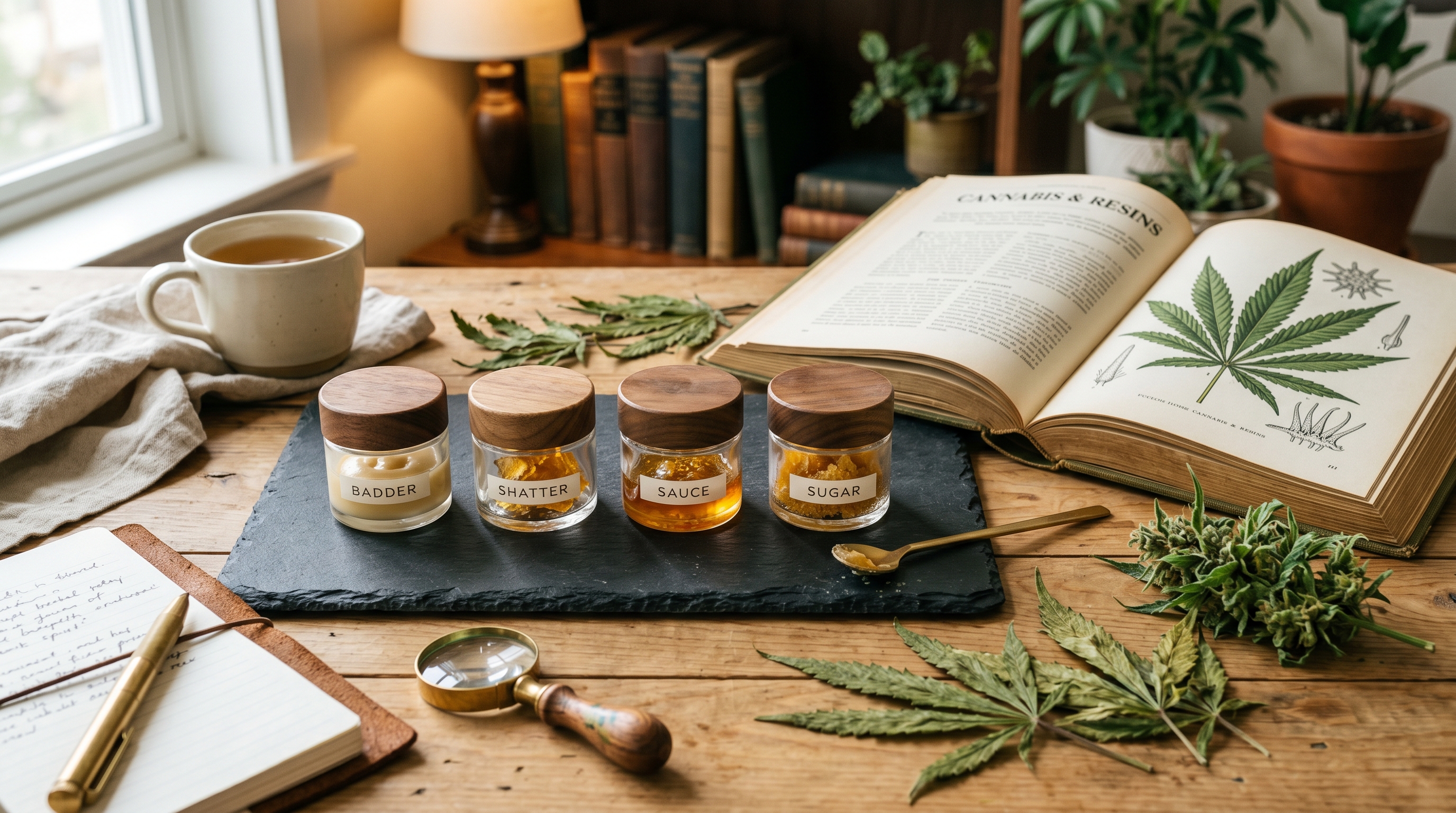
The word “resin” describes the type of extract, not the final shape. After purging, the oil can be whipped, agitated, or set into many textures. You’ll see both “cured” and “live” versions of each:
- Badder / budder — creamy, cake-frosting consistency
- Shatter — glassy, brittle, snaps like hard candy
- Sauce — runny terpene liquid studded with cannabinoid crystals
- Sugar / wax — grainy or soft and pliable
So “cured badder” and “live badder” can sit right next to each other. Same texture, different starting material, different flavor intensity. Want the fully solvent-free path? See our rosin vs distillate breakdown and the texture-by-texture tour in hash vs wax vs shatter. To skip solvents at home, check making rosin at home and the rosin press buyer’s guide. For old-school solventless, see bubble hash vs kief vs dry sift and how to make bubble hash.
Price and Value: Why “Live” Commands a Premium
Live resin almost always costs more. Often 20–30% more than comparable cured resin, and sometimes much more. The premium isn’t a marketing markup. It reflects real production costs:
- Specialized freezing equipment and the energy to run cryogenic freezers
- An unbroken cold chain from harvest through extraction, which is labor-intensive and time-sensitive
- Immediate processing — there’s no curing buffer; fresh-frozen material has to move fast
- Premium genetics, since flavor-forward strains are what make the freshness worth capturing
Rough street ranges: cured resin and standard BHO often run $20–40 per gram. Live resin commonly lands $30–60. Solventless live rosin sits even higher, often $60–100+, because of low yields. Cured resin gives you strong, reliable potency and longer shelf life at a friendlier price. That’s a real value, not a consolation prize.
Which One Is Right for You?
There’s no universal winner. Match the product to your priority.
Reach for live resin if you:
- Chase flavor and aroma above all — you want the strain to taste like the fresh plant
- Care about a full-spectrum, terpene-rich profile and the entourage effect
- Want a concentrate that reads as bright, vivid, and strain-accurate
- Don’t mind paying a premium and storing it cold (refrigeration helps preserve terps)
Reach for cured resin if you:
- Want strong potency at a better price-per-gram
- Prefer the familiar, earthy taste of cured flower
- Value longer shelf stability and wider availability
- Are newer to concentrates and want something approachable
Either way, dab low and slow. Lower temps preserve flavor and are gentler on your lungs. Think the 450–550°F range for live resin, slightly higher for cured. Still deciding between concentrates and other formats? Our guide on choosing between flower, edibles, and concentrates is a good next step. And 710 / Dab Day is a fun bit of culture.
Key Takeaways
Cured resin vs live resin isn’t a quality ranking. It’s a values trade-off baked in on harvest day. Fresh-freezing locks in the volatile monoterpenes that drying and curing would let escape. That’s why live resin tastes brighter, smells louder, and costs more. Cured resin trades some of that aromatic sparkle for reliable potency, familiar flavor, and a friendlier price.
The deeper lesson is one we come back to a lot at High IQ: the label tells you the processing, not how you’ll respond. Two people can dab the same live resin and have very different experiences, because their bodies read the terpene profile differently. The smart move isn’t memorizing which extract is “best.” It’s paying attention to which terpene profiles consistently work for you, then chasing those across flower, vapes, and concentrates alike. That’s the whole idea behind tracking your sessions in the High IQ app: find your pattern, then buy to it.
Frequently Asked Questions
Is live resin stronger than cured resin? Not necessarily. Live resin is richer in terpenes. But cured resin can test higher in raw THC, because curing concentrates cannabinoids before extraction. “Stronger” depends on the product’s lab results, not the category.
Is cured resin lower quality than live resin? No. Cured resin is a high-quality concentrate. It has reliable potency, a familiar flavor, and longer shelf life. It’s a different priority — value and classic taste — not a worse one.
Are they made the same way? The extraction is usually identical: hydrocarbon (butane or propane) in a closed-loop system. The one real difference is the starting material — dried-and-cured flower vs fresh-frozen flower.
Why is live resin more expensive? It takes cryogenic freezers, an unbroken cold chain, fast processing with no curing buffer, and premium flavor-forward genetics. All of that raises costs. Expect roughly 20–30% more than comparable cured resin.
How should I store live resin? Keep it in an airtight glass or silicone container, away from heat and light. Refrigeration helps preserve its delicate terpene profile longer.
What about live rosin — is that the same as live resin? No. Both start from fresh-frozen material, but live resin uses solvents (BHO) while live rosin is solventless (heat and pressure on ice water hash). See our live resin vs live rosin guide.
Sources
- Verilife — Live Resin vs Cured Resin: THC, Terpenes & Key Differences — https://www.verilife.com/learn/live-resin
- Veriheal — What is Live Resin? A Complete Guide to Cannabis Concentrates — https://www.veriheal.com/blog/what-is-live-resin/
- RethinkTHC — Resin vs Rosin vs Live Rosin: What’s the Difference (citing 2018 Journal of Cannabis Research on monoterpene preservation) — https://rethinkthc.com/articles/resin-vs-rosin-vs-live-rosin-difference
- The Original Resinator — Fresh Frozen Cannabis Guide by Extraction Experts — https://www.theoriginalresinator.com/blog/fresh-frozen-cannabis-guide/
- NuggMD — Cured Resin vs Live Resin — https://www.nuggmd.com/blog/cured-resin-vs-live-resin
- Green Rush — Live Rosin vs. Live Resin: The Complete Guide — https://greenrushnews.com/articles/live-rosin-vs-live-resin-guide/
Cannabis affects everyone differently. This article is educational and not medical advice. Always buy from licensed dispensaries and check the Certificate of Analysis.


