How to Make Rosin at Home: DIY Solventless Extraction
Press your own solventless rosin at home with heat and pressure. DIY straightener vs press, micron bags, temps, cold cure, yield, and fixes.


Rosin is the rare premium concentrate you can make safely on your kitchen counter. No butane, no closed-loop system, no purging volatile solvents in your apartment. Just heat, pressure, and a little patience. That is the entire pitch for solventless extraction, and it is a genuinely good one.
If you have ever read the complete guide to cannabis concentrates and felt intimidated by shatter and wax, rosin is your friendlier entry point. It is also the cleanest. Because nothing is added, what you press is what was already living inside the trichome heads: cannabinoids, terpenes, and the minor compounds that make each strain feel like itself.
In this guide I will walk you through the science, the gear, the starting material, and a repeatable step-by-step press. By the end you will understand not just how to press, but why each variable matters, which is the part most tutorials skip.
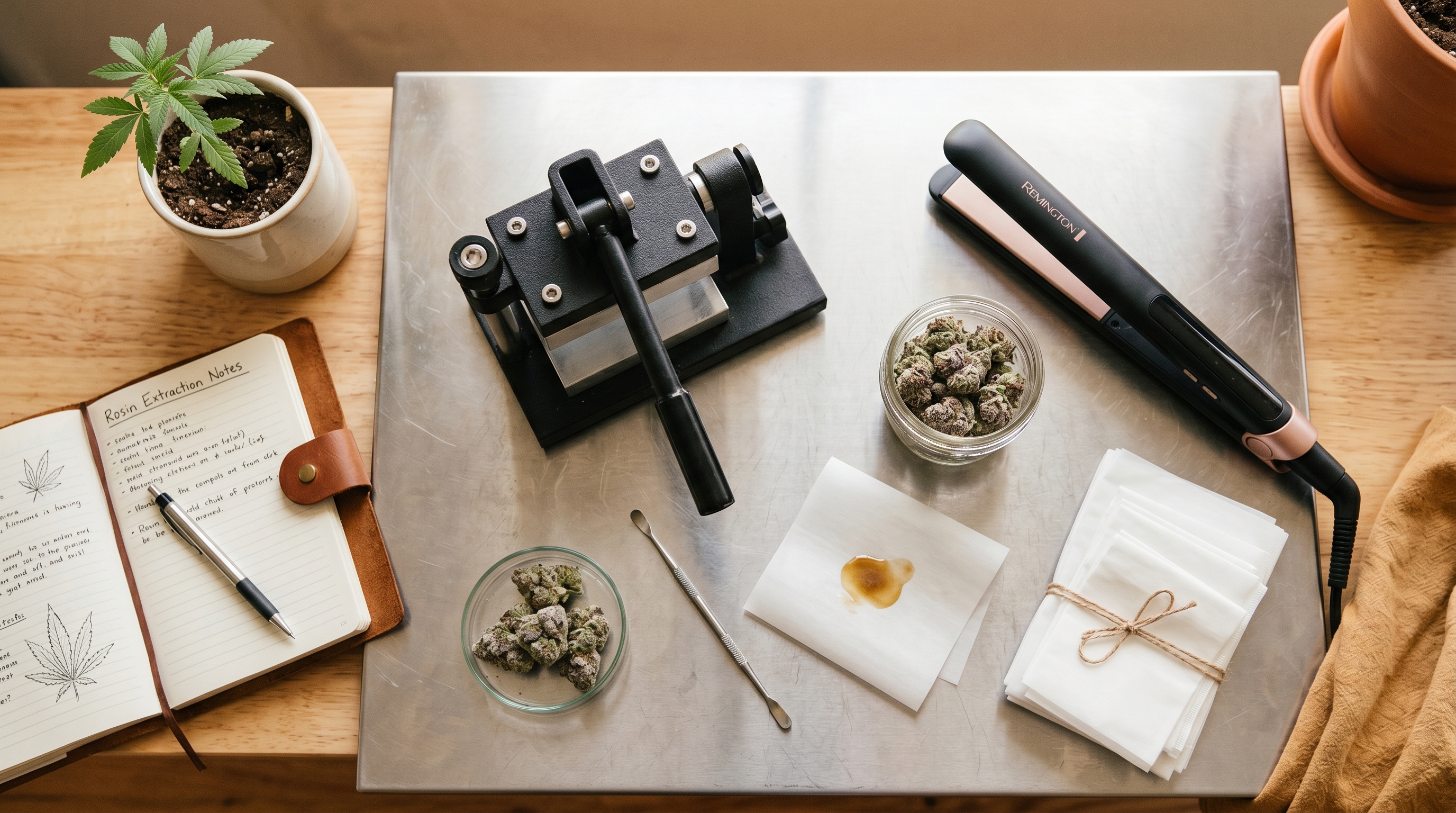
What Rosin Actually Is
Rosin is a solventless cannabis extract produced with only heat and pressure. Controlled heat melts the resinous trichome heads until the oil inside flows; mechanical pressure then forces that liquefied oil out through a fine mesh filter bag, separating it from plant material. The golden sap you collect on parchment is rosin.
That is the whole mechanism. Compare it to BHO (butane hash oil) or CO₂ extraction, both of which need pressurized solvents, vacuum ovens, and serious safety infrastructure. Rosin sidesteps all of that. It is the only top-shelf concentrate that a home user can reasonably produce, which is exactly why it has gone from a party trick a decade ago to a respected craft category today.
If you want to understand how rosin compares to its solvent-based cousins, my breakdowns of live resin vs live rosin and rosin vs distillate are worth a read. The short version: solventless preserves the original strain’s aroma and feel better than almost anything else.
The Equipment You Need
Press: DIY Hair Straightener vs Dedicated Rosin Press
You have two realistic paths.
Hair straightener (DIY, roughly $20-50). Two heated plates clamped together. It is the cheapest way to find out whether you even enjoy pressing. The honest tradeoffs: pressure is low and inconsistent, plate temperature is uneven and often inaccurate, and the small plate area limits you to micro-batches of 0.3-1g. Yields run poor, maybe 8-12% on a good day. Treat it as a proof of concept, not a long-term plan. If you go this route, pick a flat iron with adjustable temperature and a wide plate.
Dedicated rosin press ($150-400+). A frame (manual lever, hydraulic, or pneumatic) that drives two heated, temperature-controlled plates together with a pressure gauge. This is where consistency lives. Digital temperature control plus a gauge means you can replicate a good result instead of stumbling onto it. Yields climb to 15-20%+, and you can press meaningful batches. For anything beyond casual experimentation, this is the upgrade that matters.
A serious DIY builder can assemble a press for under $200 using a 12-ton shop press, aluminum plates with cartridge heaters, and a PID temperature controller (Inkbird, Mypin, and Auber units are community favorites). That is a real project, not a beginner step.
Micron Filter Bags
Rosin bags are fine nylon mesh pouches that hold your material during the press, keeping plant matter off your parchment. The micron rating is the size of the mesh openings. Smaller micron means cleaner rosin but potentially lower yield, because less can pass through. Match the bag to your material:
| Micron | Best For | Notes |
|---|---|---|
| 25µm | Refined kief, full-melt | Finest filtration, lowest yield. Ultra-pure inputs only. |
| 37µm | Premium hash rosin | The industry-standard quality bag for bubble hash. |
| 72-90µm | Kief, lower-grade sift | A middle ground. |
| 90-120µm | Flower rosin | The standard home-pressing choice. |
| 160-190µm | Trim, max yield | More plant material passes; for edibles or refinement. |
A classic mistake: a 90µm bag on hash lets green plant material through, and a 25µm bag on flower lets almost nothing flow. Match the micron to the material every time.
Parchment Paper (Not Wax Paper)
Use unbleached, food-grade, silicone (Quilon-free) parchment as your non-stick collection surface. Not wax paper, not butcher paper. Cut pieces large enough to fold completely around your material. Once you are pressing regularly, reusable PTFE sheets are a nice upgrade because they do not absorb any of your oil.
A few small extras pay off fast: a stable silicone dab mat under your parchment, a metal collection tool, a timer, gloves, and a glass jar for storage.
Choosing Your Starting Material
Here is the rule that governs everything: quality in, quality out. You cannot press premium rosin from fan leaves.
- Flower is the most accessible input. Use properly cured buds, ideally conditioned to 55-62% relative humidity. Stale, oxidized flower presses dark and weak.
- Kief / dry sift is one of the best balances of quality and yield because the trichomes are already separated from plant matter.
- Bubble hash / ice water hash is the input for the highest-grade rosin. Pressing fresh-frozen ice water hash gives you live rosin, the flavor champion. Dry your hash thoroughly first. If you have not made it yet, here is how to make bubble hash with ice water extraction, and a primer on bubble hash vs kief vs dry sift.
Whatever you start with, freshness matters. The trichome heads should be milky and intact, not amber and crumbling. If you are curious why different flower smells and presses so differently, the science of cannabis aromas explains the terpene side of the story, and drying and curing cannabis covers getting your input to the right moisture.
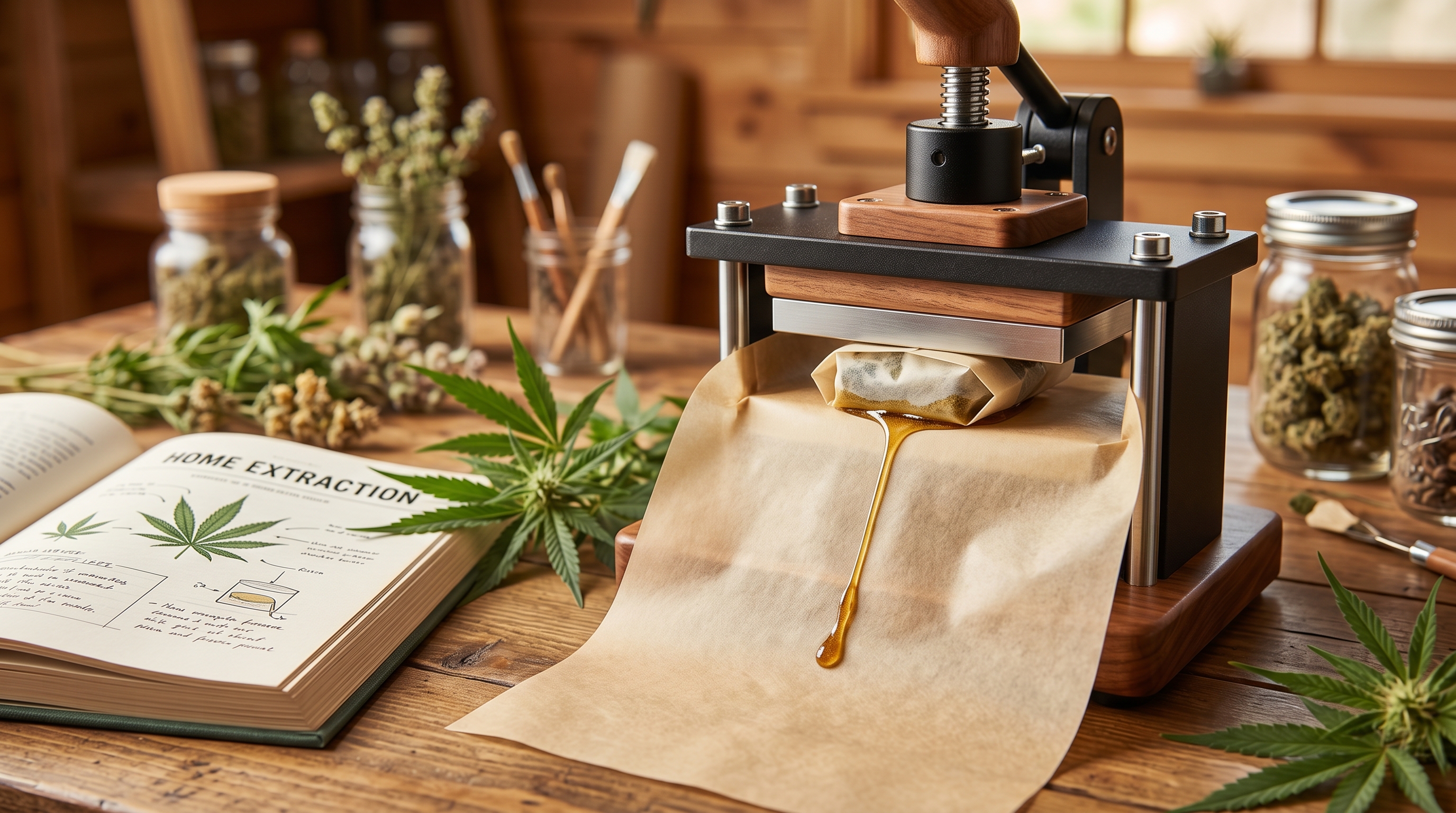
Step-by-Step: Pressing Flower Rosin
1. Prep Your Material
Condition flower to about 58-62% RH using humidity packs for 24-48 hours. Break buds into popcorn-sized pieces. Do not grind. Grinding exposes more surface area and pushes lipids and chlorophyll through the bag, giving you green, harsh rosin. Load a 90-120µm bag, filling only about 70-80% so it does not blow out. For 3x5-inch plates, 3.5-7g per press is a good range. If you have a pre-press mold, compress the material into a flat, even puck first; this improves yield by a couple of points and reduces blowouts.
2. Set Temperature
Flower rosin lives between 170-220°F (77-104°C), and where you land is a direct tradeoff:
- Low and slow (170-190°F): lighter color, superior terpene retention, sappier consistency, slightly lower yield. The connoisseur’s range.
- Higher (200-220°F): more yield, darker color, runnier oil, some terpene loss. Better for edibles or carts.
Start at 185°F for a balanced first press and adjust from there. On a hair straightener, use the lowest stable setting you can; most have no real temperature readout, so err cool to avoid scorching. Always let the plates fully stabilize at temperature before pressing.
3. Apply Pressure and Time
Fold the parchment, place the bag in the center, and close the plates to light contact. Let it warm for 10-15 seconds. Then increase pressure gradually over 15-30 seconds, never all at once. Slamming full force blows the bag and contaminates your extract. A two-stage press (light, then firm) consistently beats smashing.
Full pressure for flower is roughly 600-1,200 PSI at the bag (not at the gauge; the bag area is smaller). Hold steady and watch the parchment. Total press time is about 60-120 seconds: press longer at low temps, shorter at high temps. Stop when the golden stream slows to a trickle.
4. Collect
As soon as the press releases, get your rosin off the warm parchment quickly. Rosin left on hot parchment keeps cooking and loses terps. Scrape it into a cool glass jar with your collection tool. You just made solventless concentrate.
Flower Rosin vs Hash Rosin: Different Settings
The biggest variable in your press is what you put in the bag. Hash and kief are already pre-filtered trichome heads, so they need much gentler treatment than flower.
| Input | Micron Bag | Temperature | Pressure (at bag) | Time |
|---|---|---|---|---|
| Flower | 90-120µm | 170-220°F | 600-1,200 PSI | 60-120s |
| Kief / dry sift | 36-72µm | 150-200°F | 400-800 PSI | 45-120s |
| Bubble hash | 36-72µm | 140-180°F | 300-800 PSI | 45-90s |
| Live rosin (fresh-frozen hash) | 36-72µm | ~160-180°F | start 200, build to 800 PSI | 45-90s |
The pattern: cleaner input wants lower heat and far less pressure. Hash rosin pressed around 140-165°F can preserve roughly 30% more terpenes than a hot press while still yielding well, often 55-63% from quality hash. That is the magic of starting with good material.
The Cold Cure: From Sappy Sap to Creamy Budder
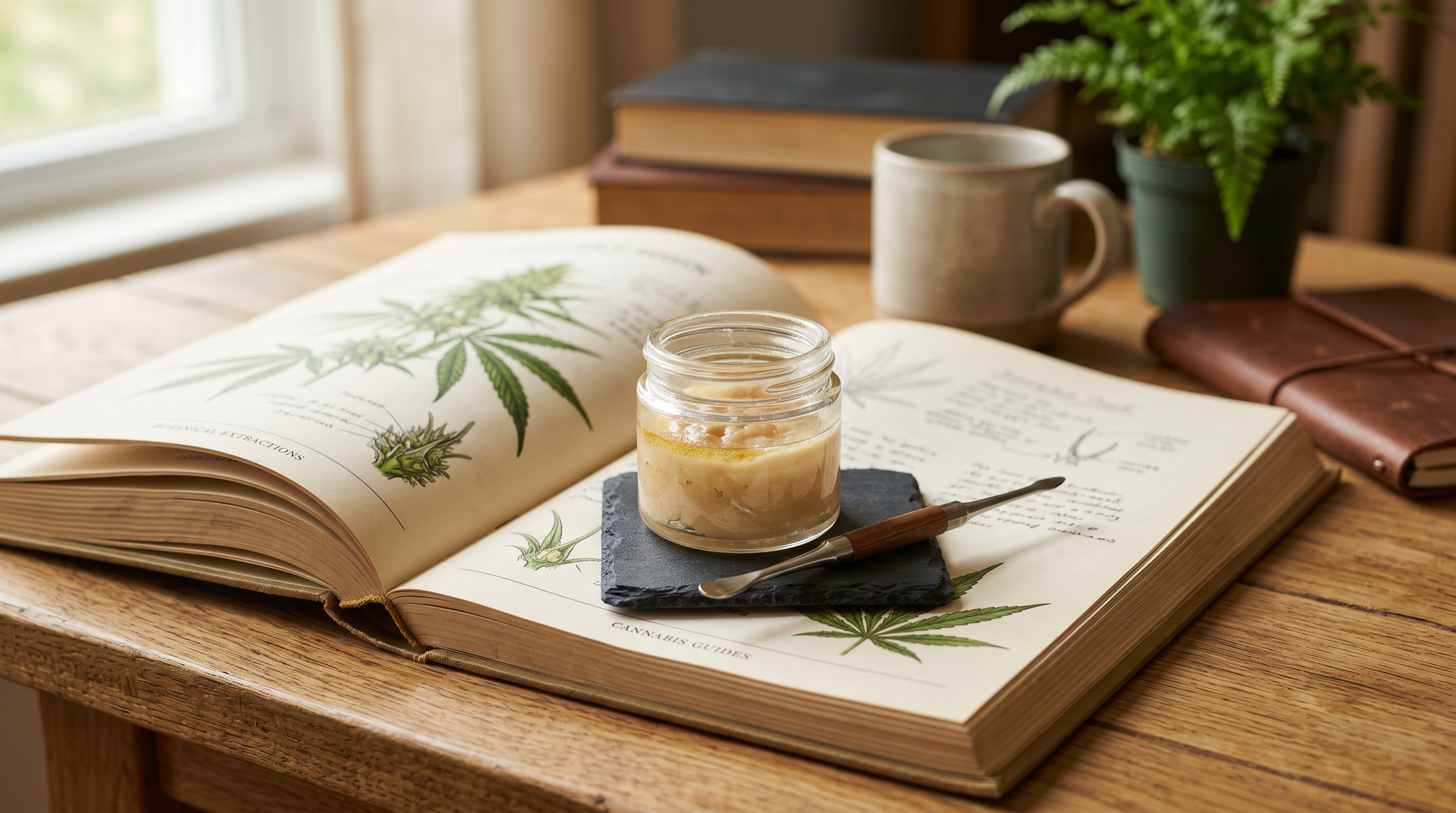
Fresh-pressed rosin is a living extract: an unstable mix of high-terpene fraction and THCA. Left alone at room temperature, those fractions separate unpredictably. A cold cure takes control of that separation to produce a smooth, stable budder or badder with deeper flavor.
The technique is simple but requires patience:
- Jar it. Put your fresh rosin in an airtight glass jar, filling close to the top so there is minimal air space (oxidation and terpene loss live in that headspace).
- Hold a cool, steady temperature. Around 50-72°F depending on the method. A wine fridge or temperature-controlled cabinet is ideal. A standard kitchen fridge at 35-40°F is actually too cold for a proper cure; it can stall the process. Avoid temperature swings.
- Wait. Most batches develop over 1-3 days at the warmer end, or 2-4 weeks at the cooler end, until you see the terpene layer separate from the cannabinoid cake.
- Homogenize. Once separation is complete, mash and gently fold the fractions back together with a cold dab tool until the texture turns uniform and creamy. Mash rather than aggressively whip; whipping introduces air. Some pressers use a “taffy” stretch-and-fold to homogenize fully.
You cannot reverse a cure. Once rosin transforms from sappy fresh-press into creamy budder, it stays that way, so cure deliberately. Cold-cured rosin is also more shelf-stable, often holding quality for months versus a few weeks for fresh-press.
Yield Expectations and Troubleshooting
Be realistic about yield. Flower typically returns 15-20% at best; a hair straightener might give you 8-12%. Hash and kief return far more because they are already concentrated. The honest financial math: a press plus good flower will not save you money up front. What you buy is control, quality, and the education of understanding exactly why your rosin tastes the way it does.
| Problem | Likely Cause | Fix |
|---|---|---|
| Green / harsh rosin | Ground flower, micron too large, too much heat/pressure | Don’t grind; drop to 90µm; lower temp 15-20°F |
| Dark rosin | Too hot, too much pressure, or degraded material | Press at 180-185°F; use fresh flower; reduce pressure 10-15% |
| Bag blowout | Loose pack, pressure too fast, bag too large | Pre-press, ramp pressure slowly, fill bag 70-80% |
| Tiny yield | Temp too low, pressure too low, low-quality input | Nudge temp up, hold pressure longer, upgrade material |
| Inconsistent results | No PID / no gauge (often a straightener) | Upgrade to a press with temperature and pressure control |
One sneaky cause of dark rosin: cheap PID setups can read 5-15°F higher than the actual plate surface. If everything is coming out scorched, verify your thermocouple is reading the plate, not the air.
How to Store and Use Your Rosin
Store rosin in an airtight glass jar away from heat, light, and air, the same enemies that degrade flower. Wrapping it in parchment or PTFE before it goes in the jar can help keep it from sticking. Fresh-press is best in the fridge and peaks within a few weeks; cold-cured rosin is more stable at cool room temperature for months. Always let a cold jar return to room temperature before opening so condensation does not form inside.
As for using it: rosin shines when dabbed at low temperatures to honor the terpenes you worked to preserve, or vaporized. It is already decarbed enough to feel on a dab, but if you want to cook with it, brush up on decarboxylation and our cannabis cooking 101 guide first. Concentrates pack a punch, so if you are deciding between formats, how to choose between flower, edibles, and concentrates and cannabis oil vs flower can help you set expectations.
Because rosin keeps the strain’s full terpene profile intact, it is one of the best ways to actually feel the difference between cultivars. That is where tracking pays off: the same strain can press into rosin that hits very differently depending on heat and cure, so logging your settings and effects turns guesswork into a recipe. Understanding High Families helps you predict which strains will give you the experience you want before you ever press, and finding your ideal high is the bigger philosophy behind it.
Frequently Asked Questions
Is rosin really solventless and safe to make at home? Yes. Rosin uses only heat and pressure, with no flammable solvents involved at any stage. That is precisely why it is the one premium concentrate safe to make in a home kitchen, unlike BHO. Use heat protection and common sense around hot plates.
Do I really need a hair straightener, or should I just buy a press? A straightener is fine for learning whether you enjoy pressing. For consistent, repeatable rosin, a dedicated press with temperature control and a pressure gauge is the upgrade that matters. See our cannabis gear guide and how to build the perfect cannabis toolkit for how it fits into a full setup.
What temperature should I press at? Start flower at 185°F and adjust. Lower (170-190°F) preserves terpenes and flavor; higher (200-220°F) maximizes yield but darkens color. Hash and kief want cooler temps, around 140-180°F.
Why is my rosin green? Almost always because you ground the flower or used too large a micron bag, letting chlorophyll and plant lipids through. Don’t grind, and drop to a 90µm bag.
How much rosin will I get? Roughly 15-20% from quality flower, less from a straightener, and much more from hash or kief. Quality of starting material is the single biggest factor, not the equipment.
Do I have to cold cure? No. Fresh-press rosin is perfectly good and keeps the sharpest terpene hit. Cold curing is an optional finishing step that creates a creamier, more stable budder with a deeper flavor profile.
Key Takeaways
Rosin rewards intention. The press is simple, but the variables (material, micron, heat, pressure, time, cure) all interact, and small changes show up immediately in color, flavor, and yield. Start cheap, start small, and keep notes. Quality in, quality out, and the more you understand each lever, the better your solventless game gets.
Sources
- PhenoDB. “Rosin Pressing Guide.” https://phenodb.eu/rosin-pressing-guide
- Camouflet. “Rosin Press Guide: DIY, Buying & Technique Tips.” https://camouflet.com/blogs/vaporizer-guide/rosin-press-guide
- Cannalabs Consulting. “Flower Rosin: Press Settings That Actually Yield 20%+.” https://cannalabsconsulting.com/how-to-press-rosin-from-flower/
- Oil Slick. “Rosin Pressing for Beginners: 2026 Home Press Guide.” https://oilslickpad.com/blogs/news/rosin-pressing-for-beginners-2026-guide
- MunchMakers. “Rosin Press Guide: How to Make Solventless Concentrates at Home.” https://guides.munchmakers.com/guide/rosin-press-guide/
- Hydrobuilder Learning Center. “How to Press Different Types of Rosin.” https://learn.hydrobuilder.com/how-to-press-rosin/
- The Press Club. “Temps, Timing, and Double Jarring for the Perfect Rosin Cold Cure.” https://thepressclub.co/blogs/tips-tricks/temps-timing-and-double-jarring-for-the-perfect-rosin-cold-cure


