Home Rosin Press Buyer's Guide: Plates, PSI, and Yield
How to buy a home rosin press: manual vs hydraulic vs electric, plate size, PSI, temperature, micron bags, yield expectations, and top picks by budget.


So you tried live rosin, fell in love with how clean it tastes, and looked at the dispensary price tag. A gram of premium solventless can cost more than an eighth of good flower. At some point every concentrate fan has the same thought: what if I just made this myself?
Good news: a rosin press is one of the few pieces of cannabis gear that genuinely puts the means of production in your hands. Bad news: the buying process is a minefield of misleading specs, “tons” that don’t mean what you think, and $4,000 machines marketed to people pressing an eighth on a Sunday. This guide cuts through the noise so you buy the right press the first time — not the one with the biggest number on the box.
A quick, honest disclaimer before we start: pressing rosin at home is legal only where cannabis is legal, and the numbers below are general consumer-education ranges, not promises. Your results depend on your material far more than your machine.
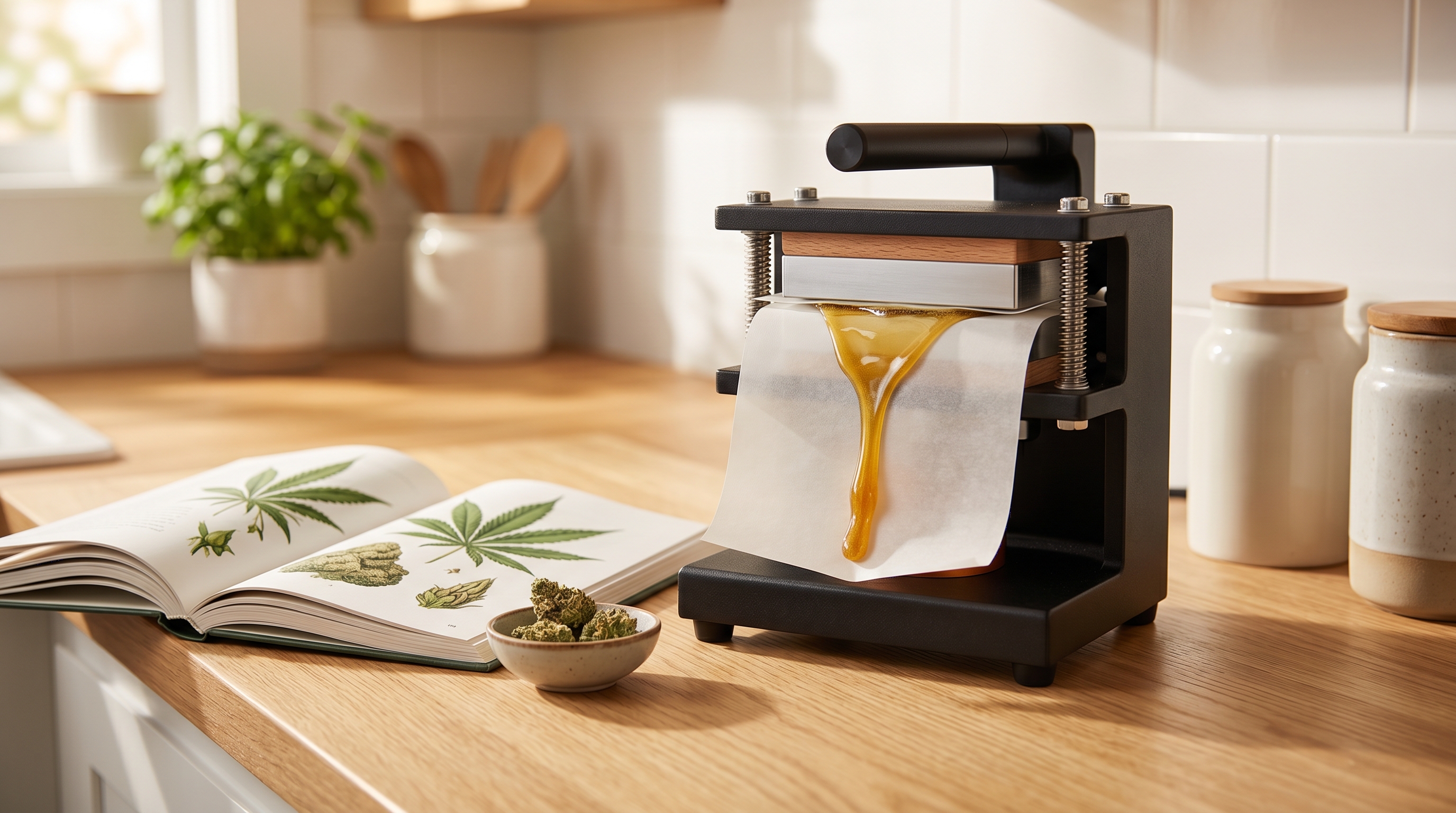
What a rosin press actually does
Rosin is dead simple in concept: heat plus pressure squeezes the oily, trichome-rich resin out of cannabis. No butane, no propane, no solvents to purge. That’s why it sits at the top of the solventless category and why so many people prefer it for dabbing.
A press is really just three systems bolted together:
- A force source — manual, hydraulic, pneumatic, or electric — that squeezes the plates together.
- Heated plates — usually aluminum, held at a precise temperature by PID controllers.
- A frame — the steel skeleton that resists all that force without flexing.
Everything else (gauges, drip channels, app integration) is convenience. Get those three core systems right and you’ll make good rosin. Get them wrong and no amount of expensive flower will save you. If you want the full hands-on walkthrough, our DIY rosin guide covers technique step by step.
Press types compared: manual, hydraulic, pneumatic, electric
The force source is the single biggest decision you’ll make. Here’s how the four types actually stack up for home use.
| Type | How it works | Price range | Best for |
|---|---|---|---|
| Manual | Lever or screw, your arm supplies force | ~$95-$300 | Tiny batches, learning, portability |
| Hydraulic | Bottle jack or hand pump multiplies force | ~$350-$1,000 | The home-use sweet spot |
| Electric / hybrid | Motor builds pressure automatically | ~$400-$3,700+ | Repeatability, no pumping |
| Pneumatic | Air compressor drives the ram | ~$1,500-$6,000+ | Commercial volume only |
Manual presses are the cheapest way in. A clamp-style press or a small lever unit can be had for around $95-$250. They’re quiet, portable, and require no power for the pressing mechanism. The catch: you supply the muscle, holding consistent pressure is genuinely hard, and most top out at 2 tons or less. Fine for a 3.5-5g personal batch, frustrating for anything more.
Hydraulic presses are where most serious home users land, and for good reason. A bottle jack or hand pump turns your effort into real tonnage — typically 4 to 12 tons — with a smooth, controllable ramp. That slow, linear pressure build is exactly what keeps your bag from blowing out. Expect roughly $350-$1,000 depending on plate size and tonnage.
Electric and hybrid presses automate the squeeze. A motor builds pressure to a target and holds it, removing the batch-to-batch variation that comes from your tired arm. Hybrids like the Dulytek DW8000 pair electric pressure with hydraulic components for professional consistency at a more reachable price. You pay for that convenience, though — fully electric units start around $400 for tiny ones and climb past $3,700 for serious machines.
Pneumatic presses run on compressed air and are built for commercial throughput. Skip them. They cost thousands, demand a separate (and loud) air compressor, and several manufacturers have actually retired their pneumatic lines because air pressure hits the bag instantly — that sudden shock causes blowouts. Unless you’re running a licensed lab, this is the wrong tool.
Professor High’s rule of thumb: For 90% of home pressers, a 4-10 ton hydraulic press with a pressure gauge is the right buy. Manual if you’re testing the waters on a budget; electric only once repeatability matters more than money.
The specs that actually matter
Plate size beats tonnage
This is the most misunderstood spec in rosin, so read it twice: more tons is not better. What matters is PSI — pounds of pressure per square inch on your material.
Here’s the math. PSI on the plates equals (tonnage × 2,000) ÷ plate contact area in square inches. A 12-ton press with big 4”×7” plates spreads its force over 28 square inches. A 10-ton press with 3”×5” plates packs the same kind of force into just 15 square inches. So it actually hits a higher PSI on your material. Reviewers have watched buyers overspend by 40% chasing tonnage when their real constraint was plate size.
For flower rosin you want roughly 600-1,000 PSI at the plates; hash and kief press cleaner at a gentler 300-700 PSI. Match plates to how much you press:
| Plate size | Contact area | Flower per press | Best for |
|---|---|---|---|
| 2”×3” | 6 sq in | 3-7g | Personal use |
| 3”×5” | 15 sq in | 7-14g | Hobbyist sweet spot |
| 4”×7” | 28 sq in | 14-28g | Semi-pro |
For nearly all home users, 3”×5” plates are the practical sweet spot — enough area for a real batch, small enough to hit good PSI without enormous tonnage.
Force and the tonnage-vs-reality gap
Two warnings on force. First, many cheap 12-ton presses really deliver only 8-9 tons before the ram runs out of travel. The rating is optimistic. Second, a built-in pressure gauge is worth paying for. It’s the only way to know what you’re actually applying and to repeat a good press. A press you run “by feel” gives you results you can’t replicate.
Temperature control is non-negotiable
Heat is where flavor and yield fight each other. Cooler presses (around 160-190°F) preserve far more terpenes and produce lighter, sappier rosin; hotter presses (200-220°F) push more yield but degrade those aromatics and run darker. One study-backed reference point: pressing near 165°F instead of 200°F can preserve roughly 30% more terpenes at comparable yield from quality material.
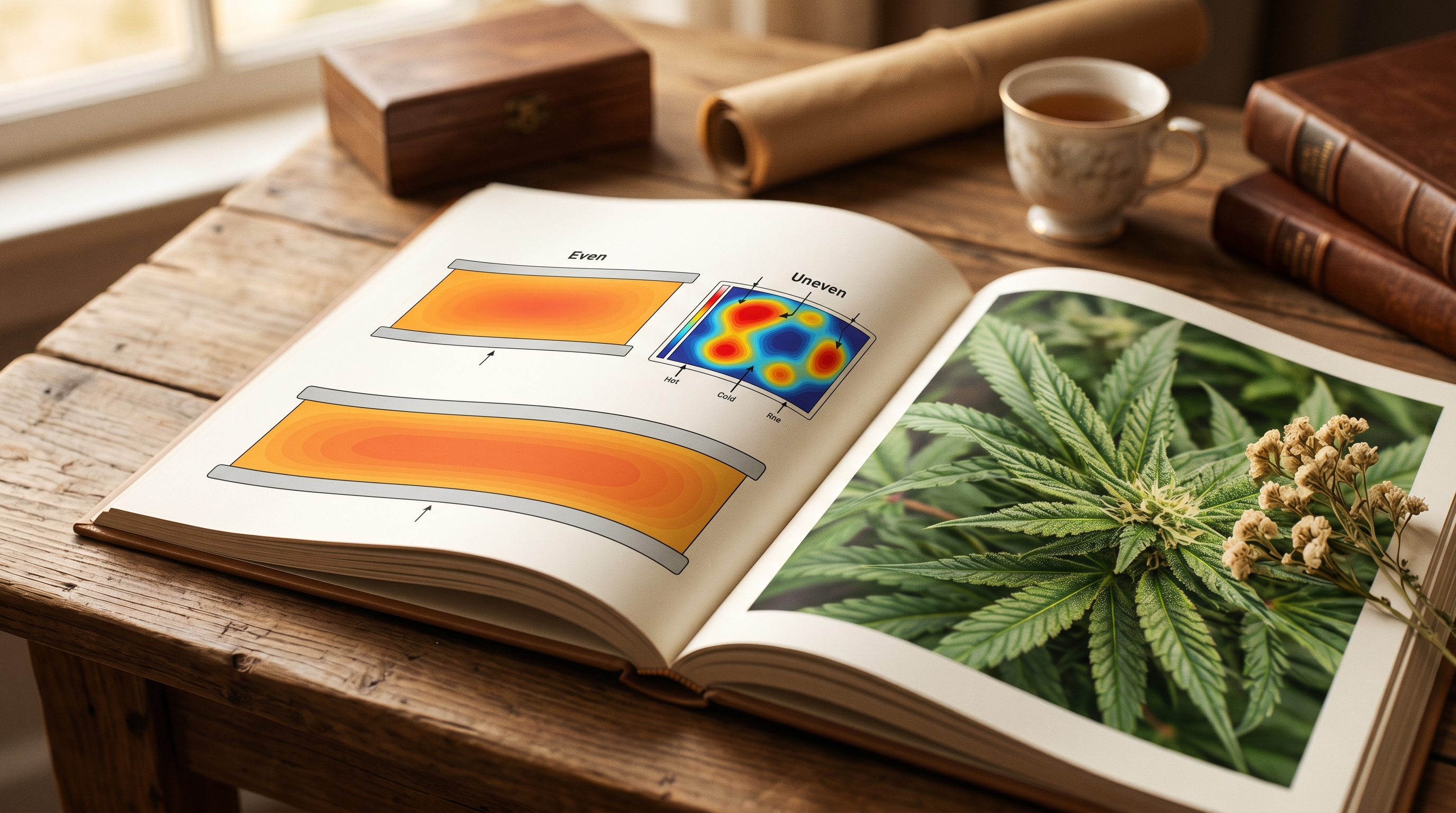
What you’re really buying is plate uniformity. Quality plates hold within about ±2°F across the surface; cheap plates can vary 10-15°F, scorching one edge while under-extracting the other. If you press hash rosin, insist on dual, independently controlled plates — a top plate running 8°F hotter than the bottom will wreck a delicate hash run.
Bags, micron, and material
Your press is only half the system. Rosin bags (nylon micron filter bags) keep plant material out of your final oil, and choosing the right mesh is a quality-vs-yield trade-off.
| Micron | Best for | Trade-off |
|---|---|---|
| 25-37µ | Premium hash, dry sift | Cleanest, slight yield restriction |
| 90µ | Flower rosin | Clean, balanced |
| 120µ | Flower, max yield | More yield, darker, more plant taste |
| 160µ | Trim, low-grade | Permissive, green-tinted, edibles only |
The rule: 90-120µ for flower, 25-37µ for hash and kief. Lower micron filters more aggressively for cleaner, lighter rosin but can leave a few percent of yield trapped in the puck; higher micron passes more oil and more waxes. A finer-than-needed bag is also a top cause of blowouts because the mesh resists flow and pressure spikes.
A few accessories punch above their weight: a pre-press mold to make a uniform, air-free puck, a 0.01g scale to track yield, unbleached parchment (never wax paper), and a silicone mat so drips don’t escape your workspace. If you’re building a full kit from scratch, our cannabis gear guide maps out the whole bench.
Yield expectations: the honest numbers
Let’s set expectations so you’re not disappointed. Yield is expressed as grams of rosin per 100g of input, and it’s driven by your starting material far more than your press.
| Starting material | Typical yield |
|---|---|
| Mids / older flower | 8-15% |
| Top-shelf cured flower | 15-25% |
| Quality dry sift / kief | 40-65% |
| 5-6 star bubble hash | 50-75% |
A realistic first press on average flower lands around 10-15%. Once you dial in moisture (condition flower to ~58-62% RH), temperature, and press time, quality fresh flower climbs into the 15-22% range. The reason hash and kief yield so much higher is simple — they’re already mostly trichome heads, so there’s far less plant fiber soaking up nothing.
Two myths to bury. More pressure does not mean more yield past a threshold; beyond it you just risk blowouts. And pressing is not a money-saver at first — good flower costs about what dispensary flower costs, and a press is $200-$600 up front. What you’re actually buying is control: you know exactly what went into your concentrate and you can tune every variable. For where rosin fits against other concentrates, see rosin vs distillate and the hash, wax, and shatter comparison.
Price tiers and top picks
Prices below are approximate and shift constantly — verify before you buy. These are illustrative of each tier, not endorsements.
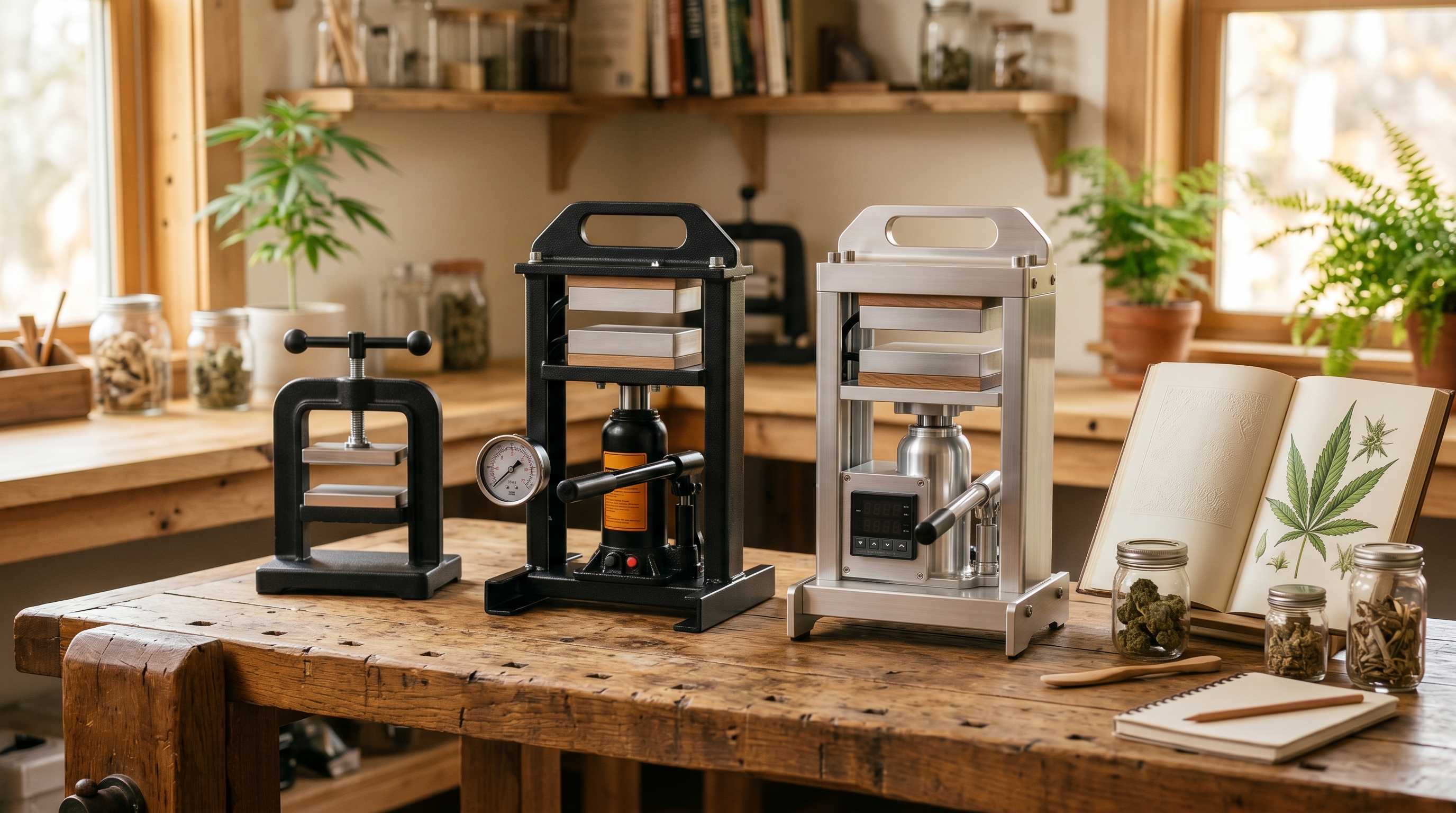
DIY / under $200 — testing the waters. A flat-iron hair straightener costs nothing extra if you own one and proves the concept on a single nug (full method in our DIY guide). A step up is a 12-ton shop press (around $50-$80) plus separate heated plates and a PID controller — the classic budget build at roughly $100-$150. Clamp-style manual presses like the Ju1ceBox sit around $95. Expect effort and inconsistency, but it’s real rosin.
$200-$500 — the home enthusiast tier. This is where most people should buy. The NugSmasher Mini ($409, 2-ton, 2.5”×2.5” plates, lifetime frame warranty) is a beloved integrated starter for 3.5-5g sessions. The DabPress 4-Ton ($379-$429) delivers twice the tonnage and bigger plates for similar money if you don’t mind sourcing a bottle jack. The RosinBomb Rocket (~$450-$479) is the push-button electric pick for people who hate pumping — about 1,500 lbs of force and 3.2”×2.8” plates with zero arm strength required.
$450-$1,000 — the quality seeker. The DabPress 10-Ton Driptech ($459) is the value champion here: 10 tons, 3”×5” plates, and an angled “Driptech” design that channels rosin off the plates for cleaner collection. The Dulytek DHP7 ($489-$549) earns praise because its dual plates genuinely hold within 2-3°F of each other — a real advantage for hash rosin. Step up to a Rosineer Mighty-10 (~$669) and you get a built-in pressure meter for repeatable runs.
$1,000+ — prosumer and beyond. The NugSmasher XP 12-Ton ($989) handles 7-28g loads with a pressure gauge. Fully electric automation like the NugSmasher IQ ($3,749) only makes sense if you press constantly and want documented, hands-off repeatability. Above that you’re into commercial territory most home users will never need.
The DIY entry point
If you’re not sure you’ll stick with it, don’t buy a press at all yet. Wrap a single small, well-cured nug in folded parchment, set a hair straightener to its lowest setting, and squeeze hard with both hands for a few seconds until you see oil bleed out. You’ll get a smear of real rosin and a perfect feel for the heat-pressure-time relationship.
It’s messy, low-yield, and you can’t control temperature precisely — but it costs nothing and answers the only question that matters: do I enjoy this enough to invest? If yes, jump straight to a 4-10 ton hydraulic with a gauge and skip the regret of an underpowered first buy.
Frequently asked questions
Do I really need rosin bags? For flower they’re strongly recommended — they filter out plant material for cleaner, lighter rosin. For hash and kief they’re essential. You can press flower bagless, but expect a darker, harsher product.
What temperature should I start at? Around 185-195°F is a balanced starting point for flower. Go cooler (160-190°F) to preserve terpenes and flavor, hotter (200-220°F) for maximum yield on older material.
How much force do I need? Less than the marketing implies. A 4-6 ton press with 3”×5” plates is plenty for flower; you only need 10-12+ tons for larger plates or high-volume hash runs. PSI on the material, not raw tonnage, is the spec that counts.
Is a press cheaper than buying concentrate? Not at first — factor in the press and good flower. The payoff is control and quality, and the savings come later if you press regularly. Compare your options in flower vs edibles vs concentrates.
What’s the single most common beginner mistake? Overpacking the bag and slamming to full pressure instantly. Load bags to ~85% capacity and ramp pressure gradually over the first 30-60 seconds.
Key takeaways
Buying a rosin press well comes down to three numbers and one habit. Get plate size right (3”×5” for most homes). Respect PSI over tonnage (aim for 600-1,000 PSI on flower). Insist on even, dual-controlled heat. And track every press in a log so you can repeat your wins. The High IQ app makes that last part easy. Log each batch next to the strain and its terpene profile, and you learn which flower actually rewards your effort. The press matters less than the data you build about your own material.
Sources
- DabPress — Rosin Press Buying Guide. https://www.dabpress.com/pages/rosin-press-buying-guide
- Trimleaf — Best Rosin Press 2026: Top Picks for Every Budget. https://trimleaf.com/blogs/guides/ultimate-rosin-press-buying-guide
- Trimleaf — NugSmasher vs DabPress and NugSmasher Pricing Guide. https://trimleaf.com/blogs/guides/nugsmasher-vs-dabpress
- Trimleaf — Rosin Yield Optimization: Temperature, Micron, and Prep Tips. https://trimleaf.com/blogs/guides/rosin-yield-optimization
- Lowtemp Plates — The Best Rosin Presses of 2026. https://www.lowtemp-plates.com/blogs/knowledge/the-best-rosin-presses-of-2026
- PhenoDB — Rosin Pressing Guide (temperature and micron data). https://phenodb.eu/rosin-pressing-guide
- Camouflet — Rosin Press Guide: DIY, Buying & Technique (PSI math). https://camouflet.com/blogs/vaporizer-guide/rosin-press-guide
- Forza Solventless — How to Use a Rosin Press for Best Quality & Yield. https://www.forzasolventless.com/blogs/articles/how-to-use-rosin-press


