Hash vs Wax vs Shatter: Choosing Your Concentrate
Hash, wax, and shatter compared on potency, terpenes, texture, price, and ease of use—so you can pick the right cannabis concentrate with confidence.

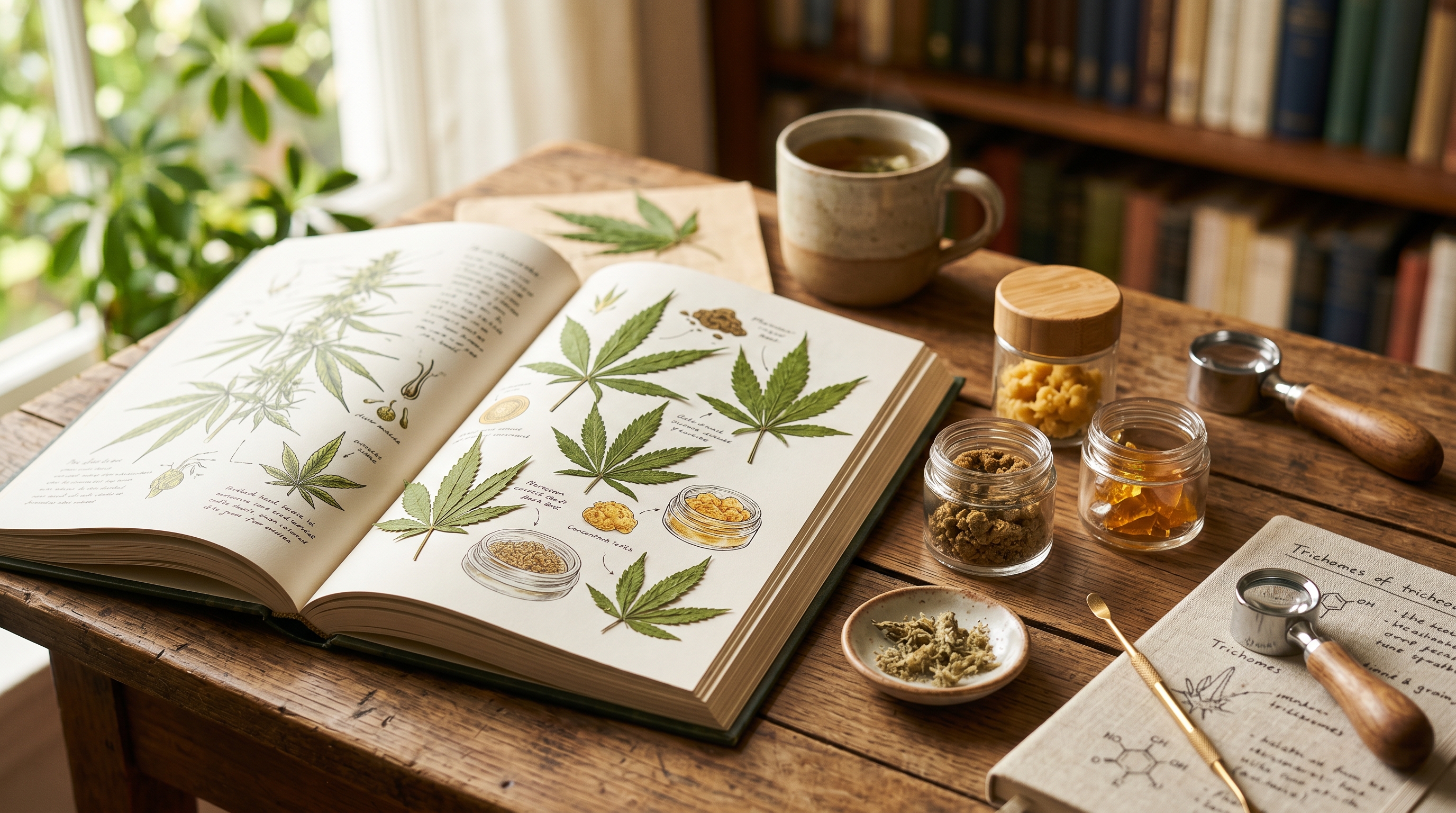
Walk up to any dispensary concentrate menu. You will see a wall of golden, glassy, and sticky little jars. The prices make flower look cheap. Three names show up again and again: hash, wax, and shatter. They all promise more punch per puff than a bowl of buds. And they all look a bit like amber candy. So what actually sets them apart?
Here is the short version. The biggest divide is not texture or even potency. It is how the trichomes get pulled off the plant. Hash uses only physical force. Wax and shatter use a chemical solvent. Everything else flows from that one choice: the snap, the crumble, the THC number, the price. Let me walk you through it. Picture us standing at the counter together.
The criteria that actually matter
First, let’s agree on what we are grading them on. People often ask me to “just tell me which is best.” I push back. Best depends on what you value most. Here are the five levers:
- Potency — how much THC (and total cannabinoids) by weight.
- Terpenes — the aromatic compounds that shape flavor and the character of the high. (New to these? Start with my cannabis terpenes guide.)
- Texture & handling — how easy it is to scoop, dose, and not waste.
- Price — dollars per gram at the dispensary.
- Ease of use — whether you need a dab rig and a torch, or just a rolling paper.
Keep those five in mind. Everything below is just these levers pulled in different directions.
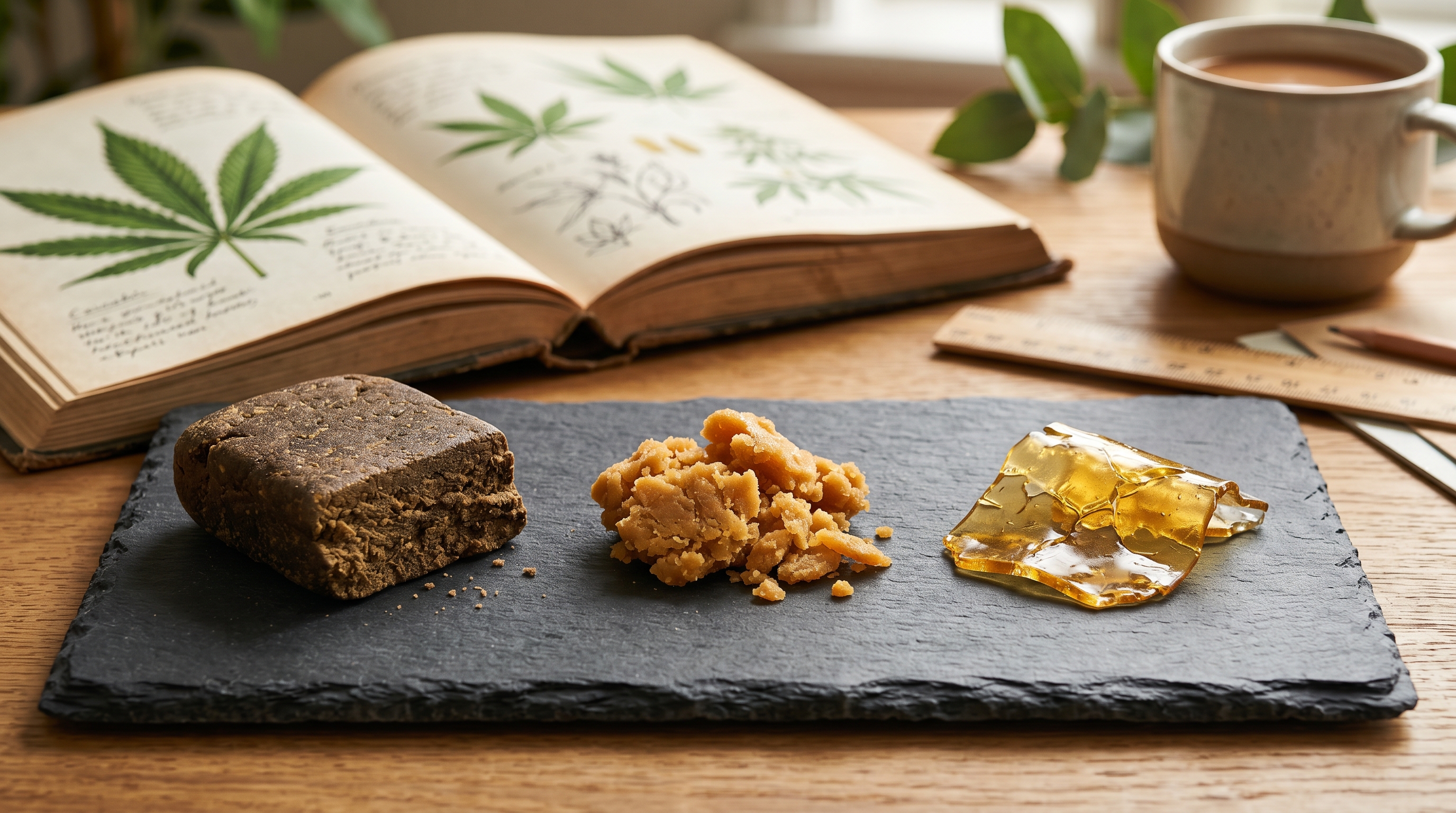
What is hash?
Hash (short for hashish) is the original cannabis concentrate. It predates every other product in this article by centuries. Historical records show concentrated cannabis resin used across Central Asia, North Africa, and the Middle East for well over a thousand years [UNODC, 2023].
The idea is simple. Cannabis potency lives in the trichomes. Those are the frosty resin glands that coat the flower. Hash is just those trichomes pulled off the plant by physical means and pressed together. No chemistry set needed. The classic methods are:
- Dry sift (kief): Flower is sifted over fine screens. The loose trichome powder is then collected and often pressed. Want the deep dive? See bubble hash vs kief vs dry sift.
- Hand-rubbing (charas): Resin is rubbed off live plants by hand.
- Ice water hash (bubble hash): Frozen flower is stirred in ice water. The brittle trichome heads snap off, then get filtered through micron bags. Want to try it? I wrote a full walkthrough on how to make bubble hash.
No solvent touches it. So hash is the original solventless concentrate. Potency varies a lot by grade. Low-grade brick hash can sit at 20–40% THC. Top-shelf “six-star” full-melt bubble hash reaches roughly 50–70%. The reward for that lower ceiling is flavor. You get an intact terpene profile and a full-spectrum experience. You consume whole trichome heads, cannabinoids and terpenes together. That feeds the entourage effect. Do terpenes really change the high? My piece on terpene synergy explains why blends tend to beat single compounds.
There is one more big perk. You don’t need a dab rig. Crumble hash into a joint or onto a bowl. That’s it.
What is wax?
Now we cross over to the solvent side. Wax is a butane hash oil (BHO) product. Cannabis is packed into a column and flooded with a solvent. That solvent is usually butane, sometimes propane (PHO) or CO₂. It strips the cannabinoids and terpenes off the plant. The solution is then purged in a vacuum oven. That removes the solvent and leaves a concentrated oil.
So what makes it wax and not something else? It’s the next step. The oil is whipped or stirred during the purge. That adds air and breaks up the structure. The result is an opaque, soft, crumbly texture. Drier whipping gives you crumble. Gentler, cooler handling gives you the creamy “budder” version.
- Potency: Usually 60–80% THC, sometimes higher.
- Terpenes: The whipping happens at lower heat. So wax usually keeps more terpenes than shatter from the same flower.
- Handling: This is wax’s superpower. It scoops cleanly onto a dab tool. No chasing a sticky blob. No chipping a glass shard. That’s why budtenders so often steer new dabbers toward wax or budder.
The catch is shelf life. Wax has a looser structure, so terpenes escape faster and it doesn’t keep as long. You also need a dab rig and a heat source to use it well.
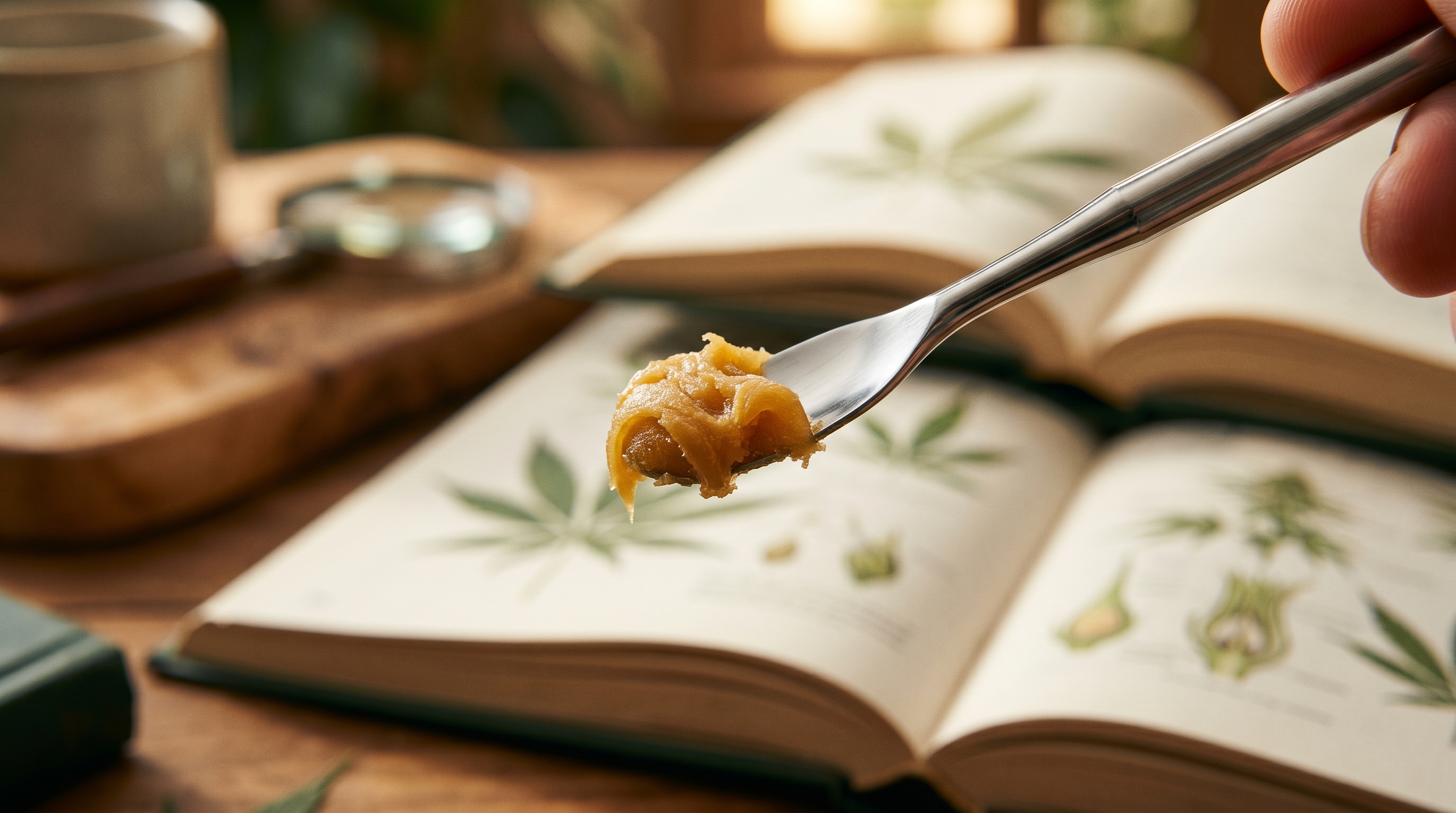
What is shatter?
Shatter starts from the exact same BHO extraction as wax. The only difference is the purge. The oil is not whipped. It is left fully still while the solvent is pulled out under heat and vacuum. With no stirring, the molecules settle into a tight, neat structure. That’s what creates the clear, glass-like sheet. Think of whisking egg whites into foam versus letting them settle flat.
- Potency: Often the highest of the three, commonly 70–90% THC.
- Terpenes: Usually the lowest of the three. That clear sheet needs higher, steadier heat. The heat cooks off some of the delicate aroma compounds.
- Handling: This is shatter’s weak spot. It snaps in odd ways. It sticks to tools. It can be fiddly. It is also often the cheapest per gram, since the process scales well.
So shatter is the purity-and-price play. You get max THC for your dollar. You trade away some flavor and easy handling. Brand new to dabbing? Read dabbing 101 before you light a torch.
Solvent vs solventless: the real dividing line
Here is the framework that makes the whole menu make sense. Forget the texture names for a moment. Sort everything into two buckets:
Solventless (hash, bubble hash, kief, rosin) uses only heat, pressure, ice, and force. There is nothing to purge and no leftover chemicals. The trichomes also stay closer to intact. That tends to keep a fuller, more true-to-strain terpene profile [Livingston et al., 2021]. The trade-off is efficiency. Physical methods pull fewer cannabinoids. So potency ceilings are lower and yields are smaller. That is why solventless often costs more per gram.
Solvent-based (wax, shatter, budder, crumble, and premium live resin) uses butane, propane, CO₂, or ethanol. Solvents are far better at stripping cannabinoids. So these products test higher in THC. They also yield more per gram of flower. The trade-off is the purge. Any solvent must be removed below legal limits. That is why lab-tested, regulated products matter so much here. Good producers publish a Certificate of Analysis. It covers both cannabinoids and leftover solvents. Always look for it.
Neither bucket is truly “better.” A clean six-star bubble hash can be great. A well-purged live resin can be great too. A sloppy version of either can let you down. The split just tells you what you value. Solventless means purity and flavor. Solvent-based means potency and price. For a wider tour, see the complete guide to cannabis concentrates. Weighing the most refined extremes? Rosin vs distillate is a good companion read.
Side-by-side comparison
| Criterion | Hash | Wax | Shatter |
|---|---|---|---|
| Extraction | Solventless (sift, ice water, press) | Solvent (BHO, whipped) | Solvent (BHO, undisturbed purge) |
| Typical THC | ~20–70% | ~60–80% | ~70–90% |
| Terpenes | Moderate to excellent (fresh bubble hash shines) | Good — better than shatter | Lower — purge cooks off volatiles |
| Texture | Brick, sandy, or pliable | Soft, crumbly, scoopable | Hard, glassy, brittle |
| Price per gram | Wide range (~$10–$60+) | Mid (~$20–$40) | Often cheapest (~$15–$30) |
| Ease of use | Easiest — no rig needed | Easy to dose, needs a rig | Trickiest to handle |
| Best for | Beginners, purists, flavor | All-around dabbers | Budget potency seekers |
Treat these ranges as guidance, not gospel. A single producer’s quality, freshness, and starting flower matter more than the label on the jar.
Which one is right for you?
Choose hash if you are new to concentrates. Or if you don’t own a rig. Or if you care most about flavor and a fuller-spectrum high. Crumble it into a joint and you’ve upgraded your flower with zero gear. It’s also my pick for anyone easing in without the punch of a 90% dab.
Choose wax if you want a true dab but value easy handling and solid flavor. It is the dependable all-rounder. It’s potent enough to matter. It’s easy enough to dose. And it’s flavorful enough to enjoy. Pair it with the right kit using my vaporizer buyer’s guide or an e-nail setup.
Choose shatter if you want max THC per dollar. You should also be fine with fussy handling and a flatter flavor. It’s the value pick for seasoned dabbers chasing potency.
Still not sure concentrates are your lane? My breakdown of flower vs edibles vs concentrates zooms out. Beginners should also bookmark the cannabis gear guide and how to build the perfect toolkit.
A note on potency, dosing, and safety
These products are strong. A pea-sized dab can carry more THC than a whole joint. And the onset is nearly instant. Research on cannabis use suggests that very high-THC products may raise the risk of short-term side effects [Freeman et al., 2021]. Those can include anxiety, a racing heart, or a greenout. The risk seems higher for newer or lower-tolerance users. So the old rule applies double here: start low, go slow. This isn’t medical advice. It’s just harm reduction. Managing tolerance? My tolerance break guide and dosing chart are worth a look. And when to increase your dose (and when not to) covers the close calls.
The most important variable isn’t the label on the jar. It’s how your body answers a given terpene and cannabinoid profile. That’s the kind of pattern High IQ helps you track over time. So you can stop guessing and start seeing what actually works for you.
Key Takeaways
There is no universal winner. Anyone who says otherwise is selling something. Hash wins on flavor, tradition, and ease. You need no gear at all. Wax is the best balance of potency, flavor, and easy handling. It is the smart default for most dabbers. Shatter gives you the most THC for the lowest price. You just have to tolerate its quirks.
So pick the lever that matters most to you. Is it purity? Potency? Flavor? Price? Or convenience? Once you know, the right concentrate almost picks itself.
FAQ
Is shatter stronger than hash? Usually yes, by THC percentage. Shatter often tests 70–90%. Hash runs about 20–70%. But many people find hash gives a more rounded high. It keeps the whole trichome’s cannabinoids and terpenes together.
Do I need a dab rig for all three? No. Wax and shatter are built for dabbing or vaping. They want a rig. Hash is the flexible one. You can crumble it into a joint or bowl, or vape it, with no special gear.
Which has the best flavor? Solventless types like fresh bubble hash keep terpenes best. So fans often rate hash and live rosin highest for flavor. Among the solvent types, wax usually beats shatter. The cooler whipping keeps more aroma.
Why is shatter often the cheapest? The still purge is efficient and scales well. So it costs less to make in volume. You trade some terpene richness for that lower price.
Are these safe to make at home? Solventless methods like ice water hash and rosin are home-friendly. But BHO (wax and shatter) with butane is truly dangerous. Open blasting has caused fires and serious injuries. Leave it to licensed labs with closed-loop systems.
Sources
- ZenWeedGuide — Hash vs. Wax (Dabs): Cannabis Concentrates Compared — https://zenweedguide.com/compare/hash-vs-wax/
- Green Rush News — Cannabis Concentrates Explained: Shatter, Wax, Live Resin, Rosin, Diamonds — https://greenrushnews.com/articles/cannabis-concentrate-types-explained/
- BulkCannabis — Solventless Cannabis Concentrates: Complete Guide (2026) — https://www.bulkcannabis.cc/solventless-cannabis-concentrates-a-guide-to-pure-extraction-methods/
- Cannabis Training University — Butane Hash Oil (BHO) Extraction: The Complete Guide — https://cannabistraininguniversity.com/cannabis-101/bho-butane-hash-oil/
- Forza Solventless — What Is Bubble Hash? Benefits, Uses, and Comparisons — https://www.forzasolventless.com/blogs/articles/what-is-bubble-hash
- PhenoDB — Hash and Solventless Guide — https://phenodb.eu/hash-guide
- Livingston et al. (2021) — Cannabis glandular trichomes: a cellular metabolite factory — PubMed: https://pubmed.ncbi.nlm.nih.gov/33231349/
- Freeman et al. (2021) — Changes in cannabis potency and first-time admissions to drug treatment — Lancet Psychiatry / PubMed: https://pubmed.ncbi.nlm.nih.gov/30528768/


