
Strain experience guide
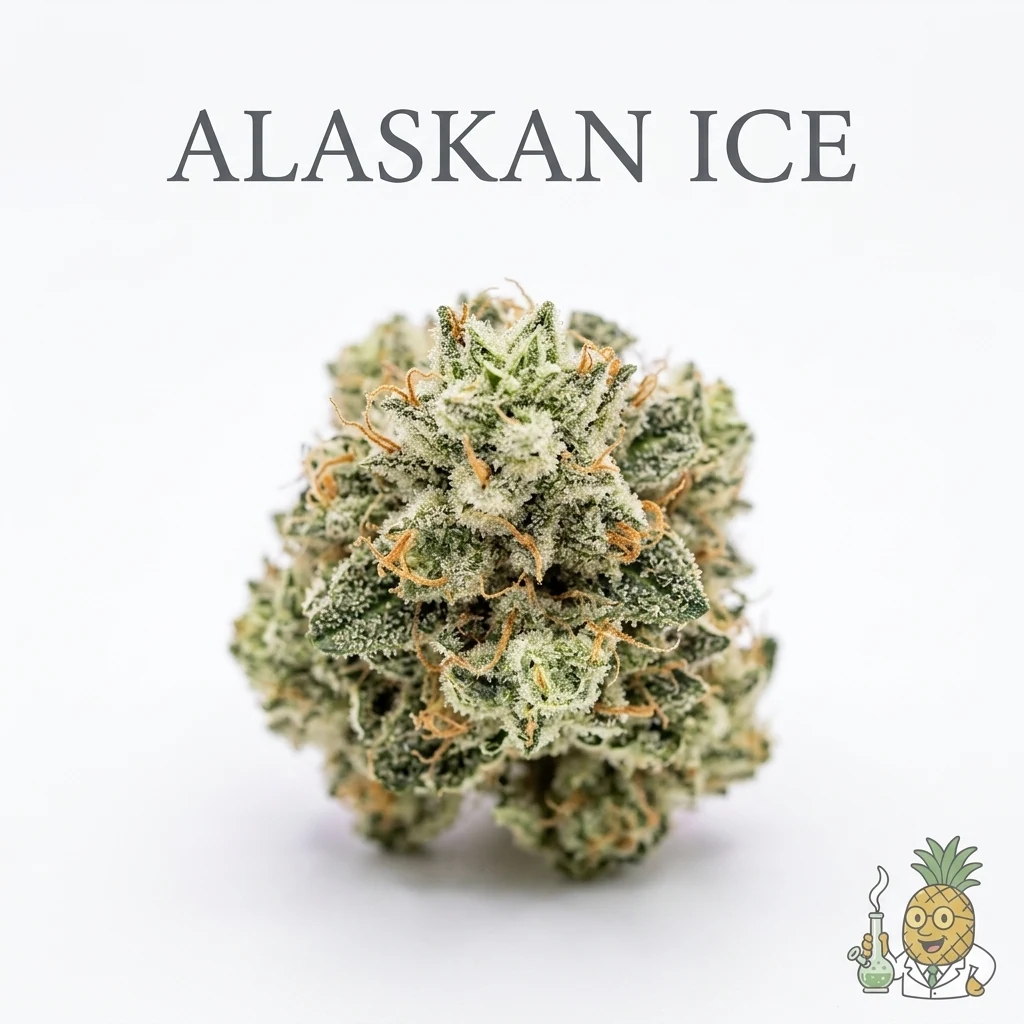
Alaskan Ice Strain
Also known as Aic
Alaskan Ice is a sativa-dominant hybrid (about 70% Sativa / 30% Indica) bred by Green House Seeds from White Widow and Haze. It is reported to deliver an euphoric, uplifted, talkative and focused head high with a gentle relaxed edge. Its lab-tested terpene profile leans on linalool, with spicy, earthy, citrus and pine notes. It suits daytime creativity and conversation. Dry mouth and dry eyes are common, and a few users report anxiety. Read more Show less
- Type
- Sativa-Dominant Hybrid
- Typical THC
- about 17% reported 9.6–24% Batches vary — check the label
- Top effects
- Euphoric, Uplifted, Happy
- Lead terpene
- Linalool
- Flavors
- Spicy, Earthy, Herbal
Quick Hits
What kind of high is Alaskan Ice?
A sativa-dominant hybrid reported as euphoric, uplifted and happy. Picked for brainstorming and walking in the morning. The profile features herbal pine flavor, sweet pine aroma and linalool as the lead terpene.
Terpenes are natural compounds that give cannabis its smell. Compare citrus, pine, and earthy notes to find what you like. They are clues, not a promise of how it feels.
Terpene percentages belong to the jar, not the strain. They move with harvest timing, drying, cure and shelf age — the lighter ones literally evaporate. What holds steady is which terpenes lead, so that is what we rank.
Research associations
- Calming
- Anti anxiety
- Sedative
General terpene associations, not effects confirmed for this strain. Evidence varies.
Ordered by measured share — the exact percentages shift with every batch and cure.
Activities people report choosing this strain for.
See the full list →The smell people describe for this strain.
See the full profile →- Spicy
- Earthy
The reported taste, first to last. The batch and how you consume it can change it.
See the full profile →- Spicy
- Earthy
- Best Time Morning
- Era 1995
- Rarity Common
Genetics Sativa-Dominant Hybrid Lineage is a guide, not a reliable predictor of the high.
Potency Check the label, not the strain Varies by batch, grower and harvest — check the label on the product you are buying. Scan your label → Reported ranges →
Heads up Reported: dry mouth and dry eyes. Responses vary. Review safety →
In short
Alaskan Ice quick answers
What are the effects of Alaskan Ice?
Alaskan Ice is a sativa strain known for euphoric, uplifted, happy, energetic and relaxed effects. It is best enjoyed during the morning.
What does Alaskan Ice taste and smell like?
Alaskan Ice has aromas of spicy, earthy, pine and citrus and flavors of spicy, earthy and herbal. Its dominant terpene is Linalool.
Is Alaskan Ice indica or sativa?
Alaskan Ice is a sativa (70% Sativa / 30% Indica) cannabis strain, classified as an Uplifting High strain. It is a cross between White Widow and Haze, bred by Green House Seeds.
How strong is Alaskan Ice?
Alaskan Ice is usually 9.6–24% THC. THC levels vary with growing conditions and the phenotype.
What terpenes are in Alaskan Ice?
The dominant terpene in Alaskan Ice is Linalool. Other notable terpenes include Humulene, Myrcene, Caryophyllene.
When is the best time to use Alaskan Ice?
Alaskan Ice is best enjoyed during the morning. People often choose it for staying active and focused.
Worth knowing
Alaskan Ice effects and experience
The memorable details
- Sativa-dominant White Widow x Haze cross from Green House Seeds
- Euphoric, uplifted, talkative head high with focus and creative spark
- Lab-tested profile led by linalool alongside humulene and myrcene
- Daytime pick; dry mouth and dry eyes are the most common side effects
Explore the full profile Complete experience record
Mind, body, and energy
Activities people choose it for
Reported uses
Reported Use Sources
11 verified sources
What people report, not medical advice: These are uses that growers, reviewers and consumers report for this strain, gathered from the sources above and summarized by AI. They are not measured results, clinical findings or treatment guidance. Cannabis affects everyone differently. Talk to a healthcare professional before you use cannabis for a health condition, and do not use it if you are pregnant or nursing.
Mental Effects
- •Stress Relief
Reported to ease everyday stress and tension
- •Anxiety Relief
Reported to help calm anxious feelings
- •Depression Support
Reported to lift low mood and encourage positivity
- •Social Anxiety Relief
Reported to ease nervousness in social situations
- •PTSD Symptom Relief
Reported use for post-traumatic stress symptoms
- •Psychiatric Symptom Relief
Reported use for general psychiatric symptoms

Professor High visualization
Body Effects
- •Pain Management
Reported to ease various types of pain
- •Nausea Relief
Reported to reduce nausea and vomiting
- •Appetite Stimulation
Reported to help with poor or lost appetite
- •Fatigue Relief
Reported to counter tiredness with energizing effects
- •Inflammation Reduction
Reported to help with inflammation
- •Tinnitus and PMS Relief
Reported use for tinnitus and PMS symptoms
Alaskan Ice side effects and safer use
Keep listening Music neighborhood
Sound neighborhood
Follow Alaskan Ice into Uplifting High music.
This Is Why I'm High classifies this strain within the Uplifting High chemistry pattern. Separately, our editorial music map associates the same family with these sounds. It is a creative bridge—not a prediction or artist endorsement.



Open the jar
Alaskan Ice aroma, flavor, and terpenes
High Print
Alaskan Ice's High Print
Alaskan Ice's High Print is linalool-led: four round lobes, a floral note at 62% of the mix. Then humulene and myrcene.
- Measured
- Not lab tested
Three or more terpenes have amounts, so the outline is solid.
How to read it
- The outline
- The loudest terpenes cut the edge. Each terpene has its own number of lobes, so five round lobes always mean limonene.
- The ring of dots
- Twelve dots sit in the same place on every print. A bigger dot means that terpene is louder in the mix.
- The fine lines
- These show the whole mix at once, like sand settling on a plate that plays a chord.
- Solid, dashed or dotted
- Solid means measured. Dashed means partly measured. Dotted and hollow means an estimate.
- What it is not
- A print shows chemistry only. It does not show strength, and it does not predict how you will feel.
Look closer Full sensory specimen
Aroma and flavor
Alaskan Ice terpene profile
Appearance
Batch context Complete cannabinoid record

03 · AI interpretation
Professor High on Alaskan Ice
Okay, notes are open. Within minutes I feel a bright, buoyant lift behind my eyes, like someone cleaned the windows of my thinking. The euphoria is quick and clean, and my thoughts start linking up fast, so I'm jotting ideas down and wanting to talk them through with anyone nearby. There's a gentle relaxation in my shoulders, which is a nice contrast to the busy, energized head. That fits a Haze-leaning cross with 30% indica influence. The lab data shows a lot of linalool, a floral, calming terpene, so my guess is it softens the edges of an otherwise zippy ride. The aroma is spicy, earthy and piney with a citrus flicker. The one caution: my mind is moving quickly, and I can see how this might feel spacy or tip into nervous for someone sensitive. Hydrate, because dry mouth is real. Verdict: a daytime thinker's strain.
Read this as an interpretation of the profile—not clinical advice, a product rating, or a guarantee.
Learn more with AI
Open your assistant with a ready-made prompt about Alaskan Ice.
- Ask ChatGPT Opens with the prompt filled in
- Ask Claude Opens with the prompt filled in
- Ask Gemini Copies the prompt to paste in
- Ask Grok Opens with the prompt filled in
- Ask Perplexity Opens with the prompt filled in
We copy the prompt to your clipboard as you go, so you can paste it if the assistant opens with an empty box. Answers come from the assistant, not from us — always double-check them against this page.
Go deeper
The story of Alaskan Ice
Practical guide How people use it
Where it comes from Origins and lineage
On the record Awards and recognition
Watch Reviews and videos
Strain reviews and videos
Finding strain review videos...
Keep exploring Similar strains


Related profiles
Popular profiles near Alaskan Ice, with strain type and chemistry context.


More sativa profiles
Other sativa profiles to compare with Alaskan Ice.
Terpene neighbors
Other profiles led by Linalool.


Compare Alaskan Ice with…
See chemistry, reported effects and terpenes side by side.


Follow us on social media
New strain profiles and terpene breakdowns as they publish.
Evidence and limits
Alaskan Ice research and sources
This profile assembles public facts in original language, links its supporting sources, and keeps gaps or disagreements visible. It is research provenance—not product or lab certification.
- Linked sources
- 13
- Sourced sections
- 9
- Claims under review
- 104
- Profile updated
- Nov 27, 2026
Research Edition Current profile edition
Updated November 27, 2026 · 9 profile areas with section-level sourcing Featured research profile
This edition records This Is Why I'm High’s synthesis of published information about Alaskan Ice. It describes source-supported patterns and uncertainty; it does not certify genetics, potency, safety, or any product batch.
- Profile sources
- 21
- Research evidence confidence
- 80%
- Edition date
- November 27, 2026
Evidence confidence summarizes source coverage and consistency for this profile synthesis. It is not a product rating, potency score, or guarantee about any batch.
Source coverage in this edition
- Classification 20 sources
- Lineage 17 sources
- Cannabinoids 15 sources
- Terpenes 9 sources
- Reported effects 20 sources
- Aromas 18 sources
- Flavors 16 sources
- Reported medical uses 11 sources
- Awards 1 source
History tracking is active
Material changes are recorded as new editions using factual categories and source metadata. Source article prose and reviews are not copied into the history.
Research context What published research says
Power-user detail Open sources and methodology
Research Methodology
How we compiled this strain profile
This strain profile was compiled from 19 published sources covering 'Alaskan Ice'. Our research pipeline cross-references these sources and reports how strongly they agree — see the confidence breakdown below.
Data Quality by Section
View all 19 sources
- leafly.com (opens in new tab)
https://www.leafly.com/strains/alaskan-ice
- seedfinder.eu (opens in new tab)
https://seedfinder.eu/en/strain-info/alaskan-ice/green-house-seeds
- budvocate.com (opens in new tab)
https://budvocate.com/strains/alaskan-ice/
- leafbuyer.com
- hytiva.com (opens in new tab)
https://www.hytiva.com/strains/hybrid/alaskan-ice
- weedvader.com (opens in new tab)
https://weedvader.com/strains/alaskan-ice
- cannaselection.net (opens in new tab)
https://www.cannaselection.net/en/pages/alaskan-ice
- liwts.org (opens in new tab)
https://www.liwts.org/strain-reviews/alaskan-ice/
- dssgenetics.com
- strainlists.com (opens in new tab)
https://www.strainlists.com/strain/alaskan-ice/
- straincompass.com (opens in new tab)
https://straincompass.com/strains/alaskan-ice
- pineappleexpress.nyc
- ascendancystrains.com (opens in new tab)
https://ascendancystrains.com/alaskan-ice-strain-review
- royalkingseeds.us
- splashbrothersnyc.com (opens in new tab)
https://splashbrothersnyc.com/alaskan-ice-review-a-frosty-sativa-dominant-hybrid-delivering-crisp-citrus-terpenes-energetic-euphoria-and-clear-focus/
- icmag.com (opens in new tab)
https://www.icmag.com/threads/alaskan-ice.222169/
- cannaconnection.com (opens in new tab)
https://www.cannaconnection.com/breeders/greenhouse-seeds
- vgtnyc.com
- sherlocksglass.com
Suggest a Factual Correction
Flag a name, lineage, source, image, or chemistry issue for private editorial review.
Suggest a Factual Correction
Flag a name, lineage, source, image, or chemistry issue for private editorial review.