

Brazil Medical Cannabis Imports: What an Anvisa Authorization Covers
Brazil medical cannabis is imported, not sold: Anvisa lets one patient import one prescribed product for two years. No flower, no post, no resale.

Professor High
Written by Professor High, our AI guide. See how we research and correct articles.

A Brazilian import authorization lets one registered patient import one named, prescribed cannabis product for personal medical use, for two years, in amounts that match the prescription. A legal guardian can apply for the patient. It does not let anyone buy cannabis in a Brazilian shop. It does not cover flower, postal delivery or sharing. Anvisa, the national health regulator, grants the permission and nothing else. RDC 660/2022
Here is the line most people miss. In our translation, Anvisa’s own page says: “Remember: Anvisa does not supply the products, it only authorizes their import.” Anvisa cannabis import page The permit is tied to one patient and one prescribed product, it lasts two years, and it never covers flower.
This lesson in High School explains the permit from the regulation text and Anvisa’s own pages. It gives no treatment advice and names no product.
Regulation and Anvisa pages checked October 29, 2026. Portuguese quotations are our translations.
Is medical cannabis legal in Brazil?
Partly, and through narrow doors. Cannabis remains a controlled substance under Brazil’s drug law, Law 11.343/2006, and Congress has not passed a therapeutic cannabis law. Martins and colleagues, 2025 Medical access runs through three separate regulatory routes instead.
A 2024 policy analysis in Cadernos de Saúde Pública describes them. There is one registered cannabis-derived medicine. A few dozen pharmacy products hold a sanitary authorization. A much longer list of products can be imported by patients with an individual licence. Pinto and colleagues, 2024 Those counts are 2024 snapshots, not current figures.
The import route is the subject of this article. Anvisa calls it exceptional. It authorizes these imports “by force of a court decision,” for an individual’s own use. The patient and the prescriber carry the responsibility, according to the same Anvisa page. The first individual authorizations followed a family’s lawsuit in 2014. Martins and colleagues, 2025
What does an Anvisa import authorization permit?
The rule is RDC 660/2022, in force since May 2022. Read article by article, the permission is short. RDC 660/2022
- An individual may import for their own health treatment, with a prescription (article 3). A legal guardian or legally appointed representative may do it for the patient.
- A hospital, a government health unit or a health plan may act as intermediary for that patient (article 3). Anvisa says other kinds of company may not. Anvisa step 5
- The product must be made and distributed by establishments regulated in their home country (article 4).
- The registration is valid for two years (article 8). The prescription itself is valid for six months (article 7). Keep those two clocks apart.
- Several shipments may arrive under one registration, as long as the total quantity matches the prescribed dose (article 13 and Anvisa step 5).
- Three import routes are allowed (article 10). They are express shipment, a customs licence, or accompanied baggage.
What does it not permit?
More than it permits. This table sets each common assumption beside the rule.
| What people assume | What the rules say |
|---|---|
| “I can buy it at a Brazilian pharmacy or shop.” | No. Anvisa says these products cannot be bought in Brazil; all are imported. Anvisa step 5 |
| “The permit covers cannabis in general.” | No. It covers the named product on the prescription. A change of patient, prescriber or product needs a new registration. Anvisa step 6 |
| “A friend can order it to my address by mail.” | No. Postal import is prohibited (article 11). |
| “I can share or sell what I do not use.” | No. Use is strictly personal and non-transferable; handing over, donating or selling is forbidden (articles 15 and 16). |
| “Flower counts as a medical import.” | No. Anvisa does not authorize the plant, plant parts or flowers. Anvisa step 3 |
| “Anvisa has tested the product.” | No. These products have no Anvisa registration and their efficacy, quality and safety have not been assessed. |
| “A Brazilian company can import stock for patients.” | No. Companies in Brazil may not import, store or resell these products under this route (Anvisa step 5). |
Anvisa can suspend an authorization at any time (article 14). A breach of the rules is a health infraction (article 20). RDC 660/2022
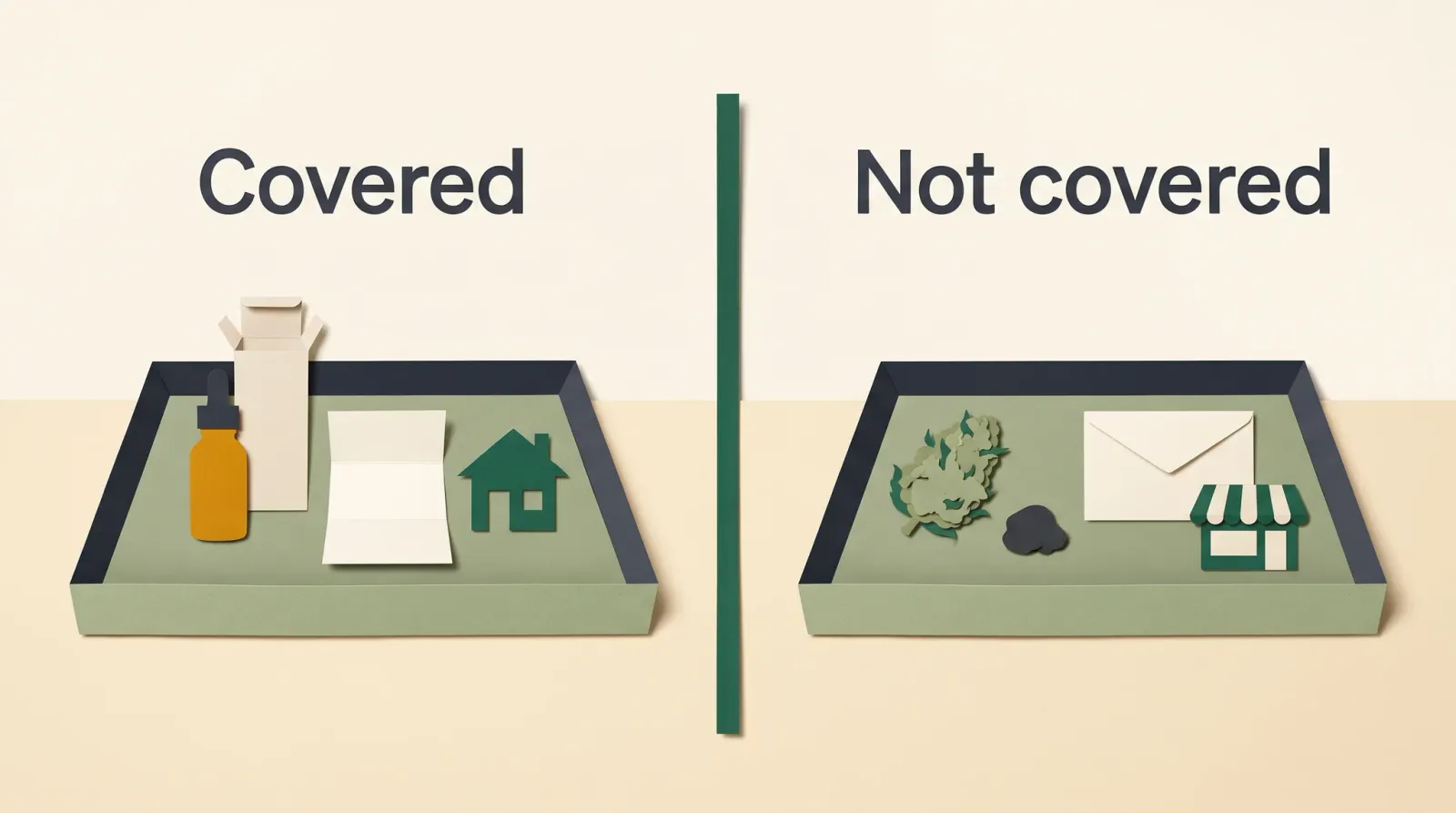
The permit is narrow: one patient, one named product, permitted routes only. Flower, concentrated extract, postal delivery and resale fall outside it.
How does a patient get the authorization?
The process has six steps on Anvisa’s service pages. The gov.br service page lists it as free of charge. gov.br service 2925
- Get a prescription that names the product. Under Brazil’s controlled-substance rules, only physicians, or dentists for dental use, may prescribe these products. The prescription must be legible. It shows the patient’s name, the product’s brand name, the dose, the date, a signature and the CRM or CRO number. Anvisa step 1 Generic labels such as “CBD”, “Hemp Oil” or “CBD oil” are not valid product names. gov.br service 2925 Our guide to what a CBD label really means explains why a generic name says so little.
- Register with Anvisa online. The patient or legal guardian applies on the gov.br service page. It needs a gov.br account at the Bronze, Silver or Gold level, and the portal estimates about 15 minutes to fill in.
- Wait for the analysis. Products on Anvisa’s published list get automatic approval. Anvisa’s technical area evaluates any other product. Anvisa step 3 The portal estimates up to 10 days for the authorization and up to 20 days in total. Those are estimates, not guarantees.
- Buy from a foreign supplier. Buying is the patient’s job. Anvisa does not choose the product or the seller (Anvisa step 5).
- Import through a permitted route. Use express shipment, a customs licence or accompanied baggage. Never the post.
- Pass the border inspection. Anvisa inspects at the port, airport or border before customs release. Each import needs a petition form, a bill of lading and a commercial invoice. It also needs the prescription from the registered prescriber and the patient’s proof of address. A traveller with accompanied baggage carries a copy of the registration instead of the shipping papers. Anvisa step 6
Import taxes are a separate question. Anvisa says tax belongs to Brazil’s Federal Revenue Service, not to the health regulator. None of the pages we opened set a rate.
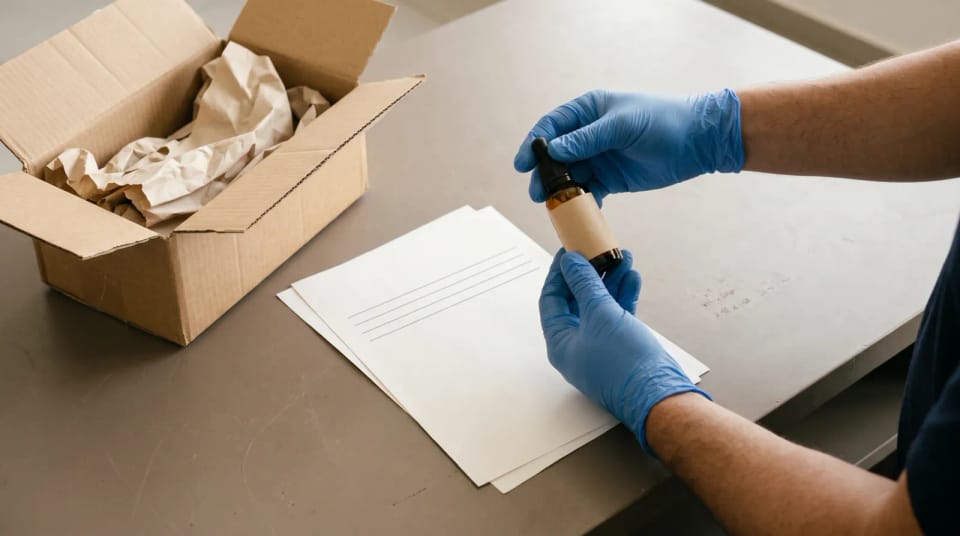
At each import, the product, supplier, patient and prescriber must match the Anvisa registration exactly. A mismatch means a new registration, not a quick fix at the counter.
Does Anvisa check the quality of imported products?
No. Anvisa says these products are not registered with it. Their quality, safety and effect have not been checked. Anvisa cannabis import page The October 2026 note that publishes the product list says the same for listed products. Anvisa Technical Note 81/2026 So “on the list” means “fast import approval,” not “approved medicine.”
RDC 660 puts the risk on two people. Under article 18, the prescriber and the patient accept that quality, safety and effect are not proven. RDC 660/2022 That makes the supplier’s paperwork more important. Our guide on how to read a cannabis lab report shows what a certificate of analysis can and cannot tell you. If a supplier calls an oil full-spectrum or isolate, our guide to full-spectrum, broad-spectrum and isolate oils explains the terms.
A permit is not proof that a product works. The 2024 policy analysis rated the evidence for cannabinoids as high only for epilepsy. It rated Parkinson’s disease as moderate, and most other uses lower. Pinto and colleagues, 2024 For the trial story behind that first rating, see what prescription CBD trials show for epilepsy. If you are new to the two main compounds, start with THC and CBD compared.
Why are flower and concentrated extract excluded?
Anvisa refuses the plant, plant parts and flowers for four reasons. It cites weak safety evidence for that use, a high risk of diversion, international drug-control treaties, and Brazil’s drug law. It adds that burning and inhaling a plant is not a pharmaceutical form or route for a health treatment. Anvisa step 3
The October 2026 technical note goes one step further. It states that concentrated cannabis extract may not be imported, because it allows smoked use. Anvisa Technical Note 81/2026 That wording comes from the 2026 note. Older rules may not have said it. The regulatory line follows the route of use, which our comparison of cannabis oil versus flower helps explain.
Did Brazil’s 2026 cannabis rules change the import permit?
No, according to Anvisa. In 2026 Brazil introduced RDC 1.015/2026, a company route for a sanitary authorization of CBD-based cannabis products. Anvisa published a question-and-answer guide on 20 July 2026. It says RDC 660/2022 “refers to the exceptional procedure for import authorization by an individual.” It does not apply to companies in Brazil, and the two procedures are not to be confused. Anvisa Q&A on RDC 1.015/2026
So the 2026 changes concern companies, not the individual permit. As of 29 October 2026, Anvisa’s pages still describe RDC 660 as the individual route. Check the service page again before you rely on it, because regulators revise these pages.
Can a tourist bring CBD oil into Brazil?
None of the official sources we opened answers this. The registration runs through a gov.br account. We could not confirm whether a foreign visitor can open one at the required level. Brazil’s general guidance on travelling with medicines does not mention cannabis, and we will not stretch it to cover cannabis.
Before any trip, ask Anvisa or a Brazilian consulate in writing. Do not pack a cannabis product because a forum said it was fine. Other countries show the same pattern. A prescription, local supply and border permission are separate permissions. The Australia prescription and travel rules and Uruguay’s medical supply rules both show this. Mexico’s medical framework is another Latin American example of how narrow medical routes can be.
When should you talk to a clinician?
Talk to your prescriber before you start, stop or change any prescribed product, and whenever a new symptom appears. Get urgent care for trouble breathing, chest pain, confusion or fainting. Anvisa has not evaluated these products, so record and report any side effect. Our guide on how to report a cannabis or CBD side effect explains what to keep.
Key takeaways
- The authorization is a permit to import, not a product, a prescription or a shop.
- It covers one patient, one named product and quantities that match the prescription, for two years.
- Flower, plant parts and, under the October 2026 note, concentrated extract are excluded.
- Postal delivery, sharing and resale are prohibited.
- Anvisa has not evaluated the quality, safety or efficacy of these imports.
- The 2026 company rules are separate from the individual import permit.
FAQ
Is medical cannabis legal in Brazil?
Only through regulated medical routes. Cannabis stays controlled under Law 11.343/2006. Patients can still use a registered medicine, an authorized pharmacy product, or a product imported under an Anvisa permit. None of these makes recreational use or flower legal.
Who can prescribe a cannabis product that Anvisa will authorize?
A physician, or a dentist for dental use. The prescription must name the commercial product and show the dosage, date, signature and CRM or CRO number. Anvisa does not judge the clinical choice; professional councils set the rules of practice.
How long does the import authorization last?
The registration is valid for two years. The prescription is valid for six months under RDC 660. So a patient can hold a valid registration with an expired prescription. Each import needs a current prescription from the registered prescriber.
Can I import cannabis flower for medical use in Brazil?
No. Anvisa does not authorize the plant, plant parts or flowers, and the October 2026 technical note also excludes concentrated extract. The permit covers industrially made products that are not meant for smoking.
Can Brazilians buy cannabis oil in a Brazilian pharmacy instead?
Not the imported products. Anvisa says imported products cannot be bought in Brazil. A separate, smaller group of pharmacy products holds a sanitary authorization, but that is a different route from the import permit.
Sources
- Anvisa. Resolução RDC n. 660, de 30 de março de 2022. Diário Oficial da União, 31 March 2022.
- Anvisa. Importação de produtos derivados de Cannabis. Accessed 29 October 2026.
- Federal Government of Brazil. Solicitar autorização para importar produtos derivados de Cannabis, service 2925. Modified 25 August 2026.
- Anvisa. Process steps 1, prescription, 3, analysis, 5, purchase and import and 6, inspection and release. Modified January and February 2025.
- Anvisa. Nota Técnica n. 81/2026, list of products under article 5, paragraph 3 of RDC 660/2022. Page modified 5 October 2026.
- Anvisa. Autorização Sanitária de Produtos de Cannabis, RDC n. 1.015/2026: Perguntas e Respostas. First edition, 20 July 2026.
- Martins L, Policarpo F, Valente MJB. Medical cannabis regulation in Brazil: patients’ demands through the courts of justice. J Illicit Econ Dev, 2025;7(2):39-52.
- Pinto CDBS, Esher A, Oliveira CVDS, Osorio-de-Castro CGS. Expansion of the medical cannabis market in Brazil and regulatory challenges. Cad Saude Publica, 2024;40(11):e00088624.



