Cannabis Breathalyzers: Where Roadside THC Testing Stands in 2026
Why a reliable THC breathalyzer is so hard to build: the science of cannabis impairment, blood and breath testing, and where roadside tech stands in 2026.

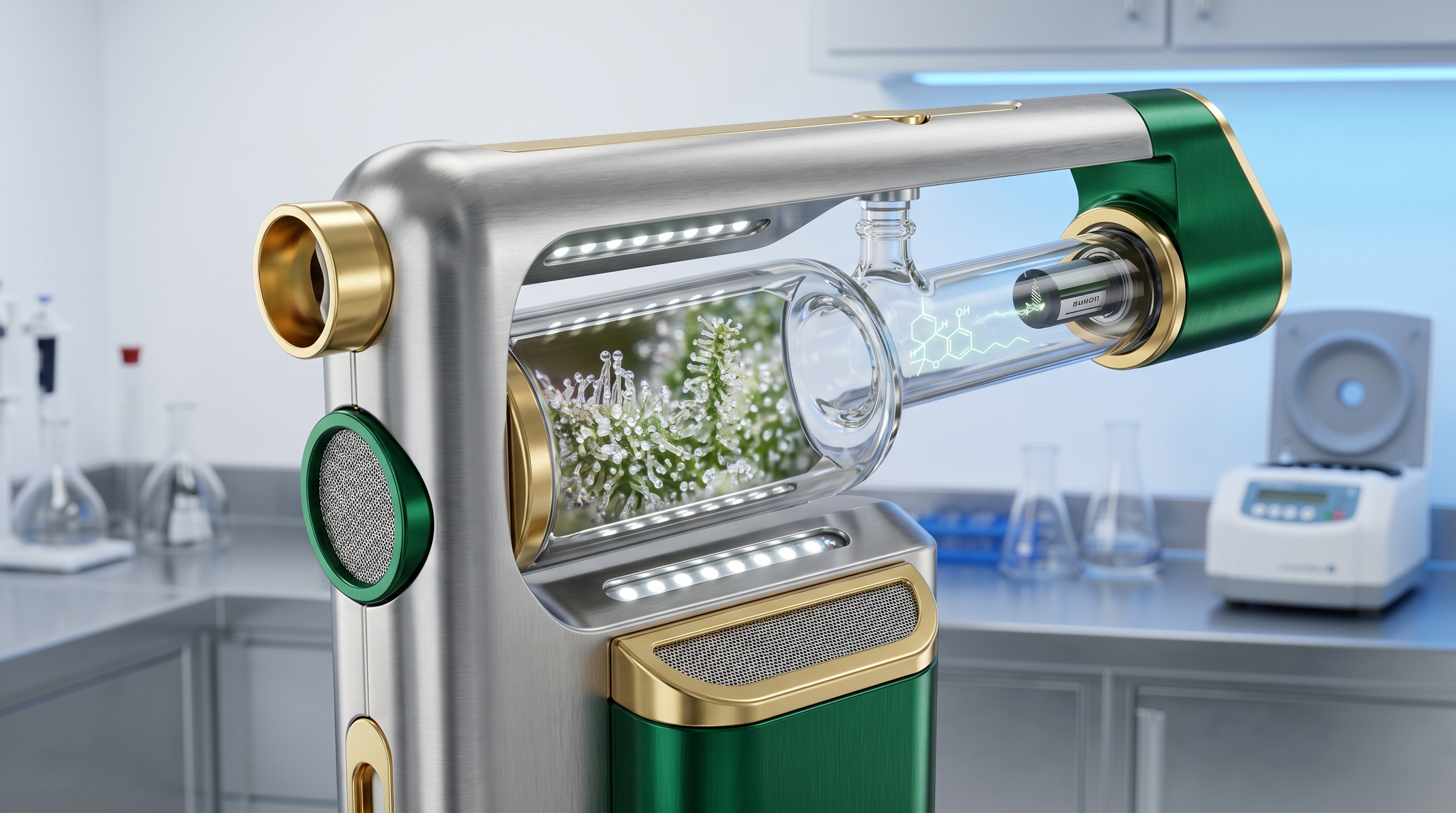
For alcohol, the story is almost boringly clean. You drink, your blood alcohol concentration (BAC) climbs in a predictable curve, and that number tracks your impairment closely enough that we built an entire legal and roadside apparatus around it. Blow into a tube, get a number, and that number means something.
Cannabis refuses to cooperate. After more than a decade of legalization, billions of dollars in venture funding, and serious work from federal labs and university chemists, there is still no validated breathalyzer that can tell a police officer whether you are impaired right now. Not because nobody has tried — because the molecule itself fights back.
This is a news-analysis piece on an unsettled field. I will tell you what the technology can and cannot do as of 2026, where the most credible research sits, and why the gap between “we detected THC” and “you are impaired” remains one of the hardest unsolved problems in forensic toxicology. Nothing here is legal advice — if you are facing a charge, talk to a qualified attorney in your jurisdiction.
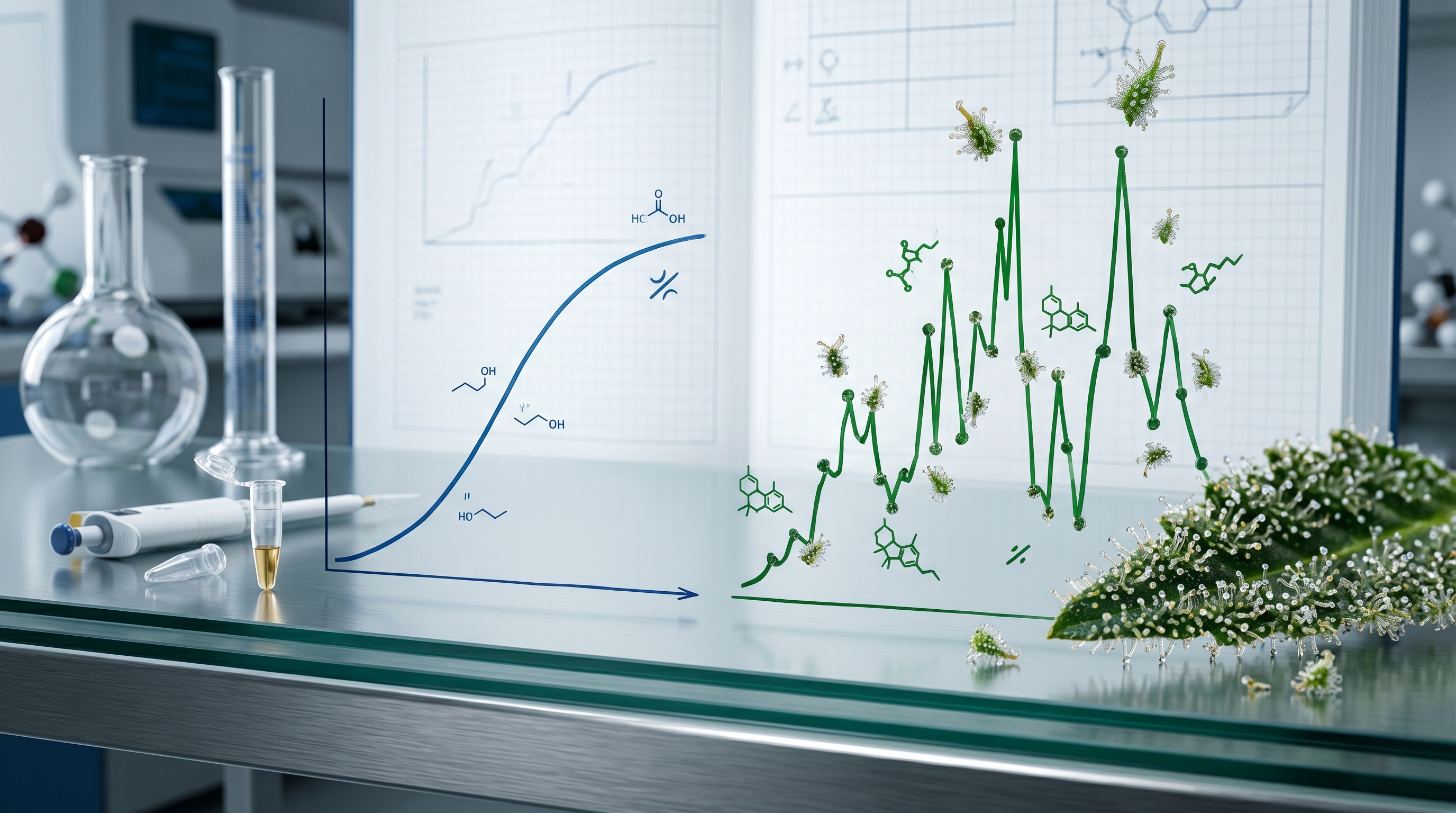
Why THC Breaks the Breathalyzer Model
The core problem is chemistry. Ethanol — drinking alcohol — is water-soluble. It distributes through your body’s water, including your blood, in a way that mirrors what is reaching your brain. THC is the opposite: it is intensely lipophilic, meaning it loves fat and avoids water.
When you inhale cannabis, delta-9-THC spikes in your blood almost at once. It often peaks before you feel the strongest effects. Then it leaves the bloodstream fast and gets stashed in fatty tissue all over the body, including the brain. Within about 30 minutes of smoking, blood THC can drop to near-undetectable levels even while the high rolls on for hours. The peak number and the peak high are simply out of sync.
That sync problem is rooted in cannabis pharmacokinetics — how your body absorbs, distributes, and eliminates THC. THC’s fat-loving behavior is also why THC can linger in your system for days or weeks after the high is long gone. The same property that makes a urine test positive a week later is the property that makes a real-time impairment test so hard.
It is worth separating two questions that get conflated constantly:
- Did this person use cannabis recently? Tractable, and getting better.
- Is this person impaired right now? Still scientifically unsolved.
Most marketing around “cannabis breathalyzers” quietly answers the first question while letting the public assume it answers the second.
The Evidence: Blood and Breath Don’t Track Impairment
The single most-cited body of work here is a 2022 study published in Scientific Reports by Gregory Wurz and Michael DeGregorio. They recruited 74 chronic cannabis users, had them smoke cannabis cigarettes ranging from 8.5% to 28.4% THC, and measured both blood and exhaled-breath THC alongside impairment assessments [Wurz et al., 2022].
The findings are striking. Before anyone even smoked, 53.3% of subjects already exceeded the 5 ng/mL blood-THC limit used in states like Washington and Montana, and 83.3% exceeded the 2 ng/mL limit used in Nevada and Ohio — all while completely sober [Wurz et al., 2022]. Breath THC did correlate with blood THC (p<0.0001), but neither one predicted impairment on its own. Their blunt conclusion: “Single measurements of ∆9-THC in blood, and now in exhaled breath, do not correlate with impairment following inhalation.”
A 2025 study in Clinical Chemistry by Robert Fitzgerald and colleagues pushed on the legal angle. They tracked 190 regular cannabis users and found that even after abstaining for at least 48 hours, 24% still exceeded 2 ng/mL, 5.3% exceeded 5 ng/mL, and 43% exceeded a 0.5 ng/mL zero-tolerance threshold [Fitzgerald et al., 2025]. One heavy daily user clocked a baseline of 16.2 ng/mL with no recent use at all. Critically, participants above the legal cutpoints drove the simulator “in a similar manner” to those below them. The numbers criminalize a metabolic state, not a behavior.
This is the crux of the how-long-to-wait-after-consuming question: for a frequent user, blood and breath THC can lie about timing for days. The American Bar Association and even the International Association of Chiefs of Police have noted that, unlike BAC, there is no defensible concentration-to-impairment relationship for THC.
Per Se Laws: The Legal Problem the Science Created
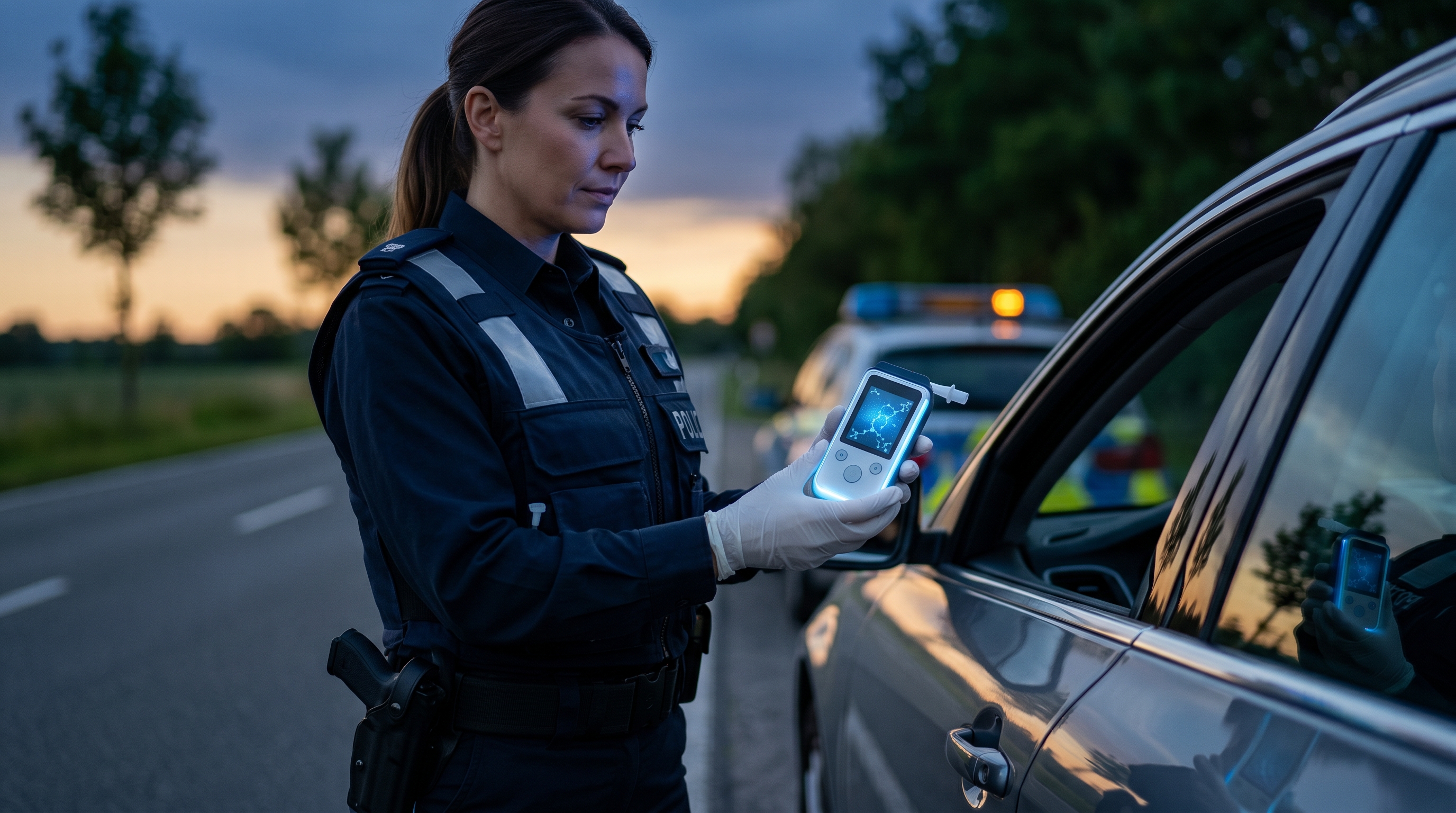
Roughly seventeen states have adopted some form of per se or zero-tolerance THC driving statute. A per se law sets a blood concentration — commonly 2 or 5 ng/mL — above which you are automatically guilty, no further proof of impairment required. Zero-tolerance laws go further: any detectable THC or metabolite is enough.
The science above explains why these thresholds are arbitrary. They were modeled on alcohol’s BAC framework, but THC does not behave like alcohol. A daily medical patient can blow past a 2 ng/mL limit on a Tuesday morning after a Friday-night dose. They are stone-cold sober and fully capable — yet legally a criminal. Meanwhile an occasional user who is truly impaired right now might fall below the cutoff an hour later, because their blood THC has already crashed into fat.
This is a tolerance problem as much as a legal one. The biology behind it is the same biology I cover in the science of cannabis tolerance and tolerance recovery: chronic exposure changes how the endocannabinoid system responds, and it changes how much THC sits in storage. The heaviest users often show the highest baseline levels and the shortest duration of measurable impairment — the exact inverse of what a per se number assumes.
For the deeper systems context, it helps to understand your endocannabinoid tone and how anandamide, your body’s own THC-like molecule, interacts with everything cannabis does. None of that biology is captured by a single roadside number.
The Companies Chasing the Holy Grail
That has not stopped a parade of companies from trying to build the device. Here is the honest 2026 state of play.
Hound Labs (now Hound Diagnostics)
Hound is the most technically credible name in the space. Their breakthrough was picomolar-level sensitivity — detecting THC in breath at parts per trillion, with a published cutoff around 20 pg/mL. Their pitch is narrow and, crucially, honest: the device targets a roughly three-hour “recent use” window, the period when impairment is most likely, rather than claiming to measure impairment itself. They published a white paper reporting accurate detection of use within an hour of smoking and partnered with Quest Diagnostics for confirmatory lab testing.
The key thing to understand: Hound positions this for workplace screening — answering “did this person use during the workday?” — not as a roadside impairment meter. That distinction is the whole ballgame, and the company is careful about it.
SannTek and Others
SannTek Labs and competitors like Cannabix Technologies have pursued similar breath-capture approaches. The category as a whole has seen repeated delays, pivots, and quiet rebrands. The pattern is consistent: the hard part isn’t catching THC in breath, it’s interpreting what catching it means.
The CU Boulder / NIST Work
The most scientifically careful effort may be the collaboration between CU Boulder psychologist Cinnamon Bidwell and NIST chemical engineers Tara Lovestead and Kavita Jeerage. In a 2024 study, they recruited 45 regular users, dosed them at home, and collected over 1,200 breath samples in a mobile lab nicknamed “the Cannavan” [Bidwell et al., 2024].
Their physics lesson is humbling: a person exhales roughly a million times more ethanol in a single breath than THC across twelve breaths after consuming cannabis. Lovestead described detecting THC as “looking for a needle in a haystack” because it rides on trace aerosol particles, not gaseous vapor. Their conclusion was appropriately hedged — a single breath measurement “cannot reliably indicate when cannabis was used or whether that person is impaired.” Their most promising idea is repeated measurements 10–20 minutes apart, betting that a falling reading flags recent use. That is clever, but it is still a recency signal, not an impairment signal.
Oral Fluid: The Tech That’s Already on the Road
While the breathalyzer remains a moonshot, oral fluid (saliva) testing is the technology that has quietly moved from lab to roadside. Devices from Dräger and others can detect recent THC use from a swab, and a majority of U.S. states now permit oral fluid testing in some form — presumptive at the roadside, confirmed later in a lab. In 2023 the U.S. Department of Transportation finalized a rule authorizing oral fluid drug testing, though as of late 2024 it still wasn’t operational for commercial drivers because the program needs two certified labs first.
Oral fluid has a genuine advantage: a shorter detection window than blood or urine, which makes a positive result more likely to reflect recent use rather than last week’s session. International standards bodies like Europe’s DRUID project have proposed thresholds (for example, 25 ng/mL in oral fluid). But notice the trap — “recent use” still is not “impairment.” Oral fluid narrows the timing question; it does not solve the impairment question. It is a better recency tool wearing impairment-test clothing.
The Tolerance Problem Nobody Wants to Talk About
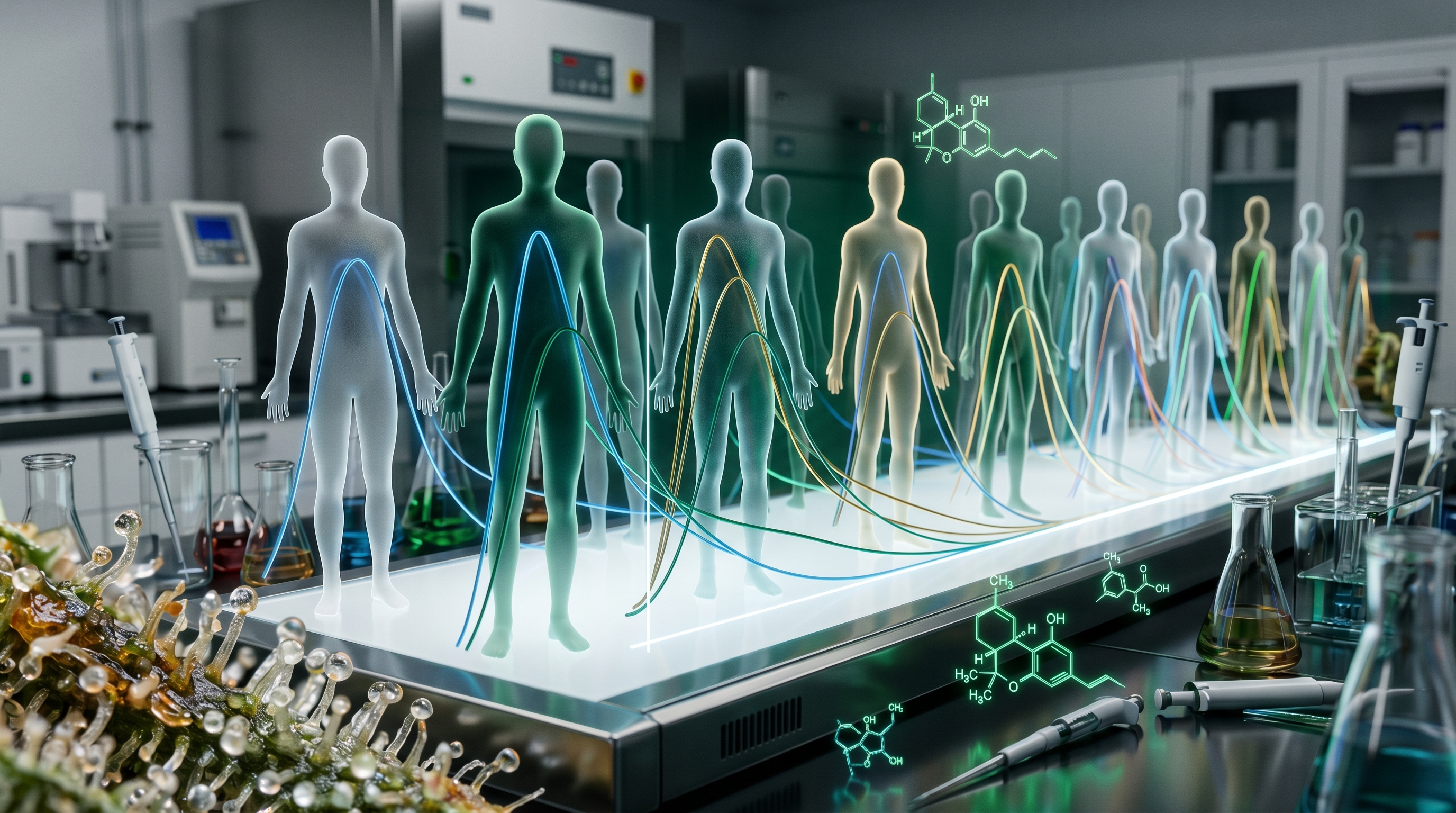
Every approach in this article collides with the same wall: individual variation, and especially tolerance. Two people can consume identical amounts and land in completely different places, a phenomenon rooted in the genetics of cannabis sensitivity and how cannabis metabolism varies with genes like MTHFR. A naïve user and a daily user with the same blood THC are not in the same cognitive state — not even close.
Add the edibles wrinkle, where the liver converts THC into the more potent 11-hydroxy-THC and the impairment curve detaches entirely from inhaled-THC kinetics, and the dream of one universal number starts to look naïve. This is the same reason THC percentage is a terrible way to choose cannabis: a single concentration figure flattens an enormously personal response.
The terpene and strain dimension matters too. The experience of a sedating, myrcene-heavy Granddaddy Purple in the Relax High family is functionally different from an alert, terpinolene-forward Jack Herer in the Energy High family — yet both register as “THC” to any current sensor. A limonene-bright Super Lemon Haze (Uplift High), a balanced Blue Dream, a high-CBD ACDC or Harlequin in the Balance High family, a caryophyllene-rich Wedding Cake in the Relief High family — none of these chemical realities show up in a roadside THC count. The number sees a molecule; it cannot see the experience.
Civil Liberties and the Cost of Getting It Wrong
The stakes here are not academic. A test that flags recent use as impairment will systematically punish the people who use cannabis most — often medical patients and daily-driver consumers managing chronic conditions like arthritis and joint pain. These are exactly the populations carrying high baseline THC with little to no impairment.
A breathalyzer that produces an authoritative-looking number invites officers, prosecutors, and juries to treat that number as truth — the way they (mostly fairly) treat a BAC. With cannabis, that confidence would be misplaced and the consequences would fall hardest on sober people. Some advocates and researchers argue that behavioral impairment testing — standardized roadside assessments of actual cognitive and motor function — may be a more honest path than chasing a chemical proxy that the chemistry says doesn’t exist.
Key Takeaways
- THC is fat-loving, so blood and breath levels can stay high for hours or days after the high fades. The number and the impairment fall out of sync.
- The best research (notably [Wurz et al., 2022] and [Fitzgerald et al., 2025]) shows single THC measurements do not track real-time impairment, and frequent users often exceed legal limits while stone-cold sober.
- Per se and zero-tolerance THC laws inherit alcohol’s framework without alcohol’s science. Most experts say they are not defensible.
- The honest devices (Hound, oral-fluid swabs like SoToxa) detect recent use, not impairment. New 2025 work from NIST and UCLA is promising but still recency-focused.
- Tolerance and individual variation mean no single number can be fair to everyone. The most reliable signal is still your own behavior and your own tracked response.
Where This Leaves Us in 2026
So, do we have a cannabis breathalyzer? Sort of, and not the one people imagine.
- Detecting recent use in breath or saliva: technically achievable, improving, and partially deployed.
- Measuring impairment from a single chemical reading: still scientifically unvalidated, and the best evidence suggests it may not be possible at all with current biomarkers.
The most promising research directions aren’t louder claims about precision. They are humbler ideas: repeated breath sampling to infer recency, alternative biomarkers like CBC and THCV that appear only during the peak window [Wurz et al., 2022], and behavioral testing that measures function instead of molecules. The honest companies are narrowing their claims to “recent use.” The honest scientists are publishing the gaps.
Until that gap closes — if it ever does — the responsible move is personal awareness. The most reliable impairment sensor anyone has is still the one between their own ears: don’t drive after consuming, give it the hours your body actually needs, and track how you respond rather than trusting a number on a device or a milligram count on a package.
That last part is exactly what we built High IQ for. The strain that mellows your neighbor might wire you; the dose that’s nothing to a daily user might floor a beginner. Logging your own patterns — strain, format, timing, and how you actually felt — gives you something no breathalyzer can: a personalized map of your own response. The science is clear that there’s no universal number. So build your own.
Sources
- Wurz, G. T., & DeGregorio, M. W. (2022). Indeterminacy of cannabis impairment and ∆9-tetrahydrocannabinol (∆9-THC) levels in blood and breath. Scientific Reports. https://pmc.ncbi.nlm.nih.gov/articles/PMC9117256/
- Fitzgerald, R. L., et al. (2025). Per Se Driving Under the Influence of Cannabis Statutes and Blood Delta-9-Tetrahydrocannabinol Concentrations following Short-Term Cannabis Abstinence. Clinical Chemistry. https://pmc.ncbi.nlm.nih.gov/articles/PMC12670588/
- Bidwell, C., Lovestead, T., & Jeerage, K. (2024). A THC breathalyzer? CU research could lead to reliable cannabis breath test. CU Boulder Today / NIST. https://www.colorado.edu/today/2024/12/18/thc-breathalyzer-cu-research-could-lead-reliable-cannabis-breath-test
- American Bar Association. Testing Challenges: No BAC for THC. https://www.americanbar.org/groups/judicial/resources/highway-justice/testing-challenges-no-bac-thc/
- NORML. (2024). Analysis: THC Blood Concentrations Not Correlated With Impairment. https://norml.org/news/2024/08/22/analysis-thc-blood-concentrations-not-correlated-with-impairment/
- Hound Diagnostics. Hound Cannabis Breathalyzer — Product Overview & FAQ. https://houndlabs.com/product-overview/
- NORML. (2024). Feds: Oral Fluid Testing Still Not an Option for Commercial Drivers Despite Last Year’s Rule Change. https://norml.org/blog/2024/12/12/feds-oral-fluid-testing-still-not-an-option-for-commercial-drivers-despite-last-years-rule-change/
- Gaize. Why aren’t cannabis breathalyzers the right solution? https://www.gaize.ai/blog/cannabis-breathalyzers-cant-test-impairment
This article is for educational purposes and is not legal advice. Cannabis and impaired-driving laws vary by jurisdiction and change frequently. Never drive after consuming cannabis. If you are facing a legal matter, consult a qualified attorney in your state.


