Cannabis Defoliation: When, Why and How to Remove Leaves
Defoliation is the strategic removal of cannabis fan leaves for light and airflow. Learn the timing, how much to take, and the risks of overdoing it.

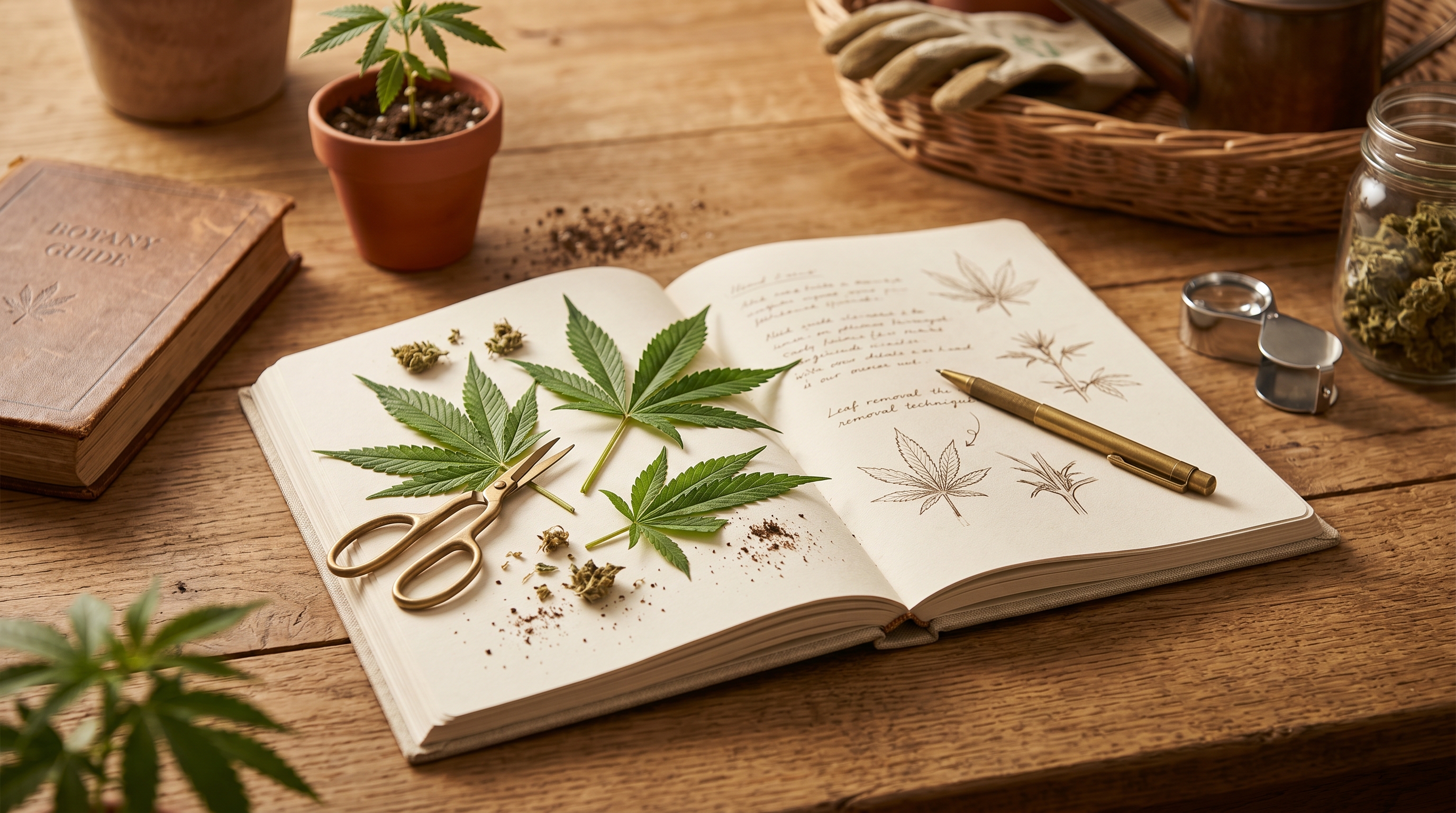
There are few topics in cannabis cultivation that start more arguments in a grow forum than defoliation. Mention that you stripped a third of the fan leaves off your plant and you will get two replies telling you that you just torched your yield, and two more telling you that you did not go far enough. Both camps have grown great weed. That should tell you something important right away: defoliation is a real technique with real benefits, but it is also genuinely contested, and the right answer depends on your plant, your room, and your experience level.
I’m Professor High, and my job today is to give you the honest version. Defoliation is the deliberate removal of fan leaves to improve light penetration, airflow, and energy allocation. Done thoughtfully, it can produce denser buds and a cleaner, lower-stress canopy. Done carelessly, it stresses the plant, stunts growth, and costs you the very yield you were chasing. Let’s walk through what it actually does, when to do it, how much to take, and where the science gets murky.
What defoliation actually is
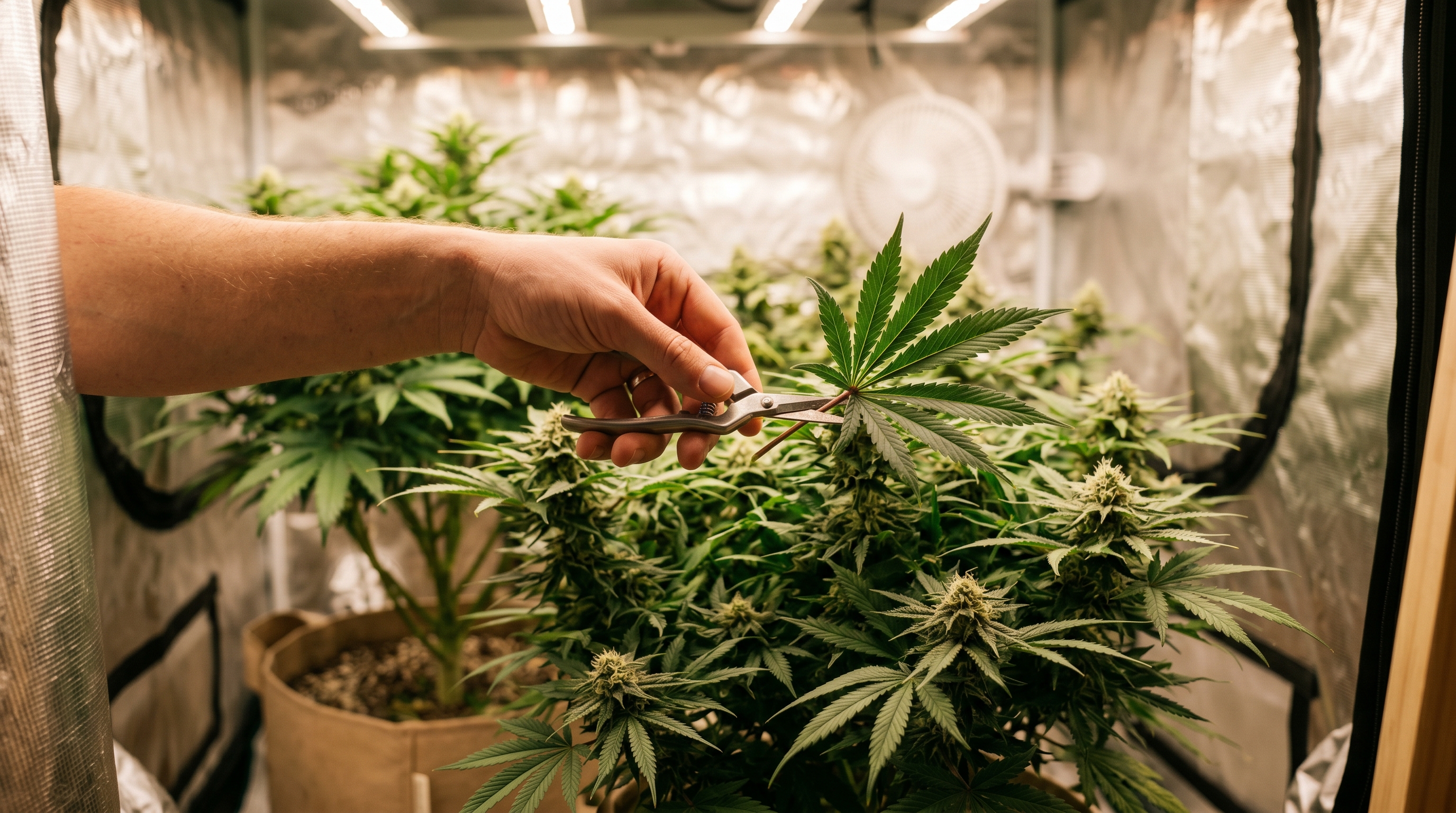
Fan leaves are the big, iconic, five-to-seven-fingered leaves you picture when you think of a cannabis plant. They are the plant’s solar panels. They capture light, drive photosynthesis, and store sugars and mobile nutrients the plant can pull back later. Defoliation is the act of selectively removing some of those leaves.
It is important to separate defoliation from its cousins, because growers blur these terms constantly. Defoliation removes leaves. Lollipopping removes the entire lower third of the plant (leaves and the weak bud sites attached to them) so energy concentrates in the top canopy. Topping cuts the growing tip to create multiple colas. And training methods like low-stress training bend branches rather than cut anything. Defoliation is the scalpel in that toolkit: you are not removing structure, you are removing shade.
The goal is rarely “fewer leaves” for its own sake. The goal is light reaching the bud sites that will actually finish, and air moving through a canopy that would otherwise be a damp, dark jungle.
Why growers remove fan leaves
There are three real, defensible reasons to defoliate, and one reason that gets oversold.
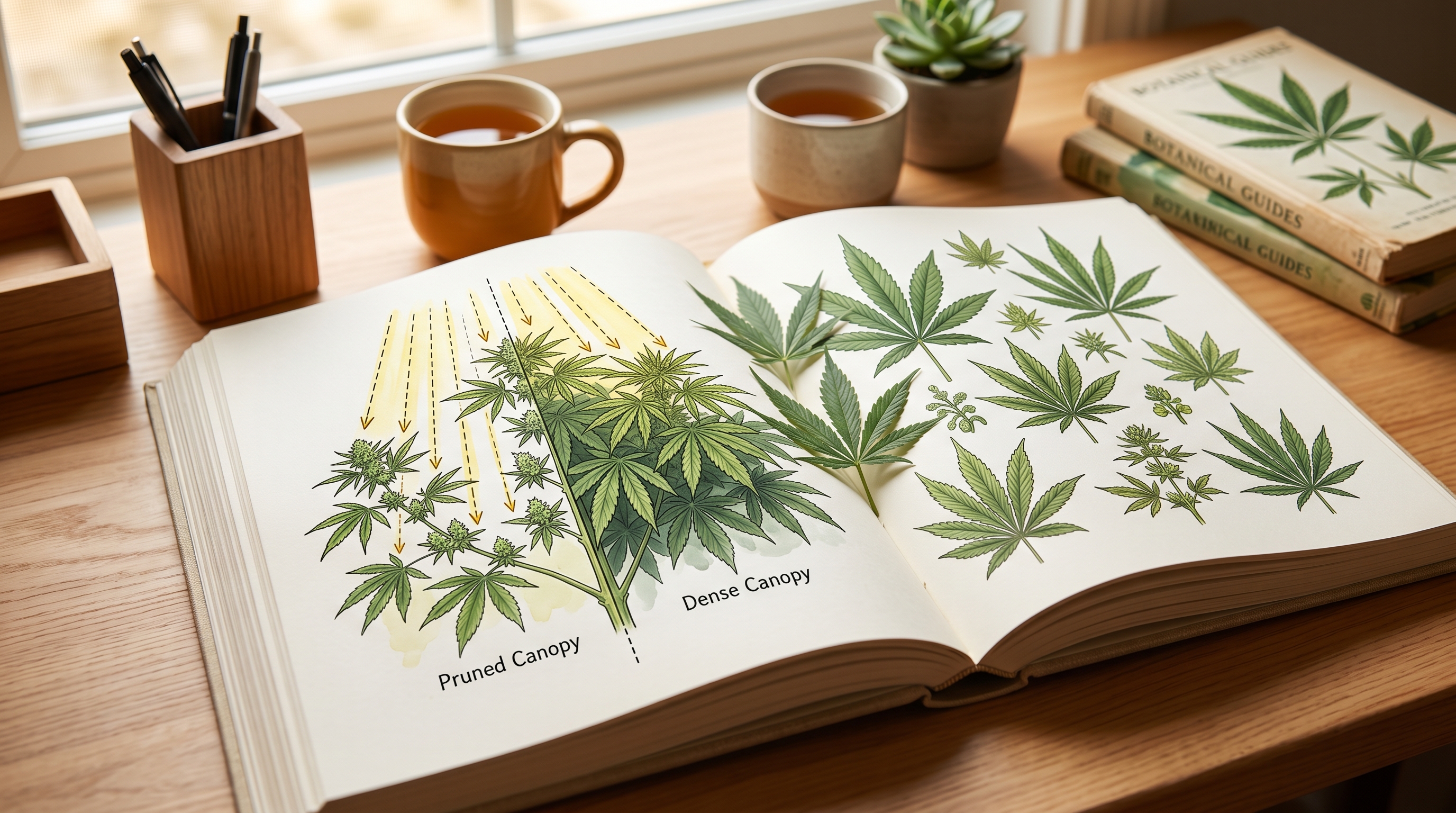
Light penetration. Indoor light falls off fast. A dense upper canopy can leave lower and interior bud sites in near-darkness, where they develop into the airy “popcorn” buds nobody wants. Pulling the large fan leaves that are physically blocking those sites lets usable light reach them. This pairs naturally with a ScrOG setup or a Sea of Green layout, where an even canopy is the whole point.
Airflow and humidity. A thick mass of leaves traps stagnant, humid air right where dense buds form. That is exactly the microclimate bud rot and powdery mildew love. Opening up the canopy lowers local humidity and keeps air moving, which matters enormously if you are already fighting your grow room’s temperature and humidity. Defoliation is one of the cheapest mold-prevention tools you have.
Energy redirection. The theory here is that removing low-value leaves and the shaded sites they feed nudges the plant to invest in the productive colas up top. This overlaps heavily with lollipopping, and it is the most plausible “yield” mechanism.
The oversold reason is the blanket claim that “defoliation increases yield.” Sometimes it does. Sometimes a comparison plant left fully leafed out wins. Yield gains depend on dialing in everything else first.
The photosynthesis trade-off (the honest part)
Here is the tension at the heart of the whole debate. Every fan leaf you remove is a solar panel you just unplugged. Leaves are how the plant makes the sugars that build buds. Remove too many and you have a plant that cannot produce enough energy to fatten flowers, no matter how much light is now reaching the stem.
The pro-defoliation argument is that indoor plants are pampered. They face no drought, no real pest pressure, and abundant artificial light, so they grow far more leaf than they strictly need. Trimming that excess, the argument goes, is removing burden, not capacity. The cautious counterargument is simpler: a leaf you remove cannot photosynthesize tomorrow, and the plant only re-grows leaves during early flower. Strip too aggressively and you spend the plant’s energy on repair instead of resin.
Both are true within limits. That is why every credible guide lands on the same boring, correct advice: moderation. Most experienced growers cap a single session at removing no more than 20 to 30 percent of the plant’s foliage, then let it recover before touching it again. The leaves you target should be the ones contributing least anyway: yellowing, damaged, or buried in deep shade where they receive almost no light.
When to defoliate: the timing windows
Timing is where most defoliation goes wrong. There are three sensible windows and one hard “do not.”
| Stage | Timing | What to remove | Why |
|---|---|---|---|
| Late vegetative | ~1-2 weeks before the flip | Largest fan leaves shading lower nodes; inward-growing leaves | Plant has full veg vigor to regrow and recover before stretch |
| Day of the flip | At the 12/12 switch | Big fan leaves blocking lower bud sites | Sets up an open canopy entering the stretch |
| ~Day 21 of flower | Around week 3 of 12/12, after the stretch | Large leaves now overshadowing developing buds | Bud sites are set; plant can spare leaves and still has a small re-leaf window |
| After ~day 25-28 flower | Avoid | Nothing major | Plant is committing reserves to bud fattening and terpene production |
The logic is straightforward once you see it. In late veg, the plant is at maximum vigor and has time to bounce back, so a cleanup pass here is the lowest-risk defoliation you will ever do. Understanding your plant’s growth stages is what makes this timing intuitive rather than memorized.
The day-of-the-flip pass and the ~day-21 pass are the two windows the “schwazzing” crowd built a method around (more on that in a second). The day-21 window works because the stretch is over, bud sites are locked in, and the plant can still re-leaf a little if it needs to.
The hard stop is roughly day 25 to 28 of flower for photoperiod plants. Past that point, the plant is no longer building new structure; it is pulling stored reserves to swell buds and produce terpenes. Removing leaves now just removes reserves and stresses a plant that has nowhere to recover. Save the heavy leaf removal for when you actually harvest.
Schedule defoliation vs. aggressive “Schwazzing”
Most home growers should practice what I’ll call schedule defoliation: a light cleanup in late veg, a targeted pass at the flip, and a moderate pass around day 21, never taking more than 20 to 30 percent at a time. It is forgiving, it captures most of the airflow and light benefits, and it is hard to ruin a crop with it.
“Schwazzing” is the aggressive end of the spectrum, popularized by Joshua Haupt’s book Three a Light. It calls for stripping essentially all the fan leaves at the flip and again around week three, two near-total defoliations in pursuit of dramatic yields. The published anecdotes are eye-catching, but the honest framing is this: schwazzing only works in the hands of growers with vigorous strains, immaculate nutrition, and serious lighting. The same cut that produces a trophy plant for an expert will stunt a beginner’s plant badly. If you are not already harvesting consistently healthy plants, this is not your technique yet.
Even the originators of schwazzing admit nobody fully understands why cannabis responds the way it does to heavy defoliation. Proposed explanations range from a stress response to an energy-reallocation effect, but it remains, scientifically, an open question. Treat anyone who tells you it is settled with healthy skepticism.
How to actually do it
The technique itself is simple; the discipline is the hard part.
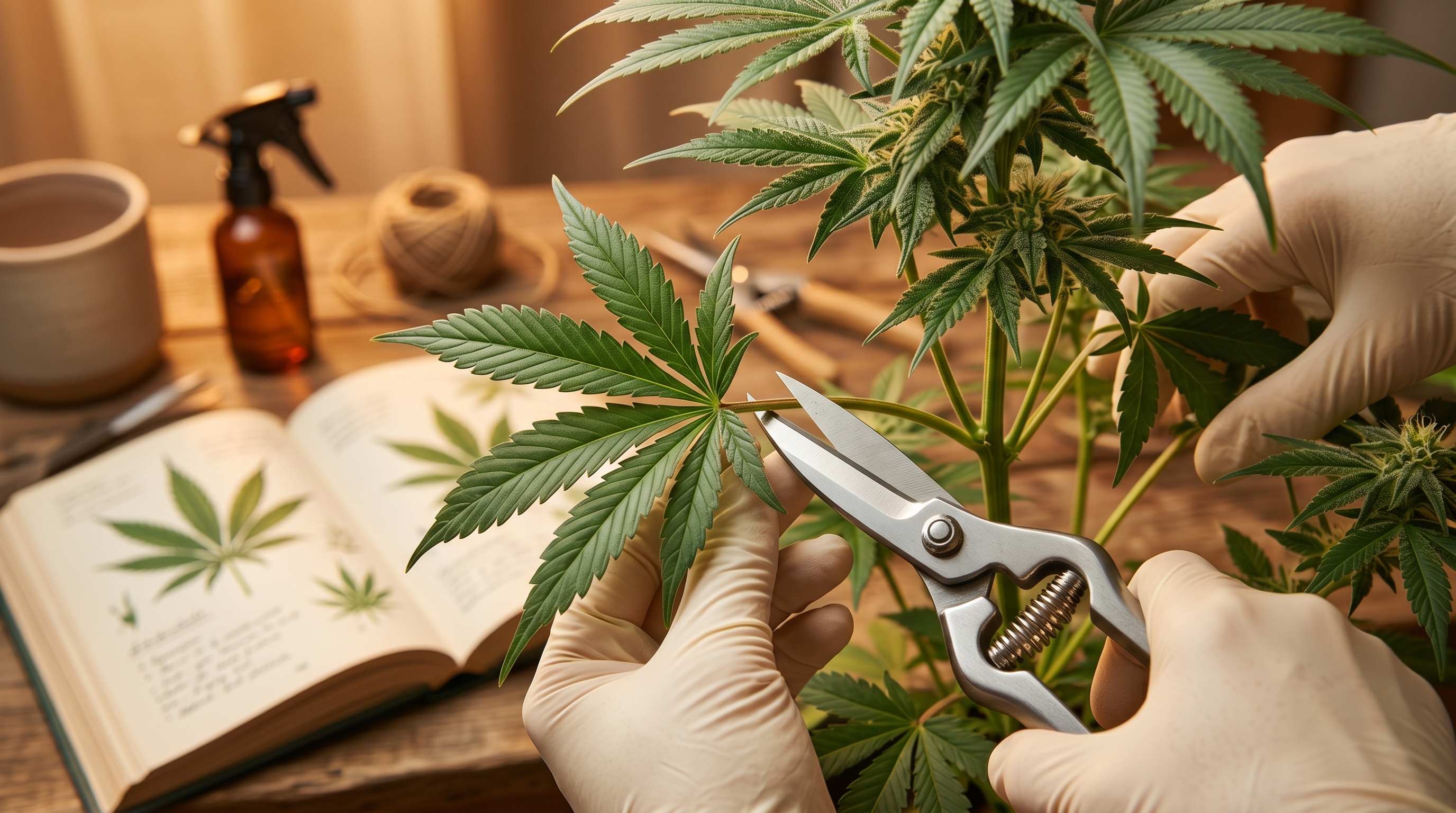
- Use clean, sharp tools. Sterilize small pruning scissors with isopropyl alcohol. Clean cuts close to the stem heal faster and resist infection. Tearing leaves off by hand invites problems.
- Start with the obvious leaves. Yellowing or damaged leaves first; they have stopped pulling their weight. Then the largest fan leaves shading lower bud sites, then leaves pointing inward toward the stem.
- Work top-down and step back often. Remove a few, look at the canopy, remove a few more. The goal is dappled light reaching the lower sites, not a bare stick.
- Respect the cap. Stop at 20 to 30 percent in a session. If you want to remove more, do it across multiple sessions days apart so the plant recovers between them.
- Watch the recovery. A healthy plant perks back up within a day or two. Drooping that lingers, or new growth that stalls, means you took too much. Back off.
Pair the practice with sound fundamentals: good plant training and a solid grow-tent setup do more for yield than aggressive leaf removal ever will.
How much is too much: the risks
Over-defoliation is the single most common way this goes sideways. The failure modes are well documented:
- Stunting and stalled growth. Strip too much and the plant diverts energy to repair instead of bud development, especially if you cut during the early-flower window when leaf area is setting bud sites.
- Stress and hermaphroditism. Severe, poorly timed defoliation is a known stress trigger, and stressed plants can throw male flowers, seeding your own crop.
- Reduced potency and yield. When the plant cannot photosynthesize enough, both bud mass and cannabinoid production suffer. The worst-case reports include drastic THC reduction and outright crop loss.
If you are unsure, take less. You can always remove another leaf next week. You cannot glue one back on. When something looks off mid-grow, work through it methodically using a guide to common growing problems before reaching for the scissors again.
A special warning for autoflowers
Autoflowering plants deserve their own paragraph because the standard advice does not apply to them. Autos run on a fixed internal clock. They flower on a timer regardless of light schedule, which means they cannot extend their vegetative phase to recover from stress the way a photoperiod plant can. A defoliation session that a photoperiod plant shrugs off in two days can cost an auto irreplaceable grow time.
The conservative approach with autos is to defoliate lightly or not at all, and if you do remove leaves, spread it across multiple gentle sessions, taking only a handful of leaves at a time over two to three weeks rather than one big cut. If you are growing from autoflower seeds, default to “less is more.”
Does it change the high?
Here is the part most grow guides skip. Defoliation is a structural technique; it does not rewrite a plant’s genetics. The cannabinoid and terpene profile a strain is capable of expressing is set by its DNA. What defoliation can influence, indirectly, is whether your buds finish dense and resinous or airy and underdeveloped. Better light and airflow during flower help the plant fully express the terpenes it was always going to make.
That distinction matters because terpenes (not just THC) shape the experience. A strain rich in myrcene leans sedating, while limonene-forward genetics feel brighter. That terpene fingerprint is what determines a strain’s High Family on High IQ, whether it lands in Relax, Uplift, or Energy. Healthy, well-grown flower simply gives those compounds their best chance to shine.
If you are growing classics like Blue Dream, Gorilla Glue, Wedding Cake, Northern Lights, or Girl Scout Cookies, how you manage the canopy affects how completely those buds finish, not which strain you end up with.
Track the technique, not just the plant
The truth about defoliation is that the only way to know what works in your room is to test it and pay attention. Grow two plants of the same strain, defoliate one on a schedule and leave the other fuller, and weigh the results. Note the timing, the percentage you took, and how the plant recovered. After a few cycles you will have something better than forum dogma: your own data.
That track-what-works mindset is exactly how we think about consumption, too. On the High IQ app you can log which strains and terpene profiles actually deliver the effects you want, so your choices come from your own patterns instead of marketing labels. Grow it deliberately, smoke it deliberately, and let the results teach you.
Key takeaways
- Defoliation is targeted fan-leaf removal for light penetration, airflow, and energy redirection, not random plucking.
- It is genuinely contested: leaves power photosynthesis, so every cut is a trade-off. Cap each session at 20 to 30 percent.
- Best windows are late veg, the day of the flip, and around day 21 of flower. Stop major defoliation after roughly day 25 to 28.
- “Schwazzing” (near-total stripping) is an expert technique that will stunt a beginner’s plant. Start with light, scheduled passes.
- Autoflowers run on a fixed clock and cannot recover from heavy stress. Defoliate them lightly, or not at all.
- Defoliation does not change a strain’s genetics. It only helps well-grown buds finish dense and fully express their terpenes.
Sources
- Grow Weed Easy — What is Schwazzing & What Does Defoliating Cannabis Do? https://www.growweedeasy.com/schwazzing-cannabis
- Dutch Passion — How to Defoliate Cannabis Plants for Bigger Yields. https://dutch-passion.blog/how-to-defoliate-cannabis-plants-for-bigger-yields/
- Three a Light — Ultimate Guide to Schwazzing. https://threealight.com/pages/ultimate-guide-to-schwazzing
- CannaConnection — Defoliating Cannabis: A Comprehensive Guide. https://www.cannaconnection.com/blog/19384-defoliating-cannabis-a-comprehensive-guide
- Zamnesia — Cannabis Defoliation: Boost Yield & Plant Health. https://www.zamnesia.com/us/grow-weed/423-defoliation


