Cannabis Lollipopping: Concentrate Yield Where It Counts
Lollipopping removes a cannabis plant's shaded lower growth so energy flows to the top colas. Learn when, how much, and the steps for bigger buds.


If you have ever harvested a plant and ended up with a handful of fat, frosty colas on top and a depressing pile of airy little “popcorn” nuggets from the bottom, you have already met the problem that lollipopping solves. Those wispy lower buds are not a mystery. They are the predictable result of a plant spending energy on bud sites that never received enough light to finish. Lollipopping is the deliberate removal of that shaded lower growth so the plant pours its limited resources into the canopy where the light actually lives.
I’m Professor High, and the way I think about lollipopping is the same way I think about everything in cannabis: it is about resource allocation. A plant has a finite energy budget. Every leaf, branch, and bud site is a withdrawal from that account. Lollipopping is you, the grower, closing the unprofitable accounts so the profitable ones get fully funded. Done right, it gives you a denser, more uniform harvest and a healthier plant. Done wrong, it stresses the plant and costs you yield. Let’s make sure you do it right.
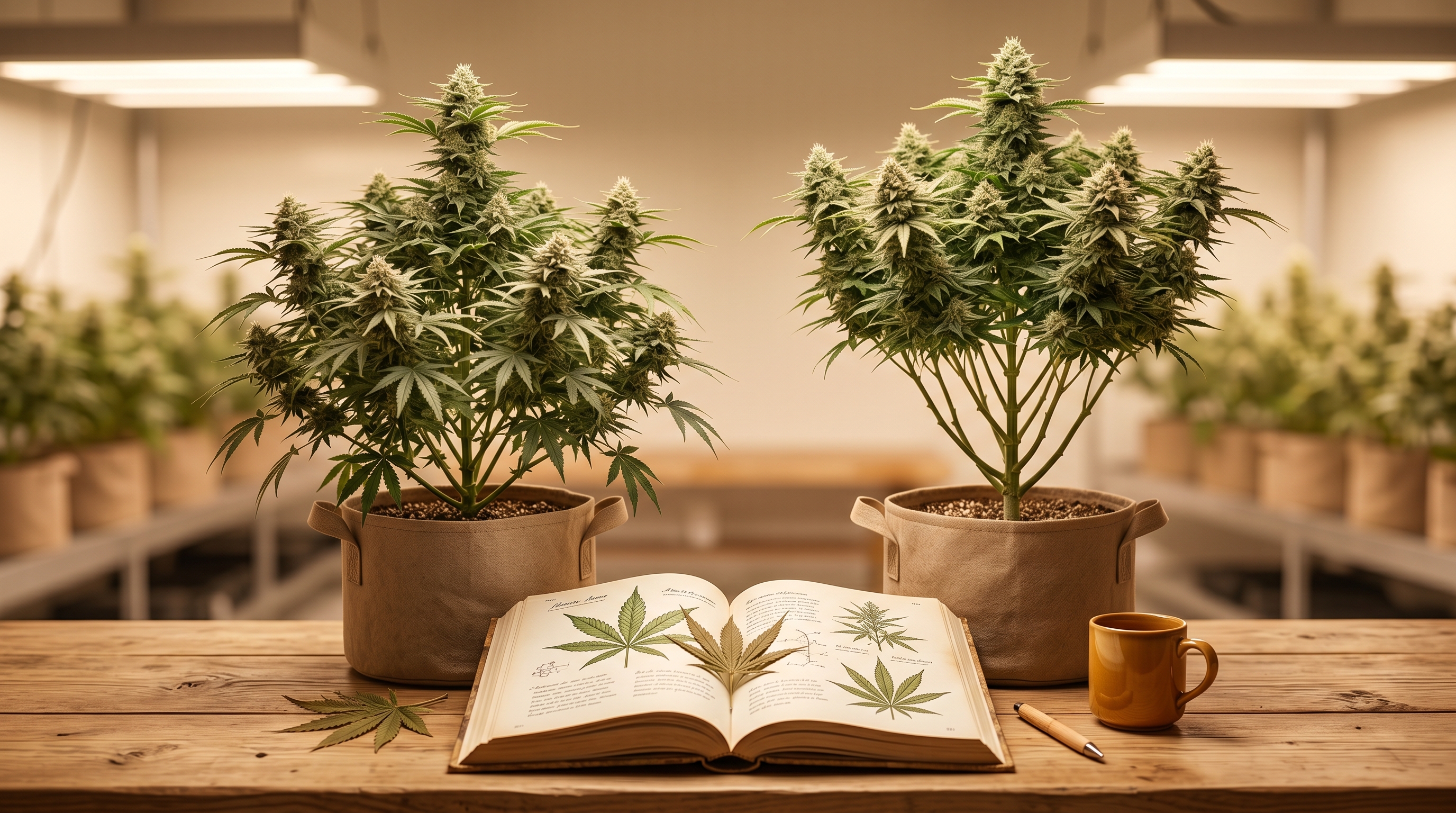
What lollipopping actually does
Picture a lollipop: a bare stick with all the candy concentrated at the top. That is the shape you are creating. You strip the lower third (or so) of the plant of its small leaves, weak side branches, and immature bud sites, leaving a clean lower stem and a thick, productive upper canopy.
The biology is simple. Light intensity drops off sharply as it travels down through a dense canopy. The buds near your grow light get plenty of photons; the ones near the floor get scraps. Those bottom sites still demand sugars, nitrogen, and water to stay alive, but they will never reach the light levels needed to pack on dense flower. So the plant ends up subsidizing a layer of larf that you would have trimmed off and tossed anyway. Lollipopping cuts those freeloaders early so the plant redirects that energy upward.
There is a second benefit that experienced growers prize just as much: airflow. Dense lower growth traps humidity right where stagnant air pools. That is a recipe for bud rot (botrytis), powdery mildew, and pests like fungus gnats and spider mites that love sheltered, humid undergrowth. Clearing out the bottom opens up the canopy, lets air move freely, and removes a major mold risk during late flower when your colas are at their fattest and most vulnerable. If you are dialing in your environment, this pairs directly with the work in our grow room humidity, temperature, and CO2 guide and VPD guide.
When to lollipop: timing is everything
This is where most growers go wrong, so read this twice. The ideal window is late vegetative growth through the first two to three weeks of flower — roughly the period that brackets your flip to a 12/12 light schedule.
Here is why that window works. When you switch photoperiod plants to 12/12, they enter the “stretch,” a burst of vertical growth that typically lasts two to three weeks and can double a plant’s height. During the stretch, the plant is establishing its final architecture: which branches will become main colas and which will languish below the canopy. Lollipopping right around the flip (anywhere from a few days before to roughly 7 to 14 days after) lets you prune while the plant is still flexible and recovers quickly, before it commits energy to those doomed lower sites.
A few timing rules I live by:
- Do not lollipop deep into flower. As a general rule, avoid heavy removal past about week three of flower. After that, your plant has stopped vegetative growth and shifted entirely to bud production. Stripping growth then is pure stress with little upside.
- Autoflowers are different. Autos run on a fixed internal clock and cannot afford a long recovery, so be gentle. Lollipop lightly, right as the buds start to form, and never take as much as you would from a photoperiod plant.
- Match it to your training schedule. If you have already topped, FIMmed, or done low-stress training, lollipopping is the natural follow-up that cleans up everything below your established canopy.
For a full picture of where this fits in a plant’s life, see our seed-to-harvest timeline.
How much to remove: the bottom third rule
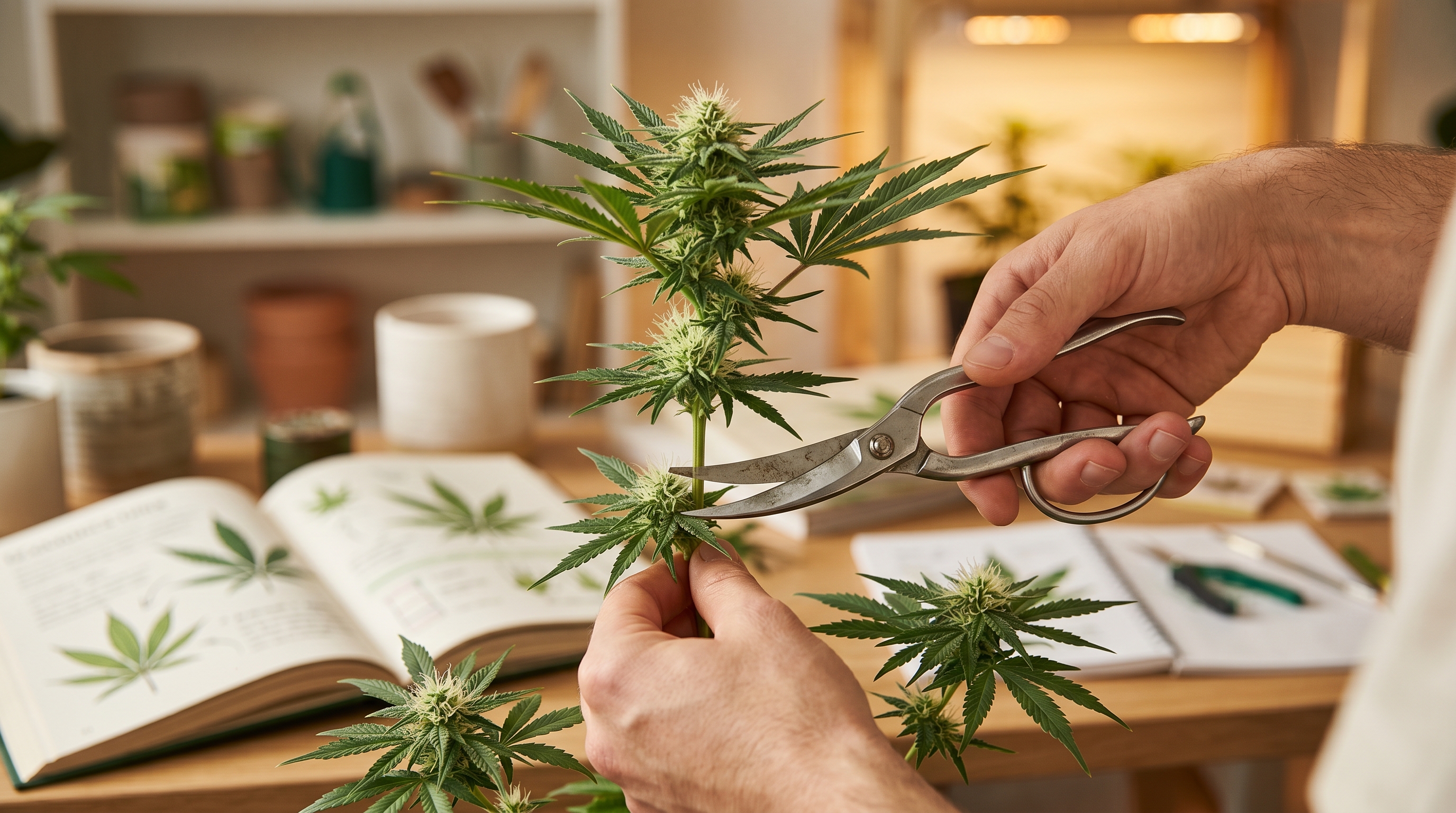
The single most important number to remember is this: remove growth from roughly the bottom one-third of the plant, and never more than about 30 to 40 percent of total growth in one session. When you are unsure, take less. You can always come back and remove more in a few days, but you cannot glue a leaf back on.
To find your cut line, look at your canopy from the side and imagine where light penetration drops off. Anything sitting in permanent shade below that line is a candidate for removal. The classic targets are:
- Thin, spindly side branches that will never reach the canopy
- Small “sucker” growth low on the main stem
- Tiny pre-flower bud sites buried in shade
- Fan leaves on the lowest section that block airflow without feeding meaningful buds
What you are protecting is the upper two-thirds: the strong branches that have reached or are reaching the canopy. Those become your premium colas.
Step-by-step: how to lollipop
- Wait for the right window. Late veg or the first 1 to 3 weeks after your flip to 12/12. Confirm the plant is healthy and not already stressed from a transplant, pest issue, or nutrient problem. Never prune a struggling plant.
- Sanitize sharp scissors. Use clean, sharp curved trimming shears wiped with isopropyl alcohol. Dull or dirty tools crush stems and invite disease. For thicker branches, use a proper pair of pruners.
- Identify your cut line. Step back and find the point where light stops reaching the lower growth, which tends to sit around the bottom third.
- Remove the obvious freeloaders first. Cut the thin lower branches and suckers flush to the main stem. Make clean cuts; do not leave ragged stubs.
- Clear small leaves and shaded bud sites. Strip the tiny leaves and immature flower sites below your line. Be careful around pre-flowers on branches you intend to keep — nick them and you can damage a future cola.
- Stop before you overdo it. Once you have cleaned the bottom third, put the scissors down. If you are tempted to keep going, that is your cue to wait two or three days and reassess.
- Support recovery. Keep your environment stable for a few days. Some growers give a light dose of seaweed or kelp extract to ease transplant-style stress, but the best medicine is simply a steady, low-stress environment.
How lollipopping pairs with other techniques
Lollipopping is a finishing move, not a standalone strategy. It works best stacked on top of canopy-management techniques that have already evened out your plant. Here is how it fits with the heavy hitters:
- Topping and FIMming. Topping breaks apical dominance and creates multiple main colas instead of one. Once you have several even tops, lollipopping cleans up the now-redundant lower growth beneath them. They are a natural pair.
- Low-stress training (LST). LST bends branches outward to flatten the canopy and expose more bud sites to light. Lollipop after your canopy is set to remove whatever still sits in shade.
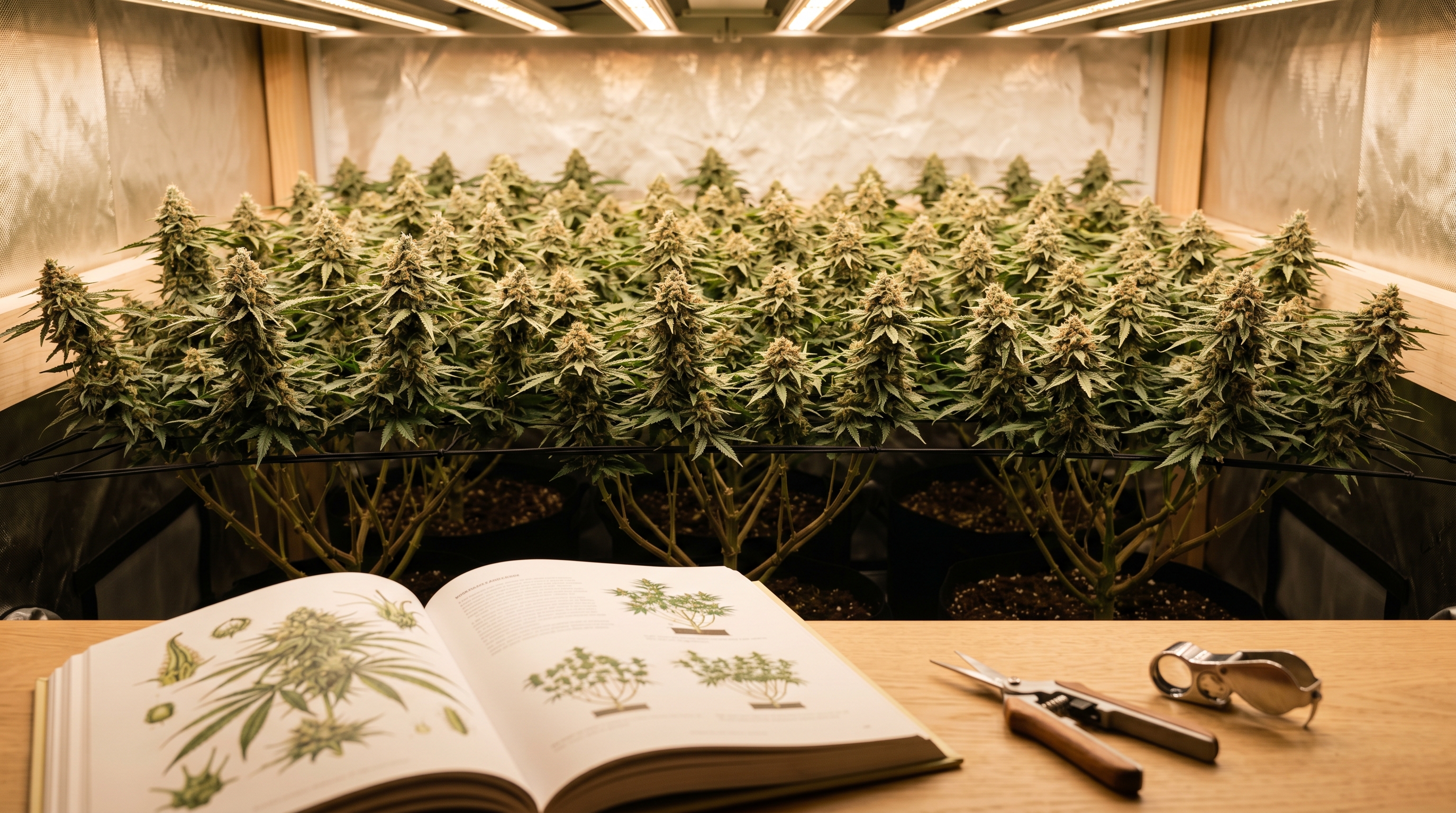
- ScrOG (Screen of Green). In a ScrOG setup, you weave branches through a horizontal screen to build one flat, even canopy. Everything below the screen is, by definition, shaded — which makes lollipopping almost mandatory. Strip it all and let the plant feed only what is above the net.
- SOG (Sea of Green). A Sea of Green grows many small plants flipped early, each producing one dominant cola. Light lollipopping keeps each plant clean and airy, though SOG’s short veg time means there is less lower growth to remove in the first place.
- Defoliation. Lollipopping removes whole lower branches; defoliation strategically removes fan leaves across the plant. They are complementary — many growers do a light defoliation pass at the same time. Just remember both are stress events, so do not go overboard on the same day.
For the bigger picture on how these techniques work together, our complete plant training guide ties topping, LST, and ScrOG into one workflow.
Mistakes to avoid
- Cutting too much, too fast. The cardinal sin. Removing more than 30 to 40 percent in one go shocks the plant, stalls growth, and can shorten your final colas. Restraint wins.
- Lollipopping too late. Heavy removal deep into flower is mostly stress with no time to recover. Keep it to the late-veg-through-week-three window.
- Damaging keeper bud sites. Rushing through with scissors near the pre-flowers on branches you mean to keep can cost you colas. Slow down on the borderline branches.
- Lollipopping a stressed or sick plant. Pruning is elective surgery. If the patient is already fighting pests, nutrient lockout, or recovering from a transplant, fix that first. See our common growing problems guide.
- Ignoring your light. Powerful modern LED grow lights penetrate deeper into the canopy than old fluorescents, so you may need to lollipop less aggressively. Match the cut to your light’s reach.
- Forgetting airflow upstream. Lollipopping helps airflow, but it is not a substitute for ventilation. Pair it with a properly dialed grow tent setup.
Does it actually boost yield?
Honestly? It depends on your setup. In a light-limited environment — modest LEDs, a crowded tent, a ScrOG net — lollipopping reliably improves the ratio of dense top-shelf flower to throwaway larf. You may not always grow more total grams, but you grow more good grams, and you slash your mold risk and your trimming time at harvest. In a high-powered, well-spaced grow where light reaches deep, the gains are smaller. The technique rewards growers whose lower canopy was never going to finish anyway.
That nuance is exactly the kind of thing cannabis culture loves to flatten into a one-line rule. The same flattening happens with strains: people chase a name expecting a fixed result, when the real story is how a given plant — and a given chemotype — behaves in your conditions. If you want to understand why the same genetics can express so differently, read why the same strain hits you differently and how to find your ideal high.
Bringing it back to what you smoke
Lollipopping is a grower’s lever, but it connects to everything we obsess over at This Is Why I’m High. Bigger, denser, better-ventilated colas mean more fully developed trichomes, which means a richer terpene and cannabinoid expression in the final flower. The terpenes that survive and concentrate in those healthy top buds — myrcene for body-heavy relaxation, limonene for a brighter mood, caryophyllene for physical relief, terpinolene for an energetic edge — are what ultimately decide which High Family a finished batch lands in, whether that is Relax, Uplift, Energy, or Relief.
In other words, good cultivation is the front end of good chemistry. Whether you grow your own or just want to understand what you are buying, the principle is the same: pay attention to where the energy goes. That is true for a plant in a tent, and it is true for your own sessions. The High IQ app exists so you can track which terpene profiles and effects actually work for you — the personal data layer that turns “this strain is supposed to do X” into “this profile reliably does X for me.”
Grow with intention, prune with restraint, and let the canopy do what it does best.
Key Takeaways
- Lollipopping removes shaded lower growth so the plant funnels energy into the top colas that actually get light.
- Timing: do it in late veg through the first 2 to 3 weeks of flower, bracketing your flip to 12/12. Avoid heavy removal after about week three.
- Amount: clear roughly the bottom one-third, and never more than about 30 to 40 percent of total growth in one session. When unsure, take less.
- Bonus benefit: opening up the lower canopy improves airflow and cuts mold, mildew, and pest risk.
- Pairs with topping, LST, ScrOG, SOG, and light defoliation — it is the finishing move after your canopy is set.
- Biggest mistakes: cutting too much too fast, lollipopping too late, and pruning a stressed plant.
Sources
- Grow Weed Easy — Lollipopping Cannabis: How to Do It Right
- Royal Queen Seeds — How To Dramatically Boost Yields With Cannabis Lollipopping
- Fast Buds — Lollipopping: Cannabis Plant Technique For Bigger Buds
- FloraFlex Media — Cannabis Lollipopping Technique: Enhancing Buds by Removing Lower Growth
- Sensi Seeds — Lollipopping Cannabis: One Sweet Trick to Up Your Yields


