Cannabis Topping vs FIMming: Which Technique Is Better?
Topping makes 2 even colas with more stress; FIMming makes 3-4 messier colas with faster recovery. Here's how to choose the right cut for your grow.

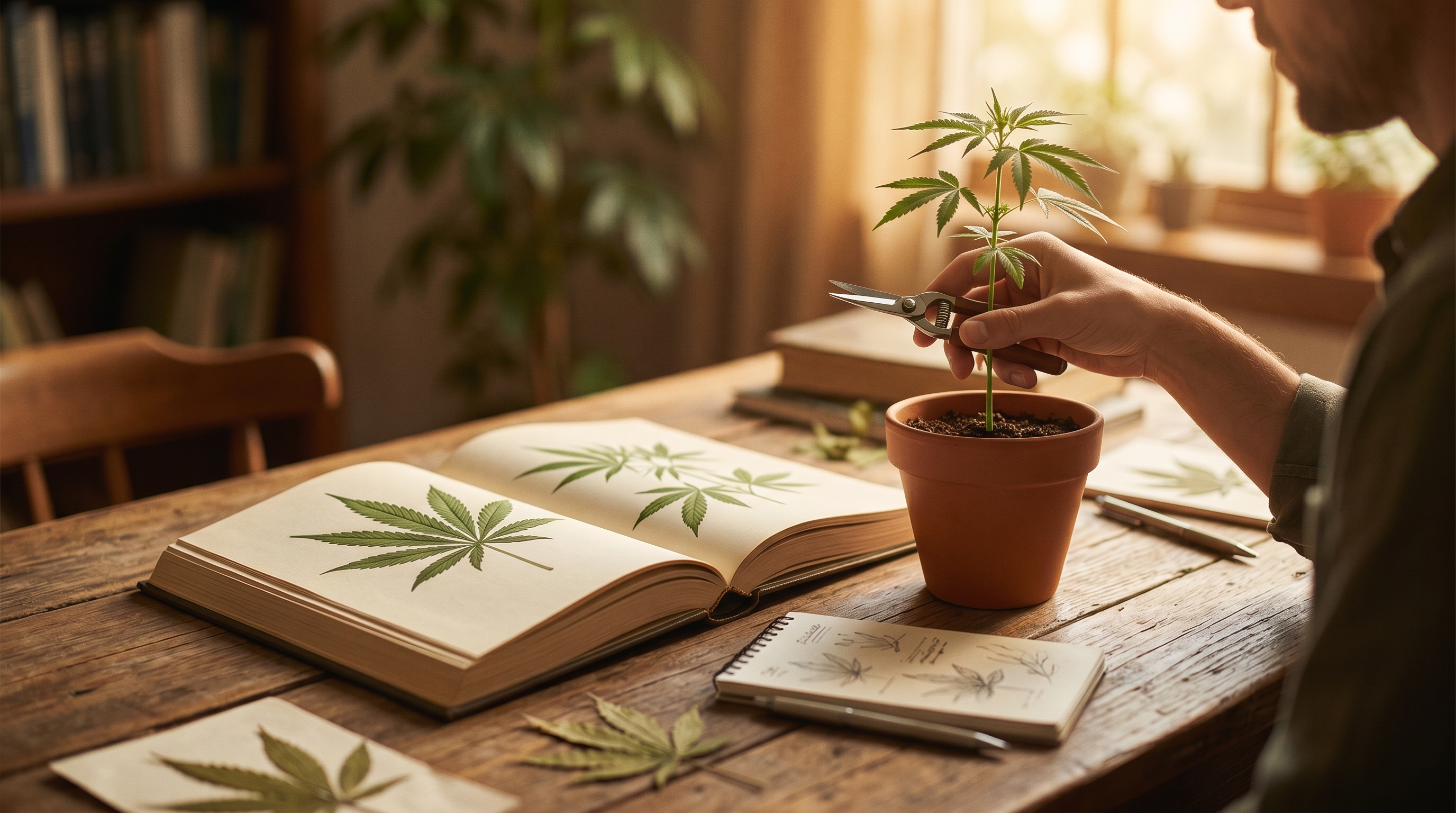
If you have ever stood over a young cannabis plant with a pair of scissors, frozen, wondering whether to snip cleanly through the stem or just pinch off the very tip, you have met the great debate of the grow room: topping versus FIMming.
Both techniques do the same fundamental job. They break the plant’s apical dominance, the chemical pecking order that pours most of its energy into one tall central cola. Interrupt that, and the plant redistributes its growth hormones across more bud sites, giving you a wider, bushier plant with multiple fat colas instead of one lonely Christmas-tree top. The difference is in how you cut, how the plant responds, and how forgiving each method is when your hands aren’t steady.
Let me walk you through both, side by side, so you can pick the one that fits your plant, your space, and your nerves. If you are brand new to all of this, start with our beginner’s guide to growing cannabis at home and the complete plant training guide, then come back here for the deep dive.
What Is Topping?
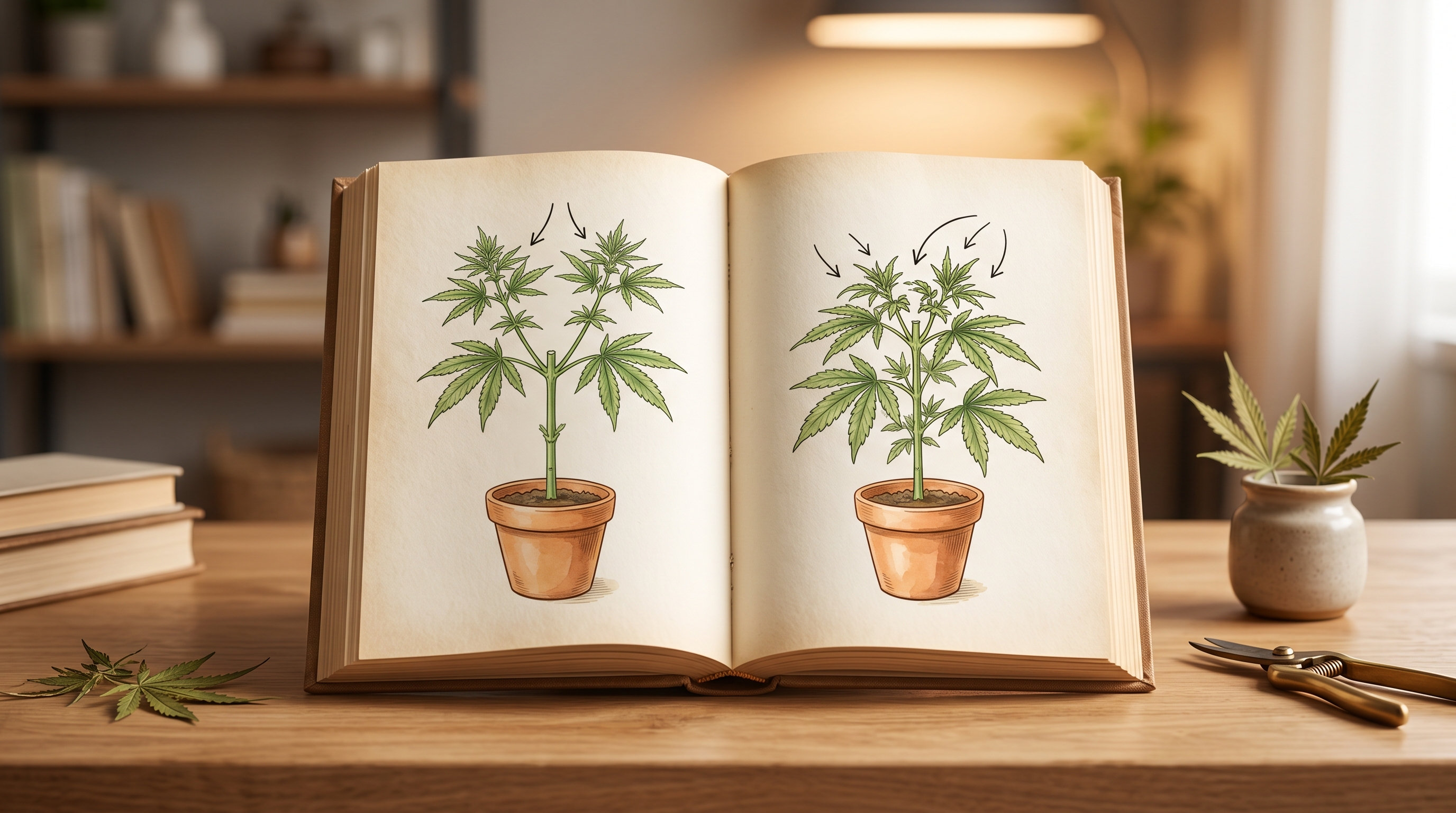
Topping is the cleaner, more decisive of the two cuts. You take a sharp, sterilized pair of scissors and slice straight through the main stem, just above a node (a node is where a set of leaves meets the stem). You are removing the newest growth tip entirely, severing the central cola.
The plant’s response is tidy and predictable. Where you had one growing tip, two new colas emerge, growing from the node just below your cut. These two colas are evenly spaced, attached at the same point, which makes them easy to bend outward and shape later. Topping is also the only one of the two methods that meaningfully reduces plant height, so it doubles as a tool for keeping a stretchy plant under your grow light, which matters most in a height-limited grow tent.
The trade-off is stress. Because you remove more plant tissue with topping, the plant has to spend more energy healing. A healthy vegetative plant typically needs a few days to a couple of weeks to fully recover and resume vigorous growth. That recovery time is rarely a problem indoors, where you control the vegetative stage and can simply wait. But it’s a real cost worth planning around.
What Is FIMming?
FIMming is the scrappier cousin, and it has the best origin story in cannabis cultivation. The name is an acronym for “F*** I Missed,” because the technique was reportedly born when a grower tried to top a plant, botched the cut, and accidentally left part of the growth tip behind. Instead of two colas, the mangled top sprouted four. A happy accident became a method.
To FIM on purpose, you pinch off roughly 75 to 80 percent of the newest cluster of growth at the very tip of the plant, leaving the bottom 20 percent intact [Tanner, 2023]. You do not cut through the main stem. The result looks like a sloppy, “mowed” top, and that’s exactly right. Because you damage rather than remove the growth tip, the plant can sprout three, four, or even more new colas from a single cut, compared to topping’s reliable two.
FIMming is gentler. You take off less tissue, so the plant barely notices the wound. New shoots can begin emerging within 48 to 96 hours, and recovery is faster than topping across the board [Humboldt, 2025]. You can even FIM by ripping the tip off with your fingernails in a pinch, though a clean, sterilized tool is always smarter for avoiding infection and other growing problems.
The catch? Precision. FIMming is messier and less predictable. The new colas are not evenly spaced, the cut looks ugly for a while, and you won’t always get the four-cola jackpot. Some FIMs underperform and behave more like a top. It also does not reduce plant height, so it won’t help you tame a stretchy strain.
Topping vs FIMming: Side by Side
Here is the whole comparison at a glance.
| Factor | Topping | FIMming |
|---|---|---|
| The cut | Clean cut through the main stem, above a node | Pinch off ~75-80% of the growth tip; stem stays intact |
| Colas produced | 2, reliably | 3-4 (sometimes more, sometimes fewer) |
| Cola spacing | Even and symmetrical | Uneven, less tidy |
| Stress level | Higher (more tissue removed) | Lower (minimal tissue removed) |
| Recovery time | A few days to ~2 weeks | 48-96 hours to new shoots; faster overall |
| Precision needed | Higher; exact cut matters | Lower; forgiving by design |
| Reduces height | Yes | No |
| Predictability | High | Lower |
| Best for | Symmetry, height control, manifold/main-lining | Bushier plants, faster turnaround, more colas per cut |
Neither is objectively “better.” Topping trades stress for predictability and symmetry. FIMming trades predictability for speed and a higher cola count. Most experienced growers keep both in their toolkit.
When to Use Each: Node Timing Matters
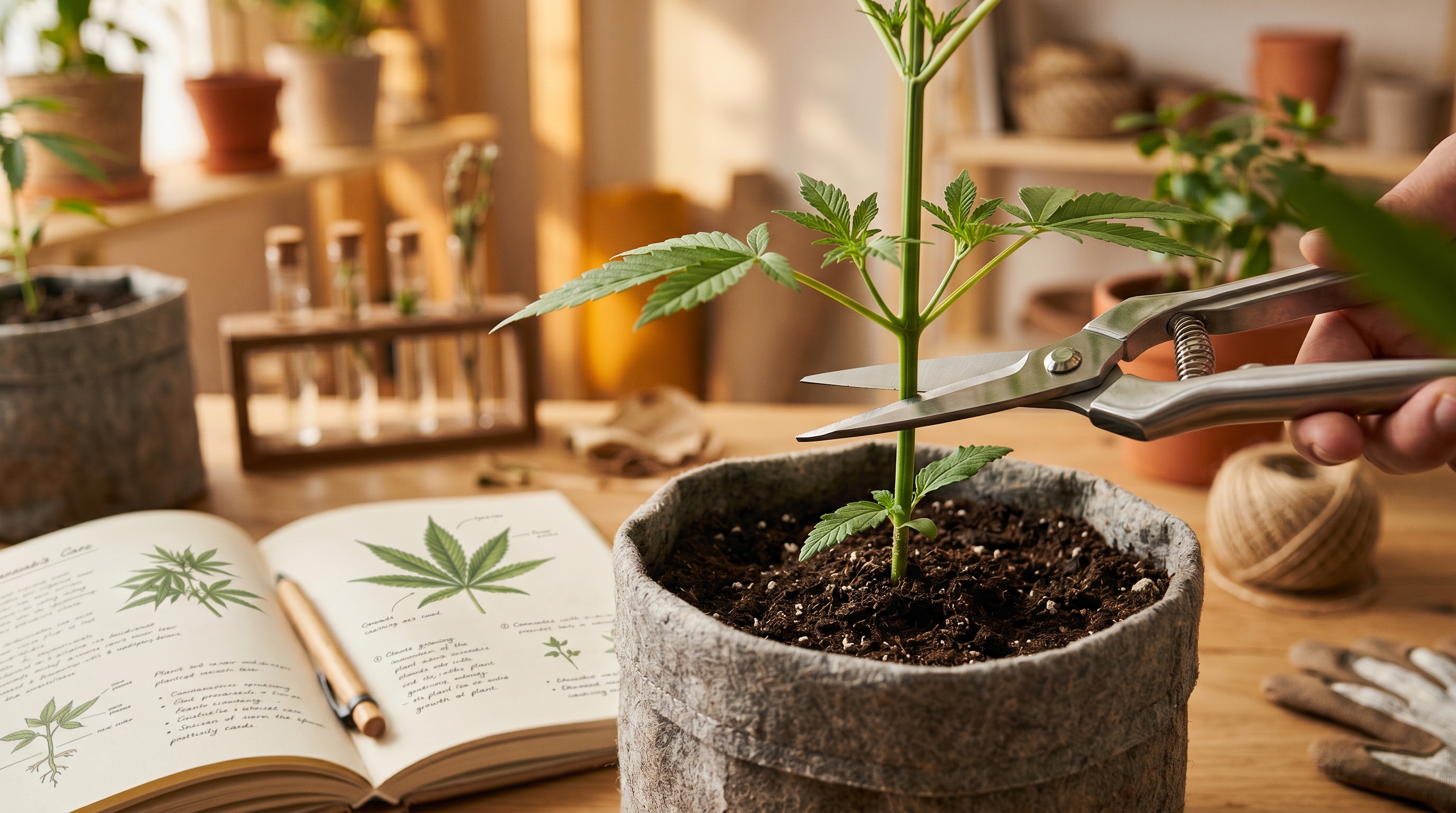
The single biggest mistake new growers make is cutting too early. If you top or FIM a tiny seedling, you’ll dramatically slow its growth and may stunt it for weeks. The plant simply doesn’t have the root mass or leaf surface to bounce back.
The rule of thumb is to count nodes. Wait until your plant has built enough structure before you cut:
- FIMming: You can FIM a little earlier, once the plant has at least 3 to 5 nodes. Some growers FIM at just 3 nodes.
- Topping: Wait a bit longer, until the plant has 4 to 6 nodes total. Generally, top at 4 nodes or later.
A practical signal: if your plant is pushing out new leaves every single day, it’s vigorous enough to recover quickly. Many growers also wait until the plant is roughly a foot tall and well into the vegetative stage before topping. A clean recovery also depends on healthy roots and steady feeding, so dial in your nutrient schedule before you cut.
One hard rule applies to both: only top or FIM during vegetation, never in flower. By around week six of flowering, the plant has stopped making new stems and focuses entirely on building buds. Cutting then just removes bud sites and stresses the plant during its most delicate phase, which costs you yield [Haze, 2024]. If a flowering plant is getting too tall for your tent, gentle bending is your only safe option.
When deciding between the two for a given plant, think about your goal:
- Choose topping if you want symmetry, need to control height, or plan to build a structured canopy through repeated cuts (a technique called manifolding or main-lining).
- Choose FIMming if you want more colas faster, your plant is on a tight timeline, or you simply want a bushier shape without sweating a perfect cut.
Combining With Low-Stress Training
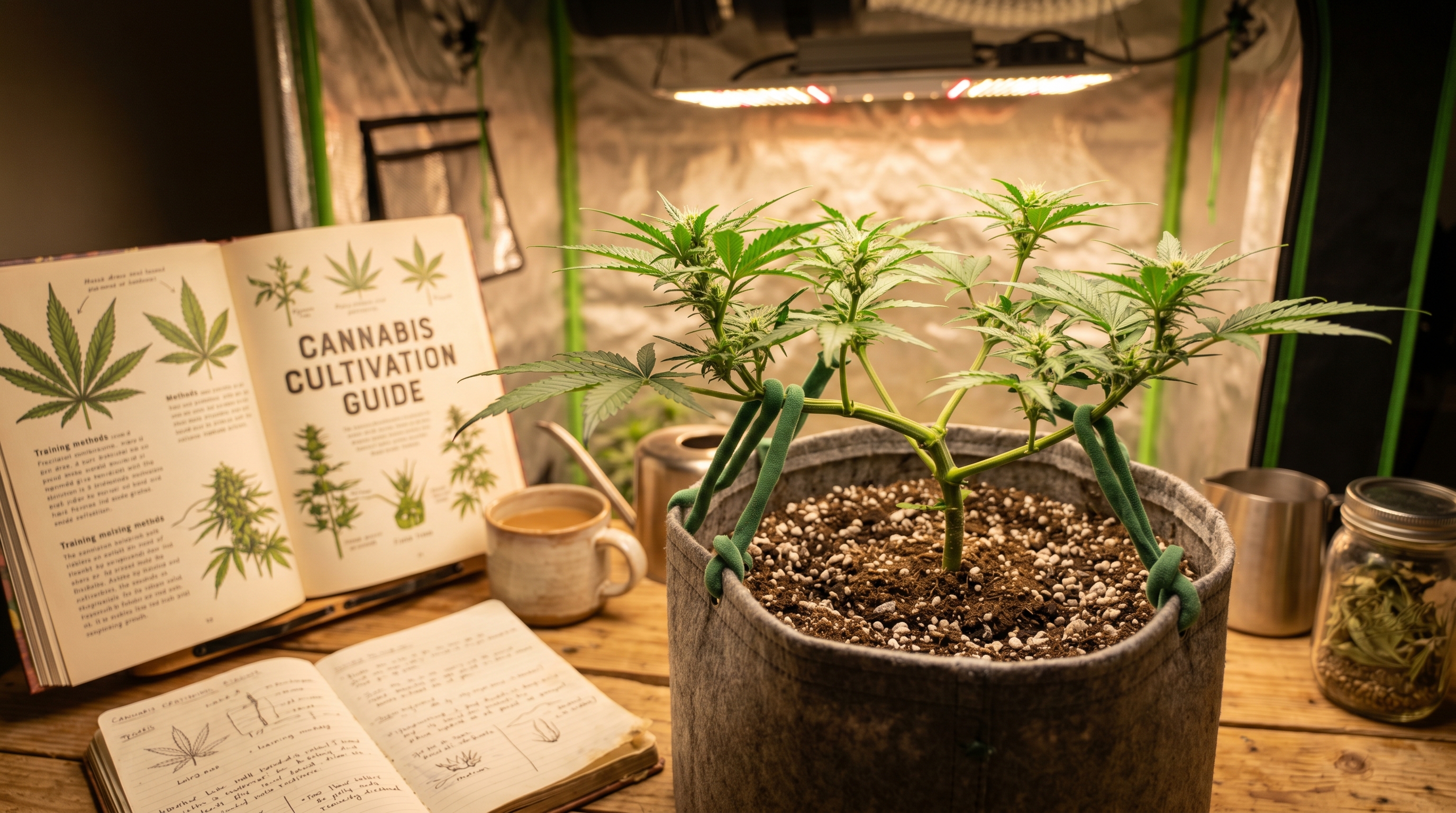
Here’s the secret that ties everything together: topping and FIMming are not the whole game. They create the colas, but low-stress training (LST) is what arranges them.
After you top or FIM and the plant recovers, you gently bend the tallest stems outward and tie them down. This opens up the center of the plant, exposes lower growth tips to direct light, and turns them into colas too. Topping plus LST is one of the most reliable ways to build a flat, even canopy where every bud site gets full light. FIMming plus LST does the same, just with more starting colas to work with.
The pairing matters because both topping and FIMming alone tend to leave you with a few dominant tops. LST is the gentle follow-up that spreads the energy evenly so no single cola runs away with all the growth. If you are running a screen-of-green (ScrOG) setup, the full plant training guide walks through how topping, FIMming, and LST stack together. Training pays off whether you grow indoors or outdoors, since both setups benefit from a wider, more even canopy.
A Serious Word of Caution for Autoflowers
This is the most important warning in the article, so I’m giving it its own section: be very careful topping or FIMming autoflowering strains, and most growers recommend avoiding it entirely.
Autoflowers run on a fixed internal clock rather than a light schedule. Their entire life from seed to harvest is compressed, often under 10 weeks, with a short, non-negotiable vegetative window. Photoperiod plants give you all the veg time you want to recover from a cut. Autoflowers do not. If an autoflower spends its precious veg days healing from a topping wound instead of growing, it may flip into flower before it ever recovers, leaving you with a small, stunted plant and a disappointing harvest.
If you grow autoflowers and want to shape them, low-stress training is far safer. Gentle bending breaks apical dominance without the recovery penalty. If you’re unsure whether your seeds are autoflowering, our guides on cannabis seed types and the ruderalis genetics behind the autoflowering trait will help you tell the difference before you reach for the scissors.
Which Technique Is Right for You?
Let me match the method to the grower:
- Total beginner, one or two photoperiod plants: Start with a single topping. It’s predictable, you’ll clearly see the two colas form, and it teaches you how the plant responds.
- Grower chasing maximum colas and speed: FIMming. More colas per cut and faster recovery mean a bushier plant sooner.
- Tight on vertical space: Topping, because it’s the only method that reduces height.
- Building a manifold or symmetrical canopy: Topping, repeated, for clean structure.
- Growing autoflowers: Neither. Use LST and skip the high-stress cuts.
- Nervous about messing up the cut: FIMming is more forgiving by design. A botched FIM often still works.
Final Thoughts: The Verdict
So which is better? The honest answer is that it depends on what you’re optimizing for. Topping wins on precision, symmetry, and height control. FIMming wins on cola count, recovery speed, and forgiveness. They’re two tools for slightly different jobs, and the best growers use both, sometimes on the same plant.
If I had to hand a single recommendation to someone starting out: top your first photoperiod plant so you learn how it reacts, follow up with LST to spread the canopy, and once you’re comfortable, experiment with FIMming on your next grow to feel the difference. Whatever you choose, wait for the node count, keep your tools clean, stay out of the flowering stage, and leave your autoflowers alone. Do it right and you’ll be rewarded with more, bigger colas when it’s time to harvest.
The plant will tell you what it likes. Your job is just to pay attention to what works, grow after grow.
Frequently Asked Questions
Does topping or FIMming increase yield? Both can increase yield by turning one cola into several and creating a wider canopy that makes better use of your grow light. Neither guarantees more yield on its own; the gains come from pairing the technique with good light, healthy plants, and LST to expose all the new bud sites.
Which is less stressful for the plant? FIMming. You remove far less tissue, so the wound is minor and the plant often recovers within a few days. Topping removes the whole growth tip and can take up to two weeks to fully bounce back.
Can I top and FIM the same plant? Yes. Many growers FIM first, then top the resulting branches a week or two later for an even bushier, more structured plant. Just give the plant time to recover between cuts.
How many nodes before I cut? Wait for at least 3 to 5 nodes before FIMming and 4 to 6 nodes before topping. Cutting a younger seedling risks stunting it.
Why does my FIMmed top look so ugly? That’s normal. The “mowed” appearance of a FIM cut looks messy for a week or two, then multiple new shoots emerge. Be patient; the ugly phase is part of the process.
Can I top a plant in flower? No. Stop all topping and FIMming before flowering. After about week six of flower the plant won’t grow new stems, and cutting only removes bud sites. Use gentle bending for height control instead.
Sources
- Haze, N. (2024). “Topping vs FIMing: Complete Cannabis Tutorial.” Grow Weed Easy — definitions, cola counts, node timing (3-5 for FIMming, 4-6 for topping), recovery, and the flowering-stage warning. https://www.growweedeasy.com/topping-fiming
- Humboldt Seed Company (2025). “Topping vs Fimming: Which Training Method Is Right for You?” — technique steps, 75-80% pinch, 48-96 hour recovery, autoflower caution. https://humboldtseedcompany.com/topping-vs-fimming-which-training-method-is-right-for-you/
- Tanner, T. (2023). “Topping And Fimming: High-Stress Training For Maximum Yield.” Growlink — apical dominance, ~75% FIM removal, four-plus shoots, two-week recovery guidance. https://blog.growlink.com/topping-and-fimming


