Cannabis for Tourette's Syndrome: Clinical Evidence and Dosing
What the THC trials and the CANNA-TICS nabiximols study actually show about cannabis for Tourette's tics, plus observed dosing and who it may help.


If you have Tourette’s syndrome and you’ve noticed your tics quiet down after cannabis, you are not imagining it. A small but unusually consistent body of clinical research has been pointing in the same direction for over two decades. The catch is that “small” is doing a lot of work in that sentence, and the headline trial designed to settle the question technically missed its mark.
This is a topic where the honest answer matters more than a tidy one. So let’s walk through what Tourette’s actually is, why the endocannabinoid system plausibly fits into the picture, what the human trials genuinely found, what doses showed up in the studies, and — most importantly — who this evidence does and doesn’t apply to.
A quick, serious note before we dive in: this article is cannabis education, not medical advice. Tourette’s is a neuropsychiatric condition, the medications used to treat it interact with cannabinoids, and self-medicating can mask or worsen things. Nothing here is a substitute for a conversation with a neurologist or psychiatrist who knows your history. Please read the “Talk to your doctor” section before you act on any of this.
What Tourette’s Syndrome Actually Is
Tourette’s syndrome (TS), formally Gilles de la Tourette syndrome, is a neurodevelopmental disorder defined by tics: sudden, repetitive, involuntary movements (motor tics) or sounds (vocal/phonic tics). Tics typically appear in childhood, peak in early adolescence, and ease for many people in adulthood — though a meaningful minority carry severe, disabling tics into adult life. TS frequently travels with companions: ADHD, obsessive-compulsive symptoms, anxiety, and impulse-control difficulties show up far more often than chance would predict.
The detail that’s easy to miss — and that turns out to matter for cannabis — is the premonitory urge. Most people with TS describe an uncomfortable, building sensation (a pressure, an itch, a “have-to”) that precedes a tic, and brief relief once the tic fires. Tics aren’t purely “random twitches”; they’re closer to a scratch for an internal itch. Many adults can suppress tics for a while, but suppression is effortful and the urge keeps mounting. If you’ve read our piece on cannabis and OCD and obsessive-compulsive symptoms, that urge-then-relief loop will feel familiar — the conditions share circuitry.
Standard first-line treatments are antipsychotics (which dampen dopamine signaling) and tic-specific behavioral therapy. Both help many people. But antipsychotics carry real side-effect burdens — weight gain, sedation, movement effects — and trained behavioral therapists are scarce. That gap is exactly why so many adults with TS have experimented with cannabis on their own.
The Endocannabinoid System and Tic Control
Why would a plant compound touch a movement disorder at all? The leading hypothesis comes back to where cannabinoid receptors live in the brain.
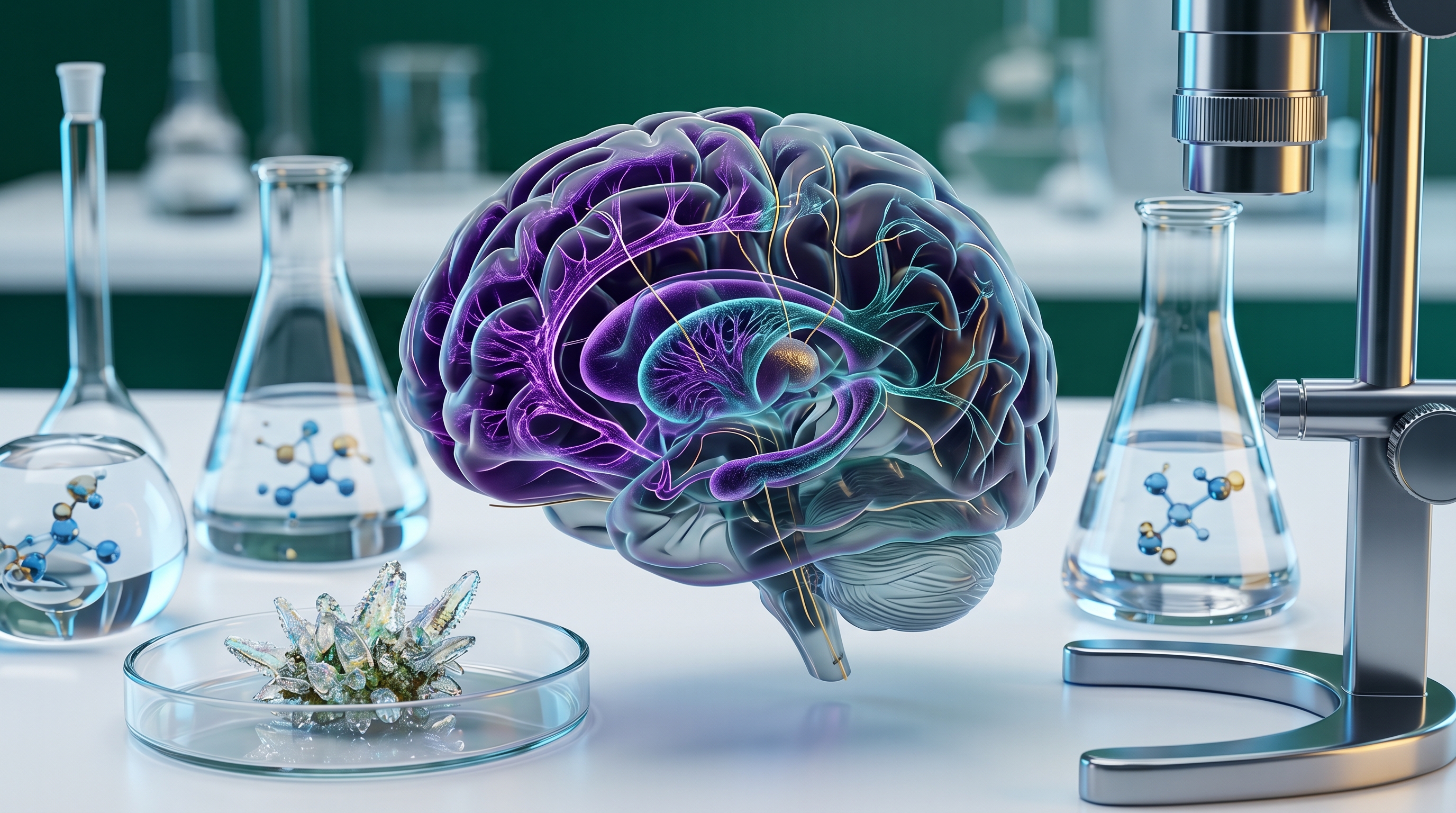
The endocannabinoid system (ECS) is your body’s own network of cannabinoid receptors (CB1 and CB2) and the molecules that activate them. If this is new to you, our endocannabinoid system guide is the place to start, and our explainer on why CB1 vs CB2 receptor location matters covers the piece that’s relevant here. CB1 receptors — the ones THC binds — are densely packed in the basal ganglia, the deep brain structures that gate and smooth voluntary movement. The basal ganglia sit at the center of the cortico-striatal-thalamo-cortical (CSTC) loops, and overactivity in those loops is one of the better-supported models of how tics get generated.
Dopamine is the other half of the story. Tics respond to dopamine-blocking drugs, which implicates dopamine signaling in the basal ganglia — and cannabinoids modulate that signaling indirectly. (Our deep dive on cannabis and dopamine and what neuroscience actually shows is worth a read, because the popular story here is oversimplified.) The proposed mechanism is that activating CB1 receptors in these circuits may turn down the excess excitatory traffic that drives both the tic and the premonitory urge that precedes it. Some researchers have even floated the idea of an endocannabinoid deficiency contributing to certain hyperkinetic conditions, though that remains a hypothesis rather than established fact.
It’s a plausible, anatomically grounded story. But plausible mechanisms have led cannabis research astray before — see the indica vs sativa myth for a cautionary tale — so the mechanism only matters if the human data backs it up. Let’s look.
The Clinical Evidence (Read This Part Carefully)
Here’s the honest summary: the evidence base for cannabis in Tourette’s is small but, for a niche condition, relatively coherent. Almost all of it comes from one research group in Germany led by Dr. Kirsten Müller-Vahl, plus a couple of more recent trials elsewhere. Coherent is not the same as conclusive.
The two foundational THC trials
The crossover pilot [Müller-Vahl et al., 2002]. A randomized, double-blind, placebo-controlled crossover trial gave a single oral dose of THC (5, 7.5, or 10 mg) to 12 adults with TS, with a four-week washout between THC and placebo days. On the self-rated symptom list, tics improved significantly versus placebo (p<0.05), and obsessive-compulsive behavior improved too. Ten of 12 patients reported global improvement after THC (mean +35%) versus only 3 of 12 after placebo. Higher doses (7.5–10 mg) looked more effective. No serious adverse reactions; five patients had mild, transient side effects.
The 6-week trial [Müller-Vahl et al., 2003]. A follow-up randomized, double-blind, placebo-controlled study treated 24 adults over six weeks, titrating from 2.5 mg/day up to a target of 10 mg/day. Several examiner-rated and self-rated scales showed significant differences favoring THC (p<0.05 at multiple visits; overall ANOVA p≈0.037). Again, no serious adverse effects. A companion analysis found THC caused no detectable cognitive impairment in these patients — and even a hint of improved verbal memory.
Two small positive trials sounds encouraging. But a 2009 Cochrane review [Curtis et al., 2009] (which pooled these two trials — 28 distinct patients total) concluded there was “not enough evidence to support the use of cannabinoids” for tics and OCB in TS. That’s the appropriately cautious read of a very thin dataset.
CANNA-TICS: the big trial that almost delivered
To settle the question, the same group ran CANNA-TICS — the first large, multicenter, randomized, double-blind, placebo-controlled phase IIIb trial of a cannabis-based medicine in TS (published 2023). It tested nabiximols (Sativex) [Jakubovski et al., 2023], an oromucosal spray with roughly 1:1 THC:CBD, in 97 adults randomized 2:1 to drug versus placebo, dosed up to 12 sprays/day (each spray ≈ 2.7 mg THC + 2.5 mg CBD).
The primary endpoint was the proportion of patients achieving ≥25% tic reduction on the Yale Global Tic Severity Scale after 13 weeks. The result: 21.9% of the nabiximols group responded versus 9.1% on placebo — more than double — but the difference did not reach statistical significance (p≈0.076). Formally, the trial was negative; superiority could not be demonstrated.
So why do clinicians still describe the field as “promising”? Because the secondary signals all pointed the same way: trends toward improvement in tics, depression, and quality of life, and subgroup signals suggesting men, those with more severe tics, and those with comorbid ADHD may benefit more. There were no relevant safety problems. The authors’ own framing was “encouraging” despite the missed primary endpoint — a fair-but-disappointing outcome that’s common when an effect is real but modest and the trial is slightly underpowered.
Other recent threads
A 2023 Australian crossover RCT in NEJM Evidence [Anderson et al., 2023] of a 1:1 THC:CBD oil in 22 adults with severe TS did hit significance: tic scores dropped 8.9 points on the active drug versus 2.5 on placebo, with a significant treatment effect (p≈0.008), alongside reductions in OCD symptoms and anxiety. A 2024 Australian pilot in adolescents found the protocol feasible with an efficacy signal, but it was tiny (10 enrolled) and underpowered. A 2024 adolescent pilot crossover trial [Efron et al., 2024] of medicinal cannabis in 10 teens showed the protocol was feasible with an efficacy signal, but it was far too small to draw conclusions. And Müller-Vahl’s clinic has published retrospective data on ~98 patients in which most reported tic improvement across various cannabis-based medicines.
Add it up and you get a real, repeatable-looking signal in adults — strong enough to keep researchers invested, too thin to call cannabis an established treatment.

Dosing Observed in the Studies
To be crystal clear: these are doses used in supervised research, not a protocol for you to follow. Cannabinoid dosing for TS is highly individual and belongs in the hands of a prescriber. With that said, here’s what the trials actually used:
- Oral THC (dronabinol): single doses of 5–10 mg in the pilot; titrated from 2.5 mg/day up to ~10 mg/day in the 6-week trial.
- Nabiximols (CANNA-TICS): titrated up to 12 sprays/day, roughly 32 mg THC + 30 mg CBD daily at the ceiling.
- THC:CBD oil (Australian RCT): titrated up to ~20 mg THC + 20 mg CBD per day.
A few patterns are worth noting. Dosing was slow and titrated — started low, raised gradually. Higher THC doses tended to work better in the pilot, but also raise side-effect risk. And the THC:CBD combinations leaned on a balanced ratio rather than THC alone, which fits the broader entourage effect thinking. If you’re curious how ratios shape effects generally, our guides on finding your ideal THC-to-CBD ratio and THC vs CBD differences cover the fundamentals — though, again, none of that substitutes for clinical supervision in a condition like this. One more honest caveat: the same dose can hit you differently each time, which is exactly why a tracked, prescriber-guided approach beats guesswork.
Side Effects and Who This Is For
The trials reported a reassuring safety profile — no serious adverse events across the THC studies and CANNA-TICS. The common side effects were mild and transient: dizziness, tiredness, dry mouth, and — notably in the CANNA-TICS active group — cognitive complaints like slowed thinking, memory lapses, and poor concentration. That cognitive point deserves weight, because TS so often coexists with ADHD; our piece on how cannabis affects memory digs into that trade-off.
Who does the evidence actually apply to? Almost exclusively treatment-resistant adults — people whose tics haven’t responded adequately to first-line antipsychotics and behavioral therapy. The studies enrolled adults (mostly the crossover and 6-week trials and CANNA-TICS were 18+), and the pediatric/adolescent data is preliminary and not a basis for treating kids. THC and a developing brain are a fraught combination, as we cover in cannabis and the teenage brain.
There are real reasons for caution beyond side effects. THC can trigger anxiety or, in vulnerable people, worse — see cannabis and paranoia and the serious risk discussion in who should avoid THC for schizophrenia risk. And because TS is so often medicated, drug interactions are a live concern — which brings us to the conversation you actually need to have.
Why the Evidence Is Still Limited
Let’s name the limitations plainly:
- Tiny samples. The foundational trials enrolled 12 and 24 patients. Even CANNA-TICS, the “large” study, had 97 — small by drug-trial standards.
- One dominant research group. Most positive data traces back to a single German team. Independent replication is thin.
- The definitive trial missed. CANNA-TICS did not meet its primary endpoint. A trend is not a proof.
- Heterogeneous products. Oral THC, nabiximols, and THC:CBD oils aren’t interchangeable, which muddies pooling.
- Placebo response is high in tic disorders, making real effects hard to isolate.
This is roughly the same maturity problem we flag across emerging cannabis medicine — compare the evidence discussions in cannabis for Parkinson’s disease and cannabis for multiple sclerosis, where the data is further along. For a wider reality check on cannabis-and-the-brain claims, the Lancet cannabis and mental health study coverage is a good grounding read.
Talk to Your Doctor — Seriously
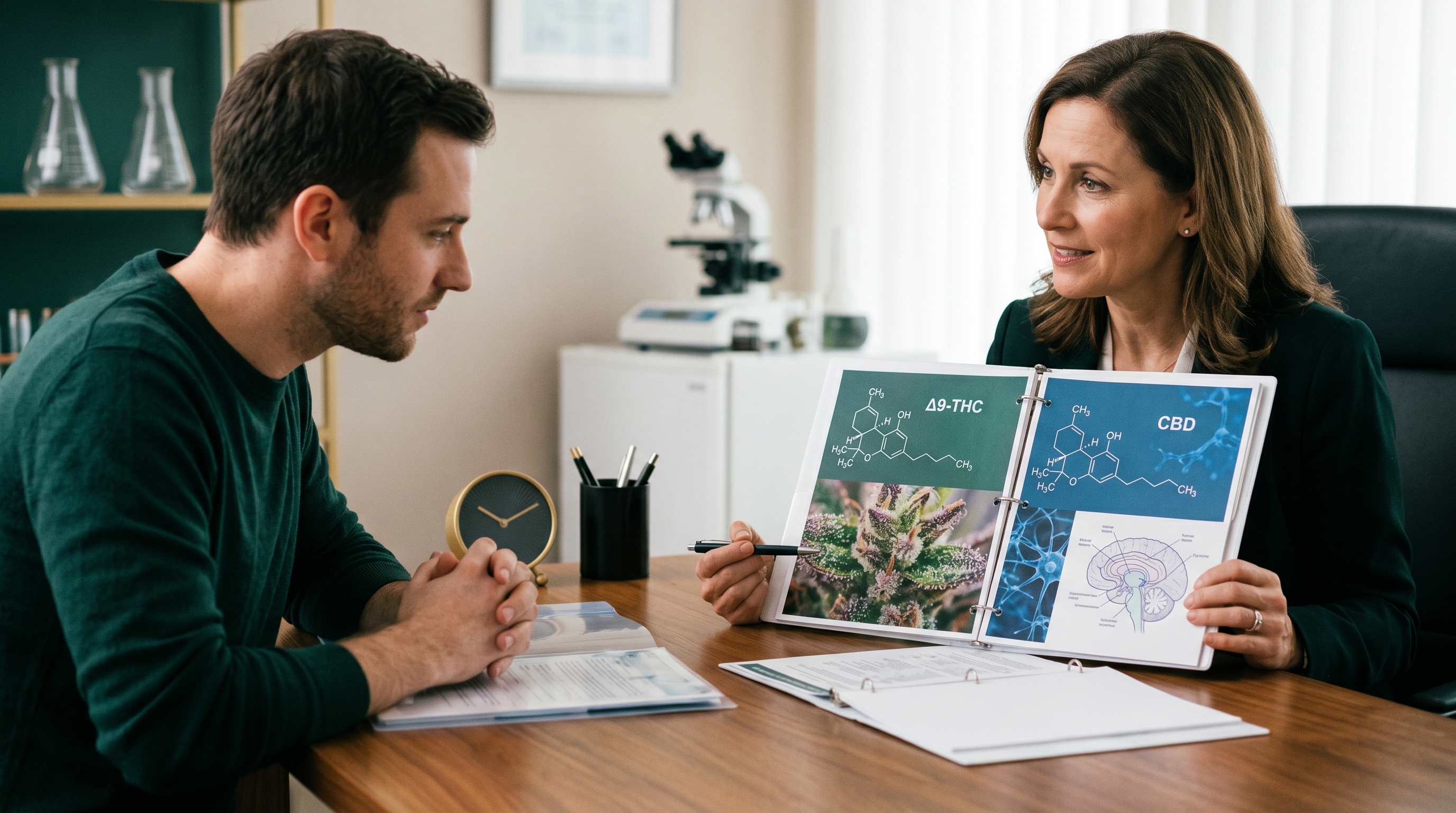
If you have Tourette’s and you’re considering cannabis, the single most important step is a real conversation with a neurologist or psychiatrist. Here’s why that isn’t a throwaway line:
- Interactions matter. Antipsychotics, SSRIs, and other TS medications can interact with cannabinoids. Our overview of cannabis and medication interactions your doctor may not mention explains the mechanisms.
- Self-medication can mask problems or worsen comorbid anxiety, mood, or attention symptoms.
- Legal access usually runs through a medical pathway anyway. A clinician can help you weigh standardized, dosed products against unregulated flower.
- Tics fluctuate naturally, so it’s genuinely hard to know what’s working without structured tracking.
None of this is medical advice, and cannabis is not a cure for Tourette’s — no treatment is. It may, for some treatment-resistant adults, be one tool worth discussing. That’s the most the evidence supports today. If you and your doctor do explore it, tracking your response carefully — dose, product, timing, tic severity, side effects — turns a guessing game into usable data. That kind of personal pattern-finding is exactly what the High IQ app is built for.
Key Takeaways
- Cannabis is not a cure for Tourette’s, and no treatment is. The honest claim is that THC-containing cannabinoids may modestly reduce tics in some treatment-resistant adults.
- The mechanism is plausible: CB1 receptors are dense in the basal ganglia, the movement-gating circuits implicated in tics.
- The two foundational THC trials (12 and 24 adults) were positive but tiny; a 2009 Cochrane review judged the evidence insufficient.
- CANNA-TICS, the one large trial, more than doubled the responder rate versus placebo but narrowly missed statistical significance.
- Research doses were low and slowly titrated (oral THC ~10 mg/day; THC:CBD products up to ~20 mg THC/day) — under medical supervision, not as a self-dosing guide.
- This is education, not medical advice. The right move is a conversation with a neurologist or psychiatrist before anything else.
Frequently Asked Questions
Does cannabis cure Tourette’s syndrome? No. There is no cure for Tourette’s, and cannabis is not one. The research suggests it may reduce tic severity for some treatment-resistant adults, but the effect is modest and the evidence is limited.
Is THC or CBD the active ingredient for tics? The strongest signal is for THC (or THC-dominant 1:1 THC:CBD combinations). Pure CBD has not been shown to reduce tics in controlled trials. See THC vs CBD.
Did the big CANNA-TICS trial work? Not formally. More than twice as many patients responded on nabiximols as on placebo, but the difference fell just short of statistical significance (p≈0.076). The authors called the secondary results “encouraging.”
Is this safe for children with Tourette’s? The controlled evidence is in adults. Pediatric data is preliminary, and THC carries developmental-brain concerns. Cannabis for tics in kids should only ever be a clinician-led decision.
What doses were used in the studies? Oral THC up to ~10 mg/day; nabiximols up to 12 sprays/day; THC:CBD oils up to ~20 mg THC daily — all slowly titrated under supervision. These are research doses, not a self-dosing guide.
Sources
- Müller-Vahl KR, et al. Treatment of Tourette’s syndrome with Δ9-tetrahydrocannabinol (THC): a randomized crossover trial. Pharmacopsychiatry. 2002;35(2):57–61. DOI: 10.1055/s-2002-25028
- Müller-Vahl KR, et al. Δ9-tetrahydrocannabinol (THC) is effective in the treatment of tics in Tourette syndrome: a 6-week randomized trial. J Clin Psychiatry. 2003;64(4):459–465. DOI: 10.4088/jcp.v64n0417
- Müller-Vahl KR, et al. Treatment of Tourette syndrome with Δ9-THC: no influence on neuropsychological performance. Neuropsychopharmacology. 2003;28(2):384–388. DOI: 10.1038/sj.npp.1300047
- Curtis A, Clarke CE, Rickards HE. Cannabinoids for Tourette’s Syndrome. Cochrane Database Syst Rev. 2009;(4):CD006565. DOI: 10.1002/14651858.CD006565.pub2
- Jakubovski E, et al. CANNA-TICS: Efficacy and safety of oral treatment with nabiximols in adults with chronic tic disorders. Psychiatry Res Neuroimaging. 2023;323:115135. DOI: 10.1016/j.pscychresns.2023.115135
- Anderson J, et al. Tetrahydrocannabinol and Cannabidiol in Tourette Syndrome. NEJM Evidence. 2023. DOI: 10.1056/EVIDoa2300012
- Jakubovski E, Müller-Vahl K. The CANNA-TICS Study Protocol. Front Psychiatry. 2020;11:575826. DOI: 10.3389/fpsyt.2020.575826
- Efron D, et al. A pilot randomized placebo-controlled crossover trial of medicinal cannabis in adolescents with Tourette syndrome. 2024. ClinicalTrials.gov: NCT05184478


