Cannabis Storage and Humidity Packs: Keep It Fresh
Cannabis humidity control made simple: the 55-62% RH sweet spot, how Boveda and Integra Boost two-way packs work, sizing, regenerating, and hygrometers.


You bought beautiful flower. It was sticky, loud, and dripping with aroma. Three weeks later you crack the jar and it crumbles to dust, smells like hay, and scratches your throat on the way down. What happened? Almost always, the answer is one invisible variable: humidity.
Most storage advice ends at “keep it in a cool, dark, airtight jar.” That’s good general hygiene, and we cover the whole picture in our complete guide to cannabis storage. But the jar is only half the system. Inside that sealed container, the relative humidity (RH) of the air is what decides whether your terpenes survive or evaporate, and whether mold gets a foothold. This guide is all about that one number, and the little packs designed to hold it steady.
I’m Professor High, and today we’re getting nerdy about water vapor. Stick with me, because mastering humidity is the single highest-leverage thing you can do to protect your stash.
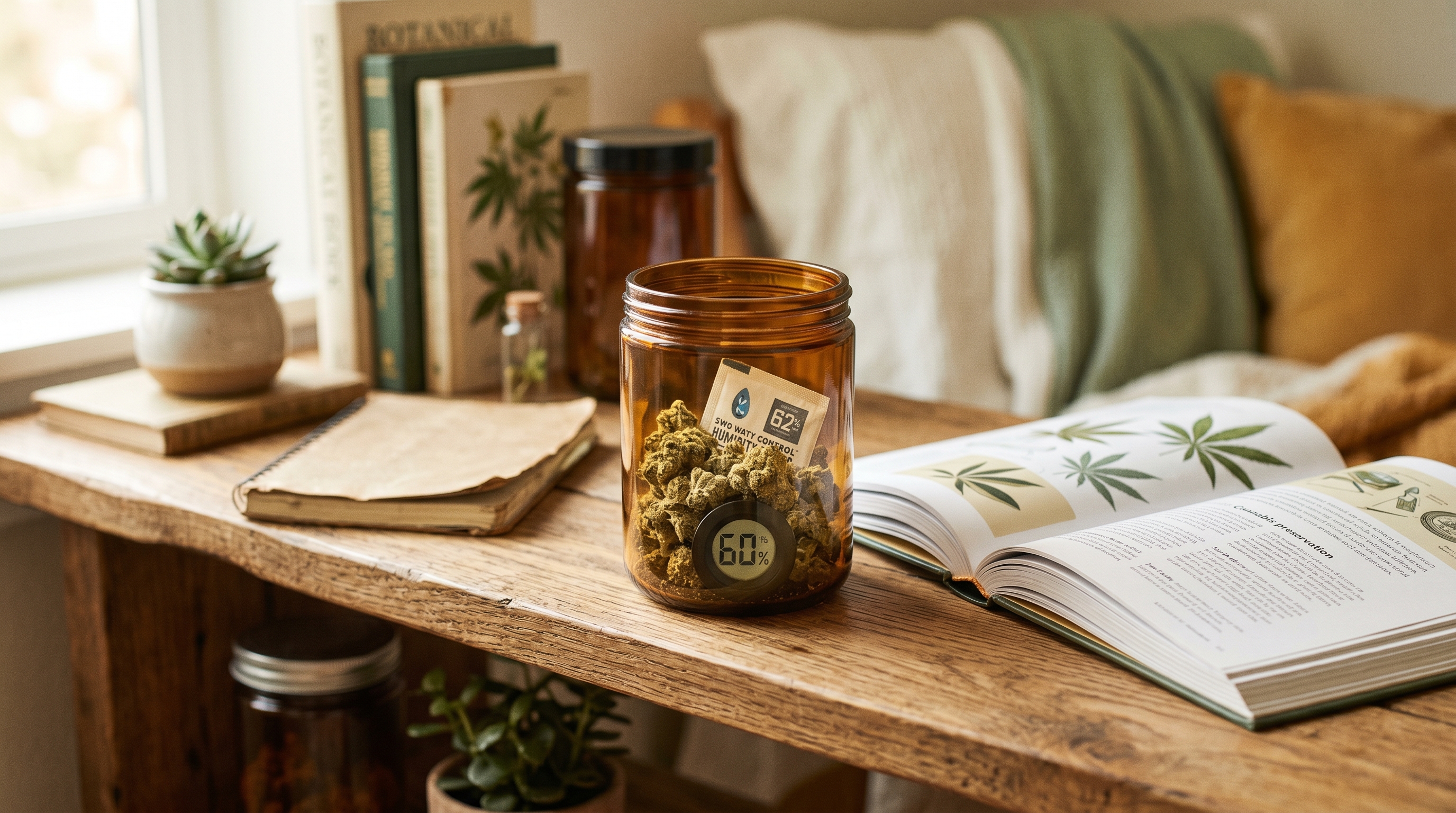
Why Relative Humidity Matters So Much
Cannabis flower is roughly 10-15% water by weight after a proper cure, and that moisture is in constant conversation with the air around it. Move the bud somewhere dry and it sheds water vapor. Move it somewhere humid and it drinks it back in. Relative humidity is just a measure of how much water vapor the air is holding compared to how much it could hold at that temperature.
Get this number wrong in either direction and you pay for it.
Too dry (below ~55% RH): Trichomes, the resin glands that hold most of your cannabinoids and terpenes, become brittle and physically detach from the flower. The volatile terpenes that give each strain its unique aroma evaporate faster in dry air, so the smell fades. The lightest, most fragrant molecules go first. A strain built on citrusy limonene or piney pinene can lose its signature long before the bud even feels dry. The plant material itself dries out and combusts hotter, producing harsher, more irritating smoke. You don’t lose much THC, but you lose almost everything that made the experience pleasant.
Too humid (above ~65% RH): Now you’re in the danger zone. Mold and mildew, especially species of Aspergillus, need available water to grow, and high RH gives it to them. Lab folks measure this precisely with water activity (Aw): the cannabis water-activity standard from ASTM International (D8197) puts the safe window at Aw 0.55 to 0.65 [International, 2022]. That maps closely to the same 55-65% RH range inside a sealed jar. Lab work on cannabis water activity confirms that mold risk climbs sharply once Aw passes about 0.65 [Daniels, 2026]. Above roughly 0.70 Aw, mold growth is essentially guaranteed within a couple of days. Inhaling moldy flower is genuinely something to avoid, especially if your immune system is compromised, so this isn’t a flavor issue, it’s a safety one. (This is general harm-reduction information, not medical advice.)
The takeaway: there’s a narrow, forgiving-but-not-infinite band where flower stays fresh, flavorful, and safe. Hitting it on purpose beats hoping for it.
The Ideal RH Range: 55% to 62%
If you remember one range from this article, make it 55-62% RH, with 62% as the everyday default.
Here’s how the industry has settled it out:
| Target RH | Best for | Trade-off |
|---|---|---|
| 62% | Daily-driver flower, short-to-medium storage | Best aroma and smoothness; sits closer to the mold line, so watch warm/humid rooms |
| 58% | Storage past ~60 days | Slightly drier, grinds easier, more shelf-life headroom; aroma slightly muted on first open |
| 55% | Long-term storage (6+ months), concentrates, humid climates | Driest of the three; maximum mold safety but faster terpene loss if used too early |
Why 62% as the default? It’s the sweet spot most labs and most smokers converge on: enough moisture to keep trichomes intact and the smoke smooth, but comfortably below the mold threshold. Drop to 58% or 55% only when long-term safety matters more than peak aroma at the moment you open the jar. The good news: re-equilibration is fast. Toss a 62% pack into a jar that’s drifted to 55% and the headspace shifts back within about 48 hours.
Two-Way Humidity Packs, Explained
A regular desiccant (like the silica gel packet in a shoe box) only does one thing: it pulls moisture out. That’s the wrong tool for flower, because it’ll happily dry your buds into oblivion.
A two-way humidity pack is smarter. It’s calibrated to a specific RH set point, and it works in both directions:
- When the air in your jar is drier than the set point, the pack releases moisture.
- When the air is more humid than the set point, the pack absorbs it.
The result is a self-regulating equilibrium. Drop a 62% pack in a sealed jar and, given a little time, the headspace settles at 62% and stays there, even as you open and close the lid. Lab testing shows the major brands hold their rated RH within about 1-2% for their useful life [Daniels, 2026].
Boveda vs. Integra Boost
Two brands dominate the shelf. Both use the same underlying two-way principle; the differences are in the materials and the small conveniences.
| Boveda | Integra Boost | |
|---|---|---|
| Technology | Saturated salt solution + purified water in a permeable packet | Plant-based glycerin/salt-free gel |
| RH options | 49, 55, 58, 62, 72% | 49, 55, 58, 62% |
| Indicator card | No (separate app/ClimaCard) | Yes, color-changing card included with many packs |
| Typical lifespan | ~2-4 months | ~4-6 months |
| Reputation | Longest track record, most widely stocked | Cost-effective, favored by many commercial operators |
Honestly? For a home stash, either one is a great choice and you won’t notice a quality difference in the jar. Pick Integra Boost if you like the built-in color indicator that tells you when to swap (great for beginners). Pick Boveda if you value ubiquity and a long retail track record. The salt-vs-glycerin debate matters more to purists than to your actual flower.
Sizing the pack
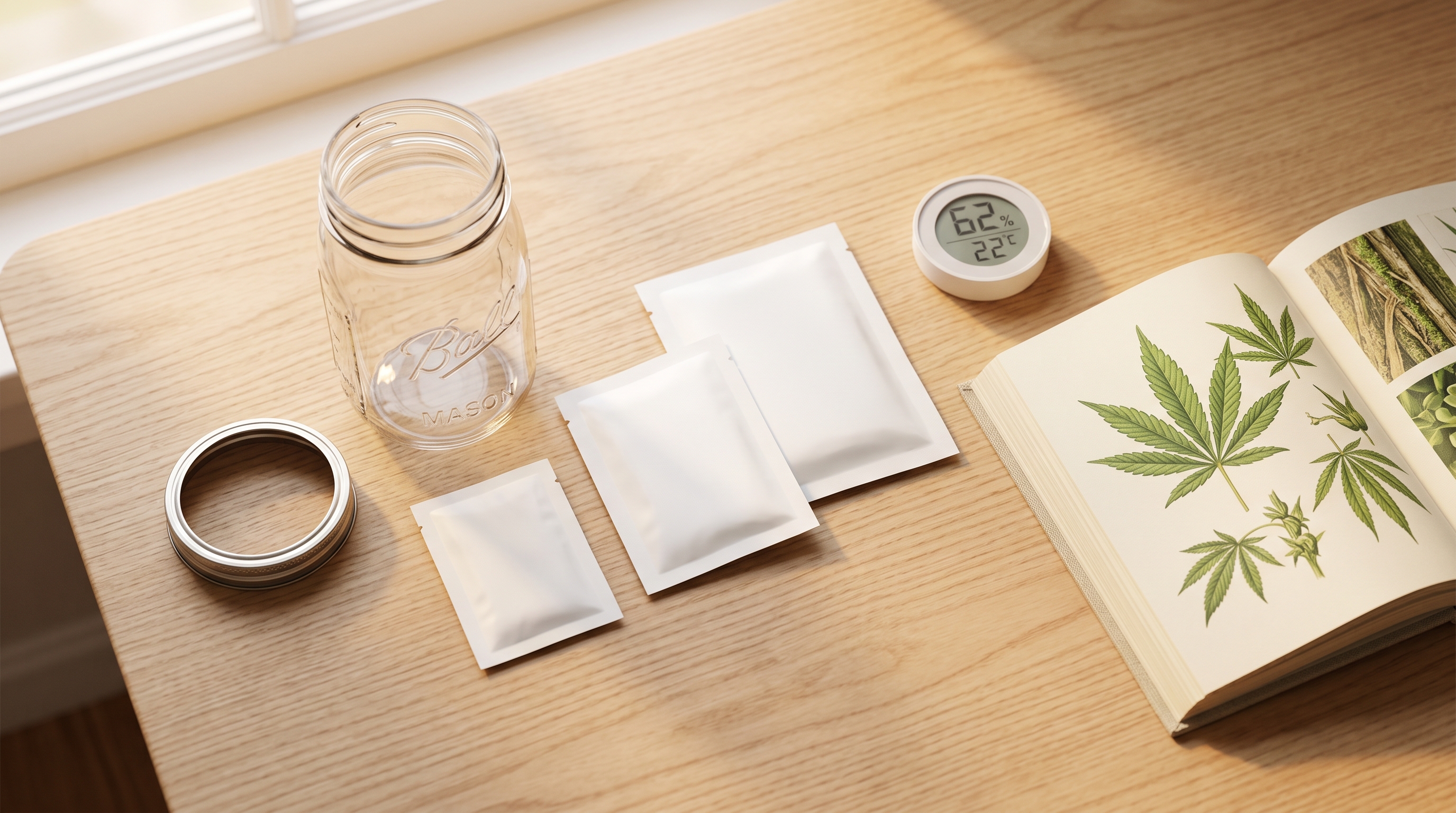
Packs are sold by gram weight, and you match the gram size to your container volume:
- 1 g pack → a few grams of flower or a single pre-roll tube
- 4 g pack → up to about 1/4 ounce (a small jar)
- 8 g pack → up to about 1 ounce (one quart-size mason jar)
- 67 g pack → a half-gallon jar, or several stacked quart jars / bulk storage
Undersizing is the common mistake. If a pack is too small for the container, it saturates or exhausts quickly and can’t keep up. When in doubt, go one size up. And don’t let the pack sit directly against the buds for weeks if you can help it; tuck it against the lid or use the little mesh sleeve some brands provide.
Regenerating and replacing
Here’s a frequent question: can you recharge a spent pack? It depends on the brand and the type.
- Boveda packs are generally not designed to be regenerated. When the salt solution crystallizes and the pack feels hard and rigid rather than pliable, it’s done. Replace it.
- Some Integra Boost products (the larger and “regenerable” SKUs) can be recharged by following the manufacturer’s instructions, which typically involve a low oven cycle or a humidity-restoring environment. Always check the specific package, because the small disposable packs are not meant for the oven.
For most people, the practical rule is simpler: when the pack hardens or the indicator card changes color, swap it. Expect to replace packs every 2-6 months depending on container seal quality, how often you open it, and your climate. A $2-3 pack that protects an ounce of flower for months is, mathematically, one of the best deals in your whole kit.
One important limit: a humidity pack cannot rescue flower that was stored wrong to begin with. If buds were sealed too wet (above ~70% RH), the pack will absorb water for a few days, saturate, and then just sit there while mold may already be starting. Packs maintain a good environment; they don’t fix a bad one.
Containers and Hygrometers
Humidity packs work with your container, not instead of it. The pack can only regulate the air it’s sealed in, so the jar matters.
- Glass beats plastic. Airtight glass is inert, doesn’t leach or impart flavors, and seals well. Wide-mouth mason jars with a rubber-gasket lid are the home standard. Plastic baggies are porous and let RH drift toward the room.
- Go dark or go UV-blocking. Light, especially UV, degrades cannabinoids and terpenes. Amber or violet (Miron) glass blocks much of it; otherwise just store clear jars in a dark drawer or cabinet. Heat is the other silent enemy, so aim for a cool spot around 60-68°F (15-20°C).
- Fill, but don’t pack. Less headspace means less air to manage, but never cram buds in tightly; crushed trichomes and poor airflow invite trouble. Around 75% full is a good rule.
Then there’s the instrument that takes the guesswork out of all of this: a hygrometer. A cheap digital mini-hygrometer dropped inside the jar reads the actual RH of your stored flower. Seal the jar, wait 24 hours, and read it:
| Jar reading | What it means | What to do |
|---|---|---|
| Above 65% | Too wet, mold risk | Leave the lid off a few hours; investigate; do not ignore |
| 58-62% | The sweet spot | Leave it alone |
| 55-58% | Slightly dry | Add a 62% pack; reduce opening |
| Below 55% | Too dry | Add a 62% pack, reseal, recheck in 48 hours |
A hygrometer turns “I think it feels about right” into a number you can act on. For a few dollars, it’s the most underrated piece of gear in cannabis storage.
Curing RH vs. Storage RH
If you grow your own, there’s an important distinction between the active cure and long-term storage, even though both live in the 55-62% band. We go deep on the whole post-harvest process in our drying and curing guide, but here’s the humidity-specific version.
During the cure (roughly the first 30-60 days), freshly dried buds are still finishing a chemical transformation: chlorophyll breaks down, harsh compounds mellow, and the terpene profile matures. This needs a little moisture to keep the enzymes working, which is why 62% RH is the cure standard. Growers traditionally “burp” the jars (open them briefly) daily in week one to release CO₂, ammonia, and excess moisture, tapering off over the following weeks. A 62% pack stabilizes a properly jarred cure but won’t replace burping if the buds went in too wet.
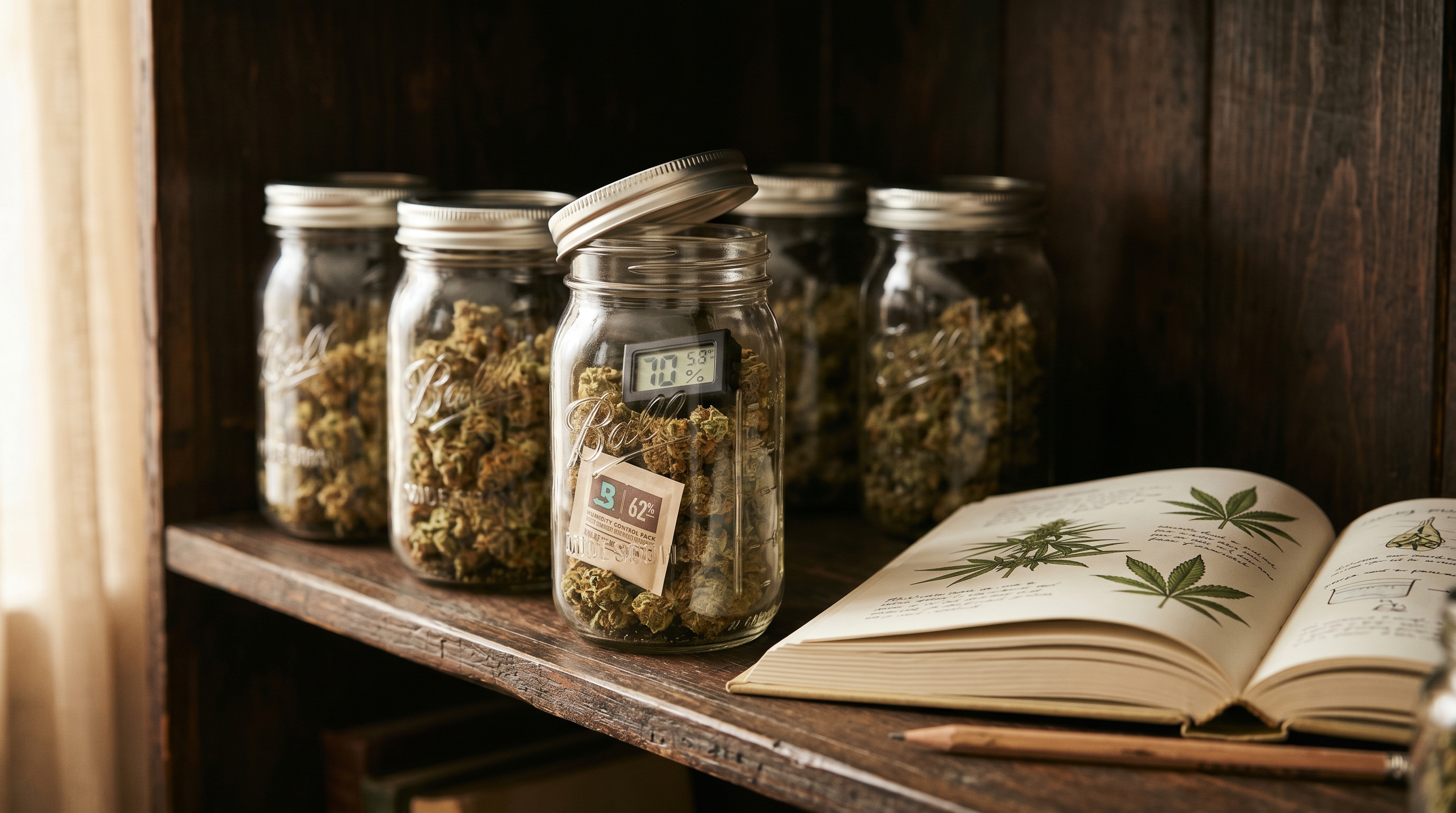
For long-term storage (after the cure is done), the chemistry has largely finished and your only job is preservation. Here you can drift down to 58% or even 55% to buy extra shelf life and mold safety, accepting slightly muted aroma on first open. The same drier set point is also why concentrates and many edibles store best at lower humidity than fresh flower. The other big difference: once flower is fully cured and stored, stop opening the jar to “check on it.” Every open is a fresh humidity and oxygen event. During the cure you open on purpose; in storage you leave it sealed.
Common Mistakes to Avoid
- Using a desiccant instead of a two-way pack. Silica gel only removes moisture and will desert-dry your flower.
- The orange-peel or wet-paper-towel “rehydration” hack. Introducing free water creates uneven moisture and a real mold risk. Use a calibrated pack instead.
- Undersizing the pack. A too-small pack can’t keep up with a big jar. Size up when unsure.
- Trusting feel over a hygrometer. “Seems about right” is how mold sneaks in. Measure.
- Storing in plastic baggies or near a window. Porous bags leak RH; light and heat degrade everything.
- Opening the jar constantly. Each peek resets the equilibrium and ages your flower faster.
- Ignoring a hardened pack. Once it’s rigid (or the indicator flips), it’s no longer regulating anything.
Tracking What Actually Works for You
Here’s the Professor High pivot: storage protects the chemistry, but you still have to notice what that chemistry does. A jar held at a perfect 62% preserves a strain’s full terpene profile, which is exactly the profile that drives how it makes you feel. That connection between aroma, terpenes, and your experience is the whole reason we built High IQ.
When you log what you smoke, you start seeing patterns across the terpene profiles and High Families that work for your body, not just what a label promises. Those patterns get clearer once you see how terpene combinations work together. But that only works if storage kept the full profile intact. Good storage keeps those signals clean so your tracking actually means something. Protect the freshness, then pay attention to it.
Frequently Asked Questions
What humidity should cannabis be stored at? Aim for 55-62% RH, with 62% as the everyday default. Use 58% for storage past two months and 55% for very long-term storage or humid climates.
Do I really need a humidity pack? If you go through flower in a week or two and store it in a sealed glass jar, you may be fine without one. For anything longer, a two-way pack is cheap insurance against both over-drying and mold.
How long do Boveda and Integra Boost packs last? Boveda packs typically last 2-4 months; Integra Boost often 4-6 months. Real-world life depends on seal quality, climate, and how often you open the container. Replace when the pack hardens or the indicator card changes color.
Can I reuse or recharge a humidity pack? Boveda packs are generally not regenerable; replace them when rigid. Some larger or “regenerable” Integra Boost products can be recharged per the manufacturer’s instructions. Never oven-treat a small disposable pack.
Will a humidity pack save flower that’s already too dry or moldy? A pack can re-add some moisture to over-dried flower, but lost terpenes and aroma don’t come back. It cannot save flower that already has mold, and it cannot fix buds sealed while too wet.
Is 62% or 58% better? 62% for daily flower and best aroma; 58% for longer storage and more mold safety. Neither is objectively superior, it’s a use-case choice.
Key Takeaways
- Inside a sealed jar, relative humidity is the variable that decides freshness: too dry kills aroma and harshens smoke, too humid invites mold.
- Aim for 55-62% RH, with 62% as the everyday default, 58% for storage past two months, and 55% for the long haul or humid climates.
- Two-way humidity packs (Boveda or Integra Boost) self-regulate to a set point; either brand works well at home, so choose by indicator card vs. availability.
- Size the pack to the jar (8 g per ounce / quart jar), and replace it when it hardens or the indicator flips.
- Pair the pack with airtight glass, darkness, cool temps, and a hygrometer, and a pack can maintain a good environment but cannot rescue flower stored wrong.
Sources
- Green Rush News — How to Store Cannabis Properly: The Science of Degradation (2026). https://greenrushnews.com/articles/cannabis-storage-guide/
- ASTM International — D8197 Standard Specification for Maintaining Acceptable Water Activity (aw) Range (0.55 to 0.65) for Dry Cannabis Flower. https://store.astm.org/d8197-22.html
- Marijuana Packaging — Boveda vs Integra Boost: Side-by-Side Comparison (2025). https://marijuanapackaging.com/blogs/comparison/boveda-vs-integra-boost-side-by-side-comparison
- Integra Products — Integra Boost Breakdown: Which Size & RH Level You Need. https://integra-products.com/blogs/news/integra-boost-breakdown-which-size-amp-relative-humidity-level-you-need
- Trimleaf — Best Humidity Packs for Curing Cannabis: Sizing & Picks (2026). https://trimleaf.com/blogs/guides/best-humidity-packs-curing-weed
- BudTrainer — How to Cure Cannabis: The 62% RH Jar Curing Guide (2026). https://www.budtrainer.com/blogs/learn/curing-cannabis
- ATMOSI Science — Best RH for Cured Cannabis: 62 vs 58 vs 65 (2026). https://atmosiscience.com/blogs/herbs/best-rh-for-cured-cannabis
This article is educational and is not medical advice. Cannabis laws vary by location; follow the rules where you live.


