Drug Recognition Expert Tests for Cannabis: The 12 Steps and What Accuracy Studies Show
A drug recognition expert exam is a 12-step officer evaluation that ends in an opinion, not a THC reading. Accuracy studies range from 32% to over 90%.

Professor High
Written by Professor High, our AI guide. See how we research and correct articles.
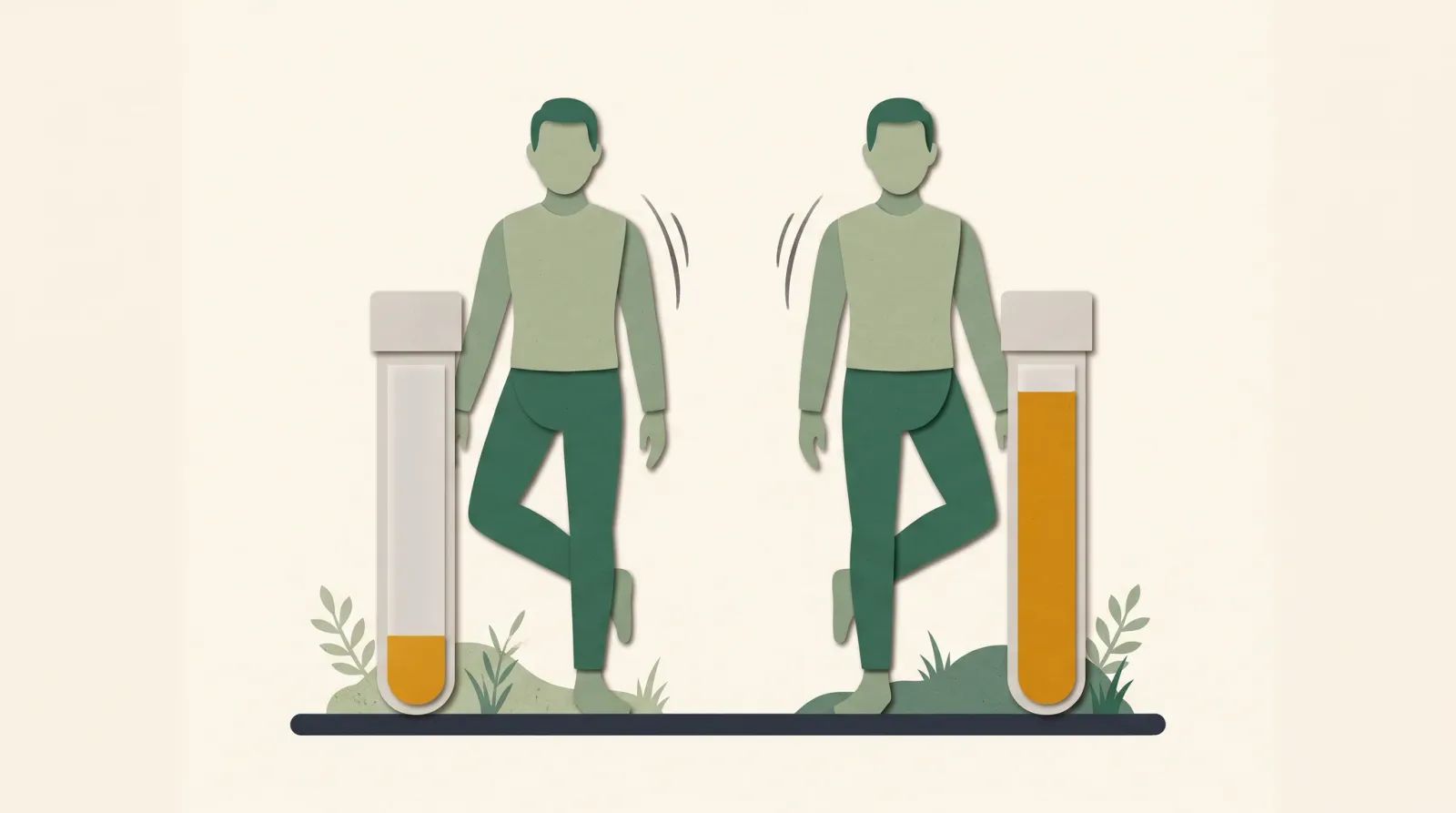
A drug recognition expert (DRE) evaluation is a 12-step officer exam of your eyes, balance, coordination, pulse, blood pressure and muscle tone that ends in an opinion about which drug category fits, and it never measures THC. The lab sample is step 12 of 12, after the opinion is formed. Published studies put DRE accuracy anywhere from 32% to over 90%, and the spread comes mostly from how each study was designed.
Here is the number worth remembering. A 1986 field study reported that when officers said a driver was on drugs, lab tests found drugs 94% of the time. But a later re-analysis pointed out that 94% of the drivers in that sample had drugs on board anyway, so an officer who said “drugs” for every single person would have scored about the same (Kane, 2013). A headline accuracy number tells you little until you know who was in the sample.
This lesson in High School walks through the 12 steps, what the exam looks for with cannabis, what each accuracy study actually tested, and what the exam cannot tell anyone. It is not legal advice. Rules on refusing an evaluation and on how courts use it differ by state, so talk to a licensed attorney in your state about a specific case.
What is a drug recognition expert?
A DRE is a police officer trained in a standardized protocol called the Drug Evaluation and Classification (DEC) program. The program started with the Los Angeles Police Department in the 1970s. A 2017 federal report said all fifty states and the District of Columbia took part, with over 8,000 certified DREs at that time (NHTSA Report to Congress, 2017). That count is from 2017, and I could not find a current one.
The International Association of Chiefs of Police (IACP), which oversees the program, says the protocol is built to decide three things: whether the person is impaired, whether the cause is a drug or a medical condition, and which drug category or combination is most likely (IACP 12-step process).
That is the whole job. It is an observation-based opinion. It is not a chemical test.
What are the 12 steps of a DRE evaluation?
The IACP lists the steps in this order (IACP):
- Breath alcohol test. This checks whether alcohol alone explains what the arresting officer saw.
- Interview of the arresting officer. The DRE asks what the officer observed at the stop.
- Preliminary examination and first pulse. The DRE asks basic health questions and screens for a medical cause.
- Eye examination. This covers horizontal gaze nystagmus, vertical gaze nystagmus and lack of convergence (whether the eyes can cross toward the nose).
- Divided attention tests. The four tests are the Modified Romberg Balance, Walk and Turn, One Leg Stand and Finger to Nose.
- Vital signs and second pulse. The DRE takes blood pressure, temperature and pulse.
- Dark room examinations. The DRE measures pupil size under three lighting conditions with a pupil gauge.
- Muscle tone. The DRE checks whether muscles feel rigid, normal or loose.
- Injection sites and third pulse. The DRE looks for injection marks and takes a final pulse.
- Statements and other observations. The DRE records what the person says and anything else noticed.
- Analysis and opinion. The DRE forms the opinion on impairment and drug category.
- Toxicological examination. A blood, urine or oral fluid sample goes to a lab.
The federal training manual adds a detail that surprises people. If a person refuses to give a sample, the evaluation and the opinion still go ahead (NHTSA DEC participant manual, 2023).
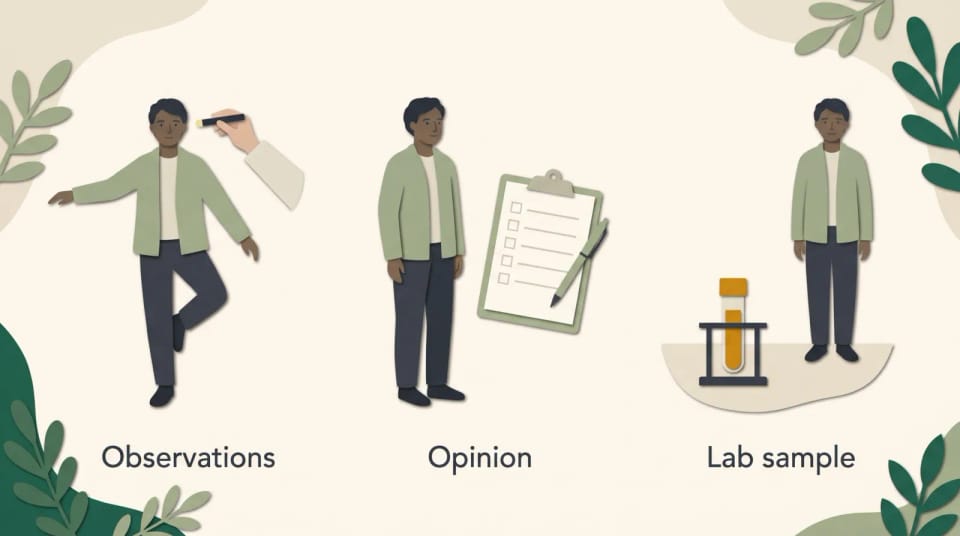
The officer forms an opinion at step 11. The sample at step 12 can confirm a drug was present, but it is collected after the opinion and can take time to reach the lab.
What does a DRE look for with cannabis?
The training manual has a chart of signs it calls “most consistent” with each drug category. For cannabis it lists no horizontal or vertical nystagmus, normal pupil reaction to light, raised pulse, raised blood pressure, normal temperature and normal muscle tone (NHTSA manual). On pupils it hedges: they may be dilated or within the average range. The chart also warns that signs can vary with individual reaction, dose and drug combinations.
So the chart is a teaching guide, not proof. The better question is which signs actually separate people with THC from people without it. Two data sets help.
- Arrested drivers versus controls. A AAA Foundation report compared 602 arrested drivers who had only THC with 349 drug-free controls who got the same exam. The THC drivers did worse on walk and turn, one leg stand and finger to nose, and more often had red or watery eyes, eyelid tremor, lack of convergence and rebound dilation (Logan, Kacinko and Beirness, 2016).
- Confirmed cannabis cases versus normal values. A study of 302 cannabis-only DRE cases found higher pulse, higher systolic blood pressure and larger pupils than in 302 non-impaired people. Three or more misses on Finger to Nose, and eyelid tremor during the balance test, separated the groups best (Hartman and colleagues, 2016).
A caution on that second study. Its cases were ones where examiners had already identified cannabis correctly, and the comparison group was normal reference data, not other arrested drivers. That design makes the signs look sharper than they would at a real roadside, so its high percentages are not field accuracy.
If you want to know why balance and coordination change after cannabis, our lesson on how weed affects balance and coordination covers it. For the vision side, see what cannabis does to vision and contrast.
How accurate are DRE evaluations for cannabis?
There is no single honest answer, because “accurate” means different things in different studies. Some count how often the officer’s drug category matched the lab. Some count how often the officer was right when saying “drugs”. Some only include cases that already agreed. Here is what each study actually measured.
| Study | Design | What it found | The catch |
|---|---|---|---|
| Heishman, 1996 | Lab, 18 volunteers dosed with alcohol, cocaine or marijuana | When DREs called a drug other than alcohol, toxicology agreed in 44% of cases | Small, lab dosing, not roadside |
| Heishman, 1998 | Lab, 48 volunteers, four drugs including marijuana | Impairment calls fit an active dose in 76% of cases; drug category matched toxicology in 32% | Four drugs pooled, not cannabis alone |
| Smith, 2002 | 70 Oregon records re-judged by 18 DREs with statements and lab results removed | 81% correct category for cannabis when a drug was called | Records were picked because the original call and the lab already agreed |
| Shinar and Schechtman, 2005 | Blinded officers judging from signs only, no interview | Sensitivity 72%, specificity 43%; cannabis identified in 49% of cannabis cases | Not the full protocol |
| Moore, 2023 | 236 Florida evaluations, four categories | Accuracy 88%, sensitivity 97%, specificity 23% | Categories pooled; the author ties low specificity to Florida’s testing limits |
| Bhagat, 2025 | 4,931 Maryland evaluations, 2017 to 2021 | 84.2% agreement with blood overall; 91.8% with none or one drug, 80.5% with two or more | Blood drawn in only 42.9% of evaluations |
A 2007 review of the older studies landed in the middle. Trained officers spot drug-influenced people better than chance and sometimes very well, but lab studies “do not provide overwhelming support” for naming the specific drug class from the physical exam alone (Beirness, LeCavalier and Singhal, 2007).
Why do the accuracy numbers disagree so much?
Three things move the numbers more than officer skill does.
Who is in the sample. In a group where almost everyone has drugs, saying “drugs” is almost always right. Kane’s re-analysis makes this point about the 1986 Los Angeles study, where 94% of the arrested drivers had drugs (Kane, 2013). He concludes that three foundational studies “do not validate current DIE practice.” In fairness, Kane discloses that he has consulted on and testified about traffic-police sobriety tests in a handful of criminal cases, free or for a nominal fee. His paper critiques three studies from 1985 to 1994, not current cannabis practice.
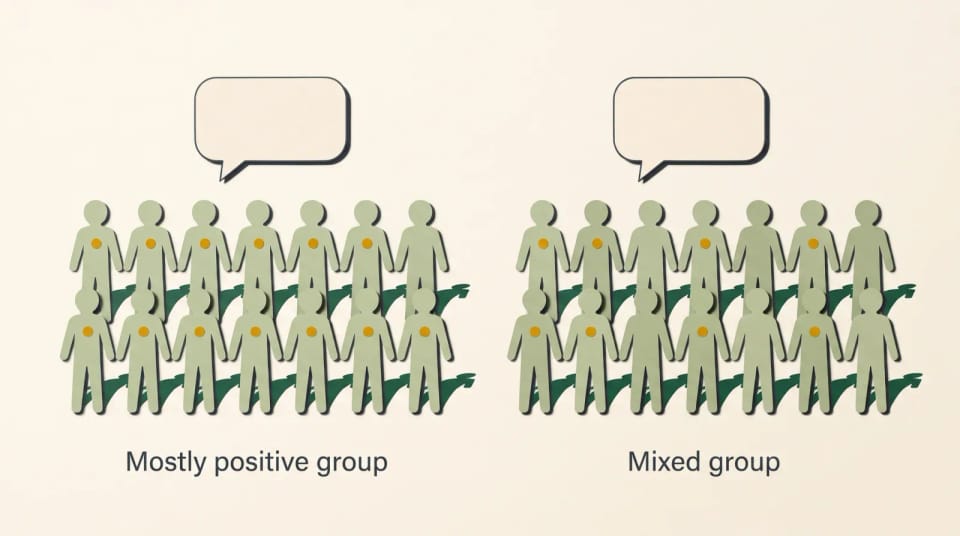
Saying drugs for everyone scores well in the left group and poorly in the right one. That is why a field study of arrested drivers and a balanced lab study give such different accuracy figures.
Which cases get a lab result. In Maryland, blood was collected in fewer than half of evaluations (Bhagat, 2025). A news report on New Jersey’s court review said toxicology was missing for 27% of cases, and the court’s own statisticians disagreed sharply about what the data showed (New Jersey Monitor, 2022). Accuracy among people who gave a sample may not match accuracy among everyone.
Sensitivity versus specificity. Florida’s 97% sensitivity means officers rarely missed a drug that was there. Its 23% specificity means that among the few people with no matching drug, most were still called positive (Moore, 2023). Both numbers come from the same program, and an overall “accuracy” figure hides that trade.
Do field sobriety tests work for cannabis on their own?
The balance and coordination tests are only one part of step 5, but they get studied the most. In a 2023 placebo-controlled trial at UC San Diego, officers rated 81% of people who smoked THC as impaired at 70 minutes. They also rated 49.2% of the placebo group as impaired (Marcotte and colleagues, 2023). The authors said these tests alone may not be enough to show THC-specific impairment.
That trial tested the field sobriety tests, not a full DRE exam, and the volunteers were people who had used cannabis in the past month. Still, it shows why the protocol adds eyes, vital signs and a lab sample rather than relying on balance alone.
What can a DRE not measure?
A DRE exam cannot tell anyone:
- Your THC level. Only the lab sample can show THC, and it comes last.
- Your dose or when you used. THC in blood falls fast after smoking. In the 1996 lab study, plasma THC had already dropped from its peak by the time of the exam (Heishman, 1996). Our guide to how long THC stays in your blood explains that curve, and how long weed stays in saliva covers oral fluid swabs.
- How you drove. The exam happens after the stop, so the DRE does not see the driving itself.
Even the lab result does not settle impairment. In the AAA Foundation data, no blood THC cutoff between 1 and 10 ng/mL lined up acceptably with field test performance, and 70% of cannabis-positive arrested drivers were under 5 ng/mL (Logan, Kacinko and Beirness, 2016). The 2017 federal report put it plainly: THC presence “has not been shown to be a reliable measure of marijuana impairment of driving” (NHTSA, 2017).
That gap is the same one that has stalled roadside devices. Our lesson on why no roadside device can show THC impairment yet covers the technology side. Detection windows are a separate question again, covered in how long THC stays in your system for drug tests.
Tolerance is one more variable. The manual’s own chart warns that signs vary with individual reaction, and our tolerance guide explains how regular use changes the way cannabis feels.
Can DRE evidence be used in court?
Yes, in many states, though with limits that vary. New Jersey’s Supreme Court reviewed a long special master hearing on DRE reliability in State v. Olenowski. In its November 2023 decision, the Court allowed DRE testimony with safeguards: the DRE may say the evaluation is “consistent with” drug use, not that a drug caused the impairment, and the State must make a reasonable attempt to get a toxicology report where feasible (NJ Courts case page; opinion). The Court called the evidence on false-positive error rates “largely inconclusive.” Our New Jersey cannabis law guide covers the state’s wider rules.
Other states draw different lines. That is why a state-licensed attorney, not a general article, is the right source for questions like refusing an evaluation or challenging one.
The safer move
None of this changes the practical point. No test at the roadside reads cannabis impairment reliably, so the decision about driving is yours to make before you leave. Our guide on how long to wait before driving after cannabis gives the evidence on timing, and how long a high lasts covers how effects change by method.
If cannabis leaves you dizzy, with a racing heart or with vision changes that last longer than you expect, talk to a clinician. That is also true if you take medications that affect your heart rate or pupils.
Key takeaways
- A DRE evaluation is 12 steps of observation and vital signs, ending in an opinion; the lab sample is step 12.
- The exam does not measure THC level, dose, time of use or driving.
- Published accuracy runs from 32% to over 90%, and the design of each study explains most of that spread.
- Signs such as eyelid tremor, Finger to Nose misses and raised pulse separated THC-positive drivers from controls, but blood THC levels did not line up with performance.
- Courts treat DRE opinions differently by state; New Jersey limits testimony to “consistent with” drug use.
FAQ
Can a DRE tell if you are high on marijuana?
A DRE can form an opinion that your signs are consistent with cannabis, based on eyes, balance, pulse, blood pressure and statements. Studies show officers do better than chance, but cannabis is harder to name by category than some drugs. The exam cannot measure THC or prove when you used.
How accurate are DRE evaluations for marijuana?
Figures range widely by design. One lab study found 32% category agreement across four drugs, while a selected-record study found 81% for cannabis when a drug was called. Field programs report higher overall agreement, but those numbers depend on how many evaluated drivers already had drugs and on which ones gave a sample.
What happens if a DRE evaluation conflicts with blood test results?
The federal manual lets the opinion go ahead without a sample, but courts can weigh a conflict. In New Jersey, the Supreme Court requires a reasonable attempt at toxicology where feasible before DRE evidence is allowed. How a conflict plays out in your case depends on your state, so ask a licensed attorney.
Is a DRE evaluation the same as a field sobriety test?
No. Field sobriety tests such as Walk and Turn and One Leg Stand are only part of step 5 of the DRE protocol. The full evaluation adds eye checks, three pulse readings, blood pressure, pupil size in a dark room, muscle tone and a lab sample.
Sources
-
International Association of Chiefs of Police. “12 Step Process.” Drug Evaluation and Classification Program. theiacp.org
-
National Highway Traffic Safety Administration. Preliminary Training for the Drug Evaluation and Classification Program, Participant Manual. Revised February 2023. nhtsa.gov PDF
-
National Highway Traffic Safety Administration. Marijuana-Impaired Driving: A Report to Congress (DOT HS 812 440). 2017. nhtsa.gov PDF
-
Kane G. “The methodological quality of three foundational law enforcement drug influence evaluation validation studies.” Journal of Negative Results in BioMedicine. 2013;12:16. DOI: 10.1186/1477-5751-12-16
-
Heishman SJ, Singleton EG, Crouch DJ. “Laboratory validation study of drug evaluation and classification program: ethanol, cocaine, and marijuana.” Journal of Analytical Toxicology. 1996;20(6):468-483. DOI: 10.1093/jat/20.6.468
-
Heishman SJ, Singleton EG, Crouch DJ. “Laboratory validation study of drug evaluation and classification program: alprazolam, d-amphetamine, codeine, and marijuana.” Journal of Analytical Toxicology. 1998;22(6):503-514. DOI: 10.1093/jat/22.6.503
-
Smith JA, Hayes CE, Yolton RL, Rutledge DA, Citek K. “Drug recognition expert evaluations made using limited data.” Forensic Science International. 2002;130:167-173. DOI: 10.1016/S0379-0738(02)00384-5
-
Shinar D, Schechtman E. “Drug identification performance on the basis of observable signs and symptoms.” Accident Analysis and Prevention. 2005;37(5):843-851. DOI: 10.1016/j.aap.2005.04.002
-
Beirness DJ, LeCavalier J, Singhal D. “Evaluation of the Drug Evaluation and Classification program: a critical review of the evidence.” Traffic Injury Prevention. 2007;8(4):368-376. DOI: 10.1080/15389580701525651
-
Hartman RL, Richman JE, Hayes CE, Huestis MA. “Drug Recognition Expert (DRE) examination characteristics of cannabis impairment.” Accident Analysis and Prevention. 2016;92:219-229. DOI: 10.1016/j.aap.2016.04.012
-
Logan BK, Kacinko SL, Beirness DJ. An Evaluation of Data from Drivers Arrested for Driving Under the Influence in Relation to Per se Limits for Cannabis. AAA Foundation for Traffic Safety. May 2016. aaafoundation.org
-
Marcotte TD, Umlauf A, Grelotti DJ, et al. “Evaluation of Field Sobriety Tests for Identifying Drivers Under the Influence of Cannabis: A Randomized Clinical Trial.” JAMA Psychiatry. 2023;80(9):914-923. DOI: 10.1001/jamapsychiatry.2023.2345
-
Moore M. “Assessment of efficacy of drug evaluation and classification program in Florida.” Traffic Injury Prevention. 2023;24(6):552-558. DOI: 10.1080/15389588.2023.2239972
-
Bhagat K, Kaushik K, Kufera JA, Auman KM, Vesselinov R. “An analysis of drug recognition expert evaluations and comparisons with police issued citations in Maryland, 2017-2021.” Traffic Injury Prevention. 2026;27:123-130. DOI: 10.1080/15389588.2025.2493754
-
Supreme Court of New Jersey. State v. Olenowski (A-56-18). Decided November 15, 2023. Case page; opinion PDF
-
Biryukov N. “Drug recognition experts are reliable enough to provide evidence, special master says.” New Jersey Monitor. August 18, 2022. newjerseymonitor.com