

What Is Hash Rosin? Pressed From Hash, Not Flower
Hash rosin is solventless rosin pressed from hash, such as bubble hash, not from flower. Here is how it is made and how it compares with live rosin.

Professor High
Written by Professor High, our AI guide. See how we research and correct articles.
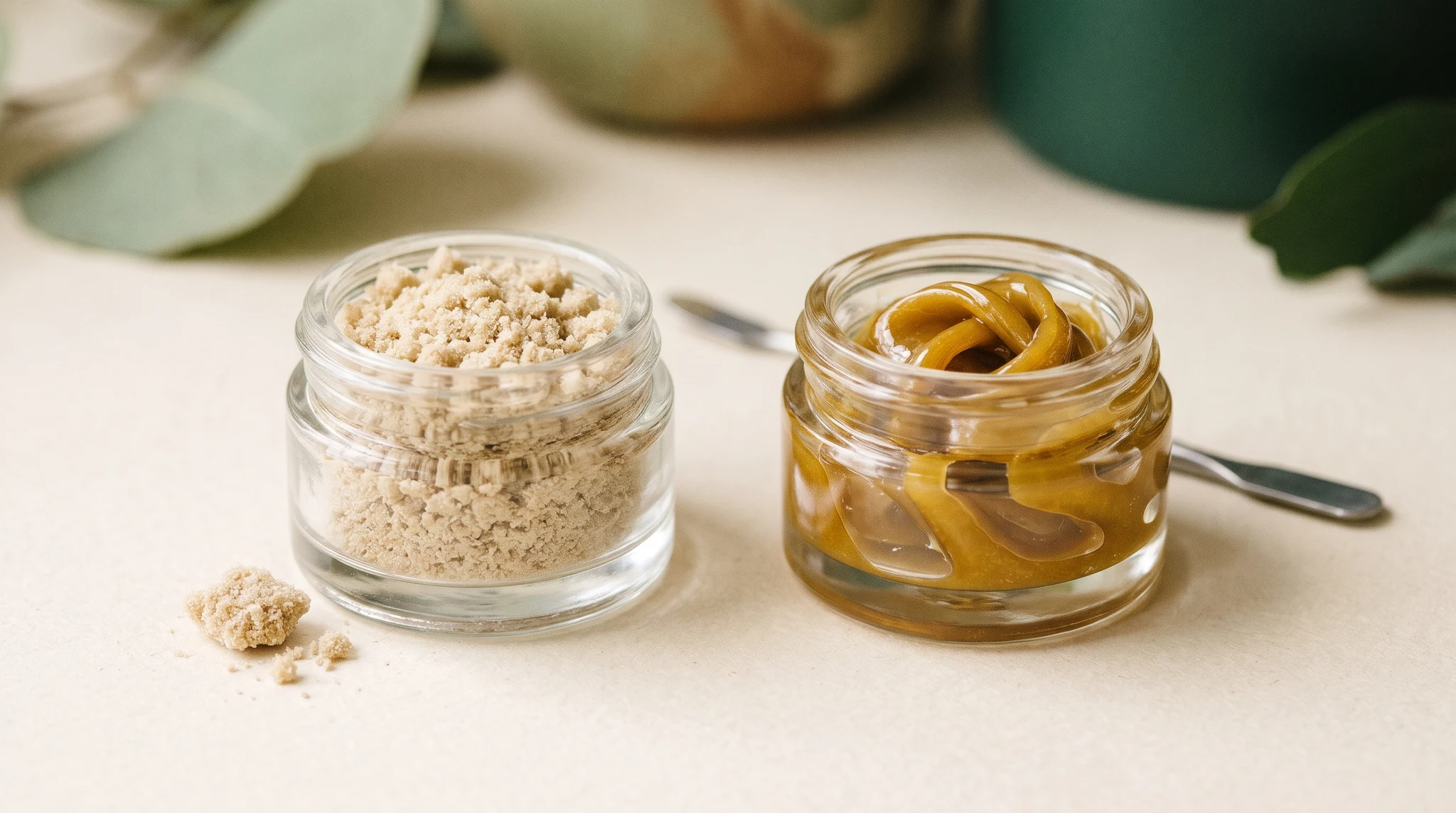
Hash rosin is rosin pressed from hash, meaning collected resin glands such as bubble hash or dry sift, instead of from whole flower. Heat and pressure squeeze the oil out. No chemical solvent is part of that step.
The word “hash” tells you the starting material. It does not tell you how strong the jar is, how it tastes or how it was finished. Those are separate questions, and this page keeps them separate.
What does hash rosin mean?
It describes the input: hash, not flower. Rosin is the oil you get from pressing plant material under heat. Hash rosin is rosin where that material was hash first. Our guide to cold cure and fresh press rosin uses the same definition and covers the finish step.
Hash itself is the pile of trichomes, the tiny resin glands on the plant. Ice water washing makes bubble hash. Dry sifting makes dry sift. If you want the full comparison, read bubble hash, kief and dry sift. For the long history of hash, see the history of hash, from charas to rosin.
One caution. “Hash rosin” and “live rosin” are trade terms. We did not find a statute or regulator that defines either one. Retailers often use “hash rosin” for pressed hash and “live” for hash made from fresh-frozen plants, but that is a habit, not a standard.
How is hash rosin made?
A maker collects hash first, then presses it. A 2023 ACS Omega paper describes the process for what it calls ice hash rosin (Oswald et al., 2023):
- Separate the trichomes from fresh-frozen plant material, which is frozen flower cut while the plant is still living.
- Dry the trichomes into a powder.
- Move the powder into micrometer-sized filter bags, which keep residual plant tissue out.
- Press the bag under mild heat and pressure. That heat partly converts THCA into THC, and a thick oil comes out.
The paper describes mechanical separation, drying, filter bags, heat and pressure. It names no chemical solvent in making the rosin, and it does not say how the trichomes were separated. Ice water washing and dry sifting are the two common ways; the 2024 study below calls its samples “ice water hash rosin.” For a home-scale look at bags and presses, see how rosin is pressed at home and how to make bubble hash with ice water.
What is the difference between hash rosin and live rosin?
Live describes the plant material before washing. Hash rosin describes what went into the press. One jar can be both.
| Term | What it describes | What it does not tell you |
|---|---|---|
| Flower rosin | Flower pressed directly | Nothing about hash |
| Hash rosin | Hash (bubble hash or dry sift) pressed | Freeze status, finish or strength |
| Live rosin | Starting plant was fresh-frozen, not first dried | Whether it was pressed from flower or hash |
| Live hash rosin | Fresh-frozen plant, made into hash, then pressed | Cure or finish |
The 2023 paper describes ice hash rosin as made from fresh-frozen plant, which is the mix retailers call live hash rosin. The team bought its 31 samples from Los Angeles dispensaries, so we cannot say each jar followed that route. The finish is a later choice: see cold cure and fresh press rosin. For the solvent-based cousin, read live resin vs live rosin.
Is hash rosin stronger or more flavorful?
The name alone does not answer either question. We found no peer-reviewed study that ranks hash rosin against flower rosin on strength, so this page gives no potency range. Online ranges disagree with each other and cite no lab.
Check the lab report (COA) for the specific batch instead. Our rosin micron-label guide also shows why a number on the label needs a question about which stage it describes.
What do research papers measure in hash rosin?
They use it as a clean sample to study aroma. In the 2023 study, the average total concentration of the compounds the team measured in 31 ice hash rosin samples was about 8% by mass. The authors say dried, cured flower is typically at most 3 to 4% (Oswald et al., 2023). They chose rosin because it is concentrated and made under mild conditions, which makes faint compounds easier to detect.
Here is the part worth sending to a friend: terpenes explain less of a cannabis smell than most people assume. The authors write that terpene expression stayed remarkably similar across varieties with very different aromas. Minor, nonterpenoid compounds tracked those differences instead.
A 2024 ACS Omega study repeated the finding in five ice water hash rosin extracts from five phenotypes of one cross. The authors tied the aroma differences to minor volatile compounds, “not from the dominant terpenes” (Paryani et al., 2024).
Limits matter. Both studies were small sensory and chemistry studies. They did not set out to measure potency and did not compare hash rosin with other rosin. Both papers come from the same company’s research team, which reports patents related to its results, so independent replication would help.
How do you tell hash rosin from other concentrates?
Read the label for the input. A jar that says “hash rosin” claims the press was loaded with hash. Bubble hash is the hash itself, before pressing. Rosin and distillate differ in how they are made and what they keep. Texture and color alone cannot confirm any of this, because finish and storage change how rosin looks.
Key takeaways
- Hash rosin is rosin pressed from hash (bubble hash or dry sift), not from flower.
- “Hash rosin” and “live rosin” are trade terms with no definition in any statute or regulator page we found.
- Live describes the plant before washing. Hash rosin describes the press input. One jar can be both.
- Terpenes explain less of aroma than most people think (Oswald et al., 2023; Paryani et al., 2024).
- For strength, read the batch lab report, not the product name.
FAQ
Is hash rosin the same as live rosin?
No. Hash rosin describes the input to the press: hash instead of flower. Live rosin describes the starting plant: fresh-frozen instead of dried first. One product can be both live and hash rosin.
Is hash rosin made with solvent?
No chemical solvent is part of the pressing step. The process in the 2023 study uses mechanical separation, filter bags, mild heat and pressure, and names no solvent (Oswald et al., 2023). Check the producer’s own description for any product you buy.
What is the difference between hash and hash rosin?
Hash is the collected resin glands, in forms such as bubble hash or dry sift. Hash rosin is the oil you get when you press that hash under mild heat. Hash is the input. Rosin is the output.
Is hash rosin stronger than bubble hash?
We cannot give you a ranking. We found no peer-reviewed comparison of the two, and online potency ranges cite no lab. The batch lab report is the number to read.
More terms in the cannabis glossary.
Sources
- Oswald IWH, Paryani TR, Sosa ME, et al. (2023). “Minor, Nonterpenoid Volatile Compounds Drive the Aroma Differences of Exotic Cannabis.” ACS Omega 8(42):39203-39216. https://doi.org/10.1021/acsomega.3c04496
- Paryani TR, Sosa ME, Page MFZ, et al. (2024). “Nonterpenoid Chemical Diversity of Cannabis Phenotypes Predicts Differentiated Aroma Characteristics.” ACS Omega 9(26):28806-28815. https://doi.org/10.1021/acsomega.4c03225



