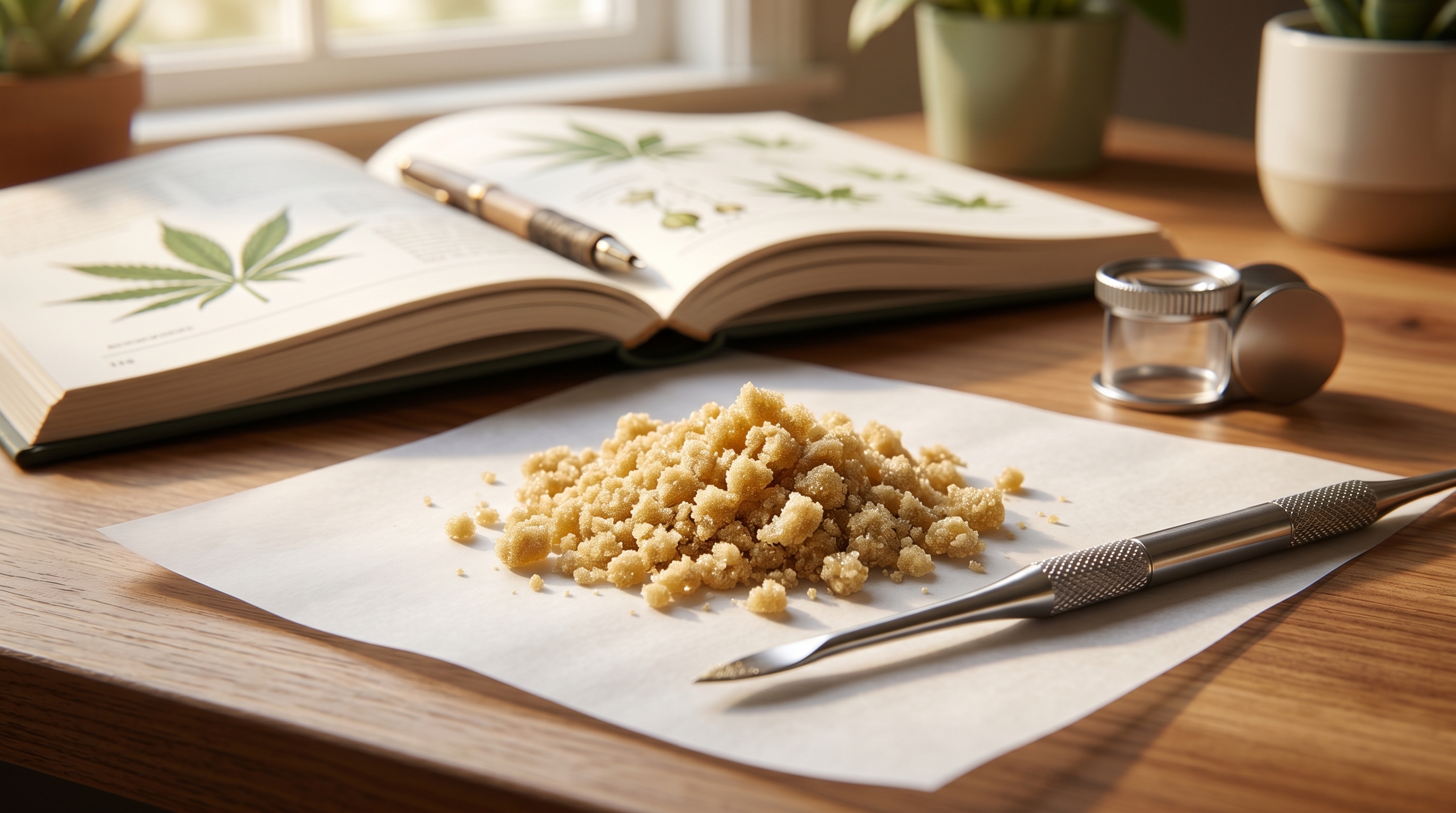
How to Make Bubble Hash: Ice Water Extraction Step by Step
Make full-melt bubble hash at home with ice, water, and bubble bags. Step-by-step ice water extraction, micron grades, drying, and yield tips.

Bubble hash might be the most honest concentrate you can make. There are no solvents, no closed-loop machines, and no chemistry degree required. Just cannabis, ice, water, and a stack of mesh bags. When you do it right, the result rivals anything on a dispensary shelf, and when you do it really right, you get full-melt hash that liquefies into golden oil the moment heat touches it.
The catch? Every step matters. Temperature, agitation, micron stacking, drying. Get sloppy with any of them and you end up with green, gritty hash that tastes like lawn clippings. Get them all dialed in and you preserve the plant’s complete terpene and cannabinoid profile in its purest mechanical form.
This guide walks through the entire process, from prepping your station to grading your final product. Let’s get into it.
What Is Bubble Hash (and Why “Solventless” Matters)
Bubble hash is a solventless cannabis concentrate made by mechanically separating trichome heads from plant material using only ice, water, and gentle agitation. The trichomes (those tiny resin glands that carry nearly all of a plant’s THC, CBD, and aromatic terpenes) get knocked loose, sink through the water, and are caught in a series of progressively finer mesh screens.
The name carries a double meaning. The “bubble” refers to the bubble bags used to filter it, and to the way high-quality hash bubbles and melts when you heat it. Impurities don’t melt, so the cleaner your hash, the more it bubbles. That visible bubbling is one of the oldest quality tests in the game.
Here’s why solventless matters. Most concentrates on the market (think shatter, wax, and live resin) rely on chemical solvents like butane or CO2 to strip the resin off the plant. Those methods are effective, but they introduce a step where solvent has to be purged out afterward. Bubble hash skips all of that. The only inputs are physics and cold water, which means nothing foreign ever touches your final product. If you want the full landscape of concentrate types, our complete guide to cannabis concentrates breaks down how each one is made.
The Core Principle: Cold Plus Agitation
The whole process rests on one simple bit of science. Cold temperatures make trichome stalks brittle. When the water sits near freezing, the connection between the resin gland and the plant becomes glassy and fragile. Gentle agitation then snaps those heads off cleanly, like shaking frost off a branch. The freed trichomes are heavier than water, so they sink, while the lighter plant material floats or stays trapped in the larger screens.
This is the same separation principle behind dry sift and kief, just using water instead of dry friction. If you’re curious how those compare, bubble hash vs kief vs dry sift lays out the differences side by side.
Equipment and Materials You’ll Need
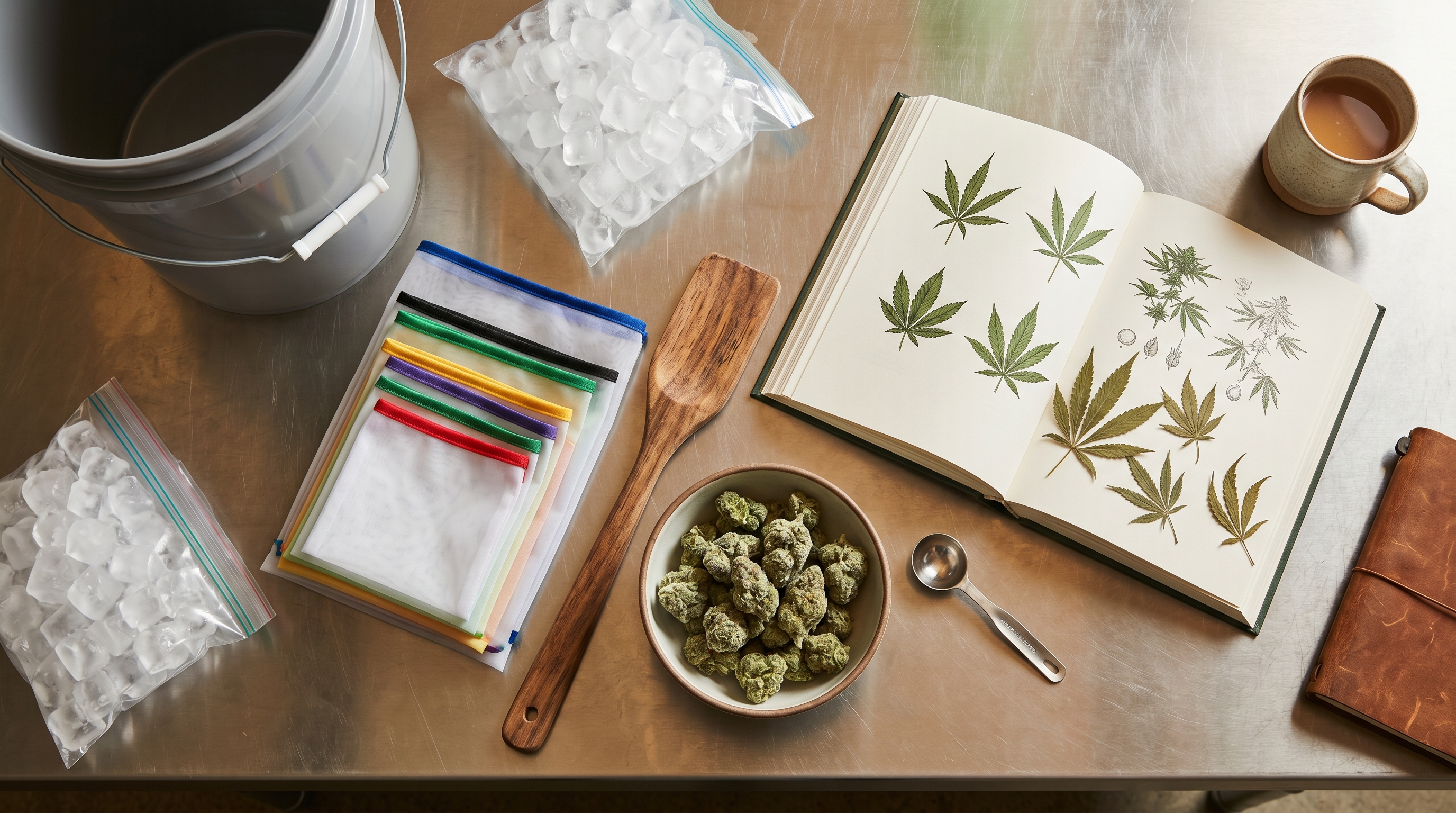
You don’t need a lab. You need cold, clean gear and patience. Here’s the checklist:
- Bubble bags (4 to 8 bag set): Mesh filter bags in graduated micron sizes. Common sets run 220µm, 190µm, 160µm, 120µm, 90µm, 73µm, 45µm, and 25µm. More bags means finer sorting.
- Two food-grade buckets: One for washing, one for catching filtered water (or one bucket if you wash directly in the stacked bags).
- Lots of ice: Plan on 10 to 20 pounds minimum. Aim for roughly a 1:1 ratio of ice to cannabis by weight.
- Cold, filtered water: Reverse-osmosis or filtered water reduces mineral buildup on your screens.
- A stirring tool: A large spoon, a wooden paddle, or an electric hand mixer on low speed.
- A collection spoon or scraper: Stainless steel works best.
- A drying screen or parchment paper: For spreading out the wet hash.
- A clean, cool workspace: Ideally 65 to 70°F (18 to 21°C) ambient.
A solid set of bubble bags is the single most important purchase here. Look for full-mesh sidewalls (not just a screen on the bottom) so water drains faster and cleaner. For more on building out a kit like this, see our cannabis gear guide from beginner to advanced.
Choosing Your Starting Material: Fresh-Frozen vs. Cured
This decision shapes your entire outcome.
Fresh-frozen material is harvested and immediately frozen before it ever dries. Freezing locks in volatile terpenes at their peak, giving hash that loud, “live” aroma you find in premium products. If you’re chasing six-star full-melt with top-tier flavor, fresh-frozen whole buds are the way. The downside: it’s delicate, bulky to store, and can clog bags if you overpack.
Cured flower or quality trim is the traditional route. It’s sturdier, easier to handle, stores in less freezer space, and often yields slightly more per gram because there’s less water weight. The trade-off is that some terpenes evaporate during drying, so the nose isn’t quite as bright. Cured material can still make excellent hash, especially with a naturally terpene-rich strain. Just rehydrate brittle, dried flower in ice-cold water for 20 to 30 minutes first so it doesn’t shed micro plant matter into your wash.
One hard truth worth repeating: trim and dried material can make solid 3-4 star hash, but they will almost never reach true full-melt. That ceiling is set by genetics and material quality long before you start stirring.
The Step-by-Step Process
Step 1: Chill Everything First
Before anything else, get cold. Chill your buckets, your water, your paddle, and your plant material. If you’re using cured flower, freeze it for at least 24 hours. Your target water temperature is 32 to 34°F (0 to 1°C) and you want to hold it there for the entire wash. Every degree above optimal causes trichome heads to smear instead of snap, and lets more plant junk slip through your screens.
A pro trick: keep a separate bucket of pre-chilled ice water settling nearby so you can top off cold water without dumping warm tap water into your wash.
Step 2: Stack Your Bags
Nest your bubble bags inside the catch bucket, largest micron on the outside (top), smallest on the inside (bottom). A common stack runs 220µm → 160µm → 120µm → 90µm → 73µm → 45µm → 25µm. The 220µm “work bag” goes in last and holds your cannabis. As the milky water drains down through the stack, each finer screen catches a different size of trichome head, automatically sorting your hash into grades.
Step 3: Load and Soak
Layer your frozen cannabis into the work bag, alternating with ice. A good starting ratio is 1 part cannabis to 1 part ice, with 2 to 3 parts cold water by volume. Don’t cram it. The mix should move freely. Fill with cold water until everything floats loosely, leaving about four inches of headroom for stirring. Let it sit 15 to 20 minutes so the material gets uniformly cold.
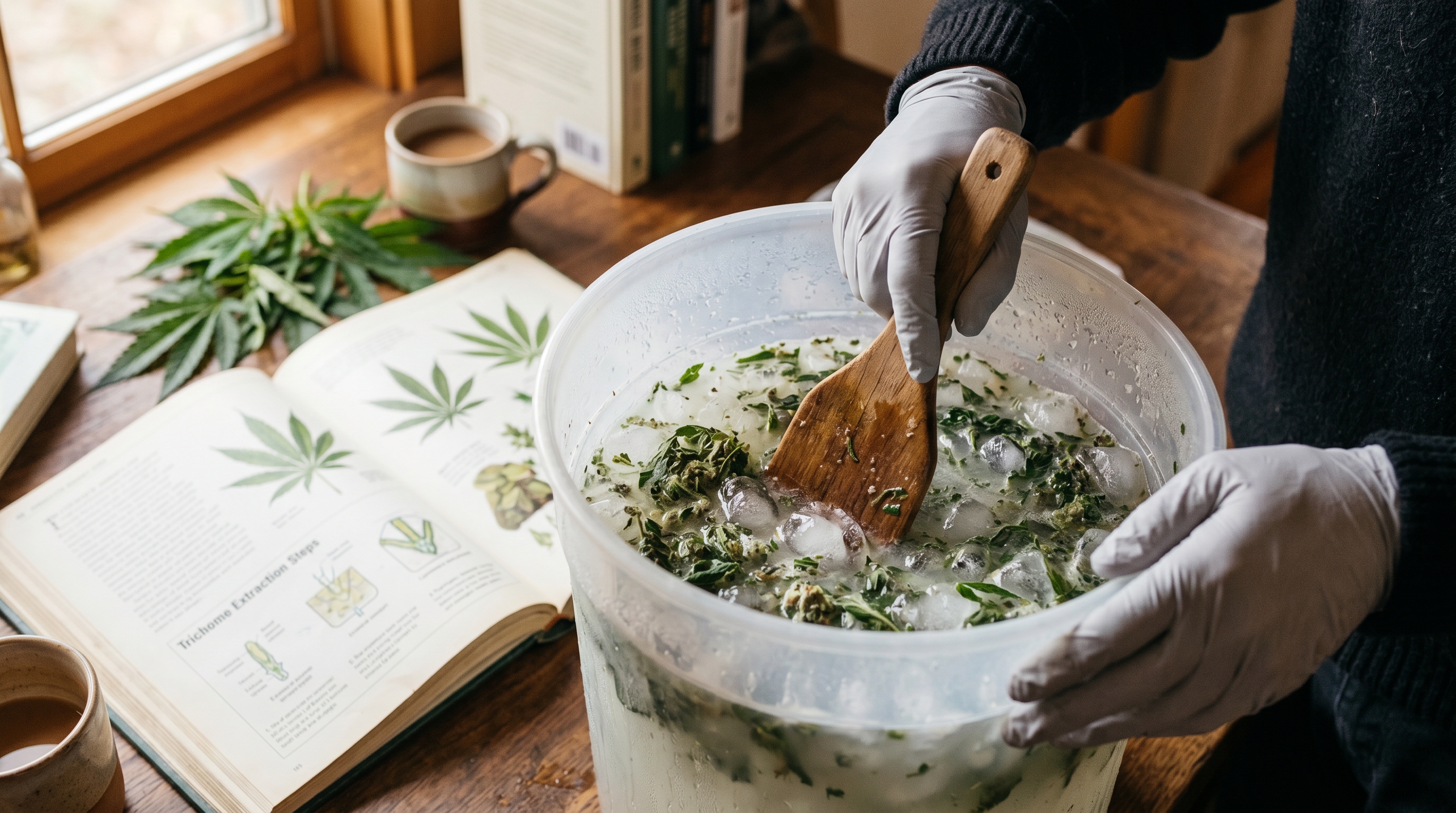
Step 4: Agitate Gently
This is the make-or-break moment. Stir in slow, full circles, occasionally changing direction. Think rolling waves, not whisking. If you’re hand-stirring, a slow figure-eight at roughly one rotation per second is perfect. If you’re using a hand mixer or hash washer, keep it on the lowest setting.
Mix for 5 to 15 minutes for the first wash. Fresh-frozen material needs shorter, gentler cycles to protect those fragile heads; cured material can take a bit longer. The water will turn milky as trichomes release. Aggressive agitation is the number one rookie mistake. It shreds plant material into fine green particles that contaminate every screen below.
Step 5: Settle and Filter
Stop stirring and let the slurry rest 3 to 5 minutes so the freed heads sink. Then lift the 220µm work bag slowly, letting it drain completely before setting it aside. The plant material stays in this bag. Now work down the stack, lifting each bag in turn, letting it fully drain into the bag below.
Step 6: Collect Each Grade
As you pull each bag, you’ll see a paste of resin pooled on the screen. Use a clean spoon or scraper to gently collect the hash from each micron. Label each pile by its micron size so you don’t mix grades. The 90µm and 120µm bags usually hold your best material; the larger and smallest bags catch more contaminants and immature heads.
You can re-wash the same material two or three times for additional yield, but quality drops with each successive wash, so keep those later collections separate.
Micron Grades and the Full-Melt Star System
Here’s where bubble hash gets nerdy in the best way. Trichome heads range from roughly 25 to 150 microns, so each bag in your stack isolates a different population of glands. The result is a built-in quality sort.
| Micron | What It Catches | Typical Grade |
|---|---|---|
| 220µm | Plant debris, ice, dirt (work bag) | Discard |
| 190µm / 160µm | Large, variable-quality heads | 1-3 star |
| 120µm | Mature, high-quality heads | 4-6 star |
| 90µm | Mature heads, ideal cuticle-to-oil ratio | 4-6 star |
| 73µm | Good loose resin, slightly less pure | 4-5 star |
| 45µm | Smaller, less mature heads | 2-4 star |
| 25µm | Very immature heads, fine contaminants | 1-3 star |
Hashmakers grade the final product on a 1-to-6 star scale based on how completely it melts when heated:
- 1-2 star (cooking grade): Visible plant contamination, leaves dark residue, little to no melt. Great for edibles or tinctures.
- 3-4 star (half-melt): Moderate melt with some residue. The sweet spot for pressing into rosin.
- 5 star (near full-melt): Bubbles and melts almost completely, leaving minimal residue.
- 6 star (full-melt): Liquefies into a clean puddle of oil with virtually no residue. Dab-ready, blonde to golden, sandy or slightly greasy.
True full-melt almost always shows up in the 73µm to 120µm range, most often the 90µm bag. It also requires fresh-frozen whole buds, near-freezing water, gentle technique, and frankly, the right genetics. Roughly one in a thousand phenotypes can deliver genuine six-star hash no matter how skilled the washer. The middle screens are where the magic lives. If your full-melt ends up in the 45µm or 25µm bags, that’s a sign of either immature trichomes or over-agitation.
Drying: The Step Most People Rush
Wet hash is fragile, and improper drying ruins more batches than any other single mistake. Water trapped inside the resin invites mold and dulls flavor, so this stage deserves real patience.
Air drying is the accessible method. Spread your hash thin on a drying screen or parchment paper, break it into small pieces, and let it dry 24 to 72 hours in a cool, dark, well-ventilated space. Microplaning the hash into fine crumbles speeds things up dramatically by exposing more surface area. It’s done when it feels dry and slightly powdery and crumbles rather than smears.
Freeze drying is the professional gold standard. A freeze dryer (the Harvest Right is the popular one, running $2,000 to $5,000) pulls moisture out via sublimation in 24 to 48 hours while preserving the most volatile terpenes. It’s overkill for a casual home batch but transformative if you’re chasing flavor at the highest grade.
Whichever route you take, dry fully before storage. Properly dried hash stores best cold and airtight, much like the principles in our guide to storing cannabis for freshness and potency.
Troubleshooting and Yield Expectations
Let’s set realistic numbers. Quality flower typically yields 3 to 8 percent of its starting weight in hash, or roughly 1 to 2.5 grams per ounce. Trim runs lower, around 1 to 3 grams per ounce, and produces lower grades. Don’t expect to turn an ounce of buds into an ounce of full-melt. That’s not how the math works.
Here are the issues home washers run into most, and how to fix each one:
- Green, gritty hash: Water too warm or agitation too aggressive. Add more ice and stir more gently.
- Tiny yield: Under-washing, too few washes, or low-resin genetics. Re-wash, but keep grades separate.
- Hash won’t melt: Plant contamination or immature trichomes. Focus on the 73-120µm screens and harvest at peak ripeness (milky trichomes with some amber).
- Moldy or sour smell: Incomplete drying. There’s no fixing this one; prevention is the only cure.
- Clogged bags: Overpacked work bag or fresh-frozen material handled too roughly. Use less material per wash.
The biggest lever is temperature. If you remember nothing else, keep that water at 32 to 34°F from start to finish.
How to Use Your Bubble Hash
Once it’s dry, the world opens up. Full-melt grades shine when dabbed or vaporized, where their clean terpene profile comes through best. Mid-grade 3-4 star hash is perfect for pressing into hash rosin, the same family as the products covered in live resin vs live rosin.
You can also crumble hash over a bowl, twist it into a joint, or roll it into “snakes” around the outside of a pre-roll, similar in spirit to how moon rocks layer concentrate onto flower. Lower grades are ideal for cooking and edibles. Whatever you choose, start with a small amount; bubble hash is dramatically more potent than flower, and the same start-low-go-slow logic from finding your ideal THC-to-CBD ratio applies here too.
Because bubble hash preserves the plant’s full terpene fingerprint, it’s a great way to experience a strain’s true character. Whether a particular hash leans relaxing, uplifting, or energizing comes down to the same terpene chemistry behind our High Families system. The strain you wash matters less than how your body responds to its specific terpene profile, which is exactly the kind of pattern worth tracking in the High IQ app.
Frequently Asked Questions
Is bubble hash stronger than flower? Yes, considerably. Because it concentrates trichome heads, potency commonly lands well above flower, and premium full-melt can test very high. Always start with a small dose.
Can beginners make full-melt? Yes, with the right inputs. Cold water (32 to 34°F), gentle agitation, clean fresh-frozen material, and a full micron set give you a real shot. Genetics set the ceiling, but technique gets you there.
Do I need a freeze dryer? No. Air drying on a screen for 24 to 72 hours works fine for home use. A freeze dryer just preserves terpenes better and speeds drying for those chasing the highest grade.
Fresh-frozen or cured for my first batch? Cured flower or trim is more forgiving for beginners because it’s sturdier and easier to handle. Once you’re comfortable, switch to fresh-frozen for the best flavor.
Why is my hash green? Almost always warm water or over-agitation pulling plant material through the screens. More ice, slower stirring.
How long does bubble hash last? Properly dried and stored cold and airtight, it keeps for many months. Poorly dried hash degrades fast and risks mold.
Key Takeaways
Bubble hash rewards patience and punishes shortcuts. The science is simple (cold makes trichomes brittle, gentle agitation snaps them free, and graduated screens sort them by size) but the execution is all about discipline. Keep the water freezing, stir like you’re rocking a baby, dry slowly, and respect the micron grades. Do that, and you can produce a solventless concentrate at home that captures the purest expression of your favorite strain.
Then track what each batch and each strain actually does for you. That’s where understanding moves from technique to genuine personalization.
Sources
- MunchMakers [MunchMakers, 2026]. “Bubble Hash: How to Make Ice Water Hash at Home.” guides.munchmakers.com
- Mobius [Hurt, 2025]. “Best Micron for Bubble Hash: The Expert Guide.” mobiustrimmer.com
- Lowtemp Plates [Lanzrath, 2024]. “What Is the Best Micron for Bubble Hash?” lowtemp-plates.com
- Aether Green [Aether, 2025]. “Six Star Bubble Hash Full Melt Explained” and “Fresh Frozen vs Dried Cannabis for Hash.” blog.aethergreen.com
- Mood [Mood, 2026]. “Every Variable That Decides If Your Bubble Hash Will Full Melt.” mood.com
- HashMOM [Hashmom, 2025]. “How to Make Bubble Hash.” hashmom.com
- Bubble Bag [Bubblebag, 2024]. “How to Make Cold Water Hash with Bubble Bags.” bubblebag.com