Cannabis and Fashion: How Weed Culture Went Mainstream
From tie-dye and hemp to Supreme, runway shows, and Cookies, trace how the cannabis leaf strutted from counterculture symbol to mainstream style staple.

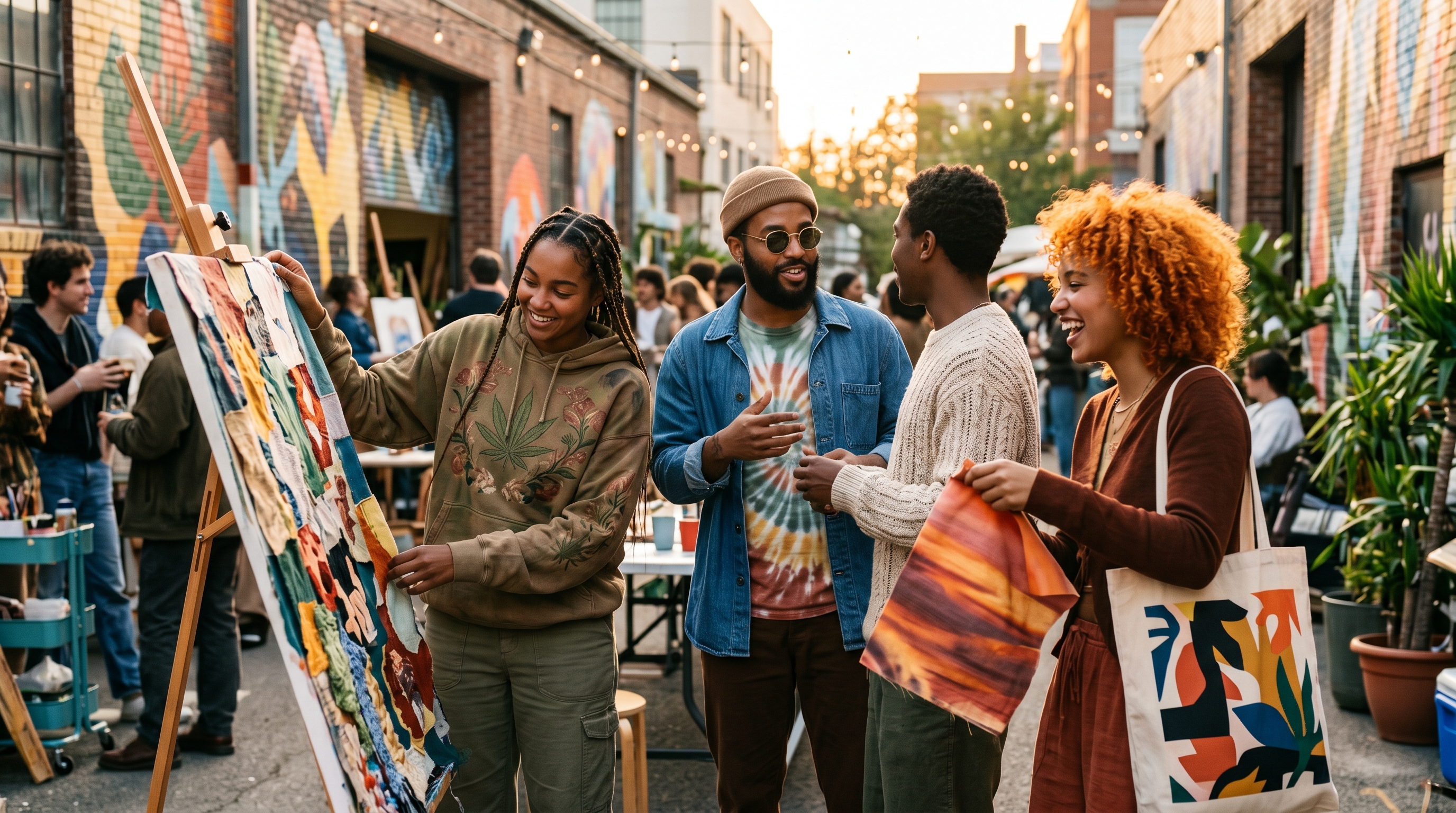
Walk into any mall in America right now. You can buy a hoodie with a cannabis leaf on it without a single raised eyebrow. That sentence would have read like science fiction in 1971. The leaf used to be a coded handshake — a thing you wore to signal which side of the line you stood on. Today it’s a graphic, a logo, a luxury motif, and a billion-dollar branding language. So how did we get here? How did the same plant that got people arrested end up vaping its way down a Manhattan runway at sunset?
Pull up a chair. This is a story about rebellion becoming retail, and about a leaf that refused to stay underground. And like a lot of cannabis history, it tells us as much about us as it does about the plant.
Counterculture Roots: Tie-Dye, Hemp, and the Leaf as Protest
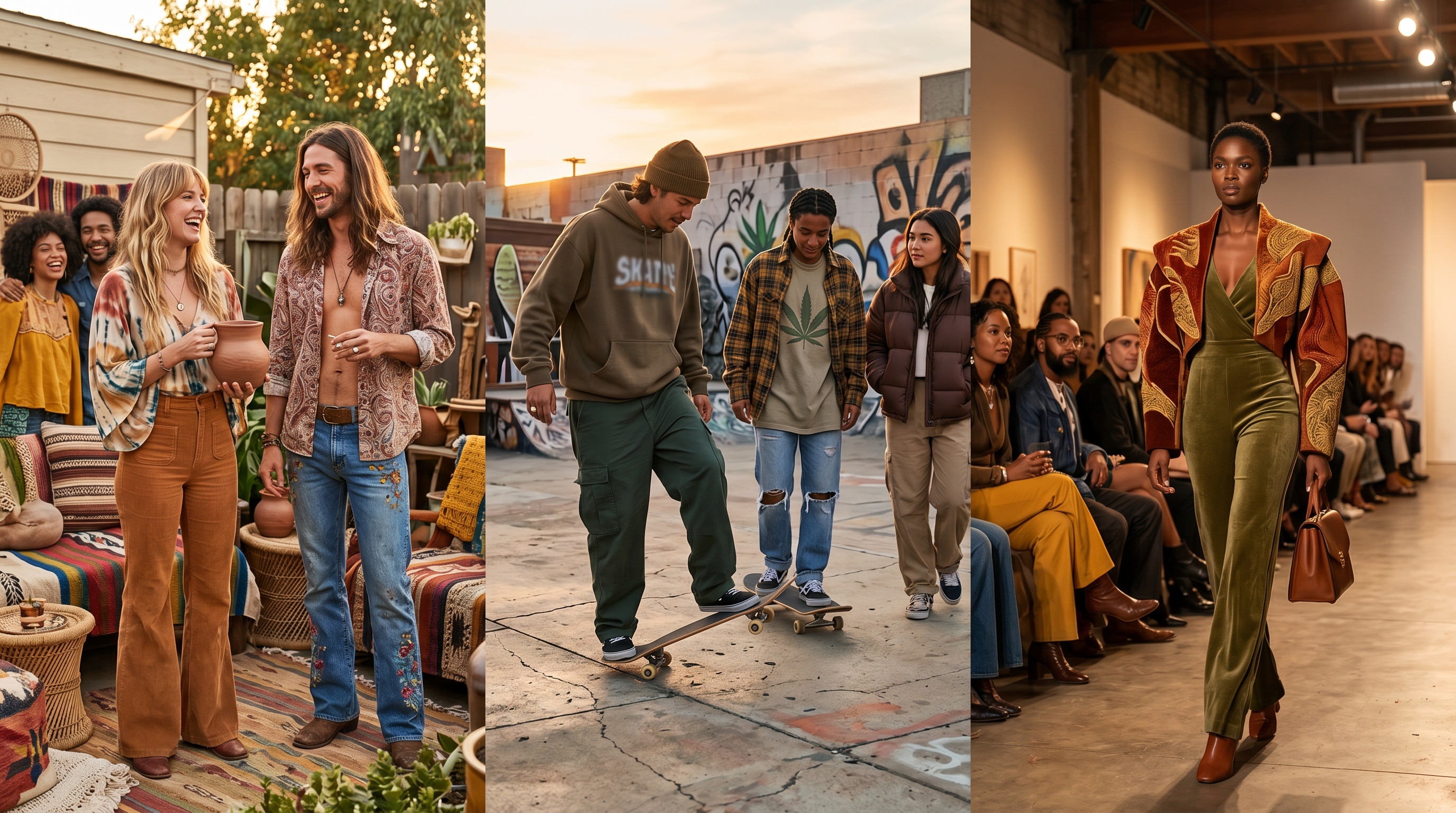
Cannabis fashion didn’t start in a design studio. It started at a protest, a music festival, and a commune — usually all three at once. The hippie movement of the 1960s and ’70s wrapped cannabis into a whole worldview of peace, freedom, and rejecting the establishment, and clothing became the visual shorthand for it.
The look was unmistakable: tie-dye shirts, bell-bottom jeans, bohemian flowing fabrics, and yes, a lot of actual hemp. At Woodstock in 1969, the dress code was the manifesto. Marijuana leaf motifs showed up alongside peace signs, and slogans like “Legalize It” and “Make Love Not War” turned the humble t-shirt into a billboard. Musicians like Jimi Hendrix, Janis Joplin, and later Bob Marley made these styles iconic — and inseparable from the plant.
Two things matter here. First, the leaf was a risk. Wearing it meant publicly aligning yourself with something stigmatized and frequently illegal. Second, hemp wasn’t a sustainability buzzword yet — it was just a cheap, durable, slightly scratchy fabric that happened to come from the same plant family. Both of those facts are about to flip completely over the next fifty years. If you want the deeper backstory on how cannabis itself traveled from ancient medicine to modern stigma, we mapped that whole arc in the history of cannabis, and the broader rituals around it in how cannabis culture differs around the world. The same era even minted cannabis’s most famous number — the story behind how 420 became cannabis culture is pure counterculture lore.
The Streetwear Era: When the Leaf Became a Logo
The ’80s and ’90s rewired everything. Cannabis fashion migrated out of the festival field and into the skate park, the hip-hop video, and the punk basement. The stigma was still very real — this was the height of the War on Drugs — so the references got cleverer, woven into subcultures that were already coded as rebellious.
Skate and streetwear brands led the charge. Stüssy, founded by surfboard shaper Shawn Stussy, built an entire visual language out of loose, hand-drawn marks — and cannabis-adjacent imagery fit right in. HUF, launched by pro skater Keith Hufnagel in 2002, leaned in even harder, famously building leaf iconography into its identity (the brand’s “Plantlife” socks are basically a cult object). Supreme, the streetwear titan, has dropped cannabis-themed pieces for years. Skate and apparel labels like Spitfire and Volcom layered in their own winking references.
Meanwhile, hip-hop turned weed apparel into wardrobe canon. Snoop Dogg, Cypress Hill, and Wiz Khalifa made oversized graphic tees, leaf prints, and Rastafarian color palettes part of the uniform. And a whole DIY scene bloomed: leaf patches, embroidered pot motifs, spray-painted “Legalize It” slogans on thrifted jackets.
This is the crucial turn. The leaf stopped being only protest and started becoming style — an aesthetic you could buy into without necessarily smoking anything. Cannabis was building the same cultural cachet in fashion that it was building in music, from jazz clubs to hip-hop. The two scenes fed each other constantly, which is exactly why cannabis and music share such a tight strain-pairing relationship to this day. And it wasn’t just music — cinema was busy reframing the stoner from a menace into a lovable everyman, a shift we trace in Reefer Madness to The Dude.
Luxury and the Runway: The Leaf Goes Couture
Here’s where it gets fancy. As legalization spread in the 2010s and the stigma cracked, high fashion — which had quietly loved cannabis for decades — finally said the quiet part out loud.
The watershed moment for a lot of observers was Spring 2015, when designer Mara Hoffman sprinkled a green leaf print across her runway collection that looked an awful lot like a cannabis plant. “I think cannabis is a beautiful plant,” she told Style.com, adding it “should have been legalized years and years ago.” Around the same time, Jeremy Scott — fashion’s reigning maximalist — created a pot-print motif for his Adidas collaboration that ended up on A$AP Rocky, Sky Ferreira, and Miley Cyrus. Jewelry designer Jacquie Aiche was selling pavé diamond “Sweet Leaf” ear jackets for over $2,000 a pop.
The 2020s pushed it further into the establishment. Luxury houses including Gucci, Balenciaga, and Dior have flirted with cannabis-inspired details, and the leaf has appeared in everything from sequined gowns to leaf-embroidered tailoring. And the runway moments keep getting more functional. At New York Fashion Week in September, Collina Strada sent models down a heliport runway vaping at sunset, debuting a button-down with a discreet vape pocket; two days later, Eckhaus Latta models lit joints mid-walk using a custom lighter sheath and joint case. Both collaborations came through Gotham, a New York cannabis concept store. As Gotham’s Rachel Berks put it, bringing cannabis to the runway “simply acknowledges a connection that has long been there.”
That’s the key insight: luxury didn’t discover cannabis. It finally admitted it had been using it all along — as a creative tool, a party staple, and a symbol of cool. This is the same destigmatization wave reshaping everything from cannabis tourism destinations to fine dining and elevated edibles to the polished new world of THC-infused beverages.
Celebrity and Designer Cannabis Brands: Branding Like Streetwear
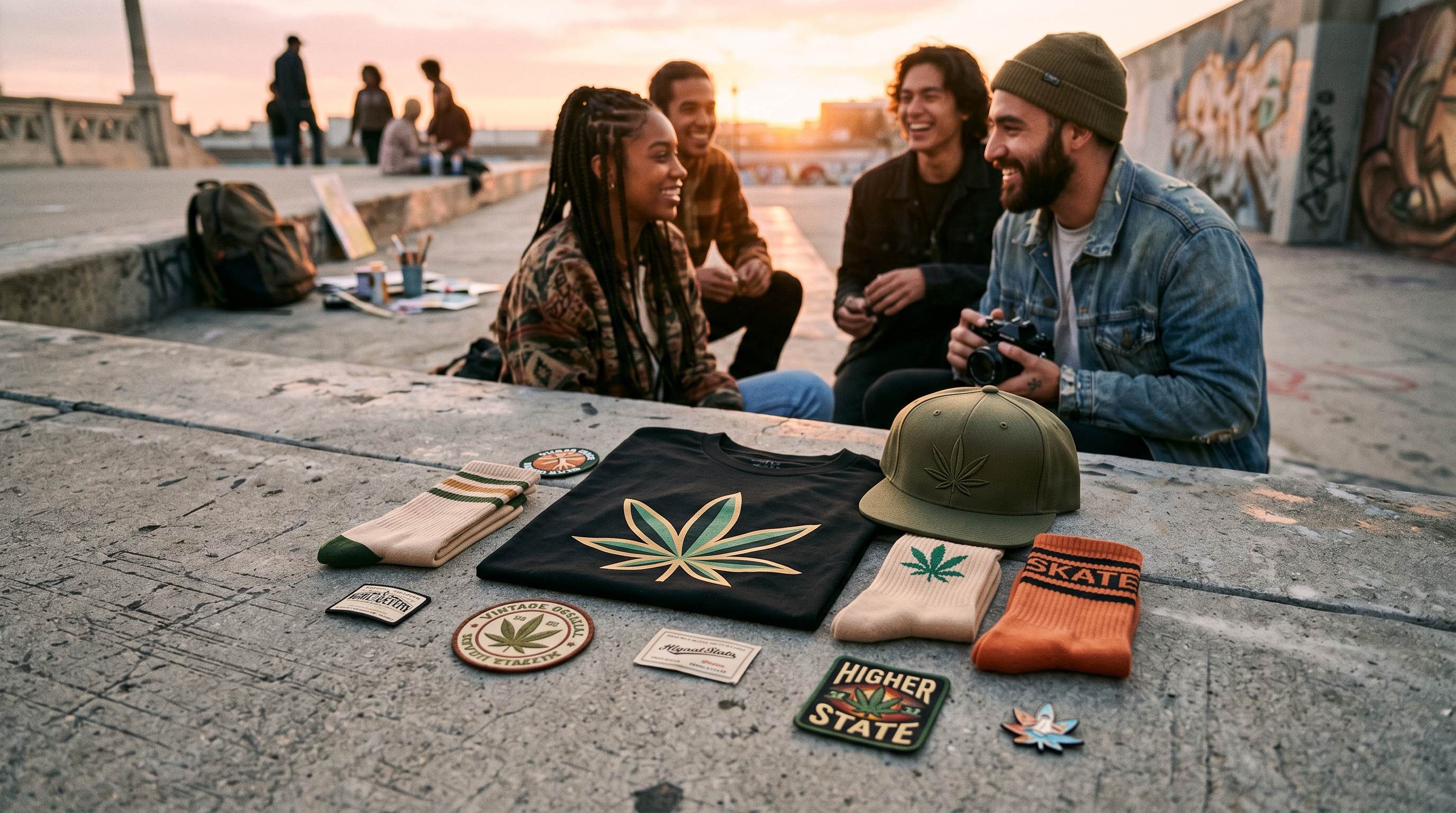
Once fashion embraced cannabis, cannabis returned the favor and started thinking like fashion. The most influential example is Cookies, the brand built by Bay Area rapper-entrepreneur Berner. Cookies fused a strain (the legendary Girl Scout Cookies lineage), a music career, and a streetwear-style merch empire into one of the most recognizable names in the entire industry — proving cannabis branding could be as hype-driven as a sneaker drop.
The packaging tells the story. Brands like Sherbinskis and Cookies elevated cannabis presentation to luxury-streetwear levels: limited-edition pre-rolls, exclusive strain collaborations, drop culture, scarcity, and dispensary experiences staged like flagship retail. Seoul-based Sundae School blends high-end tailoring with subtle cannabis references to make pieces that read as sophisticated rather than stoner-y — the apparel equivalent of the rise of intentional, connoisseur-style consumption. Labels like Mister Green and Pleasures push the lifestyle-as-aesthetic angle even harder. Even mainstream giants have played along — Nike and Adidas have released 4/20-themed limited-edition sneakers.
It’s worth noting who built this language. As cannabis writer Jackie Bryant points out, the streetwear brands that gave weed its modern visual identity — Cookies, HUF, Supreme, Sundae School — came largely from skate, music, and often non-white, economically marginalized communities. Luxury is still “translating” that lineage into couture, which raises real questions about equity and who actually shapes the modern industry. The aesthetics traveled uptown faster than the credit — or the profits — did.
Hemp Textiles and the Sustainability Story
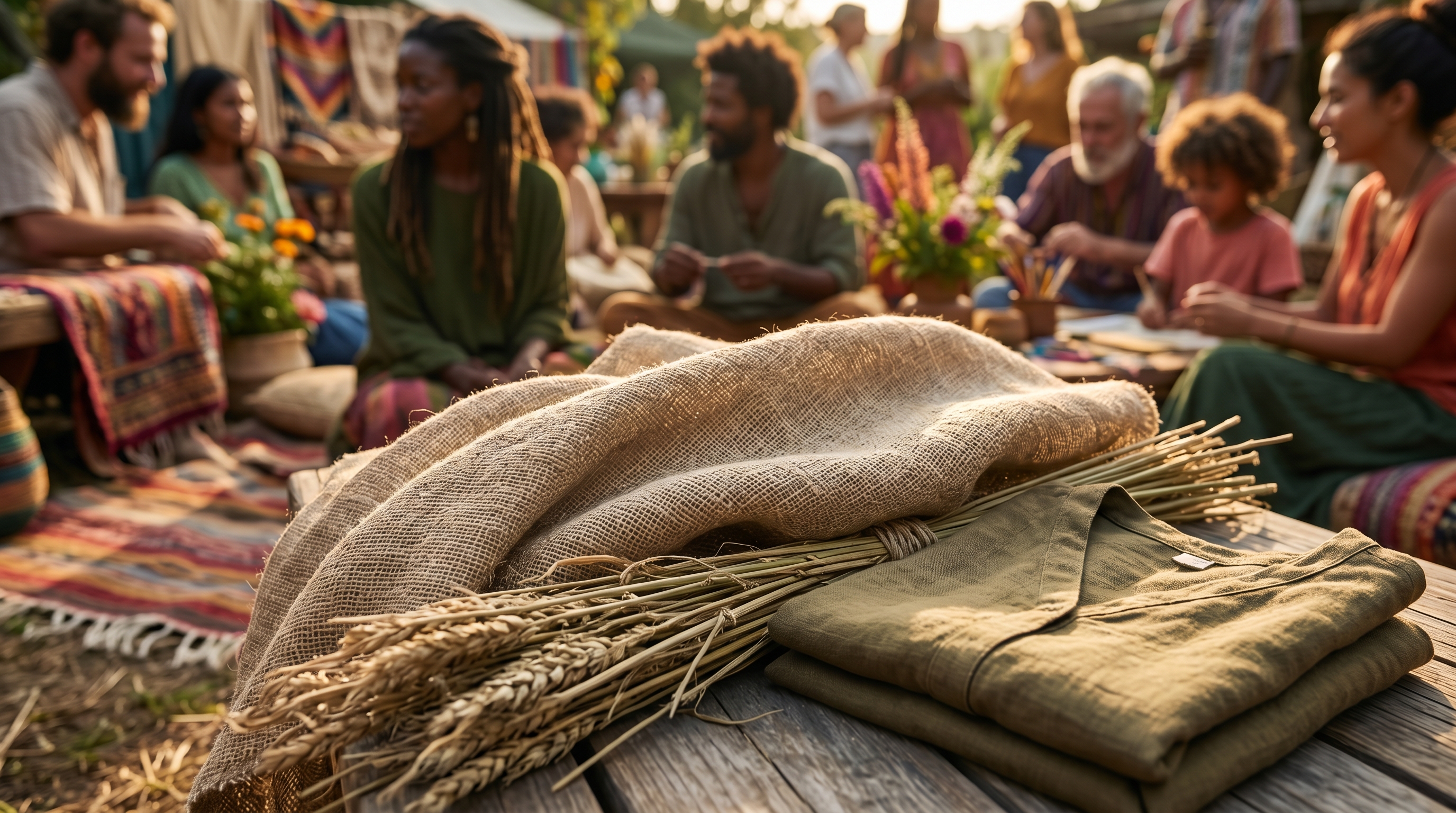
Remember that scratchy hippie hemp from the ’70s? It’s back, and now it wears a lab coat.
The fashion industry has a brutal environmental footprint. It’s one of the most polluting sectors on earth, consuming an estimated 79 billion cubic meters of water annually — a single cotton t-shirt can require around 2,700 liters of water, roughly what one person drinks in two and a half years. Around 87% of textile products end up in landfills or incinerated. That’s the backdrop against which hemp is having a renaissance.
A 2025 comparative life cycle assessment in Cleaner Waste Systems found that, at the farming and processing level, hemp fiber production had substantially lower environmental impacts than cotton across every category studied: global warming potential (1,374 vs. 7,903 kg CO₂ eq. per hectare), eutrophication, and acidification. Hemp also sequesters carbon — research suggests roughly 1.8 kg of CO₂ is stored per kilogram of hemp fiber, and that stored carbon can stay locked up for decades in a long-lived garment.
A fair caveat from Professor High: hemp isn’t a magic bullet. Some analyses note that today’s hemp textile processing — especially the degumming stage and reliance on older machinery — can erode those farm-level gains, and hemp still holds well under 1% of the global fiber market. The agricultural advantage is real and large; the manufacturing pipeline still needs to catch up. If sustainability is your lens, it’s worth understanding the full environmental cost of growing cannabis, because the same plant that makes a greener t-shirt can also be grown in energy-hungry ways.
What Mainstreaming Actually Means
So the leaf made it. It’s on runways, in malls, on luxury jewelry, and woven into sustainable textiles. What does that mean?
Mostly, it means destigmatization is winning. Fashion is a mirror. When something taboo shows up on a mainstream rack, the culture has already decided it’s okay. The same shift that put cannabis in Vogue is busting old stereotypes, too. The data keeps contradicting the lazy “stoner” trope, as we covered in debunking stoner stereotypes. Back in 2015, branding pioneer Cheryl Shuman put the pivot bluntly. She wanted cannabis tied to “a highly functioning, corporate woman,” not the old image. Whatever you think of that, it captures the trajectory: from outsider symbol to lifestyle category.
But there’s a “be honest” footnote, and Professor High insists on it. Wearing the leaf is now low-stakes self-expression. Using the plant well is still personal science. A hoodie doesn’t tell you which terpenes calm you down or wind you up — that’s where the High Families framework comes in, grouping strains by effect profile (Relax, Uplift, Energy, and more) instead of marketing hype. And the single most useful realization is that your ideal high isn’t a strain name — it’s a pattern that’s unique to you. The fashion went mainstream. The self-knowledge is still bespoke.
That’s the whole This Is Why I’m High thesis, honestly. The leaf on your chest is a vibe. The data about how you respond to a given chemovar is the actual upgrade — and it’s worth keeping a simple journal to find it. Style is loud and shared; your high is quiet and yours.
Key Takeaways
- The cannabis leaf began as protest. In the ’60s and ’70s, tie-dye, hemp, and leaf prints were risky symbols of rebellion.
- Streetwear made it a logo. Brands like Stüssy, HUF, and Supreme turned the leaf into an aesthetic you could buy.
- Luxury caught up last. Designers like Mara Hoffman and Jeremy Scott, plus recent runway shows, made cannabis couture.
- Cannabis brands learned from fashion. Cookies and Sundae School borrowed streetwear’s drop culture and hype.
- Hemp is having a green moment. At the farm level it beats cotton on water and carbon, though textile processing still lags.
- The clothing went mainstream. Your high is still personal — and that’s the part worth tracking.
FAQ
When did cannabis first influence fashion? The modern story starts with the 1960s–70s hippie counterculture, when tie-dye, bell-bottoms, hemp fabric, and leaf motifs became visual symbols of peace, rebellion, and pro-legalization sentiment. Cannabis has appeared in clothing in coded ways for far longer, but the ’60s is when it became an overt fashion language.
Which brands made the cannabis leaf a streetwear logo? Stüssy, Supreme, and HUF were early streetwear pioneers, with HUF especially leaning into leaf iconography. In the cannabis-native space, Cookies (founded by Berner), Sherbinskis, Sundae School, Mister Green, and Pleasures turned the plant into full lifestyle brands.
Is hemp clothing actually more sustainable than cotton? At the farming level, yes — studies show hemp uses far less water and produces dramatically lower greenhouse gas, eutrophication, and acidification impacts than cotton, and it sequesters carbon. The caveat is that current hemp textile processing (especially degumming with older equipment) can offset some gains, so the manufacturing side still needs modernizing.
Did luxury fashion really put cannabis on the runway? Yes. Mara Hoffman’s 2015 leaf-print collection and Jeremy Scott’s Adidas pot-print were early milestones, and houses like Gucci, Balenciaga, and Dior have since flirted with cannabis motifs. Recent New York Fashion Week shows (Collina Strada, Eckhaus Latta) featured functional cannabis accessories used live on the catwalk.
Does wearing cannabis fashion mean a brand endorses use? Not necessarily. As the stigma faded, the leaf became a broad aesthetic and cultural symbol — many wearers treat it as a style or values statement rather than a literal endorsement, much like any other countercultural motif that went mainstream.
Sources
- Jaczynska, K., Ruto, D., Orner, K., & Mehta, S. (2025). A comparative life cycle assessment of textile fiber production processes: Hemp versus cotton. Cleaner Waste Systems, Vol. 11. https://doi.org/10.1016/j.clwas.2025.100277
- Hemp: From Field to Fiber — A Review. (2024). MDPI / Fibers. https://www.mdpi.com/2673-7248/4/2/11
- Carbon Neutrality Potential of Textile Products Made from Plant-Derived Fibers. (2023). Sustainability, 15(9), 7070. https://www.mdpi.com/2071-1050/15/9/7070
- Studeman, K. T. (2015). High Fashion: The Legal Weed Industry Is Becoming More Stylish. Vogue. https://www.vogue.com/article/high-fashion-legal-weed-industry-is-becoming-more-stylish
- Bryant, J. (2025). Hemp and High Fashion. Cannabitch. https://cannabitch.substack.com/p/hemp-and-high-fashion
- High Fashion: The Growing Connection Between Weed and Streetwear. (2025). Bluntly. https://www.itsbluntly.com/post/high-fashion-the-growing-connection-between-weed-and-streetwear
- The Evolution of Cannabis Fashion. (2025). BudLords. https://www.budlords.com/weed-blog/the-evolution-of-cannabis-fashion-a-journey-through-history-and-mainstream-style


