Cannabis Chain of Custody: From Sample to Lab Result
Follow a cannabis sample through collection, sealing, transport, lab receipt, and testing—and learn what chain of custody can actually prove.

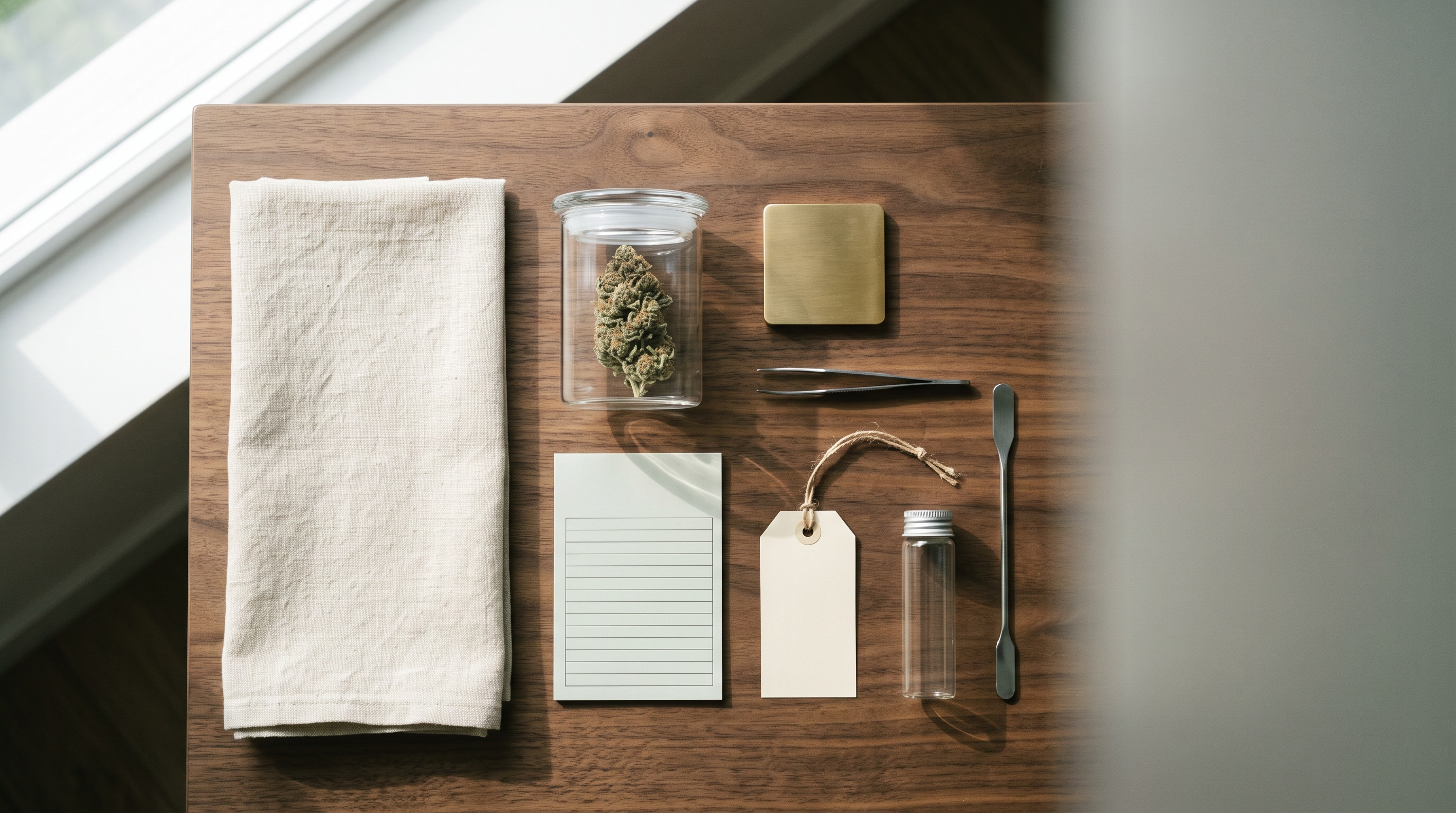
A cannabis certificate of analysis can look impressively final. It has a batch number, potency, safety panels, a lab signature, and a clean PASS at the top.
But the instrument only tested the material that reached it. Before that sample became a number, somebody had to choose, label, seal, move, accept, store, and prepare it. Each handoff also needed a record. That paper-and-package trail is the chain of custody.
Here is the useful mental model: a COA is the end of a relay race, not the whole race. Chain of custody helps show that the baton did not quietly change along the route. It does not prove that the runner started with a fair piece of the batch. Nor does it make every package on a dispensary shelf the same.
If you are still learning the document itself, open our complete guide to reading cannabis lab results first. Then come back here to follow the physical sample behind those results.
What chain of custody actually means
In lab work, chain of custody is a controlled record of a sample’s identity, possession, movement, storage, and final fate. A strong record answers five plain questions:
- What was collected? Product type, batch or lot, amount, and unique sample ID.
- Who controlled it? The collector, courier, receiving analyst, and later handlers.
- When and where did control change? Dates, times, collection site, transport, and laboratory receipt.
- What condition was it in? Seal status, package condition, temperature when required, and any irregularity.
- What happened next? Storage, subsampling, analysis, retention, transfer, or destruction.
The exact form varies by state. California requires labs to record transport, handling, storage, and destruction. Custody changes include the date, time, names, and signatures. Washington requires labs to track the original sample and later test portions or extracts. Minnesota makes an intact seal and on-time lab arrival clear acceptance checks.
Those are regulatory examples, not one national cannabis rulebook. Requirements can change, and a compliant process in one state may not look identical in another. The sequence below describes the common logic.
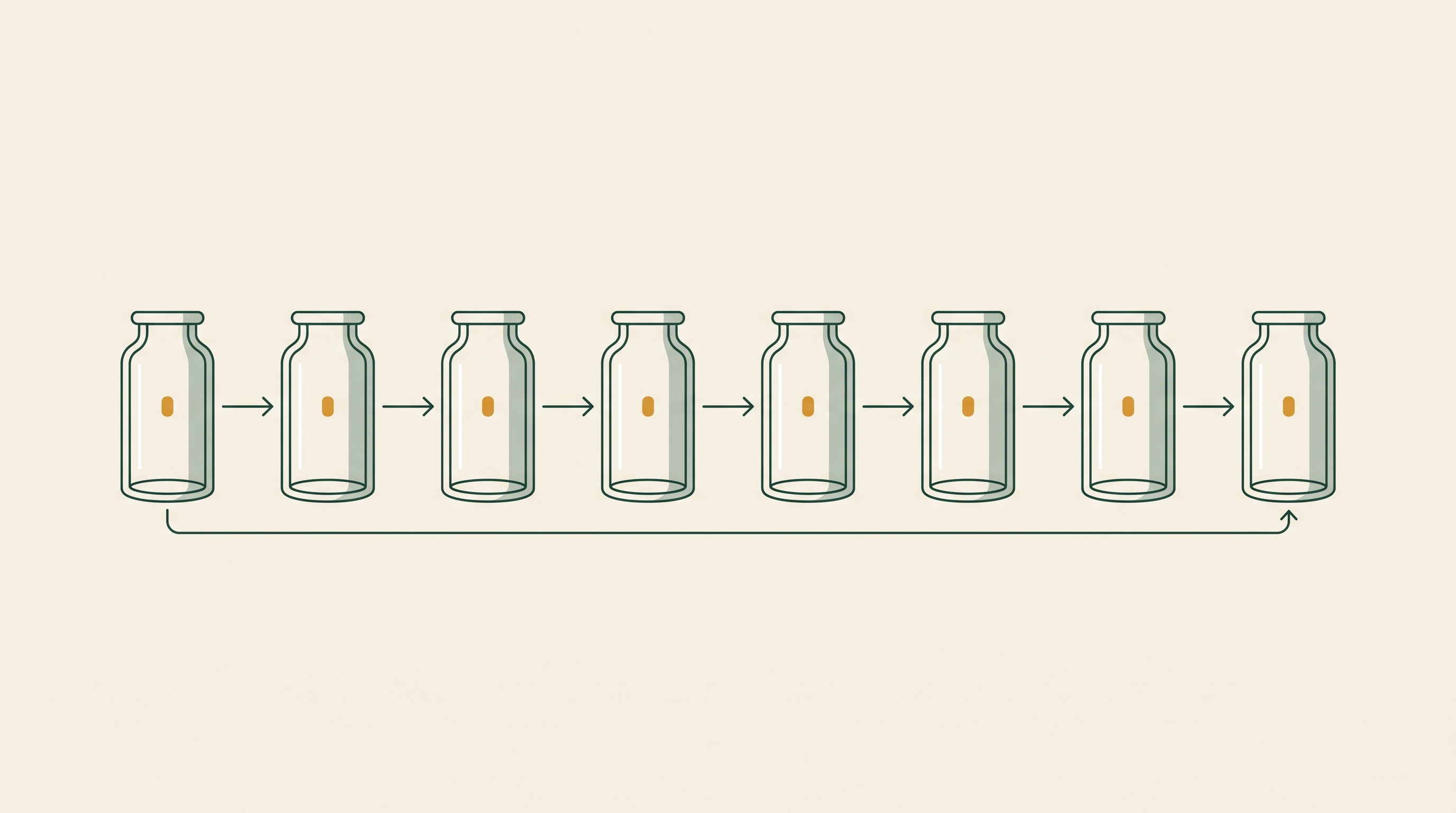
Step 1: Define—and stop changing—the batch
Custody begins before anyone fills a sample jar. The producer first marks the batch that the result should represent. It might be harvested flower, concentrate, or finished units of an edible or vape.
That boundary matters. Product may be added, removed, blended, treated, packed again, or relabeled after sampling. Without the right controls, the sample may no longer describe the retail product.
A track-and-trace system can connect the production batch, laboratory sample, and retail package. Think of this as a chain of identity running alongside physical custody. A perfect courier log cannot rescue a wrong batch number.
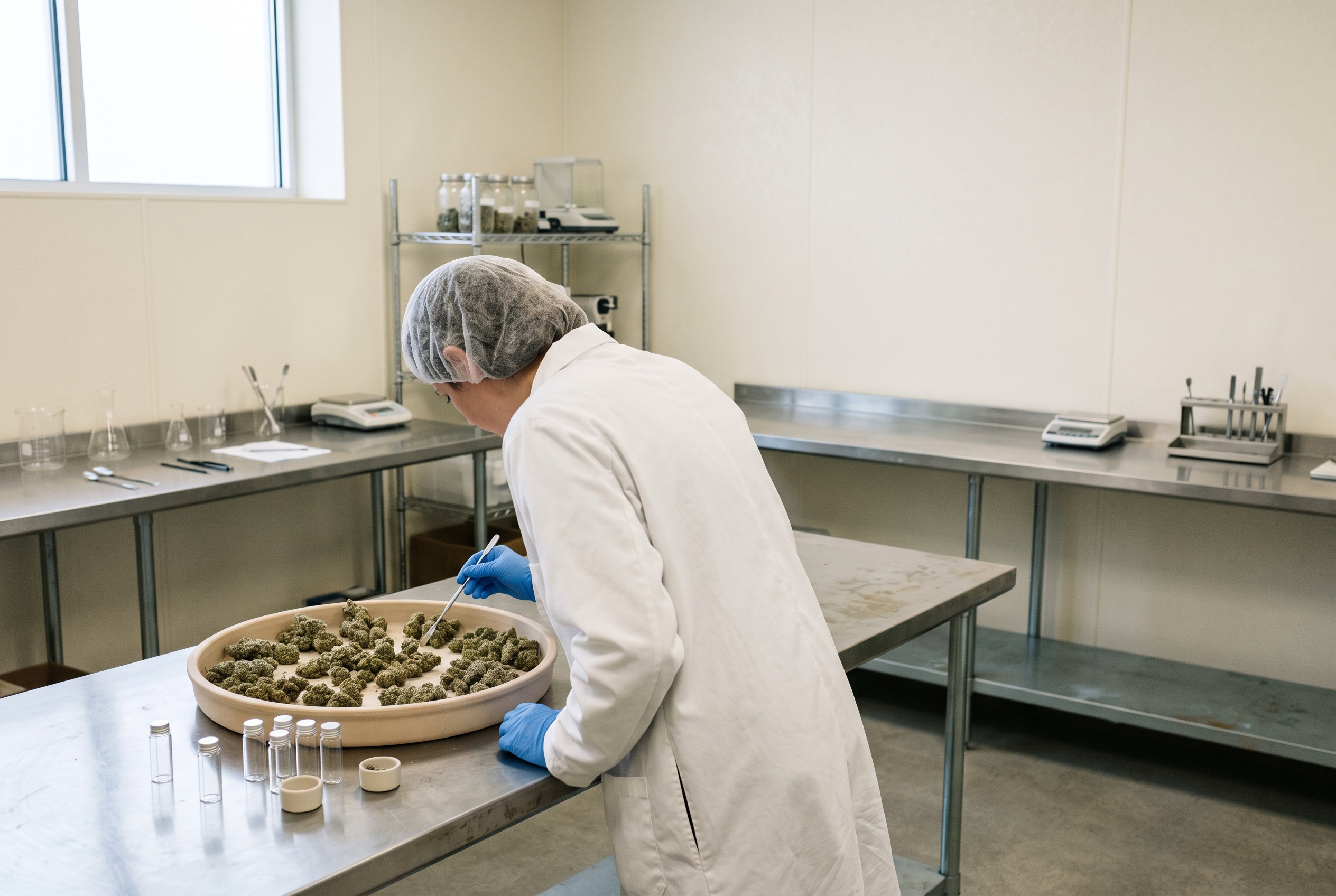
Step 2: Select a representative sample
This is the most important step that consumers rarely see.
A trained sampler should follow the state’s sampling plan. That may mean choosing spots across the batch, taking several small portions, and recording each choice. New Jersey, for example, calls for a valid sampling plan, portions from different containers, and both initial and retained samples. New York requires portions throughout the batch and a signed statement about the process.
Why not grab the prettiest top flower? Cannabis is not uniform. Cleary, Maloney, Toor, and Vandermeirsch (2025) measured dried cannabis with one method. They still found total-THC variation within and across plants from the same batch. Across nine batches, the spread within one plant level ranged from 3.1 to 6.7 percentage points. Top-to-bottom spreads across three batches ranged from 4.7 to 6.1 points.
That finding makes a crucial distinction:
Chain of custody protects the sample that was taken. Representative sampling determines whether that sample deserves to speak for the batch.
A flawless chain can deliver a biased scoop. For more context, read why THC percentage is a poor way to choose cannabis and why cannabis lab-testing standards fail consumers.
Step 3: Identify, weigh, and seal the sample
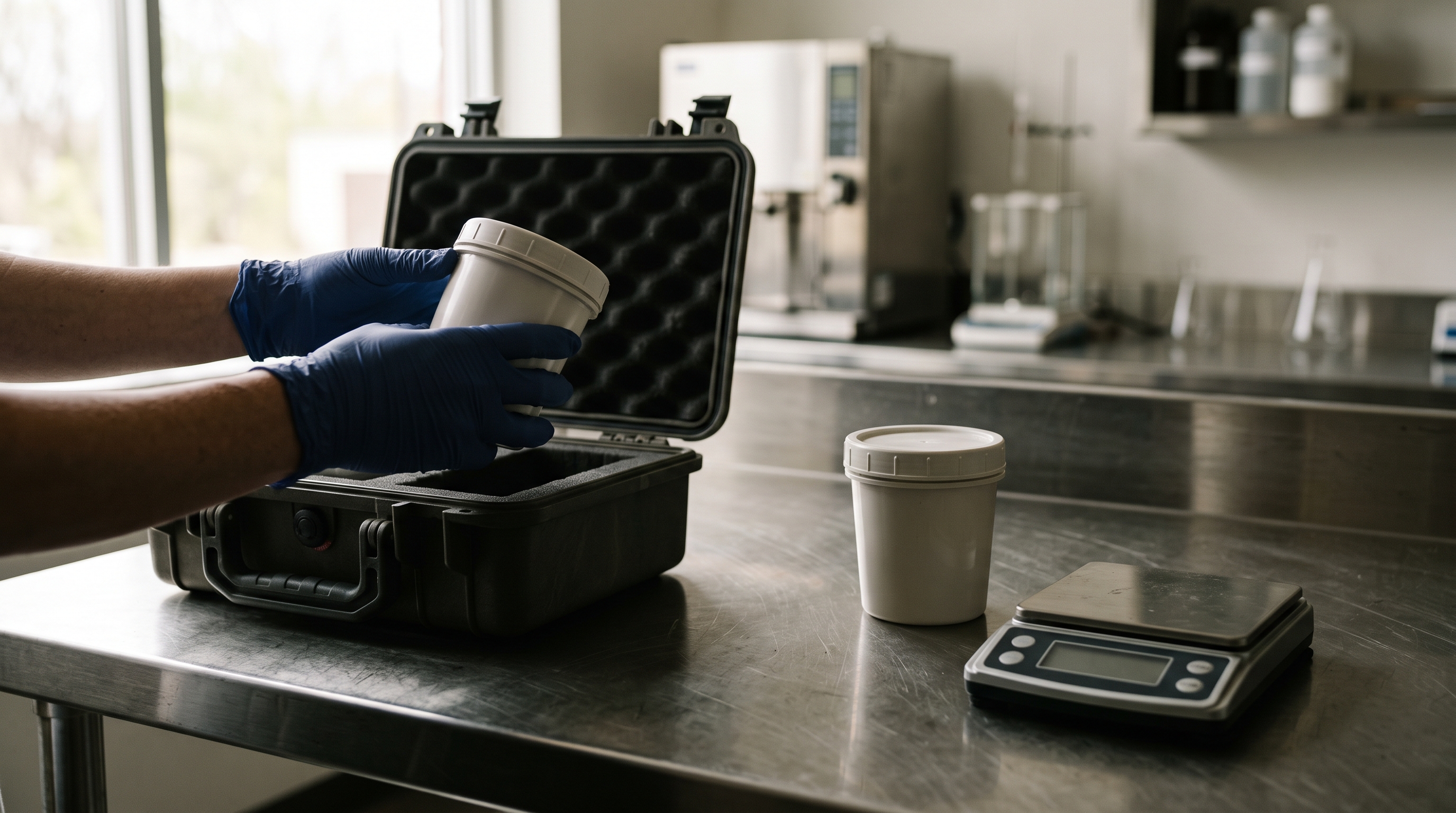
After collection, the container gets a unique ID tied to the batch and field record. That record often names the product, amount, collector, place, date, time, and any required witness.
Then comes the tamper-evident seal. Its job is modest but valuable: make unauthorized opening or alteration visible. The collector—not the producer casually carrying an open jar to a favorite lab—should apply the seal under the applicable rule.
Do not turn that seal into magic. An intact seal supports the claim that the closed container was not opened after sealing. It does not establish that the right material went inside, that the sample was representative, or that temperature-sensitive compounds remained unchanged.
Step 4: Control transport
In transit, the sample should stay safe from access, loss, dirt, heat, and mix-ups. California requires a secure, enclosed vehicle area out of public view. Packages must not be opened or altered on the trip. Minnesota’s medical-cannabis rule requires delivery within 48 hours.
The transport record should follow the sample. Each transfer must show who released it, who took it, and when. A courier handing a locked case to a lab worker is a custody event, not trivia.
Product type changes the risk. Aromatic compounds can escape. Wet material can change. Edible or extract samples may separate, and heat can alter chemistry. Storage should fit the test. Our guides to storing flower, edible shelf life, and COA age explain why handling still matters after a pass.
Step 5: Receive—or reject—the package
At lab receipt, a trained worker compares the package with the manifest and custody record. Common checks include:
- Does the sample ID match the paperwork?
- Is the tamper-evident seal intact?
- Is the amount sufficient for required tests and retention?
- Did it arrive within the permitted time?
- Is the container leaking, damaged, contaminated, or stored incorrectly?
- Are all required signatures, dates, and batch details present?
Washington tells labs to record package condition, possession, and problems. A mismatch or sign of tampering triggers rejection. Minnesota also requires rejection for a broken seal or missed 48-hour window.
Rejection is a quality-control success. The lab refused to turn a doubtful sample into an official-looking number. A program with no recorded exceptions is not always cleaner. It may be worse at finding them.
Step 6: Track storage, subsamples, and preparation
Receipt does not end custody. The original sample belongs in a secure area with limited access. The record continues as workers make test portions, extracts, and instrument vials.
This is where homogenization, or even mixing, matters. The lab tests a small portion, not the whole jar. Good grinding, mixing, splitting, and labeling help that portion stand for the submitted sample. Washington requires tracking, proper mixing, and handler records for original samples, test portions, and extracts.
Again, separate the controls:
| Control | The question it answers |
|---|---|
| Sampling plan | Did the field sample represent the production batch? |
| Chain of custody | Can we reconstruct identity, possession, and condition? |
| Sample preparation | Did the tested portion represent the submitted sample? |
| Analytical method and quality controls | Did the instrument measure that portion competently? |
| Batch/lot traceability | Does the retail package point back to that tested batch? |
No single row proves the rest.
Step 7: Analyze, review, and report
The lab runs the required panels, checks the data, and issues the COA. California says labs must use approved work steps, quality programs, and skill tests. They must also hold ISO/IEC 17025 accreditation. A COA may come out only after all tests are complete. It usually cannot change without state approval.
Accreditation is useful evidence of a lab quality system. It does not promise a perfect result. Jikomes and Zoorob (2018) studied Washington’s seed-to-sale data. They found steady differences in cannabinoid results among certified labs, even after testing other possible causes. Schwabe, Johnson, Harrelson, and McGlaughlin (2023) retested 23 Colorado flower samples. Measured potency averaged 23.1% below the lowest label values. The study could not tell which mix of sampling, testing, storage, or sales pressure caused each gap.
That uncertainty is the point. A surprising result does not tell you where the chain failed.
Rules may require secure storage of leftover sample and records, followed by recorded destruction. Custody ends when that material has a recorded fate.
What a consumer can reasonably infer
Most shoppers get a COA. They do not get the full custody form, field log, video, or lab receipt record. Use the visible clues with care.
A clean match supports these inferences
- The COA is traceable to a named laboratory sample and production batch.
- The laboratory reports that the submitted sample completed the listed tests.
- Sampling, receipt, test, and report dates create a plausible sequence.
- An unamended report from a licensed lab is stronger than a screenshot with no verifiable source.
- A complete panel can show what the jurisdiction required the laboratory to evaluate.
It does not prove these claims
- Every gram or unit in the batch has identical potency.
- The sampler took truly representative increments.
- The retail package was stored well after testing.
- A passing result covers hazards not listed on the panel.
- The product is counterfeit-proof, risk-free, or right for your body.
- A high THC number predicts a better experience.
Those last two matter. Learn how to spot a counterfeit vape, judge flower grades beyond potency, and see why dispensary labels can mislead. One lab number is not the whole product.
A 60-second custody check at the dispensary
You cannot audit a laboratory from the checkout line, but you can catch broken links.
- Scan the product’s QR code, rather than relying on a generic COA supplied for the whole brand.
- Match the batch or lot character for character. Similar is not the same.
- Confirm product identity and type. Flower results should not be reused for a manufactured derivative.
- Read the sample-received, test, and report dates. Missing chronology deserves a question.
- Verify the lab name and license on the regulator’s current directory when available.
- Look for report status and version. If amended, the report should make that clear.
- Check every expected safety panel, not just the large potency box.
- Inspect the retail package seal and condition. Laboratory custody cannot protect a package damaged months later.
New Jersey tells shoppers to request the COA. It says to check the batch or lot, sample date, lab license, and all test panels. Our dispensary buyer’s guide can help when those details do not line up.
Pause if the batch number is wrong. Do the same if the QR code opens a brand homepage, the report is cropped, or a required panel is missing. Ask the retailer for the batch-specific original. If the answer stays fuzzy, choose another product.
Key takeaways
Chain of custody is not glamorous. It is seals, doors, logs, clocks, and people willing to reject a bad package. That work gives a lab result a traceable physical history.
But custody is only one layer of trust. The strongest evidence stack is:
fair sampling + intact custody + sound analysis + exact batch match + proper storage.
Use our COA scanner to surface key fields, compare products, and save what you tried. Your own response history can beat chasing a “perfect” potency number. You can also use High Families to group products by broad chemical patterns, not one label claim.
Frequently asked questions
Is chain of custody the same as seed-to-sale tracking?
No. Seed-to-sale tracking follows regulated inventory through cultivation, manufacturing, transfer, and retail. Chain of custody follows the laboratory sample’s possession and condition. The systems should connect through batch and sample identifiers, but they answer different questions.
Does an intact tamper-evident seal prove the sample is valid?
It supports that the container was not opened after sealing. It does not prove the correct material was sealed, that collection was representative, or that transport conditions were appropriate.
Can a producer collect its own compliance sample?
That depends on the jurisdiction and program. Some rules require a laboratory employee or independent sampling firm to collect it and restrict producer involvement. Check the current regulator rule where the product was sold.
Why would a laboratory reject a sample?
Common reasons include a broken seal, wrong ID, late delivery, too little sample, a leak, poor temperature control, dirt, or missing paperwork. Rejection helps keep doubtful material from producing an official result.
Can I request the full chain-of-custody record?
You can ask the retailer, producer, lab, or regulator. Public access varies by state and record type. A consumer COA shows results, not every handoff. Start with the original batch-specific COA and verify it with the lab or state.
Does ISO/IEC 17025 accreditation guarantee accurate cannabis labels?
No. Accreditation cannot remove sampling variation, mistakes, or misconduct. It shows that a lab has a formal quality system for its approved scope. Weigh that signal with sampling controls, skill tests, state oversight, and batch tracking.
Sources
- Washington State Legislature — Chapter 16-309 WAC: Cannabis Laboratory Quality Standards.
- Minnesota Revisor of Statutes — Rule 4770.3002: Sampling.
- California Department of Cannabis Control — Testing Laboratories.
- California Code of Regulations, Title 4, § 15706 — Chain of Custody Protocol (Cornell LII).
- New York Codes, Rules and Regulations, Title 9, § 130.21 — Cannabis Sampling (Cornell LII).
- New Jersey Cannabis Regulatory Commission — Understanding Certificates of Analysis.
- Cleary, Maloney, Toor, and Vandermeirsch (2025), “Variability of total THC in greenhouse cultivated dried Cannabis,” Scientific Reports.
- Jikomes and Zoorob (2018), “The Cannabinoid Content of Legal Cannabis in Washington State Varies Systematically Across Testing Facilities and Popular Consumer Products,” Scientific Reports.
- Schwabe, Johnson, Harrelson, and McGlaughlin (2023), “Uncomfortably high: Testing reveals inflated THC potency on retail Cannabis labels,” PLOS ONE.
Regulatory examples were reviewed August 22, 2026. Cannabis rules vary by jurisdiction and change over time; this guide is educational, not legal advice.

