Rolling Tray and Kit Setup: Build Your Session Station
Build a rolling tray and kit that actually works. Tray materials, sizes, magnetic setups, the essential accessories, travel kits, and care tips.

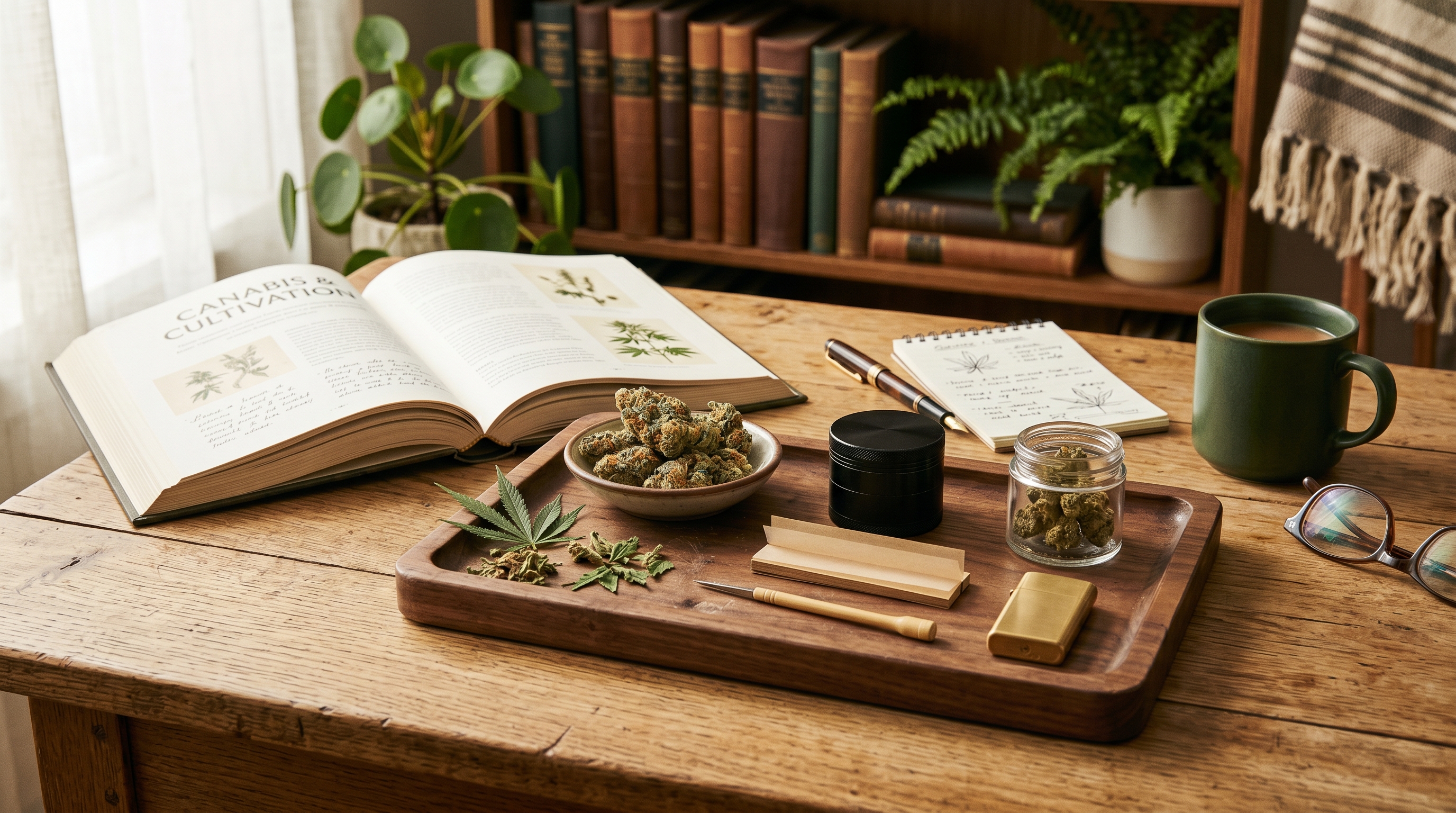
If you have ever ground up some flower on a paper towel, lost half of it to the carpet, and then spent ten minutes hunting for your lighter, you already understand the problem. The flower was probably fine. The setup failed you. A good rolling tray and a thoughtfully built kit turn rolling from a frustrating scavenger hunt into a calm, repeatable ritual. That is what we are building today: a session station.
Think of it the way a cook thinks about a clean cutting board and a knife within reach. The work goes faster, you waste less, and the whole thing just feels better. Whether you are rolling your first joint or you have been at this for years, dialing in your tray and accessories pays off every single session.
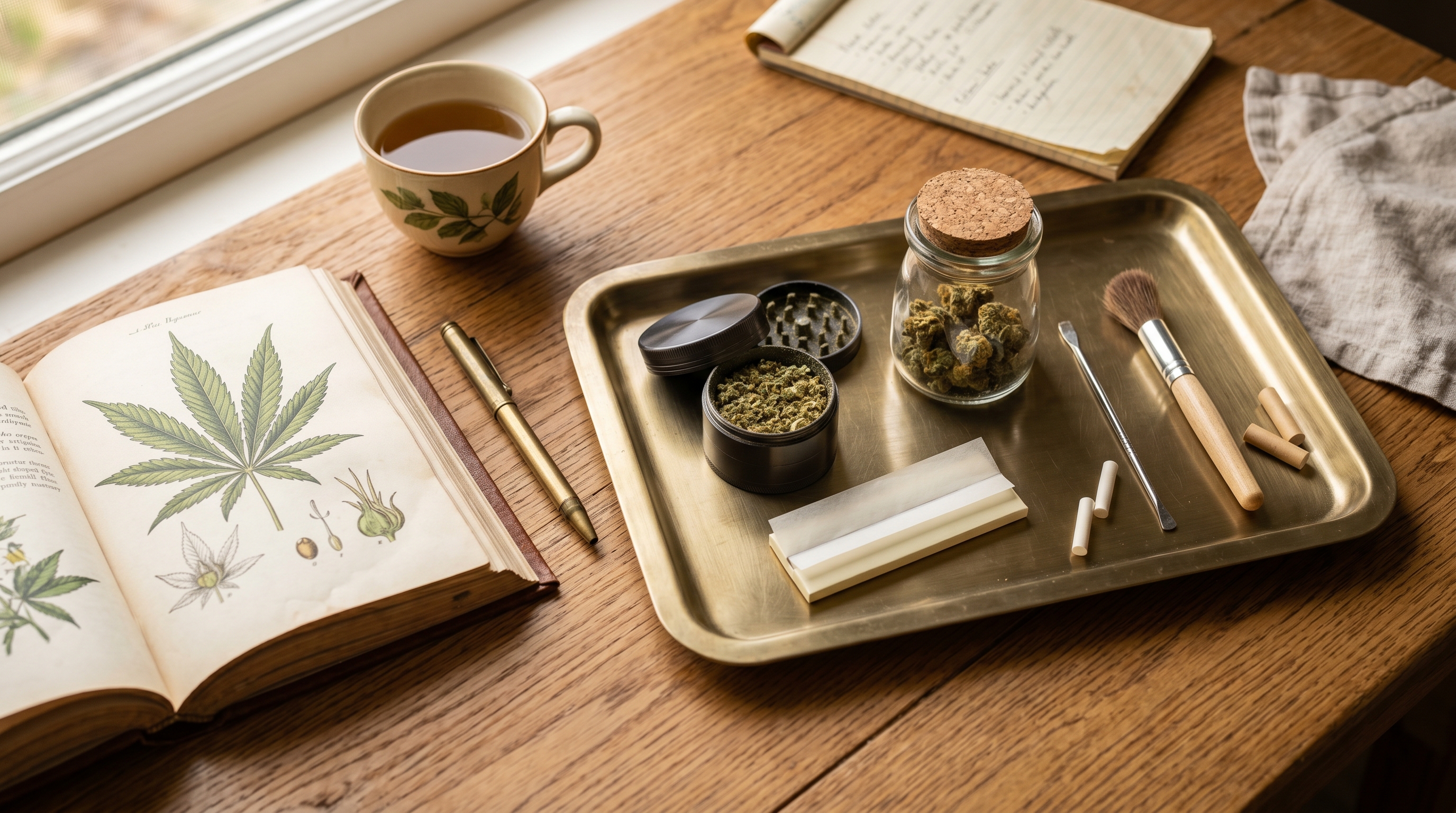
Why a Session Station Beats Winging It
A rolling tray is the foundation, and it earns its keep in five quiet ways.
- It reduces waste. Raised edges catch ground flower that would otherwise scatter, so most users find they lose less over time. Over a year, that adds up to real money saved.
- It keeps you organized. Papers, filters, and tools live in one place instead of migrating around your home.
- It contains the mess. A defined surface means crumbs and kief stay put, which makes cleanup a quick wipe rather than a chore.
- It is portable. A tray with a lid lets you pack up your whole setup and move it without losing anything.
- It elevates the experience. There is a reason ritual matters. A clean, intentional surface makes the whole thing feel more deliberate, and that mindset carries into how you consume.
None of this is about looking fancy. It is about removing friction so the experience is consistent every time. If you are still figuring out the basics of consumption gear, our cannabis gear guide from beginner to advanced is a good companion to this one.
Tray Types: Material, Size, and Magnets
Material
The material you choose shapes how the tray feels, how long it lasts, and how easy it is to clean. Here is the honest breakdown.
- Metal (aluminum or steel) is the default for most people, and for good reason. It is durable, wipes clean in seconds, lightweight, and affordable, usually in the $10 to $30 range. The downsides are minor: it can dent under heavy impact and printed designs can scratch over time.
- Wood (bamboo, walnut, maple) looks premium and feels warm to the touch. Many are handcrafted, and bamboo is a renewable favorite. The tradeoffs are price ($30 to $150 and up), more maintenance, and the fact that unfinished wood can absorb odors. Wood trays make great display pieces and gifts.
- Silicone is flexible, nearly indestructible, and travel-friendly. It is non-slip and easy to rinse, typically $10 to $25. The catch is that it is less rigid, so loose items can slide, and it can pick up lint and absorb odors over time.
- Plastic or acrylic is the cheapest option ($5 to $15) and fine as a starter, but it cracks more easily and gets harder to clean as it ages.
- Glass is beautiful and non-porous, but fragile, heavy, and pricey. Save it for a careful home display, not daily handling.
For most readers, a medium metal tray is the sweet spot. If you travel a lot or tend to be clumsy, silicone is the smarter pick.
Size
Trays come in roughly four sizes, and the right one depends on how you use it.
- Small (5 to 7 inches by 4 to 5 inches): personal use, tight spaces, and travel. Holds enough for a joint or two.
- Medium (about 10 by 7 inches): the sweet spot for daily rolling. Room for a full session’s supplies without hogging your table.
- Large (13 by 9 inches and up): group sessions and heavy users who like to spread out a full kit, grinder and all.
- XXL or party size (16 by 12 inches and up): built for gatherings or multiple people rolling at once.
When in doubt, go medium. It is the size most people grow into rather than out of.
Magnetic Trays and Closures
Magnets show up in two useful places. First, magnetic lids and closures keep a cover snapped shut during transport so nothing spills. Look for strong magnets with multiple contact points. Second, some trays use magnetic accessory holders so your grinder, lighter, or tool clicks into place instead of sliding around. If you carry your tray between rooms or out the door, a magnetic lid is one of the most practical upgrades you can make.
A few features genuinely matter when you shop: raised, curved edges of at least half an inch for containment; a smooth or lightly textured surface that is easy to wipe; and built-in compartments or grooves if you like everything in its slot. Other features, like LED lighting or wireless charging, are fun but mostly gimmicks unless you have a specific need.
The Essential Kit Checklist
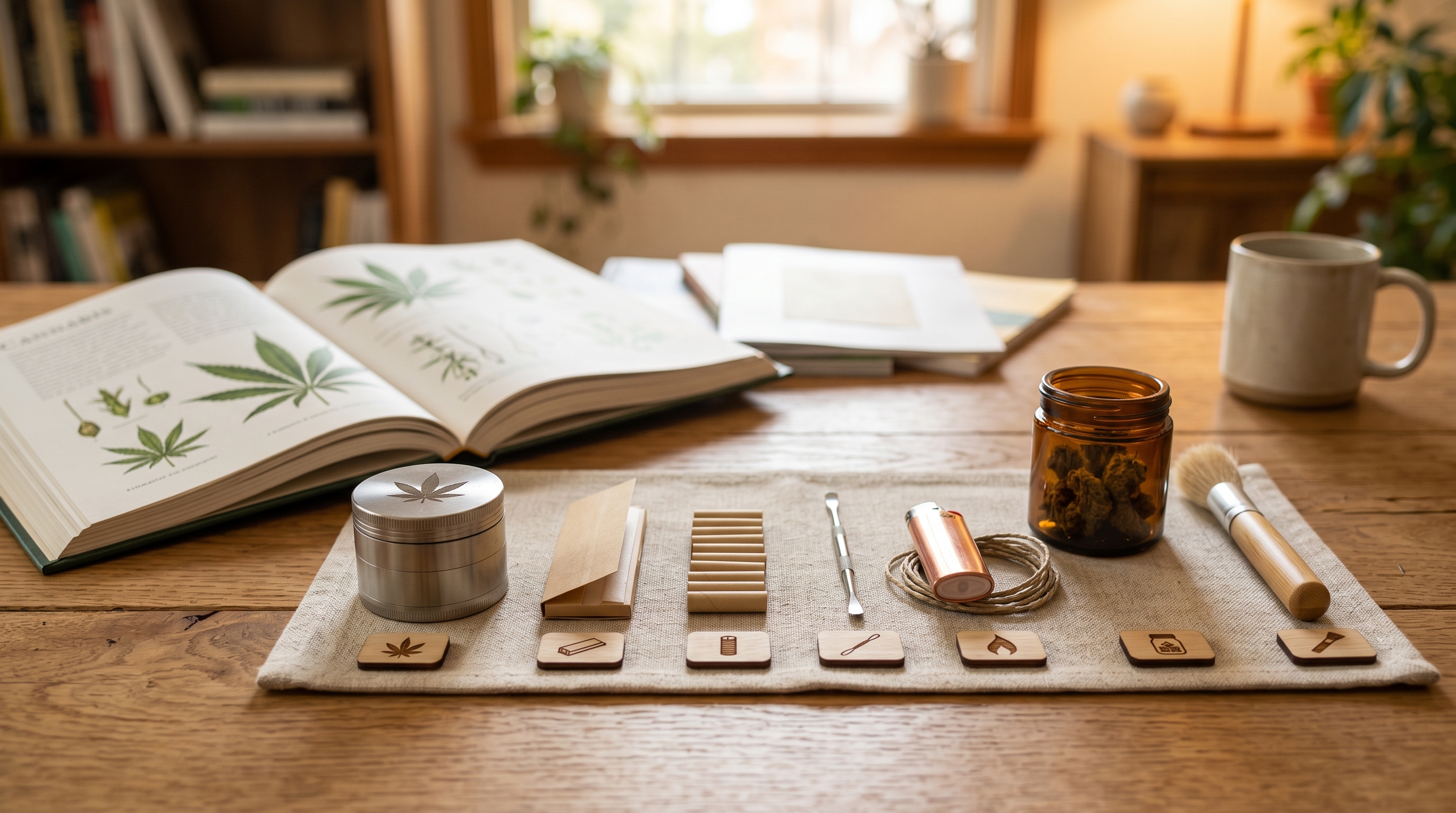
A tray is the table. The kit is what sits on it. Here is the core lineup, with the why behind each piece.
- Grinder. A consistent, even grind is the single biggest factor in how smoothly your joint or bowl burns. A four-piece metal grinder also catches kief in a bottom chamber. If you want to go deep, our best cannabis grinders 2026 buyer’s guide breaks down the options.
- Rolling papers or pre-rolled cones. Papers give you control; cones save time and are beginner-friendly. Our rolling papers and cones complete buyer’s guide covers materials, sizes, and burn rates.
- Filters or tips. A crutch (also called a tip or filter) keeps bits of flower out of your mouth, holds the joint’s shape, and lets you smoke down to the end without burning your fingers.
- Packing tool or poker. A slim tool to tamp flower evenly and clear a finished bowl. A poker doubles as a way to nudge things into place while rolling.
- Lighter or hemp wick. A reliable lighter is non-negotiable. Many people add hemp wick, a length of twine coated in beeswax, to avoid inhaling butane fumes and to get a gentler light. If you would rather skip rolling entirely on some days, it is worth understanding the pre-rolls versus hand-rolled joints tradeoff.
- Storage container. A small airtight, opaque jar keeps your flower fresh between sessions. Light, air, and humidity are the enemies of freshness, which is the whole subject of our complete guide to storing cannabis.
- Cleaning brush. A soft brush sweeps stray flower and kief back into a pile so nothing goes to waste and the tray stays tidy.
That is the foundation. Once you have these seven pieces, you can roll, pack, and clean up without ever leaving your seat. For a broader take on building out your whole setup over time, see how to build the perfect cannabis toolkit.
Organization Tips That Keep It Sane
Owning the gear is half the battle. Keeping it usable is the other half.
- Give everything a home. Use the tray’s grooves or small dishes so your grinder, tips, and tool always land in the same spot. Muscle memory does the rest.
- Group by frequency. Daily items (papers, lighter, grinder) live on the tray. Occasional items (extra papers, backup lighter, a second grinder) live in a nearby drawer or pouch.
- Keep flower sealed and off the tray. Only grind what you plan to use. Leaving flower exposed on an open tray dries it out fast.
- Sweep after every session. Thirty seconds with the brush keeps kief from caking into corners and saves a bigger cleanup later. That accumulated kief is a bonus, too. If you have ever wondered what to do with it, our piece on bubble hash versus kief versus dry sift is a fun rabbit hole.
- Refill before you run out. Keep a small stock of papers, tips, and lighters so a dead lighter never ends a session early.
Building a Travel Kit
A home station is great until you are not home. A dedicated travel kit means nothing gets forgotten and nothing announces itself in your bag.
The single most important piece is a smell-proof case. Look for an activated-carbon (charcoal) lining, a quality zipper seal, and a discreet exterior. Soft cases are lighter and more flexible; hard cases protect better. Expect to spend $15 to $50 for something that actually contains odor.
Inside the case, pack a compact version of your home kit:
- A mini grinder (1.5 to 2 inches). A two-piece is ultra-compact; a four-piece travel grinder still catches kief.
- A small storage container, like a one-ounce UV jar or a doob tube for pre-rolls.
- Papers and filters, or pre-rolled cones to skip rolling on the road entirely.
- A small rolling tray or a flexible silicone mat that rolls up.
- A lighter and a slim packing tool.
Prioritize discretion, compact size, and organization over features. A travel kit that is annoying to carry is a travel kit you leave at home. If you are crossing state or national borders, the rules change fast, so read our guides on traveling with cannabis and the broader state-by-state cannabis laws for 2026 before you pack.
Beginner vs. Connoisseur Builds
There is no single “right” station. Yours should match where you are.
The Beginner Build (about $40 to $60)
- Medium metal tray with raised edges
- Affordable four-piece metal grinder
- Pre-rolled cones (easier than rolling papers while you learn)
- A pack of filter tips
- A basic lighter
- A small airtight jar
This covers everything you need to roll a clean joint and store your flower properly. If rolling itself is still intimidating, work through our step-by-step guide to rolling the perfect joint, and if you are brand new to all of this, the first-time cannabis user’s guide sets expectations for the experience itself. Knowing your grams, eighths, and ounces at a glance also helps you size your storage jar correctly.
The Connoisseur Build (about $150 and up)
- Premium wood or magnetic-lid metal tray with compartments
- A high-quality grinder with a fine kief screen
- A curated paper collection (different sizes, unbleached or hemp options)
- Glass or reusable tips
- Hemp wick plus a quality lighter
- UV-protective glass jars with humidity control packs
- A dedicated cleaning kit
At this level you are optimizing for flavor, consistency, and ritual. You might also be paying closer attention to the strains themselves, which is where understanding High Families as a better way to choose cannabis and the terpene profiles behind them comes in. The deeper truth is that gear amplifies good flower; it does not rescue mediocre flower. For that, learning why a strain’s name tells you less than its chemistry matters more than any accessory.
Care and Cleaning
A clean station is a happy station, and maintenance is mostly about consistency, not effort.
- Metal and glass trays: wipe with a dry cloth after each session; for sticky resin buildup, use isopropyl alcohol on a cloth or cotton swab, then let it dry fully.
- Wood trays: keep them dry, wipe gently, and avoid soaking. A finished surface resists odors far better than raw wood.
- Silicone: rinse with warm soapy water, or peel off dried resin once it hardens. Silicone’s flexibility makes it the easiest material to deep-clean.
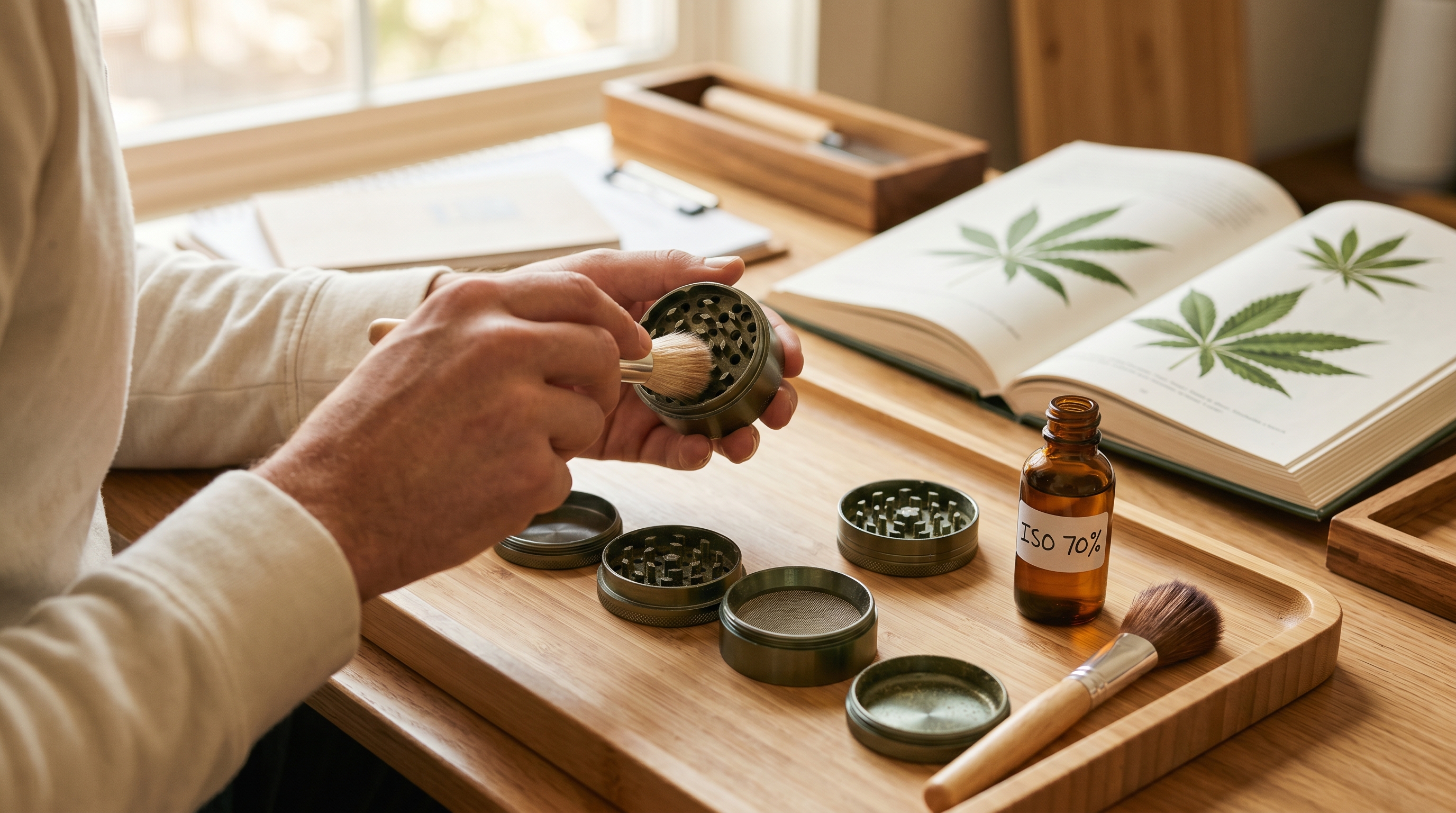
- Grinders: disassemble periodically and soak metal grinders in isopropyl alcohol to dissolve resin, then scrub the screen with a brush and rinse. A gummed-up grinder is the most common reason a “good” grinder feels bad.
- Brushes and tools: wipe tools with alcohol; tap out brushes regularly so they keep sweeping cleanly.
Build a quick habit of a 30-second wipe-down after each session and a deeper clean every few weeks. Your gear will last for years and perform like new. The same disciplined mindset that keeps a tray tidy is the one that turns rolling into a genuine cannabis ritual worth slowing down for.
FAQ
Do I really need a rolling tray, or is a plate fine? A plate works in a pinch, but it lacks raised edges, so you lose more flower and the cleanup is messier. A basic metal tray costs about as much as an eighth and pays for itself in saved flower.
What size tray should a beginner get? A medium tray, roughly 10 by 7 inches. It has room for a full session’s supplies without taking over your table, and it is the size most people stick with long term.
Is a magnetic lid worth it? If you ever move your tray between rooms or take it out of the house, yes. A magnetic lid keeps everything contained during transport and adds discretion.
Metal or silicone? Metal for a stationary home setup (durable, easy to wipe). Silicone for travel and outdoor use (flexible, nearly indestructible). Many people own one of each.
How often should I clean my grinder? Give it a quick brush after heavy use and a full alcohol soak every few weeks, or whenever it starts feeling stiff to twist. Resin buildup is the usual culprit behind a sluggish grinder.
Can I just buy an all-in-one kit? Sure, and it is a reasonable starting point. Just check the quality of the grinder and tray, since bundled kits sometimes cut corners there. You can always upgrade individual pieces as your tastes develop.
Key Takeaways
A session station is not about spending money; it is about removing friction. The tray contains the mess, the kit keeps your tools in reach, and a quick clean keeps everything working. To recap:
- Start with a medium metal tray with raised edges — it is the size and material most people grow into rather than out of.
- Build the seven essentials: grinder, papers or cones, filter tips, packing tool, lighter or hemp wick, an airtight storage jar, and a cleaning brush.
- Give everything a home on the tray and only grind what you plan to use, so flower stays fresh and tools stay findable.
- Pack a separate travel kit built around a smell-proof, carbon-lined case.
- Wipe down after every session and deep-clean your grinder every few weeks.
The gear is the easy part. The harder, more rewarding part is paying attention to what you actually consume and how it makes you feel. That is exactly why we built High IQ: to help you track your strains, terpene profiles, and effects so your sessions get smarter over time, not just better organized. Build the station, then let the data tell you what is worth keeping on it.
Sources
- [Wilson, 2026] MunchMakers Cannabis Guides — “Rolling Tray Buying Guide: Features, Styles & Price Points” (updated May 2026): guides.munchmakers.com/guide/rolling-tray-buying-guide
- [Wilson, 2026] MunchMakers Cannabis Guides — “Travel Rolling Kits: Portable Rolling Station Guide” (updated May 2026): guides.munchmakers.com/guide/travel-rolling-kits
- [Zigzag, 2025] Zig-Zag — “The Essentials Kit: Rolling Accessories That Make Every Wrap Better”: zigzag.com/blogs/zig-zag-blogs/the-essentials-kit-rolling-accessories-that-make-every-wrap-better
- [Bdd, 2025] BDD Wholesale — “How to Use Rolling Trays & Choose the Best”: bddwholesale.com/blogs/news/how-to-choose-the-best-rolling-tray-best-rolling-trays-for-different-needs


