Pre-Rolls vs. Hand-Rolled Joints: Is There a Difference?
Pre-rolls vs. hand-rolled joints compared on cost, freshness, burn, and quality. What's really inside that cone, and which one is right for you.

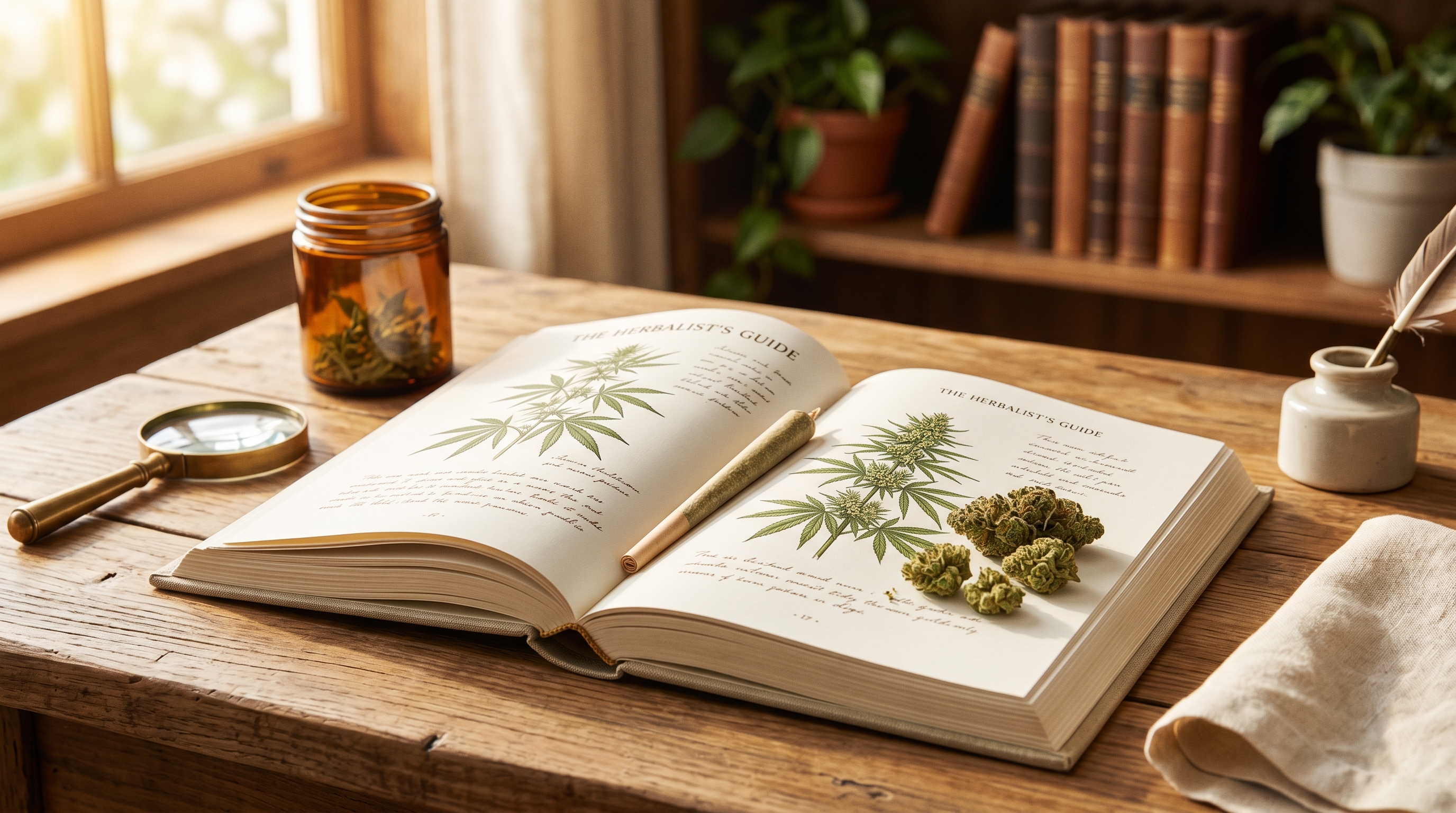
Walk into any dispensary in 2026 and you will see a wall of pre-rolls. They have quietly become the fastest-growing product category in legal cannabis. Over the last 12 months, consumers bought 410 million packs of pre-rolls, a 14% jump. Pre-rolls now out-sell every other product type in units moved, according to cannabis data firm Headset [Yakowicz, 2026]. Flower still wins on total dollars because it costs more. But the message is clear: a lot of people would rather grab a finished joint than roll one.
Which raises a fair question. Is a factory pre-roll actually the same thing as the joint you would roll at home? Or are you paying a premium for a tube full of someone else’s leftovers?
The honest answer is: it depends entirely on what is inside and how it was built. Let me walk you through the real differences so you can read a dispensary shelf like a scientist instead of guessing.
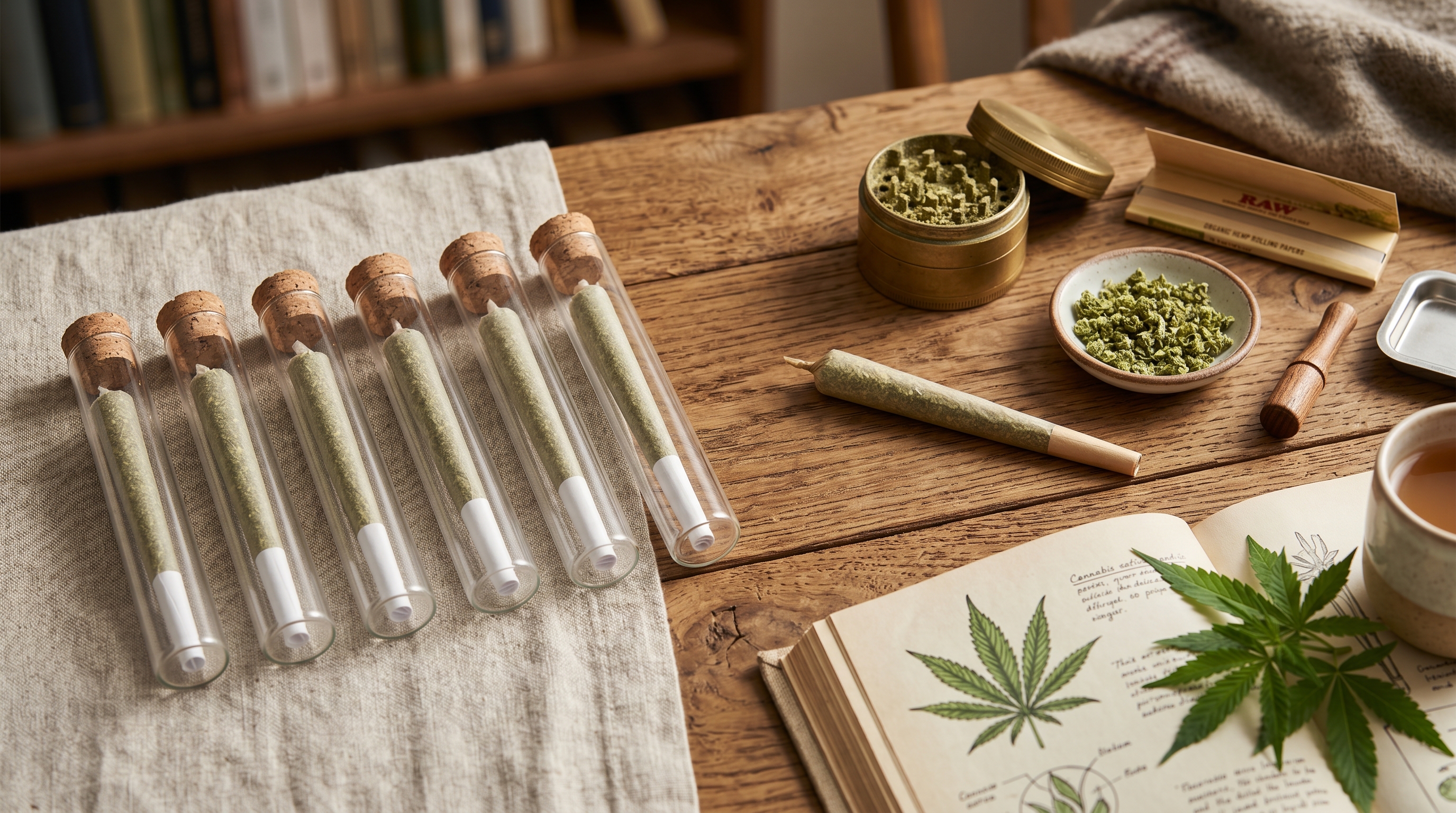
The Five Things That Actually Matter
Forget the marketing on the packaging. Whether a smoke is “good” comes down to five practical levers, and both pre-rolls and hand-rolled joints can win or lose on each one:
- What is inside (whole flower vs. shake vs. trim)
- How it is packed (density, airflow, even burn)
- Freshness (how long ago it was ground)
- Cost (per gram and per session)
- Convenience and control (effort vs. customization)
We will score both formats against these. But first, you need to know what a pre-roll really is.
What a Pre-Roll Actually Is
A pre-roll is simple on paper: ground cannabis packed into a rolling paper or pre-formed cone, with a filter tip (also called a crutch), sold ready to light. No grinding, no rolling, no mess. That convenience is the entire appeal.
The catch is what goes into the cone. The “input grade” is the single biggest variable, and there are three:
- Whole flower (bud). The actual buds, freshly ground. This is the closest thing to smoking a joint you rolled yourself from a fresh eighth. Highest in cannabinoids and terpenes, smoothest burn, truest flavor.
- Shake. The loose bits that fall off buds during handling and storage. Shake is not automatically bad, but it has more air exposure, so it dries out and loses aroma faster, and its uneven particle size can cause patchy burns. It is often cheaper and sometimes surprisingly potent.
- Trim. The sugar leaf clipped off during manicuring. It has far fewer trichomes (the resin glands that make cannabinoids and terpenes), more chlorophyll, and produces harsher, hotter smoke with weaker effects.
The grind hides what is inside, so you cannot judge a pre-roll by looking at it. That is also why THC percentage is a poor way to choose cannabis. It is also why so many dispensary labels mislead you about what you are really getting.
Here is the uncomfortable industry truth. A pre-roll cofounder told Forbes that historically, pre-rolls were “like a hotdog, the inputs of the beef or pork are usually not the best” [Yakowicz, 2026]. For years, pre-rolls were how producers moved the byproducts they could not sell as premium flower. One transparency-focused retailer estimates that roughly 60% of commercial pre-rolls are made with trim or shake rather than full flower [Smokeunicorn, 2025]. That figure varies wildly by market and brand, so treat it as a warning, not a law.
The encouraging news: this is changing fast. Brands like Jeeter built entire businesses on premium pre-rolls, and a growing number of producers now advertise “100% whole flower” because consumers finally know to ask. The label matters more than ever.
Machine vs. Hand: How Pre-Rolls Get Made
Most pre-rolls are machine-filled. Empty cones sit upright in a tray, ground cannabis is loaded above them, and the machine vibrates the material down into the cones, then tamps it to a target density. At scale, the best of these systems fill thousands per hour at a remarkably consistent weight and airflow.
That consistency is genuinely good. As one Canadian retailer put it, machine pre-rolls are “packed to a uniform density that burns evenly from end to end, a consistency that even experienced hand-rollers don’t always achieve” [Purpleleaf, 2026].
But cheap, outdated “knock-box” filling is where pre-rolls earn their bad reputation. That just means shaking flower into a cone and moving on. Cannabis is not a uniform powder. When it is vibrated into place without real density control, you get the classic failures. Too tight and it clogs. Too loose and it burns hot and fast. Uneven and it canoes, meaning it burns down one side. From the outside the joint looks fine. Inside, the airflow is already broken before you ever spark it [Hightimes, 2026].
Some premium producers hand-fill or hand-finish their cones to dodge those problems, and infused pre-rolls almost always involve careful human oversight. So “pre-roll” covers everything from floor-sweepings in a tube to a craft product rolled with the same flower you would buy in a jar.
What Hand-Rolling Gets You
Rolling your own means buying loose flower and assembling the joint yourself with papers, a grinder, and a filter. The trade-offs are almost a mirror image of the pre-roll.
The wins:
- Total transparency. You see the flower before you grind it. You can check trichome density, smell the terpenes, and verify the cure. No intermediary decides what goes in the paper.
- Peak freshness. Terpenes are volatile and start evaporating the moment flower is ground. A joint you pack 30 seconds before smoking has lost essentially none of them. (More on this below.)
- Full customization. You choose the size, the tightness, the paper, and you can blend strains or add kief, hash, or solventless rosin yourself.
- Lowest cost per session. No labor or packaging markup.
The costs:
- It takes skill. A well-packed, evenly burning joint takes real practice. Beginners produce loose, fast-burning, or canoeing joints until they develop the touch. The good news is canoeing is a skill problem with a skill solution, not a flaw baked into the format. Our step-by-step rolling guide walks through the technique, and a pro tip is the graduated pack: slightly looser at the tip for easy lighting, progressively tighter toward the filter.
- It takes gear and time. You need a grinder, papers or cones, and a couple of minutes. If you are missing a tool or in a hurry, that is friction. Building out a proper toolkit helps.
If the idea of choosing between formats sounds limiting, note that hybrids exist: pre-formed cones you fill yourself give you fresh flower and your own grind with most of the rolling skill removed. Our broader gear guide covers the spectrum.
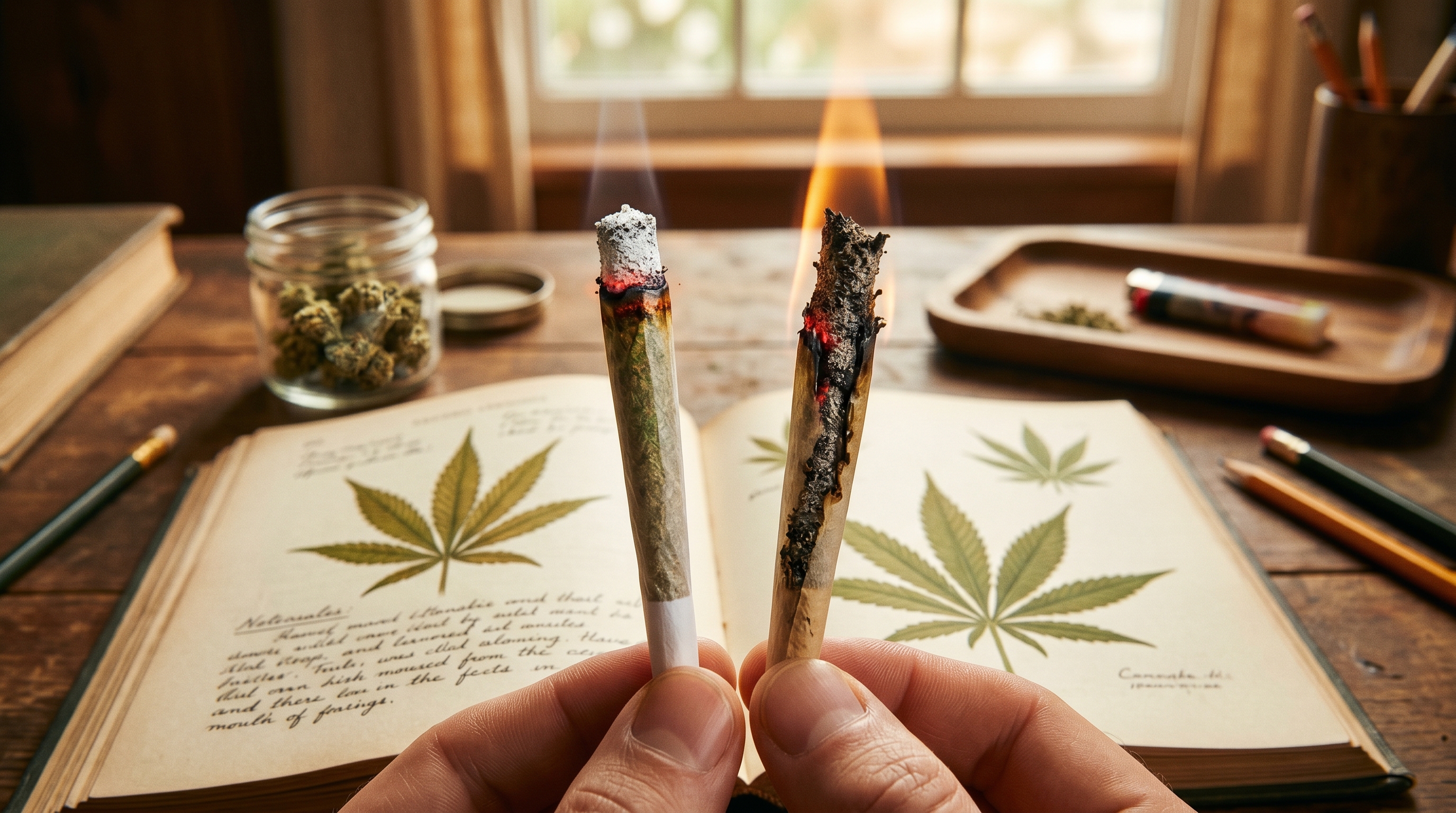
Side-by-Side: The Honest Scorecard
| Factor | Pre-Rolls | Hand-Rolled Joints |
|---|---|---|
| Cost | Higher per gram; a 1g pre-roll often costs more than a gram of premium flower (roughly $8 to $20 each) | Lowest per session; regular smokers can save 30 to 50% over equivalent pre-rolls |
| Convenience | Unbeatable. Light and go, no tools, fully portable | Requires grinder, papers, filter, and a couple of minutes |
| Freshness | Variable. Ground weeks or months ago; terpenes fade on the shelf | Peak. Ground seconds before smoking |
| Quality (input) | Depends entirely on the brand; could be whole flower or trim | You choose and inspect the exact flower |
| Control & consistency | High consistency from good machines; zero customization | Fully customizable; consistency depends on your skill |
A few notes that the table cannot capture. On cost, a daily consumer who rolls their own can save a few hundred to a couple thousand dollars a year versus equivalent pre-rolls, depending on local pricing [Chen, 2026]. If the gram-and-eighth math is fuzzy, our visual guide to cannabis quantities makes the per-session cost easy to picture. On freshness, a pre-roll in a sealed tube stays smokable for three to six months. But one smoked within a week of manufacture tastes noticeably better than two-month-old stock. If your dispensary prints packaging dates, buy the most recent. Some premium brands use nitrogen-sealed tubes or built-in humidity packs to fight this, but most do not. Proper storage is the other half of the freshness equation for your own flower.
A Quick Word on Infused Pre-Rolls
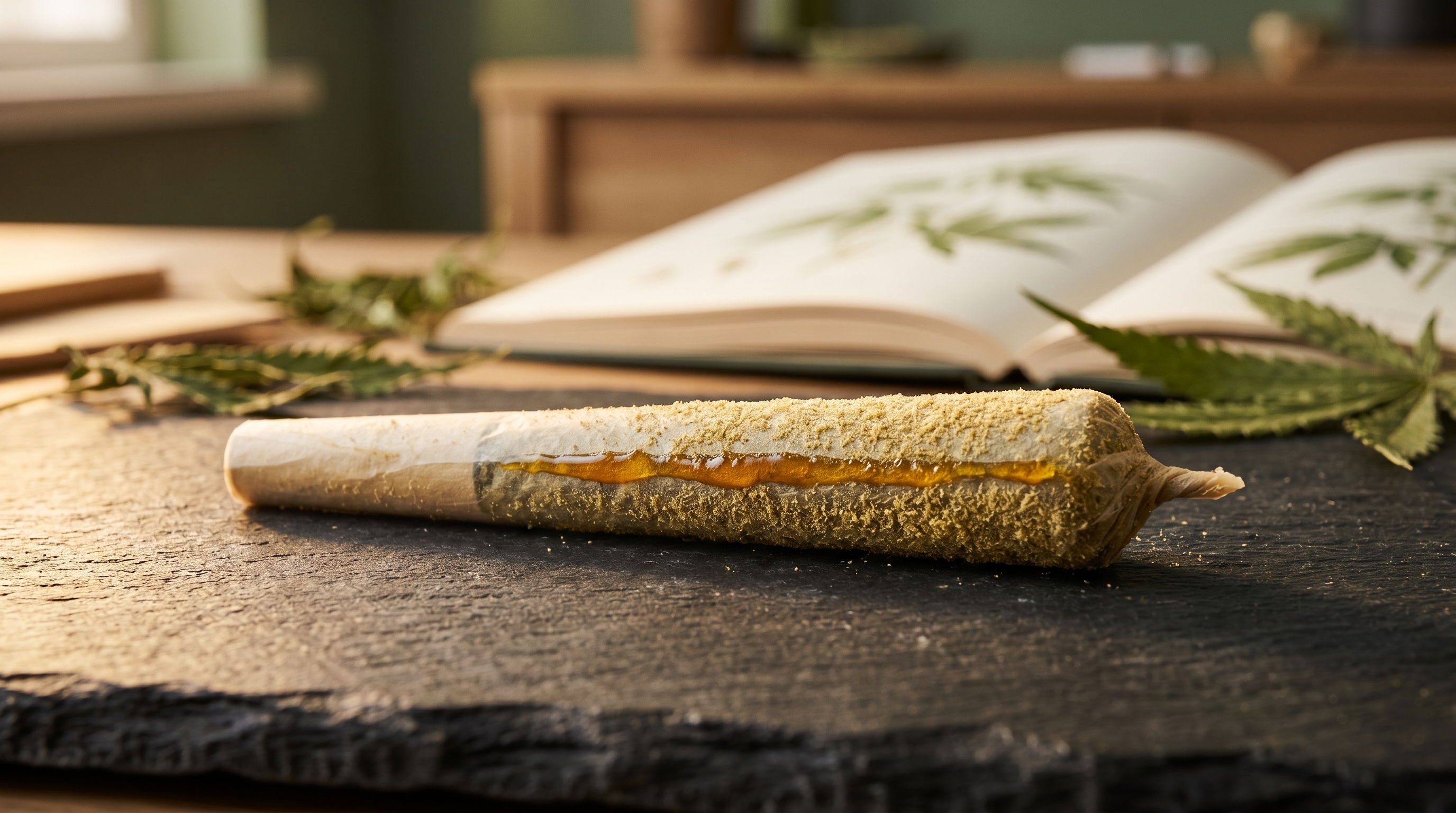
You will also see infused pre-rolls. These are flower plus added concentrate: distillate, live resin, rosin, kief, or THCA diamonds. The concentrate can be mixed in, lined inside the paper, dusted on the outside, or layered. The point is more cannabinoids and a stronger, faster-onset experience. They can be excellent, and they deliver effects you genuinely cannot replicate by rolling plain flower at home.
Two honest cautions. First, infusion is harder to build well: outside-coated joints especially can run, clog, or burn unevenly if the oil is applied too heavily or the base roll is sloppy. Warm it in your hand, toast the tip slowly, and take smaller puffs. Second, and this is the part the marketing skips, the base flower still matters. A great concentrate on bad trim still tastes rough. Infusion can also be a way to make low-grade material feel stronger. And remember that any concentrate raises total potency fast, so infused pre-rolls are easy to overdo if you have a lower tolerance.
Which One Is Right for You?
Reach for pre-rolls if you:
- Are new to cannabis and do not roll yet
- Want zero effort and maximum portability
- Value session-to-session consistency
- Like sampling different strains without committing to a full eighth
- Are in a social setting where rolling would be awkward
- Want infused or specialty formats you cannot make at home
Roll your own if you:
- Smoke regularly and want to save real money
- Prioritize peak freshness and full flavor
- Want to control the strain, size, grind, and add-ins
- Enjoy the ritual of grinding and rolling
- Want to see and verify exactly what you are smoking
Most experienced consumers, honestly, end up doing both: pre-rolls for the dog walk or the festival, hand-rolled for the unhurried evening at home.
The Verdict
Is there a difference between pre-rolls and hand-rolled joints? Yes, but probably not the one you expected. The format itself is not the deciding factor. A well-made whole-flower pre-roll from a reputable brand can match or beat an amateur hand-rolled joint on burn and consistency. A sloppy, trim-filled pre-roll loses to almost anything you would pack yourself.
The real variables are what is inside, how well it is packed, and how fresh it is. Pre-rolls win on convenience and consistency. Hand-rolling wins on freshness, cost, and control. Neither is universally “better,” and as one expert put it, “a well-made regular pre-roll can be better than a sloppy infused one. Fancy ingredients can’t fix bad construction.”
Here is the deeper point, the one we keep coming back to. The most important thing is not the joint. It is whether you can connect what you smoked to how it actually made you feel. Two pre-rolls of the “same” strain can hit completely differently depending on grade, freshness, and your own body chemistry. That is exactly why the same strain hits you differently each time. So tracking your sessions beats chasing strain names. It is why we built the High IQ app around finding your ideal high instead of a label on a tube.
Key Takeaways
- A pre-roll and a hand-rolled joint are the same idea: ground cannabis in paper with a filter. The difference is who built it and what went inside.
- The format is not the deciding factor. Input grade, packing, and freshness are. A whole-flower pre-roll can beat a sloppy homemade joint, and vice versa.
- Pre-rolls win on convenience, portability, and machine consistency. Hand-rolling wins on freshness, cost, and control.
- Read the label like a scientist: look for “100% flower,” a clear strain, real potency numbers, and a recent packaging date.
- Infused pre-rolls add real punch, but the base flower still matters and they are easy to overdo.
- The thing that improves your sessions most is not the format. It is paying attention to what actually worked for you.
Frequently Asked Questions
Are pre-rolls just made from shake and trim? Many budget pre-rolls are, but plenty are not. The market has shifted hard toward whole-flower products. Look for “100% flower” or “whole flower” on the label, a clear strain name, realistic potency, and a recent packaging date. Vague terms like “premium ground cannabis” or “proprietary blend” can be a tell for lower-grade material.
Do pre-rolls burn worse than hand-rolled joints? Not necessarily. Good machine-packed pre-rolls burn very evenly because the density is dialed in. Cheap “knock-box” pre-rolls can canoe, clog, or burn hot. A skilled hand-roller can match or beat a machine; a beginner usually cannot, yet.
Why does my pre-roll taste stale or harsh? There are two common causes. The flower may be trim or shake, which means more chlorophyll and harsher smoke. Or the pre-roll has sat on the shelf long enough for terpenes to evaporate. Fresh flower is exactly why every strain smells different. To avoid stale stock, buy from brands with good inventory rotation. Ask your budtender about the source material. And check the lab results and packaging date.
Is it cheaper to roll my own? Almost always, especially if you smoke a few times a week or more. Buying flower in bulk and rolling your own typically runs 30 to 50% less per session than equivalent pre-rolls once you skip the labor and packaging markup.
Is a pre-roll the same as a joint? Functionally, yes: both are ground cannabis in paper with a filter. The difference is who rolled it and what went inside. For the broader family of formats, see our breakdown of joints vs. blunts vs. spliffs.
Sources
- Forbes, “How Sluggers Became A Heavy Hitter In Pre-Roll Joints” (2026) — Headset sales data, 410M pre-roll packs, category growth, “hotdog” input quote. https://www.forbes.com/sites/willyakowicz/2026/05/24/how-sluggers-became-a-heavy-hitter-in-pre-roll-joints/
- Hyperwolf, “What’s in a Pre Roll? Inside Cannabis Joints Explained” (2026) — flower vs. shake vs. trim, cones vs. hand-rolled, label red flags. https://hyperwolf.com/blog/california/what-s-in-a-pre-roll
- The Haze Connect, “Whole Bud vs Shake Pre-Rolls: Why Quality Matters” (2026) — burn, flavor, potency, smoothness differences by input grade. https://thehazeconnect.com/blogs/learn/whole-bud-vs-shake-pre-rolls
- Hefestus, “Hand-Rolled Joints vs. Machine-Rolled Joints” (2026) — production consistency, density control, “quality is driven by inputs and process control.” https://www.hefestus-tech.com/blog/hand-rolled-joints-vs-machine-rolled-joints/
- High Times (sponsored), “Pre-Rolls Don’t Suck. Bad Manufacturing Does.” (2026) — knock-box failures, clogging, canoeing, density control. https://hightimes.com/sponsored/pre-rolls-dont-suck-bad-manufacturing-does/
- Green Rush, “Pre-Rolls vs. Packing Your Own: Which Is the Better Value?” (2026) — pricing, freshness, shelf degradation, cost savings figures. https://greenrushnews.com/articles/pre-rolls-vs-packing-your-own/
- Hyperwolf, “Infused vs Solventless vs Regular Pre-Rolls” (2026) — infusion methods, burn issues, “base flower still matters.” https://hyperwolf.com/blog/infused-vs-solventless-vs-regular-pre-rolls
- Green Rush (Marcus Chen), “Pre-Rolls vs. Packing Your Own: Which Is the Better Value?” (2026) — pricing, shelf degradation, annual cost-savings figures. https://greenrushnews.com/articles/pre-rolls-vs-packing-your-own/
- SmokeUnicorn, “Pre-Roll Transparency: Spotting Trim vs Flower” (2025) — ~60% trim/shake estimate, COA guidance, THC ranges. https://smokeunicorn.com/blogs/news/pre-roll-transparency-spotting-trim-vs-flower
- The Purple Leaf, “Rolling Papers vs Blunts vs Pre-Rolls: Pros and Cons” (2026) — machine density consistency, convenience, cost-per-session comparison. https://thepurple-leaf.com/what-are-the-pros-and-cons-of-rolling-papers-vs-blunts-vs-pre-rolls/


