Rolling Papers and Cones: The Complete Buyer's Guide
A complete buyer's guide to rolling papers and cones: hemp vs rice vs wood pulp, sizes, tips, burn rate, and the best picks for every kind of roller.


Stand in front of the rolling paper wall at any dispensary or smoke shop and you will feel it: a small wave of decision fatigue. Hemp, rice, wood pulp, flax. Bleached, unbleached, organic. 1¼, king size, king slim, single wide. Booklets, rolls, and pre-rolled cones in a dozen lengths. It is enough to make you grab whatever has the friendliest logo and walk out.
Here is the thing, though. The paper you wrap around your flower is not a neutral container. It shapes how your joint burns, how it tastes, and how easy it is to roll in the first place. A great paper disappears and lets your flower do the talking. A bad one canoes down one side, tastes like cardboard, and goes out every thirty seconds.
This guide breaks down everything that actually matters, the way I wish someone had explained it to me. By the end you will know exactly which paper or cone fits your hands, your flower, and your session. And if you want a wider view of the gear ecosystem, our cannabis gear guide for beginners to advanced covers grinders, trays, and storage too.
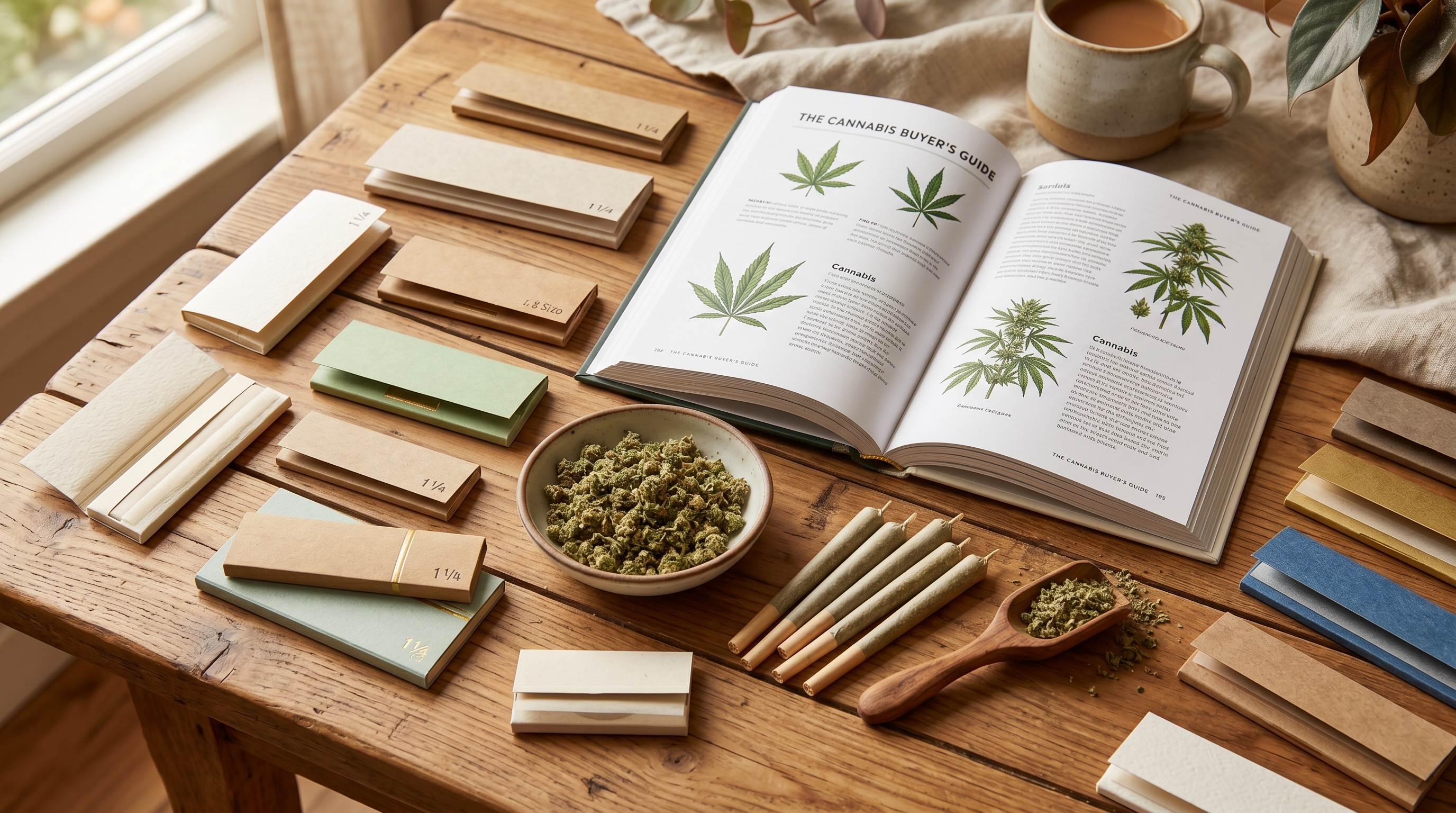
The Four Materials, Compared
Almost every paper on the shelf comes down to one of four plant fibers. Each burns and tastes a little differently, and each is easier or harder to handle. There is no single “best,” only the best for you.
Hemp
Hemp has quietly become the new standard, and it earns it. Made from industrial hemp fiber, these papers are usually unbleached, giving them a natural light-brown look. They are medium-thickness with a slightly textured surface, which means they grip well and resist tearing. That makes them the friendliest material for newer rollers.
Flavor-wise, hemp is not totally silent. It carries a mild, slightly sweet and earthy note that many people feel blends nicely with flower rather than fighting it. Burn rate is slow and steady, and hemp is far less likely to go out mid-session than thinner options. If you are weighing formats more broadly, our vaping vs smoking cannabis comparison lays out the trade-offs.
Best for: beginners, eco-conscious smokers, and anyone who wants a reliable everyday paper.
Rice
Rice papers are the connoisseur’s pick. Pressed from processed rice fiber, they are ultra-thin, nearly translucent, and produce very little ash. Their big advantage is flavor neutrality: rice is essentially tasteless, so nothing stands between you and the aromas of your strain.
The trade-off is handling. That slick, ultra-thin surface offers almost no grip, so rice papers slip, tear, and behave badly in humid weather. They also need a firmer roll to stay lit. If you have rolled a few hundred joints, you will love them. If you are still learning, they will test your patience. Pairing a clean-burning rice paper with a properly stored, fresh batch of flower matters too, which is why we put together a complete guide to storing cannabis for freshness and potency.
Best for: experienced rollers and flavor purists who want the paper to vanish.
Wood Pulp
Wood pulp is the original, the classic white paper made from tree fiber, the same stuff in everyday writing paper. It is the thickest and stiffest of the bunch, so it holds its shape and forgives shaky hands, which is why beginners often start here.
The downsides are real, though. Wood pulp burns faster than the alternatives and has the most noticeable papery taste, which can mask your flower. And if the paper is bright white, it has been chemically bleached. That is not automatically dangerous, but it is more processing than many smokers want.
Best for: quick, no-fuss sessions and absolute beginners who want maximum forgiveness.
Flax
Flax is the hidden gem and the great compromise. Derived from the flax plant, these papers are thin and silky like rice but a touch more durable and easier to handle. The result is the slow, even burn of hemp paired with the clean, neutral taste of rice, the best of both worlds. Zig-Zag’s iconic French Orange papers are flax-based and have been a best-seller for over a century.
Best for: rollers who want an all-around experience without choosing between flavor and ease.
| Material | Burn Speed | Flavor | Ease of Use | Best For |
|---|---|---|---|---|
| Hemp | Slow | Mild, earthy | Easy | Everyday, beginners |
| Rice | Slow | Neutral | Harder | Flavor purists |
| Flax | Slow | Light, clean | Easy | Balanced all-rounder |
| Wood Pulp | Fast | Noticeable | Very easy | Quick sessions, beginners |
Bleached vs Unbleached
This is the question people obsess over, so let me keep it grounded. Bleached papers are white because they have been through a whitening process. Unbleached papers keep their natural fiber color, a light brown or tan.
The honest take: when papers are well made, the performance difference is small, and the choice is mostly about preference. That said, unbleached papers skip the chemical whitening step, and many smokers feel they offer a cleaner, more natural taste. Some sources also flag that brightly colored, printed, or flavored papers may carry additives or pigments you would rather not inhale.
The cautious approach, and the one I lean toward, is to favor unbleached, additive-free papers from transparent brands. The research on what burning paper additives do to your lungs is still thin, so hedging toward “fewer extras” is just sensible harm reduction. If you care about what goes into your body, our piece on how to read cannabis lab results reflects the same mindset applied to flower.
Papers vs Cones: Craft or Convenience
The biggest fork in the road is not material, it is format. Do you roll your own from a flat paper, or fill a pre-shaped cone?
Rolling papers are flat sheets you shape yourself. They give you total control over how much flower goes in, how tight the roll is, and the final shape. They are cheap, roughly a few cents per paper, and compact to carry. The catch is skill. A clean joint takes practice, and your first dozen attempts may look rough. If you are still learning the motion, our step-by-step guide to rolling the perfect joint walks you through it.
Pre-rolled cones are paper shells already formed into a cone, usually with a tip built in. You grind, fill, pack, and twist the end, and you are done in under a minute. They burn consistently because the shape is engineered, and they are a gift for anyone with limited dexterity or zero patience for rolling. The downsides: they cost more per unit (often $0.50 to $2 each), they are bulkier to carry, and you give up some control over size and shape.
There is no wrong answer here. Craft versus convenience is a personal call, and plenty of people keep both on hand. For the bigger picture on joints and their cousins, see our breakdown of joints vs blunts vs spliffs.

Sizes: Matching the Paper to the Session
Size determines how much flower fits and how long your session lasts. The numbers vary slightly by brand, but here are the standards.
- Single Wide (about 70mm x 38mm): The smallest common size. Great for a quick solo puff, but tight to work with.
- 1¼ (about 78mm x 45mm): The most popular all-purpose size. Holds a little more than a single wide, rolls nicely, and suits daily personal use. If you are unsure, start here.
- King Size (about 100 to 110mm x 53mm): The social size. Long and wide enough for a substantial joint to share with two or three friends.
- King Slim (about 110mm x 44mm): King-size length with 1¼ width. Longer sessions without the extra girth, but trickier to roll, so not ideal for beginners.
For cones, the logic is similar. A small “Dogwalker” around 70mm holds roughly a quarter to half gram for a quick solo session, a 1¼ classic around 84mm fits about half to three-quarters of a gram for daily use, and a King at 109 to 110mm holds a full gram-plus for an extended or shared smoke. Party-size cones exist, but those are more spectacle than practical tool.
A simple rule: solo and casual leans 1¼ or single wide, social leans king size. If you are still mastering the motion, bigger and thicker is more forgiving than small and thin. Curious how a gram looks before you pack it? Our visual guide to cannabis quantities makes the math concrete, and if you are hosting, our guide to hosting a cannabis tasting party pairs nicely with king-size rolls.
What Actually Makes a Paper “Good”
Beyond material and size, a few details separate a premium paper from a frustrating one.
Even burn. The best papers smolder reliably without going out or burning down one side, a defect rollers call “canoeing.” Hemp and flax are the consistency champions here. Many quality brands also press a watermark or crisscross pattern into the paper, which helps regulate airflow and keep the burn even.
Flavor neutrality. A good paper either tastes like almost nothing (rice, flax) or carries a mild complementary note (hemp). Harsh, papery taste usually points to thicker, bleached wood pulp.
The gum. Every paper has an adhesive strip to seal the roll. Premium papers use natural gum arabic, also called acacia gum, which seals cleanly without odd flavors or extra chemicals. A pro tip from the shop: tear the glued edge before you lick it, since exposed fibers grip better than some glues.
Thickness. Thinner papers generally give cleaner flavor and slower burns but demand more skill. Thicker papers are easier to handle but burn faster and taste more. Match the thickness to your experience level, then work thinner as your technique improves. A consistent, fluffy grind from a quality grinder helps any paper burn evenly, which is why we wrote a 2026 buyer’s guide to cannabis grinders.
Tips, Filters, and Crutches
That little rolled piece of cardboard at the mouth end is called a tip, filter, or crutch, and it is one of the easiest upgrades you can make. A good crutch does three things: it keeps loose herb out of your mouth, gives the joint structure so it does not collapse as you smoke, and improves airflow for a smoother, cooler draw.
You can buy pre-made tips in booklets, or just tear a strip from the cardboard cover that ships with most paper packs and roll it into a spiral. Worth knowing: a paper or cardboard crutch is not a true particulate filter and will not meaningfully reduce what you inhale, so think of it as a structural and comfort upgrade rather than a health device. For the full kit beyond papers, our guide on building the perfect cannabis toolkit covers what else belongs in your bag.
Top Picks by Need
Brands matter, and a few have earned their reputations honestly.
- Best for beginners: Hemp papers in 1¼ or king size, like a RAW Organic Hemp or Zig-Zag Hemp. Forgiving grip, slow burn, natural taste. Wood pulp classics like Zig-Zag French Orange are also famously easy for first-timers.
- Best for pure flavor: Rice papers such as Elements, prized for ultra-thin sheets, near-zero ash, and no aftertaste. Earn your way up to these.
- Best all-around: Flax papers like Zig-Zag’s French Orange line, balancing a slow burn with clean taste.
- Best for convenience: Pre-rolled cones from RAW or Elements, ready to fill in under a minute and consistent every time.
- Best for the eco-conscious: Unbleached organic hemp from brands like RAW that skip bleach, chalk, and dyes.
A note on flavored papers: they exist in everything from tropical fruit to dessert flavors, and they are fun for a special occasion. But the flavors are typically artificial, and flavored or heavily printed papers are exactly the category most likely to carry additives. Treat them as a novelty, not a daily driver. If you want real flavor, it should come from your flower, not your paper, which is the same logic behind why THC percentage is a terrible way to choose cannabis.
Whatever you choose, remember that the paper is only one variable. The flower, the grind, the pack, and your own body all shape the experience. If you want to understand why the same joint can feel different on different days, our piece on why the same strain hits you differently each time goes deep, and our 100 cannabis tips every consumer should know is a great catch-all. And once you have your paper dialed in, learning to find your ideal high rather than chasing a strain name, exploring strains by effect, and reading up on terpene profiles is where the real personalization begins.
Frequently Asked Questions
What size rolling paper is best for beginners? Go with 1¼ or king size in hemp or wood pulp. Larger papers give you more material to grip and shape, and thicker fibers are more forgiving. Avoid ultra-thin rice and skinny king slims until you have some practice.
Are unbleached papers actually healthier? They skip the chemical whitening step and avoid some additives, which many smokers prefer. Whether that translates to a meaningful health difference is not well established, since research on burning-paper additives is limited. Favoring unbleached, additive-free papers is a reasonable, cautious choice rather than a proven one.
Which papers burn the slowest? Hemp and flax are the most consistent slow burners and least likely to go out. Rice burns clean and slow too, but its thinness can cause it to extinguish if you are not actively smoking it. Thicker wood pulp burns fastest.
Are cones worth the extra cost? If you value speed, consistency, or struggle with rolling, yes. Cones cost more per unit and take up more space, but the convenience and reliable burn win over many people. Hand-rolling stays cheaper and gives you full control.
Do flavored papers affect the high? Flavored papers change taste, not potency. The bigger consideration is that artificial flavorings and dyes are additives you may prefer to avoid for regular use. Save them for occasions.
Key Takeaways
If you skim nothing else, remember these:
- Material sets the tone. Hemp is the friendly everyday standard, rice is the flavor purist’s pick, flax is the balanced all-rounder, and wood pulp is the forgiving beginner classic.
- Format is the real fork. Rolling papers give craft and control for a few cents each; pre-rolled cones give speed and consistency for more money and bulk.
- Size matches the session. Start with 1¼ for solo use and reach for king size when you are sharing.
- Favor unbleached, additive-free papers from transparent brands, and treat flavored or heavily printed papers as a novelty rather than a daily driver.
- The paper is one variable among many. Grind, pack, flower, and your own body all matter, so tracking what works for you beats chasing any single product.
Sources
- Smoke Cartel. “Ultimate Rolling Papers Guide: Materials, Sizes & Top Brands.” smokecartel.com
- Smoke Cartel. “Rolling Paper Materials: The Definitive Guide to Hemp vs. Rice vs. Wood Pulp.” smokecartel.com
- Lionforce Supply Co. “Complete Guide to Rolling Papers: Materials, Sizes & Burn Rates.” lionforcesupply.co.uk
- Zig-Zag. “Pre-Rolled Cones vs. Rolling Papers” and “Your Complete Guide to Rolling Paper Sizes.” zigzag.com
- MunchMakers. “Pre-Rolled Cones vs Hand Rolling: Which is Better?” guides.munchmakers.com
- Hefestus. “Pre Roll Sizes: Complete Guide (Charts & Cone Dimensions).” hefestus-tech.com
- RollYourOwnPapers. “What Is Rolling Paper Made Of? The Ultimate Guide to Rolling Paper Materials.” rollyourownpapers.com
Cannabis affects everyone differently. This guide is educational and not medical advice. Always consume responsibly and in accordance with your local laws.


