CBD Isolate vs CBG Isolate: Which Single Cannabinoid Wins?
CBD isolate vs CBG isolate compared: receptor mechanisms, effects, evidence, and cost. Find which 99%-pure cannabinoid fits your goals.

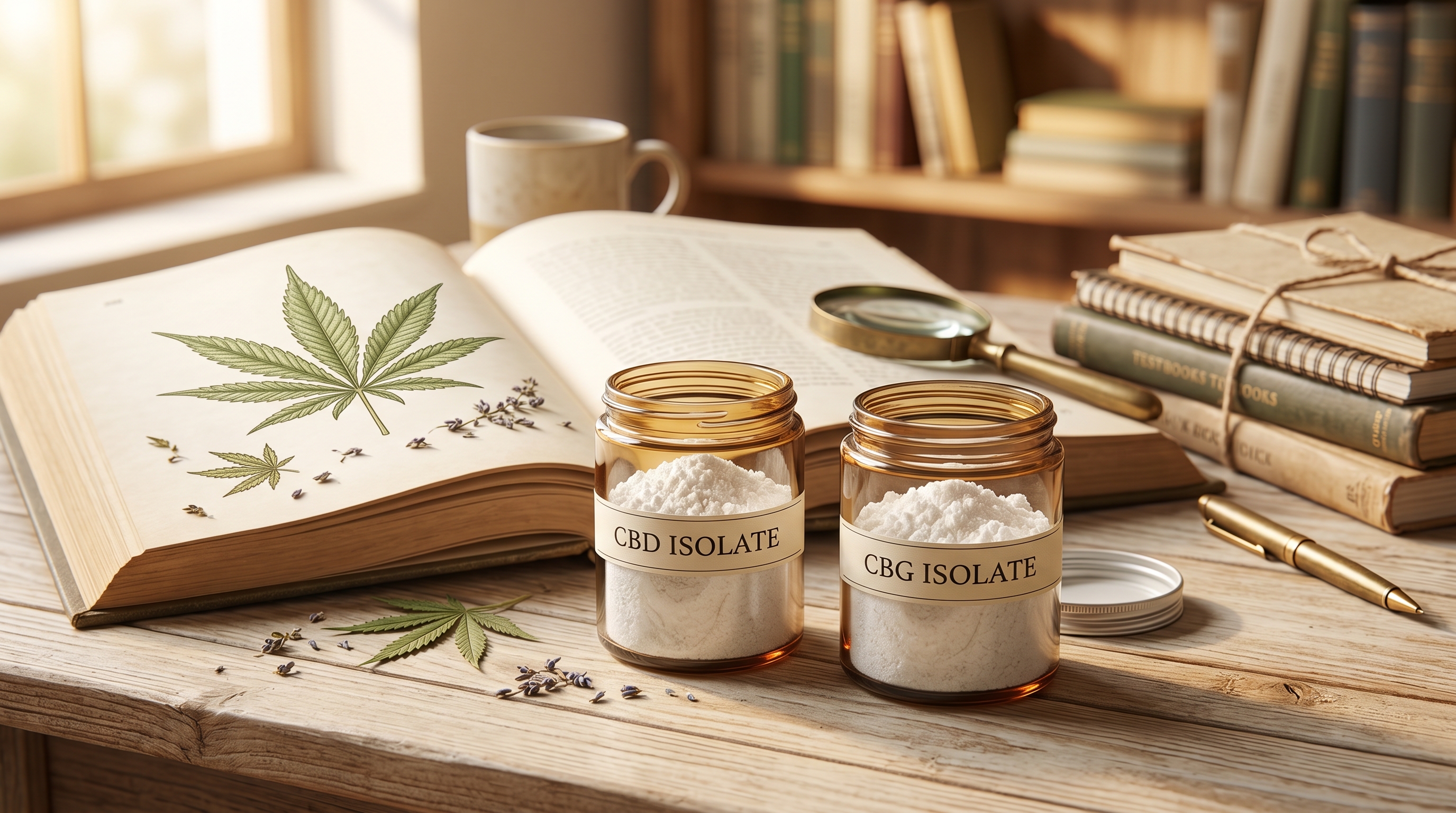
You are standing in front of two identical-looking jars of white crystalline powder. One is labeled CBD isolate. One is labeled CBG isolate. Both are 99%+ pure, neither will get you high, and one costs noticeably more than the other. Which do you reach for?
It is a genuinely fair question, and the honest answer is “it depends on what you are trying to do.” These two cannabinoids look like cousins on paper, but they work through different biological doors, carry very different amounts of research behind them, and suit different goals. Let me walk you through how I would think about the choice.
A quick note before we dive in: none of this is medical advice, and cannabinoid research is still young. I will hedge where the evidence is thin, because being honest about uncertainty is more useful than overselling a molecule. If you want the broader family tour first, our guide to CBG, the mother cannabinoid and our THC vs CBD breakdown are good companions.
How We Will Judge These Two
To compare fairly, I will hold both cannabinoids to the same five criteria:
- What it is and how pure an isolate really gets
- Effects profile – what each is best known for
- Mechanism – how it actually talks to your body
- Evidence strength – how much real research exists
- Cost and practicality – price, availability, and who it suits
By the end you will have a clear framework, a side-by-side table, and a verdict.
What “Isolate” Actually Means
An isolate is a single cannabinoid stripped of everything else. Through extraction and refinement, makers remove all other cannabinoids, terpenes, flavonoids, and plant material. What is left is one compound at roughly 99% purity. That is the defining feature. With an isolate, you know exactly what you are taking, in exactly what amount.
This is the opposite end of the spectrum from full-spectrum products, which keep the plant’s natural mix intact. If the difference between isolate, broad-spectrum, and full-spectrum is fuzzy for you, our explainer on full-spectrum vs broad-spectrum vs isolate lays it out cleanly.
The big trade-off with any isolate is that you lose the entourage effect. That is the theory that cannabinoids and terpenes work better together than alone. We dig into the science of that synergy in our entourage effect deep dive. With a pure isolate you give up that potential teamwork. In return, you get precision and predictability. For people who get drug-tested, or who react strongly to even trace THC, that trade is often worth it.
CBD Isolate: The Well-Studied Workhorse
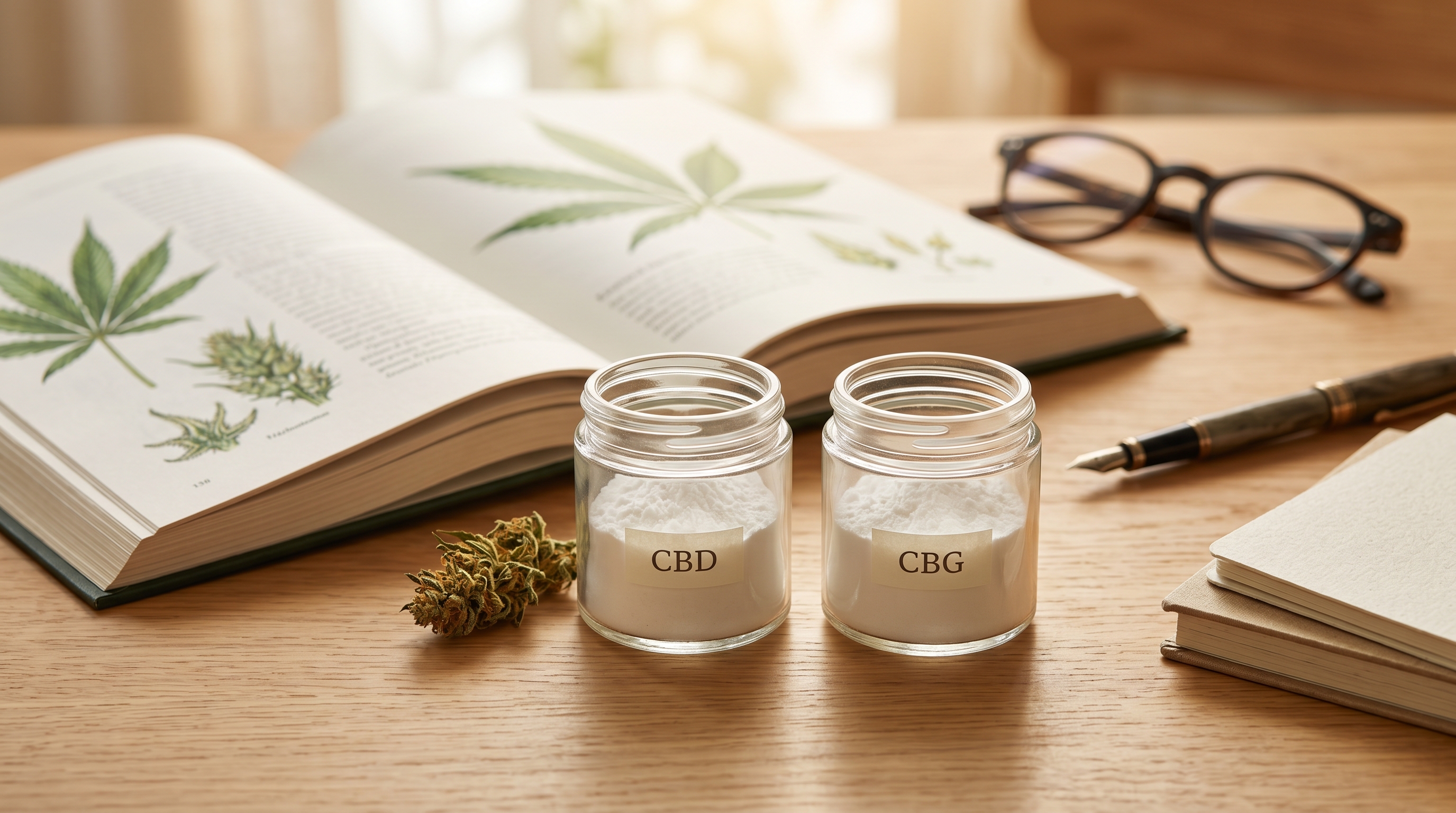
CBD (cannabidiol) is the cannabinoid most people already know. It is the dominant cannabinoid in most hemp – often 15 to 20% of the flower – which makes it cheap to extract and easy to find. CBD isolate is the budget-friendly, widely available, “I know what I am getting” option.
What is CBD best known for? Three broad areas, all with meaningful (though not unlimited) research:
- Anxiety and stress. A 2024 systematic review reported a substantial effect of CBD on anxiety, and human neuroimaging work has shown CBD reducing activity in the amygdala, the brain’s fear-and-reactivity hub.
- Sleep. Many people use CBD in the evening, though the picture is dose-dependent and individual. Interestingly, research suggests CBD can be mildly stimulating at low doses and more relaxing at higher ones – so the dose matters as much as the molecule.
- Inflammation. CBD’s anti-inflammatory pathways (including COX-2 and cytokine effects) are part of why it shows up in arthritis and joint-pain conversations and athletic recovery routines.
The headline credential: CBD is the only cannabinoid in this comparison with an FDA-approved prescription drug behind it – Epidiolex, approved in 2018 for rare seizure disorders. That regulatory milestone reflects a deep, multi-decade research base.
CBG Isolate: The Pricier, Earlier-Evidence Newcomer
CBG (cannabigerol) is the “mother cannabinoid.” In its acid form (CBGA), it is the precursor molecule the plant converts into THC, CBD, and others. Because the plant burns through nearly all of it during growth, mature flower typically contains less than 1% CBG. That scarcity is exactly why CBG isolate costs more – you need far more plant material (or specially bred high-CBG cultivars) to produce the same amount.
What is CBG associated with? Be honest with yourself here: the evidence base is genuinely earlier-stage than CBD’s. That said, the emerging research is interesting:
- Focus and clear-headedness. Users frequently describe CBG as more “daytime” and alert than CBD. This lines up with its receptor activity (more on that below) and is part of why it shows up in biohacking stacks alongside CBD and THCV and in conversations about strains for focus and concentration.
- Anxiety and memory. A landmark 2024 double-blind, placebo-controlled crossover trial found that 20 mg of hemp-derived CBG reduced anxiety and stress. It even enhanced verbal memory in 34 healthy adults, with no intoxication or impairment [Cuttler, 2024]. It is one well-run trial, not a body of literature. Still, it is a meaningful signal.
- Gut and inflammation. Preclinical work points to CBG easing colitis in animal models of inflammatory bowel disease.
- Antibacterial activity. This is one of CBG’s most striking lab findings – it has shown activity against drug-resistant bacteria including MRSA. We covered this in CBG’s antibacterial powers and in our piece on cannabinoids vs superbugs.
The honest caveat: most CBG findings outside the Cuttler trial come from cell cultures and animal models. Promising is not the same as proven. Treat CBG as “early evidence worth tracking,” not “established.”
The Mechanism Difference (Why They Feel Different)
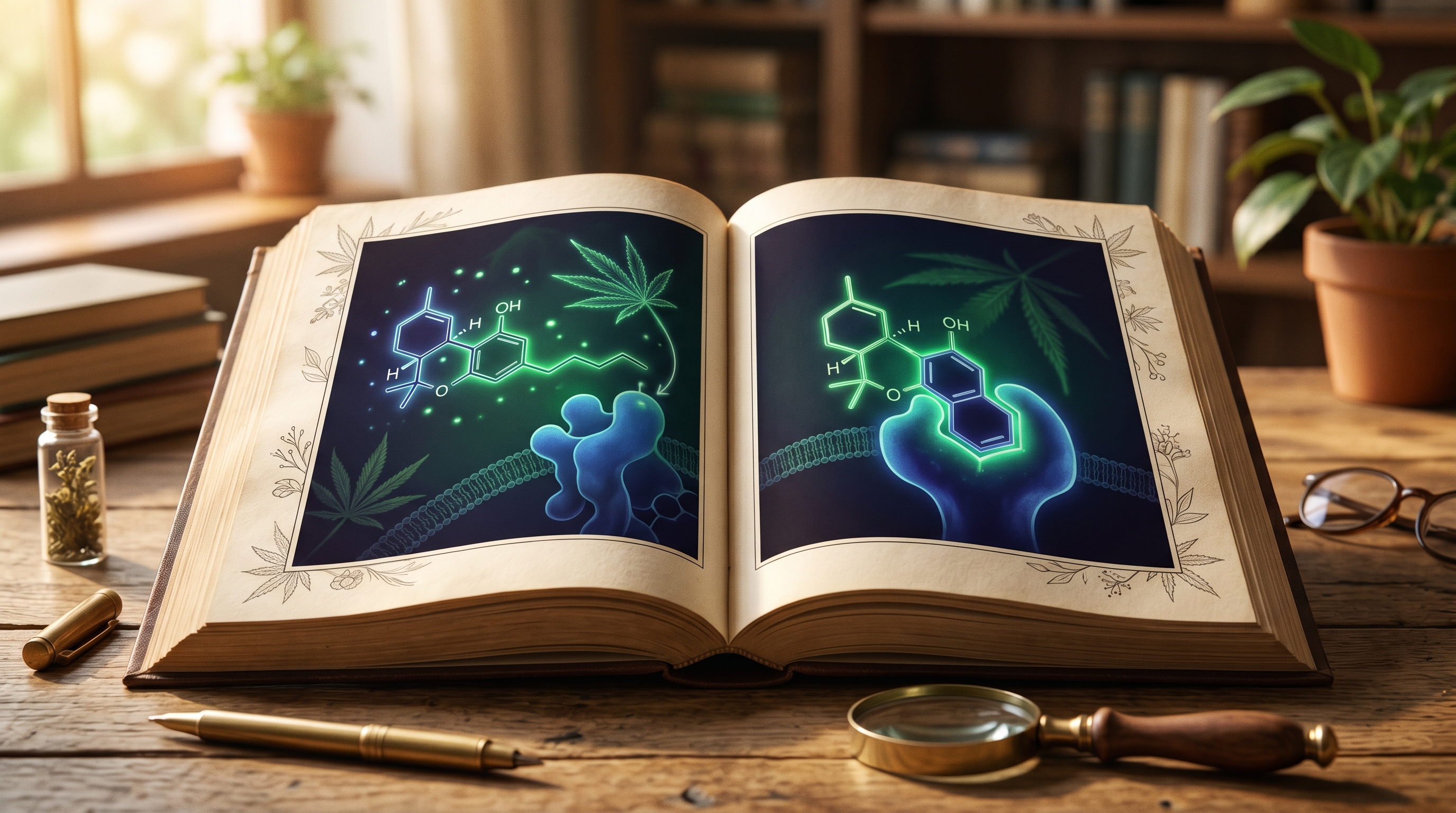
Here is the part that explains everything else. CBD and CBG differ by just two hydrogen atoms, yet they engage your biology through different doors.
CBD works mostly indirectly. It does not strongly grab the CB1 or CB2 cannabinoid receptors. Instead, it acts as a negative allosteric modulator at CB1 [Laprairie, 2015]. That means it changes how the receptor responds rather than switching it on. It also inhibits FAAH, the enzyme that breaks down your body’s own “bliss molecule,” anandamide. On top of that, it activates 5-HT1A serotonin receptors and engages TRPV1. That serotonin-plus-anandamide combination is a plausible basis for CBD’s calming, mood-steadying reputation.
CBG works more directly. It is a weak-to-partial agonist at both CB1 and CB2, so it binds the receptors themselves – just far more gently than THC [Nachnani, 2021]. Its standout feature is potent activity at the alpha-2 adrenergic receptor. That is the same receptor family targeted by focus-and-attention medicines like guanfacine. CBG also tends to antagonize 5-HT1A, roughly the opposite of CBD at that site. That alpha-2 activity is the leading explanation for why CBG reads as more “focusing” and clear-headed.
In short: CBD modulates the system from the sidelines; CBG steps onto the field. Neither one produces a high, because neither activates CB1 the way THC does. If you want the deeper biochemistry, the mother cannabinoid guide goes further.
Side by Side
| Criterion | CBD Isolate | CBG Isolate |
|---|---|---|
| Plant abundance | High (often 15-20% of hemp) | Very low (typically <1% in mature flower) |
| Best known for | Anxiety, sleep, inflammation | Focus, gut comfort, antibacterial |
| Primary mechanism | Indirect: FAAH inhibition, 5-HT1A, TRPV1 | More direct: weak CB1/CB2 agonist, alpha-2 adrenergic |
| Intoxicating? | No | No |
| Evidence strength | Deep; FDA-approved drug (Epidiolex) | Early; one strong 2024 human trial (Cuttler) |
| Typical use window | Often evening (dose-dependent) | Often daytime |
| Cost | Lower (abundant, cheap to extract) | Higher (scarce, harder to produce) |
| Availability | Very wide | Growing but limited |
Can You Stack Them?
Yes – and many people do. CBD and CBG are chemically compatible and target different pathways, so combining them is a way to get CBD’s serotonin-and-anandamide calm alongside CBG’s alpha-2 alertness. Common formulations use CBD:CBG ratios in the 3:1 to 5:1 range, though plenty of products run a balanced 1:1.
Stacking isolates also lets you rebuild a little of the synergy you lose when you skip full-spectrum products – you are choosing exactly which cannabinoids join the team. If ratio-tuning interests you, the same logic that governs finding your ideal THC-to-CBD ratio applies here: start low, change one variable at a time, and track how you respond. The pain-patient data in our piece on the THC:CBD sweet spot is a good reminder that ratios are deeply personal.
Which One Is For You?
- Choose CBD isolate if you want the most-researched, most-available, most-affordable option, your goals are anxiety, sleep, or general inflammation, and you value predictable dosing data.
- Choose CBG isolate if your priority is daytime focus and clear-headedness, you are curious about gut or antibacterial applications, and you are comfortable being an early adopter of a cannabinoid with thinner (but promising) evidence.
- Choose both, stacked, if you want complementary calm-plus-focus and do not mind a slightly higher cost and a little experimentation.
- For anyone drug-tested: verified isolates of either cannabinoid carry low risk because tests screen for THC, not CBD or CBG. Always confirm a third-party Certificate of Analysis.
The Verdict
If I had to pick one word for each: CBD is the proven generalist. CBG is the promising specialist. Neither “wins” outright. They are not really competing for the same job. CBD is the safer first purchase. It is cheaper, better studied, and effective across a wide range of wellness goals. CBG is the more exciting frontier pick if focus is your target – as long as you accept that the science is still catching up to the hype.
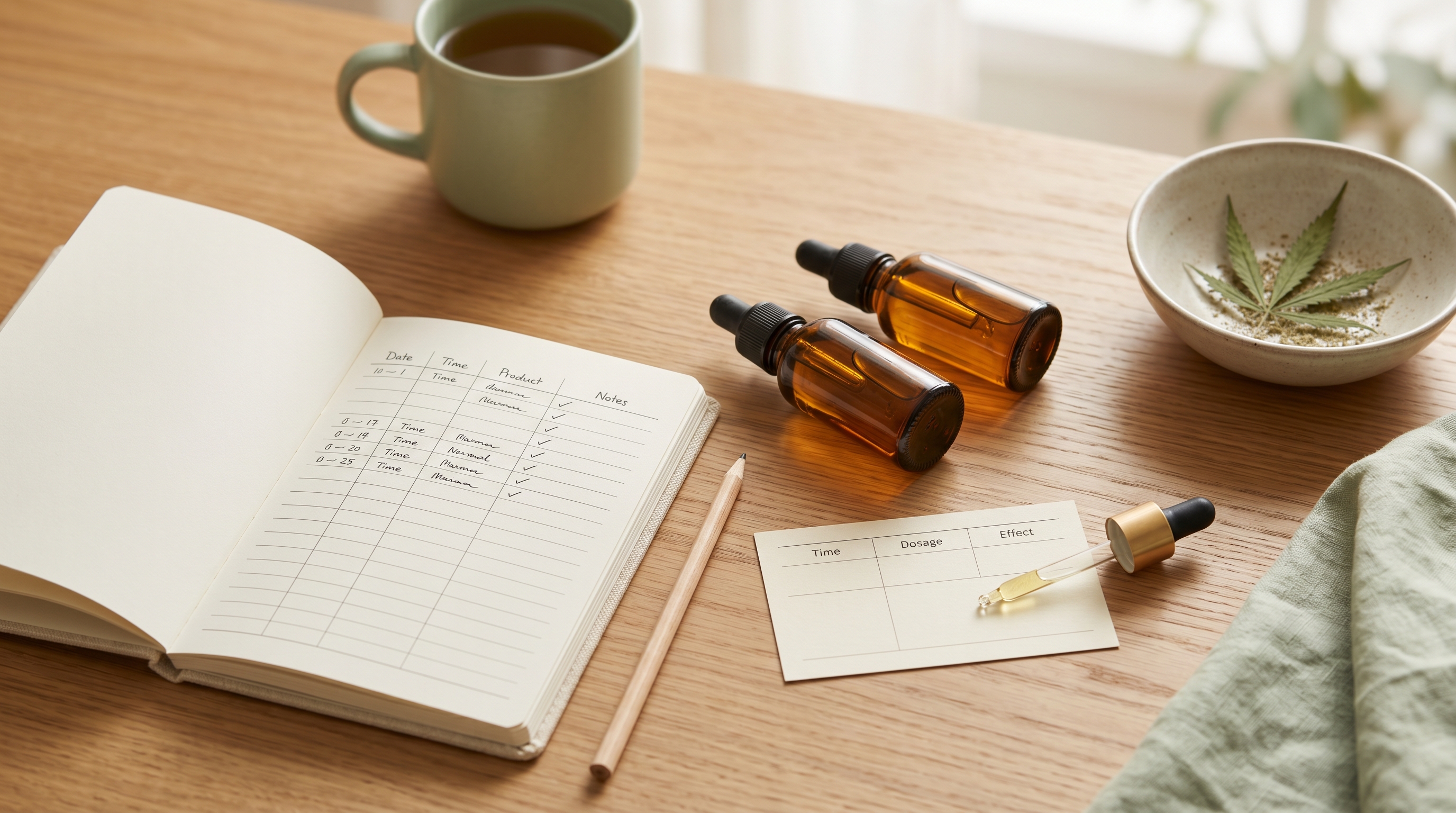
The deeper truth is the one I keep coming back to. The molecule matters less than how you respond to it. Two people can take the same 20 mg of CBG and have different days. That is exactly why tracking what you take and how you feel beats chasing whatever cannabinoid is trending. Log your dose, your timing, and your outcome. After a few weeks, your own data will tell you which jar deserves the shelf space.
Key Takeaways
- Both are pure and non-intoxicating. CBD and CBG isolates are 99%+ single cannabinoids. Neither gets you high.
- CBD is the proven generalist. It is cheaper, more available, deeply studied, and backed by an FDA-approved drug. Best for anxiety, sleep, and inflammation.
- CBG is the promising specialist. It is pricier and earlier-stage, but its alpha-2 activity points to focus and clear-headedness, with one strong 2024 human trial behind it.
- You can stack them. A 3:1 to 5:1 CBD:CBG blend pairs calm with focus.
- Track your own response. Your data beats the trend. Log dose, timing, and outcome.
Frequently Asked Questions
Is CBG stronger than CBD? Not in a simple “more powerful” sense. For localized effects and focus, CBG’s more direct receptor binding may feel more pronounced; for anxiety and sleep, CBD has far stronger evidence. “Stronger” depends entirely on the goal.
Will either show up on a drug test? Standard tests screen for THC metabolites, not CBD or CBG. Verified isolates of either are low-risk. The risk comes from full-spectrum products with trace THC – so check the Certificate of Analysis.
Why is CBG isolate more expensive? Mature hemp contains less than 1% CBG because the plant converts most of it into other cannabinoids. Producing CBG isolate requires far more plant material or specially bred high-CBG cultivars, which drives up cost.
Can I take CBD and CBG together? Yes. They are chemically compatible and hit different pathways. Many products blend them in 3:1 to 5:1 (CBD:CBG) ratios, though balanced 1:1 blends exist too.
Do isolates work as well as full-spectrum? Isolates trade the potential entourage effect for purity and precision. For drug-tested individuals or those sensitive to THC, that trade is often worthwhile. For maximum effect at lower doses, full-spectrum may have an edge.
Sources
- Cuttler, C., Stueber, A., Cooper, Z. D., & Russo, E. (2024). Acute effects of cannabigerol on anxiety, stress, and mood: a double-blind, placebo-controlled, crossover, field trial. Scientific Reports, 14. DOI: 10.1038/s41598-024-66879-0 (PMID: 39003387)
- Nachnani, R., Raup-Konsavage, W. M., & Vrana, K. E. (2021). The Pharmacological Case for Cannabigerol. Journal of Pharmacology and Experimental Therapeutics, 376(2), 204-212. DOI: 10.1124/jpet.120.000340
- Laprairie, R. B., Bagher, A. M., Kelly, M. E. M., & Denovan-Wright, E. M. (2015). Cannabidiol is a negative allosteric modulator of the cannabinoid CB1 receptor. British Journal of Pharmacology, 172(20), 4790-4805. (PMID: 26218440)
- Navarro, G., et al. (2018). Cannabigerol Action at Cannabinoid CB1 and CB2 Receptors and at CB1-CB2 Heteroreceptor Complexes. Frontiers in Pharmacology, 9, 632. DOI: 10.3389/fphar.2018.00632
- Cannabigerol (CBG): A Comprehensive Review of Its Molecular Mechanisms and Therapeutic Potential (2024). Molecules. (PMID: 39598860)
- Medical News Today. CBG vs CBD: Differences and therapeutic benefits. https://www.medicalnewstoday.com/articles/cgb-vs-cbd


