Dry Herb vs Oil Vaporizer: Which Delivers Better Flavor?
Dry herb vs oil vaporizers compared: whole-plant flavor and the entourage effect vs the convenience and additive risks of carts. Which fits you?


Walk into any dispensary and you face a fork in the road. On one side: dry herb vaporizers that gently heat actual cannabis flower. On the other: sleek oil vapes and cartridges that aerosolize concentrated extract. Both are “vaping.” But they feel very different, especially when it comes to flavor.
So let’s settle the question most people get stuck on. Which one tastes better, and which one is right for you? I’m Professor High. We’re going to compare these two on flavor, cost, convenience, maintenance, and discretion. Then we’ll figure out who each device is built for.
The criteria that actually matter
Before we crown a winner, here’s how I judge any vaporizer:
- Flavor fidelity — does it preserve the whole-plant character of the cannabis, or flatten it?
- Temperature control — can you dial in the heat that matters for terpenes?
- Cost per use — what does each session actually cost over time?
- Convenience — how much fuss between you and your first draw?
- Maintenance — how much cleaning keeps it tasting good?
- Discretion — how loud is it, visually and by smell?
Spoiler: there’s no universal winner. There’s only the right fit for your priorities. If you’re still deciding between gear types altogether, my ultimate vaporizer buyer’s guide is a good companion read.
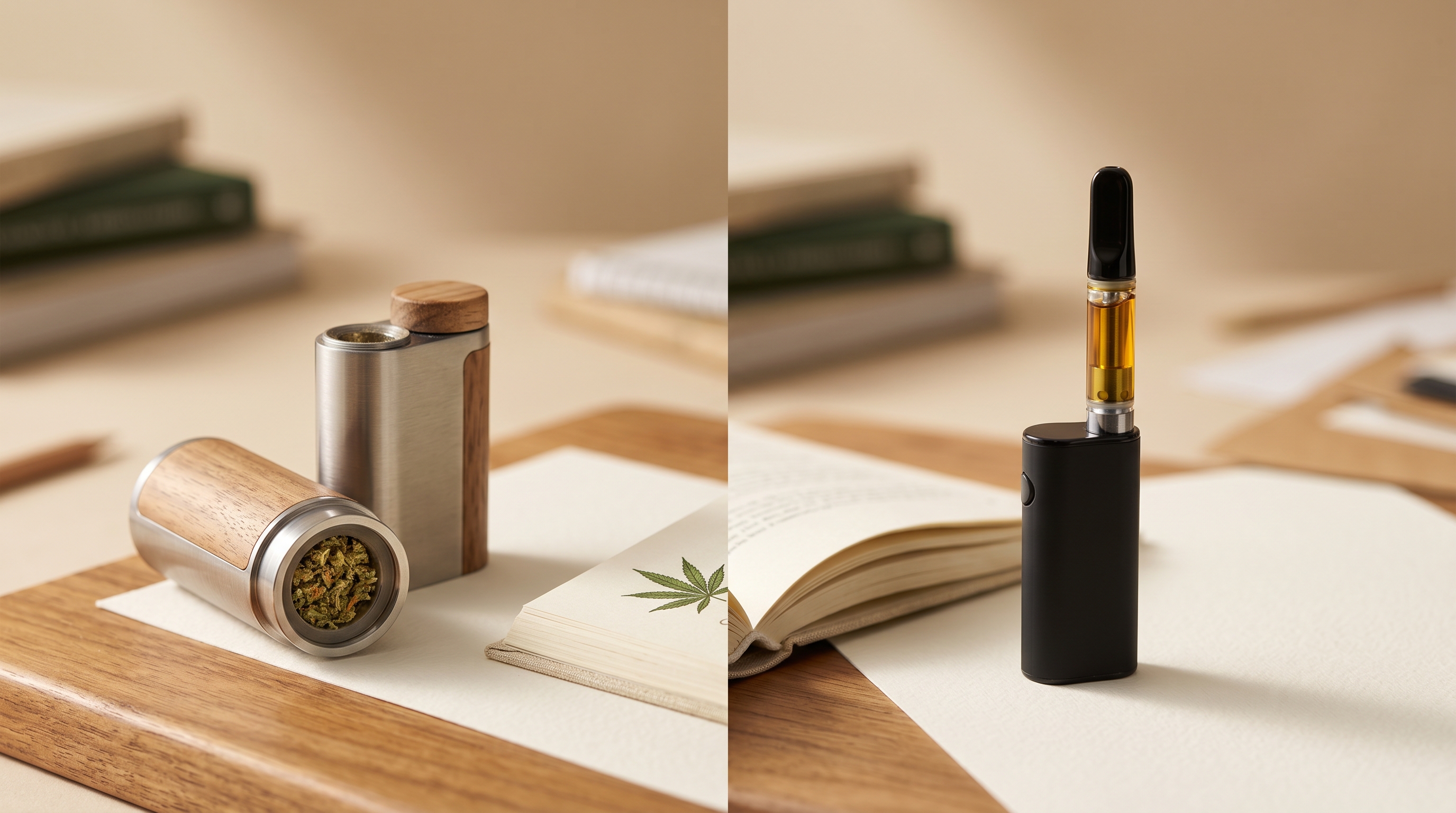
Dry herb vaporizers: the whole-plant flavor champion
A dry herb vaporizer heats ground flower until cannabinoids and terpenes turn to vapor. It never reaches the point of combustion. That single design choice is why flower vapes are the flavor purist’s pick. You’re tasting the actual plant, terpenes and all, not a distilled extract.
Conduction vs convection: the heating story
There are two main ways these devices heat your herb, and the difference shapes flavor more than almost anything else.
Conduction applies direct heat from the chamber walls to the surface of your flower, like a pan on a stove. It’s simpler and cheaper to build. That’s why most budget and pocket-sized vapes use it. The trade-off: heat is uneven, the herb closest to the element can scorch, and you often need to stir the bowl between hits. Conduction is great for thick clouds and full-bowl sessions. But it’s “not the best for flavor.”
Convection heats the air, then passes that hot air through the herb, like a convection oven. It warms the flower evenly. So it “gradually releases terpenes and cannabinoids when their vaporization temperature is reached.” That even, on-demand heating is why flavor chasers prefer convection. Many portable convection units are really hybrid. They mix a little chamber heat with airflow heat to speed things up.
If you want the deep mechanics of bong-water and heat science, my piece on hot vs cold bong water temperature explores a related thermal idea.
Temperature control is the flavor dial
Here’s where dry herb vapes earn their reputation. Research on cannabis vapor pressure found that terpenes vaporize before cannabinoids do [Eisenberg, 2023]. At around 180°C (356°F), only about 10% of THC evaporates within 20 seconds. Monoterpenes are mostly released first. That means lower temperatures favor aroma and flavor. Push to 220°C (428°F) and THC evaporation jumps to roughly 34% within 20 seconds. The THC evaporation rate climbs by nearly three times for every 20°C of added heat.
The practical takeaway: the recommended range for flower vapes is roughly 160–220°C (320–428°F). Lower in that band means brighter, tastier, more terpene-forward vapor. Higher means denser, more potent draws with a toastier flavor. A good vape with precise temperature control lets you choose. An oil cart simply can’t match that flexibility. (Want a deeper dive on which terpenes shine at which heat? My terpenes guide and the piece on terpene bioavailability both go further.)
The entourage advantage
Because flower vapes deliver the whole plant, you get the full chorus of cannabinoids and terpenes working together. That’s the basis of the entourage effect. It’s also why the High Families framework matters here. An Uplift-leaning limonene strain or a Relax-leaning myrcene strain shows its full personality through a flower vape. A stripped-down distillate often can’t do that. If terpenes are why a strain feels the way it does, dry herb vaping is the most faithful way to experience them.
The downside? Flower vapes are bulkier, slower to heat, and they produce a noticeable (if much milder than smoke) aroma. They also demand regular cleaning to keep tasting clean.
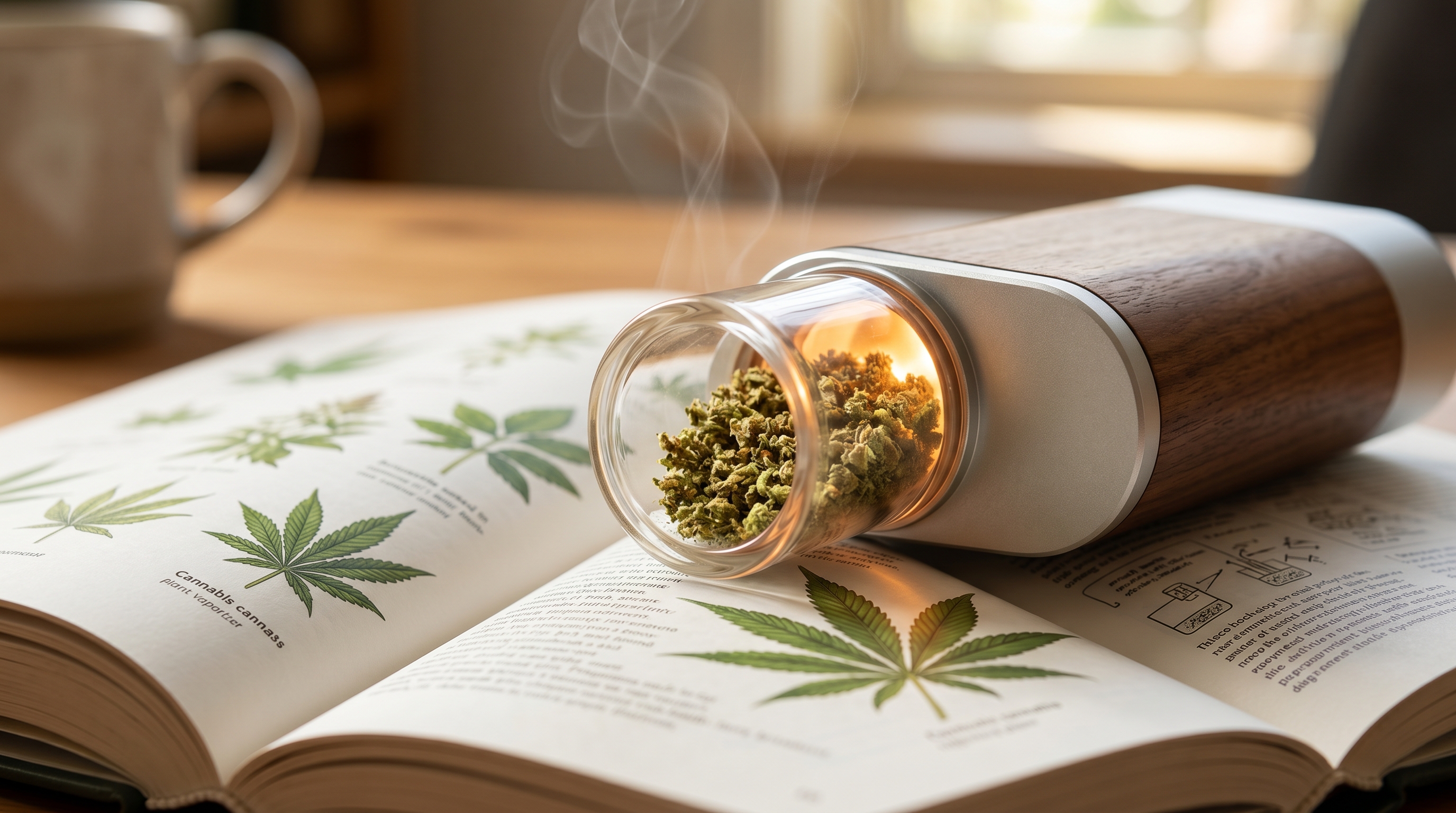
Oil and cartridge vaporizers: convenience and concentrated potency
Oil vapes heat a pre-filled concentrate instead of flower. These are the 510-thread carts and all-in-one disposables you see everywhere. Press a button (or just inhale) and you get an almost instant, potent, low-effort draw. For a closer look at the two oil formats, see my cart vs disposable comparison.
Why people love them
- Convenience. No grinding, no packing, no stirring. They “heat up faster than dry herb vaporizers.”
- Potency. Concentrates are far stronger than flower, so a smaller draw goes further.
- Discretion. Carts are compact, quiet, and produce a fainter, shorter-lived smell. They slip into a pocket.
- Low maintenance. With a disposable there’s nothing to clean; with a cart you just swap it out.
The flavor trade-off
Oil vapes deliver an intense, direct hit of isolated cannabinoids and terpenes. But that’s the catch. Many cartridges are made from distillate that’s been stripped of its native terpenes, then re-dosed with terpenes added back in. The flavor can be vivid, but it’s an engineered flavor, not the living complexity of whole flower. Flavor purists tend to feel something gets lost in translation.
The additive concern (read this part)
Here’s where I put on my serious hat. The quality of an oil cart depends entirely on what’s in it. And the unregulated market has a track record worth understanding.
Cutting and thickening agents are cheap additives used to stretch oil volume. The most infamous is vitamin E acetate. In a 2020 Toxics analysis of vaping fluids tied to the first 10 New York EVALI (e-cigarette or vaping product use-associated lung injury) cases, vitamin E acetate showed up in 64% of the cannabinoid-containing cartridges, at 16–57% by mass [Capler, 2020]. The U.S. CDC later named vitamin E acetate as strongly linked to the EVALI outbreak, which involved thousands of hospitalizations [CDC, 2020].
This isn’t a reason to fear all carts. Regulated, lab-tested products are a different world from illicit-market ones. But it is the reason to buy only tested products and to read your lab results. A newer concern is heat-related chemistry. My piece on acetylated cannabinoids and ketene covers a vaping additive risk worth knowing. With whole flower in a dry herb vape, there are no cutting agents to worry about. That’s a real, underrated safety advantage.
As always, none of this is medical advice; if you have health concerns about inhalation, talk to a clinician.
Side-by-side: dry herb vs oil vaporizer
| Factor | Dry Herb Vaporizer | Oil / Cartridge Vaporizer |
|---|---|---|
| Flavor | Best for purists; full whole-plant terpene profile | Intense but often engineered; native terpenes may be stripped and re-added |
| Cost per use | Lower ongoing cost; flower is cheaper per gram | Higher per-gram cost for concentrate; disposables priciest long-term |
| Convenience | Grind, pack, wait for heat-up | Near-instant, no prep |
| Temperature control | Precise, adjustable (160–220°C) | Usually fixed or limited presets |
| Maintenance | Frequent cleaning to preserve flavor | Minimal (carts) or none (disposables) |
| Discretion | Bulkier, mild but real aroma | Compact, quiet, faint short-lived smell |
| Additive risk | None, just flower | Possible cutting agents in untested products |
| Potency per draw | Moderate | High |
Which one is right for you?
Choose a dry herb vaporizer if you:
- Care most about flavor and the full entourage effect
- Want to control temperature and tune your experience
- Prefer the lowest cost per session over time
- Want to avoid additives entirely by vaping whole flower
- Are building a serious setup, see my perfect cannabis toolkit guide and the broader gear guide
Choose an oil/cartridge vaporizer if you:
- Prioritize convenience, speed, and grab-and-go simplicity
- Want maximum discretion and minimal smell
- Value potency in a small, pocketable device
- Don’t want to clean or maintain gear, and will commit to buying lab-tested products
Still torn between vaping and other formats? Compare the bigger picture in vaping vs smoking and how to choose between flower, edibles, and concentrates.
The verdict
For pure flavor, the dry herb vaporizer wins, and it isn’t close. Whole-plant vapor, terpene-first temperature control, and zero cutting agents make it the connoisseur’s flavor machine. The oil vaporizer wins on convenience, discretion, and potency per draw. That’s exactly why so many people carry one.
But here’s the Professor High reframe. The device is only half the equation. Flavor and effect come from the strain’s terpene and cannabinoid profile, not the brand of vape. That’s why I keep saying that your ideal high isn’t a strain name, and why THC percentage is a terrible way to choose cannabis. Pick the hardware that fits your life. Then pay attention to which terpene profiles actually work for you. And to keep that flower tasting its best in either device, store it right, my cannabis storage guide has you covered.
That’s where tracking comes in. Log what you vape: the strain, the temperature, the format, and the effect you felt. Patterns emerge fast. The High IQ app helps you turn those notes into a personal map of what works, so your next session is a better one.
Key Takeaways
- Dry herb vapes win on flavor. Whole-plant vapor preserves native terpenes, and lower temperatures bring them out first.
- Oil vapes win on convenience. They’re fast, pocketable, discreet, and need little to no cleaning.
- Temperature is the flavor dial. Flower vapes let you tune the 160–220°C range; most carts can’t.
- Additives are a cart-only risk. Buy lab-tested oil and read the COA. Whole flower has no cutting agents.
- The strain matters more than the device. Track your sessions to learn which terpene profiles fit you.
Frequently asked questions
Do dry herb vaporizers really taste better than oil carts? For whole-plant flavor, usually yes. Flower vapes deliver the strain’s native terpenes intact, especially at lower temperatures. Many carts use distillate with terpenes stripped and re-added. Some users love the bold, clean taste of a quality cart. So “better” depends on whether you want authentic or amplified.
What temperature is best for flavor in a dry herb vape? Stay in the lower part of the 160–220°C (320–428°F) range. Terpenes vaporize before cannabinoids, so cooler draws emphasize aroma and taste. Higher temperatures produce denser, more potent (and toastier) vapor.
Are oil cartridges safe? Lab-tested, regulated cartridges are very different from illicit-market ones. The EVALI outbreak was strongly linked to vitamin E acetate. That cutting agent showed up in 64% of cartridges in one analysis of early cases. Buy tested products, check the COA, and read how to read lab results. This is general education, not medical advice.
Which is cheaper over time? Dry herb vaping usually costs less per session. Flower is cheaper per gram than concentrate, and you control the dose. Disposables tend to be the priciest format long-term.
Can one device do both? Some vaporizers accept both flower and concentrate inserts, but dedicated devices typically perform each job better. If flavor is your priority, a purpose-built convection flower vape is hard to beat.
Sources
- Capler, R., et al. (2020). Analysis of Cannabinoid-Containing Fluids in Illicit Vaping Cartridges. Toxics, 8(1). PMC: https://pmc.ncbi.nlm.nih.gov/articles/PMC7151740/
- Eisenberg, E., et al. (2023). Vapor Pressure, Vaping, and Corrections to Misconceptions Related to Cannabis Vaporization Temperatures. PMC: https://pmc.ncbi.nlm.nih.gov/articles/PMC10249740/
- Vaping360. Convection vs Conduction: Is it a Heated Debate? https://vaping360.com/learn/convection-vs-conduction/
- Puffco Knowledge Base. Dry Herb Vape vs Concentrate Devices. https://www.puffco.com/blogs/cannabis-knowledge-base/dry-herb-vape-vs-concentrate-devices
- U.S. CDC. Outbreak of Lung Injury Associated with E-cigarette/Vaping Products (EVALI). https://www.cdc.gov/tobacco/e-cigarettes/


