The Endocannabinoidome: The Bigger System Behind the ECS
The endocannabinoidome (eCBome) expands the classic ECS into 100+ mediators, 20+ receptors, and 50+ enzymes. Here's why it changes everything.

Professor High
Your friendly cannabis educator, bringing science-backed knowledge to the community.
You’ve probably heard of the endocannabinoid system. What almost nobody talks about is that the ECS is just the small, famous core of something much, much larger. Scientists now call that larger network the endocannabinoidome—or eCBome for short—and it reframes how we think about cannabis, diet, mood, and the gut all at once.
The classic story goes like this. Your body makes two cannabinoids, anandamide and 2-AG. They act on two receptors, CB1 and CB2. Clean, simple, easy to teach. But over the last decade, labs led by Vincenzo Di Marzo and Cristoforo Silvestri have shown a twist. That tidy four-piece system is just the tip of a far bigger iceberg. Below the surface sit roughly 100 lipid messengers, more than 20 receptors, and over 50 enzymes—all working together.
Let’s explore the system behind the system.
A Quick Recap: The Classic ECS
Before we expand the map, let’s remember what we’re expanding from. If you want the full tour, our endocannabinoid system guide covers it in depth, but here’s the short version.
The endocannabinoid system has three classic parts:
- Two endocannabinoids: anandamide (the “bliss molecule”) and 2-AG, the most abundant one.
- Two receptors: CB1 and CB2—CB1 mostly in the brain and nervous system, CB2 mostly in immune tissue.
- The enzymes that build these molecules on demand and break them back down afterward.
This system acts like a master dimmer switch, nudging mood, appetite, pain, sleep, and memory back toward balance. When you understand the ECS, the whole idea of endocannabinoid tone—running “hot” or “cold”—starts to make sense.
But here’s the catch: anandamide and 2-AG were never working alone.
The eCBome Expansion: 100 Messengers, Not 2
Researchers looked closely at the fatty molecules floating around cells. They found that anandamide and 2-AG have dozens of chemical cousins. These cousins are built from the same membrane fats. The same enzymes help make them. They hit many of the same targets. But most of them barely touch CB1 or CB2 at all.
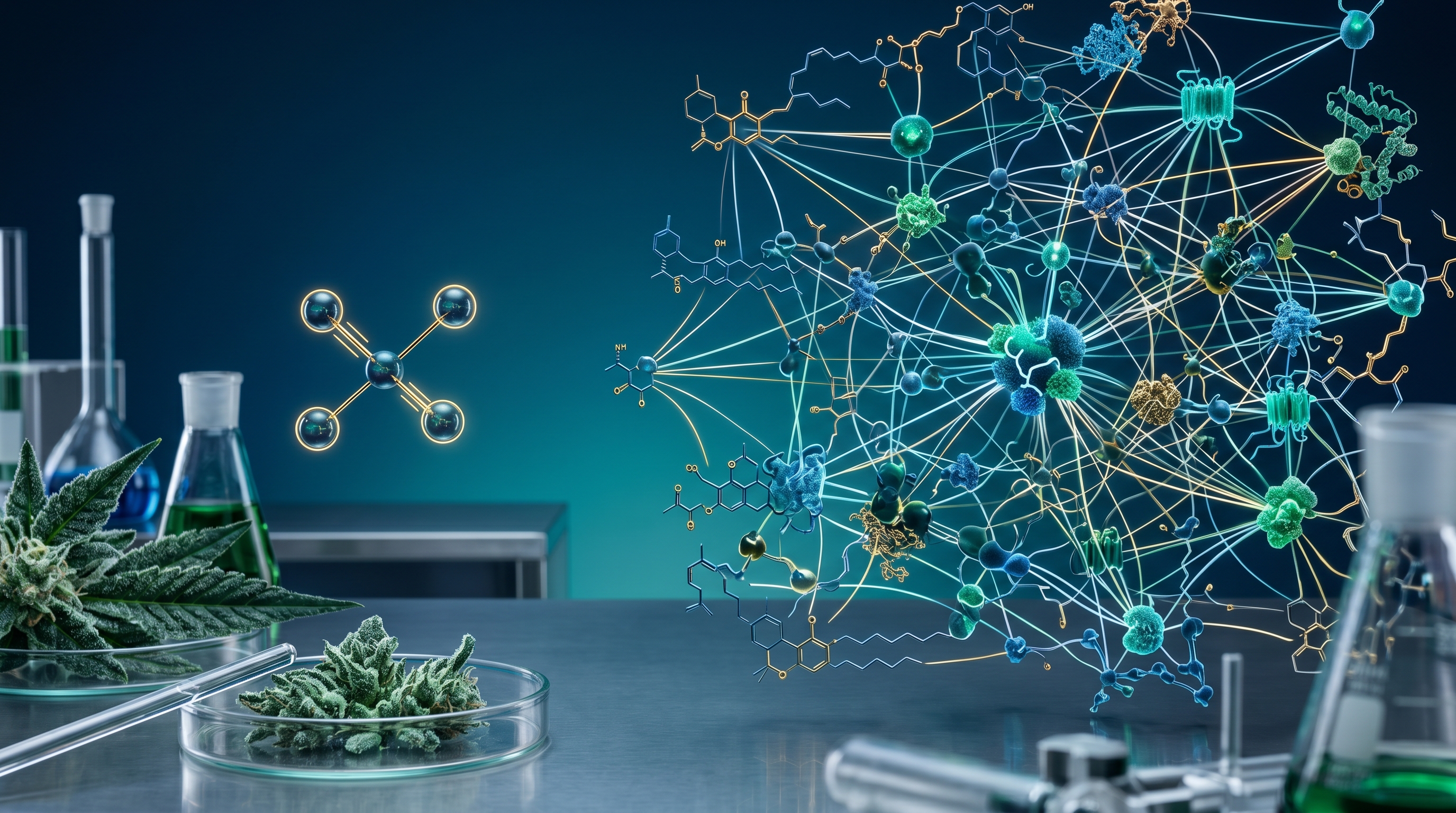
The two biggest families of these cousins are:
- N-acylethanolamines (NAEs): anandamide’s relatives, including PEA (palmitoylethanolamide), OEA (oleoylethanolamide), and SEA (stearoylethanolamide). PEA is best known as a pain-easing, immune-calming molecule. OEA helps signal fullness and manage fat.
- 2-monoacylglycerols (2-MAGs): 2-AG’s relatives, a family of glycerol-based lipid messengers.
On top of those sit long-chain fatty acid amides, N-acyl amino acids (researchers have proposed more than 200 possible variants), N-acylated neurotransmitters, and a host of oxidation byproducts. Add it all up and you get roughly a hundred related lipid mediators [Silvestri, 2023].
They all share one trick. They’re made “on demand.” Your cells don’t store them in little packets. Instead, the moment a signal arrives, enzymes carve these messengers right out of the cell membrane. They do their job. Then other enzymes take them apart. It’s a just-in-time messaging system built into every cell.
More Than Two Receptors
Here’s where the picture really opens up. The eCBome’s hundred messengers don’t funnel into just CB1 and CB2. They act on more than 20 molecular targets spanning three different families [Silvestri, 2023]:
- PPARs (PPAR-α and PPAR-γ): receptors that control how cells handle fat and sugar. OEA and PEA both switch on PPAR-α. That’s a big reason they affect metabolism and inflammation without making you high.
- TRPV1: the same “capsaicin receptor” that makes chili peppers feel hot. Several eCBome mediators tune it. It also helps manage pain and gut barrier health.
- GPR55 and GPR119: orphan receptors. GPR119 sits in the gut and pancreas. It helps coordinate appetite and blood sugar.
This is the key reframe. Many eCBome molecules barely register at the “cannabis” receptors. Instead, they speak to PPARs, TRPV1, and orphan receptors. That’s why a molecule like PEA can calm inflammation with no high at all.
A 50-Enzyme Network
Finally, the enzymes. The classic ECS textbook names a handful—mostly FAAH and MAGL. The eCBome runs on more than 50 enzymes. These are the builders and the recyclers, and their paths overlap. NAPE-PLD builds the NAEs. FAAH and NAAA break them down. DAGL enzymes build 2-AG. MAGL recycles it.
Why does the count matter? Because these paths overlap, the molecules compete and trade off. Push one pathway and you shift the whole balance. That’s exactly what diet, exercise, and cannabis end up doing.
The Gut–Microbiome–eCBome Axis
If the receptor expansion reframes where the system works, the next discovery reframes who else is in the conversation: your gut bacteria.
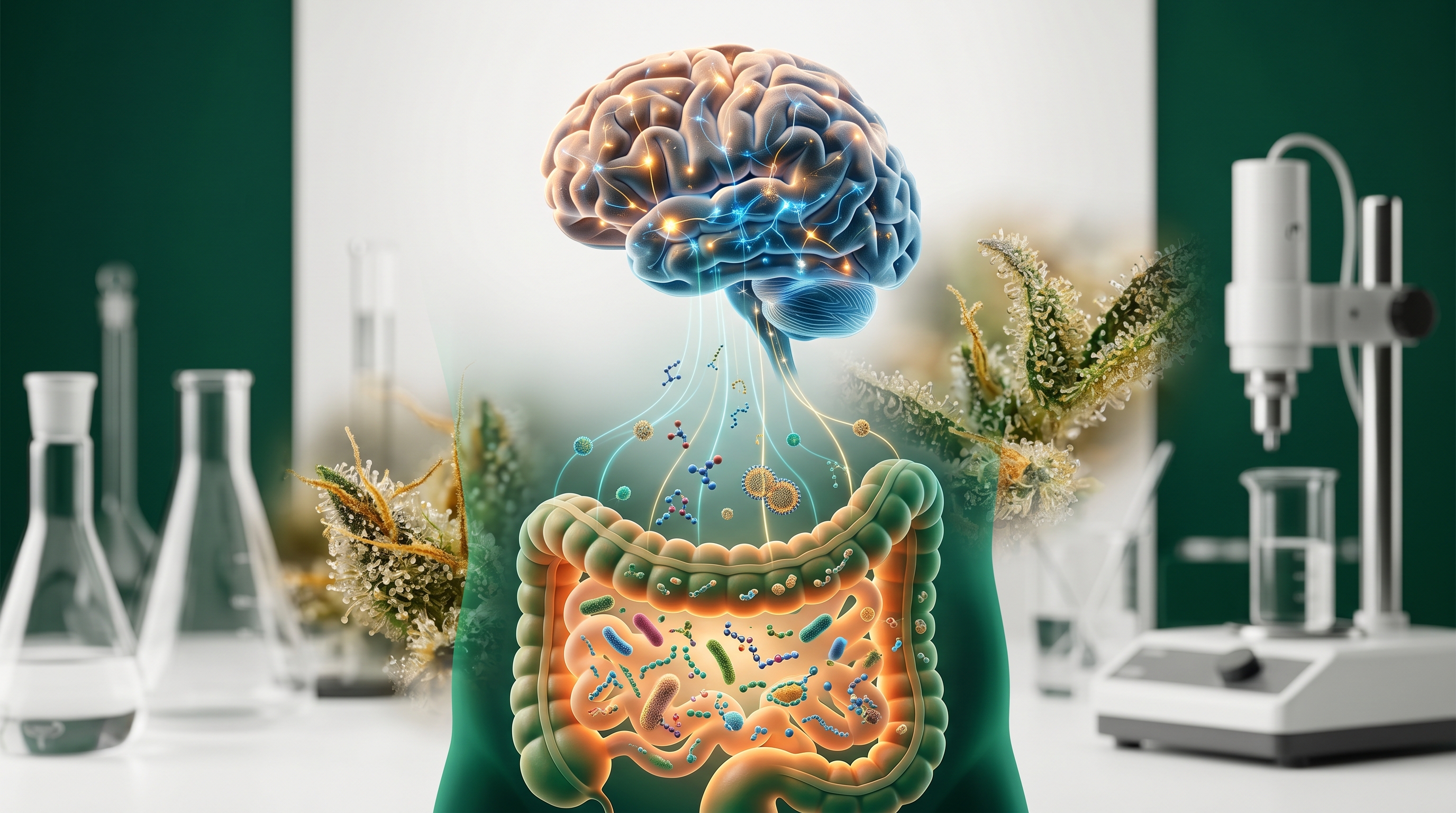
Researchers describe a bidirectional gut microbiome–endocannabinoidome axis [Silvestri, 2023]. It runs both directions:
- Microbes shape the eCBome. Germ-free mice are raised with no gut bacteria. They show altered eCBome receptor and mediator levels. A fecal microbiota transfer can partly reset them. Gut bacteria also make short-chain fatty acids like butyrate that ripple into eCBome signaling.
- The eCBome shapes microbes. NAEs and 2-MAGs can directly change which bacteria thrive. OEA, for example, nudges the community toward a leaner profile, while PEA in the colon can quiet inflammation in models of inflammatory bowel disease [Moriello, 2022].
There’s even a striking behavioral thread. In animal studies, gut-derived eCBome mediators switch on TRPV1 sensory neurons. Those neurons raise dopamine in the brain’s reward center. When the microbiome was depleted, exercise motivation dropped. Disrupted gut signaling has also been tied to lower brain 2-AG and depression-like behavior in transfer experiments.
This is the same territory we cover in cannabis and gut health and the vagus nerve gut-brain axis—but the eCBome lens reveals the molecular currency the gut and brain trade in.
Why This Matters: Diet, Lifestyle, and a Whole-Body Switchboard
Here’s the part that turns abstract biochemistry into everyday relevance. Because the eCBome is built from dietary fats and tuned by your microbiome, your fork and your habits are constantly editing it.
In a 2019 review in Nutrients, Di Marzo and Silvestri laid out how lifestyle reshapes the eCBome [DiMarzo, 2019]:
- The omega-6 to omega-3 ratio matters. Linoleic acid is the omega-6 fat in many Western diets. It converts easily into arachidonic acid—the raw material for anandamide and 2-AG. A diet heavy in omega-6 can push eCBome tone “in the wrong place at the wrong time.” Research suggests that adding omega-3s (think EPA and DHA from fish or algae) may help counter that drift and supply anti-inflammatory NAEs.
- High-fat feeding shifts the system within hours. eCBome mediator levels move fast, which is part of why diet so quickly affects appetite and metabolism.
- Exercise tunes it too. Acute exercise raises circulating anandamide and related NAEs like PEA and OEA—part of the runner’s high—while regular activity favors a healthier gut community.
- Even spicy food and sunlight play. Capsaicin works through TRPV1, an eCBome receptor, to improve glucose handling; UV exposure nudges 2-AG.
This whole-body switchboard is also why eCBome dysregulation keeps showing up in metabolic and diabetes research and in the molecular science of inflammation.
Why Cannabis Does So Many Things
The eCBome also helps explain one of cannabis’s biggest puzzles: how can one plant affect mood, pain, appetite, sleep, and inflammation all at once?
Part of the answer is that cannabis compounds don’t only hit CB1 and CB2. CBD vs THC act very differently in part because they brush up against eCBome targets—TRPV1, PPARs, and the enzymes that recycle anandamide. Some terpenes reach further still: caryophyllene behaves like a cannabinoid by binding CB2 directly.
This is the deep version of the entourage effect. When you read about the science of the entourage effect, here’s what’s really going on. Dozens of plant compounds nudge dozens of eCBome targets at once. It’s not a single key in a single lock. At This Is Why I’m High we group strains into High Families for this reason. Their combined chemistry, not any one number, predicts how they tend to feel.
Implications and Honest Limits
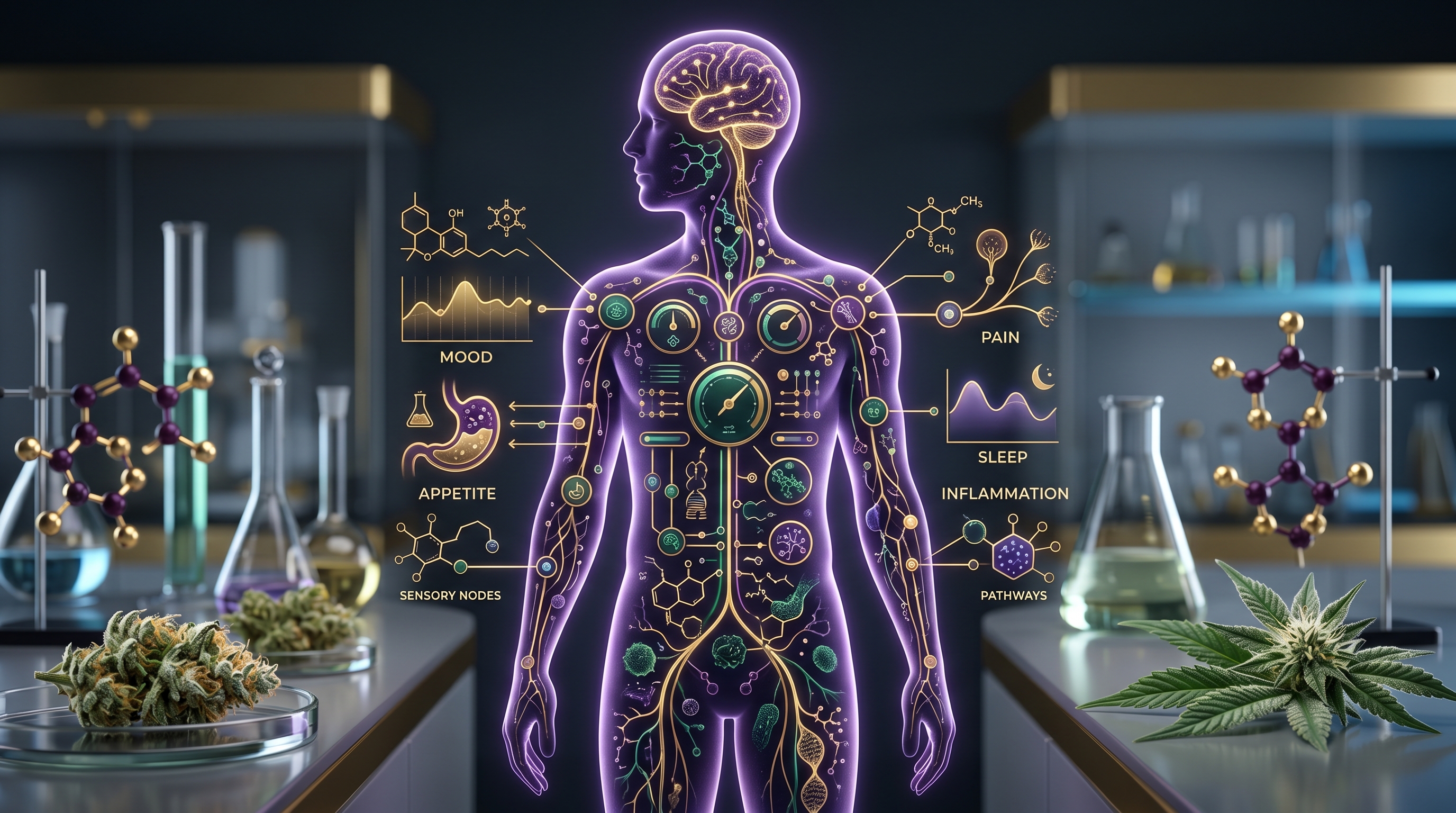
So what does the eCBome change in practice?
- It reframes “balance.” The idea of clinical endocannabinoid deficiency gets richer when you realize “tone” involves a hundred messengers, not two. The system has far more dials than we once thought.
- It makes diet a real lever. Omega-3s, fiber, and a healthy microbiome plausibly shift eCBome signaling—though “plausibly” is doing real work in that sentence.
- It explains why blanket strain advice fails. Your gut, diet, and genetics all edit your eCBome, so the same flower can land differently for different people.
Now the honest limits, because Professor High doesn’t oversell. Much of this research is preclinical—a lot of the gut-axis findings come from mice, not humans. The authors of these very reviews stress that “most of the molecular mechanisms through which these two complex systems control each other are still unknown.” The eCBome is a powerful framework, not a finished instruction manual. None of this is medical advice, and no supplement or strain is a proven treatment for any condition. If you’re managing a health issue, talk to a clinician.
What the eCBome does give us is a better mental model: your body’s cannabinoid network is vast, deeply wired into diet and the gut, and far more interesting than two molecules and two receptors. Cannabis is just one more set of keys reaching into a switchboard you’ve been running your whole life.
The best thing you can do with that knowledge? Pay attention to your own responses. Because in a system this personal, your data is the most valuable data there is.
Key Takeaways
- The endocannabinoid system (ECS) is the small, famous core: two endocannabinoids and two receptors. The endocannabinoidome (eCBome) is the much bigger network around it.
- The eCBome adds roughly 100 lipid messengers, more than 20 receptors, and over 50 enzymes—including PEA, OEA, PPARs, and TRPV1.
- A two-way gut microbiome–eCBome axis links your bacteria to your mood, metabolism, and inflammation.
- Diet and lifestyle (omega-3s, fiber, exercise) appear to tune this system, though much of the evidence is still preclinical.
- The eCBome is the deeper reason cannabis touches so many systems—and why your own response data matters more than any label.
Frequently Asked Questions
What’s the difference between the ECS and the endocannabinoidome? The endocannabinoid system (ECS) is the classic core: anandamide, 2-AG, and the CB1/CB2 receptors. The endocannabinoidome (eCBome) is the expanded network around it—roughly 100 related lipid messengers, more than 20 receptors, and over 50 enzymes. The ECS is a subset of the eCBome.
Are PEA and OEA cannabinoids? Not in the classic sense. PEA and OEA are anandamide’s chemical cousins (N-acylethanolamines), but they mostly act on PPAR-α and other non-CB receptors rather than CB1/CB2. That’s why they can influence pain, inflammation, and metabolism without any intoxicating effect.
Does diet really change my endocannabinoid signaling? Research suggests it can. The balance of omega-6 to omega-3 fats, dietary fiber, and your gut microbiome all appear to shift eCBome mediator levels. Most of the strongest evidence is still from animal studies, so think “promising direction,” not “proven prescription.”
How does the gut microbiome connect to cannabis? Your gut bacteria and your eCBome talk to each other constantly, trading short-chain fatty acids and lipid messengers. Because cannabis compounds act on eCBome targets too, the gut–eCBome axis is part of why cannabis effects can vary so much from person to person.
Why does cannabis affect so many different things? Because cannabis compounds reach far beyond CB1 and CB2 into the wider eCBome—TRPV1, PPARs, and recycling enzymes—and because terpenes and minor cannabinoids add their own targets. That broad reach is the molecular basis of the entourage effect.
Sources
- Silvestri C, Di Marzo V. “The Gut Microbiome–Endocannabinoidome Axis: A New Way of Controlling Metabolism, Inflammation, and Behavior.” Function (Oxford), 2023. DOI: 10.1093/function/zqad003
- Di Marzo V, Silvestri C. “Lifestyle and Metabolic Syndrome: Contribution of the Endocannabinoidome.” Nutrients, 2019;11(8):1956. DOI: 10.3390/nu11081956
- Schiano Moriello A, Di Marzo V, Petrosino S. “Mutual Links between the Endocannabinoidome and the Gut Microbiome, with Special Reference to Companion Animals: A Nutritional Viewpoint.” Animals (Basel), 2022;12(3):348. DOI: 10.3390/ani12030348
This article is for educational purposes and is not medical advice. Cannabis affects everyone differently—track your own responses and consult a healthcare professional about your individual situation.


