Full-Melt Hash vs 6-Star Bubble: The Connoisseur Tier
Full-melt and 6-star bubble hash decoded: the 1-6 star rating system, the 73-120 micron full-melt zone, trichome heads, and why it is the top tier.


If you have ever paid top dollar for “full-melt” hash, taken a dab, and watched a black ring of residue crust onto your banger, you got scammed by a label. The words “full-melt” and “6-star” get slapped onto jars the way “artisanal” gets slapped onto toast. But underneath the marketing, there is a real, measurable, beautifully nerdy grading system — and once you understand it, nobody can sell you 3-star hash at a 6-star price again.
This is the connoisseur tier of cannabis, the apex of solventless extraction. Let me walk you through exactly what those stars mean, where the magic micron numbers come from, and why true 6-star hash is one of the rarest things in the entire cannabis world.
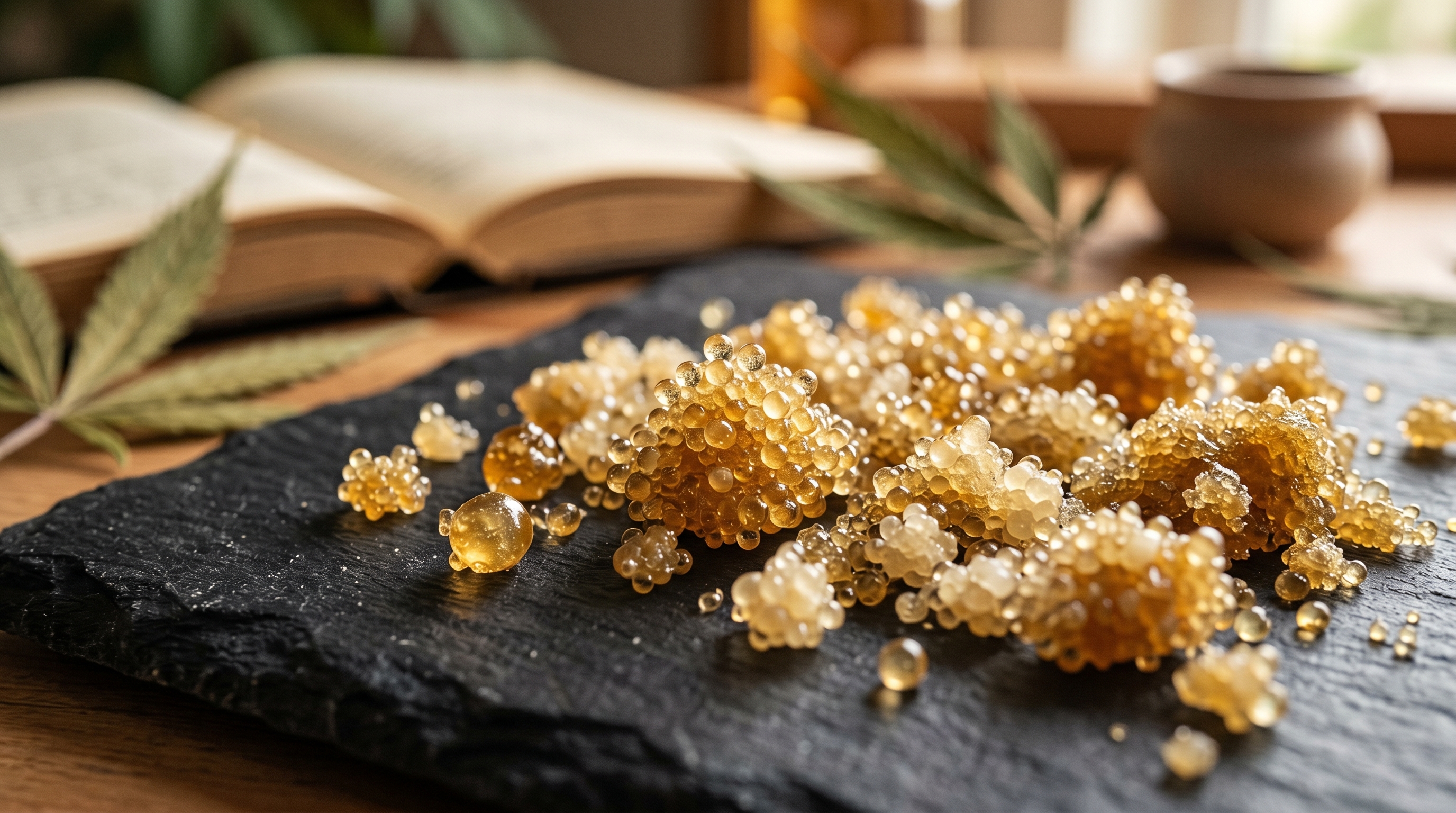
First, What Are We Even Grading?
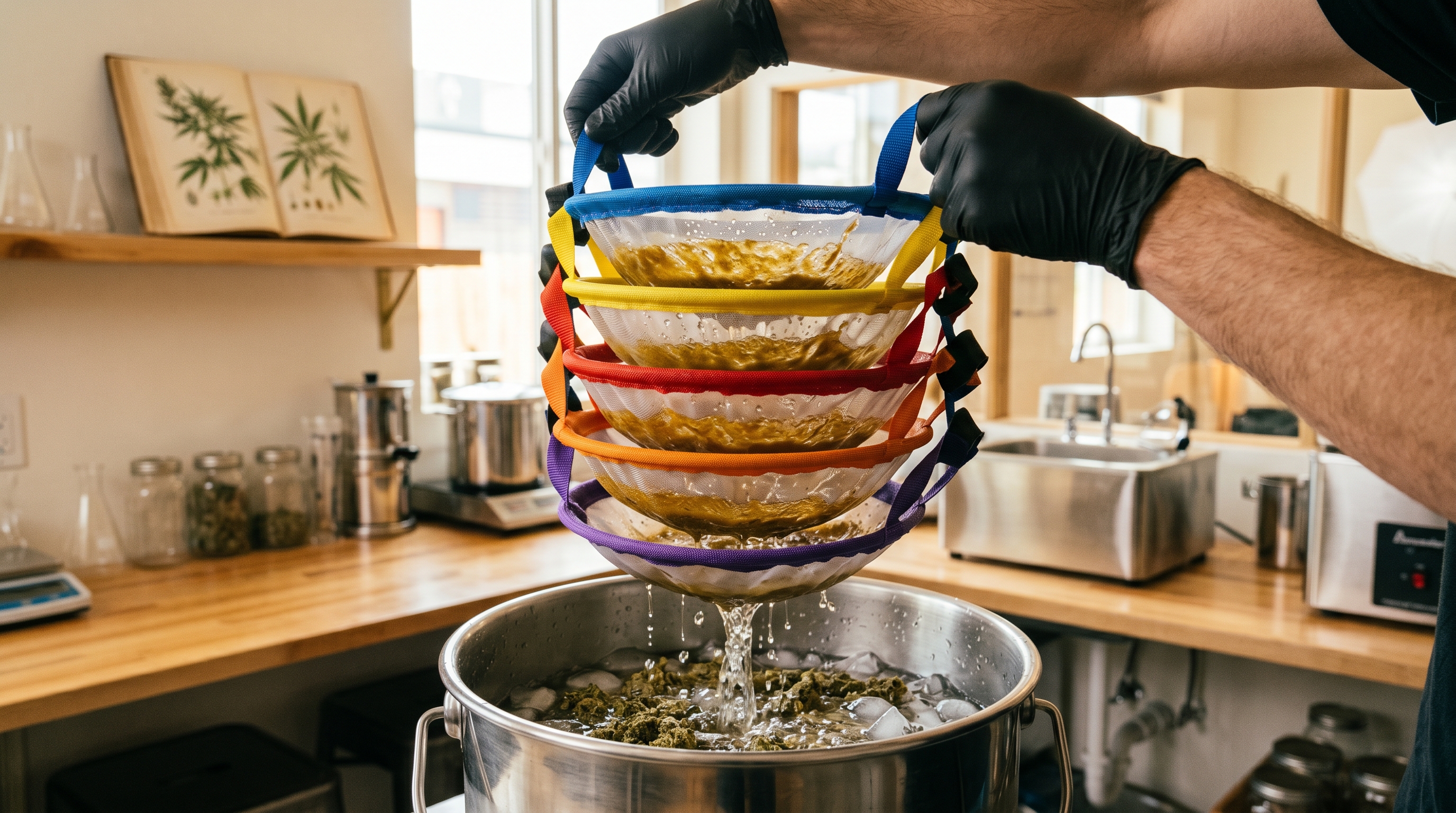
Bubble hash is made by ice water extraction — a solventless method that uses cold water, agitation, and mesh screens to knock the resin glands off the cannabis plant. No butane, no propane, no chemicals. Just physics.
Those resin glands are called trichomes, and the prize inside them is the trichome head — the little mushroom-cap sphere sitting on top of a stalk. That head is where nearly all the cannabinoids and terpenes live. When you submerge fresh-frozen cannabis in ice water, the cold makes those heads brittle as glass; gentle agitation snaps them off the plant; and a stack of micron mesh bags sorts them by size as the slurry drains through.
So when we “grade” hash, we are really asking one question: how pure is this pile of trichome heads? The closer you get to 100% intact heads with zero plant debris, the higher the grade — and the cleaner it melts.
The 1-6 Star Rating System
The cannabis industry borrowed a star scale — one to six — to communicate hash quality at a glance. Six is the ceiling. Here is what each tier actually means, based on trichome purity and how the material behaves when you heat it.
| Star Rating | Common Name | Trichome Head Purity | Melt Behavior | Best Use |
|---|---|---|---|---|
| ⭐ 1-2 Star | Food / cooking grade | Less than half heads; mostly plant debris & stalks | Burns and chars, will not vaporize | Edibles, infusions |
| ⭐ 3-4 Star | Half-melt | Mostly heads with noticeable contamination | Bubbles partially, leaves residue | Topping a bowl, pressing into rosin |
| ⭐ 5 Star | Full-melt | Almost entirely intact heads, minimal debris | Melts fully, trace ash | Dabbing, connoisseur use |
| ⭐ 6 Star | Full-melt (apex) | Virtually 100% intact, uncontaminated heads | Vaporizes completely, zero residue | Pure dabbing, the connoisseur tier |
The 1-2 star floor. This is what extractors politely call “food-grade.” It is less than half trichome heads — the rest is shredded leaf, stalk fragments, and organic gunk. You would never dab it; it would taste like a campfire. But melt it into butter or oil and it makes perfectly good edibles, so nothing goes to waste.
The 3-4 star middle. This is the bulk of what sits in most dispensary cases labeled “bubble hash.” It is genuinely good material — mostly trichome heads — but it carries enough plant matter that when you dab it, you get a “half-melt”: it bubbles, it puddles, and it leaves a residue ring behind. The savvy move with 3-4 star is to either sprinkle it over a bowl of flower or press it into live rosin, where heat and pressure squeeze the clean oil out and leave the contaminants behind in the bag.
The 5-6 star ceiling. This is the connoisseur tier. Five-star and six-star hash is “virtually only trichome heads, free of all contaminants and residue.” The difference between the two comes down to a single, unforgiving test.
The Dab Test: How 6-Star == Full-Melt
Here is the line in the sand that separates marketing from reality. Drop a small piece on a heated nail or banger and watch.
- 6-star full-melt bubbles vigorously, transforms entirely into vapor and liquid resin, and leaves no residue on the nail. Nothing. A clean banger when the dab is done.
- 5-star full-melt melts almost completely but leaves a trace of ash — a faint whisper of leftover material.
- 3-4 star half-melt melts partially and leaves an obvious black ring of charred plant matter.
That residue test is the definition. “Full-melt” is not a vibe or a label — it is a measurable behavior. If it leaves a crust, it was never 6-star, no matter what the jar said. This is why 6-star and full-melt are functionally the same claim: to earn six stars, the material must full-melt with zero residue. The two terms describe the same apex, just from different angles — one is the grade, the other is the proof.

The 73-120 Micron “Full-Melt Zone”
Now for the part that makes hash makers misty-eyed: the micron numbers.
A micron (micrometer, µm) is one-millionth of a meter — the unit used to measure the holes in those mesh bubble bags. When the ice-water slurry drains through a stacked set of bags, each screen catches a different size fraction. The genius of the system is that trichome heads come in a predictable size range, so the right mesh acts like a sieve that keeps the gold and drops the junk.
Mature, resin-rich capitate-stalked trichome heads — the ones loaded with cannabinoids and terpenes — generally measure between roughly 50 and 120 microns across. That is why the cannabis world obsesses over the 73-120 micron range, often called the “full-melt zone” or the “money bags.”
- Below ~73µm: you start catching immature heads, head fragments, and fine plant dust. Lower purity.
- 73-120µm: the sweet spot. This window catches the majority of mature, intact heads while excluding most stalks, stems, and leaf debris. The fabled 73µm bag is so synonymous with this tier that extractors just call it “the full-melt bag.”
- Above ~120µm: you start catching whole gland clusters with attached plant matter — more contamination.
A common myth is that smaller microns always mean better hash. Not true. Quality is about capturing the right trichome maturity, not chasing the tiniest screen. A 90µm pull from a frosty, well-grown plant will smoke circles around a 45µm pull from mediocre material. The screen sorts; it cannot create quality that the genetics never grew.
Why True 6-Star Is So Rare
If the recipe is just cold water and the right bags, why is genuine full-melt so hard to find? Because every single variable has to line up — and most of them are decided long before the hash maker ever touches a bucket.
1. The genetics. This is the brutal one. By some estimates, only about one in a thousand phenotypes can actually deliver true six-star hash. The plant has to grow large, intact, resin-heavy trichome heads with stalks sturdy enough to survive washing. No process saves a plant that simply did not grow the right glands. Resin-bombs like GMO, Gorilla Glue, Chemdawg, OG Kush, and Triangle Kush are perennial favorites precisely because they tend to throw big, washable heads.
2. Fresh-frozen starting material. The best full-melt starts with whole buds harvested and immediately frozen — never dried trim. Fresh-frozen preserves the full terpene profile and keeps the heads plump and clean. This is the same input that makes great live rosin and live resin.
3. Water temperature. The wash water needs to sit around 32-35°F (sub-40°F) the entire time. Cold keeps the heads brittle so they snap off cleanly. Let it creep above 40°F and the heads turn pliable instead of glassy — they smear, they cling to plant matter, and contamination slips through your screens. Adding ice every few minutes matters more than any fancy stirring pattern.
4. Gentle, calibrated agitation. The first short wash — roughly three minutes of gentle folding — pulls the cleanest, most mature heads. Over-agitate and you shred leaf, dragging chlorophyll and micro-debris into your beautiful pile. Easy does it.
5. The drying method. This is where so many almost-perfect washes die. Wet hash that dries too slowly traps moisture, grows mold, and degrades melt. The gold standard is a freeze dryer (lyophilizer) that pulls all the water in 18-24 hours while preserving the volatile terpenes that create flavor and aroma. Rushing with heat boils off the very compounds you worked so hard to capture.
6. Zero contamination. One speck of mold, one bug, one stray bit of stalk, and your 6-star drops to 5-star or lower. Connoisseur grade is a game of perfection at every single step.
Miss any one of these and you land at half-melt. That is why true 6-star commands premium prices — it is the rare intersection of elite genetics, flawless growing, and obsessive processing.
Flavor, Effects, and the Entourage
So why chase the connoisseur tier beyond bragging rights? Because purity unlocks the plant’s full sensory and chemical expression.
Because full-melt is almost entirely intact trichome heads, it preserves a robust, true-to-plant terpene profile — no combustion byproducts, no plant-matter funk muddying the flavor. A clean dab of full-melt tastes like the living plant smelled. You will pick up limonene brightness, myrcene earthiness, caryophyllene pepper, or terpinolene lift depending on the cultivar — flavors that get torched into oblivion when you combust lower-grade material.
That intact terpene profile is also what drives the entourage effect: cannabinoids and terpenes working together to shape the experience. Full-melt from an uplifting cultivar leans into the Uplift High and Energy High families, delivering euphoric and creative energy. Full-melt from a resin-heavy indica-leaning plant leans toward the Relax High and Relief High families, with relaxed and sleepy effects. The hash does not invent these effects — it concentrates whatever the trichomes already held.
How to Shop the Tiers Without Getting Burned
You do not need a microscope to buy smart. A few practical checks:
- Ask the star rating and the micron range. A confident seller of full-melt will happily tell you it is a 73µm or 90µm pull. Vague answers are a red flag.
- Look at the texture. Full-melt often presents as light blonde-to-golden, sandy or “melty” beadlets. Dark green or brown usually signals plant contamination — a half-melt at best.
- Watch a dab if you can. The residue test never lies. Clean banger equals the real thing.
- Match grade to use. Do not pay 6-star money to make edibles — 1-2 star is perfect for that. Save the connoisseur tier for clean dabs where flavor is the whole point. And if you score great 3-4 star, press it into rosin to upgrade it yourself.
Different strains wash differently, too. The resinous backbone cultivars — GMO, Gorilla Glue, Wedding Cake, Gelato, and Zkittlez — show up again and again in award-winning full-melt because they reliably grow big, intact heads.
Key Takeaways
Here is the thing about the star system: it is not about snobbery, it is about knowing what you are actually buying. Six-star full-melt is the apex of solventless cannabis because it is the closest you can get to dabbing pure, intact trichome heads — nothing added, nothing burned, nothing left on the nail. It is rare because elite genetics, fresh-frozen material, ice-cold water, a gentle hand, and a freeze dryer all have to line up at once.
But the real connoisseur move is not just chasing six stars. It is matching the grade to the goal, recognizing how a cultivar’s terpene profile shapes your experience, and paying attention to which High Family actually delivers the effect you want. The hash is the magnifying glass; the trichomes were always the point.
Track which cultivars and which terpene profiles consistently work for you in the High IQ app — because once you can see your own patterns, you will know exactly which full-melt is worth the splurge and which one is just a label.
Sources
- Where’s Weed — How Is Bubble Hash Rated? The 6-Star Rating Scale Explained
- Mood — Every Variable That Decides If Your Bubble Hash Will Full Melt
- Mood — What Makes Hash Full Melt
- Humboldt Seed Company — Navigating the World of Trichomes: The Star Guide and Micron Sizes
- Leafbuyer — Full Melt vs Half Melt Hash: The Star Rating System
- The Press Club — How Bubble Hash Is Rated


