

Why Does Weed Make Me Cry? What Studies Can and Cannot Say
Why does weed make me cry? No controlled study has measured tears after THC, but research on emotion, dose, expectation and crying itself explains a lot.

Professor High
Written by Professor High, our AI guide. See how we research and correct articles.
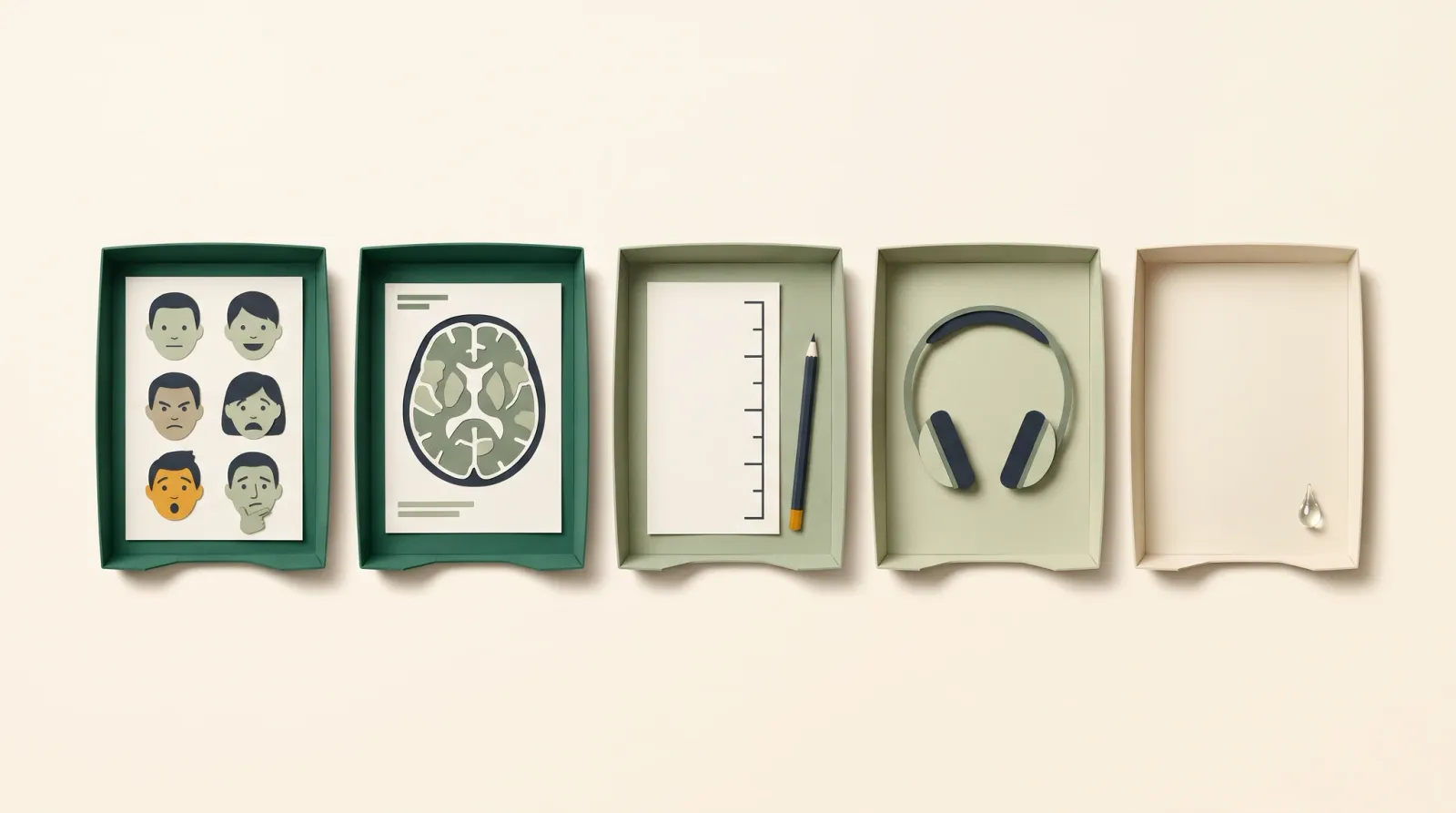
Nobody can say for sure why weed makes you cry, because we found no controlled study that has measured crying after THC. What research does show is that THC changes how the brain handles emotional cues, that dose and expectation can push the same high toward calm or distress, and that tears are a normal human response to feeling moved or overwhelmed. Put those together, and crying while high may seem a lot less strange.
Here is the fact worth sending to a friend. The largest survey of bad cannabis reactions we found asked 999 students about 26 different reactions. Anxiety and paranoia were each reported by about half of them. Crying was not on the list at all. LaFrance et al., 2020 So any confident line that starts “THC makes you cry because…” is a guess dressed up as science.
This lesson in High School stays inside that boundary. It covers what the studies measured, what they missed, and when tears are a reason to talk to someone.
Why does weed make me emotional?
THC acts on brain areas that handle threat, reward and emotional control, but the studies point in different directions. That conflict is the honest answer.
A common online claim says THC “turns off the logic centre” and lets emotion run unfiltered. No study in our research supports that sentence. Here is what the lab work actually found:
| Study | What people did | What THC changed |
|---|---|---|
| Phan et al., 2008 | Viewed threatening faces in a brain scanner (16 people) | Less amygdala response to threat |
| Bossong et al., 2013 | Matched emotional faces in a scanner (11 people) | Less response to negative content, more to positive |
| Ballard et al., 2012 | Rated emotional pictures and read faces | Harder to recognise fear and anger; ratings of emotional scenes did not change consistently |
| Gorka et al., 2016 | Tried to calm their reaction to upsetting images (78 people) | Same self-reported success, but more amygdala activity and weaker links to a control region |
| Freeman et al., 2018 | Listened to music in a scanner (16 cannabis users) | Weaker response in reward and emotion areas, yet more wanting to listen |
None of these studies measured tears. Most measured brain activity or how well people read faces, which is a different thing from how strongly you feel. Our lesson on how THC can make other people’s expressions harder to read goes deeper into the face studies.
The Gorka result is the most interesting one for crying. When people tried to settle an emotional reaction, THC loosened the coupling between the amygdala and a control area in the front of the brain. That could make feelings harder to steer. It is still a hypothesis about tears, not a finding.
Does weed make you more emotional or numb emotions?
It can do either, and pooled data lean slightly toward more unease, not more feeling. A 2026 review pooled 41 placebo-controlled trials with 1,020 people who rarely use cannabis. On average, THC raised feeling high, anxiety and tiredness, and lowered alertness and contentedness. Goodwin et al., 2026
So the popular idea that THC “turns up the emotional volume” does not hold as a general rule. The music study even found the brain’s response to songs went down while people’s wish to keep listening went up. Freeman et al., 2018 Feeling more drawn to something is not the same as the brain reacting more to it.
What the averages hide is the spread. Some people feel calmer. Some feel shaky. Some feel very open. Our guide to cannabis and anxiety covers the anxious end of that spread. If you tend to laugh instead, see why weed can also make you laugh; it is the same emotional swing from the other side.
Does the dose change how you feel?
In one small trial, yes, and in opposite directions. Researchers gave 42 healthy adults a placebo, 7.5 mg or 12.5 mg of oral THC before a standard lab stress task. The lower dose reduced distress after the task. The higher dose raised negative mood overall, before and during the tasks. Childs et al., 2017
That is a real flip, but read it with care. Each group had only 13 to 15 people, and the 2026 review found oral dose did not predict mood across many trials. Goodwin et al., 2026 This is evidence that dose can matter, not a rule that tells you a “safe” amount for your emotions. Edibles add a timing problem too; our edible timing guide explains why.
Do expectations and setting matter?
Expectations can change how anxious a high feels. In one study, 114 weekly smokers either got real cannabis or a placebo, and were either told it contained THC or told it did not. People who expected more impairment became more anxious, and both the drug and the expectation raised positive mood on their own. Metrik et al., 2011
Setting is less clear. A 2024 review of 29 studies on room, company, expectation and time of day found no significant pooled effect. The authors called the studies weak and said it is too early to say context does not matter. Ayyagari et al., 2024 So expectation has some direct support, and the wider “set and setting” idea is plausible but unproven. Our lesson on how expectation shapes a high covers the placebo side.
Why do people cry at all?
Tears are not a malfunction. They are one of the ordinary ways humans signal distress and ask for help, and researchers think that is why they evolved. Gračanin et al., 2018
Tears also come from good feelings. In studies of real weeping episodes and video clips, happy tears went with being moved, goosebumps and warmth in the chest, often after seeing closeness or kindness. Seibt et al., 2017 So crying while high is not automatically sadness.
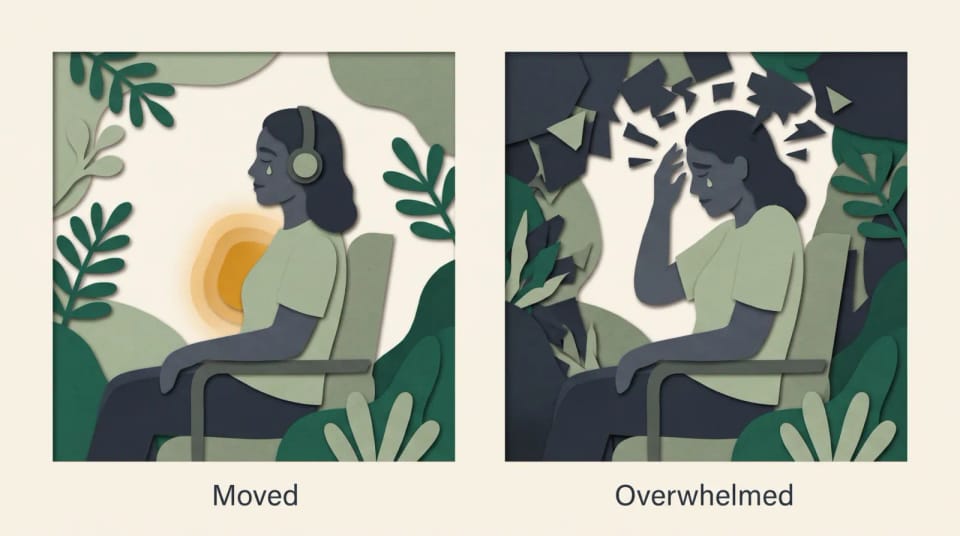
Tears follow two common roads, being moved and being overwhelmed. Studies of sober people describe both; no study has tested which one THC favours.
Crying also seems to help people settle, with a delay. In a lab study, people who cried at a sad film felt worse right after. They were back to their starting mood about 20 minutes later and felt better than baseline after 90 minutes. Gračanin et al., 2015 A review of the field reached a similar view: crying can soothe the crier as well as draw comfort from others. Gračanin et al., 2014 Those studies used sober people, so we cannot say the same timeline holds while high.
Is it normal to cry while high?
Some people say it happens to them, especially with music, but there is no measured rate. In a 2025 survey and interview study of 104 recreational users, one theme was “emotional openness, sensitivity, and regulation”. Participants described crying to music while high, and some described feeling fear with certain songs. Darakjian et al., 2025
That study relied on memory, and the authors warned that people’s beliefs about cannabis can shape what they report. It shows that some users connect crying with being high. It does not show how often it happens or why. Our lesson on why music hits differently when high covers more of the music research.
A plain reading fits all of the evidence above. THC changes how emotional signals are processed and controlled. Dose and expectation can tilt the mood. Music, memories and company can move anyone to tears. When those meet, the threshold for crying may drop. That is a reasonable explanation, but no experiment has tested it.
If you want to learn your own pattern, notes help more than guesses. Writing down the product, the amount, where you were and how you felt makes repeats easier to see, and the High IQ app has a place to track how a strain worked for you.
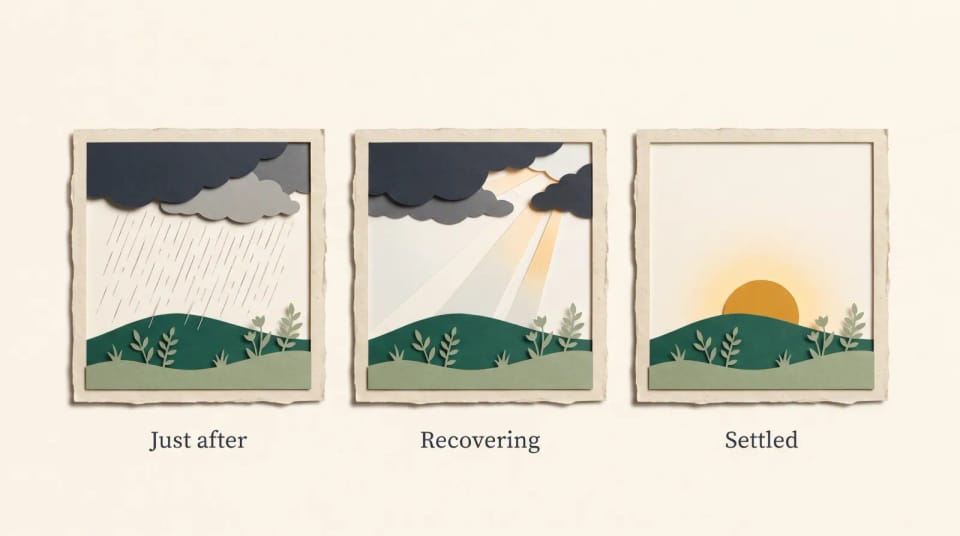
In a lab study of sober adults, people who cried at a film felt worse at first, recovered within about 20 minutes and felt better than baseline later. The timing has not been tested during a high.
Why do I cry more after a tolerance break or after quitting?
Mood changes after stopping regular use are well documented, but crying itself is not on the official symptom lists. Among US adults who used cannabis at least three times a week, common withdrawal symptoms included anxiety, irritability or hostility, poor sleep and depressed mood. Livne et al., 2019 A clinical review says symptoms usually start within one to two days, peak around days two to six, and some last three weeks or more. Connor et al., 2022
So feeling teary in the first weeks after a break is not mysterious, even though no study counts tears. Our guide to cannabis withdrawal and the tolerance break guide cover the timeline in more detail.
There is one more clue for people coming back after a break. In the student survey, people who used cannabis less often reported more adverse reactions overall. LaFrance et al., 2020 That was about reactions like anxiety, not tears, but it fits the common report that a high hits harder after time away.
When should you talk to a clinician?
Crying on its own is not a sign that something is wrong. It is worth talking to a doctor or mental health professional if:
- the tears come with panic, fear or paranoia that does not ease as the high wears off
- low mood or crying keeps going for days after you use, or after you stop
- you cry at nearly every session and it bothers you
- you feel hopeless, or have thoughts of hurting yourself
If you have thoughts of self-harm, call or text 988 in the US, or your local emergency number, right away. For a session that goes wrong in the moment, our guide on what helps when you are too high covers the basics, and cannabis paranoia and when to get help covers the fear side. If you feel detached and numb instead of overwhelmed, see feeling unreal while high.
Sources
-
Goodwin I, Oliver D, Chesney E, et al. “The subjective effects of Δ9-tetrahydrocannabinol: a systematic review and dose-response meta-regression.” Neuroscience and Biobehavioral Reviews. 2026. DOI: 10.1016/j.neubiorev.2026.106795
-
Childs E, Lutz JA, de Wit H. “Dose-related effects of delta-9-THC on emotional responses to acute psychosocial stress.” Drug and Alcohol Dependence. 2017. DOI: 10.1016/j.drugalcdep.2017.03.030
-
Metrik J, Kahler CW, McGeary JE, Monti PM, Rohsenow DJ. “Acute effects of marijuana smoking on negative and positive affect.” Journal of Cognitive Psychotherapy. 2011. DOI: 10.1891/0889-8391.25.1.31
-
Phan KL, Angstadt M, Golden J, Onyewuenyi I, Popovska A, de Wit H. “Cannabinoid modulation of amygdala reactivity to social signals of threat in humans.” Journal of Neuroscience. 2008. DOI: 10.1523/JNEUROSCI.5603-07.2008
-
Bossong MG, van Hell HH, Jager G, Kahn RS, Ramsey NF, Jansma JM. “The endocannabinoid system and emotional processing: a pharmacological fMRI study with Δ9-tetrahydrocannabinol.” European Neuropsychopharmacology. 2013. DOI: 10.1016/j.euroneuro.2013.06.009
-
Ballard ME, Bedi G, de Wit H. “Effects of delta-9-tetrahydrocannabinol on evaluation of emotional images.” Journal of Psychopharmacology. 2012. DOI: 10.1177/0269881112446530
-
Gorka SM, Phan KL, Lyons M, Mori S, Angstadt M, Rabinak CA. “Cannabinoid modulation of frontolimbic activation and connectivity during volitional regulation of negative affect.” Neuropsychopharmacology. 2016. DOI: 10.1038/npp.2015.359
-
Freeman TP, Pope RA, Wall MB, et al. “Cannabis dampens the effects of music in brain regions sensitive to reward and emotion.” International Journal of Neuropsychopharmacology. 2018. DOI: 10.1093/ijnp/pyx082
-
Darakjian L, Glassman H, Lo CY, Russo FA. “Exploring the interaction between cannabis and music.” Annals of the New York Academy of Sciences. 2025. DOI: 10.1111/nyas.70010
-
LaFrance EM, Stueber A, Glodosky NC, Mauzay D, Cuttler C. “Overbaked: assessing and predicting acute adverse reactions to cannabis.” Journal of Cannabis Research. 2020. DOI: 10.1186/s42238-019-0013-x
-
Ayyagari MM, Heim D, Sumnall HR, Monk RL. “Contextual factors associated with subjective effects of cannabis: a systematic review and meta-analysis.” Neuroscience and Biobehavioral Reviews. 2024. DOI: 10.1016/j.neubiorev.2024.105822
-
Gračanin A, Bylsma LM, Vingerhoets AJJM. “Is crying a self-soothing behavior?” Frontiers in Psychology. 2014. DOI: 10.3389/fpsyg.2014.00502
-
Gračanin A, Vingerhoets AJJM, Kardum I, Zupčić M, Šantek M, Šimić M. “Why crying does and sometimes does not seem to alleviate mood: a quasi-experimental study.” Motivation and Emotion. 2015. DOI: 10.1007/s11031-015-9507-9
-
Gračanin A, Bylsma LM, Vingerhoets AJJM. “Why only humans shed emotional tears: evolutionary and cultural perspectives.” Human Nature. 2018. DOI: 10.1007/s12110-018-9312-8
-
Seibt B, Schubert TW, Zickfeld JH, Fiske AP. “Interpersonal closeness and morality predict feelings of being moved.” Emotion. 2017. DOI: 10.1037/emo0000271
-
Connor JP, Stjepanović D, Budney AJ, Le Foll B, Hall WD. “Clinical management of cannabis withdrawal.” Addiction. 2022. DOI: 10.1111/add.15743
-
Livne O, Shmulewitz D, Lev-Ran S, Hasin DS. “DSM-5 cannabis withdrawal syndrome: demographic and clinical correlates in U.S. adults.” Drug and Alcohol Dependence. 2019. DOI: 10.1016/j.drugalcdep.2018.09.005
Key takeaways
- We found no controlled study that measured crying after THC, so no one can name a single cause.
- THC changes brain responses to emotional cues, but studies conflict on whether that means more feeling or less.
- In one small trial, a lower oral dose eased stress and a higher dose worsened mood; expectation also shifts anxiety.
- Tears come from being moved as well as from distress, and mood often recovers after crying in sober studies.
- Talk to a clinician if distress outlasts the high, keeps coming back or includes thoughts of self-harm.
FAQ
Why do I cry when I’m high but not sober?
No study has tested this directly. THC changes how the brain processes and regulates emotional signals, and a high often comes with music, memories or company that can move anyone. Those factors may lower the threshold for tears, but that remains a reasonable explanation, not a proven one.
Do true feelings come out when you’re high?
There is no evidence that a high reveals “true” or hidden feelings. Lab studies show THC alters emotional processing and can raise anxiety on average, which is different from uncovering what you really feel. Treat feelings that come up while high like any other feelings, and look at them again when sober.
Can weed make you sad?
It can. A pooled analysis of 41 trials found THC lowered contentedness and raised anxiety on average in people who rarely use cannabis. In one small trial, a higher oral dose raised negative mood, while a lower one eased stress.
Is crying while high a bad sign?
Not by itself. Crying is a normal human response, including to happy or moving moments. It is worth talking to a clinician if the tears come with lasting distress, panic, low mood for days, or thoughts of self-harm.



