Your First Dispensary Visit: What to Expect and What to Ask
Your first dispensary visit, demystified: what to bring, how budtenders help, reading labels, and how to ask for the effect you actually want.


So you are about to walk into a dispensary for the first time. Maybe a friend invited you, maybe legalization finally reached your state, maybe you are simply curious. Whatever brought you here, take a breath: you are not about to fail a test. There is no secret handshake, no dress code, and no quiz at the door. A dispensary is a retail shop staffed by people whose entire job is to help you find something you will enjoy. The most common feeling first-timers report afterward is “that was way easier than I expected.”
I am Professor High, and I have walked a lot of nervous newcomers through that frosted-glass front door. Let me demystify the whole experience — from the ID check to the checkout — and arm you with the right questions so you leave with a product that actually fits you, not just whatever was on the shelf.

What to Bring: Your Pre-Visit Checklist
Ninety percent of first-visit stress evaporates if you arrive prepared. Here is everything worth tucking into your pocket before you go:
- A valid, unexpired government ID proving you are 21+ (or your medical card, if you are visiting a medical dispensary). A driver’s license, state ID, passport, or military ID all work. Expired IDs are almost universally rejected, even if you are clearly an adult. Out-of-state IDs are usually fine at recreational shops.
- Cash — more than you think you need. Because cannabis is still federally illegal, most banks and card networks will not touch it. Many dispensaries are cash-only or charge a fee for debit. Most have an on-site ATM, but those carry their own surcharge, so bringing cash saves money.
- A debit card as backup. Some shops run debit through a “cashless ATM” system that rounds up to the nearest $5 or $10 and tacks on a fee. Handy in a pinch, but cash is king.
- A rough budget. A first purchase typically runs $30 to $80. Bring a little extra, because taxes get added at the register and can be steep — sometimes 20% to 40% depending on your state and city.
- Patience and a question or two. That is genuinely all the “homework” you need.
Leave at home: any expectation that you must already know what an “indica” is. Spoiler — that label tells you far less than the marketing implies, and we will get to why.
Walking In: The Check-In and the Two Counters
Most dispensaries have a small lobby or waiting area separated from the retail floor by a locked door. When you arrive, a greeter or security guard will ask for your ID. They scan or check it, and once you are cleared, you are buzzed into the main room. Do not be surprised if your budtender asks to see your ID a second time at the counter — it is a compliance requirement, not a sign they think you are lying.
Some shops, especially in states with both programs, run a medical counter and a recreational counter. The medical side serves registered patients (often with lower taxes, higher purchase limits, and access to higher-potency products), while the recreational side serves any adult 21+. If you are a recreational customer, you simply head to that side — no card needed. If you happen to hold a medical card, bring it; the savings can be real.
The retail floor itself usually looks like a cross between a jewelry store and a coffee bar: glass cases, tablets or menus, and friendly staff. Which brings us to the most valuable resource in the building.
The Budtender: Your Guide, Not a Salesperson
A budtender is the person behind the counter, and a good one is worth their weight in trichomes. Many are enthusiasts themselves, and the best ones treat their job like a sommelier treats wine — matching you to an experience rather than upselling the priciest jar.
Here is the mindset shift that changes everything: a budtender cannot read your mind, but they can read a lab report. The more specific you are about what you want to feel and what you have tried, the better their recommendation. “I want something that helps me unwind in the evening without knocking me out, and I have never smoked before” gets you a far better answer than “uh, what’s good?”
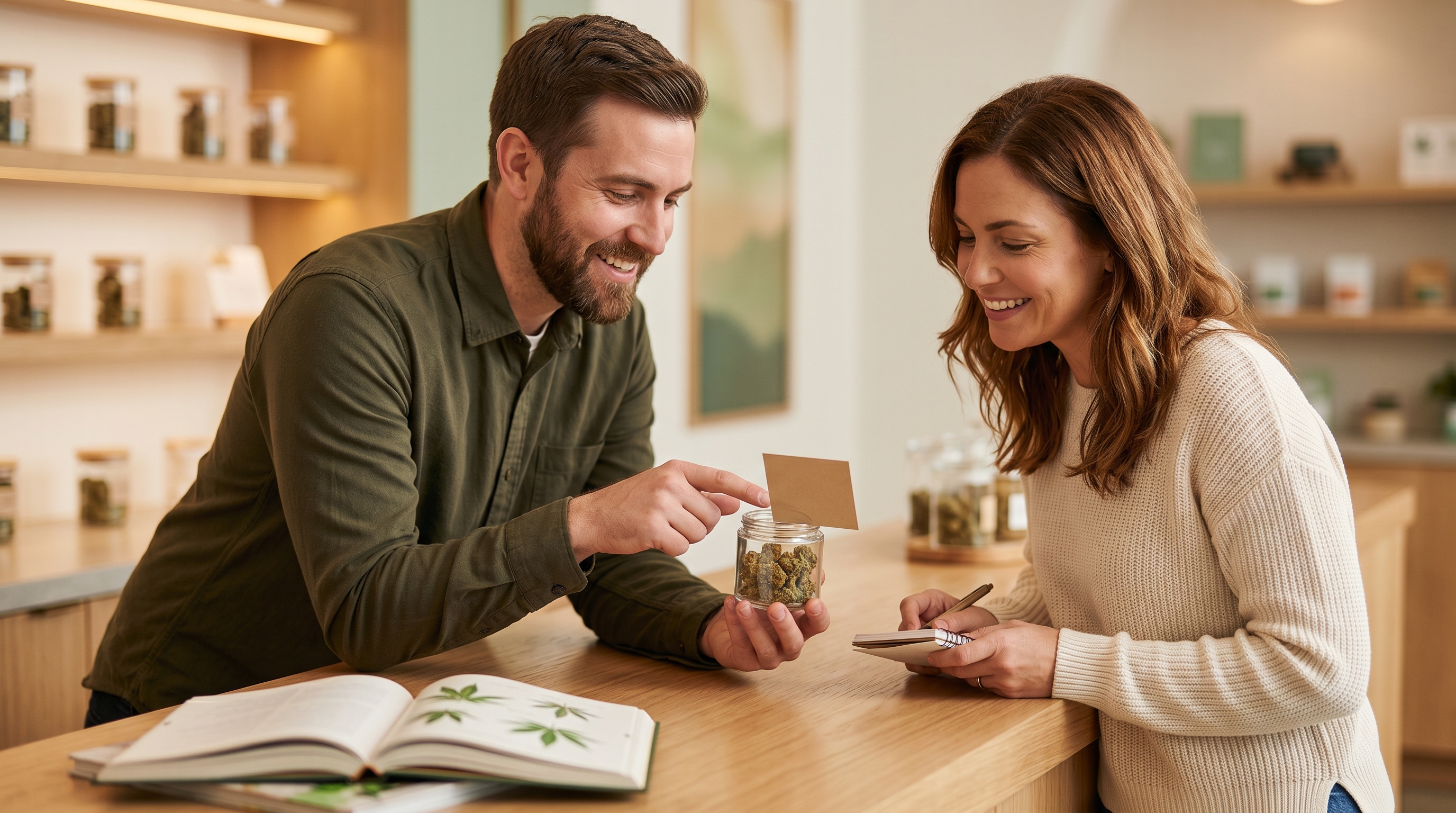
Questions to Ask Your Budtender
Print these on your mental notepad. You will not need all of them, but any one will mark you as a thoughtful customer:
- “I am brand new to cannabis. What is a gentle, low-dose place to start?” This invites a beginner-friendly recommendation at a forgiving potency.
- “What effect is this likely to give me — and how does its terpene profile create that?” A great budtender will talk about myrcene, limonene, or caryophyllene, not just “it’s an indica.”
- “How much should I take the first time, and how long until I feel it?” Critical for edibles, where onset can take up to two hours.
- “When was this batch harvested or packaged, and is the lab report (COA) available?” Freshness and third-party testing matter.
- “What is the total with tax?” So there are no surprises at the register.
- “If this is too strong or too mild, what should I try next time?” This signals you want to learn your own pattern over time.
Product Categories: A Quick Field Guide
Dispensary menus can feel overwhelming, so here is the lay of the land. Each format delivers cannabis differently, which changes onset, duration, and intensity.
- Flower — the classic dried buds, smoked or vaporized. Fast onset (minutes), effects last one to three hours. Most flexible for dialing in your dose.
- Pre-rolls — flower already rolled into a joint. Zero gear required, great for first-timers. See our pre-rolls vs. hand-rolled joints comparison if you are curious how they differ.
- Edibles — gummies, chocolates, capsules. Slow onset (30 minutes to two hours), long-lasting (four to eight hours), easy to overdo. Read our edible dosing for beginners guide before you bite.
- Vapes — cartridges and disposables. Fast onset, discreet, potent. Compare formats in our cart vs. disposable vape breakdown.
- Concentrates — wax, shatter, rosin, dabs. Very potent; not a beginner’s first stop. Our concentrates 101 guide explains the landscape.
- Tinctures — alcohol- or oil-based drops taken under the tongue. Precise dosing, moderate onset. See how to make cannabis tinctures.
- Topicals — balms, salves, lotions applied to skin. Generally do not produce a high. Learn how topicals work.
- Capsules and pills — pre-measured, discreet, edible-like onset. See cannabis capsules and pills.
If you are unsure which lane to pick, our guide on how to choose between flower, edibles, and concentrates walks through the trade-offs.
How to Read a Label (Without an Advanced Degree)
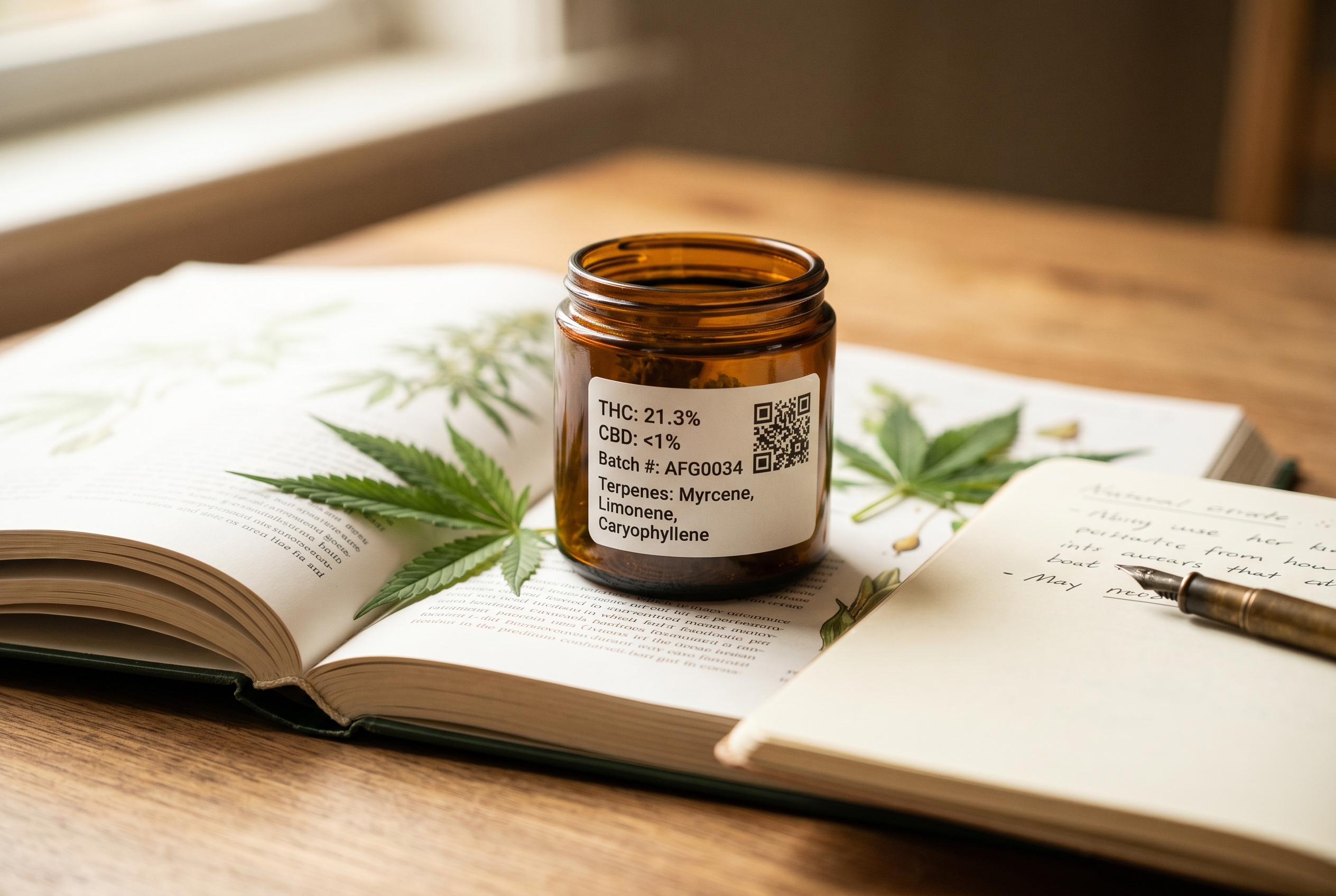
Every legal product carries a label packed with numbers. Here is what actually matters:
- THC % — the primary intoxicating cannabinoid. Flower commonly ranges 15% to 30%. Higher is not “better”; it is just stronger, and stronger is easier to overdo when you are new.
- CBD % — non-intoxicating, often described as balancing or mellowing. A product with meaningful CBD alongside THC is frequently a gentler ride for beginners.
- Terpenes — the aromatic compounds that may shape how the high feels. A label listing dominant terpenes (myrcene, limonene, linalool, pinene) tells you more about the likely experience than the indica/sativa tag does.
- Batch number and test/packaged date — fresher flower (under six months) preserves terpenes and potency. The batch number ties to the lab report.
- COA / lab testing — a Certificate of Analysis confirms the product passed safety testing for pesticides, mold, and heavy metals. Many labels include a QR code linking to it.
If you want to go deeper, our piece on how to read cannabis lab results is the full course. And for a contrarian take, why your dispensary labels are mostly wrong explains the limits of those tidy percentages.
Describe the Feeling, Not the Label — Our Way
Here is where I climb onto my favorite soapbox. For decades, dispensaries sorted everything into “indica” (relaxing) and “sativa” (energizing). The trouble is that those words describe a plant’s shape and growth history, not reliably how it makes you feel. Two “sativas” can produce opposite experiences. The science just does not support the binary — and we lay out the evidence in indica vs. sativa vs. hybrid: what science actually says and the broader indica vs. sativa myth.
What does correlate with experience is the terpene and cannabinoid profile. That is why at This Is Why I’m High we organize cannabis into High Families — effect-based groupings built on terpene chemistry rather than marketing folklore. When you ask your budtender for an effect and a terpene profile, you sidestep the whole indica/sativa muddle.
Use this translation table when you talk to your budtender:
- Want to mellow out and decompress? Ask about the Relax family, often led by myrcene. Strains like Granddaddy Purple or Northern Lights live here.
- Want a brighter, more social mood? Look toward the Uplift family with limonene and linalool. Think Blue Dream or Jack Herer.
- Want focused, creative energy? The Energy family leans on terpinolene and ocimene — see Green Crack or Durban Poison.
- Want physical comfort? The Relief family features caryophyllene, found in GMO Cookies and Bubba Kush.
- New and want something forgiving and even-keeled? The beginner-friendly Balance family — a great starting point, with options like Harlequin or ACDC.
- Want the full-spectrum, everything-working-together feel? That is the Entourage family, embodied by complex profiles like GG4.
You can also browse by the outcome you are chasing — for example our relaxation effect page or happy effect page — and bring those names to the counter. For more on why terpenes drive the experience, start with our cannabis terpenes guide.
Dispensary Etiquette: The Unwritten Rules
Dispensaries are friendly places, but a few customs keep things smooth:
- Do not touch or open the product unless invited. Many shops keep flower in sealed “pop-top” jars or display “sniff jars” specifically so you can smell without handling the goods.
- No photos of the staff, other customers, or sometimes the menu — privacy and security come first. Ask before snapping anything.
- Be patient and let people behind you breathe. Lines move, and rushing rarely helps you make a good choice.
- Tipping is appreciated. Budtenders often work for tips much like baristas; a dollar or two, or rounding up, is a kind gesture for good guidance.
- Have your ID and payment ready at the register to keep the line flowing.
None of these are make-or-break. Staff have seen every kind of nervous newcomer, and they are rooting for you.
Start Low, Go Slow — Then Track What Works
The single most important rule for any new consumer: start low and go slow. Take the smallest reasonable dose, wait long enough to feel the full effect (especially with edibles, which can take up to two hours), and only then decide whether you want more. You can always take more later; you cannot take less once it is in you. For a deeper framework, see our first-time cannabis users guide and best cannabis strains for beginners.
Here is the long game, though. Your first visit is a single data point. The real magic happens when you start noticing patterns — which terpene profiles leave you relaxed versus anxious, which dose hits your sweet spot, which time of day suits which family. That is exactly what the High IQ app is built for: log what you try, tag how it made you feel, and watch your personal map emerge over time. The strain name matters far less than how you respond to its chemistry — and the only way to learn that is to track it.
Professor High’s parting wisdom: Walk in curious, not anxious. Bring cash, bring your ID, and bring one good question. Ask for an effect and a terpene profile instead of a marketing label, start with the smallest dose that makes sense, and write down what happens. Do that, and your second visit will feel like coming home. 🍍
A quick, friendly reminder: cannabis affects everyone differently, and nothing here is medical advice. If you take medications or have a health condition, talk with a healthcare professional before you begin, and never drive impaired.
Key Takeaways
- Bring a valid 21+ photo ID and cash (more than you expect — taxes and ATM fees add up). A debit card is a useful backup.
- Expect an ID check at the door and again at the counter, and possibly separate medical and recreational lines.
- Your budtender is a guide, not a salesperson. Describe the effect you want and ask about the terpene profile, not just “indica or sativa.”
- Read the label: THC %, CBD %, terpenes, and the batch/test date matter more than the biggest number on the package.
- Mind your manners: do not touch the product, tipping is appreciated, and patience pays off.
- Start low and go slow — especially with edibles — and track what works so your next visit is even better.
Sources
- Leafly — What to know before you visit a dispensary for the first time: https://www.leafly.com/news/cannabis-101/how-to-buy-weed-dispensary
- PrestoDoctor — How to Read a Dispensary Label: Freshness, TAC and Terpenes: https://prestodoctor.com/content/education/how-to-read-a-dispensary-label-ultimate-guide-to-thc-tac-and-freshness
- LivWell — How to Read a Cannabis Product Label: https://livwell.com/blog/reading-cannabis-product-label
- The Clear Brands — A First-Timer’s Guide to Visiting a Dispensary: https://theclearbrands.com/blog/a-first-timers-guide-to-visiting-a-dispensary/
- Rollin Green NJ — What to Ask a Budtender: A Simple Guide for First-Time and Returning Visitors: https://rollingnj.com/blog/what-to-ask-a-budtender-a-simple-guide-for-first-time-and-returning-visitors-21/
- ATM Depot — Cannabis Rescheduling: What It Means for Dispensary ATM Operations: https://atmdepot.com/articles/cannabis-schedule-iii-atm-dispensary-operations/


