Cannabis-Infused Olive Oil: The Versatile Kitchen Staple
Make cannabis-infused olive oil at home: decarb, low-temp infusion, straining, storage, dosing math, and the best savory ways to use it.

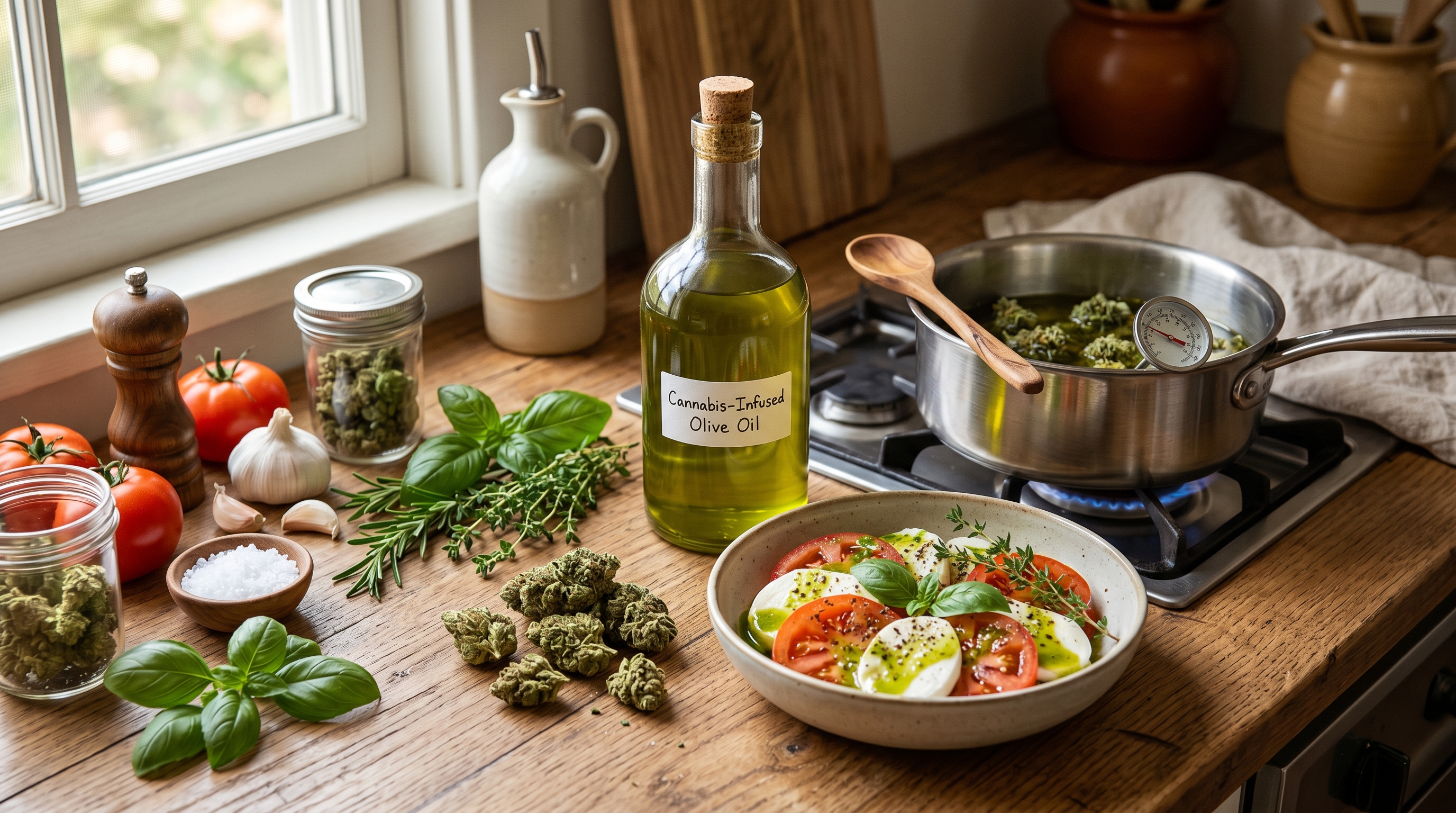
Coconut oil gets all the attention in the edibles world, and butter has its loyalists, but there’s a quieter workhorse sitting in nearly every kitchen already: olive oil. It stays liquid at room temperature, it tastes like dinner instead of dessert, and it slides into savory cooking with zero fuss. If you’ve ever wanted an infusion you can drizzle on roasted vegetables, whisk into a vinaigrette, or swirl into hummus without it firming up into a sad puck in the fridge, olive oil is your answer.
In this guide we’ll walk through why olive oil works so well for cannabinoids, the exact temperatures that protect your hard-won potency, and how to turn a jar of decarbed flower into a finishing oil you’ll actually reach for. As always with homemade edibles, treat the dosing numbers here as careful estimates, not lab results — your mileage will vary with your flower, your stove, and your tolerance.
Why Olive Oil Works for Cannabis
The whole reason any of this works comes down to a simple fact of chemistry: THC, CBD, and the rest of the cannabinoid family are fat-soluble. They don’t dissolve in water — that’s why steeping flower in plain hot water makes weak, grassy “tea” — but they happily bind to fat molecules. Olive oil is roughly 14 grams of fat per tablespoon, which makes it an excellent solvent for pulling those compounds out of plant material and holding onto them.
What sets olive oil apart from the usual edible fats is its texture and flavor profile. Where coconut oil and cannabutter solidify when chilled, olive oil pours straight from the bottle. That single property makes it the most versatile base for cold and low-heat applications: salad dressings, dips, drizzles, pesto, and any dish you’d normally finish with a glug of good oil. Its peppery, slightly bitter character also leans savory, so it disappears into Mediterranean cooking far more gracefully than a coconut-forward fat would.
If you’re still weighing your options, our breakdown of choosing the right fat for cannabis infusions compares olive oil against coconut, butter, MCT, and ghee side by side. The short version: pick olive oil when you want a liquid, savory, finishing-style infusion.
One important caveat up front — olive oil is a finishing oil, not a frying oil. Extra-virgin olive oil has a smoke point around 375°F (190°C), which is fine for the gentle infusion temperatures we’ll use, but high-heat searing or deep-frying will scorch the oil and degrade the cannabinoids you worked so hard to capture. We’ll come back to this in the uses section.
Step One: Decarboxylate First (Always)
Here’s the rule that separates a working infusion from a disappointing one: you must decarb before you infuse. Raw cannabis is loaded with THCA and CBDA — the acidic, non-intoxicating precursors. To unlock the THC and CBD that actually do something, you need to apply gentle heat over time to drive off a carboxyl group. That reaction is called decarboxylation, and skipping it is the single most common reason homemade edibles fall flat.
We’ve covered the chemistry in depth in decarboxylation explained, and there’s a practical walkthrough in how to decarb cannabis perfectly every time. The condensed version:
- Preheat your oven to 240°F (115°C). Low and slow is the goal — hotter ovens convert faster but burn off terpenes and risk degrading THC into CBN.
- Break your flower into roughly pea-sized pieces (don’t grind it to dust) and spread it on a parchment-lined baking sheet.
- Bake for 30 to 40 minutes, giving the tray a gentle shake halfway through. The flower should turn from bright green to a toasty light-brown.
- Let it cool. It’s now activated and ready to infuse.
A small detail worth mentioning: a little decarb time also evaporates moisture and some of the chlorophyll-adjacent compounds that contribute to the “weedy” taste people complain about. If flavor is a priority, our guide on how to make cannabis edibles without the weedy taste has more tricks.
Step Two: The Low-Temperature Infusion
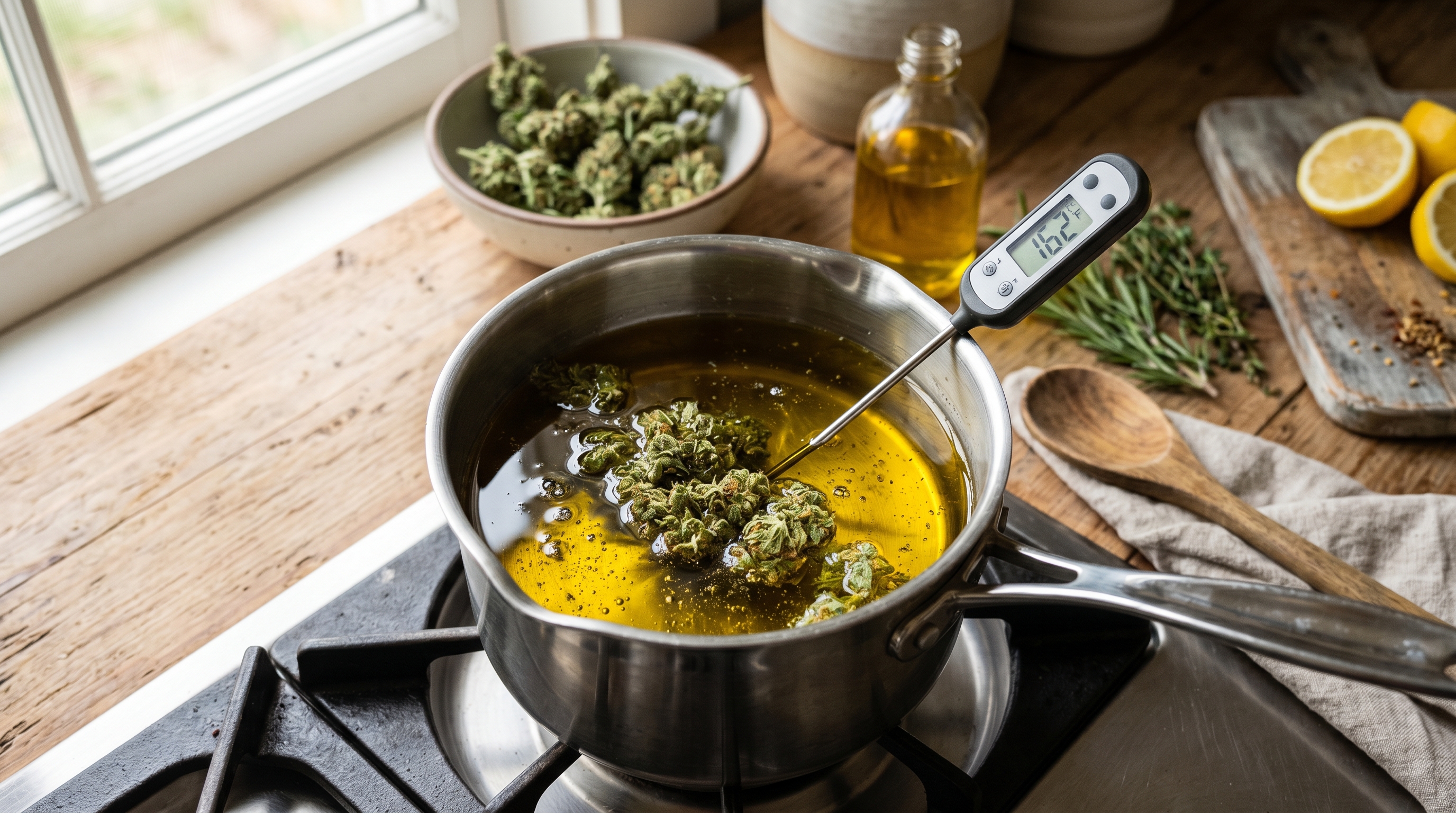
Now the fun part. The temperature window here matters more than almost anything else, so I’ll repeat the headline number: keep the oil between 160°F and 200°F (70–93°C) for the entire infusion. Hot enough to coax cannabinoids into the fat, cool enough that you’re not boiling away terpenes or breaking down THC. The smoke point isn’t the concern at these temps — degradation is.
Ingredients
- 1 cup (240 ml) extra-virgin olive oil — a mid-range bottle is perfect; save the prized stuff for finishing raw
- 7–14 grams decarboxylated cannabis flower — see the dosing note below for how to scale
- A pinch of sunflower or soy lecithin (optional — may help with emulsification and absorption)
Equipment
- A double boiler, slow cooker, or a heavy saucepan over your lowest burner setting
- A cooking thermometer (non-negotiable — guessing is how potency dies)
- Cheesecloth or a fine-mesh strainer
- A dark glass storage bottle or jar
Steps
- Set up your gentle heat. A double boiler or a slow cooker on “low” is the most forgiving setup because the water bath caps the temperature. If you’re using a saucepan directly, keep the burner on its lowest setting and watch the thermometer closely.
- Combine oil and flower. Add the cup of olive oil and your decarbed cannabis to the pot. Stir so all the plant material is submerged and coated.
- Hold the temperature. Bring the oil up to 160–200°F and keep it there for 2 to 3 hours, stirring every 20–30 minutes. Never let it bubble or sizzle aggressively — that’s your signal it’s too hot. If you see active bubbling, pull it off the heat for a minute and let it settle.
- Add lecithin if using. Stir in the pinch of lecithin during the last 30 minutes; some home cooks find it helps the cannabinoids disperse more evenly.
- Cool and strain. Let the oil cool until it’s warm but safe to handle. Pour it through cheesecloth or a fine-mesh strainer into your storage bottle. Press gently to recover oil clinging to the plant material — but don’t wring it out hard. Squeezing too aggressively releases chlorophyll, which adds bitterness and a stronger grassy taste.
- Bottle and label. Transfer to a dark glass container and label it with the date and your best potency estimate (math below). Future-you will thank present-you.
If you’d rather not babysit a pot for three hours, dedicated infusion machines automate the decarb-and-infuse cycle and hold temperature precisely. They’re an investment, but they take the guesswork out.
Step Three: Storage and Shelf Life
Infused olive oil is more delicate than the plain bottle in your pantry because cannabinoids are sensitive to light, heat, and oxygen. To keep it potent:
- Use dark glass. Amber or cobalt bottles block the light that degrades THC into CBN over time.
- Keep it cool and dark. A cupboard away from the stove is fine; the fridge is even better. Olive oil can cloud or thicken slightly when refrigerated, but it re-liquefies at room temperature within a few minutes.
- Aim to use it within about 2 months for peak potency and flavor. Stored well in a cool, dark spot, it can last longer, but cannabinoid content gradually fades.
- Label everything. Date, strain, and estimated dose per teaspoon. This is the difference between a controlled experience and a guessing game.
For the bigger picture on how infused fats and finished edibles hold up over time, see our cannabis edibles shelf-life and storage guide.
Dosing: The Math (and Why It’s an Estimate)
This is where homemade edibles demand respect. You can’t taste potency, and edibles famously hit harder and later than smoking, so a careful estimate beats a confident guess every time. Here’s a simplified way to ballpark your dose.
Say you use 7 grams of flower that tests at 20% THC. That’s a theoretical ceiling of:
- 7 g × 1,000 = 7,000 mg of flower
- 7,000 mg × 0.20 = 1,400 mg THC before any losses
Real-world infusions never capture 100%. Decarb conversion and infusion efficiency mean you’ll realistically retain somewhere in the neighborhood of 60–70% — so estimate closer to 840–980 mg THC in your batch. Divide by your finished volume:
- 1 cup of oil = 48 teaspoons
- ~900 mg ÷ 48 ≈ ~19 mg THC per teaspoon (a rough estimate)
That’s a meaningful dose, so start low. A common beginner-friendly serving is 2.5–5 mg, which may mean starting with just a fraction of a teaspoon — adjust based on how you respond. And because edible onset tends to be slow, the golden rule applies: wait before redosing. Our guide on edible dosing for beginners and the 2-hour rule explains why patience may help you avoid the dreaded over-do-it spiral, and edible dosing math for home cooks walks through the calculations in more detail.
Professor High says: The only way to truly know your batch’s strength is to test it. If you can, a home potency tester removes the guesswork — see how to test homemade edible potency at home. Otherwise, treat your first teaspoon as a calibration experiment, not a meal.
The flower you choose also shapes the experience, not just the strength. Cannabinoids drive potency, but terpenes color the ride. A myrcene-rich, relaxing strain like Granddaddy Purple or Bubba Kush leans toward the couch — these sit in the Relax High family. If you’d rather stay social and bright over dinner, a limonene-forward pick like Super Lemon Haze or Tangie from the Uplift High family is a better match. The terpene limonene brings citrusy mood-lift, myrcene leans sedative, and caryophyllene — found in peppery strains like Girl Scout Cookies — adds a spicy note that, conveniently, pairs beautifully with savory food.
How to Use Your Infused Olive Oil
Remember the golden rule: finish, don’t fry. Olive oil’s cannabinoids are happiest when they aren’t subjected to high, prolonged heat, so the best uses keep things cool or warm — not screaming hot.
Drizzle It
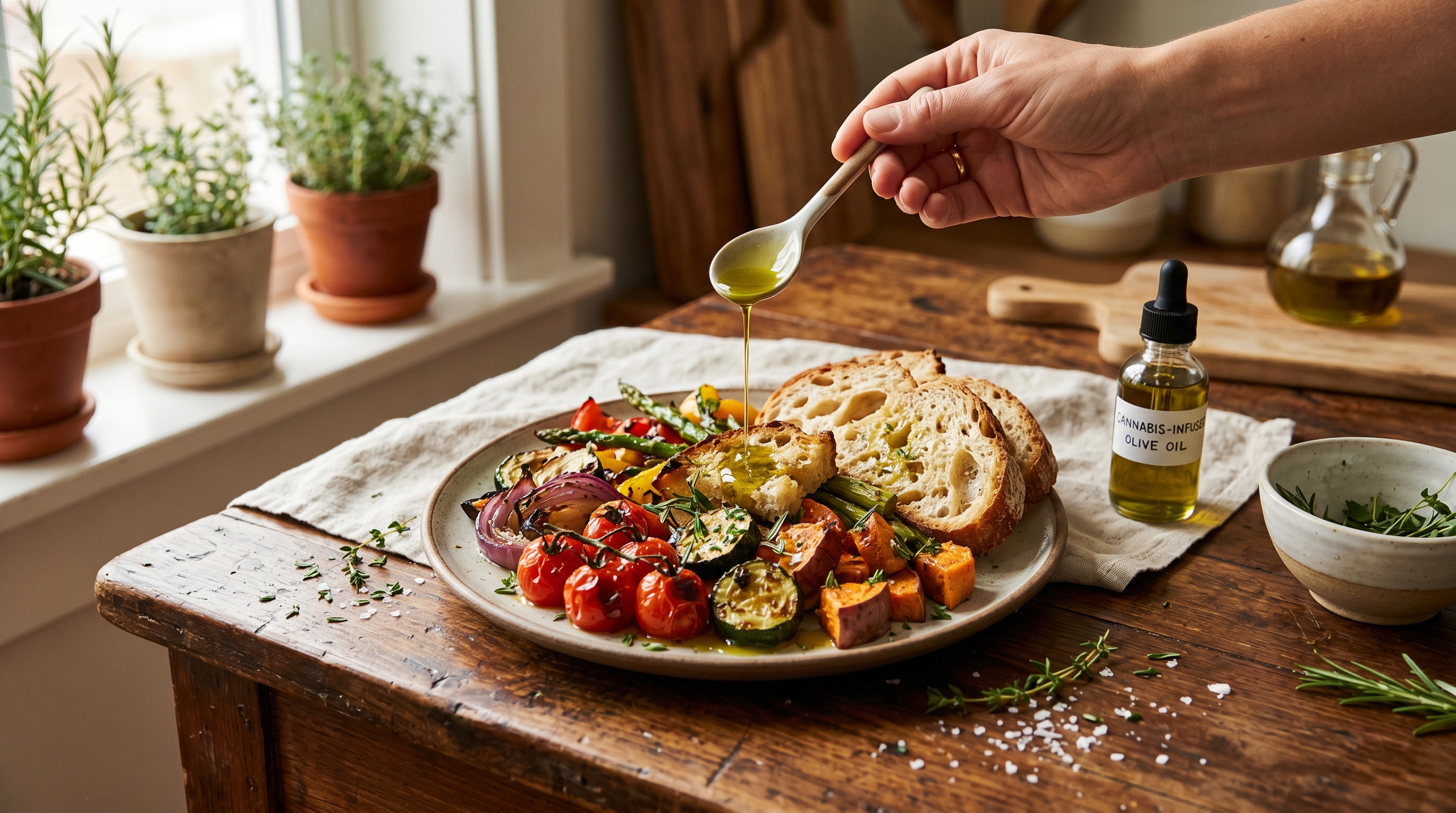
The simplest move. Spoon it over roasted vegetables, grilled bread, a finished bowl of soup, or a plate of pasta after cooking. The residual warmth of the dish is plenty; the oil delivers flavor and effect without frying off potency.
Whisk It Into Dressings
Olive oil is the backbone of vinaigrette, and infusing it makes per-serving dosing easy. Try our cannabis vinaigrette and salad dressing recipe or the creamier infused ranch dressing. A mustard-emulsified vinaigrette is one of the most reliable low-heat edibles you can make.
Blend It Into Dips and Sauces
Swirl it into hummus, baba ganoush, or our infused guacamole. It’s also the literal foundation of cannabis pesto — just use it in place of the regular olive oil the recipe calls for.
Toss It With Pasta
A garlic-and-chili infused-oil aglio e olio is hard to beat. You can also stir a measured spoonful into a finished marinara or pasta sauce right before serving, off the heat.
Use It as a Dip
Pour a little into a shallow bowl with cracked pepper, flaky salt, and a splash of balsamic for crusty bread. Low effort, high reward.
What you should avoid is using it as your primary cooking fat for searing, sautéing over high heat, or deep-frying. For those jobs, reach for your regular oil and add the infused oil at the end. New to the kitchen side of all this? Start with cannabis cooking 101, which covers the fundamentals before you commit a whole batch.
A Few Final Tips
- Strain selection is flavor selection. Earthy, peppery strains play nicely with savory food; intensely fruity strains can clash. A balanced, beginner-friendly option from the Balance High family — think a mellow profile like Harlequin — keeps things easy.
- Mind the chlorophyll. Gentle straining and a clean decarb both reduce the grassy taste.
- Track what works. Because every batch is a little different, jot down the flower, the dose per teaspoon, and how it felt. Over a few batches you’ll dial in your personal sweet spot far better than any label could promise.
Cannabis-infused olive oil isn’t flashy, but that’s exactly the point. It’s the dependable, do-everything bottle that turns weeknight cooking into something a little more interesting — as long as you respect the heat, mind your dose, and let the oil do what olive oil does best: finish a dish beautifully.
Key Takeaways
- Olive oil works because cannabinoids are fat-soluble — and it stays liquid, which makes it ideal for dressings, dips, and drizzles.
- Decarb first at 240°F (115°C) for 30–40 minutes. No decarb means no effect.
- Infuse low: 160–200°F for 2–3 hours. Never let it bubble aggressively, or you’ll degrade your potency.
- Strain gently and store in dark glass, cool and out of light, for up to about 2 months of peak quality.
- Treat dosing as an estimate. Start with a small fraction of a teaspoon, wait, and test your batch if you can.
- Finish, don’t fry. Use it off the heat to protect both flavor and cannabinoids.
Sources
- Find Out How to Make Cannabis-Infused Olive Oil — Royal Queen Seeds
- A Complete Guide to Cannabis Olive Oil — Wallflower Cannabis House
- The Complete Guide to Cannabis Oil Infusions — Feel State
- How to Make Cannabis-Infused Cooking Oil — International Highlife
- What Oil Is Best for Cannabis Infusion? — Sorting Robotics
This article is for educational purposes only and is not medical advice. Homemade edible potency is an estimate, not a guarantee — start with a low dose, wait, and consume responsibly where legal.


