Cannabis Vinaigrette: An Infused Salad Dressing Recipe
Make a cold, no-heat cannabis vinaigrette with infused olive oil. Per-tablespoon dosing math, mustard emulsion tips, uses, and fridge storage.

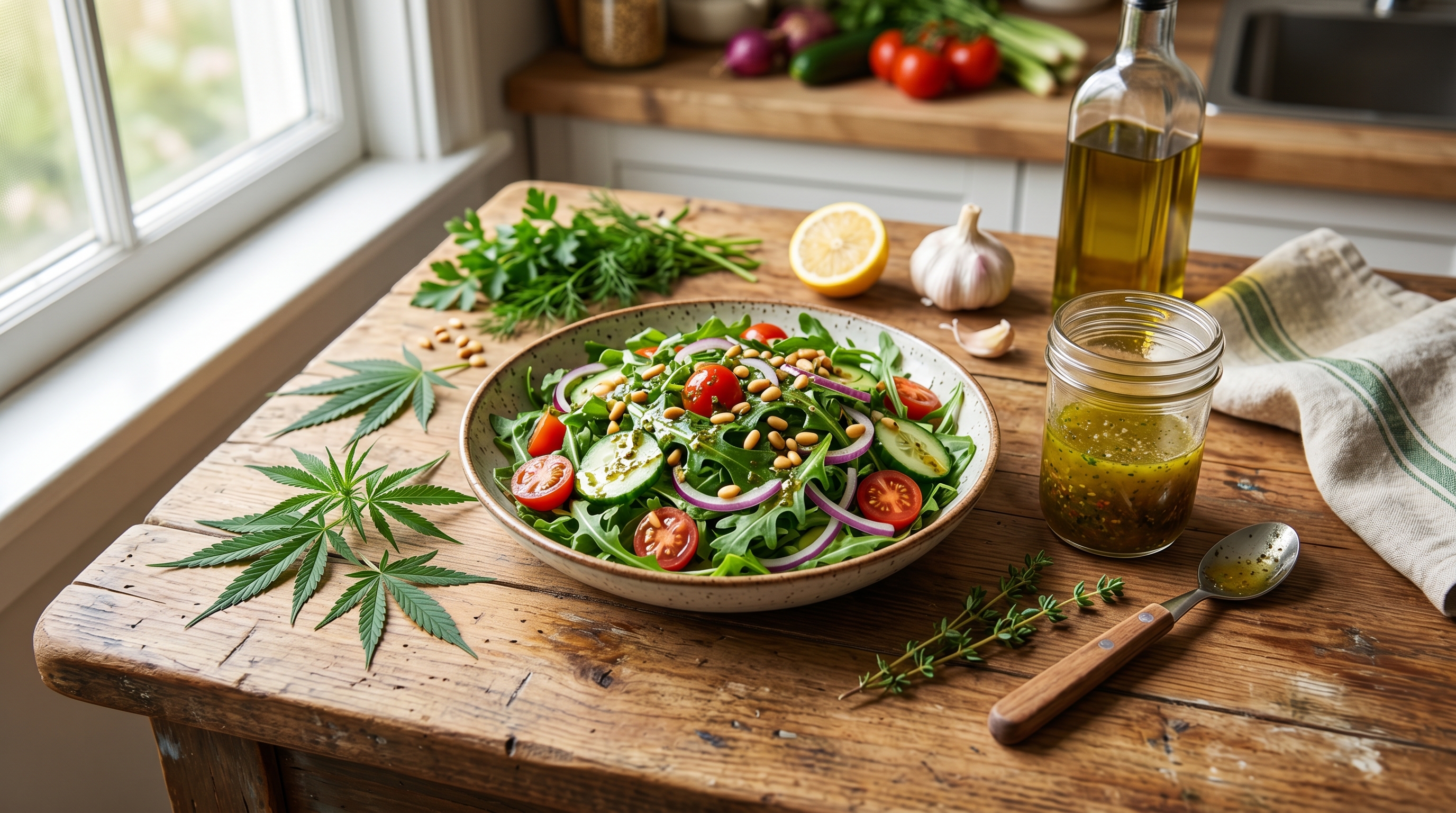
Most infused recipes ask you to bake, simmer, or melt something. A vinaigrette asks you to do almost the opposite: shake a jar. That makes cannabis salad dressing one of the friendliest ways into homemade edibles I know of. All the hard chemistry happens before the dressing comes together.
Here’s the catch, though, and it’s a real one. A vinaigrette is oil and acid fighting to stay apart. Your cannabinoids live entirely in the oil half. Get lazy with the mixing and one tablespoon delivers a sleepy evening while the next barely registers. So this guide is really two recipes in one: a good dressing, and a dosing system that keeps every spoonful honest.
Let me walk you through why the format works, the one mistake that wrecks consistency, and the per-tablespoon math that turns “some weed dressing” into a measured, repeatable dose.
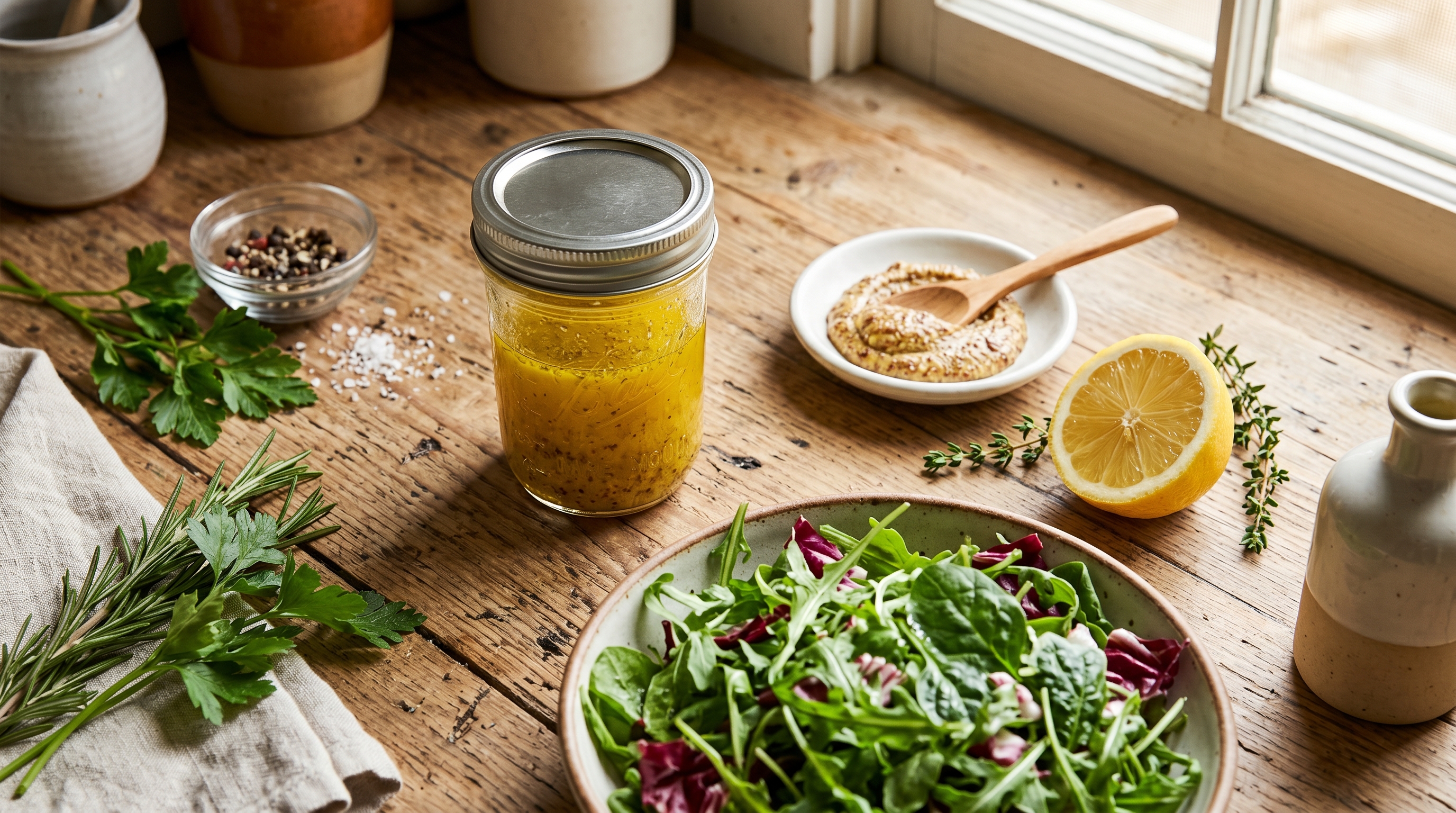
Why a Vinaigrette Is a Great Format for Infused Cooking
THC, CBD, and the rest of the cannabinoid family are fat-soluble. They bind to fats and oils, not to water. That’s why nearly every edible starts with an infused fat like cannabutter or an infused oil. A classic vinaigrette is built on oil, so the carrier is already part of the recipe. You’re not bending the format to fit cannabis. Cannabis fits the format.
Olive oil is the natural choice here, though it’s worth understanding the tradeoffs when choosing the right fat for cannabis infusions. Olive oil brings flavor and body; a neutral oil like MCT or avocado disappears into the background and lets the herbs lead. Either works. The cannabinoids don’t care which fat carries them, only that there’s enough fat to hold them.
The second reason I love this format: no heat. Once your oil is infused and the cannabinoids are activated, you never have to cook the dressing. You whisk cold ingredients together and serve. That sidesteps the most common edible anxiety — “did I just torch my THC?” — because the heat-sensitive step is already behind you.
If this is your first time turning flower into food, read Cannabis Cooking 101 first. It covers the workflow this recipe assumes you already understand.
Decarb First, Then Keep It Cold
Raw cannabis is barely psychoactive. The plant makes THCA and CBDA, acidic precursors that only turn into the THC and CBD you want when heat knocks a carbon atom loose. That reaction is called decarboxylation. Skipping it is the number-one reason homemade edibles do nothing. If the term is new to you, decarboxylation explained is the foundation for everything below.
The standard approach: grind your flower, spread it on a lined tray, and bake at roughly 240°F for 30 to 40 minutes until it’s fragrant and lightly toasted. Then you infuse that activated flower into oil over low heat and strain it. That infused oil is your one and only “hot” ingredient.
Here’s the key insight for a vinaigrette: because decarboxylation already happened, the finished dressing needs no further heat. The potency is locked into the oil. Cooking the dressing would only scorch the delicate terpenes that survived infusion. Those are the aromatic compounds like limonene and linalool that give your oil its character. Cold keeps them intact. So this is a no-heat recipe by design, not by accident.
If you’d rather skip the psychoactive punch entirely, the same method works with CBD-only strains for a dressing that’s all calm, no high.
The One Real Challenge: Cannabinoids Hide in the Oil
This is the part most recipe blogs gloss over, and it’s the part that actually matters.
A vinaigrette is an emulsion: tiny droplets of oil suspended in acid (vinegar or citrus). Emulsions are unstable. Left alone, the oil floats back to the top and the acid sinks. Every milligram of THC and CBD lives in the oil phase. So that separation isn’t just cosmetic. The cannabinoids ride with the oil straight to the top of the jar.
The consequence is real: if your dressing has separated and you spoon from the top, you get a heavy dose. Spoon from the bottom and you get almost nothing. Two people sharing the same salad can have completely different nights.
Two habits fix this:
- Emulsify well at assembly. A teaspoon of Dijon mustard is the classic stabilizer — it contains natural emulsifiers that help oil and acid stay married longer. Whisk vigorously, or use a small blender or jar-and-shake method to drive the oil into fine droplets.
- Shake before every single serving. Even a great emulsion drifts apart in the fridge over a few hours. Treat “shake the jar” as a non-negotiable step, the same way you’d shake a tincture. Think of it as the home-cook version of testing edible potency at home. Instead of measuring, you’re making sure the dose is spread evenly before it hits the plate.
Get these two right and your per-tablespoon math (next section) actually holds up. Skip them and the math is fiction.
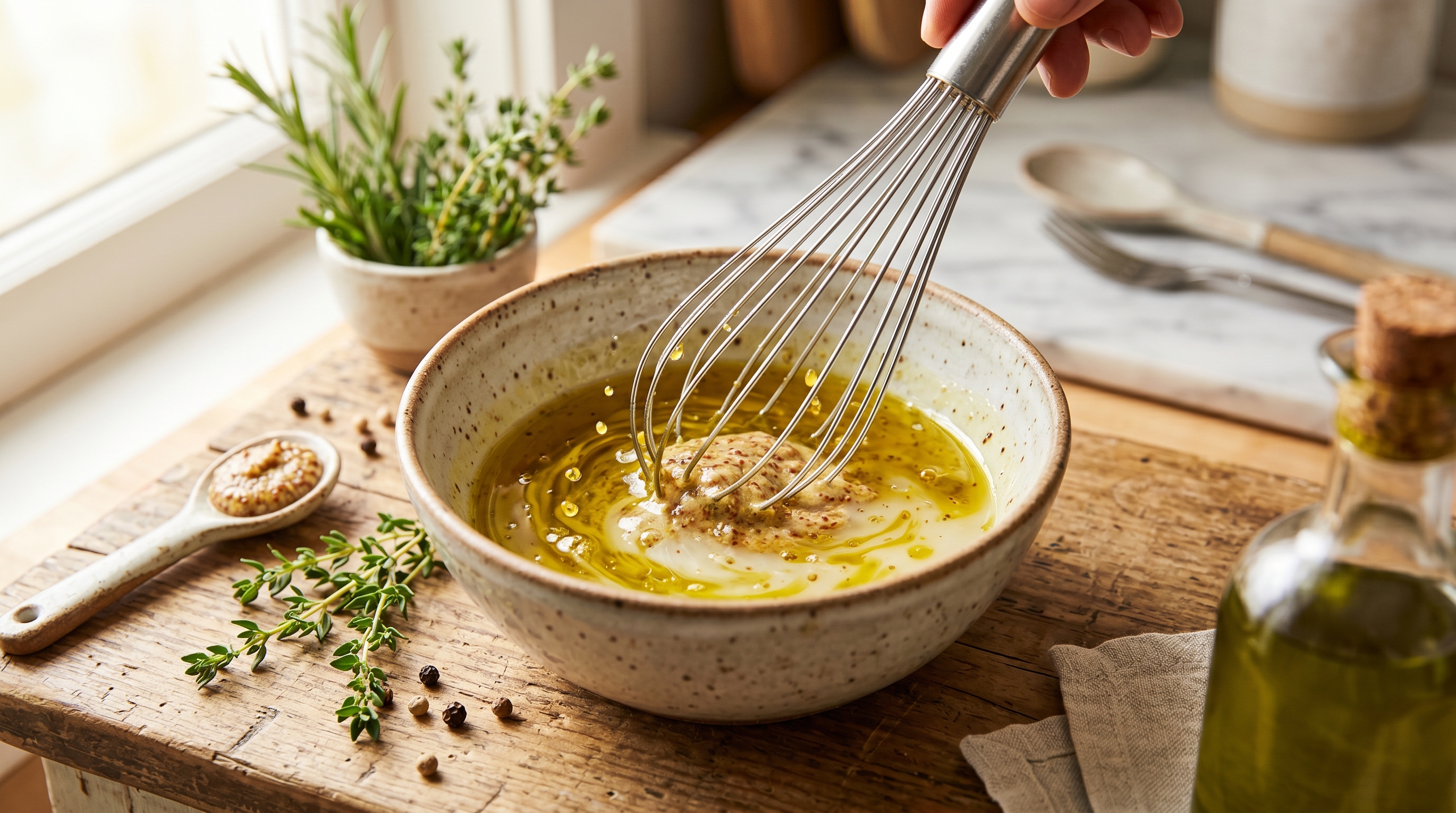
Ingredients and Equipment
Makes about 1 cup (16 tablespoons) of dressing.
For the vinaigrette:
- 1/2 cup cannabis-infused olive oil (or split with plain olive oil to lower the dose — see math below)
- 1/4 cup acid: red wine vinegar, white balsamic, or fresh lemon juice
- 1 teaspoon Dijon mustard (for emulsification)
- 1 teaspoon honey or maple syrup (balances the acid)
- 1 small garlic clove, finely grated
- Salt and freshly cracked pepper to taste
- Optional: a pinch of dried oregano, fresh herbs, or a few drops of plain olive oil to soften the cannabis flavor
Equipment:
- A whisk, small blender, or a mason jar with a tight lid
- Measuring spoons (accuracy matters more here than in a normal dressing)
- An airtight jar for storage
A quick flavor note: infused olive oil can taste assertively “green.” If that’s not your thing, making edibles without the weedy taste covers tricks — strong acid, herbs, and a touch of sweetness all help, and a vinaigrette already has all three.
Step-by-Step
- Confirm your oil is decarbed and infused. This recipe does not activate raw flower. Your infused olive oil should already be made, strained, and ideally lab-tested or carefully estimated for potency.
- Add the base flavors. In a bowl or jar, combine the vinegar (or lemon juice), Dijon mustard, honey, grated garlic, salt, and pepper. Whisk until the mustard fully dissolves.
- Add the oil slowly. This is the emulsion step. While whisking constantly, drizzle the infused olive oil in a thin, steady stream. Pour too fast and the emulsion “breaks” — the oil and acid refuse to combine evenly. If you’re using a jar, add everything and shake hard for 30 to 45 seconds instead.
- Taste with plain dressing logic, not dose logic. Adjust salt, acid, and sweetness as you would any dressing. Don’t taste-test by eating spoonfuls to “feel it out” — that’s how people accidentally overdose. Trust the math.
- Serve immediately, or refrigerate. Shake or re-whisk right before dressing the salad so the dose is evenly distributed.
Per-Tablespoon Dosing Math
This is the whole point. A dressing you can’t dose is just risky oil.
Step 1 — Know your oil’s potency. Say you infused 1/2 cup (about 8 tablespoons) of olive oil and your batch contains roughly 200 mg of THC total. That’s 25 mg THC per tablespoon of oil. As a real-world anchor, one published recipe estimates about 29 mg THC per tablespoon of oil made from a 20% THC strain [Food, 2023]. (For a worked example of how this number comes from flower weight and THC percentage, see edible dosing math for home cooks.)
Step 2 — Account for dilution. The full recipe is 1 cup (16 tablespoons) of finished dressing, but only 8 of those tablespoons are infused oil:
- Total THC in the batch: 8 tbsp oil × 25 mg = 200 mg THC
- Total dressing volume: 16 tablespoons
- Per tablespoon of dressing: 200 mg ÷ 16 = 12.5 mg THC per tablespoon
Step 3 — Match it to a real dose. A standard edible serving is around 5 to 10 mg of THC [Jane, 2023], and beginners are often steered toward 2.5 to 5 mg. At 12.5 mg per tablespoon, a single tablespoon is already a moderate-to-strong dose for many people. To land in beginner territory, either use half a tablespoon of dressing per salad, or cut your infused oil with an equal amount of plain olive oil when you build the batch — which halves the per-tablespoon dose to about 6.25 mg.
New to edibles? Anchor on edible dosing for beginners and the cannabis beginner’s dosing chart. The golden rule still applies: start low, then wait. Edibles hit harder and slower than smoking, and the high can last hours longer than you expect. Don’t add more dressing just because the first serving “isn’t working yet.”
The gap between a microdose drizzle and a heavy pour is huge. That’s why it pays to understand high-dose vs. microdose edibles. The dressing format makes both possible. You just have to commit to a measured tablespoon and a well-shaken jar.
Uses and Pairings
A cannabis vinaigrette is far more versatile than its name suggests:
- Salads, obviously — bitter greens, grain bowls, or a simple arugula-and-shaved-parmesan plate
- A marinade for chicken, tofu, or vegetables before grilling (note: marinating raw with infused oil and then cooking will expose the oil to heat — use plain oil for the cook and finish with infused dressing instead)
- A finishing drizzle over roasted vegetables or a warm grain dish, added after cooking to keep it cold
- A dip for crusty bread
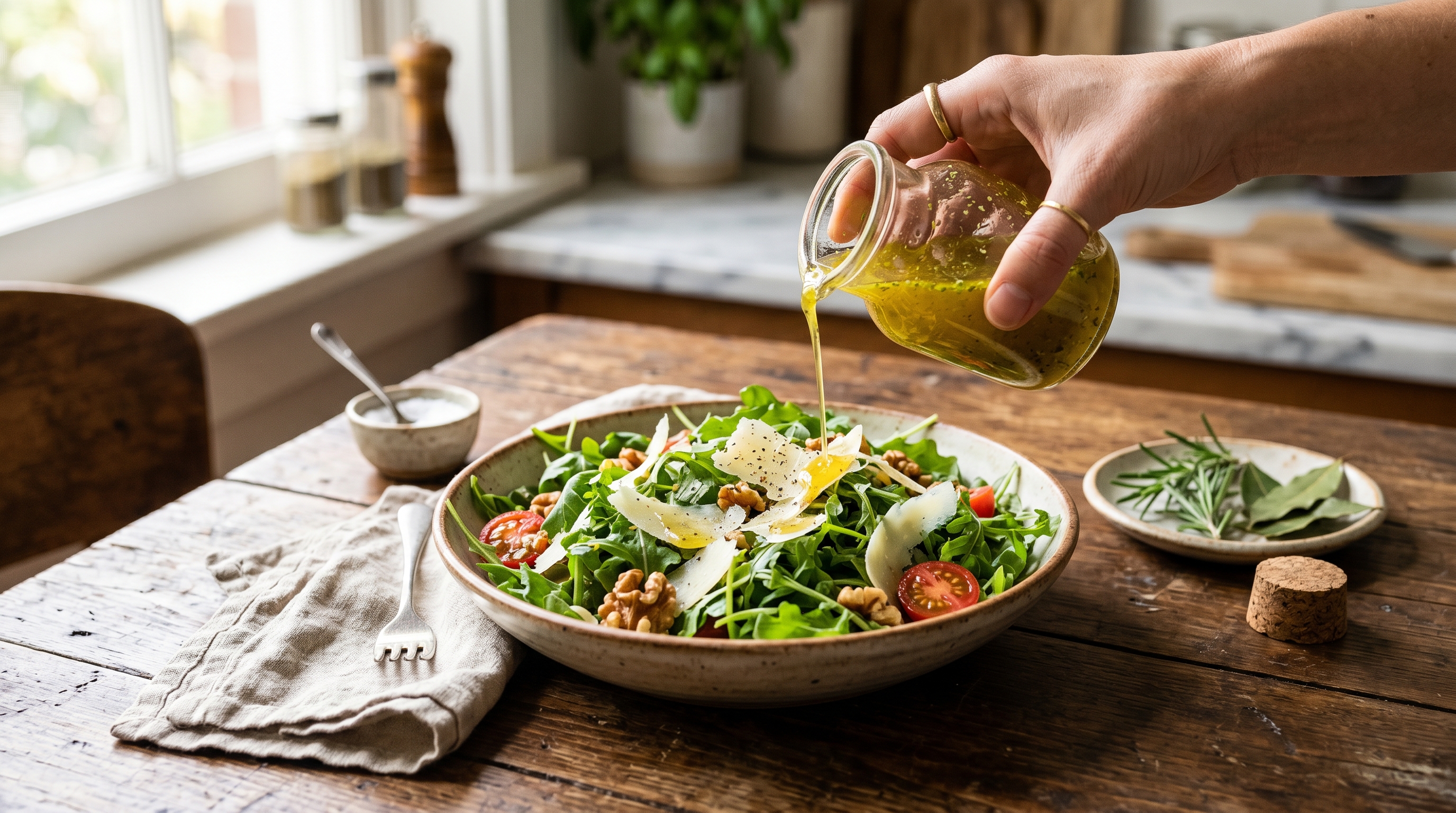
The cold-finish principle is the through-line: treat your infused vinaigrette like a garnish you add at the end, never something you cook with. If you enjoy this no-heat, savory approach, you’ll likely also want to try infused guacamole, cannabis pesto, and a creamy infused ranch dressing — all built on the same fat-as-carrier logic. For warmer dishes, an infused marinara follows similar dosing principles, and on the sweet side there’s salted caramel sauce.
Storage
Treat your finished vinaigrette like any infused product: airtight, cold, and dated.
- Store in a sealed jar in the refrigerator for up to 1 to 2 weeks [Emily, 2020]. Fresh garlic and citrus shorten the window; vinegar-based versions last longer.
- The oil will solidify and the dressing will separate in the cold — both are normal. Let it sit at room temperature for a few minutes, then shake hard before serving.
- Label the jar with the date and the per-tablespoon dose. Future-you will not remember.
- Keep it clearly marked and out of reach of children, guests, and anyone who didn’t sign up for an infused salad. Standard edible storage and shelf-life rules apply.
Frequently Asked Questions
Do I need to heat the dressing to activate the cannabis? No. Activation (decarboxylation) happens when you make the infused oil. The assembled dressing is cold by design — heating it would only risk degrading flavor and terpenes.
Why does my dose feel inconsistent between salads? Almost always because the dressing separated and you served unevenly. Cannabinoids concentrate in the oil layer that floats to the top. Shake or re-whisk before every serving.
Can I use store-bought infused oil? Yes, and it makes dosing easier because the potency is usually labeled. Just plug the labeled mg-per-tablespoon into the math above.
What if I don’t know my oil’s exact potency? Estimate conservatively, dose small, and wait the full onset window before deciding it’s weak. When in doubt, treat homemade oil as stronger than you think. Testing potency at home can narrow the guesswork.
Is this a good first edible to try? It can be, because there’s no baking and the dose is adjustable per spoonful. If it’s truly your first time with any cannabis, read the first-time user’s guide first and start at half a tablespoon or less.
Can I make a beverage version of this idea? Vinaigrettes don’t translate to drinks (oil and water don’t mix without emulsifiers), but the same fat-carrier challenge shows up there too — see infused beverages at home.
Key Takeaways
A cannabis vinaigrette rewards two things: a properly decarbed, infused oil and the discipline to shake before you serve. Here’s the short version:
- Decarb first, then go cold. Your oil is the only hot step. The finished dressing never needs heat.
- The dose lives in the oil. Cannabinoids ride the oil phase, so a separated jar gives uneven doses. Emulsify with mustard and shake every time.
- Do the math once. Total batch mg divided by total tablespoons gives your per-tablespoon dose. Cut with plain oil to go lower.
- Start low and wait. A tablespoon can be a strong dose. Don’t chase it with more before the onset window passes.
- Store it smart. Airtight, refrigerated, labeled with the date and dose, and out of reach of anyone who didn’t opt in.
Keep it cold, keep it labeled, and keep it honest. — Professor High
Sources
- Emily Kyle Nutrition — “Zesty Cannabis-Infused Lemon Vinaigrette” (dosing-per-serving math, Dijon for emulsification, refrigerated storage and shaking): https://emilykylenutrition.com/cannabis-infused-lemon-vinaigrette/
- Jane & Mary — “An Easy To Follow Guide For Infusing Salad Dressing With THC” (5-10 mg per-serving guidance, slow oil drizzle to avoid breaking the emulsion, start-low advice): https://janeandmary.com/salad-dressing/
- Food & Wine — “Cannabis-Infused Olive Oil” (decarboxylation requirement, ~29 mg THC per tablespoon at 20% strain, refrigerate and use within 30 days): https://www.foodandwine.com/cannabis-infused-olive-oil-6420607
- Ardent Cannabis — “Cannabis-Infused Salad Dressing Recipes” (infused olive oil as the dressing base, ingredient ratios): https://ardentcannabis.com/2021/01/20/cannabis-infused-salad-dressings/


