How Cannabis Fuels Musical Creativity: The Neuroscience
Discover the neuroscience behind cannabis and musical creativity — from CB1 receptors to the default mode network, terpenes, and creative flow.

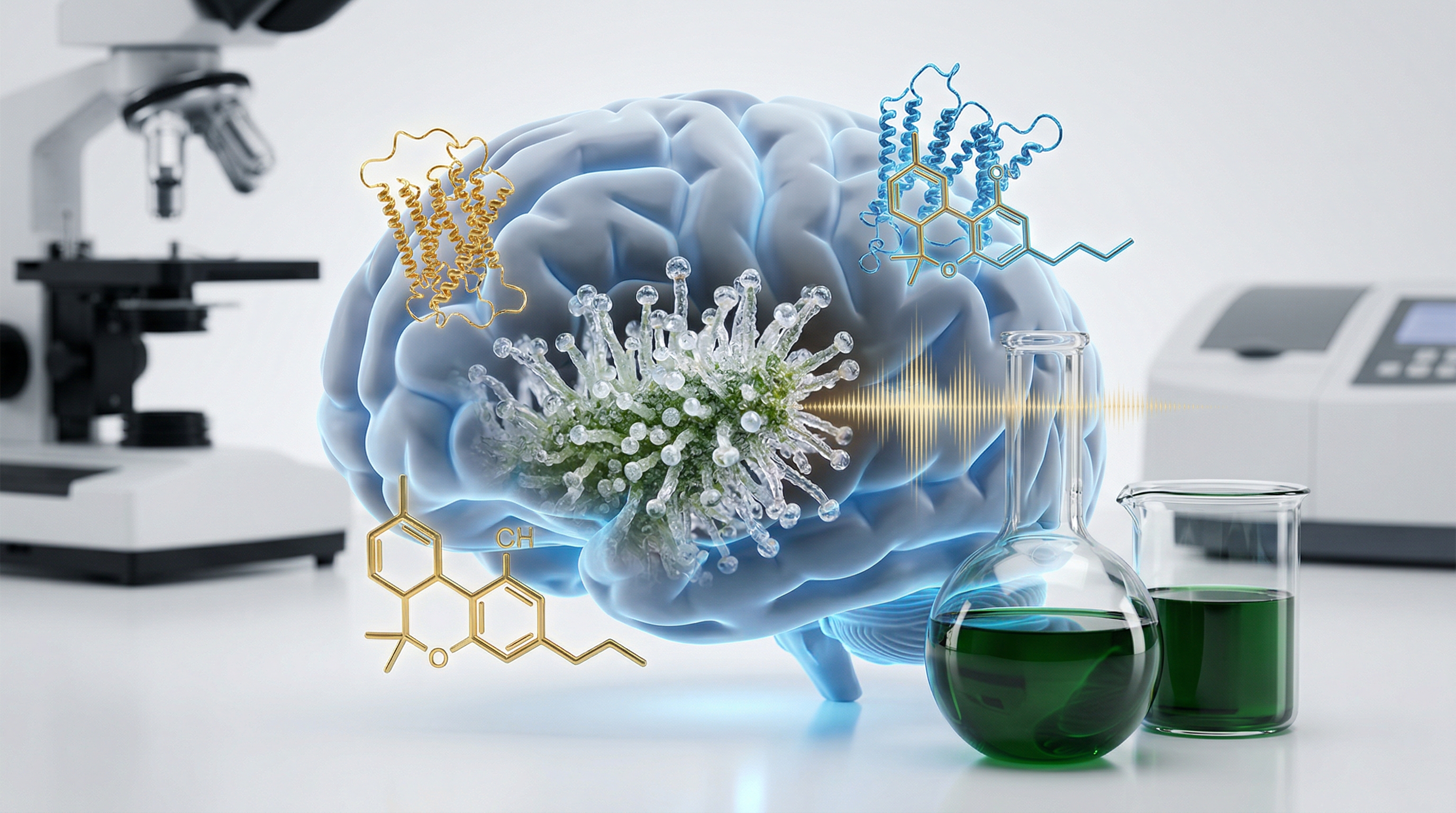
Cannabis and music have been intertwined for centuries. But why? Neuroscience is now mapping the brain mechanisms behind this relationship — from altered auditory processing to creative flow states. This guide breaks down what the research actually shows, and how to use it.
Why Does Music Sound So Good When You’re High?
Here’s a fact that might surprise you: when researchers at University College London played simple musical sequences to cannabis consumers, participants didn’t just enjoy the music more — their brains actually processed the auditory information differently, showing altered activity in regions associated with emotional processing and reward [Freeman et al., 2018]. The music wasn’t changing. Their brains were.
From Louis Armstrong to Willie Nelson, from the psychedelic rock revolution of the 1960s to the lo-fi beats streaming through your headphones right now, cannabis and music have been intertwined for centuries. But until recently, the why behind this relationship lived mostly in anecdote and assumption. “It just sounds better” was the best explanation most people could offer.
That’s changing. Over the past two decades, neuroscience has begun to peel back the layers of how cannabinoids interact with the brain’s auditory processing, creativity networks, and sense of time — all of which converge to create that unmistakable feeling of being inside the music. Whether you’re a musician searching for a creative spark, a listener who builds entire evenings around the perfect playlist, or simply someone curious about what’s happening between your ears, the science here is genuinely fascinating.
If you’ve ever wondered why music sounds better high, this article goes deeper — into the specific brain mechanisms that researchers are now mapping in real time. We’ll walk through what researchers have discovered about cannabis and musical creativity: from the neurochemistry of how THC alters auditory perception, to the specific brain networks that light up during creative flow states, to what terpene profiles may best support your next jam session.
Let’s tune in.
The Neuroscience: How Cannabis Changes the Musical Brain
The Endocannabinoid System and Sound Processing
To understand why music sounds different — and often profoundly richer — under the influence of cannabis, we need to start with the endocannabinoid system (ECS). Think of the ECS as your brain’s master modulation system. It doesn’t generate signals itself; it fine-tunes how strongly and how long other signals fire. It influences mood, pain, appetite, memory, and critically for our purposes, sensory perception.
When THC enters your system, it binds to CB1 receptors, which are densely concentrated in several brain regions that matter enormously for musical experience:
- The auditory cortex — where sound is processed, pitch is recognized, and musical patterns are decoded
- The prefrontal cortex — the seat of complex thinking, creativity, abstract reasoning, and — crucially — self-criticism
- The amygdala — the brain’s emotional core, deeply involved in the emotional response to music
- The cerebellum — which handles timing, rhythm perception, and motor coordination for musicians
- The hippocampus — involved in memory formation, pattern recognition, and tying musical phrases to emotional associations
The key insight from modern neuroscience: THC doesn’t just flip a switch in one of these areas. It modulates the communication between them. Neuroscientist and music researcher Jörg Fachner, who has spent years studying cannabis and music perception at Aalborg University, found through EEG studies that cannabis alters temporal processing of auditory information — essentially changing how the brain sequences and timestamps sound over time [Fachner, 2006]. Imagine listening to a song where you normally hear the whole arrangement at once, and suddenly you can distinguish each individual instrument as its own voice. That’s not imagination. That’s altered neural gating.
This connects to what researchers call enhanced auditory salience. Cannabis appears to increase the perceived importance of auditory stimuli — meaning sounds feel more present, more worthy of attention. For a musician, this can translate to hearing expressive details in a recording that you’d simply filtered out before.
There’s also the time perception factor. Multiple studies have demonstrated that cannabis distorts subjective time, typically making it feel slower [Atakan et al., 2012]. For music, this has a profound effect: the spaces between notes seem to widen, rhythmic patterns become more intricate, and a three-minute song can feel like a full immersive journey. Fachner’s EEG research specifically documented that cannabis users compensated for temporal distortion by focusing more intensely on musical micro-details — a phenomenon he termed “focal attention to acoustic space” [Fachner, 2006].
The Default Mode Network and Creative Thinking
Here’s where the creativity story gets genuinely fascinating. The default mode network (DMN) is the brain’s autopilot — the constellation of regions active when you’re daydreaming, self-reflecting, mind-wandering, or making unexpected conceptual connections. Neuroimaging research has consistently linked DMN activity to divergent thinking — the ability to generate novel, varied ideas from a single starting point, widely considered the cognitive engine of creativity [Benedek, 2025].
A landmark 2025 study by Ben Shofty and colleagues at the University of Utah used direct brain stimulation to establish a causal relationship between DMN activity and creative thinking — not just correlation [Shofty et al., 2025]. When the DMN was activated in patients, creative idea generation measurably improved. This is the same network that cannabis modulates.
Research using fMRI has shown that THC alters DMN activity in ways that increase associative thinking — the loose, free-form linking of concepts that underlies creative breakthroughs [Carhart-Harris et al., 2012]. For a musician, this may look like an unexpected chord progression that arrives fully formed, or a lyric that connects two ideas you’d never consciously linked before. The prefrontal cortex’s editorial function — which normally screens out “weird” ideas before they fully form — may be temporarily dialed back, allowing more creative raw material to surface.
Separately, fMRI research by Limb and Braun (2008) studying jazz improvisation found that musical creativity involves a characteristic pattern: decreased activity in the dorsolateral prefrontal cortex (the self-monitoring, rule-enforcing region) paired with increased activity in the medial prefrontal cortex (the autobiographical, expressive region). This neural signature of improvisation maps strikingly onto what cannabis does via CB1 receptor modulation — quieting self-critical executive function while amplifying associative, expressive processing.
The Dopamine Connection: Reward, Exploration, and Flow
THC triggers dopamine release in the nucleus accumbens — the brain’s primary reward center [Bossong et al., 2009]. This creates a feedback loop that’s especially relevant for musical creativity: you play a riff, it activates the reward pathway, you’re motivated to keep exploring. In an unaltered state, self-criticism may interrupt this loop (“that sounds strange, stop”). With cannabis modulating the prefrontal cortex’s evaluative function, that inner critic quiets, and the reward signal from musical exploration stays strong longer.
This may explain why so many musicians describe cannabis as a tool for getting out of their own way — not for generating skill from nothing, but for accessing the improvisational freedom that technical training makes possible.
What the Research Actually Shows About Cannabis and Creativity
The Dose Question: Where the Evidence Gets Nuanced
The science on cannabis and creativity is genuinely complex — and the most important variable is dose.
A widely cited study by Schafer et al. (2012) tested divergent thinking in cannabis users and found that cannabis increased verbal fluency and the perceived novelty of ideas — but primarily at moderate doses. At higher doses, divergent thinking actually declined [Schafer et al., 2012]. This aligns with the inverted-U hypothesis of creativity: too little stimulation and the brain is understimulated; too much and it’s overwhelmed. Creativity peaks in the middle.
A 2015 controlled study by Kowal et al. published in Psychopharmacology specifically tested creativity under different potency conditions. They found that high-potency cannabis (22 mg THC) impaired divergent thinking compared to placebo, while low-potency cannabis (5.5 mg THC) showed no significant difference from placebo [Kowal et al., 2015]. This was a key finding: even “no impairment” at low doses represents a ceiling. The creativity-enhancing anecdotes that musicians widely report may be more about set, setting, and trained musical skills than about THC alone generating novel ideas.
This nuance was reinforced by a rigorous 2022 study by Heng, Barnes, and Yam. Their research found that cannabis use did not increase actual creative output as measured by objective evaluators — but it did increase participants’ confidence in their own creativity [Heng et al., 2022]. In other words: cannabis may make you feel more creative without making you objectively more creative. For many musicians, that confidence shift alone is meaningful. Reduced self-doubt during the generative phase is a legitimate creative tool, even if the underlying quality of ideas remains constant.
The honest synthesis: cannabis does not appear to be a creativity enhancer in a universal, dose-independent sense. But at low doses, in the right context, for people with existing musical skills, it may support creative flow by reducing inhibitory self-monitoring, increasing dopaminergic reward during exploration, and enhancing auditory salience.
Cannabis, Music, and the Brain’s Reward System
A critical nuance comes from the 2018 UCL study by Freeman et al., published in the International Journal of Neuropsychopharmacology. The researchers found that cannabis actually dampened neural responses to music in the auditory cortex and nucleus accumbens — the core reward circuit — compared to placebo [Freeman et al., 2018]. This seems paradoxical: how can cannabis make music feel more rewarding while dampening the reward response?
The answer may lie in tolerance and subjective interpretation. The study was conducted in regular, long-term users. For occasional or moderate consumers, the effect profile is likely different. The finding also helps explain why heavy, chronic use sometimes leads musicians to feel creatively stalled — the very reward circuitry that cannabis initially amplifies may become habituated over time.
This reinforces a key principle also covered in our best cannabis strains for creativity guide: intentional, moderate use preserves the neurological sensitivity that makes cannabis’s effect on music meaningful.
The Terpene Layer: Beyond THC
Here’s where things get especially interesting for the terpene-curious consumer. THC may set the stage, but the terpene profile of what you consume likely shapes the character of the creative experience. Understanding cannabis terpenes is essential for dialing in a musical session.
Limonene — the bright citrus terpene — has been associated with elevated mood and reduced anxiety in preclinical research [de Almeida et al., 2012]. For musicians, this may translate to buoyant, confident creative energy that encourages experimentation. Strains rich in limonene tend to fall into the Uplifting High family — think social energy, mood elevation, and the kind of creative spark that makes you want to fill a blank page.
Linalool — the floral terpene also found in lavender — has demonstrated anxiolytic (anxiety-reducing) properties [Guzmán-Gutiérrez et al., 2015]. Performance anxiety is one of the biggest creativity killers for musicians. A terpene profile that gently eases that tension without inducing sedation could be the difference between a productive session and a frozen one. Look for linalool in strains that pair the Relaxing High with creative energy.
Terpinolene — found in strains associated with the Energetic High family — has been linked to uplifting, clear-headed effects. Musicians working on technically demanding compositions — where mental clarity matters as much as creative flow — may find this profile particularly supportive. It’s notably rare, found in roughly 1 in 10 strains.
Myrcene — the most common cannabis terpene — promotes relaxed, body-forward experiences. For deep listening sessions or emotional songwriting rooted in introspection, myrcene-dominant profiles in the Relaxing High family may facilitate profound emotional access.
And then there’s the entourage effect — the theory that cannabinoids and terpenes work synergistically, producing effects greater than any single compound [Russo, 2011]. Strains with complex, multi-terpene profiles — what we classify as the Entourage High family — may offer the most nuanced creative experience, engaging multiple neurochemical pathways simultaneously. This is covered in depth in our entourage effect guide.
The key principle: Cannabis doesn’t have a single “creativity switch.” The compound profile, dose, and context all shape whether the experience enhances or hinders creative musical work.
Practical Applications: Science-Informed Strategies for Musicians
Five Evidence-Based Principles for Creative Sessions
1. Start Low, Stay Low
The research is remarkably consistent: lower doses appear to support creativity while higher doses may impair it [Kowal et al., 2015; Schafer et al., 2012]. If you’re consuming before a creative session, consider microdosing or using low-THC options. You’re looking for the gentle loosening of mental filters, not cognitive disruption. A 2.5–5 mg dose is a reasonable starting point for many people.
2. Match Your Terpene Profile to Your Creative Task
Not all musical creativity makes the same cognitive demands. Writing lyrics requires different resources than improvising a guitar solo or mixing a track:
| Creative Task | Cognitive Need | Suggested High Family |
|---|---|---|
| Lyric writing / songwriting | Divergent thinking, free association | Uplifting High (limonene, linalool) |
| Improvisation / jamming | Flow state, reduced inhibition | Entourage High (complex terpene profiles) |
| Focused composition / arrangement | Mental clarity, sustained attention | Energetic High (terpinolene, ocimene) |
| Deep listening / emotional absorption | Enhanced perception, relaxation | Relaxing High (myrcene) |
3. Set Up Your Environment Before You Consume
The research suggests that set and setting may matter as much as the substance itself. Before consuming, set up your instrument, open your DAW, queue your reference tracks. Prime your brain for music before cannabis enters the equation. THC amplifies the cognitive direction you’re already pointed in — so point toward music first.
4. Record Everything
Here’s a practical truth the science directly supports: cannabis impairs short-term memory consolidation via hippocampal CB1 receptor activity [Ranganathan & D’Souza, 2006]. That brilliant melodic idea that feels unforgettable in the moment may genuinely be gone by morning. Hit record before you start. Voice memos, loop stations, screen capture — capture the raw material and evaluate it with fresh ears later.
5. Generate High, Edit Sober
Many successful cannabis-using musicians describe a two-phase creative process: generate with cannabis, edit sober. The uninhibited exploration phase benefits from reduced self-criticism; the refinement phase demands the sharp analytical thinking that cannabis may temporarily reduce. Both phases are essential to the finished work.
Strain Families for Musical Creativity
If you’re looking for specific strain recommendations for musicians and performers, see our full guide: Best Cannabis Strains for Playing Music and Jam Sessions. For a broader view of strains suited to creative work across disciplines, the Best Cannabis Strains for Creativity guide is the place to start.
The High Families system is worth understanding in this context. Rather than relying on the increasingly inaccurate sativa/indica distinction — a classification that research suggests correlates poorly with actual effects [Piomelli & Russo, 2016] — High Families organize strains by their functional effect profile. For musical creativity specifically:
- Uplifting High: Mood elevation, verbal flow, creative energy — ideal for songwriting and lyric sessions
- Energetic High: Clear-headed focus with upward energy — best for compositional and technical work
- Entourage High: Complex, multi-layered effects — suited to open-ended improvisation and experimentation
- Relaxing High: Body relaxation with emotional openness — deep listening, ambient music creation, introspective writing
Key Takeaways
- Cannabis alters auditory processing via CB1 receptors in the auditory cortex, amygdala, and cerebellum — research suggests it may make music sound more detailed, emotionally resonant, and temporally rich [Fachner, 2006].
- The default mode network — the brain network most associated with creative thinking — is modulated by THC, potentially enabling the kind of loose associative thinking that generates novel musical ideas [Carhart-Harris et al., 2012; Shofty et al., 2025].
- Low doses may support divergent thinking while high doses appear to impair it — the effective range for creative support is moderate, not maximum [Schafer et al., 2012; Kowal et al., 2015].
- Cannabis may increase creative confidence more reliably than creative output itself — but reduced self-doubt during the generative phase is a legitimate creative tool [Heng et al., 2022].
- Terpene profiles shape the creative experience — limonene and linalool may support mood-driven creativity; terpinolene may better serve focused compositional work.
- Set, setting, and existing skill level matter enormously — cannabis amplifies the cognitive direction you’re already pointed in.
- Record everything — THC’s effects on short-term memory make real-time capture essential.
FAQs
Does cannabis actually make music sound better, or does it just feel that way?
Both, in a sense — though the full picture is nuanced. EEG research by Fachner (2006) shows that cannabis genuinely alters how the brain processes auditory information: temporal perception changes, attention to micro-details increases, and emotional processing in the amygdala is modulated. You’re not simply imagining the difference; your brain is processing sound differently. Whether “different” equals “better” is subjective, but the perceptual change is measurable. For a deeper dive, see our article on why music sounds better high.
Is sativa better than indica for musical creativity?
The science suggests the sativa/indica distinction is largely a myth when it comes to predicting effects [Piomelli & Russo, 2016]. What matters far more is the terpene and cannabinoid profile of a given strain. Instead of reaching for a “sativa,” explore the High Families system — an Uplifting High or Energetic High profile is more likely to deliver the creative energy you’re looking for.
Can cannabis make you a better musician?
Cannabis research does not support the idea that it builds technical skill — it won’t improve your finger dexterity or teach you music theory. What the research suggests it may do is lower creative inhibitions, enhance auditory salience, and facilitate flow states that allow you to access skills you already have in novel ways [Schafer et al., 2012]. Think of it as a tool for expression, not a shortcut to competence.
What about CBD? Does it help with musical creativity?
Research on CBD and creativity is still early, but CBD’s well-documented anxiolytic properties [Blessing et al., 2015] suggest it may help musicians who struggle with performance anxiety or creative block rooted in self-doubt. A balanced THC:CBD ratio — common in the Balancing High family — might offer creative loosening without the cognitive impairment that higher THC doses can bring.
Does tolerance affect the creative benefits?
Research suggests yes — significantly. The 2018 UCL study by Freeman et al. found that regular, long-term cannabis users showed dampened neural responses to music in reward-circuit regions compared to controls [Freeman et al., 2018]. This implies that the neurological sensitivity that makes cannabis’s musical effects meaningful may diminish with heavy use. Intentional, moderate, and infrequent use appears to preserve the most benefit. This is one of the key reasons why tolerance breaks are often recommended by musicians who use cannabis as a creative tool.
Sources
- Atakan, Z., Morrison, P., Bossong, M.G., et al. (2012). “The effect of cannabis on perception of time: a critical review.” Current Pharmaceutical Design. PMID: 22300604
- Benedek, M. (2025). “The role of the default mode network in creativity.” Current Opinion in Behavioral Sciences. doi: 10.1016/j.cobeha.2025.101432
- Blessing, E.M., Steenkamp, M.M., Manzanares, J., et al. (2015). “Cannabidiol as a Potential Treatment for Anxiety Disorders.” Neurotherapeutics, 12(4), 825–836.
- Bossong, M.G., van Berckel, B.N., Boellaard, R., et al. (2009). “Delta-9-tetrahydrocannabinol induces dopamine release in the human striatum.” Neuropsychopharmacology, 34(3), 759–766.
- Carhart-Harris, R.L., Leech, R., Erritzoe, D., et al. (2012). “Functional Connectivity Measures After Psilocybin Inform a Novel Hypothesis of Early Psychosis.” Schizophrenia Bulletin. (See also related DMN modulation research via same group.)
- de Almeida, A.A., Costa, J.P., de Carvalho, R.B., et al. (2012). “Evaluation of acute toxicity of a natural compound (+)-limonene epoxide and its anxiolytic-like action.” Brain Research, 1448, 56–62.
- Fachner, J. (2006). “Music and Altered States of Consciousness: An Overview.” Music and Altered States: Consciousness, Transcendence, Therapy and Addictions. London: Jessica Kingsley Publishers.
- Freeman, T.P., Pope, R.A., Wall, M.B., et al. (2018). “Cannabis dampens the effects of music in brain regions sensitive to reward and emotion.” International Journal of Neuropsychopharmacology, 21(1), 21–32. doi: 10.1093/ijnp/pyx082
- Guzmán-Gutiérrez, S.L., Gómez-Cansino, R., García-Zebadúa, J.C., et al. (2015). “Antidepressant activity of linalool and linalyl acetate from Salvia lavandulaefolia in mice.” Journal of Ethnopharmacology, 161, 103–112.
- Heng, Y.T., Barnes, C.M., & Yam, K.C. (2022). “Cannabis use does not increase actual creativity but biases evaluations of creativity.” Journal of Applied Psychology, 108(1). doi: 10.1037/apl0001057
- Kowal, M.A., Hazekamp, A., Colzato, L.S., et al. (2015). “Cannabis and creativity: highly potent cannabis impairs divergent thinking in regular cannabis users.” Psychopharmacology, 232(6), 1123–1134. doi: 10.1007/s00213-014-3749-1
- Limb, C.J., & Braun, A.R. (2008). “Neural substrates of spontaneous musical performance: an fMRI study of jazz improvisation.” PLOS ONE, 3(2), e1679.
- Piomelli, D., & Russo, E.B. (2016). “The Cannabis sativa Versus Cannabis indica Debate: An Interview with Ethan Russo, MD.” Cannabis and Cannabinoid Research, 1(1), 44–46.
- Ranganathan, M., & D’Souza, D.C. (2006). “The acute effects of cannabinoids on memory in humans.” Psychopharmacology, 188(4), 425–444.
- Russo, E.B. (2011). “Taming THC: potential cannabis synergy and phytocannabinoid-terpenoid entourage effects.” British Journal of Pharmacology, 163(7), 1344–1364.
- Schafer, G., Fachner, J., & Jungaberle, H. (2012). “Changes in the representation of space and time whilst listening to music under the influence of cannabis.” Music and Medicine, 4(3), 130–138.
- Shofty, B., et al. (2025). “Default mode network electrophysiological dynamics and causal role in creative thinking.” Brain. University of Utah Neurosurgery.


