How to Make Cannabis Hard Candy at Home Safely
Make glass-clear cannabis hard candy and lollipops at home with precise dosing, the hard-crack sugar window, and the cool-down trick that protects your THC.

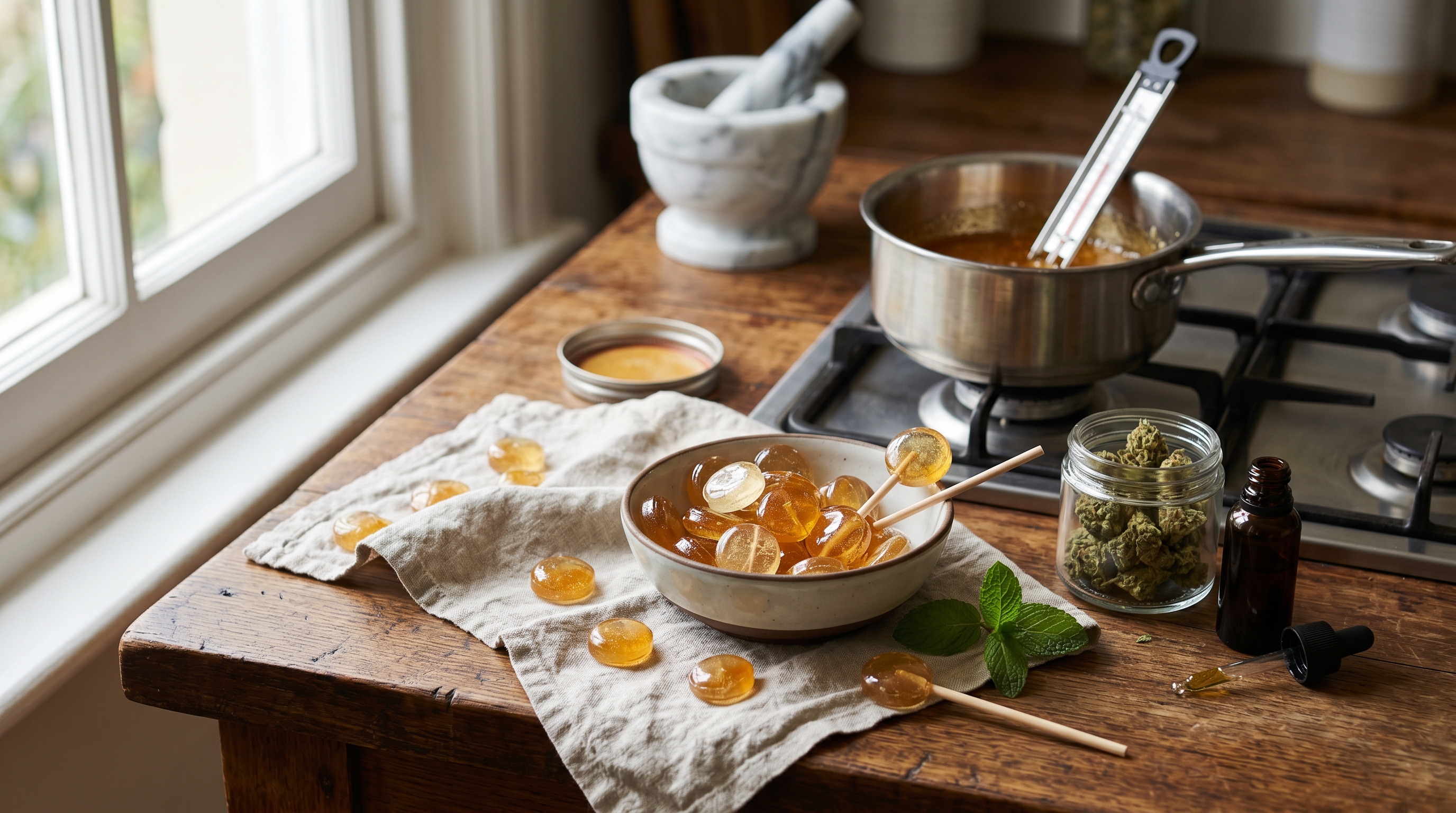
Here is a confession most candy recipes skip: the hardest part of making cannabis hard candy is not the cannabis. It is the sugar. Molten sugar at hard-crack temperature is hotter than a deep-fryer, sets in seconds, and will give you a serious burn if you respect it carelessly. Get the sugar right and the cannabis part is almost easy.
The reward is worth the care. A well-made batch of infused hard candy is shelf-stable, discreet, easy to portion, and slips a little under the radar of your digestive system thanks to some absorption right in your mouth. This guide walks you through the chemistry, the safety, and the dosing math so your first batch is clear, consistent, and dosed the way you intended, not the way the sugar gods decided.
The sugar science (and the heat problem)
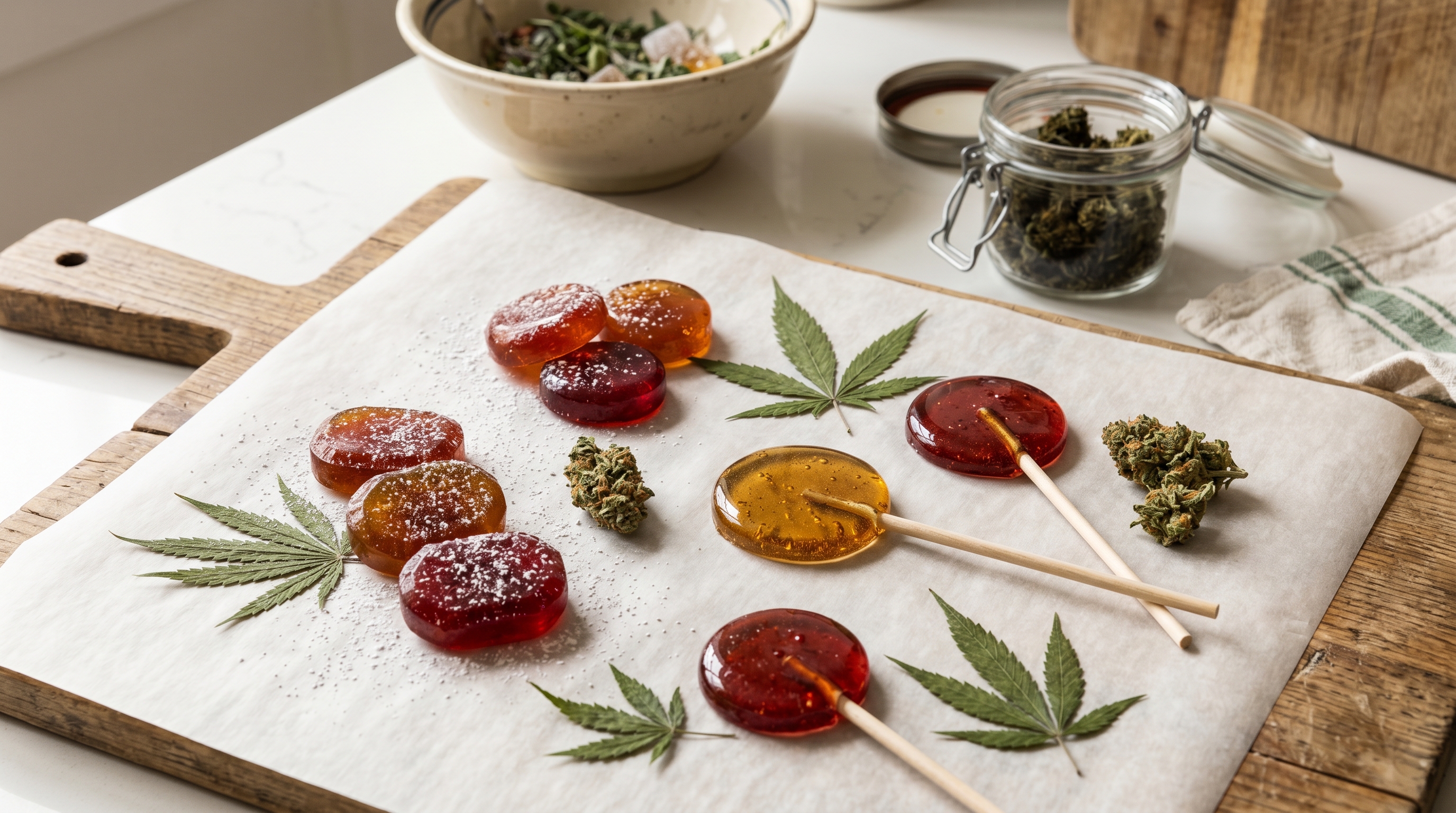
Hard candy is just sugar cooked past the point of no return. As a sugar syrup boils, water evaporates and the temperature climbs through named stages: soft ball, hard ball, soft crack, and finally hard crack at 300 to 310°F (149 to 154°C). At hard crack, so little water remains that the cooled syrup turns into a brittle, glass-like solid that snaps cleanly. Drop below 300°F and your candy stays chewy or tacky. Push above 320°F and the sugar starts to scorch and turn bitter. That roughly 20-degree window is your whole game, and a candy thermometer is the only reliable way to hit it [Herb, 2026].
Now the cannabis problem. Cannabinoids and terpenes are heat-sensitive. THC begins measurable degradation above roughly 320°F, and terpenes (the aromatic compounds behind flavor and a chunk of the effect) start evaporating well before that. If you dump your infusion into sugar that is still boiling at 300°F-plus, you torch potency and flash off most of the aroma. The fix is beautifully simple timing, which we cover in the steps below: cook the sugar all the way to hard crack, pull it off the heat, and let it coast down to around 250 to 260°F before you stir the cannabis in. The candy is still molten enough to mix evenly, but cool enough to protect your THC. This single pause is the difference between a working batch and a wasted one [Herb, 2026].
If the science of “activating” cannabis is new to you, read decarboxylation explained first. Raw flower is full of THCA, which will not get you high until heat converts it to THC. Every infusion starts there.
What you will need
Ingredients (makes roughly 20 to 24 pieces)
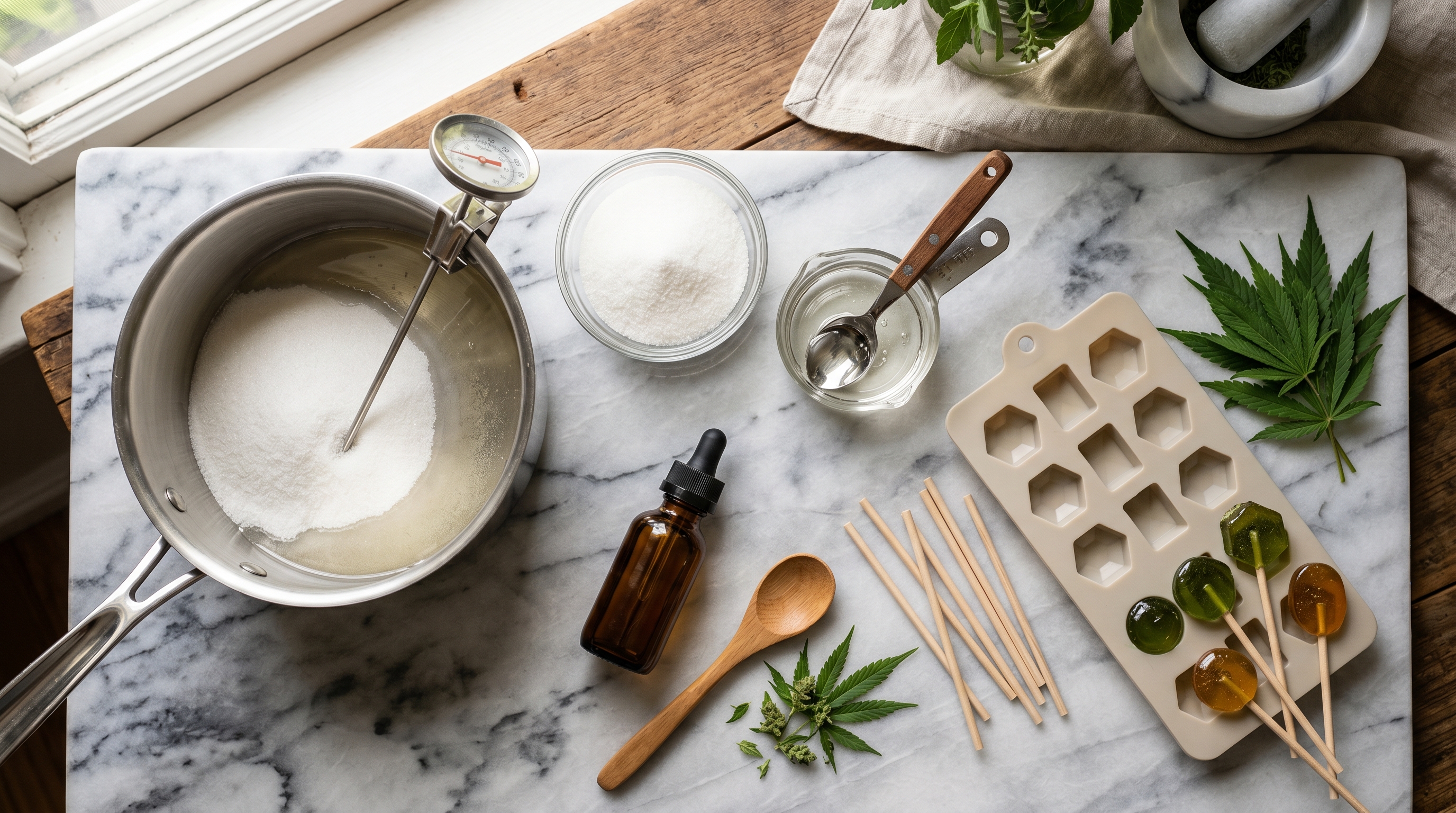
- 2 cups granulated sugar
- 2/3 cup light corn syrup (helps prevent crystallization)
- 3/4 cup filtered or distilled water (minerals in tap water cause cloudiness)
- 1 to 2 teaspoons of an alcohol-based cannabis tincture, dose calculated to your preference (see the dosing section)
- 1 teaspoon flavoring extract or 1/4 teaspoon concentrated flavoring oil
- A few drops of food coloring (optional)
Equipment
- A candy thermometer (non-negotiable) or a clip-on digital probe
- Heavy-bottomed saucepan
- Silicone spatula
- Candy molds or lollipop molds plus sticks, lightly oiled
- Heat-resistant gloves and long sleeves
A quick word on the infusion. An alcohol-based tincture is the right tool here because it dissolves cleanly into hot sugar and distributes the dose evenly. Learn to make one in our home cannabis tincture guide. Cannabis distillate also works and is even more concentrated. What does not work well is an oil-based infusion like cannabutter, FECO, or RSO mixed into MCT: oil and sugar syrup refuse to emulsify, so you get a greasy, separated candy with wildly uneven dosing. If oil is all you have, an emulsifier such as soy or sunflower lecithin (roughly 1/2 teaspoon per 2 tablespoons of oil) helps a little, but tincture is far cleaner. Oil-based infusions are better suited to gummies or classic infused cooking.
Step-by-step
1. Set up first. Lightly oil your molds and insert lollipop sticks before you start cooking. Calibrate your thermometer in boiling water (it should read 212°F at sea level). Once the sugar is hot there is no time to fumble, so have everything within arm’s reach.
2. Dissolve. Combine sugar, corn syrup, and water in the saucepan over medium heat. Stir gently until the sugar fully dissolves.
3. Stop stirring. Once the mixture comes to a boil, clip on the thermometer (tip submerged, not touching the bottom) and do not stir again. Stirring now drives crystallization, the number-one cause of cloudy, grainy candy.
4. Cook to hard crack. Let it boil undisturbed until it reaches 300 to 310°F. This takes roughly 15 to 25 minutes: slow at first, then fast near the end. Do not walk away. Living above sea level? Subtract about 2°F from your target for every 1,000 feet of elevation, because water boils cooler up high.
5. Pull and cool. The instant you hit your target, remove the pan from the heat. Let the bubbling subside and the temperature drop to 250 to 260°F, about 30 to 60 seconds. This is the THC-protecting pause.
6. Infuse and flavor. Add your measured tincture, flavoring, and coloring. Stir gently but thoroughly with the spatula just until combined. It will hiss and steam as the alcohol flashes off; that is normal. Keep your face back from the rising steam.
7. Mold fast. Pour into the molds immediately, because the candy sets within a couple of minutes. Work quickly and carefully.
8. Cool completely. Let everything harden at room temperature for 20 to 30 minutes. Do not rush it in the fridge or freezer; sudden cooling cracks the candy and pulls in moisture.
Per-piece dosing math
This is where homemade candy beats anything off a shelf: you control the dose. The formula is simple.
Total mg of THC in the batch ÷ number of pieces = mg per piece
You need to know the potency of your tincture. A common homemade alcohol tincture runs around 30 mg/mL, so 1 teaspoon (about 5 mL) carries roughly 150 mg total. Spread across 20 pieces, that is about 7.5 mg per candy. Want a beginner-friendly 5 mg per piece? Use less tincture or pour into more, smaller molds. Want a stronger dose? Use a higher-potency tincture or a touch of distillate (1 gram of 90% distillate is about 900 mg, which is a lot, so measure carefully).
The honest catch: homemade tincture potency is an estimate, not a lab result. Treat your first batch as a calibration run, label it, and start low. If you want to tighten the numbers, our edible dosing math guide and home potency testing guide walk through it, and the beginner dosing chart suggests starting points. For most newcomers, 5 mg or less per piece is a sensible place to begin.
A note on onset (it is a little different)
Here is the quirky upside of candy you suck on rather than chew and swallow: some of the dose absorbs sublingually, through the thin tissue under your tongue and inside your cheeks, before it ever reaches your stomach. That partial sublingual route can mean a somewhat faster onset, often around 15 to 45 minutes, compared with the longer wait for a swallowed edible [Veriheal, 2024]. We break down the timing difference in our sublingual vs. edible onset comparison.
That said, the part you do swallow behaves like any other edible. Your liver converts THC into 11-hydroxy-THC, which is why edibles can hit harder and last longer than you expect. So even with the head start, the smart move is patience. Give it the full window before reaching for a second piece. The 2-hour rule exists for a reason, and respecting it is core to good harm reduction. Research on cannabis effects is still evolving, so treat dosing as personal and start conservatively.
Safety: respect the hot sugar
I will say it plainly because it matters most. Molten sugar at 300°F can cause severe burns on contact, far worse than boiling water because it sticks to skin. Treat your candy session like the kitchen hazard it is:
- Wear long sleeves and heat-resistant gloves.
- Keep kids, pets, and distractions out of the kitchen.
- Never leave the pan unattended once it is on the heat.
- Keep your face away from the rising steam when you add the tincture.
- Have a bowl of cold water nearby in case of a splash, but never add water to the hot pan itself.
And the obvious one: infused candy looks exactly like regular candy. Label it clearly and store it where children and guests cannot reach it. This is the single most important rule of making edibles at home.
Storage: beating stickiness and humidity
Hard candy’s enemy is moisture. Sugar is hygroscopic, meaning it pulls water out of humid air, which is why candy made on a rainy day turns sticky and cloudy. To keep your batch crisp:
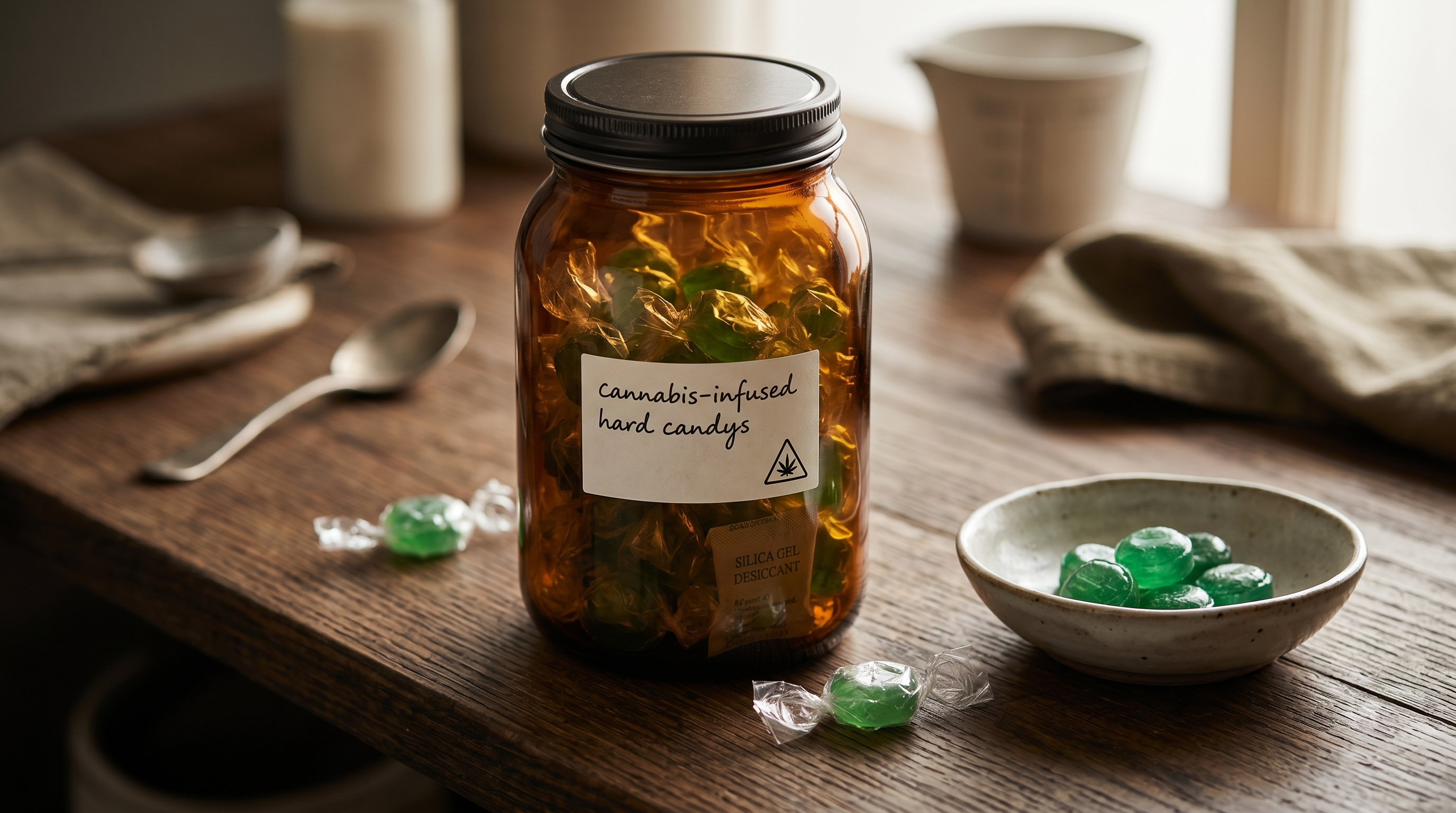
- Once fully cool, dust pieces lightly with powdered sugar or wrap each one individually to stop them fusing together.
- Store in an airtight container with a silica gel packet to absorb stray moisture.
- Keep it in a cool, dark place, never the fridge (condensation is the enemy).
Stored well, hard candy stays good for several weeks to a few months. For the full breakdown on how long an infused batch keeps and why, see our edibles shelf-life and storage guide.
FAQ
Can I make hard candy without a thermometer? You can use the cold-water test (a drop of syrup in cold water should form brittle, snapping threads at hard crack), but it is far less reliable and easy to over- or undercook. A candy thermometer is cheap and dramatically improves your success rate.
Why did my candy come out cloudy or grainy? Almost always crystallization: stirring after the boil started, undissolved sugar left on the pan walls, or mineral-heavy tap water. Use filtered water, do not stir once boiling, and brush down the pan sides with a wet pastry brush.
Can I use cannabutter or oil instead of tincture? It is not recommended for hard candy. Oil will not emulsify into sugar syrup and separates into a greasy, unevenly dosed mess. Save your cannabutter and infused fats for baked goods and use an alcohol-based tincture here.
Will the heat destroy my THC? Not if you follow the cool-down step. Adding infusion at 250 to 260°F keeps you well below the roughly 320°F degradation threshold. The danger only appears if you add cannabis to actively boiling sugar.
What is a safe starting dose? For most people new to edibles, 5 mg of THC or less per piece. You can always eat a second one; you cannot un-eat the first.
Can I make CBD candy instead? Yes. Use a CBD-rich tincture in place of THC tincture. The candy-making technique is identical, and the product is non-intoxicating. Prefer a drink? Try infused honey or infused coffee and tea instead.
Key Takeaways
Cannabis hard candy rewards precision. Nail the hard-crack window, protect your THC with a 30-second cool-down, do the per-piece math, and respect the molten sugar. Do those four things and you will have clear, consistent, discreet candy that doses exactly the way you planned. Start low, label everything, and track how each batch actually feels. The recipe is only half the work; knowing how you respond is the rest. None of this is medical advice, and cannabis affects everyone differently, so go gently.
Sources
- [Herb, 2026] — Best Weed Hard Candy Recipes: 9 Easy Cannabis-Infused Candies You Can Make at Home. https://herb.co/guides/recipe/weed-hard-candy-recipes
- [Veriheal, 2024] — How to Make Cannabis-Infused Lollipops at Home. https://www.veriheal.com/blog/how-to-make-cannabis-infused-lollipops/
- Emily Kyle Nutrition, MS, RDN — How to Make Cannabis-Infused Lollipops (2021). https://emilykylenutrition.com/yummy-customizable-cannabis-lollipops/
- Cannigma — How To Make Weed Candies and Weed Lollipops (2025). https://cannigma.com/recipes/candies-and-weed-lollipops/
- RxLeaf — How to Make Cannabis Hard Candy with THC or CBD (2018). https://rxleaf.com/how-to-make-cannabis-hard-candy-thc-cbd/
- Urth & Fyre — Cannabis Hard Candy & Lollipop Production Line Setup Guide (2026). https://www.urthandfyre.com/post/cannabis-hard-candy-lollipop-production-line-setup


