Cannabis Companion Planting: Best Plants to Grow Alongside
Discover the best companion plants for cannabis. Deter pests, fix nitrogen, attract beneficial insects, and build a self-defending organic garden.

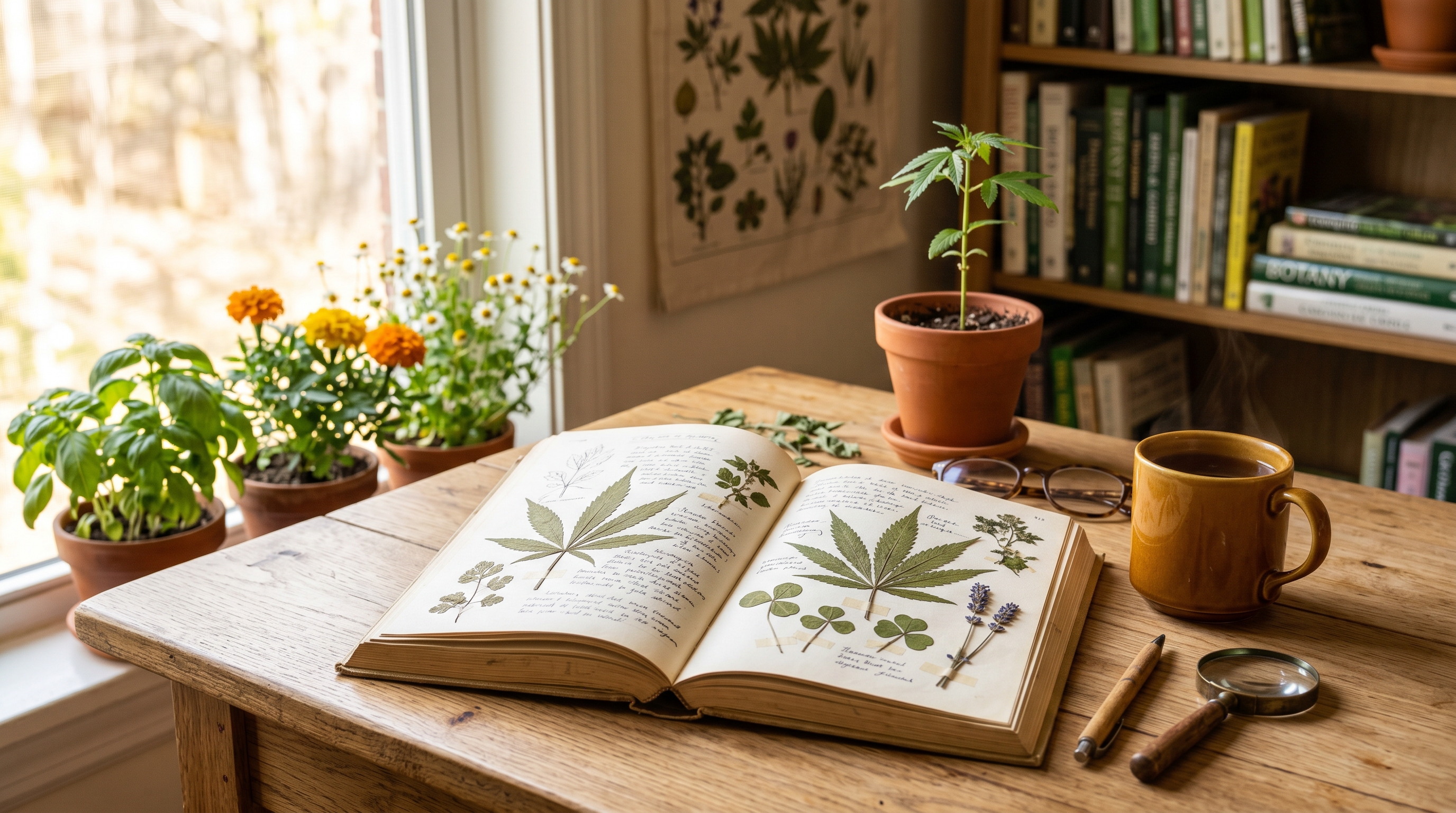
Wild cannabis never grew in a tidy row by itself. Out in Central Asia, it came up tangled among grasses, wildflowers, and herbs. Each plant lived in a tiny ecosystem. Modern growers who copy that mess on purpose call it companion planting. It is one of the most useful tools an organic grower has.
Companion planting is not garden magic. It is just plain ecology. Every plant you tuck in next to your cannabis works on it. It does this through root chemistry, scent compounds in the air, and the bugs it invites or repels. The right neighbors lower pest pressure. They feed the soil and mask odor. They let you spend less time spraying and more time growing. The wrong neighbors steal light, water, and food. One of them, as we’ll see, even poisons the plants around it.
This guide covers the plants worth growing next to your cannabis. We’ll sort them by the job they do: deter pests, build soil, draw in helpful bugs, and a few to keep far away. New to all this? Read our beginner’s guide to growing cannabis at home first.
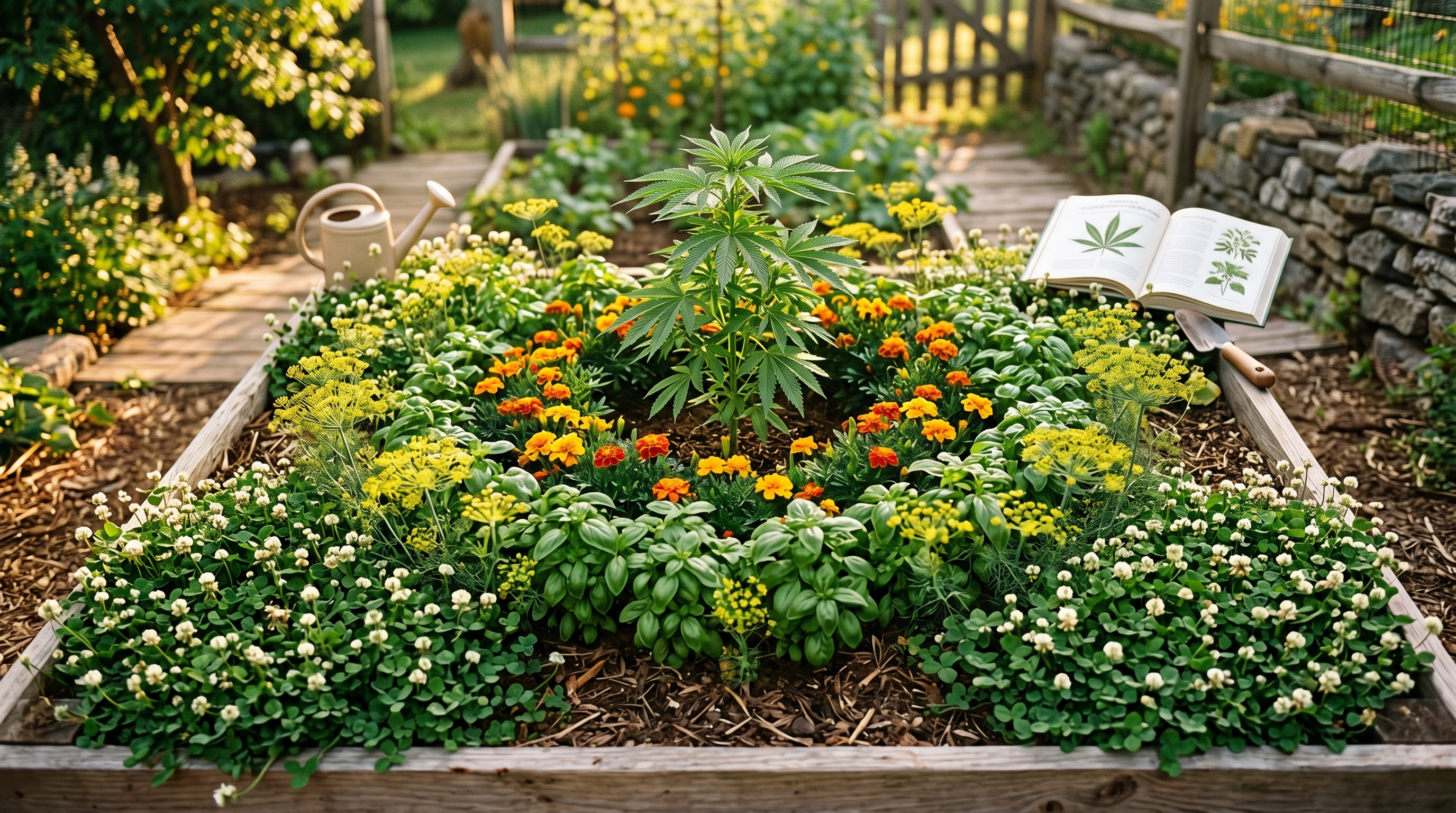
Pest-Deterrent Companions
This is the headline benefit. Many herbs and flowers give off scent compounds in the air. These are the same kind of terpenes that give cannabis its smell. They confuse, repel, or even poison common pests like aphids, spider mites, whiteflies, and thrips. Most of the research comes from controlled trials, not cannabis gardens. So treat these plants as prevention, not a cure for a bad outbreak. Pair them with the fix-it guide in common cannabis growing problems and how to fix them.
| Plant | Active compounds | Deters | Best placement |
|---|---|---|---|
| Basil (Ocimum basilicum) | Linalool, eugenol, methyl chavicol | Aphids, whiteflies, thrips, spider mites | 12–18 in. from the main stem |
| Marigold (Tagetes spp.) | Alpha-terthienyl, limonene | Root-knot nematodes, whiteflies, beetles | Outer border, planted early |
| Dill (Anethum graveolens) | Carvone, limonene | Aphids, spider mites | Windward side, let it flower |
| Lavender (Lavandula angustifolia) | Linalool, linalyl acetate | Moths, fleas, ticks | Perimeter, drier spots |
| Peppermint (Mentha spp.) | Menthol, menthone | Aphids, ants, flies | Pots only — it spreads aggressively |
| Rosemary (Salvia rosmarinus) | 1,8-cineole, camphor, α-pinene | Mites, aphids | Sunny border |
| Garlic / chives (Allium spp.) | Sulphur volatiles | Aphids, Japanese beetles, fungal issues | Tucked between plants |
| Chamomile (Matricaria) | Various | Some nematodes; “the plant doctor” | Near struggling plants |
| Yarrow (Achillea millefolium) | Various | Repels some pests, draws predators | Borders |
Basil is the workhorse. Its linalool and eugenol repel four of the most common outdoor cannabis pests at once. It also loves the same warm, well-drained soil that cannabis prefers. Plant it 12 to 18 inches from the main stem. Harvest it often to keep it growing. You can even turn the trimmings into cannabis-infused basil pesto. Many growers say basil also nudges nearby cannabis toward richer terpenes. The science there is still young, but the stories are strong.
Marigold is the classic for a reason, and it works below the soil line too. French marigolds produce alpha-terthienyl. This compound is toxic to root-knot nematodes — tiny root-eating worms that are nearly impossible to remove once they settle in. In one cited trial, cannabis grown near marigolds showed far fewer galls and larvae than plants with no cover [Philosopher, 2026]. The catch: this soil chemistry builds up slowly. So plant marigolds as a border at least one full season before you need the protection. Above ground, marigolds also give off limonene that wards off whiteflies through the air alone — no contact needed.
A quick note on odor: big clumps of basil, peppermint, or lavender around flowering cannabis help mask that late-summer skunk smell. Handy if you want to keep things low-key.
Nitrogen-Fixers & Soil Builders
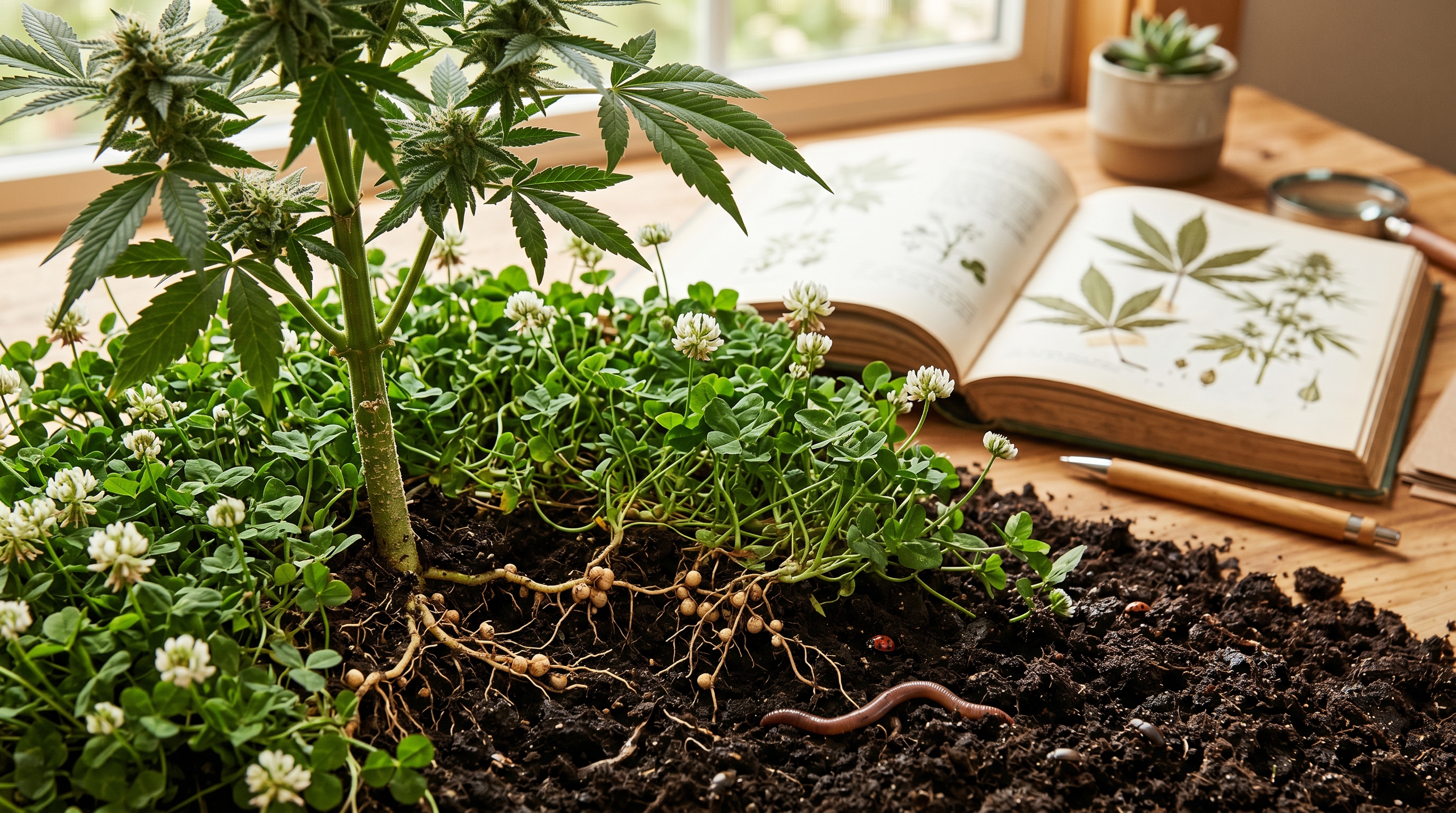
Less plant stress means better pest resistance. So the base of any companion plan is healthier soil. This is where legumes earn their keep. Legumes host helpful bacteria in their roots. Those bacteria pull nitrogen straight out of the air and turn it into food your cannabis can use. It works like free fertilizer.
- White & crimson clover — the best living mulch. Grow it as ground cover between plants. Research suggests it can fix nitrogen, block weeds, hold moisture, and feed soil life all at once.
- Beans & peas — solid nitrogen fixers. They need time to form root nodules first, so plant them early in the veg stage.
- Alfalfa — may fix nitrogen and improve soil structure. It is mineral-rich, so growers often chop it and drop it as mulch around their cannabis.
- Buckwheat — sprouts fast and flowers to feed helpful bugs. Turn it into the soil as a green manure to add organic matter and phosphorus.
- Comfrey — not a fixer, but a deep miner. Its taproot reaches up to two meters down and pulls up subsoil minerals. The leaves rot into a slow-release feed rich in potassium, calcium, and boron — just what cannabis wants during flowering [Cannigma, 2026].
This is the bridge between companion planting and serious organic soil work. If you want to go deeper, clover and comfrey are core players in both no-till cannabis farming with recycled organic living soil and a proper cannabis super soil recipe. For everything you can layer on top, see our guide to organic cannabis amendments — castings, guano, and compost tea. And if you’re just dialing in feeding rates, the cannabis nutrients guide explains how living-soil companions reduce your dependence on bottled inputs.
Beneficial-Insect Attractors & Trap Crops
The smartest pest control is hiring an unpaid army. Helpful bugs — ladybugs, lacewings, hoverflies, and parasitic wasps — spend their whole lives hunting the aphids, thrips, and caterpillars that want your buds. You attract them with flowers that have shallow nectar and tiny, flat flower clusters. Small bugs need a spot they can land on and feed from.
The best bug-drawing plants:
- Dill, cilantro, and their flat-topped flowers — perfect landing pads for parasitic wasps and hoverflies. Let some plants flower fully instead of cutting them all for the kitchen.
- Sweet alyssum & phacelia — among the strongest bug magnets for the garden edge. They feed hoverflies, lacewings, and wasps that hunt aphids and thrips.
- Yarrow — great at drawing in lacewings.
- Lavender & coriander — pull in both pollinators and predators.
One grower sums it up well. After ringing an aphid-hit patch with marigolds and sweet alyssum, the bugs crashed within two weeks. The marigolds kept new aphids away. The alyssum brought in wasps that finished off the rest.
Trap crops flip the script. Instead of repelling pests, you invite them onto a decoy plant you’re willing to lose:
- Nasturtium is the classic. Aphids, whiteflies, and spider mites flock to it, pulling the heat off your cannabis. Check it often and pull or treat any plant that gets swamped. A trap crop you ignore just becomes a bug nest.
- Sunflowers work two ways. They act as tall trap plants and as a windbreak and screen on the edge.
What NOT to Plant Nearby
Companion planting can backfire. A few common mistakes:
- Fennel — the big one. Fennel gives off growth-blocking chemicals that stunt most plants around it. Its reach is reported to be up to 10 meters. It’s a lovely bug attractor, but keep it well away from cannabis. Its look-alike, dill, is perfectly friendly.
- Fast spreaders in shared soil — mint and other runners will take over a bed. Grow them in their own pots on the edge so they can’t choke out your roots.
- Hungry feeders that compete — big vegetables like corn, squash, and broccoli want the same nitrogen, water, and light your cannabis does. In tight beds they fight you, not help you.
- Anything that traps moisture — thick, low mats of leaves around the stem hold damp air against the plant. That invites bud rot and powdery mildew. Airflow is a must.
The golden rule: keep companions at the rim of the pot or the edge of the bed. Never crowd the main stem.
Indoor vs. Outdoor
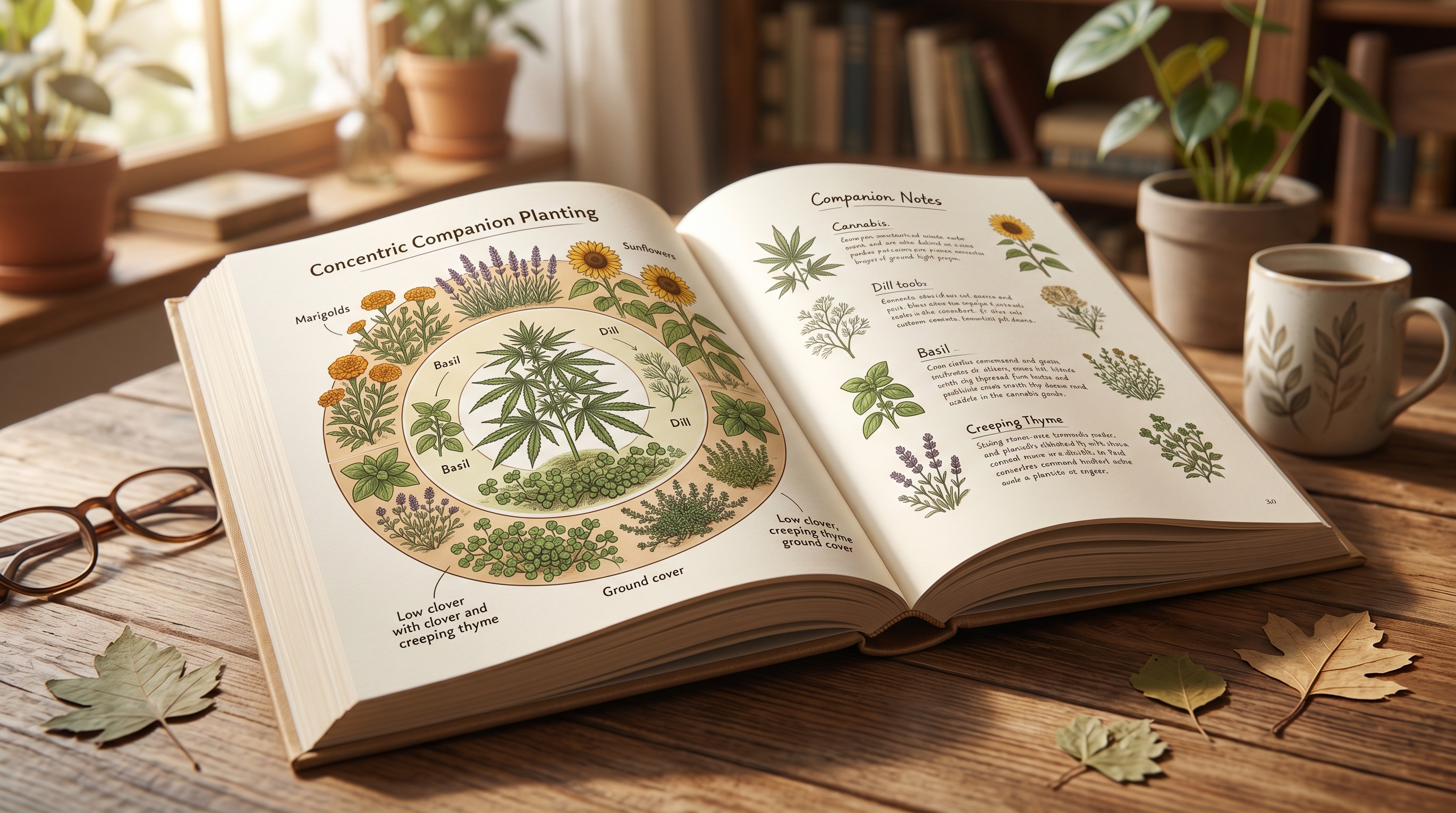
Outdoors, the options are nearly endless. You have room to build a full mixed garden. Picture an outer ring of marigolds against nematodes and whiteflies. Inside that, a barrier of rosemary and lavender. Then dill and coriander mixed in to draw predators. White clover as a nitrogen-fixing living mulch. Comfrey at the edges, and mint in pots to mask odor. Companion planting is at its strongest here. It pairs well with the seasonal timing in our outdoor cannabis growing season starter guide. Keep in mind that sun-grown cannabis tends to produce richer terpenes, and a living garden only helps that. Weigh the full tradeoffs in indoor vs. outdoor cannabis growing.
Indoors, space and airflow are the limits. But companion planting isn’t off the table. Small plants like basil, coriander, potted mint, and tiny marigolds can live under the same grow light as your cannabis and still help. The catch is humidity. Every extra plant adds moisture to the air, so manage your space with care. Our grow room humidity, temperature, and CO2 guide and VPD guide explain the targets. Keep companions in their own small pots at the edge of the tent. Never let leaves crowd the canopy. In a sealed grow tent, a couple of basil pots make sense. A full mixed garden does not.
Fitting It Into Organic & No-Till Growing
Companion planting isn’t a standalone trick. It’s one layer of integrated pest management and the wider organic idea of working with nature instead of against it. The whole point is to shrink problems before you can even see them. That means living roots in the soil year-round, mixed canopies that confuse pests, and a steady crew of helpful bugs so you never reach for a spray.
That’s the same mindset behind no-till living soil, where cover crops like clover live in the bed full-time. The mix also pays off for the planet. You use fewer chemicals, lose less runoff, and grow healthier soil life. That ties right into the environmental cost of growing cannabis. Companion planting, super soil, and no-till are really three views of one idea. You build a self-feeding, self-guarding garden that gets better each round. It carries through your seed-to-harvest timeline and into the harvest and drying and curing stages.
Start small. Pick the one problem your last grow struggled with — aphids, tired soil, swings in the air. Then add a single companion that targets it. Add more once you see it work. A garden built one good neighbor at a time beats a dozen plants thrown in for looks.
Key Takeaways
- Companion planting is ecology, not magic. Diverse neighbors lower pest pressure, feed the soil, and mask odor.
- Start with basil and marigold. Basil repels aphids and mites in the canopy. Marigold fights root nematodes from the soil up.
- Feed the soil with legumes. Clover, beans, and alfalfa fix nitrogen for free. Comfrey mines deep minerals.
- Hire helpful bugs. Dill, sweet alyssum, and yarrow draw in ladybugs, lacewings, and wasps that eat your pests.
- Avoid fennel, runaway mint, and crowding. Keep companions at the edge, never against the stem, and protect airflow.
- It works indoors too, just keep it small and watch your humidity.
Frequently Asked Questions
Can companion planting really replace pesticides? Only so far. Herbs deter pests and flowers bring in predators. Together they cut how often you reach for a spray. But companions are prevention, not a cure for a heavy outbreak. For that you still need to spot the pest and act. Think of them as a security system, not a magic shield.
What’s the best companion plant for a beginner? Marigold. It’s tough, hard to kill, and it fights soil nematodes while drawing in helpful bugs. All from one easy border plant. Basil is a close second if you want pest help right in the canopy. Just keep its water steady, since it wilts fast.
How close should companions be to my cannabis? Keep repellents like basil and marigold within about 2 to 3 feet so the scent barrier works. But never crowd the main stem. In pots, set companions at the rim. In beds, give every plant room to breathe. If the air gets damp or leaves dry slowly, you planted too tight.
Does companion planting improve terpenes or flavor? Maybe. Many growers say herbs like basil seem to boost nearby cannabis terpenes. The shared scent chemistry gives it a plausible path. But the hard science on cannabis is still thin. Treat it as a likely bonus, not a sure thing.
Sources
- The Cannigma — Companion Planting for Cannabis: Pollinators, Pest Control, and Aromatic Allies (2026). https://cannigma.com/plant/companion-planting-for-cannabis-pollinators-pest-control-and-aromatic-allies/
- Philosopher Seeds — Use of Companion Plants in Cannabis Cultivation (2026). https://www.philosopherseeds.com/blog/en/use-of-companion-plants-in-cannabis-cultivation/
- Green Rush News — Cannabis Companion Planting: The 12 Best Plants to Grow Alongside Your Weed (2026). https://greenrushnews.com/articles/cannabis-companion-planting-garden/
- The Seed Connect — The Benefits of Companion Planting with Cannabis (2026). https://theseedconnect.com/blog/benefits-companion-planting-cannabis/
- Cannoptikum — Companion Plants in Cannabis Growing: Practical Guide (2026). https://cannoptikum.com/en/blog/factors-in-cannabis-cultivation/companion-plants
Educational content only. Grow within your local laws. Companion planting supports a healthy garden but does not replace attentive cultivation and proper pest diagnosis.


