What to Do With Already Vaped Bud (AVB): 10 Real Uses
Explore 10 uses for already vaped bud, from butter and brownies to capsules. Learn what color, water curing, and lab research can tell you about AVB.

Professor High
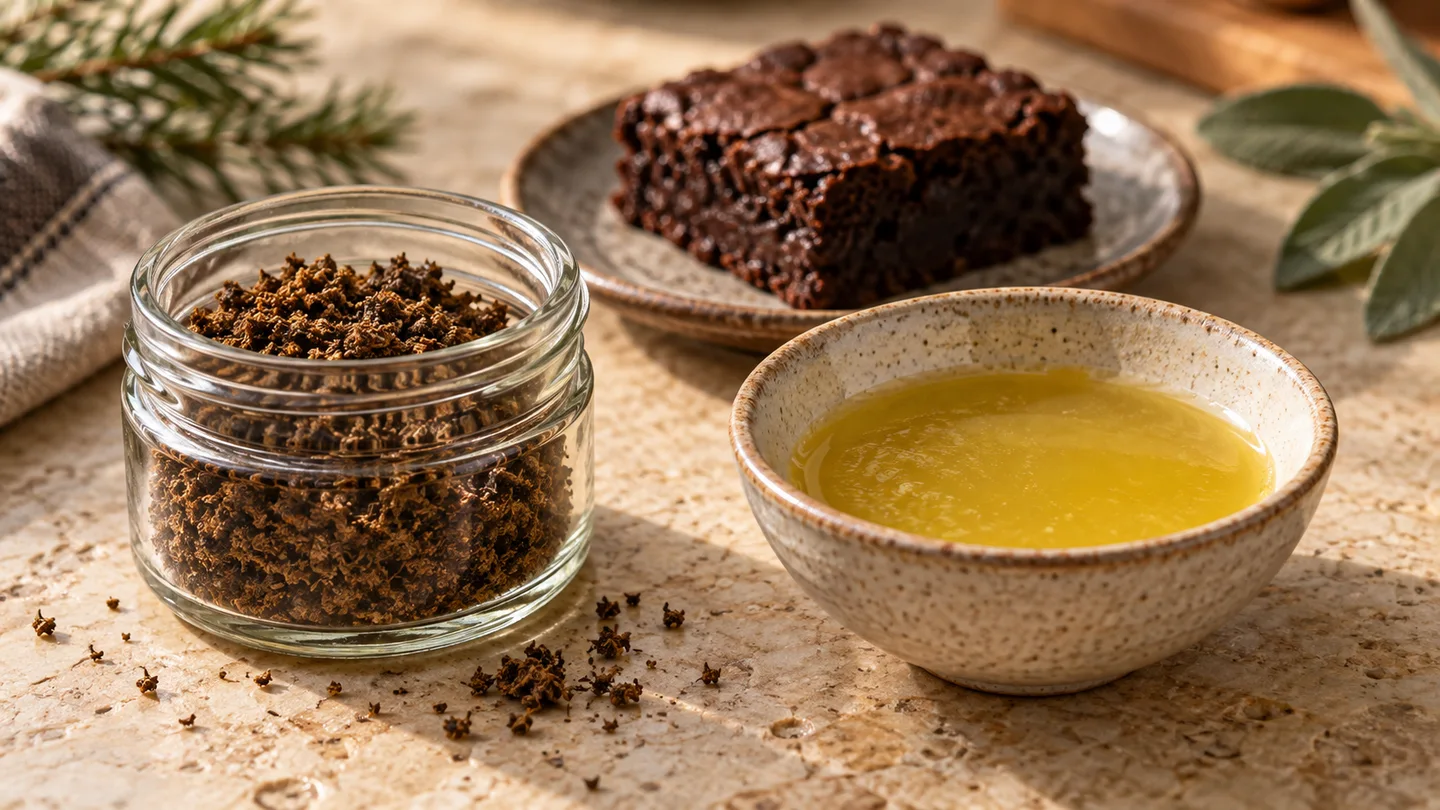
Already vaped bud can go into butter, oil, brownies, nut butter, capsules, and more. The brown herb left in a dry herb vaporizer can still contain THC, and heating has already converted at least some of its THCA into THC. The catch: neither its color nor its weight tells you the dose.
That little jar you have been saving is an ingredient with an unknown strength. Give it a purpose, but resist the internet’s favorite shortcut: calling a spoonful a serving.
Below are ten uses, their kitchen tradeoffs, and the research that helps you decide what to do with your jar.
AVB at a glance: choose a use
AVB means already vaped bud. ABV, short for already been vaped, means the same thing in cannabis discussions. We are talking about leftover dry flower, not cartridge oil, dab reclaim, pipe resin, ash, or material mixed with tobacco.
| Use | Why choose it? | Main tradeoff |
|---|---|---|
| Firecracker | A quick nut-butter cracker; no separate infusion | You eat the gritty plant material |
| Capsules | Avoid the toasted taste | A filled capsule is not a known THC dose |
| Butter | A versatile base for baking | Requires straining and cold storage |
| Coconut or olive oil | A dairy-free cooking base | Oil choice changes texture, not dose certainty |
| Peanut butter | Strong flavor and minimal prep | Herb stays in the spread |
| Brownies and dense bakes | Chocolate can cover some bitterness | A normal-sized brownie may contain too much THC |
| Tincture | A liquid format | Alcohol handling and unknown concentration |
| Honey | A sweet accompaniment | Mixing is not the same as dissolving THC |
| Coffee, tea, or hot chocolate | A drink made with a prepared infusion | Oil can separate; effects are delayed |
| Topical salve | An external-use craft project | AVB-specific benefits are unproven |
For cooking flexibility, my pick is one strained butter or oil infusion. You can use that base in several dishes without putting gritty AVB into each one. If knowing the dose matters more than using leftovers, choose a tested, labeled product instead.
What is actually left in AVB?
A 2016 laboratory study by Lanz and colleagues tested five vaporizers. For four electric devices operated at 210°C, THC recovery in vapor ranged from 54.6% to 82.7%. Crucially, the researchers also measured the plant residue and deposits on device parts. The portion missing from vapor was not all left in the bud. This was a device experiment, not an edible trial. Read the study.
A 2023 Swiss Federal Office of Public Health-funded report also measured AVB from three devices at multiple temperatures. Its different machine-puffing protocol left appreciable cannabinoids in the material. The authors cautioned that their puff volume might underestimate vaporizer delivery. These experiments demonstrate why one universal “AVB has X% THC” rule does not work. Neither measures your jar. Sambiagio and colleagues, report, Table 12 and limitations.
Is AVB already decarbed?
Often substantially, but not reliably completely. Lanz’s electric-device experiments achieved at least 97.3% THCA conversion. That supports skipping a separate decarb step for thoroughly vaped material under comparable conditions; it does not establish that every short or low-temperature session does the same.
Commercial testing described by Ardent, attributed to its partner MCR Labs, reported incomplete conversion after vaping. That is a manufacturer’s account with a commercial interest in decarb equipment, not an independent peer-reviewed recipe trial. It is another reason to avoid an absolute rule. Ardent’s AVB testing discussion.
If your bowl was barely heated, treat it as partly processed flower. Our decarboxylation guide explains the process. Extra heating cannot replace cannabinoids already removed, and an extra oven cycle is not a reliable way to standardize unknown AVB.
Reading your AVB by colour
Use appearance to describe what happened in the bowl, not to assign milligrams. We did not find a validated visual scale that converts AVB color into THC content.
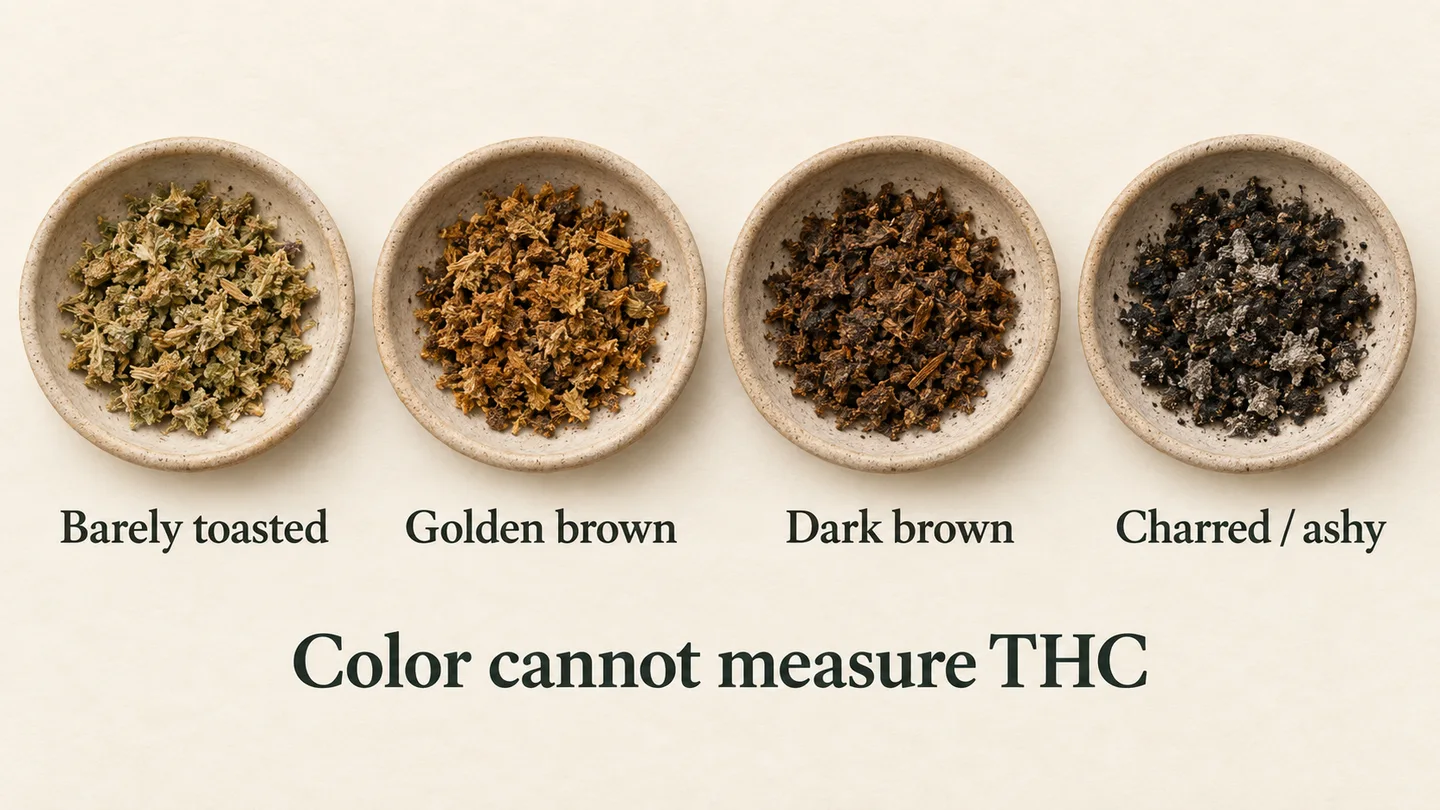
Illustrative appearances, not tested samples. Lighting, starting flower, grind, and device use can change what you see.
| Appearance | Practical interpretation |
|---|---|
| Greenish or barely toasted | Do not assume complete decarboxylation |
| Golden to medium brown | Common saved AVB; remaining potency is unknown |
| Very dark brown | Taste may be a bigger obstacle; darkness does not justify a larger dose |
| Blackened with ash or a burnt smell | Set it aside for disposal rather than food |
| Fuzzy growth, damp clumps, or a musty smell | Discard the batch; do not try to rescue it |
For recurring scorching, check your device’s instructions and our dry herb temperature guide. Do not keep increasing the temperature just to make every bowl the same color.
The dosing problem, stated honestly
There is no dependable grams-to-dose conversion for untested AVB. Half a gram, a teaspoon, one capsule, and one-twentieth of a batch are quantities of material. None tells you how much THC you will swallow.
A calculator cannot fix an unknown input. The THC percentage on the original flower package describes the original flower, not the leftovers. Even knowing how much reached the vapor would leave other losses unresolved.
For a finished infusion that has actually been tested, the arithmetic is straightforward:
THC per portion = measured THC concentration × amount of infusion in that portion.
Hypothetical example: an oil measured at 1 mg THC per mL contributes 1 mg THC when you use 1 mL. This is an arithmetic example, not an estimate of AVB potency.
Testing the finished, well-mixed product avoids having to guess extraction losses. A kitchen scale helps repeat an amount; it does not measure cannabinoids. Read our home potency-testing guide with that distinction in mind, and use a qualified laboratory when accuracy is consequential. Our edible dosing math guide explains portion calculations, but its fresh-flower assumptions cannot simply be transferred to AVB.
Timing matters too. Health Canada advises new consumers to look for products containing 2.5 mg THC or less, and says edible effects can take up to four hours to develop fully. That amount cannot be translated into a pinch of untested AVB. Do not take more while waiting for an edible to develop; waiting does not make an unknown first amount safe. Effects can last up to 12 hours, with residual effects up to 24 hours. Avoid alcohol and do not drive while impaired. Health Canada’s consumption guidance.
10 things to do with AVB
These are preparation options, not ten validated dosing recipes. Use only clean, dry, uncontaminated flower residue. If you are new to edibles, an untested batch is a poor starting point.
1. The firecracker
The classic: nut butter on a cracker or toast, with crumbled AVB mixed into the spread. Almond butter or a suitable seed butter can replace peanut butter if needed. Mixing it through gives a better texture than leaving a dry mound on top.
Best for: minimal preparation. With thoroughly vaped material, no separate infusion is needed to consume the THC already present.
The catch: the plant material stays in the food. Expect a toasted, sometimes bitter crunch. There is no universal “sprinkle this many grams” serving, and covering the taste does not reduce the THC.
2. Capsules
Capsules are an option for adults who dislike the flavor. Dry AVB can be placed in food- or pharmaceutical-grade empty capsules using a filling tray; a tested strained oil requires capsules specifically designed for liquid filling.
Best for: avoiding taste and keeping a clearly identified batch together.
The catch: capsule size measures capacity, not potency. Grind and packing change the amount inside. Do not assume every size 00 capsule holds the same weight, add oil to a shell without checking compatibility, or mistake homemade capsules for standardized medicine. The capsules guide explains the format.
Fat is not an on/off switch for oral THC. Food can change absorption and timing; the dronabinol prescribing information reports a substantial food effect for its particular formulation. It does not establish that adding drops of oil makes dry AVB reliably absorbable or predictable. DailyMed, pharmacokinetics.
3. AVB butter
Butter makes a flexible base for baking and savory cooking. Straining removes most of the gritty solids, which is the main culinary advantage over mixing AVB directly into batter.
A practical workflow:
- Record the AVB batch and the amount of butter used. Those notes document your process, not its THC concentration.
- Melt the butter gently in a heatproof bowl over a water bath. Add the AVB and keep it immersed and stirrable.
- Use the gentle infusion stage in our cannabutter guide, monitoring the mixture and the water bath. Skip its fresh-flower decarb stage only when appropriate for your material.
- Strain through a securely supported fine sieve lined with food-safe cloth into a heatproof container. Let it drain without forcing fine particles through.
- Mix, label, and refrigerate promptly. Measure the final yield if you plan to have the infusion tested.
The catch: no butter-to-AVB ratio guarantees a mild result. This is a kitchen adaptation, not a laboratory-validated AVB extraction protocol. Do not add more AVB merely because the butter looks pale.
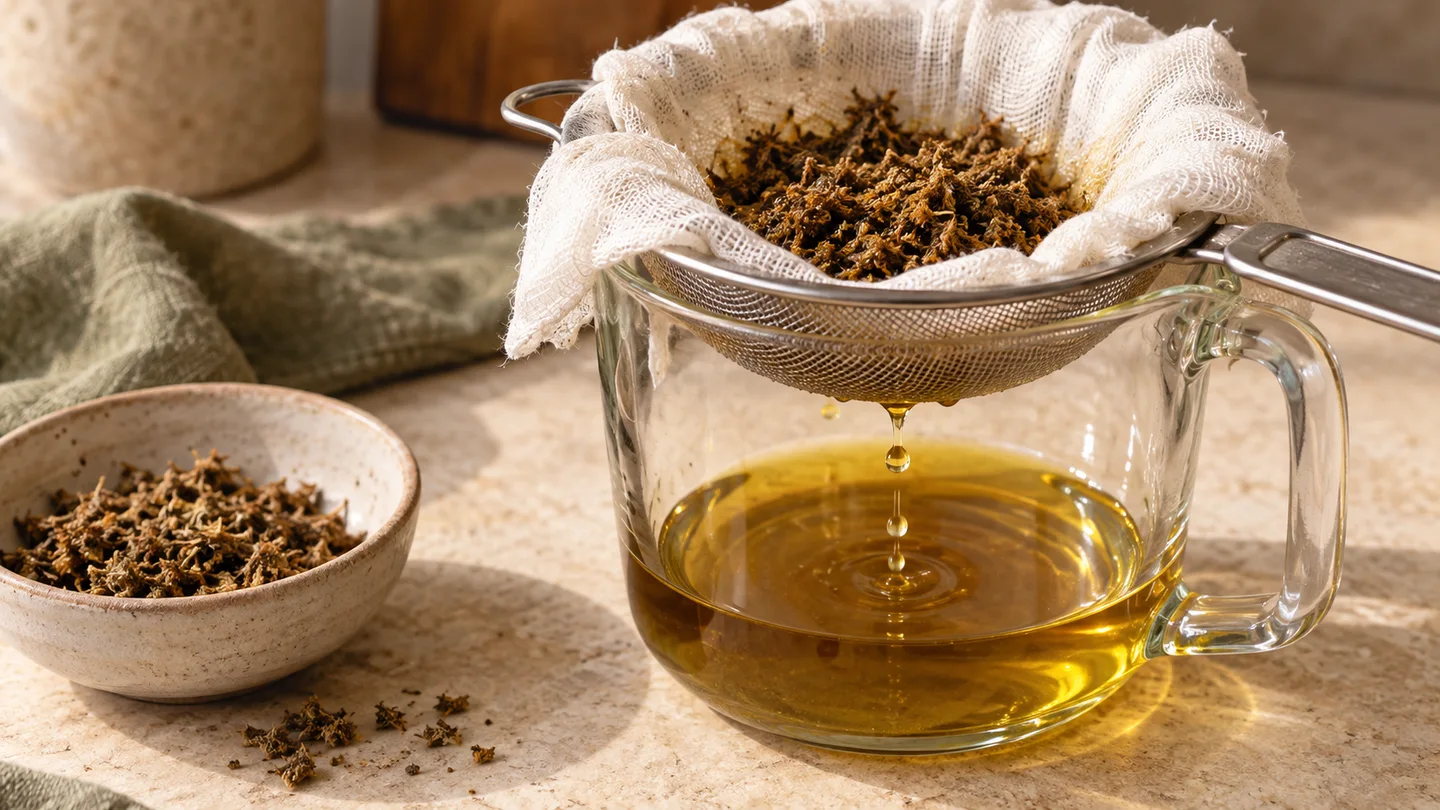
Straining improves texture by separating plant solids. It does not measure THC or make contaminated material safe.
4. AVB coconut oil
For a dairy-free base, use food-grade coconut oil or olive oil with the same basic infuse-and-strain workflow. Refined coconut oil suits dishes where you want less coconut flavor; olive oil fits savory food. Our coconut oil guide covers culinary uses.
Best for: choosing a fat that fits the finished dish.
The catch: a higher saturated-fat content does not, by itself, prove one homemade AVB infusion extracts more THC than another. Choose for flavor, texture, and dietary needs. Keep water out of a finished oil, follow the storage guidance below, and never put a cooking infusion into a vape cartridge.
5. AVB peanut butter
For a spread rather than a cracker sandwich, stir finely crumbled dry AVB into a separate small container of peanut butter. A little gentle warming can make thick nut butter easier to mix; prolonged heating is not needed just to combine the ingredients.
Best for: toast, or a strong-flavored spread that tolerates some texture.
The catch: do not modify the household peanut-butter jar. An ordinary-looking jar is easy for someone else to use by mistake. Label the separate container immediately, list allergens, and keep it secured. Weighing the spread can help repeat a portion, but it cannot establish its THC dose.
6. Brownies and dense bakes
Chocolate brownies and banana bread suit AVB’s toasted flavor better than a delicate vanilla cake. A strained infusion usually gives a smoother result than loose plant material. Either approach can still leave some bitterness.
Use the appropriate butter or oil component in our brownie recipe or banana bread recipe. If using a tested infusion, calculate its THC contribution before mixing. Combine thoroughly and portion consistently; do not assume the recipe’s usual slice size is an appropriate cannabis serving.
The catch: bake to the recipe’s normal doneness. Do not underbake food to “protect THC,” or extend the bake to “activate it more.” Keep infused portions separate from ordinary baking, including scraps and batter.
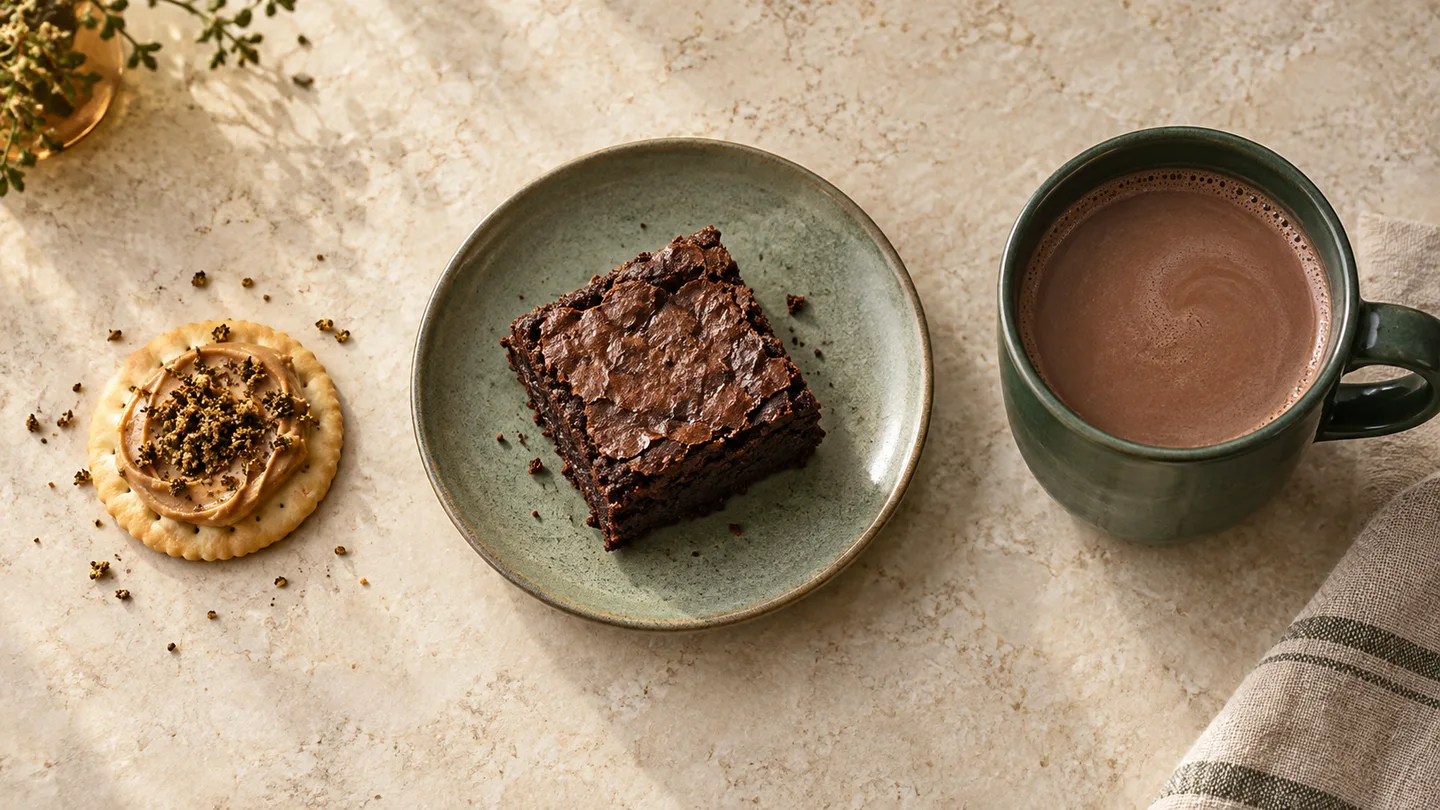
Three food formats, not equivalent doses or suggested serving sizes. Appearance cannot tell you how much THC any one contains.
7. Tincture
An alcohol-based tincture is another possible format, but it brings extra handling requirements. Use only alcohol explicitly suitable for consumption and the relevant method in our tincture guide. Never use rubbing alcohol, denatured alcohol, or cleaning solvents. Do not heat or evaporate high-proof alcohol in a home kitchen; keep it away from flames and ignition sources.
Best for: experienced adults who specifically need a liquid format and can establish its concentration.
The catch: a dropper does not solve unknown potency. Drop size varies, and the extract needs testing before you can assign milligrams per mL. Concentrated alcohol can irritate the mouth. If swallowed or added to food, treat it as an edible with delayed effects; do not promise an exact sublingual onset for a homemade product.
8. AVB honey
Think of this as honey combined with an infusion, rather than honey magically extracting a measured dose from a pile of herb. For an immediate-use preparation, blend a measured amount of tested edible infusion into honey and mix thoroughly.
Best for: adding sweetness to a prepared portion.
The catch: oil and honey can separate. A spoonful from the top may not match one from the bottom, and stirring or adding lecithin does not certify uniformity. Do not call homemade infused honey shelf-stable just because plain honey keeps well. Added water, dairy, or other ingredients change the storage question. Our honey guide explores the format; its recipe quantities cannot establish your AVB dose.
9. Coffee, tea and hot chocolate
For a less gritty drink, use a prepared, tested infusion rather than steeping loose AVB and guessing what entered the mug. Stir an appropriate measured amount into a single drink. Hot chocolate’s strong flavor makes it a practical choice; cream or a suitable plant milk changes the texture.
THC has very poor water solubility, as illustrated by the formulation information for synthetic delta-9-THC. That makes plain water an unreliable extraction shortcut, not a guarantee that AVB tea contains zero THC. Swallowed particles can also carry cannabinoids. DailyMed, description.
The catch: oil can float or cling to the mug. A splash of milk does not demonstrate complete extraction or even distribution. Drinks still count as edibles; a hot beverage is not an instant-onset format. See our cannabis tea guide.
10. Topical salve
A strained oil can be incorporated into an external-use balm with a suitable wax base. If you try this as a craft project, use clean ingredients, label it external use only, and keep it away from food preparations. Avoid broken skin and stop if irritation occurs.
Best for: exploring a balm format without making an edible.
The catch: we did not find clinical evidence establishing benefits for homemade AVB salves. Health Canada notes that topical effects and risks remain incompletely understood and that allergic skin reactions can occur. Unknown potency and contaminated ingredients do not become irrelevant because something goes on skin. Health Canada’s topical guidance.
For the formulation distinction, read topicals versus transdermal patches. Do not treat a homemade balm as a proven treatment or a guaranteed way to avoid systemic exposure.
Why it tastes bad, and the cold-water fix
AVB often tastes toasted, bitter, or burnt. The simplest kitchen improvements are straining an infusion and choosing a strong-flavored dish. Neither requires soaking your saved material for days.
Water curing means soaking AVB and discarding the colored water to reduce some of the unwanted flavor. It is popular home practice, but our searches did not locate a controlled AVB study validating a particular soak schedule, flavor result, or percentage of THC retained.
Low water solubility makes limited THC dissolution plausible. It does not prove zero loss: particles can leave with the wash, and material can remain on containers and filters. Clear rinse water is not a cannabinoid test. Claims of “almost no potency lost,” “half the mass removed,” or “completely tasteless” go beyond what we could verify.
If you choose to wash AVB, use clean equipment and potable water, keep it refrigerated, and treat the wet material as perishable. Do not leave it soaking on the counter for days, seal it damp for storage, or assume an overnight air-dry proves shelf stability. Water curing cannot rescue moldy material. If you cannot control drying and storage, skip this optional step.
Storing it
Keep dry AVB separate from finished food. They have different storage needs.
- Dry material: let it cool before closing the container, keep it dry in clean airtight storage away from light and heat, and record the collection date. Avoid adding damp material or humidity packs. These are conservative handling suggestions; we found no validated universal AVB shelf life.
- Infusions and food: label ingredients and preparation date, then follow the storage needs of the most perishable ingredient. As a conservative household rule for unvalidated homemade infusions, refrigerate and use within three to four days, or freeze promptly. This applies general leftover guidance; it is not an AVB shelf-life study.
- Access: use a locked container or cupboard, separate from ordinary food and out of sight and reach of children and pets. A handwritten label alone is not access control.
USDA advises refrigerating perishable leftovers within two hours, or one hour above 90°F / 32°C, and using refrigerated leftovers within three to four days. Keep the refrigerator at 40°F / 4°C or below. USDA food-handling guidance. Health Canada specifically recommends separating and clearly labeling homemade cannabis foods. Safe cannabis storage.
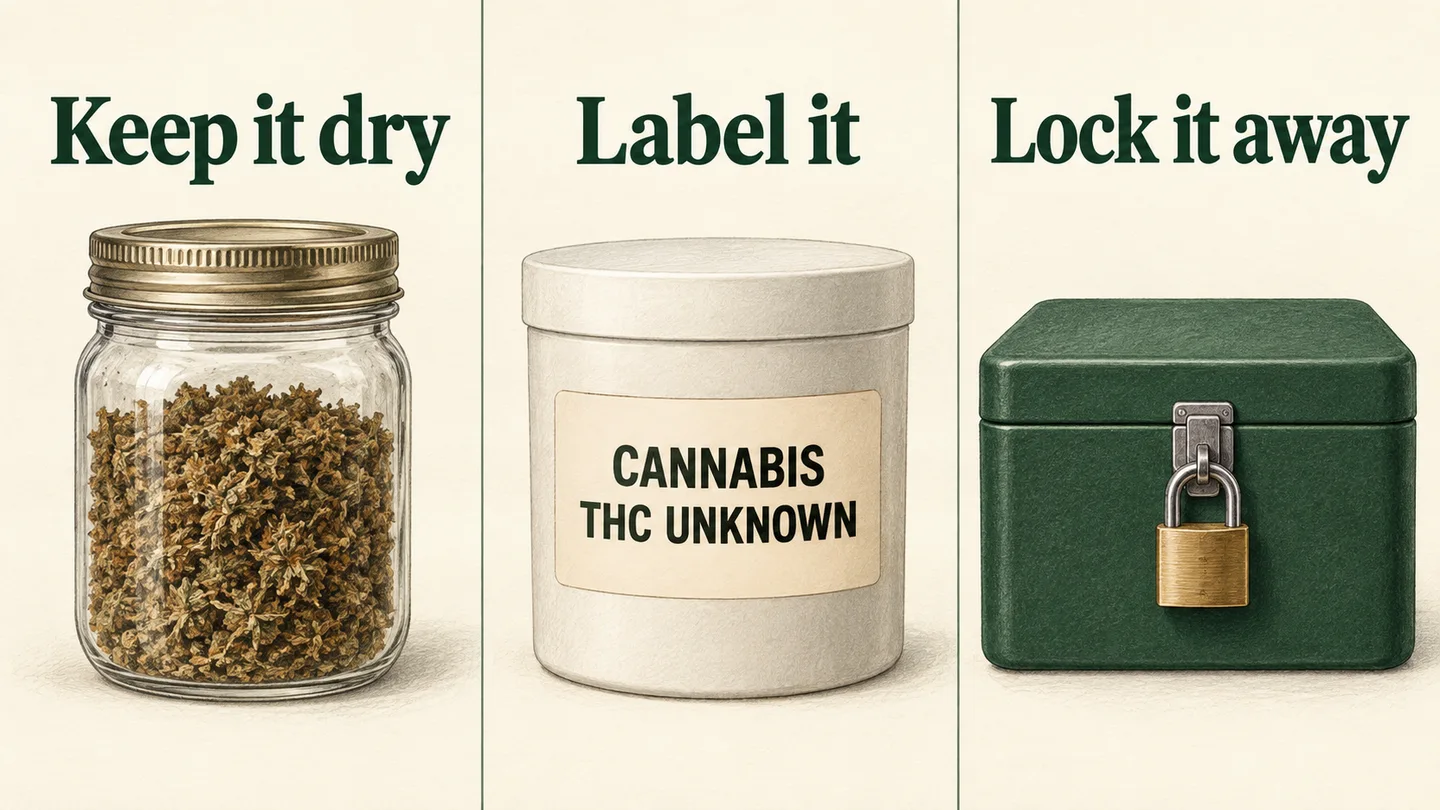
Keep raw AVB dry, label cannabis preparations honestly, and prevent access. Perishable infused foods also need refrigeration or freezing.
When to just compost it
You do not owe every bowl a second use. If the material is scorched, contaminated, damp with an uncertain history, or more trouble than it is worth, dispose of it.
Compost only where local rules and your compost system allow plant waste, with no access for pets or children. Otherwise use a secure disposal method. Do not put capsules, packaging, or oily finished foods into a plant-waste stream that does not accept them.
AVB questions readers ask
Can you eat AVB straight?
It can contain orally active THC, but swallowing dry plant material is unpleasant and gives no dose control. No-cook does not mean low-risk. If you need predictable effects, use a tested preparation.
How much AVB should a beginner use?
We cannot give a reliable gram amount for untested material. A labeled low-dose product provides information a jar of leftovers cannot. Start with the dosing section above rather than a teaspoon recommendation.
Can you re-vape AVB?
A partly used bowl may still release cannabinoids, but there is no reliable number of extra draws. Follow the device manufacturer’s instructions, avoid scorching, and never put butter, oil, honey, or washed damp material into a dry herb chamber.
Does AVB make you sleepy because it contains CBN?
Do not assume a particular CBN level or sleep benefit from brown color. The studies discussed here do not establish that homemade AVB is an effective sleep treatment. Your jar is not a standardized CBN product.
Does water curing remove the smell and all the bitterness?
It may change the flavor, but a guaranteed odorless or tasteless result is not established. Straining and a strong-flavored recipe are simpler first options.
Can you smoke AVB?
It is possible to burn it, but that adds combustion and is not one of our recommended ways to reuse it. There is little reason to chase a harsh final smoke from material you already vaporized.
What if someone eats too much, or a child gets into it?
For suspected cannabis poisoning in the United States, call Poison Control at 1-800-222-1222. Call 911 for an emergency, including trouble breathing or an unresponsive person. Children can become seriously ill after eating cannabis; get help promptly. CDC cannabis poisoning guidance.
The useful habit is simple: choose a format you will actually use, keep the batch identifiable, and be honest about what is known. Saving leftovers should not require pretending you know their strength.
Sources
Research and official guidance rechecked September 10, 2026. Laboratory extraction results are distinguished from home practice and human health guidance. Original AI-generated images illustrate materials and methods; they are not photographs of tested batches.
- Lanz C, Mattsson J, Soydaner U, Brenneisen R. Medicinal Cannabis: In Vitro Validation of Vaporizers for the Smoke-Free Inhalation of Cannabis. PLOS ONE. 2016;11(1):e0147286. DOI: 10.1371/journal.pone.0147286. PMID: 26784441.
- Sambiagio N, Aires Guerra Iria D, Auer R, Schöni A, Berthet A. Toxicological assessment of aerosols emitted by cannabis inhalation methods. Final report, June 23, 2023, funded by the Swiss Federal Office of Public Health. Full report; see Table 12 and limitations. Government-commissioned laboratory report, not an edible clinical trial.
- Ardent Cannabis. How to Use ABV for Cannaoil or Cannabutter. August 12, 2023. Manufacturer’s report of partner-lab testing. Commercial source; no universal dose or product recommendation adopted.
- Health Canada. What you need to know if you choose to consume cannabis.
- Health Canada. Cannabis for medical purposes: Using a cannabis product.
- Camber Pharmaceuticals. Dronabinol capsules prescribing information. Updated April 2026. DailyMed; sections 11 and 12.3. Used for THC chemistry and formulation-specific food effects, not to equate AVB with medicine.
- USDA Food Safety and Inspection Service. Leftovers and Food Safety.
- Health Canada. Safe storage of cannabis. Updated August 11, 2025.
- CDC. Cannabis and Poisoning. February 15, 2024.
