Cannabis-Infused Coconut Oil: Complete Recipe and Uses
Make cannabis coconut oil at home: why it's the top edible carrier, plus decarb, low-temp infusion, straining, storage, dosing math, and uses.

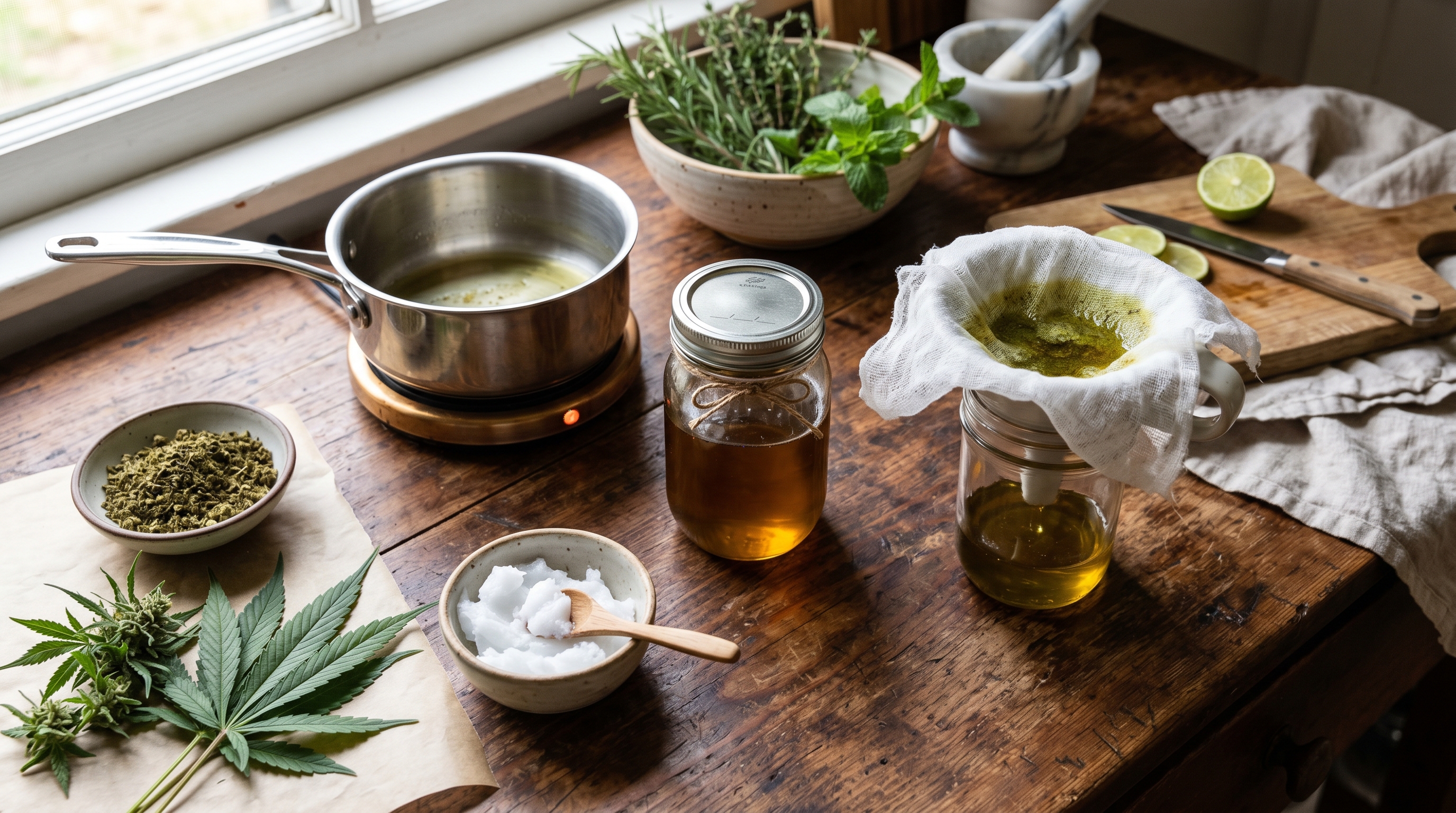
If there’s one ingredient that earns its keep in the edibles world, it’s coconut oil. Ask ten experienced home cooks what fat they reach for when they want maximum potency, flexibility, and shelf stability, and most of them will say the same thing. Coconut oil is the workhorse: it pulls cannabinoids out of flower with ruthless efficiency, it sets up solid at room temperature so you can pour it into capsules or whip it into a salve, and it folds into everything from morning coffee to a tray of brownies without complaint.
In this guide we’ll cover why coconut oil sits at the top of the carrier-fat hierarchy, the exact temperatures that protect your hard-won potency, and how to turn a jar of decarbed flower into a versatile infusion you’ll use a dozen different ways. One honest caveat before we start: every dosing number here is a careful estimate, not a lab result. Homemade infusions vary with your flower, your stove, and your own tolerance, so treat the math as a starting point and lean on the golden rule — start low, go slow.
Why Coconut Oil Is the Top Edible Carrier
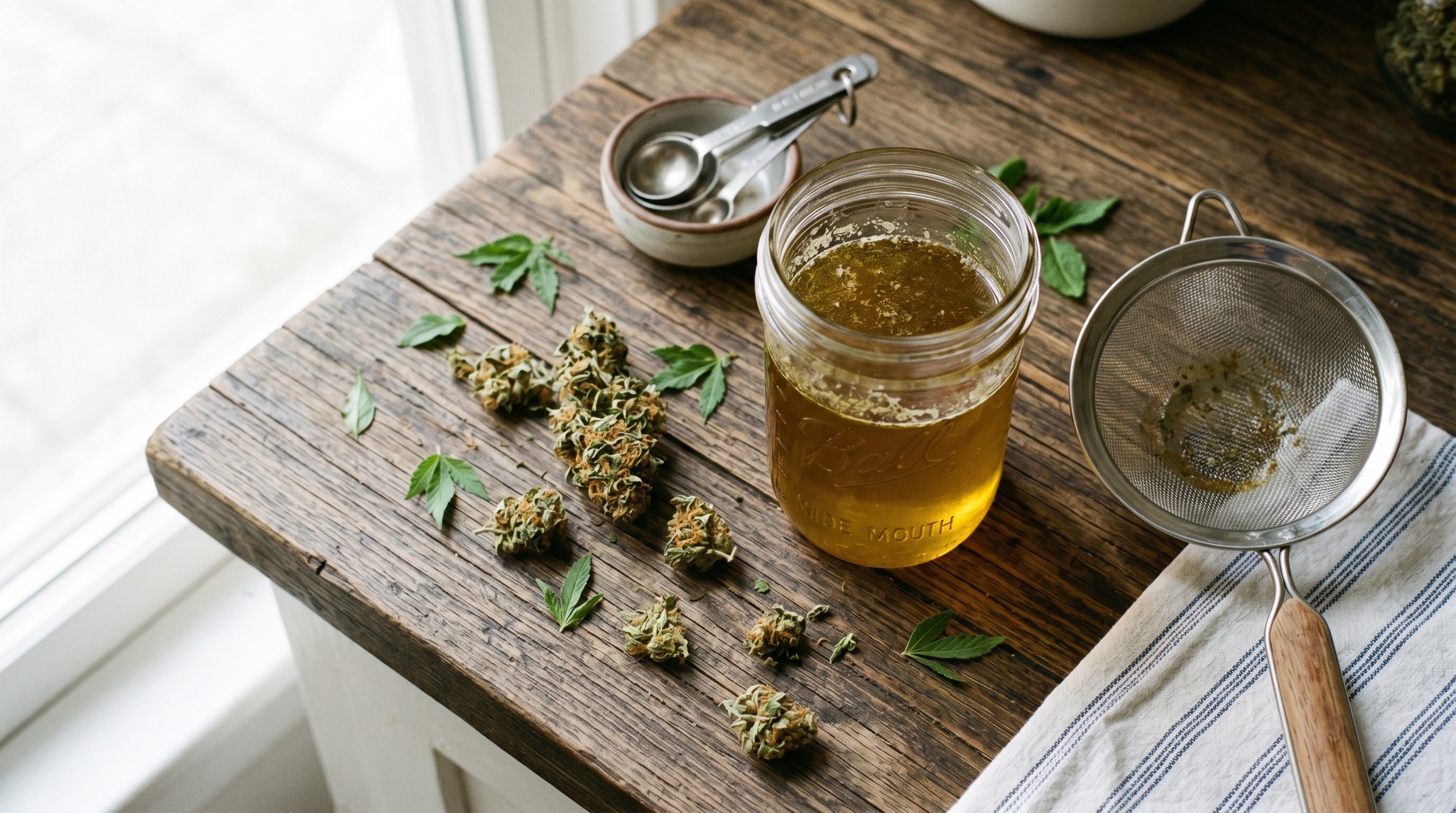
The whole reason any infusion works comes down to chemistry: THC, CBD, and the rest of the cannabinoid family are fat-soluble. They don’t dissolve in water — that’s why steeping flower in plain hot water makes weak, grassy “tea” — but they bind eagerly to fat. So the more fat a carrier holds, the more cannabinoids it can capture and hold onto. That’s where coconut oil pulls ahead of the pack.
Coconut oil is roughly 90% saturated fat — far more than butter (around 60%) or olive oil (under 20%). That dense, stable lipid content gives cannabinoids many more binding sites. So coconut infusions tend to come out more potent than the same flower steeped in a leaner oil. If you want the most THC and CBD from a given amount of bud, a high-saturated-fat carrier is your best bet. Our deep dive on choosing the right fat for cannabis infusions lays out the full comparison, and our piece on cannabis oil vs. flower explains how the delivery format changes the experience.
Three more properties make coconut oil the go-to:
- It’s solid at room temperature. Coconut oil firms up below about 76°F (24°C), which is perfect for filling cannabis capsules, spreading into a balm, or portioning into measured scoops. Compare that to cannabis-infused olive oil, which stays liquid and shines for savory drizzles instead.
- It’s wildly versatile. A neutral, faintly sweet fat slots into baking, coffee, smoothies, curries, and skin salves alike.
- It has a higher smoke point than butter, which makes the gentle infusion process more forgiving.
MCT vs. Virgin Coconut Oil
You’ll see two forms on the shelf, and they behave differently. Virgin (unrefined) coconut oil keeps its tropical aroma and antioxidants and sets up firm — ideal for topical salves and capsules. Refined coconut oil is deodorized for a neutral flavor and a higher smoke point, which suits baking and infusions where you don’t want a coconut note.
MCT oil is a fractionated coconut product made of medium-chain triglycerides. Because MCTs are metabolized quickly, many people report a faster perceived onset, and MCT stays liquid — which makes it the standard base for homemade tinctures and dropper bottles. The trade-off: MCT can’t be poured into capsules that need to set solid, and it lends a slightly oily mouthfeel to drinks. For an all-purpose kitchen infusion, virgin or refined coconut oil wins; for sublingual dosing, reach for MCT.
Ingredients and Equipment
This recipe scales cleanly. A 1:1 ratio of flower to oil by volume is the classic starting point.
Ingredients
- 7–14 grams (¼–½ oz) of cannabis flower — see the dosing note before you commit to an amount
- 1 cup (about 240 ml) coconut oil (virgin or refined)
- Optional: a teaspoon of sunflower lecithin to help with even distribution
Equipment
- Baking sheet + parchment paper (for decarbing)
- A slow cooker, double boiler, or oven-safe mason jar set in a water bath
- An instant-read or candy thermometer (non-negotiable for protecting potency)
- Fine-mesh strainer and/or cheesecloth
- A clean glass jar with a tight lid for storage
Step One: Decarboxylate First (Always)
Here’s the rule that separates a working infusion from a disappointing one: you must decarb before you infuse. Raw cannabis is loaded with THCA and CBDA — the acidic, non-intoxicating precursors. To unlock the THC and CBD that actually do something, you apply gentle heat over time to drive off a carboxyl group. That reaction is decarboxylation, and skipping it is the single most common reason homemade edibles fall flat.
We cover the chemistry in decarboxylation explained, with a practical walkthrough in how to decarb cannabis perfectly every time. The condensed version:
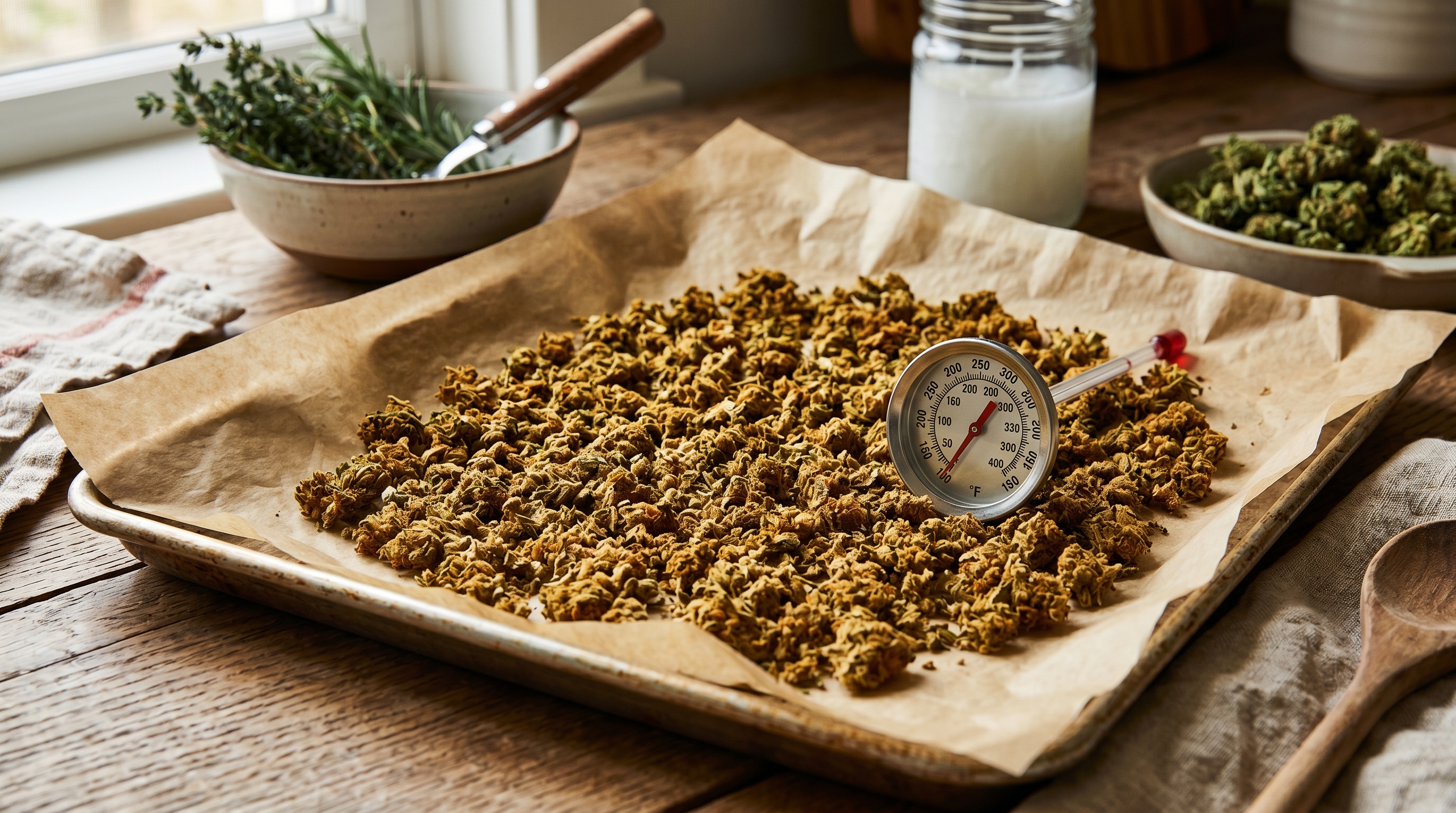
- Preheat your oven to 240°F (115°C). Low and slow is the goal — hotter ovens convert faster but burn off terpenes and risk degrading THC into CBN.
- Break your flower into roughly pea-sized pieces (don’t grind it to dust) and spread it on a parchment-lined baking sheet.
- Bake for 30 to 40 minutes, giving the tray a gentle shake halfway through. The flower should shift from bright green to a toasty light-brown.
- Let it cool completely. It’s now activated and ready to infuse.
A bonus: that decarb time also evaporates moisture and some of the chlorophyll-adjacent compounds behind the “weedy” taste. If flavor matters to you, our guide on how to make cannabis edibles without the weedy taste has more tricks.
Step Two: The Low-Temperature Infusion
Now the fun part. The temperature window matters more than almost anything else, so here’s the headline number: keep the oil between 160°F and 200°F (70–93°C) for the entire infusion. Hot enough to coax cannabinoids into the fat, cool enough that you’re not boiling off terpenes or breaking down THC. Degradation, not the smoke point, is the concern at these temperatures.
Pick whichever method matches your kitchen:
- Combine your decarbed flower and coconut oil in your vessel. If you’re using lecithin, stir it in now.
- Heat gently and hold the temperature in that 160–200°F band. Use the thermometer — eyeballing it is how potency dies.
- Slow cooker: Set to low or “warm,” lid on, and check the temperature with your thermometer. Many slow cookers run hot, so prop the lid if it climbs past 200°F.
- Double boiler: The water bath naturally caps the temperature near boiling, giving you a built-in safety margin.
- Mason jar in a water bath: Seal decarbed flower and oil in a jar, set it in a pot of water on a folded towel, and hold a gentle simmer. This method keeps every terpene trapped inside the jar.
- Simmer for 2 to 3 hours, stirring occasionally. Longer, lower infusions generally pull more cannabinoids than short, hot ones.
- Don’t let it boil. Bubbling oil is too hot and will scorch both the plant material and the cannabinoids.
The terpenes you’re protecting are the same compounds that shape the experience — myrcene for its relaxing lean, limonene for a brighter mood, caryophyllene for physical comfort, linalool for calm, pinene for clarity, and terpinolene for an uplifting edge. Treat them gently and your infusion keeps the character of the strain you started with.
Step Three: Strain and Store
Once the infusion has done its time:
- Strain while warm, when the oil is at its most fluid. Pour through a fine-mesh strainer lined with cheesecloth into your storage jar.
- Don’t wring the cheesecloth. Squeezing forces chlorophyll and plant solids into the oil, which adds bitterness and a green, grassy taste without meaningfully boosting potency. Let gravity do the work.
- Cool and label. Note the date, the flower weight, and the flower’s THC percentage so future-you can do the dosing math.
For storage, keep finished coconut oil in an airtight glass jar away from light and heat. At room temperature it stays good for a few weeks; in the fridge it’ll comfortably last a couple of months. Infused oils can go rancid faster than plain oil because of the residual plant matter, so when in doubt, refrigerate. For more on keeping edibles fresh, see our cannabis edibles shelf-life and storage guide.
Dosing: The Math (and the Honest Caveats)
This is where home infusions get humbling. You cannot know your exact potency without lab testing, but you can estimate. Here’s the back-of-the-napkin method, and we go deeper in edible dosing math for home cooks.
Start with the theoretical maximum. One gram of flower is 1,000 mg. If your flower tests at, say, 20% THC, that’s roughly 200 mg of THC per gram. Then apply two reality checks:
- Decarb efficiency. Decarboxylation typically converts only about 85–90% of THCA to THC, so multiply by ~0.90.
- Extraction loss. Some cannabinoids stay locked in the spent flower or cling to your strainer, so real-world recovery is often 60–80%, not 100%.
So for 7 grams of 20% flower infused into 1 cup of oil (48 teaspoons):
- 7 g × 200 mg = 1,400 mg theoretical THC
- × 0.90 decarb × ~0.70 extraction ≈ ~880 mg THC in the batch
- ÷ 48 teaspoons ≈ ~18 mg THC per teaspoon
Those numbers are estimates, not guarantees — actual potency commonly lands lower than the math suggests. Always test a small portion first. Take a measured amount (a half-teaspoon or less), wait a full 2 hours before considering more, and write down how it felt. Edibles metabolize through the liver into 11-hydroxy-THC, which is why they hit harder and last longer than inhaled cannabis. If you’re newer to edibles, our 2-hour rule guide and the beginner’s dosing chart are worth a read before your first batch. If you want hard numbers, our how to test homemade edible potency at home guide covers the consumer testing tools that exist.
How to Use Cannabis Coconut Oil
This is the payoff. Because it sets up solid and tastes neutral, coconut oil is the most versatile infusion in the kitchen.
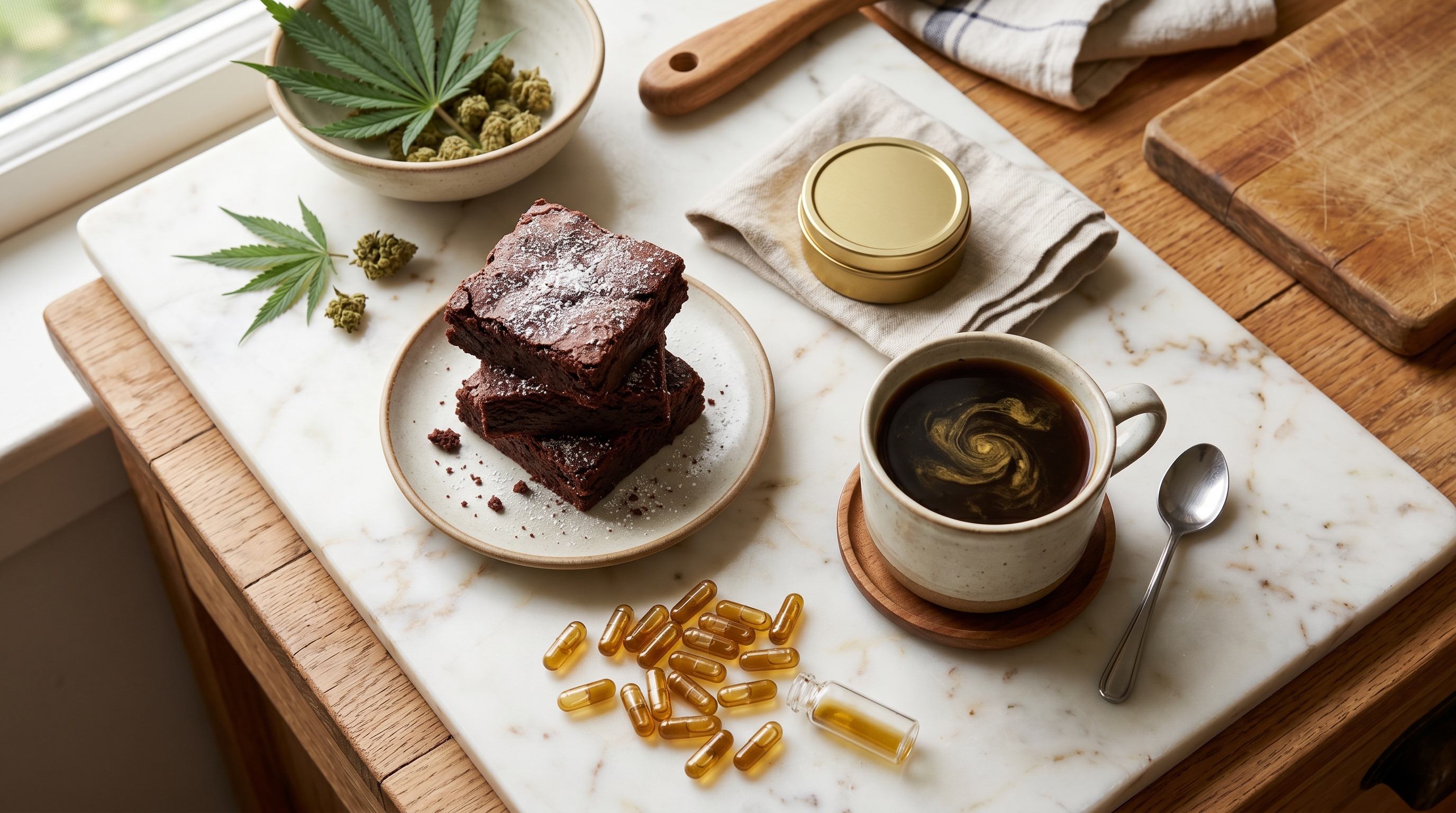
- Capsules. Melt the oil slightly, fill empty gel caps with a measured amount, and chill until solid. This is the most precise, most discreet way to dose — see our cannabis capsules and pills guide.
- Baking. Swap it 1:1 for butter or other oils in brownies, cookies, and quick breads. Try it in our cannabis-infused brownie recipe or banana bread. Keep oven temps moderate to protect the cannabinoids.
- Coffee and smoothies. Blend a measured scoop into hot coffee or a smoothie — the fat helps it emulsify rather than float as a slick. See cannabis-infused coffee and tea for microdose ideas.
- Savory cooking. Stir into curries, rice, roasted vegetables, or mac and cheese. Its neutral profile disappears into bold dishes.
- Topicals. Whip cooled infused oil with a little beeswax for a DIY salve. Used on the skin, topicals work locally without getting you high, making them popular among wellness-minded users seeking targeted physical comfort.
Matching Strain to Goal
Because you control the input, you can tune the output. Choosing flower by its terpene and effect profile is where the High IQ approach beats reading a label. A few starting points:
- For relaxation and sleep, myrcene-rich Relax High strains like Granddaddy Purple or Bubba Kush lean toward a sleepy, relaxed body experience.
- For daytime mood, limonene-forward Uplift High options such as Super Lemon Haze or Tangie skew euphoric and bright.
- For physical comfort, caryophyllene-heavy Relief High strains aimed at pain relief make excellent topical and capsule infusions.
- For a gentle, balanced edible, beginner-friendly Balance High or higher-CBD Harlequin keeps things mellow — handy when you’re still calibrating dose.
The strain matters less than how you respond to its profile. Track which infusions land well in the High IQ app, and over a few batches you’ll know your personal recipe cold.
Key Takeaways
- Coconut oil is the top edible carrier because ~90% saturated fat means maximum cannabinoid binding and potency.
- Decarb first, always — 240°F for 30–40 minutes — or your infusion won’t work.
- Hold the infusion at 160–200°F for 2–3 hours. A thermometer is your most important tool.
- Strain gently, store cool, and refrigerate to fight rancidity.
- All dosing is an estimate. Start with a half-teaspoon or less, wait two full hours, and titrate up slowly.
Make one batch and you’ll see why coconut oil never leaves the rotation. It’s the most flexible foundation in the edibles kitchen — capsules in the morning, a salve at night, brownies for the weekend, all from one jar.
Sources
- Leafly — Cannabis and coconut oil: Benefits, uses & how to make it
- Veriheal — Infuse Anything With This Simple Cannabis Coconut Oil Recipe
- Royal Queen Seeds — How to Make Cannabis MCT Oil: Infusion, Storage, and Dosing
- Sorting Robotics — What Oil Is Best for Cannabis Infusion? A Complete Guide


