Can Cannabis Make Pain Bother You Less Without Hurting Less?
Cannabis can change how unpleasant pain feels without reducing its intensity, but that is not the only pattern. Compare two controlled experiments.

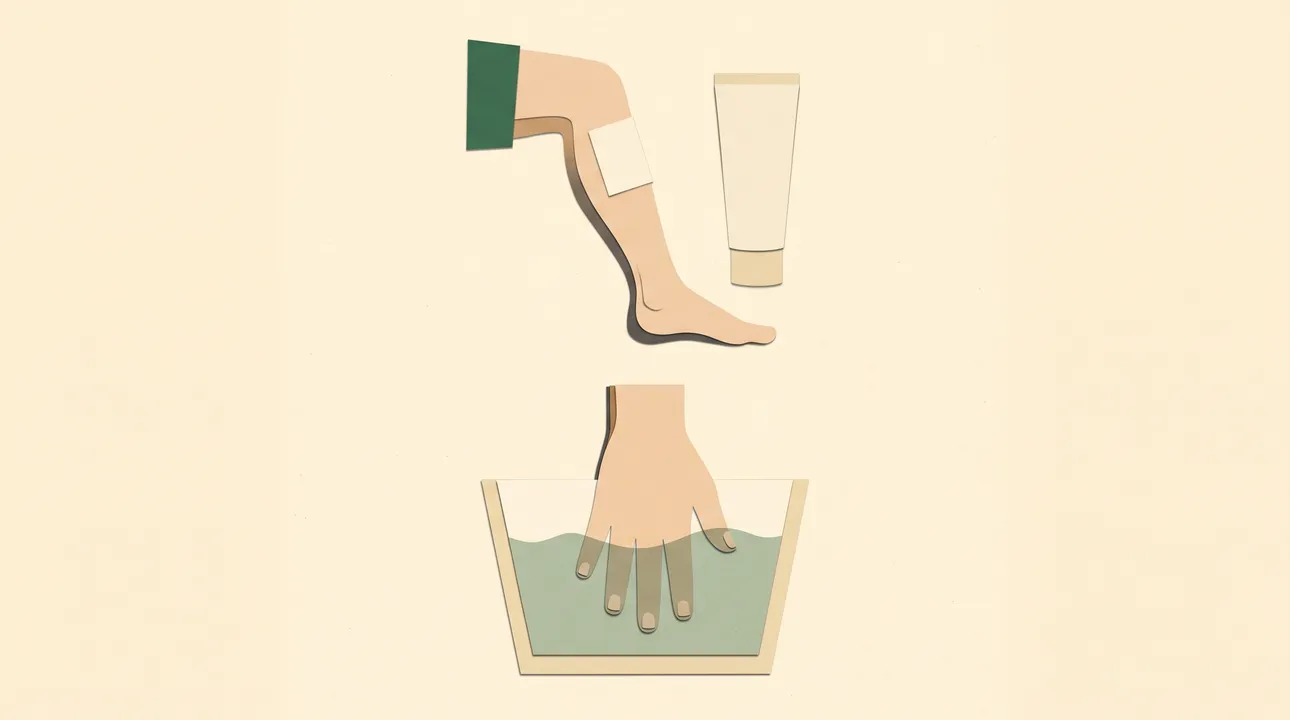
Cannabis can make pain feel less unpleasant without a significant drop in its intensity, but other experiments found reductions in both ratings. “It bothers me less” and “it hurts less” answer different questions. Neither result, alone, tells us that an injury has healed or that a treatment will work for chronic pain.
Here in High School, the useful lesson is to name the outcome before calling something pain relief. A study can measure how strong pain feels, how much it bothers someone, when pain starts or how long someone tolerates a test. Those measures need their own results.
The opening illustration shows two experimental tasks, not two treatments or a comparison of which product works better.
What is the difference between pain intensity and unpleasantness?
Intensity asks how strong the sensation feels. Unpleasantness asks how much that sensation bothers you. The two studies below collected separate ratings rather than assuming one answer stood for both. Lee et al., 2013, Cooper et al., 2013
As a fictional example, “the burning is just as strong, but it bothers me less” differs from “the burning feels weaker.” The first statement does not deny pain. The second does not tell us everything about how that pain affects the person.
This is why a single phrase such as “cannabis helped” leaves an important question open: helped with what? A careful account can name more than one change without treating them as interchangeable.
What did the two controlled experiments find?
Read the result beside the task, route and group:
| Study and task | Participants and exposure | Subjective result versus placebo | Main limit |
|---|---|---|---|
| Lee et al., 2013: capsaicin-induced ongoing and provoked pain | 12 healthy cannabis-naive men analyzed; oral 15 mg THC or placebo crossed with topical 1% capsaicin or placebo cream | Unpleasantness fell; intensity changes were not significant | Acute experimental pain, small male-only sample |
| Cooper et al., 2013: cold-water pain | 30 healthy daily users completed; oral dronabinol 10/20 mg or smoked cannabis 1.98/3.56% THC, plus placebo | Both smoked strengths and oral 20 mg reduced intensity and bothersomeness; oral 10 mg did not change those ratings | Experimental task in daily users, not chronic-pain patients |
Original full sources: Lee et al. and Cooper et al.. The doses describe research conditions, not a dosing guide.
Fifteen men were recruited; three were excluded, including one with acute paranoia. THC slowed reaction time in 11 with usable data. Lee et al.
Thirty completed from 34 enrolled. Cooper et al.
Does this mean cannabis is only a distraction?
No. The capsaicin result shows one pattern under one set of conditions. The cold-water result provides a counterexample to the claim that cannabis can only change how much pain bothers someone.
It also helps to separate a result from a proposed explanation. A lower unpleasantness rating does not, on its own, prove distraction caused that change. Calling the finding “only distraction” replaces a measured outcome with a mechanism the rating alone cannot establish.
The Lee study also used brain imaging. Its reported links between brain activity and changes in pain ratings do not establish one universal pathway for cannabis pain relief. Lee et al.
Our endocannabinoid system lesson gives biological background. A receptor explanation still needs to connect to the particular human outcome being discussed.
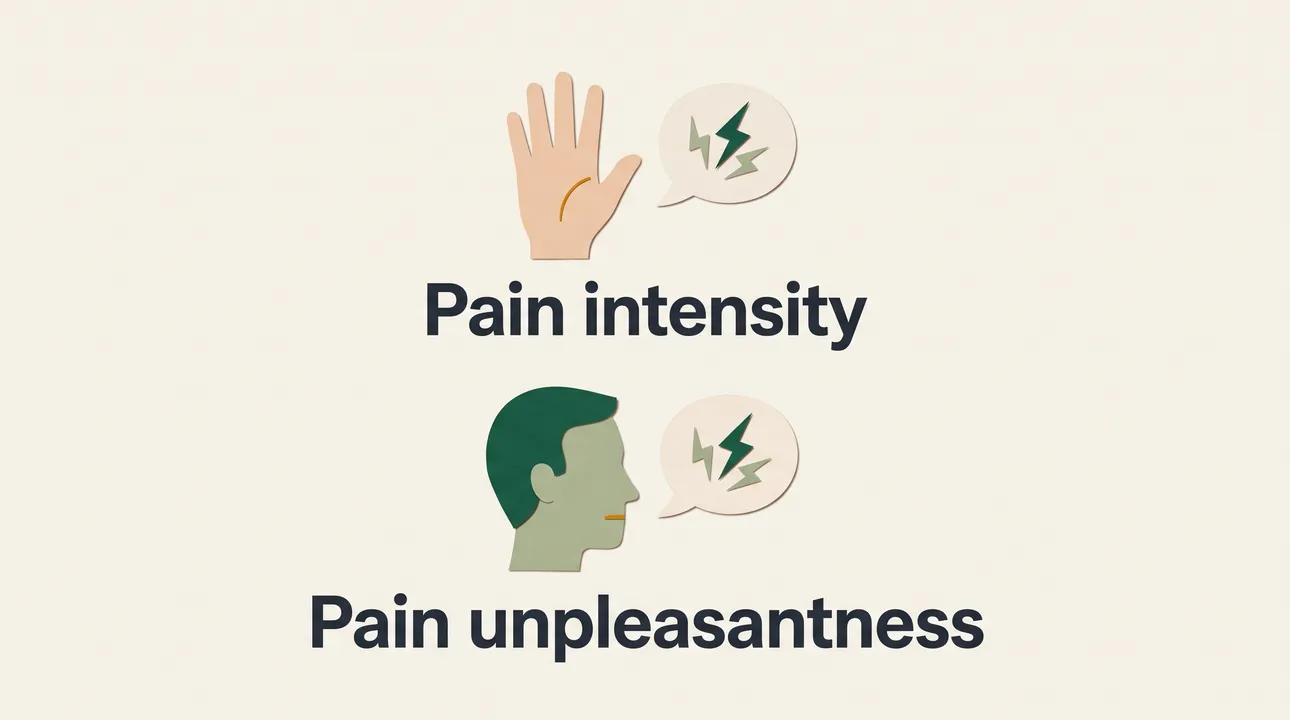
Two questions about one experience: how strong it feels and how much it bothers you. The symbols show questions, not measured effects or where THC acts.
Why did the studies show different patterns?
These experiments differed in pain model, cannabis history, dose and route. They did not run a single controlled comparison that isolates which difference explains the results. We should not choose the most convenient explanation and present it as settled.
Nor can the table rank products for a person in pain. An oral dose in milligrams and a cigarette’s THC percentage describe different things. The percentage is not the amount absorbed by a participant, and matching the labels would not recreate the experiment.
Our lesson on tolerance across different effects explains why a response to one outcome cannot stand for every other outcome. It does not establish that tolerance caused the contrast here.
Are pain tolerance and pain intensity the same measure?
No. Oral 10 mg increased hand-withdrawal tolerance despite unchanged ratings. Stronger smoking showed time-dependent tolerance effects, with no significant increase across the session. Cooper et al.
So “the lower oral dose did nothing” would also overstate the result. A null rating is specific to that rating. It is not a verdict on every measure in the experiment.
Our lesson on placebo and expectations explains why the comparison condition matters. A reported change and a difference from placebo are separate claims.
Can these results guide chronic-pain treatment?
These were acute pain experiments in healthy volunteers. They do not determine long-term benefit, daily function, an individual’s treatment plan or whether the source of pain has resolved. Those questions need evidence in the relevant patients and setting.
Our chronic-pain evidence lesson covers the separate clinical question. Keep a laboratory rating beside its actual limits when discussing it with a clinician; it cannot supply a personal prescription.
Our confidence and performance lesson makes a related distinction: how something feels and what a task measures can differ. It does not tell us that pain is imaginary or that a person’s account is invalid.
Key takeaways
- Pain intensity and unpleasantness ask different questions.
- One capsaicin experiment found lower unpleasantness with no significant intensity change.
- A cold-water experiment found some conditions reduced both ratings; cannabis is not universally “only distraction.”
- A null result for one measure does not erase other findings or establish chronic treatment benefit.
FAQ
Can pain still hurt while bothering me less?
Yes, that pattern appeared in the capsaicin experiment. It describes two separate ratings, not proof that the pain or its cause has disappeared.
Does cannabis only change the emotional side of pain?
That is too broad. The cold-water study found lower intensity as well as bothersomeness in some conditions. Results depend on the outcome and experiment being described.
Does feeling less bothered mean an injury is healed?
No healing conclusion follows from these pain-rating experiments. A change in the experience does not establish what happened to its cause.
Did the lower oral THC dose do nothing?
No. Use separate results for each measure. A dose cannot receive one verdict that stands for every outcome.
Sources
- Lee MC, Ploner M, Wiech K, Bingel U, Wanigasekera V, Brooks J, Menon DK, Tracey I (2013). Amygdala activity contributes to the dissociative effect of cannabis on pain perception. Pain154(1):124–134. DOI; PMID23273106.
- Cooper ZD, Comer SD, Haney M (2013). Comparison of the Analgesic Effects of Dronabinol and Smoked Marijuana in Daily Marijuana Smokers. Neuropsychopharmacology38(10):1984–1992. DOI; PMID23609132.





