Cannabis and Osteoarthritis: What the Joint-Pain Research Shows
An honest look at cannabis and CBD for osteoarthritis: strong animal data, limited human evidence, and what the joint-pain research actually says.


If you have osteoarthritis, you have probably heard a friend, a forum, or a dispensary shelf promise that CBD will fix your aching knees. I want to be straight with you from the first sentence: the science is more interesting and more humble than the marketing. There is genuinely exciting biology here, and there is also a real shortage of strong human studies. Both things are true at once.
This article is specifically about osteoarthritis (OA) — the slow, wear-and-tear breakdown of cartilage that affects hundreds of millions of people. That makes it different from the broader story I told in Cannabis for Arthritis and Joint Pain, because OA is not the same disease as the autoimmune arthritis many people picture.
A quick, important note before we go further: nothing here is medical advice, and cannabis is not a cure for osteoarthritis. Please read the cautions near the end and talk to your own doctor before changing anything — especially if you take other medications.
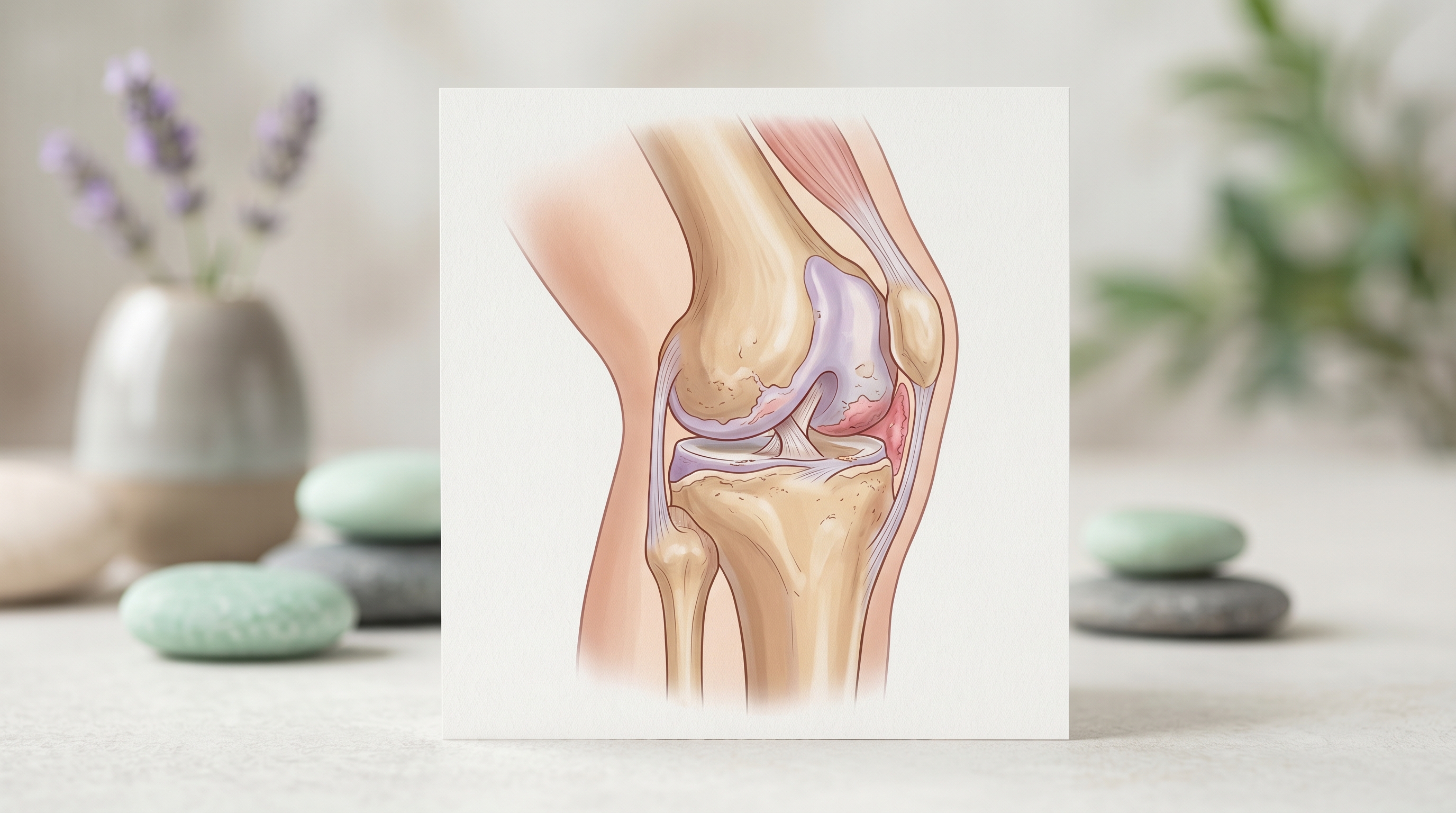
What Osteoarthritis Actually Is (and Why It Is Not Rheumatoid Arthritis)
Osteoarthritis is a degenerative joint disease. Over years, the smooth cartilage that cushions the ends of your bones thins and frays. The body responds with low-grade inflammation in the joint lining (the synovium), bone changes underneath the cartilage, and — over time — pain, stiffness, and lost function. It shows up most in knees, hips, hands, and the spine.
Rheumatoid arthritis (RA) is a different beast. RA is an autoimmune disease: the immune system mistakenly attacks the joint lining, driving aggressive, body-wide inflammation. OA is mostly mechanical and local; RA is immune-driven and systemic. They can feel similar from the outside — sore, swollen joints — but the underlying machinery differs, which matters a lot when we talk about how cannabinoids might help.
Why does the distinction matter? Because most of the headline-grabbing “cannabis for arthritis” research that shows dramatic anti-inflammatory effects was done in inflammatory or autoimmune models. OA has an inflammatory component, but it is also a structural problem — and structure is harder for any drug to fix. If you want the deeper picture of how cannabinoids interact with inflammation generally, I unpack it in Cannabis and Inflammation: The Complete Molecular Science.
The Endocannabinoid System Lives in Your Joints
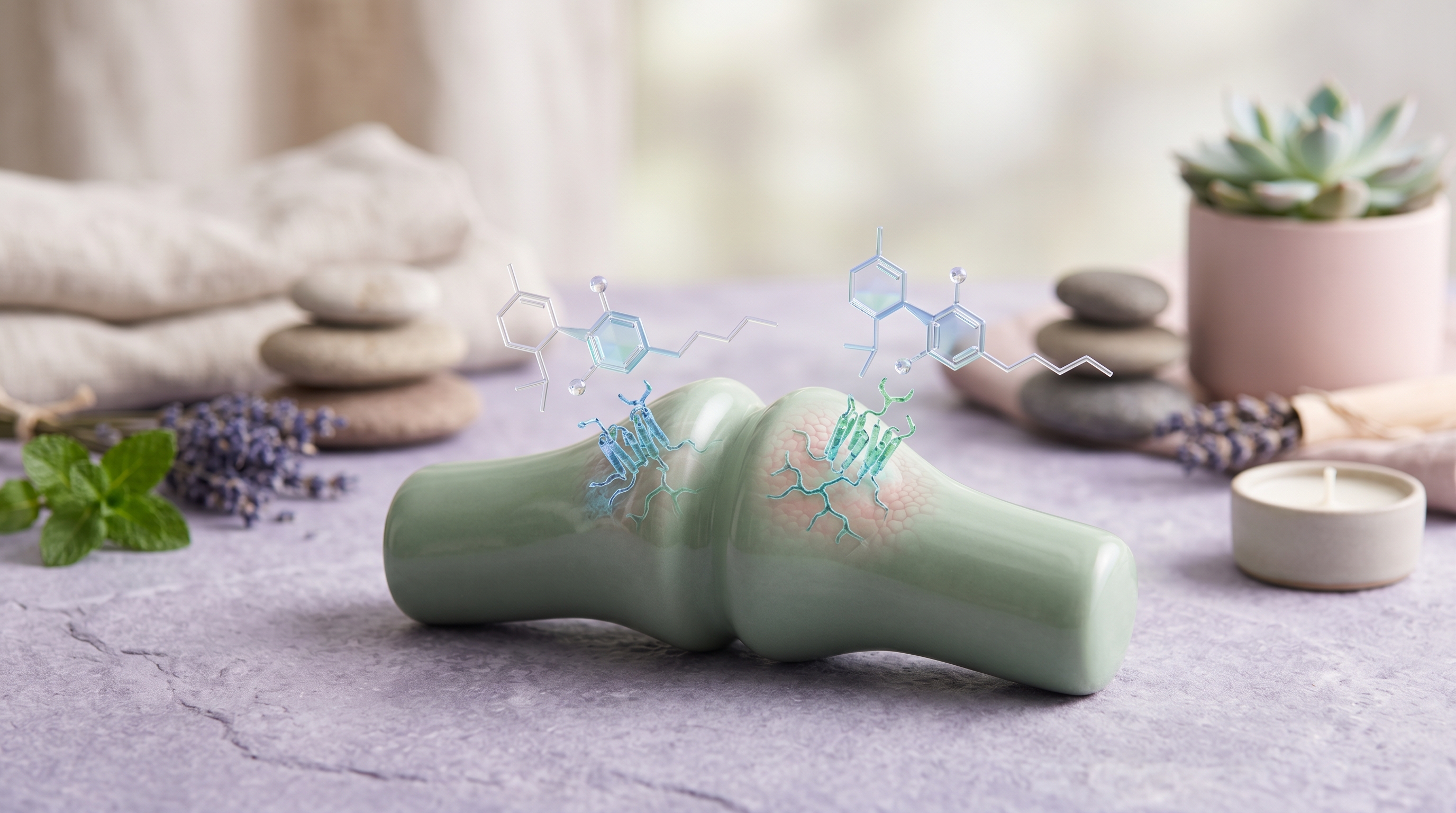
Here is the part that gives the whole field its hope. Your joints are not passive hinges — they have a working endocannabinoid system (ECS). Researchers have found functional CB1 and CB2 receptors on the nerves and tiny blood vessels that supply the knee joint, in both animals and humans [Philpott et al., 2017]. If receptors are present, then cannabinoids have a plausible place to act.
The two receptors do different jobs. CB1 sits mostly on nerves and helps dial pain signaling up or down. CB2 is the immune-and-inflammation receptor, and it shows up in the synovium — the very tissue that gets inflamed in OA. (For a friendly tour of the difference, see CB1 vs CB2 Receptors: Why Location Matters.) There is even a third player, the orphan receptor GPR55, plus the TRPV1 “heat and pain” channel, both of which CBD is known to touch.
A 2013 study in PLOS One added a fascinating clinical clue: in human spinal cord samples, the more cartilage damage a knee had, the less CB2 receptor was found in the corresponding spinal cord [Burston et al., 2013]. In other words, the ECS appears to be actively involved in how OA pain gets processed — not just in the joint, but in the nervous system that carries the signal. If you are new to this whole system, my Endocannabinoid System Guide is the place to start.
The Preclinical Evidence Is Genuinely Strong
When we look at animal models of OA, the cannabinoid story gets compelling. Three findings stand out.
1. Local CBD blocked OA pain in rats. In the Philpott team’s 2017 study, researchers induced knee OA in rats and treated the joint directly with CBD (100–300 micrograms). CBD dose-dependently quieted the firing of pain nerves and improved how much weight the animals would put on the joint (P<0.0001). Even more striking, giving CBD before OA developed reduced early joint inflammation and was neuroprotective — it helped prevent nerve damage that drives long-term pain. The anti-inflammatory effect was blocked by a CB2 (and TRPV1) blocker, pointing straight at those receptors.
2. Transdermal CBD calmed inflamed joints. A 2016 rat study applied CBD as a skin gel over an arthritic knee. It reduced joint swelling, immune-cell invasion, and synovial-membrane thickening in a dose-dependent way, while pain behavior returned toward normal — with no obvious effect on the brain [Hammell et al., 2016]. This is the experimental backbone behind today’s enthusiasm for topical CBD.
3. CBG may protect cartilage in a way CBD does not. A 2023 mouse study compared CBD oil and CBG oil after surgical OA. Both reduced synovitis and improved gait and movement. But only the CBG oil reduced cartilage degeneration, slowed chondrocyte loss, and lowered the cartilage-eating enzyme MMP-13 [Karuppagounder et al., 2023]. That hints at something the field cares deeply about: a treatment that does not just mask pain but actually slows the disease. I cover this lesser-known cannabinoid in CBG: The Mother Cannabinoid.
There is also a terpene angle. Beta-caryophyllene, common in many cannabis cultivars, is a direct CB2 agonist — meaning it can engage that anti-inflammatory receptor on its own. I dig into that in Caryophyllene: The Terpene That Acts Like a Cannabinoid.
The Human Evidence Is Limited — and Often Disappointing
Now for the honesty. Strong animal data does not always survive contact with the human body, and OA is a tough test case.
A 2024 scoping review in Clinical Rheumatology gathered the human evidence: out of more than 2,500 citations, only 10 studies on cannabis-based medicines for OA met inclusion criteria, and only four were randomized controlled trials (RCTs) [Xiao et al., 2024]. The verdict was mixed. Roughly 60% reported some pain improvement — but the larger, longer, better-designed studies generally did not find a significant benefit. The reviewers concluded the data is simply “insufficient to make recommendations.” That is the most honest summary of where we stand.
The disappointing trials are worth naming, because they are well done:
- Oral CBD added to paracetamol (2023): Knee-OA patients took high-dose oral CBD (600 mg/day) on top of their usual painkiller for 8 weeks. It performed no better than placebo [Pramhas et al., 2023].
- CBD-rich full-spectrum oil — the CANOA trial (2025): A double-blind, placebo-controlled trial of CBD-rich cannabis oil for knee OA found that both the cannabis and placebo groups improved similarly, with no significant difference between them. The good news: it was well tolerated, with no serious adverse events [Mojoli et al., 2025].
- Low-dose CBD for hand arthritis (2022): 10–20 mg/day produced no pain reduction versus placebo.
So why the gap between mice and people? A few likely reasons: human trials often used low doses or CBD-only formulas (no THC, no entourage), the trials were short (often 8 weeks), product quality varied wildly, and OA pain in humans is shaped by mood, sleep, and the nervous system in ways a controlled mouse cannot replicate. The 2025 AHRQ “living systematic review” on cannabis for chronic pain reaches a similar careful note: select people with chronic pain may see small, short-term improvements, but the evidence for durable benefit remains thin.
Where the human signal is most encouraging
It is not all flat. Topical CBD is where reviewers see the most promising — if still preliminary — results. A 2026 review focused on human OA studies from 2020 onward concluded that topical CBD “showed the most encouraging results and an acceptable safety profile,” while stressing that variability in dosing and products keeps the overall evidence weak (doi.org/10.1007/s10067-026-08038-6). Several studies also found that OA patients using cannabis reduced their opioid use — an outcome that matters even if the raw pain scores are modest. I compare those two paths head to head in Cannabis vs Opioids for Chronic Pain.
How People Actually Use Cannabis for OA
I will describe what people do, not prescribe what you should do. The choice usually comes down to topical versus internal, plus the THC-to-CBD ratio.
Topicals (creams, balms, salves). These target a specific joint — a knee, a thumb, a hand. They generally do not get you high because little reaches the bloodstream, and they map best to the rat-skin-gel data above. This is the most popular starting point for OA, especially for hands and knees. See Cannabis Topicals: How They Work Without Getting You High and the DIY angle in Cannabis Topical Salves: DIY Recipes for Targeted Pain Relief.
Oral and sublingual (oils, tinctures, capsules). These work body-wide and are what most failed OA trials tested. They may help with the sleep and mood side of living with chronic pain even when they do not move a pain score much. If this is your route, How to Make Cannabis Tinctures at Home and Cannabis Capsules and Pills are useful primers.
The ratio question. Many OA users prefer CBD-dominant or balanced products to keep the high minimal while leaning on the anti-inflammatory side. Because cannabinoids can behave in a biphasic way — where a moderate dose helps more than a big one — chasing higher doses is not always better. Our guides on finding your THC-to-CBD ratio and THC vs CBD differences walk through this, and Finding Your THC/CBD Sweet Spot shares what pain patients reported. The entourage effect is also why some prefer full-spectrum over isolate, though the CANOA trial is a reminder that “full-spectrum” is not a guarantee.
Because so many people with OA are older adults managing several conditions at once, I would also point you to Cannabis for Seniors before you start. And remember that cannabinoids touch the same pain-and-inflammation pathways discussed in Cannabis for Pain Management and Cannabis Terpenes Relieve Pain Through Adenosine Receptors.
Limitations and Cautions You Should Take Seriously
This is the part I refuse to soft-pedal.
- Cannabis does not cure osteoarthritis. At best, current human evidence suggests it may help some people with symptoms. It does not regrow cartilage in humans, and the cartilage-protective CBG signal is so far only in mice.
- High-dose oral CBD has been linked to elevated liver enzymes in trials — a real reason not to mega-dose on your own.
- Drug interactions are genuine. CBD can affect how your liver processes other medications (the same enzyme system that handles many common drugs). If you take blood thinners, seizure medicine, or anything with a narrow safety window, this matters.
- Product quality is all over the map. Lab-tested products from regulated sources are worth the premium; mislabeled CBD is common.
- THC has its own risks — impairment, dizziness, and falls (a serious concern for older adults). Start low, go slow, and never drive impaired. Our beginner’s dosing chart is a sane starting point.
Please Talk to Your Doctor
I mean this sincerely: OA is a medical condition, and the right plan depends on your joints, your other medications, and your goals. Cannabis might fit alongside physical therapy, weight management, and other evidence-based care — or it might interact with something you are already taking. A clinician who knows your history can help you weigh that. Bring this article, bring the study names, and have the conversation. Treat anything you read online — including this — as a starting point for that discussion, not a substitute for it.
Key Takeaways
- Osteoarthritis is a degenerative wear-and-tear disease, different from autoimmune rheumatoid arthritis — so research on one does not automatically apply to the other.
- Your joints contain a real endocannabinoid system, with CB2 receptors in the inflamed synovium, which gives cannabinoids a plausible target.
- Animal evidence is strong: CBD may reduce OA pain and inflammation in rats and mice, and CBG may even protect cartilage in mice.
- Human evidence is limited and mixed: the best oral-CBD trials largely did not beat placebo, though topical CBD shows the most encouraging early signal.
- Cannabis is not a cure, high-dose oral CBD carries liver-enzyme concerns, and drug interactions are real — so please talk to your doctor first.
Frequently Asked Questions
Does CBD work for osteoarthritis? Honestly, the human evidence is mixed and limited. Animal studies are strong, but the best human trials of oral CBD largely failed to beat placebo. Topical CBD shows the most encouraging early human results. It may help some people, but it is not proven and is not a cure.
Is cannabis better for osteoarthritis or rheumatoid arthritis? They are different diseases. RA is autoimmune and inflammation-driven; OA is degenerative wear-and-tear. Much of the dramatic anti-inflammatory cannabinoid data comes from inflammatory or autoimmune models, so it does not automatically transfer to OA’s structural problem.
Should I use a topical or take it orally? Topicals target one joint and rarely cause a high, and they align with the strongest preclinical data for local relief. Oral products work body-wide and may help sleep and mood, but that is also the route that struggled most in OA trials.
What about CBG instead of CBD? In a mouse study, CBG (not CBD) actually protected cartilage. That is exciting but very preliminary — there are no human OA trials confirming it. Consider it a research frontier, not a recommendation.
Can cannabis replace my arthritis medication? No. Do not stop prescribed treatment. Talk to your doctor about whether cannabis could complement your existing plan, especially because of possible drug interactions.
Sources
- Philpott HT, et al. Study on cannabidiol, early-phase inflammation, and nerve protection in a rat osteoarthritis model. Pain, 2017. doi.org/10.1097/j.pain.0000000000001052
- Hammell DC, et al. “Transdermal cannabidiol reduces inflammation and pain-related behaviours in a rat model of arthritis.” European Journal of Pain, 2016. doi.org/10.1002/ejp.818
- Burston JJ, et al. “Cannabinoid CB2 receptors regulate central sensitization and pain responses associated with osteoarthritis of the knee joint.” PLOS One, 2013. doi.org/10.1371/journal.pone.0080440
- Karuppagounder V, et al. “Therapeutic effects of non-euphorigenic cannabis extracts in osteoarthritis.” Cannabis and Cannabinoid Research, 8(6), 1030–1044, 2023. doi.org/10.1089/can.2021.0244
- Xiao ATY, et al. “Evidence for the use of cannabis-based medicines in osteoarthritis: a scoping review.” Clinical Rheumatology, 2024. doi.org/10.1007/s10067-024-07001-7
- Pramhas S, et al. “Oral cannabidiol (CBD) as add-on to paracetamol for painful chronic osteoarthritis of the knee: a randomized, double-blind, placebo-controlled trial.” The Lancet Regional Health – Europe, 2023. doi.org/10.1016/j.lanepe.2023.100777
- Mojoli A, et al. “Effects and safety of a CBD-rich Cannabis sativa oil in knee osteoarthritis (CANOA): a double-blind, randomized, placebo-controlled trial.” Frontiers in Pharmacology, 2025. doi.org/10.3389/fphar.2025.1657065
- “The role of cannabis-based medicinal products in managing osteoarthritis symptoms: a scoping review of current evidence.” Clinical Rheumatology, 2026. doi.org/10.1007/s10067-026-08038-6
- Cásedas G, et al. “Cannabidiol (CBD): A systematic review of clinical and preclinical evidence in the treatment of pain.” Pharmaceuticals, 2024. doi.org/10.3390/ph17111438