Cannabis Harvest Season: A Fall Forager's Guide for 2026
Why fall is cannabis harvest season, what Croptober means for fresh flower and prices, plus cozy autumn strains, terpenes, and rituals.


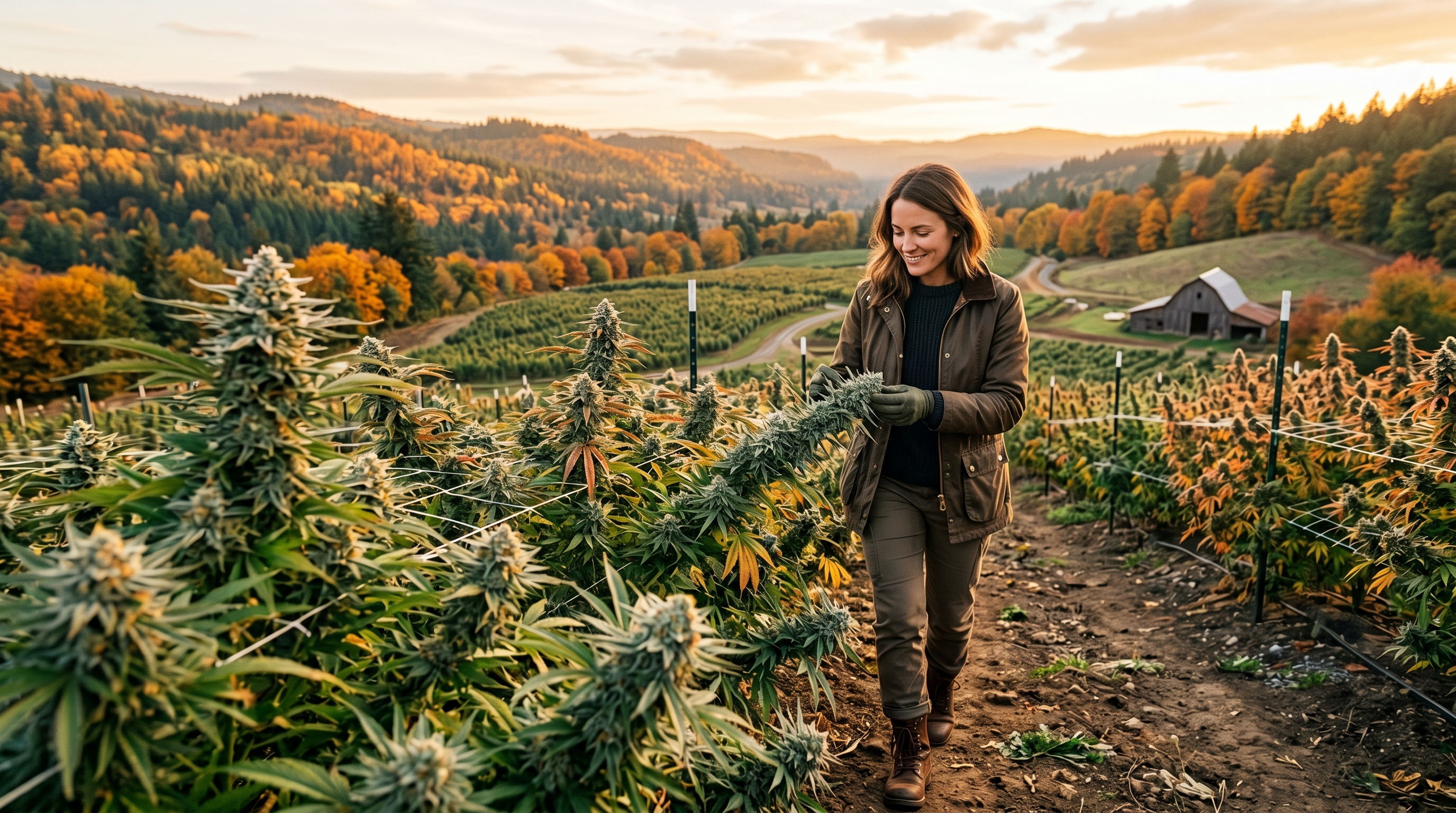
Every autumn, the air turns crisp and the light goes golden. The cannabis world holds its breath. Growers call this Croptober. It’s the few weeks each fall when outdoor plants finish their season. The year’s biggest wave of sun-grown flower comes off the field. Ever wonder why so much “fresh drop” flower shows up around Halloween? Or why your favorite outdoor strain tastes brighter in October? You’re noticing one of the most reliable rhythms in cannabis.
Welcome to harvest season. Think of this as your fall forager’s guide. It’s part nature lesson, part shopping tip, part cozy-night-in ritual. We’ll cover why fall is the finish line for outdoor plants. We’ll look at what Croptober means for the flower on the shelf and your wallet. Then we’ll get into the terpenes that make fall cannabis feel so seasonal, plus a few warm pairings for the slow days ahead.
Why fall is cannabis harvest season
Outdoor cannabis doesn’t flower on a calendar. It flowers on a clock made of sunlight. Cannabis is what growers call a short-day plant. A better name might be a long-night plant. Long summer days keep the plant leafy and green. After the June solstice, the days slowly get shorter. Once the plant gets about 12 hours of dark each night, a switch flips. This happens in late July or August up north. Now the plant pours its energy into buds and resin.
That switch is real biology, not folklore. The long night lowers key plant hormones at the growing tips. That shortens the gaps between nodes. The flowers pack into the dense, sticky clusters we call buds (uhae245, Horticulture Research, 2024). The plant only needs about three short days to start. But it has to keep getting them, right up to the finish.
After the August flip, the clock keeps ticking. Indica-leaning plants tend to ripen in 8 to 9 weeks. Many are ready by late September. Sativa-leaning plants can take 10 to 14 weeks. Some won’t finish until November. Stack those timelines on the light cycle, and most of the crop lands in October. That’s Croptober. Want the grower’s side? Our outdoor cannabis growing season starter guide and the full seed-to-harvest timeline walk through it. The seasonal cannabis guide maps strains to each part of the year.
What Croptober means for consumers
Here’s the part that matters even if you’ve never touched a watering can: harvest season changes what’s on the shelf and what it costs.
Fresh drops. Through October and November, dispensaries in outdoor markets get a flood of fresh, sun-grown flower. After drying and curing, much of it hits shelves through late fall and winter. Sun-grown flower also tends to be more terpene-rich than indoor flower. Cool fall nights slow the breakdown of those aromatic oils. So the buds keep more of their smell and flavor. We dig into the why in sun-grown cannabis has better terpenes.
Lower prices on outdoor flower. It’s basic supply and demand. A whole year of harvest hits the market at once. Wholesale prices for sun-grown flower often dip 10 to 20% in harvest months. In 2025, market trackers said the fall harvest would push the national spot price down as supply rose. Bulk outdoor pounds in oversupplied states like California and Oregon traded well below indoor flower (Cannabis Benchmarks, Oct 2025). For shoppers, that can mean fall deals on ounces and pre-rolls. Indoor flower stays pricier and steadier all year.
A word on quality. Cheaper doesn’t mean worse. Outdoor flower can be amazing, especially craft sun-grown from good farms. But a wet fall can force an early harvest. That lowers a crop’s final THC and terpene levels. So the freshest October drops can vary year to year. Smell the jar, check the trichomes, and let your nose lead. That’s exactly the skill the whole High IQ approach is built around. If the shelf labels confuse you, we explain why dispensary labels are mostly wrong and how to pick a dispensary worth your loyalty.
Autumn rituals and cozy pairings
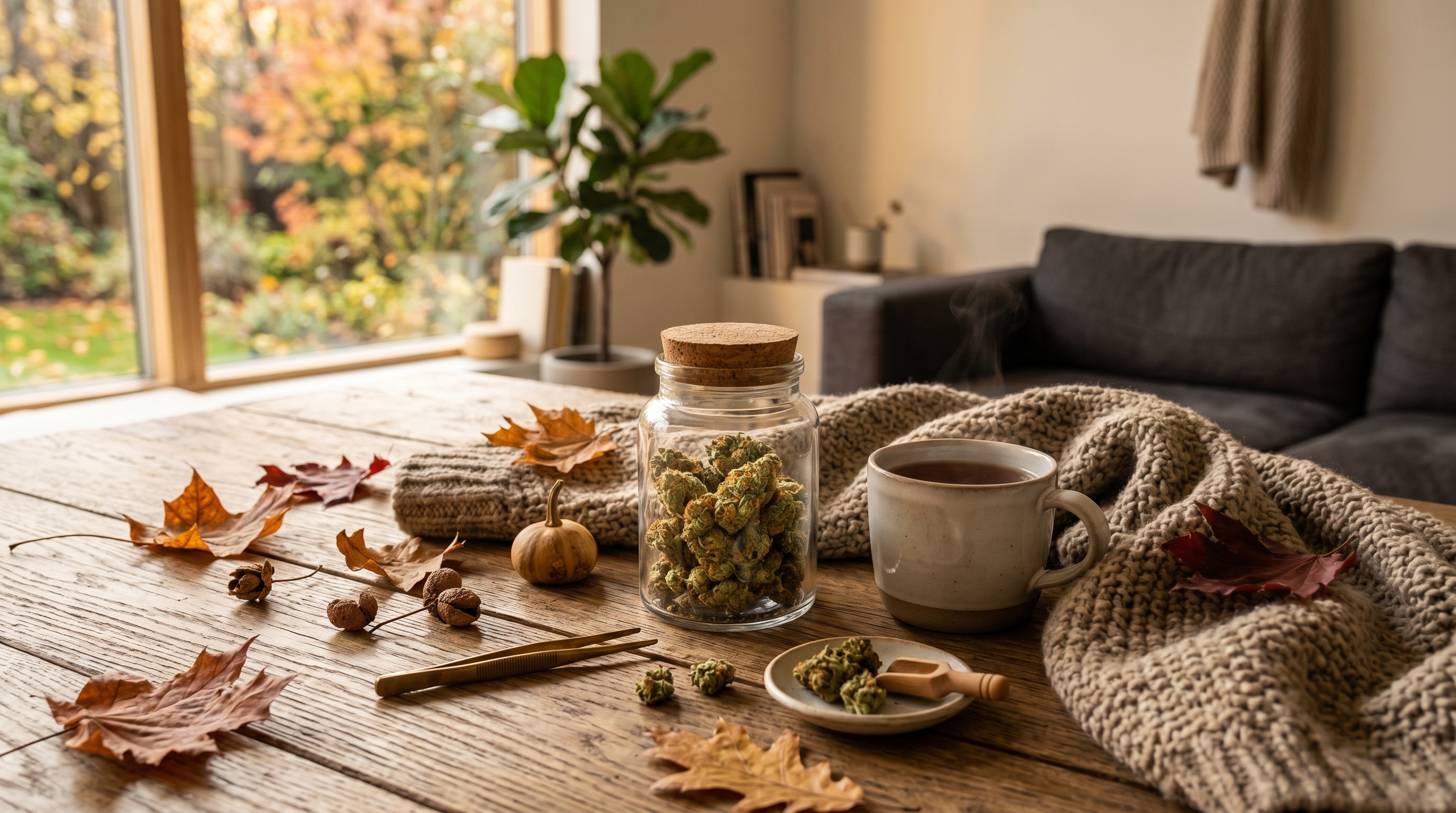
Fall cannabis isn’t just about what’s in the jar — it’s about the mood. The season practically begs for slow rituals, and the right flower meets that energy instead of fighting it.
- Crisp-morning walks. A bright, citrus-forward strain can make the leaf-peeping pop. If you like getting outside, cannabis and hiking covers the science of outdoor highs, and these strains for outdoor adventures are a solid place to start.
- Couch-and-blanket evenings. When the goal is to disappear into a soft sweater, lean toward earthy, sedating profiles. Our picks for deep relaxation and couch-lock and a classic nighttime default like Ice Cream Cake fit the bill.
- Movie marathons and rainy days. Few things say autumn like a downpour and a watchlist. See strains for movie night and rainy-day relaxation.
- Wind-down and sleep. Shorter days nudge everyone toward earlier nights; our science-based sleep guide and the deeper dive on cannabis and sleep explain how to use that to your advantage.
- Kitchen season. Fall is comfort-food season, and edibles fit right in. New to dosing? Start with the 2-hour rule for beginners before a cozy batch of holiday cannabis cookies.
For a quiet evening with someone you like, the cannabis date-night guide pairs strains with settings. And if rolling is part of your ritual, brush up with how to roll the perfect joint.
Seasonal terpenes and strains for fall
If pumpkin spice has a cannabis equivalent, it’s the family of terpenes that smell like autumn. These aromatic oils shape both the flavor and, as part of the entourage effect, the feel of a strain.
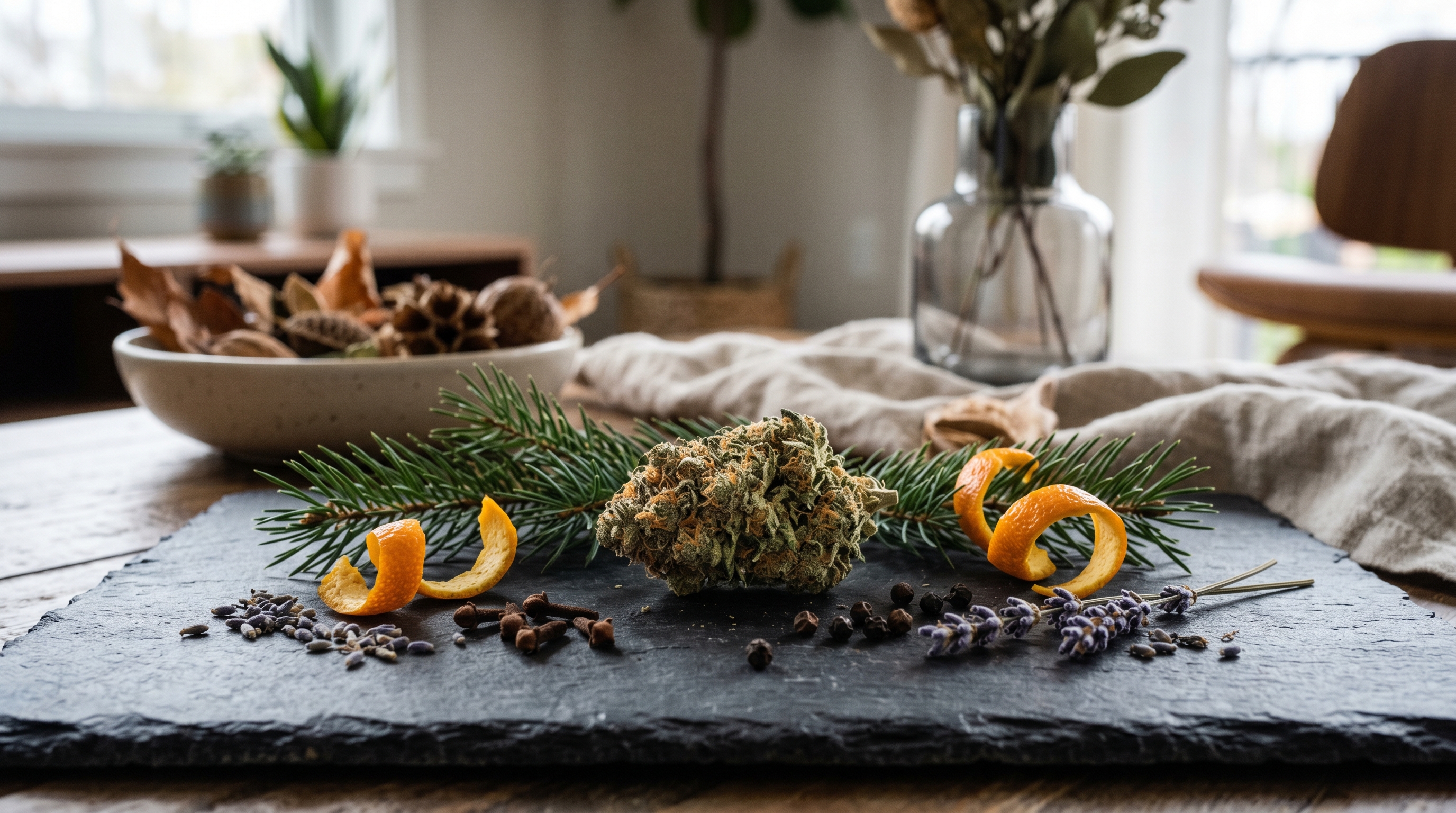
- Myrcene — earthy, musky, the classic relaxing base note. It’s the terpene behind the couch-lock feeling, though the old “0.5% myrcene rule” is more myth than rule.
- Caryophyllene — peppery, clove-and-cinnamon warmth that doubles as the terpene that acts like a cannabinoid.
- Pinene — fresh forest air for foggy fall mornings; learn how it preserves memory and alertness.
- Limonene — bright citrus that lifts the mood when the gray sets in.
- Linalool — soft, lavender-floral calm, perfect for cool nights; see linalool for calm and sleep.
These map cleanly onto our High Families system. It sorts strains by their main terpenes, not the tired indica-vs-sativa labels. A myrcene-heavy Relax pick is your cozy-evening friend. A limonene-bright Uplift profile carries the morning walk. Want the full map? Our cannabis terpenes guide breaks down each one. The German chemovar study shows the science behind grouping strains this way.
Home-grow harvest basics (the short version)
If you grew your own this year, October is your moment of truth. Timing is everything. Here’s the quick checklist:
- Read the trichomes, not the calendar. Those tiny resin glands shift from clear to milky to amber. Most growers cut when the trichomes are mostly milky with a touch of amber. That’s the sweet spot for potency and feel.
- Watch the weather. Late rain and damp air invite bud rot. A wet fall is the main reason growers cut a bit early. A slightly young crop beats a moldy one.
- Don’t rush the finish. Drying and curing make or break flavor. Hang-dry in a cool, dark room near 60 to 68°F. Then cure in sealed jars.
That’s the short version. For the full walkthrough, see when and how to harvest cannabis and the key drying and curing guide. Once it’s jarred, keep it fresh with our cannabis storage guide. Stored right, fall flower can last you well into spring.
Key Takeaways
Here’s the Professor High takeaway. Harvest season hands you variety and value. But the name on the jar matters less than how your body responds to its terpenes. The October flower that glues one friend to the couch might be your perfect creative-evening pick. The only way to know is to pay attention. Note what you reach for on a crisp morning versus a rainy night. Let those patterns guide next season’s shopping. That’s what the High IQ app is built to do. Log what you try, watch your terpene patterns appear, and stop guessing. Croptober is the perfect time to start.
FAQ
What is Croptober? Croptober is the community’s nickname for October. It’s when most outdoor cannabis gets harvested up north. It’s the single biggest supply moment of the year for sun-grown flower.
Why do outdoor cannabis plants flower in the fall? Cannabis is a short-day plant. After the summer solstice, the days get shorter. Nights stretch past about 12 hours. That’s when plants stop growing leaves and start making flowers. They naturally finish in the fall.
Does cannabis get cheaper during harvest season? Often, yes, for outdoor and greenhouse flower. The fall supply surge pushes wholesale sun-grown prices down 10 to 20%. That can mean deals on ounces and pre-rolls. Indoor flower stays steadier all year.
Is fresh-harvest cannabis better quality? Not always. Sun-grown flower can be great and terpene-rich. But a wet fall can force early harvests that lower potency and smell. Judge by smell, trichomes, and how it makes you feel. Don’t just go by the harvest date.
Which terpenes are best for fall? Myrcene is earthy and relaxing. Caryophyllene is peppery and warm. Pinene smells like fresh pine. Limonene is bright citrus. Linalool is calming lavender. All five fit fall’s cozy-yet-crisp mood.
Sources
- Inflorescence development in female cannabis plants is mediated by photoperiod and gibberellin, Horticulture Research (uhae245), 2024
- Optimizing Photoperiod Switch to Maximize Floral Biomass and Cannabinoid Yield in Cannabis sativa L., PMC8786113
- U.S. Cannabis Spot Index, October 10, 2025 — Cannabis Benchmarks
- By the Numbers: 2025 Cannabis Harvest Report — Leaf Nation
- Sungrown tells a story: 2025 Harvest Report — GreenState


