Cannabis Mac and Cheese: Comfort Food Infused Right
Make cannabis mac and cheese with cannabutter folded into the cheese sauce. Per-serving dosing math, low-heat technique, stovetop and baked methods.

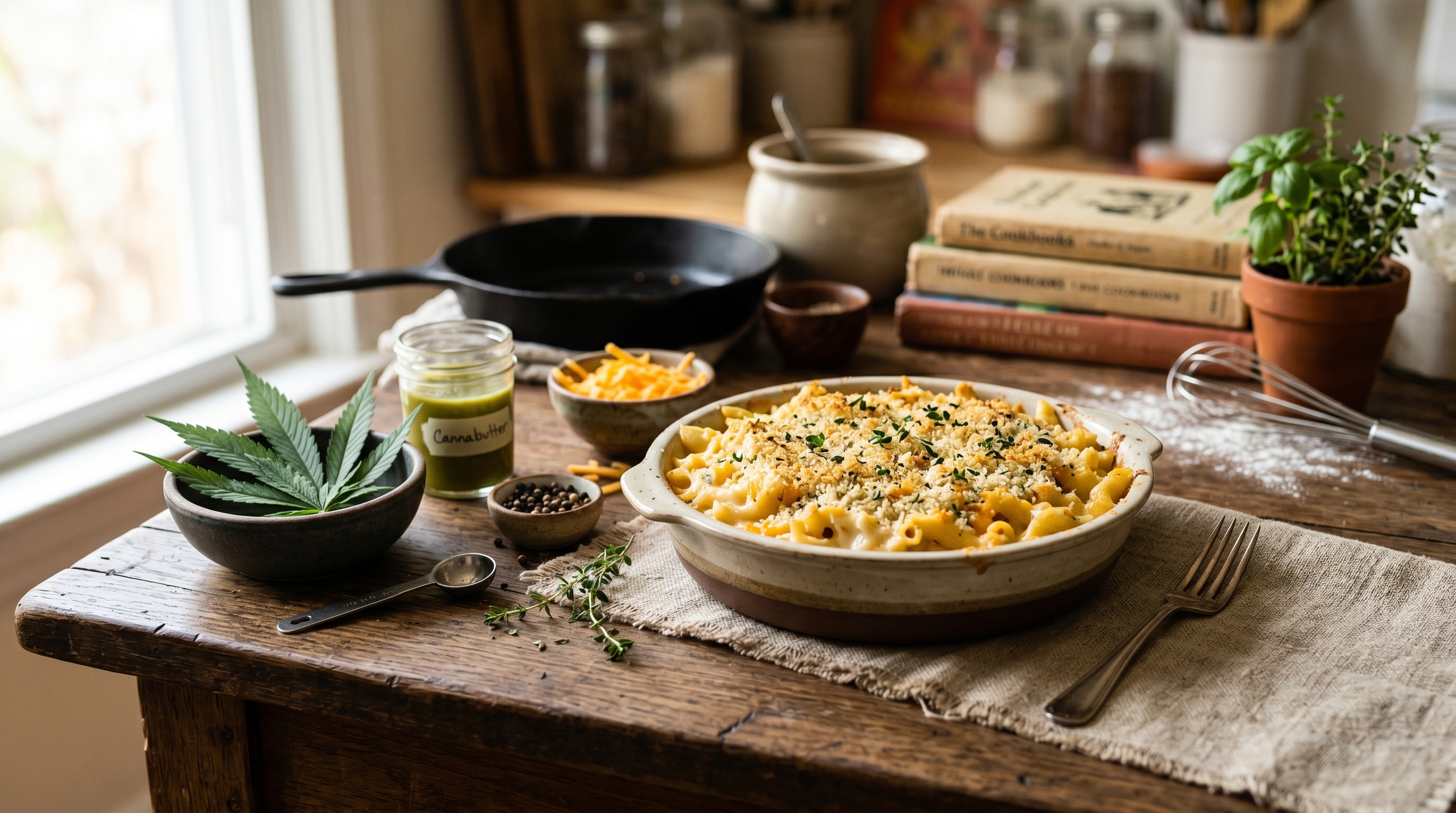
There is a reason every infused-edibles beginner eventually circles back to mac and cheese. It is creamy, it is forgiving, and it is built on exactly the thing cannabis loves most: fat. The cheese sauce that makes this dish so comforting is also one of the best carriers for a precisely dosed edible you will ever cook at home.
But “easy” is not the same as “casual.” The top way home cooks ruin an infused dish is not bad flavor. It is bad dosing. The other is a blast of heat that quietly wrecks the cannabinoids. Get those two things right and this becomes the most reliable comfort-food edible you make.
This is a how-to, so I will keep it practical. We will cover why this dish works as a carrier, how to keep the sauce below the heat that breaks down THC, a step-by-step for stovetop and baked versions, the dosing math, and safe storage. New to edibles? Start with Cannabis Cooking 101 and Edible Dosing for Beginners before you fire up the stove.
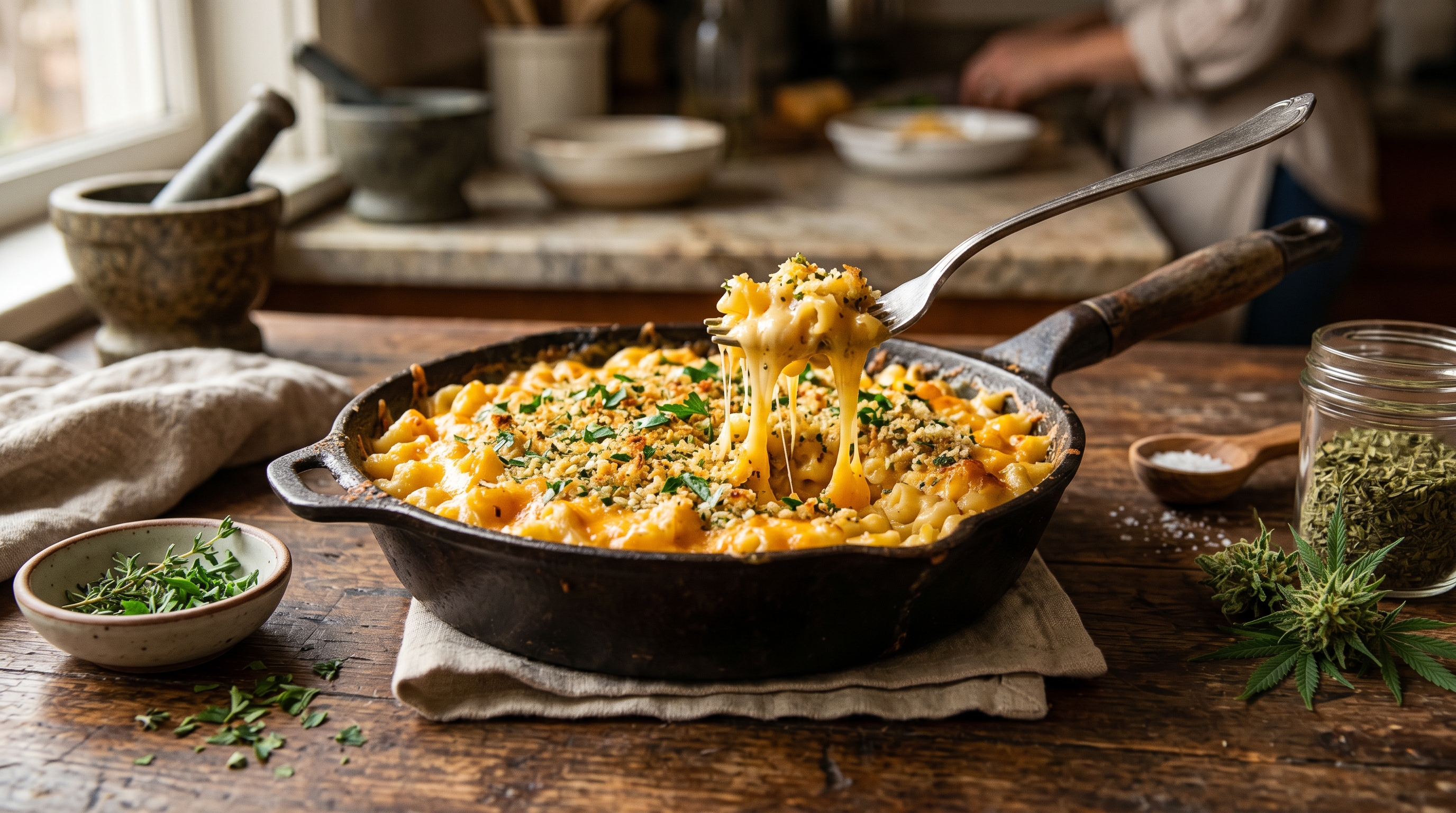
Why mac and cheese is a near-perfect carrier
Cannabinoids like THC and CBD are fat-soluble, not water-soluble. They bind to dietary fat. That fat is what carries them through digestion and into the bloodstream [CED Clinic, 2025]. Mac and cheese is basically a delivery system made of butter, whole milk, and cheese. The carrier is already built into the recipe. That is why choosing the right fat for cannabis infusions matters so much. A fat-rich dish tends to give a more even, predictable edible experience than a low-fat one.
There is a flavor advantage too. The most common complaint about homemade edibles is a grassy, “weedy” taste. Sharp cheddar, a little smoked Gouda, salt, and pepper are bold enough to bury those herbal notes almost completely. Worried about a bitter aftertaste? Read how to make cannabis edibles without the weedy taste. Most of it comes down to how you ground and infused the flower in the first place.
The carrier here is cannabutter, the foundation for nearly every infused baked good and savory dish. We are not infusing the pasta. We are folding finished, measured cannabutter into the cheese sauce at the gentlest possible moment.
The one rule that matters most: do not overheat
Here is where most infused recipes go wrong. People assume that because cannabis can survive a 350°F oven in a brownie, it can survive anything. It cannot.
THC is heat-sensitive. Sustained heat above roughly 300°F pushes THC to break down into CBN, a more sedating cannabinoid [Mood, 2026]. That is not automatically “ruined” — CBN has its own uses. But it is not what you dosed for. Say you measured a balanced, social-feeling edible and then scorched the sauce. You could end up with something that just makes you sleepy. The point of careful cooking is to land where you meant to.
The good news: a proper cheese sauce never needs to get that hot. A simmering roux sits well under 212°F because it is mostly water and dairy. The danger is not the sauce — it is the impulse to keep the cheese melting over an open flame, or to bake the finished dish hard and long for a crispy top.
Two habits keep you safe:
- Pull the pan off the heat before adding cheese. Residual warmth melts cheese into a silky sauce without ever pushing cannabinoid temperatures into the danger zone.
- If you bake, keep it gentle. Hold the oven at or below about 340°F and limit the bake to roughly 15 to 20 minutes — just enough to brown the top, not long enough to cook off your dose.
Your cannabutter should already be decarboxylated and infused before it reaches the pasta. New to “decarb”? Decarboxylation explained covers why raw flower has to be heated (around 240°F for 30 to 40 minutes) before infusing into fat. The infusion itself is low and slow. Most guides hold the butter at 160 to 180°F for two to three hours. Those steps live in the cannabutter guide. This recipe assumes your butter is finished and labeled with an estimated potency.
Ingredients and equipment
This makes a stovetop batch that comfortably serves four. Scale the dose, not just the noodles.
Ingredients
- 8 oz (about half a box) elbow macaroni or cavatappi
- 2 tablespoons finished, measured cannabutter
- 2 tablespoons all-purpose flour
- 2 cups whole milk (whole milk matters — the fat helps)
- 1.5 cups shredded sharp cheddar
- 0.5 cup shredded smoked Gouda or Gruyère (optional, for depth and flavor masking)
- 0.5 teaspoon salt, plus more to taste
- Black pepper and a pinch of paprika
- Optional toppings: toasted breadcrumbs, chives, crispy bacon, diced jalapeños
Equipment
- Medium saucepan
- Whisk and a folding spoon or spatula
- A pot for boiling pasta
- A kitchen scale or measuring spoons (for accurate dosing)
- Optional: a buttered baking dish if you want a crusted, baked finish
Shred your own cheese if you can — pre-shredded bags are coated with anti-caking starch that can make sauce grainy. Sharp cheddar plus a smoked cheese is the combination that most reliably covers any lingering herbal note.
Step-by-step: stovetop method
The stovetop version is the safest for protecting potency because the dish never sees oven heat.
- Boil the pasta. Cook to just shy of al dente in salted water, drain, and set aside. It will finish in the sauce.
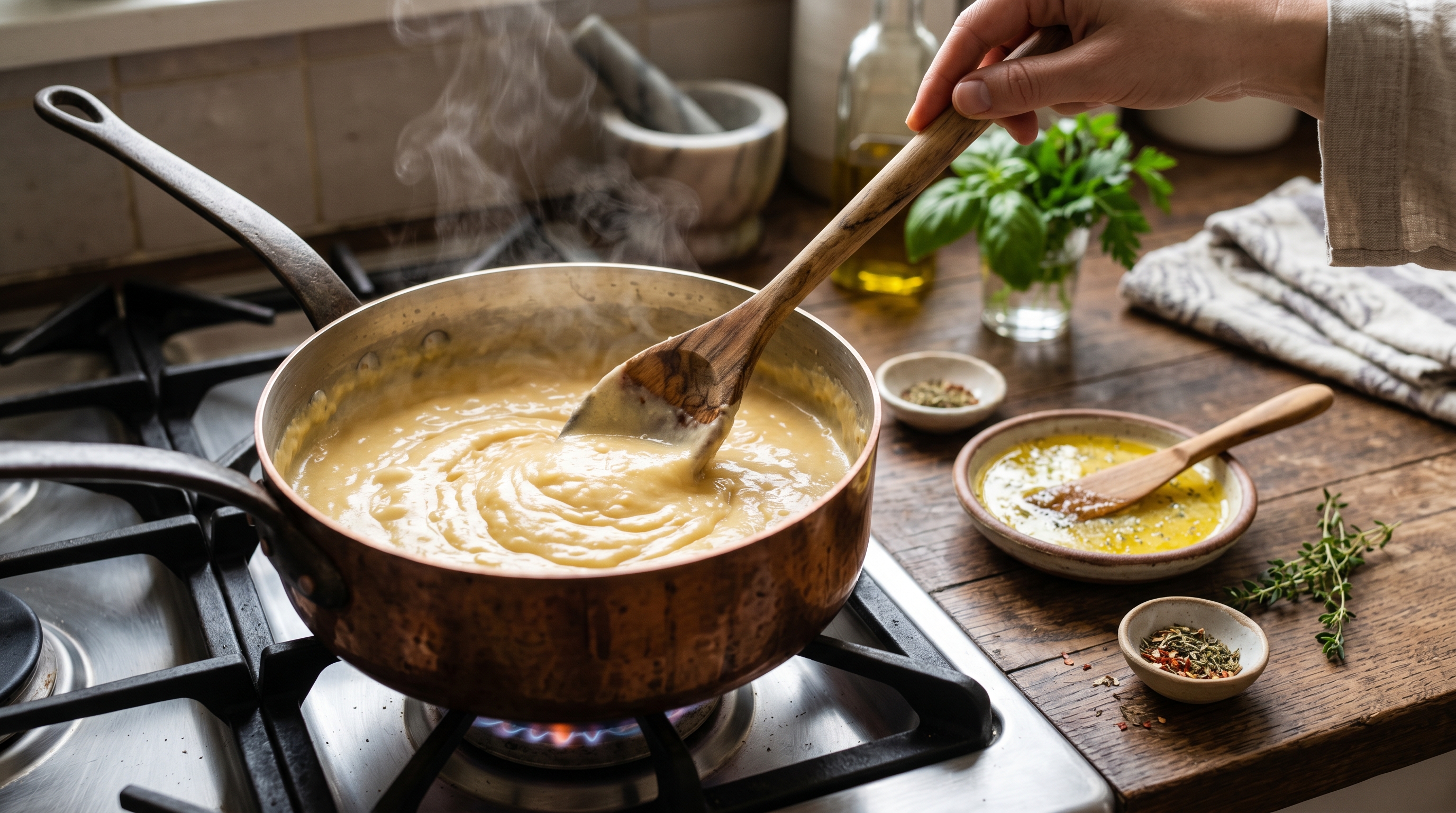
- Build the roux gently. In a saucepan over low heat, melt the 2 tablespoons of cannabutter. Whisk in the flour and stir constantly for about a minute until smooth. Low heat is non-negotiable here.
- Add the milk slowly. Pour in the whole milk a little at a time, whisking continuously, and let it thicken to a silky texture over low to medium-low heat — usually 5 to 7 minutes. Never let it reach a hard boil.
- Kill the heat, then add cheese. Turn the burner off. Now stir in the cheddar, smoked cheese, salt, pepper, and paprika. Whisk until completely smooth. The residual warmth melts everything without endangering your dose.
- Fold in the pasta. Add the drained noodles and fold gently until every piece is coated. Taste and adjust salt.
- Serve and divide evenly. Portion into four equal bowls so each serving carries the same dose. Stir before plating so the cannabutter is evenly distributed and one bowl is not stronger than the next.
Optional baked finish
If you want a golden crust, transfer the finished mac into a buttered baking dish, scatter toasted breadcrumbs on top, and bake at 340°F (or lower) for 15 to 20 minutes — just long enough to brown. Going hotter or longer is exactly the mistake that degrades your potency, so resist the urge to crank it to 400°F for a deeper crust.
A quick boxed shortcut works too: cook the noodles per the box with the heat off at the end, then stir your measured cannabutter in with the cheese powder. Never simmer the cannabutter with the noodles. And recalculate per-serving dose, because a box of mac usually feeds fewer people than the recipe above.
Per-serving dosing math
This is the part you do not skip. Dosing by feel is how people end up too high. Dosing by math is how you stay in control.
Start from your flower or your butter’s known potency. Here is the worked example most home cooks use:
- Say you infused 7 grams of flower at 20% THC. That is roughly 1,400 mg of total THC before any loss.
- Infusion is not 100% efficient. Assume 60 to 80% transfers into the butter, giving a working estimate of about 840 to 1,120 mg in the whole batch.
- If that batch is 8 tablespoons of butter, that is roughly 105 to 140 mg per tablespoon.
- This recipe uses 2 tablespoons, so the whole pot holds about 210 to 280 mg.
- Divide by 4 servings → roughly 53 to 70 mg per bowl.
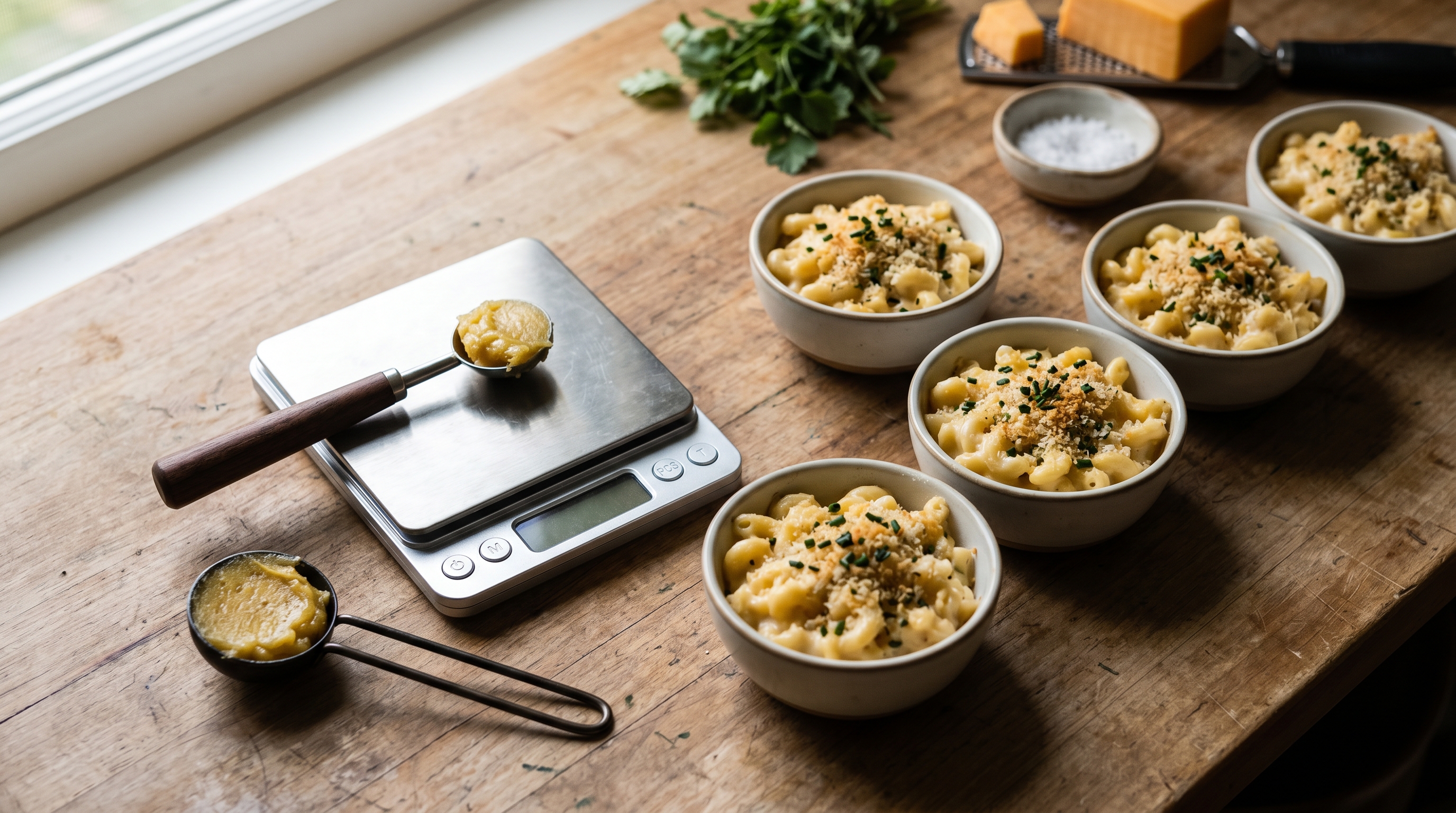
That is a strong dose for one bowl — a heads-up that homemade butter is potent and you almost always want less cannabutter than your instinct says. To land a beginner-friendly 5 to 10 mg per serving, you would use far less infused butter (and make up the rest with regular butter) or split the pot into many more, smaller portions. For the full formula and a printable chart, see edible dosing math for home cooks and the cannabis beginner’s dosing chart.
Two rules to internalize:
- Wait the full 90 minutes to 2 hours before deciding whether to eat more. Edibles convert in the liver to 11-hydroxy-THC, which hits harder and lasts longer than smoking. The 2-hour rule exists because people who do not wait take a second helping and regret it.
- Verify, do not trust. Home infusion efficiency varies. If you want a reality check on your batch, how to test homemade edible potency at home walks through your options. None of this is medical advice, and effects vary by person, tolerance, and body chemistry.
If you want a gentler dish entirely, infuse with CBD-only flower for a non-intoxicating, relaxing version using the same method.
Cheese, flavor, and variation tips
Once the dosing and heat are handled, the rest is just cooking. A few ways to make it better:
- Layer your cheeses. Sharp cheddar for backbone, smoked Gouda or Gruyère for depth. The savory intensity is also what masks herbal notes best.
- Add a splash of cream cheese or heavy cream off the heat for extra velvet.
- Texture toppings — toasted breadcrumbs, crushed chips, crispy bacon, jalapeños, chives — add craveability and further bury any green flavor.
- Match the moment. Choosing strains specifically for cooking? Best cannabis strains for cooking and culinary creativity covers terpene profiles that play nicely with savory food. If you want to understand effect profiles like Relax and Relief before you pick a strain, understanding High Families is the place to start.
Want more savory infused projects in the same vein? Try cannabis-infused pasta sauce, infused pesto, or infused ranch dressing.
Storage and safety
Treat the finished dish like any dairy-heavy leftover, with one extra step: label the dose.
- Refrigerate finished mac and cheese in a sealed container and eat within 3 to 4 days.
- Cannabutter itself keeps about 4 days in the fridge and up to 2 months in the freezer without much measurable potency loss. Portion and freeze extra. More detail in the edibles shelf life and storage guide.
- Label every container with the contents and estimated mg per serving. This is the single most important harm-reduction habit with homemade edibles.
- Store securely. Keep it inaccessible to children, pets, and any houseguest who did not choose to consume cannabis. An unlabeled tray of “regular” mac in a shared fridge is a genuine accidental-dosing risk.
Key Takeaways
The chain that makes this dish work is short, and each link protects the next:
- Fat is the carrier. Butter, whole milk, and cheese carry cannabinoids well, so a rich dish gives a more predictable effect.
- Keep it gentle. Pull the pan off the heat before adding cheese, and if you bake, hold the oven at or below 340°F for 15 to 20 minutes.
- Do the math first. Calculate mg per serving before you cook, divide the pot evenly, and lean toward less cannabutter than feels intuitive.
- Be patient. Wait the full 90 minutes to 2 hours before more.
- Label and store safely. Mark the mg, eat within 3 to 4 days, and keep it away from kids and pets.
Get those right and cannabis mac and cheese is the most forgiving, repeatable comfort-food edible you can make at home.
FAQ
Will baking destroy the THC? Not if you keep it gentle. The risk is sustained heat above roughly 300°F. Hold a baked finish at or below about 340°F for 15 to 20 minutes, or skip the oven entirely with the stovetop method. The cheese sauce itself never gets hot enough to be a problem.
What is a safe starting dose? A common beginner range is 5 to 10 mg of THC per serving, and effects vary widely from person to person. Homemade butter is usually stronger than people expect, so use less cannabutter than feels intuitive and wait the full two hours before more. See when to increase your dose — and when not to.
Why use butter instead of just sprinkling in ground flower? Raw flower has to be decarboxylated to activate, and cannabinoids need fat to absorb well. Cannabutter handles both. Sprinkling ground flower in gives you a grassy taste and a weak, unpredictable effect.
How long until it kicks in? Edibles are slow — typically 1 to 2 hours to full effect, lasting 4 to 6+ hours depending on dose and your metabolism. See how long a cannabis high lasts.
Can I make a CBD version? Yes. Use the same method with CBD-rich flower for a relaxing, non-intoxicating dish.
Sources
- [Mood, 2026] — “Cannabutter Mac and Cheese with Proper Dosing”: decarb at ~240°F/30-40 min, infuse at 160-180°F/2-3 hrs, THC-to-CBN degradation above ~300°F, off-heat cheese method, baked finish ≤340°F, potency formula, 5-10 mg starting dose, storage timelines. https://mood.com/blog/cannabutter-mac-and-cheese
- [CED Clinic, 2025] — “Cannabis-Infused Mac and Cheese Recipe for Comfort and Calm”: fat-enhanced absorption, low-heat roux method, off-heat cheese step, dosing-by-tablespoon math, 5 mg microdose to 25 mg adjustments. https://cedclinic.com/cannabis-infused-mac-and-cheese-recipe/
This article is educational and not medical advice. Cannabis laws and effects vary; consume responsibly and only where legal. Track what works for you and dose with intention.


