Alice B. Toklas Brownies: The 1954 Recipe Was Never a Brownie
Alice B. Toklas brownies were never brownies. The 1954 recipe was a no-chocolate hashish fudge Brion Gysin sent her. Here is what was in it.

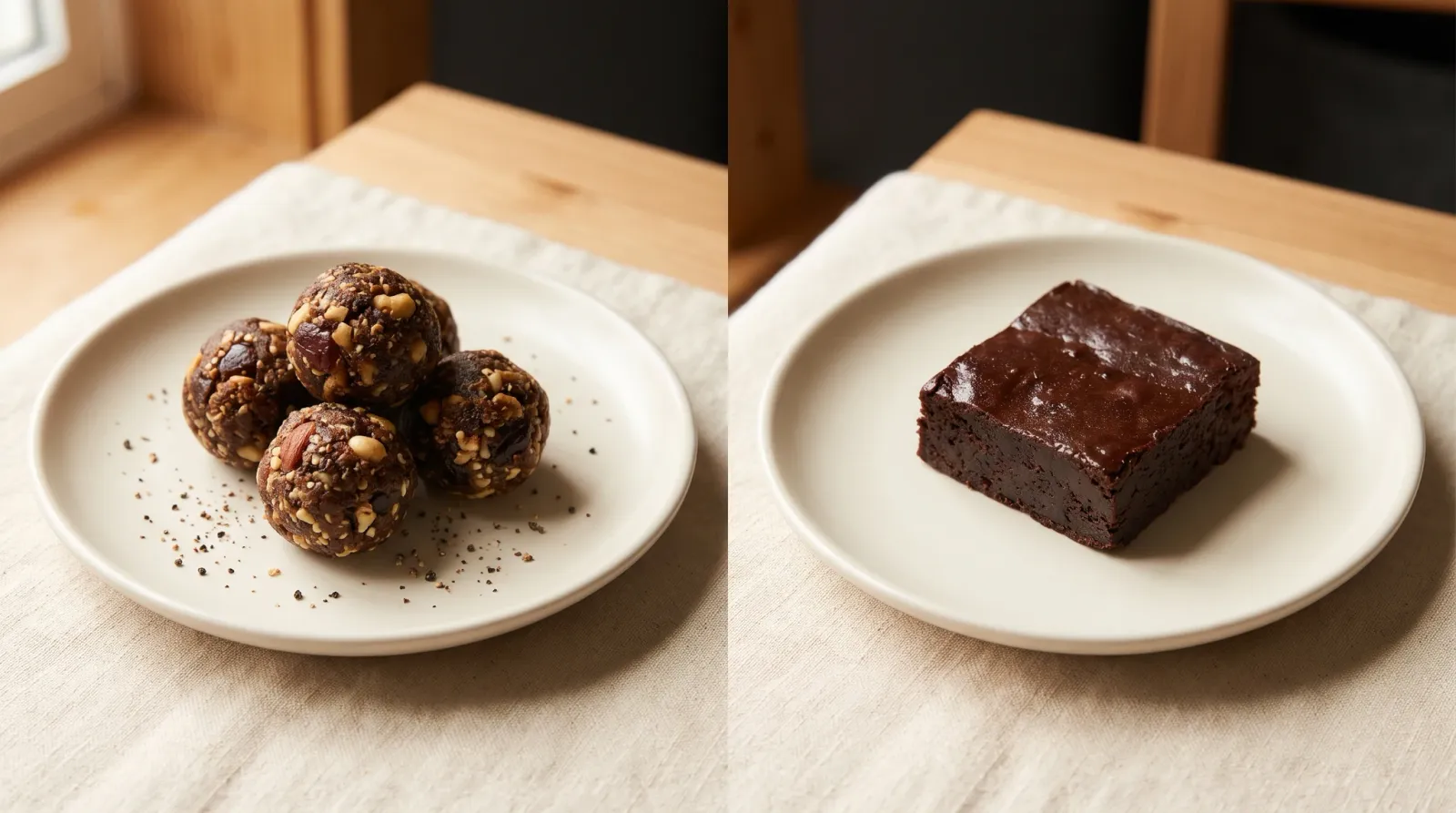
The “Alice B. Toklas brownie” was never a brownie, and Toklas did not write the recipe: it was a no-chocolate “Haschich Fudge” of spices, dates, figs and nuts that her friend Brion Gysin contributed to her 1954 cookbook. The brownie came later, through American retellings and a 1968 Peter Sellers film. The cookbook itself has no brownie in it.
Here is the detail that settles the argument at the dinner table. The original recipe contains no chocolate and no flour. It is spiced fruit and nuts, kneaded with pulverized cannabis plant, bound with sugar and butter, and rolled into balls “about the size of a walnut.” That is the text Toklas read aloud in a recorded reading transcribed by Open Culture. In October 1954, Gysin wrote to Time to claim it as his own.
This lesson in High School follows the paper trail: who wrote the recipe, what was in it, why the first American edition left it out, and how a fudge turned into a brownie.
What was in the original Alice B. Toklas recipe?
The recipe is a spiced fruit-and-nut sweet, not a baked brownie. In the reading transcribed by Open Culture, the method runs like this: pulverize black peppercorns, a whole nutmeg, cinnamon sticks and coriander in a mortar. Chop “about a handful each of stoned dates, dried figs, shelled almonds and peanuts.” Then “a bunch of Cannabis sativa can be pulverized,” dusted with the spices over the fruit and nuts, and kneaded together. About a cup of sugar goes in, “dissolved in a big pat of butter.” The mixture is rolled into a cake or into walnut-sized balls. Open Culture transcript
Notice three things.
- No chocolate. Not a square of it. Scientific American’s food blog makes the same point: the fudge has no chocolate, despite the film that tied it to brownies.
- No oven. Nothing is baked. It is kneaded and rolled.
- Plant, not hash. Despite the title, the text calls for pulverized Cannabis sativa plant material, not hashish. If you want to know what hash actually is, it is a separate, concentrated product.
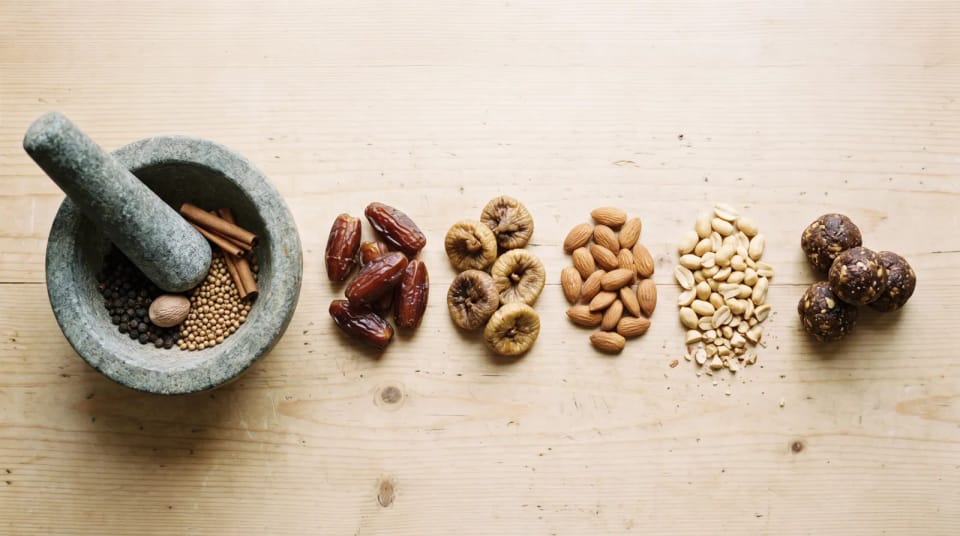
The 1954 recipe, ingredient by ingredient. Spices, dried fruit and nuts, sugar and butter. There is no chocolate and no flour anywhere in it.
The recipe ends with “it should be eaten with care” and “Two pieces are quite sufficient.” Read that as a period line, not a dose. The plant amount is “a bunch,” with no weight and no potency, so two pieces of one batch could be nothing like two pieces of another. Today, why two pieces is not a dose comes down to milligrams and waiting, and dosing an edible by milligrams is how home cooks get a number.
Did Alice B. Toklas write the hashish fudge recipe?
No. Brion Gysin, a British-born artist living in Tangier, Morocco, sent it to her. He said so himself in a letter Time printed on October 25, 1954: “I recognize the Alice B. Toklas hashish fudge [TIME, Oct. 4] as my own.” In the same letter he wrote that the sweet is called “majoon” in Morocco, sometimes served with mint tea at the end of a feast. Time, Letters, Oct. 25, 1954
The book agrees. The fudge sits in the cookbook’s “Recipes From Friends” chapter, where Toklas collected dishes from people she knew, and Gysin’s introduction calls it “the food of Paradise—of Baudelaire’s Artificial Paradise.” The Takeout A rare-book dealer describing a London first edition states plainly that “the recipe was given to Toklas by Brion Gysin.” Rooke Books
Even M.F.K. Fisher, who introduced the 1984 edition, doubted the contributed recipes sounded like Toklas. “They simply don’t sound Toklas-ian,” she wrote, as quoted by The Takeout.
Did Toklas know the fudge contained cannabis?
The sources do not agree on exactly what she knew. Her own words, as quoted by Scientific American, are narrow: “The recipe was innocently included without my realizing that the hashish was the accented part of the recipe.” Scientific American The Takeout reports that she later said she hadn’t noticed the cannabis and blamed a deadline. The Takeout
You will often read that Toklas “didn’t know what cannabis was.” Her quoted words do not say that. They say she did not realize the cannabis was the point of the recipe. Whether she ever made it herself is not on record in any source here.
Why was the recipe left out of the American edition?
The recipe was printed in the British first edition and left out of the first American one. A dealer’s description of the London first edition, published by Michael Joseph, places the “Haschich Fudge” on page 259 and says it “was expurgated from the US edition, published two days after this first UK edition.” Rooke Books A second dealer, describing a first American edition from Harper & Brothers, notes that the page 259 recipe “has been removed” and that the British edition came out “just a few days” earlier. Ken Sanders Rare Books
Scientific American reports that Harper’s left it out and that a second US edition in the early 1960s put it back. It also quotes Toklas: “I was shocked to find that America wouldn’t accept it because it was too dangerous.” Scientific American
| Edition | Publisher | Haschich Fudge? | Source |
|---|---|---|---|
| First UK edition, 1954 | Michael Joseph, London | Yes, page 259 | Rooke Books |
| First US edition, 1954, days later | Harper & Brothers, New York | No, left out | Ken Sanders Rare Books |
| Later US edition, early 1960s | Not named in the sources | Yes, restored | Scientific American |
What no source here gives is a primary statement from the publisher explaining the decision. The sources say only that the American edition did not carry it. It is fair context that cannabis was already under heavy federal restriction in the United States, a story told in why a 1954 publisher had reason to fear the word. But the paper trail does not prove that law was the reason.
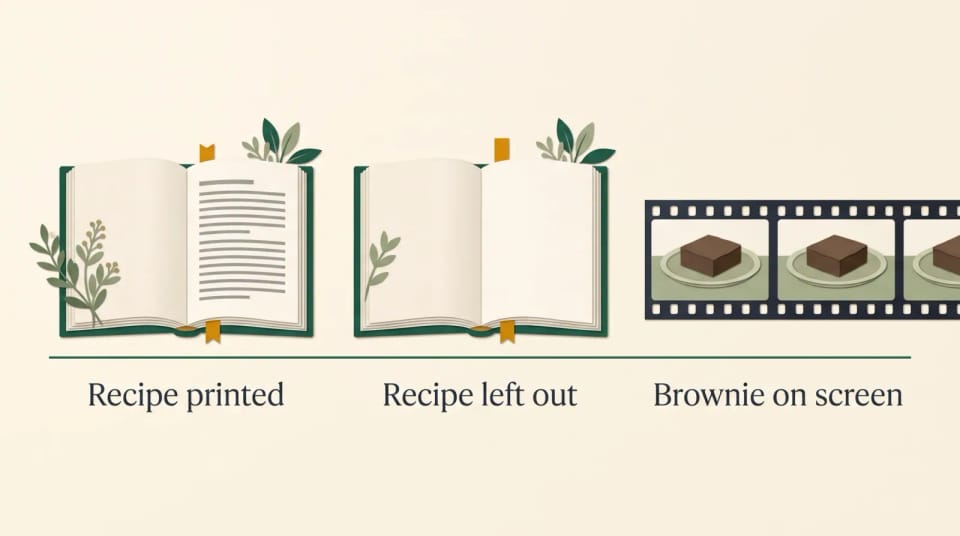
The recipe ran in the British edition, was missing from the first American edition, and only became a brownie later, most famously on film in 1968.
How did the fudge become a brownie?
The brownie came from America, not from the cookbook. The best-documented step is a film. I Love You, Alice B. Toklas, a 1968 Warner Bros.-Seven Arts comedy directed by Hy Averback, stars Peter Sellers as a lawyer, Harold Fine. A young woman, Nancy, bakes him pot brownies without telling him what is in them, and he serves them to his family. Wikipedia: I Love You, Alice B. Toklas A Boulder Weekly column puts the contrast neatly: the film “featured brownies made with pot, not the faux hash fudge from the cookbook.” Boulder Weekly
Salon describes the recipe as “soon Americanized into a fudge brownie,” but gives no date or source for that step. Salon So here is the honest version: the name “Alice B. Toklas” became attached to the chocolate pot brownie through 1960s American culture and the 1968 film. The first chocolate pot brownie recipe, and who baked it, is not documented in any source checked for this lesson.
That timing fits the counterculture that embraced cannabis in the 1960s. The restored American edition arrived in the early 1960s, and by the end of the decade a Hollywood comedy could use her name as a punchline.
Is the Toklas fudge the first cannabis brownie recipe?
No, and it cannot be, because it is not a brownie. Some popular articles call it the first published “hash brownie” recipe while also admitting it has no chocolate. That claim falls apart on its own terms.
The fudge also was not new in kind. Gysin himself linked it to majoon, a Moroccan sweet. The Takeout describes it as “technically” a majoun, “a mixture of pulverized fruits, nuts, and spices,” and Scientific American draws the same comparison. The Takeout The Toklas cookbook did not invent a cannabis confection. It carried an existing North African one into an English-language cookbook.
How is a modern cannabis brownie different?
A modern cannabis brownie is a measured chocolate bake. The 1954 fudge was an unmeasured raw mix. That difference matters more than any of the history.
| 1954 Haschich Fudge | Modern cannabis brownie | |
|---|---|---|
| Base | Dates, figs, almonds, peanuts, spices | Chocolate, flour, eggs, sugar |
| Cooking | Kneaded and rolled, not baked | Baked |
| Cannabis form | “A bunch” of pulverized plant | Usually an infused butter or oil |
| Plant heated first? | Not in the text | Usually, in a separate step |
| Dose | “Two pieces,” no weight or potency | Estimated in milligrams per piece |
Modern recipes start by heating the plant. Raw cannabis carries mostly THCA, and heat converts it to THC, which is why decarbing cannabis comes first in nearly every current method. The infused fat comes next, as in how modern recipes infuse butter. If you want to bake the brownie the film made famous, see a modern from-scratch cannabis brownie recipe. For how cannabis cooking has changed since 1954, chefs now pair and dose courses on purpose.
Do not use the 1954 recipe as a how-to. Its plant amount, potency and portion size are unknown. Edibles also take longer to act than smoking, so people who eat more while waiting can end up far higher than they planned. If someone has chest pain, trouble breathing, confusion, fainting or vomiting that will not stop after eating an edible, get medical help. If edibles make you anxious or interact with medicines you take, talk with a clinician before using them.
Key takeaways
- The famous recipe is “Haschich Fudge,” not a brownie. It has no chocolate and no flour.
- Brion Gysin wrote it and claimed it in a 1954 letter to Time. Toklas published it in a chapter of friends’ recipes.
- It appeared in the British first edition and was left out of the first American edition, then restored in the early 1960s.
- The brownie link came from American culture and the 1968 film I Love You, Alice B. Toklas.
- The 1954 “two pieces” line is not a dose. Modern edibles are measured in milligrams.
FAQ
Did Alice B. Toklas invent pot brownies?
No. Her 1954 cookbook contains a cannabis fudge made of spices, dried fruit and nuts, with no chocolate. Her friend Brion Gysin wrote that recipe. Her name became linked to brownies later, most famously through a 1968 film.
Did the Alice B. Toklas recipe contain chocolate?
No. The recipe calls for peppercorns, nutmeg, cinnamon, coriander, dates, figs, almonds, peanuts, pulverized cannabis plant, sugar and butter. It is closer to the Moroccan sweet majoun than to any brownie.
Which movie made Alice B. Toklas brownies famous?
I Love You, Alice B. Toklas, a 1968 comedy starring Peter Sellers and directed by Hy Averback. In it, a young woman bakes pot brownies and does not tell him what is in them. The film used brownies, not the cookbook’s fudge.
What is majoun?
Majoun, which Gysin spelled “majoon,” is a Moroccan confection of pulverized fruits, nuts and spices that can include cannabis. Gysin said the Toklas fudge was what Moroccans called majoon. The Toklas recipe follows that pattern closely.
Can you still find the original recipe?
Yes. Later printings of The Alice B. Toklas Cook Book include it, and Toklas’s own recorded reading has been transcribed online. Treat it as history, not a recipe to follow, because its cannabis amount and strength are unknown.





