Cannabis and Sickle Cell Disease: What Research Says
An honest look at the early research on cannabis for sickle cell disease pain — the one small RCT, self-medication surveys, and key cautions.


Medical disclaimer: This article is educational and is not medical advice. Sickle cell disease is a serious, complex condition, and cannabis can interact with medications and complicate care. Nothing here is a cure or a treatment recommendation. Always talk to your hematologist or doctor before changing anything about how you manage your disease.
A Pain Burden Most People Never See
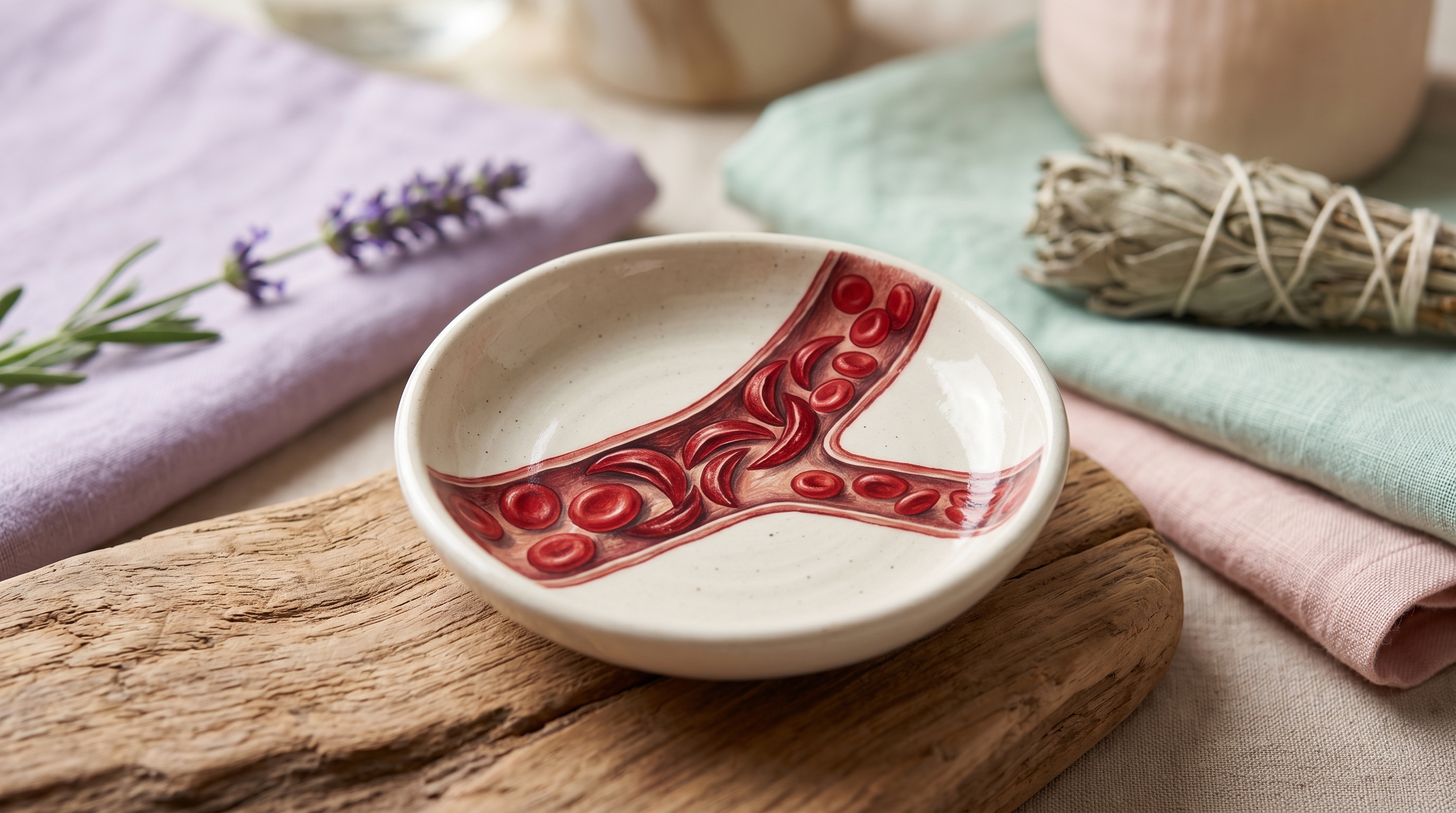
Sickle cell disease (SCD) is one of the most common inherited blood disorders in the world. In the United States, it mostly affects Black Americans. The problem starts in a single protein. A genetic change makes hemoglobin — the molecule that carries oxygen in red blood cells — stiffen. This warps red cells into a rigid, crescent or “sickle” shape. Those misshapen cells get stuck in small blood vessels. Blood flow to tissues and organs gets choked off.
The result is pain. Not ordinary pain — defining pain.
People with SCD live with two overlapping kinds of pain. The first is the acute vaso-occlusive crisis (VOC). These are sudden, often brutal episodes that can last days and frequently send people to the emergency room. The second is chronic pain that can span an entire lifetime, layered on top of the crises. As one major review put it, SCD pain is “unique with acute pain due to recurrent and episodic vaso-occlusive crises as well as chronic pain, which can span an individual’s entire life” [Argueta et al., 2020].
For decades, the main answer medicine offered was opioids. They help during crises. But long-term use brings tolerance, side effects, and dependence risk. And this is a group that is already too often disbelieved in clinical settings, which adds the burden of being treated as drug-seeking. It is a deeply underserved population with a real, unmet need. That combination is exactly why so many patients and researchers ask a careful question: could cannabis help?
This article walks through what the research actually shows. The honest headline up front: the evidence is early, thin, and mostly small-scale. There is real biological rationale and a lot of patient interest. But there is only one randomized controlled trial — and it did not hit its main target. Let’s look at all of it without overselling.
The Endocannabinoid System, Pain, and Inflammation
Why do researchers think cannabis might matter here? It helps to know a little about the body’s own endocannabinoid system (ECS). The ECS is a network of receptors and signaling molecules. It helps regulate pain, inflammation, mood, and appetite.
The two best-studied receptors are CB1 and CB2. CB1 is concentrated in the nervous system. CB2 is more common on immune cells. Their jobs differ because location largely determines effect — a topic we cover in CB1 vs CB2 receptors. THC interacts mainly with CB1. CBD works more indirectly. The practical point: the differences between THC and CBD matter a great deal for what any cannabis product might do.
Why does this map onto sickle cell pain? Because SCD pain isn’t just “stubbed-toe” signaling. It’s driven by a whole noxious microenvironment. Reviewers describe “ongoing hemolysis, inflammation, oxidative stress, mast cell activation, neurogenic inflammation, hypoxia/reperfusion injury and endothelial activation” all feeding the pain pathways [Argueta et al., 2020]. In plain terms: blood cells break down, tissue gets starved of oxygen, immune cells fire, and nerves become sensitized.
In theory, cannabinoids act on several of those steps at once. The same review notes that cannabinoids “have the potential to inhibit oxidative stress, inflammation, neuroinflammation and peripheral/central sensitization” while “directly inhibiting the neuronal activity, leading to amelioration of pain.” That dual angle — calming inflammation and dampening pain — is the heart of the rationale. To go deeper, see our piece on cannabis and inflammation and how cannabinoids may calm neuroinflammation.
One quick, important caveat. Most of this mechanistic story rests on preclinical work — cell cultures and humanized mouse models of SCD. A plausible mechanism in a mouse is a hypothesis in a human, not a result. Some readers may also have a baseline ECS imbalance, an idea explored in clinical endocannabinoid deficiency. Interesting, but still theoretical.
What the Research Actually Shows
Here we have to be especially disciplined. The gap between “patients say it helps” and “trials prove it helps” is wide.
The one randomized controlled trial
The single most important study is a 2020 pilot randomized, double-blind, placebo-controlled crossover trial. It was led by Donald Abrams and colleagues and published in JAMA Network Open [Abrams et al., 2020]. Twenty-three adults with SCD and chronic pain completed both arms. During two separate five-day inpatient stays, they inhaled either vaporized cannabis (4.4% THC / 4.9% CBD) or a placebo, three times daily.
The results were genuinely mixed:
- On the primary outcome — daily pain on a visual analog scale — cannabis trended better than placebo every single day. Mean differences ranged from roughly −5 to −16.5. But none of those differences reached statistical significance. With only 23 people, the study was likely too small to detect a real effect even if one existed.
- Pain interference with mood did improve significantly with cannabis (P = .02). Interference with general activity, walking, and sleep did not.
- Opioid use was similar in both periods — no clear opioid-sparing signal in this short study.
- No difference in treatment-related adverse effects was observed, which is at least reassuring on short-term tolerability.
The authors’ own honest conclusion: vaporized cannabis “did not statistically significantly reduce pain and associated symptoms, except interference in mood.” That is the opposite of a slam dunk. It’s a small pilot. It suggests cannabis was well tolerated and might help mood and pain, and that bigger trials are warranted — nothing more.
Self-medication surveys: lots of interest, not proof
Outside that one trial, most of what we know comes from surveys — which capture what patients do and report, not whether cannabis works.
- A 2005 UK questionnaire of 86 young adults found 36% had used cannabis in the past year. Among users, 52% cited pain reduction and 39% used it to relieve anxiety or low mood [Howard et al., 2005].
- A 2018 US survey of 58 patients found 42% reported marijuana use in the past two years, most for medicinal reasons. The authors argued that making SCD a qualifying condition for medical cannabis “might reduce illicit marijuana use and related risks” [Roberts et al., 2018].
- A 2020 study reported that daily cannabis users with SCD had fewer hospital admissions and ER visits than non-users with similar pain severity — about 1.8 fewer admissions per year [Curtis et al., 2020]. Provocative, but cross-sectional. It cannot tell us whether cannabis reduced admissions or whether different people simply chose cannabis.
A 2024 retrospective look at 36 patients certified for medical cannabis found acute-care use dropped after certification. But the effect lost statistical significance once researchers accounted for bone marrow transplant history. That’s a reminder of how easily confounders creep in [Aron et al., 2024].

These surveys tell a consistent story. A large minority of people with SCD already use cannabis, mostly to manage pain, anxiety, and sleep. Most are also willing to participate in research. What the surveys cannot tell us is whether cannabis works better than placebo. Only trials can do that, and we have essentially one small one.
The Opioid-Sparing Question
One of the most hopeful ideas is that cannabis could let SCD patients reduce opioids. It’s also one of the most overstated. The logic is appealing. Chronic opioid therapy carries real risks. And the broader cannabis vs opioids for chronic pain literature has raised the possibility of an opioid-sparing effect in some pain conditions.
But for SCD specifically, the direct evidence is weak. In the Abrams trial, opioid use was similar across both cannabis and placebo periods. There was no measurable sparing. The reduced-hospitalization survey is suggestive but, again, correlational. Reviews of chronic pain in SCD repeatedly flag opioid dependency as a problem worth solving. They also note that the alternatives, including cannabis, remain under-tested [Argueta et al., 2020].
So here is the honest position. Opioid-sparing is a reasonable hypothesis that has not been demonstrated in SCD. If you currently take opioids, do not adjust them based on cannabis. That is a conversation for your care team, and abrupt changes can be dangerous.
Why This Population Is So Underserved
It’s worth naming why SCD sits in a research blind spot. Historically, SCD has been underfunded relative to its burden. And patients — who are disproportionately Black — frequently report being doubted or undertreated for pain in emergency settings. That backdrop matters. When formal options feel inadequate or hostile, self-medication becomes more common. That is exactly what the surveys show.
There’s also a legal mismatch. As the 2018 survey noted, even where medical cannabis is legal, many states do not list SCD as a qualifying condition [Roberts et al., 2018]. That pushes some patients toward unregulated products of unknown potency and purity. It’s a harm-reduction problem as much as a pharmacology one. For anyone navigating the legal side, our guide on how to get a medical marijuana card explains how qualifying conditions vary by state.
The encouraging part: patients are clearly willing to be studied. In the 2005 survey, 58% said they’d participate in cannabis research. The bottleneck has been trials, not interest.
Cautions and the Talk-to-Your-Doctor Reality
If you live with SCD and you’re curious about cannabis, please weigh these carefully — and weigh them with your hematologist, not against them.
- No cure, no guarantee. The research does not support cannabis as a treatment for SCD itself. At best, the open question is whether it may modestly help symptoms like pain or mood.
- Drug interactions are real. SCD care often involves multiple medications, and cannabis can interact with them. Our overview of cannabis and medication interactions explains why this matters.
- Don’t self-adjust opioids or hydroxyurea. Changing prescribed SCD medications on your own can be dangerous.
- Smoking is a poor fit. Compromised lung function and oxygenation are real concerns in SCD, which is one reason the trial used a vaporizer; see vaping vs smoking cannabis.
- Product matters. The studied product was a balanced ~1:1 THC:CBD vapor. Understanding your ideal THC-to-CBD ratio — and what 1,400 pain patients discovered about ratios — is more useful than chasing high THC numbers.
- Terpenes may play a role. Anti-inflammatory terpenes like caryophyllene and calming ones like linalool are part of why effects vary; our High Families framework groups strains by these profiles.
One thread runs through all of this. Cannabis is not a substitute for SCD care. The people best positioned to judge your individual risk are your doctors. Bring the research to them — including this article’s honest limitations — and decide together.
Key Takeaways
- Sickle cell disease carries one of the heaviest pain burdens in medicine. The standard toolkit leaves many people wanting.
- There is a plausible biological rationale for cannabinoids in SCD pain. But most of it comes from preclinical lab and mouse work.
- The only randomized trial (23 people) found cannabis trended better than placebo on pain without reaching significance. It did significantly help mood.
- Surveys show a large minority of patients already use cannabis, mostly for pain. They show interest, not proof.
- Opioid-sparing is an untested hypothesis in SCD, not a finding. Never self-adjust opioids.
- This is an early starting line, not a finish. Bring the research to your doctor and decide together.
The Bottom Line
Sickle cell disease carries one of the heaviest pain burdens in medicine, and the standard toolkit leaves many people wanting. Cannabis has a plausible rationale, strong patient interest, and a few intriguing signals. But the formal evidence is one small pilot RCT that missed its main target. The rest is surveys that show use without proving benefit. That’s a starting line, not a finish.
Curious how cannabis is studied across other pain-heavy conditions? Our reviews of cannabis for fibromyalgia, arthritis and joint pain, osteoarthritis, and cancer-related symptoms offer useful comparisons. The role of the immune system is relevant too. Older adults can find tailored guidance in our cannabis for seniors guide. For the fatigue that often shadows chronic pain, see cannabis for chronic fatigue syndrome. And for the careful art of dosing, read when to increase your dose — and when not to.

Frequently Asked Questions
Does cannabis cure or treat sickle cell disease? No. Research suggests cannabis may, at most, ease symptoms like pain or mood. It does not change the underlying disease, and even the symptom question is unproven in rigorous trials. Always talk to your doctor.
Did the clinical trial show cannabis relieves SCD pain? Not significantly. The 2020 Abrams pilot RCT found cannabis trended better than placebo on pain but did not reach statistical significance; it did significantly improve interference with mood. It was small (23 people) and likely underpowered.
Can cannabis replace my opioids? There’s no evidence for that in SCD — in the one trial, opioid use was similar with cannabis and placebo. Never adjust prescribed opioids on your own; talk to your care team first.
Why is there so little research? SCD has been historically underfunded, cannabis research faces legal hurdles, and many states don’t list SCD as a qualifying medical-cannabis condition. Patients are willing; trials are the bottleneck.
Is smoking cannabis safe for someone with SCD? Smoke and impaired oxygenation are a concern. The trial deliberately used a vaporizer. Discuss any inhaled route — and all routes — with your doctor first. See our comparison of vaping vs smoking.
Sources
- Abrams DI, Couey P, Dixit N, et al. Effect of Inhaled Cannabis for Pain in Adults With Sickle Cell Disease: A Randomized Clinical Trial. JAMA Network Open. 2020;3(7):e2010874. doi:10.1001/jamanetworkopen.2020.10874
- Argueta DA, Aich A, Muqolli F, et al. Considerations for Cannabis Use to Treat Pain in Sickle Cell Disease. Journal of Clinical Medicine. 2020;9(12):3902. doi:10.3390/jcm9123902
- Curtis SA, Brandow AM, DeVeaux M, et al. Daily Cannabis Users with Sickle Cell Disease Show Fewer Admissions than Others with Similar Pain Complaints. Cannabis and Cannabinoid Research. 2020;5(3):255–262. doi:10.1089/can.2019.0036
- Roberts JD, Spodick J, Cole J, et al. Marijuana Use in Adults Living with Sickle Cell Disease. Cannabis and Cannabinoid Research. 2018;3(1):162–165. doi:10.1089/can.2018.0001
- Howard J, Anie KA, Holdcroft A, et al. Cannabis use in sickle cell disease: a questionnaire study. British Journal of Haematology. 2005;131(1):123–128. doi:10.1111/j.1365-2141.2005.05723.x
- Aron JA, Healy EW, Robinson JRM, Blinderman CD. Effects of Medical Cannabis Certification on Hospital Use by Individuals with Sickle Cell Disease. Cannabis and Cannabinoid Research. 2024;9(2):629–634. doi:10.1089/can.2022.0136


