Cannabis Dosing Devices: A Buyer's Guide
Metered inhalers, dose-control vaporizers, titration droppers, and app-connected gear can make THC dosing far more precise. A buyer's guide.

Here is the truth most dispensary signage skips over. When you eyeball a pinch of flower into a bowl or freehand a dropper of tincture, you have almost no idea how many milligrams of THC just entered your body. You are guessing. For a lot of people, guessing is fine. But it is the enemy for medical patients managing chronic pain, for microdosers chasing a clear-headed lift, for beginners terrified of greening out, and for anyone who just wants the same experience twice in a row.
I am Professor High, and today we are talking about a small but fast-growing category of gear built around a single promise: knowing how much THC you actually took. These are cannabis dosing devices, and they range from FDA-style medical inhalers to clever droppers with lines printed on the side. Let me walk you through what is out there, how accurate each option really is, and who should care.
If you have ever wondered why the same strain hits you differently each time, part of the answer is dose. Control the dose, and you remove one giant variable from the equation.
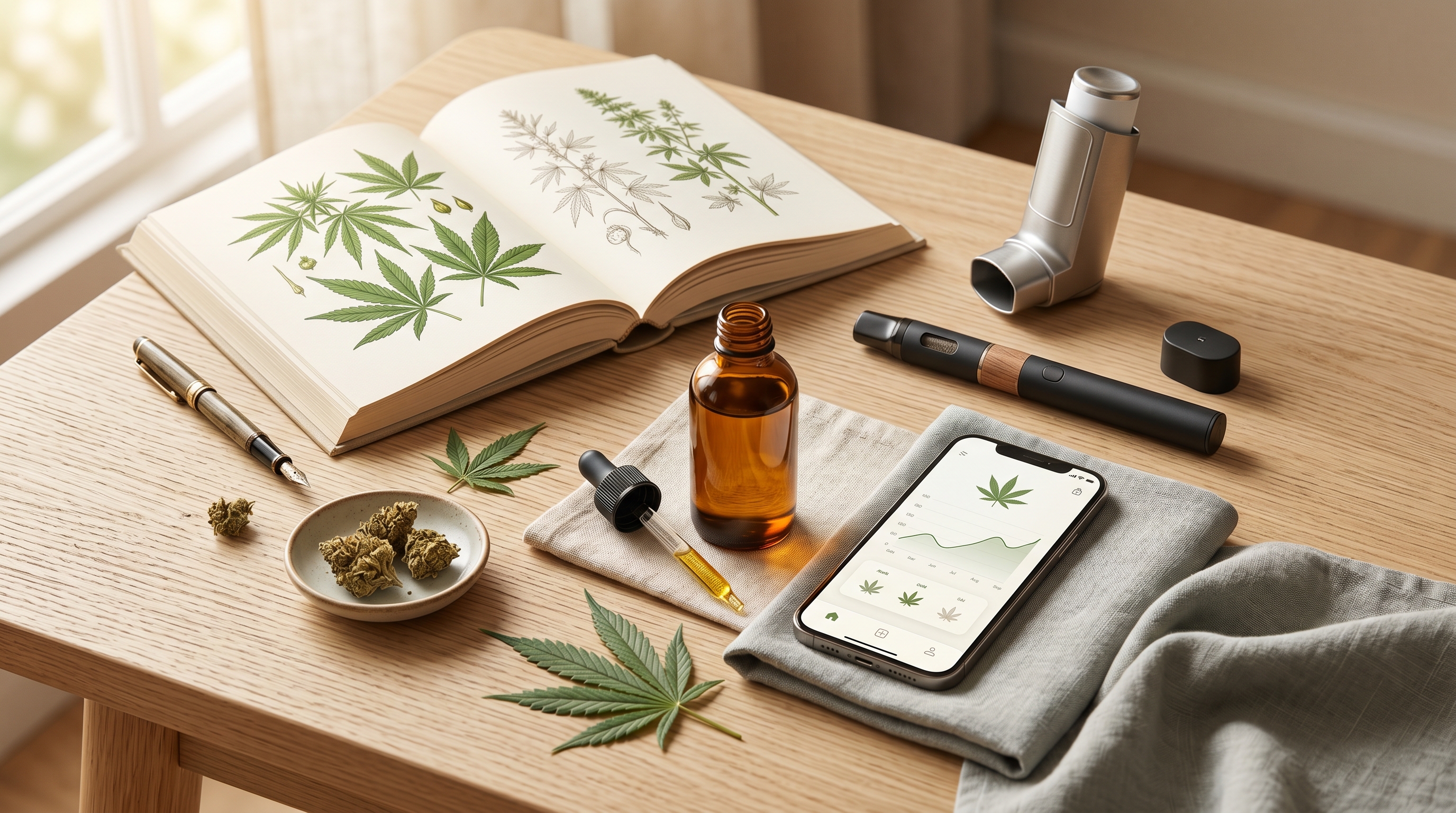
Why Precise Dosing Matters
Cannabis is unusual among consumer products in how loosely it is dosed. A glass of wine tells you roughly how much alcohol you are getting. A pill is stamped with its milligram count. But the THC percentage on a jar of flower is a notoriously poor guide to what your body will absorb, and lab labels are not always reliable.
A 2025 study in Scientific Reports tested 277 products from 52 Colorado dispensaries [Bidwell, 2025]. Only 56.7% of flower products were labeled within 15% of their true THC content, and most were over-labeled. Concentrates did far better at 96% accuracy. The point is not that testing is useless. The point is that the gap between what the label says and what you inhale is wide enough to matter. At the low end, a couple of milligrams changes everything.
Precise dosing helps you find what researchers call your minimum effective dose: the smallest amount that gives you the benefit you want with the fewest side effects. That concept sits at the heart of finding your ideal THC-to-CBD ratio and of smart microdosing for productivity and focus. It is also the backbone of safe edible dosing for beginners. The more precisely you can dial in a dose, the faster you learn your own pattern.
Metered-Dose Inhalers: The Pharmaceutical Tier
The most precise cannabis dosing device on the planet right now is a medical inhaler. The best-known example is the SyqeAir, an Israeli medical device. It delivers metered doses of vaporized whole-flower cannabis in microgram increments at the push of a button. You select from preset doses: 250, 500, 750, or 1,000 micrograms of THC. The device then uses thermal and airflow control to deliver that amount, no matter how hard or softly you inhale.
How precise is that, really? A randomized, double-blind, placebo-controlled trial tested the device in 27 chronic-pain patients [Eisenberg, 2021]. When set for a 0.5 mg dose, it delivered an average of 0.537 mg with about 9.6% imprecision. The 1.0 mg setting delivered 1.083 mg with roughly 7% imprecision. That is pharmaceutical-grade consistency for inhaled cannabis, which is famously hard to standardize. Patients saw an average pain reduction of 25% and 39% at the two dose levels, and 95% of side effects were mild.
The catch: these are prescription medical devices, available mainly in certain medical-cannabis programs, not something you grab off a dispensary shelf in most U.S. states. But they show what the ceiling looks like. For background on why inhalation absorbs so efficiently, see our guide on consumption methods ranked by bioavailability.
Dose-Control Vaporizers: Precision for the Rest of Us
Most people will never touch a medical inhaler. The accessible middle ground is a dose-control vaporizer, and there are two flavors worth knowing.
The first is the session-tracking vaporizer, like the PAX line. It paired with a companion app to let you set temperature, monitor session length, and control dose timing. (PAX is sunsetting its app in 2026. That is a reminder that app-dependent features can disappear, so we will come back to it.) These devices do not measure milligrams the way an inhaler does. But precise temperature plus a consistent draw gives you far more repeatability than a lighter and a bowl.
The second is the pre-portioned vaporizer, best shown by the Omura system. Instead of measuring, you load a paper “Flowerstick” that holds roughly 0.12 to 0.15 grams of ground flower. The device runs a fixed heat curve through it. Every stick is the same size, so every session starts from the same baseline. You scale up by using a second or third stick, much like ordering another drink. It is not microgram-precise. But it turns a random pinch into a known unit, and that is a real upgrade for repeatability.
If you are shopping for a vaporizer more broadly, our ultimate vaporizer buyer’s guide covers convection versus conduction, temperature ranges, and form factors. Vaporizing also tends to be gentler than combustion, as our vaping vs. smoking comparison explains.
Titration-Marked Tincture Droppers
For oral dosing, nothing beats a tincture with a calibrated dropper for sheer dose control. A modern tincture label tells you milligrams of THC per full dropper (usually 1 mL) and often milligrams per drop. A 30 mg-per-dropper tincture at 40 drops per dropper works out to 0.75 mg per drop, which means you can titrate in 0.75 mg increments. Try doing that with a brownie.
This is why tinctures are a favorite of patients who need fine control, and why our deep dives on making cannabis tinctures at home and sublingual vs. edible onset speed keep coming back to the dropper. Held under the tongue for 60 to 90 seconds, a sublingual dose kicks in faster (20 to 40 minutes) and more predictably than a swallowed edible.
The accuracy limit here is two-fold. First, drop size varies with viscosity and technique. For true precision, many patients switch to an oral syringe marked in 0.1 mL increments. Second, the tincture is only as accurate as its formulation. A UK study found that only 8% of CBD products landed within 10% of their advertised content [Liebling, 2023]. Pair a well-tested tincture with a graduated dropper or syringe, though, and you have the most controllable dose math of any cannabis format.
Precision Edible Dosers
Edibles are where overconsumption stories are born, mostly because people eat a “10 mg” gummy that is really 6 mg one day and 14 mg the next. Homogeneity is the issue: cannabinoids have to be evenly distributed through the candy, and regulators in states like New York require lab homogeneity testing within tight tolerances precisely because it is hard to get right.
For home cooks, precision starts with the math, which we break down in edible dosing math for home cooks and how to test homemade edible potency at home. The device-level upgrade is a dosing syringe or graduated dispenser for distillate and RSO, plus silicone molds with identical cavity volumes so each piece is the same. If you are working with RSO, a 1 mL syringe with milligram markings is the difference between a known micro-dose and a surprise. For an even more controlled commercial format, capsules and pills deliver a fixed milligram count per unit with no measuring at all.
App-Connected Tracking: The Software Layer
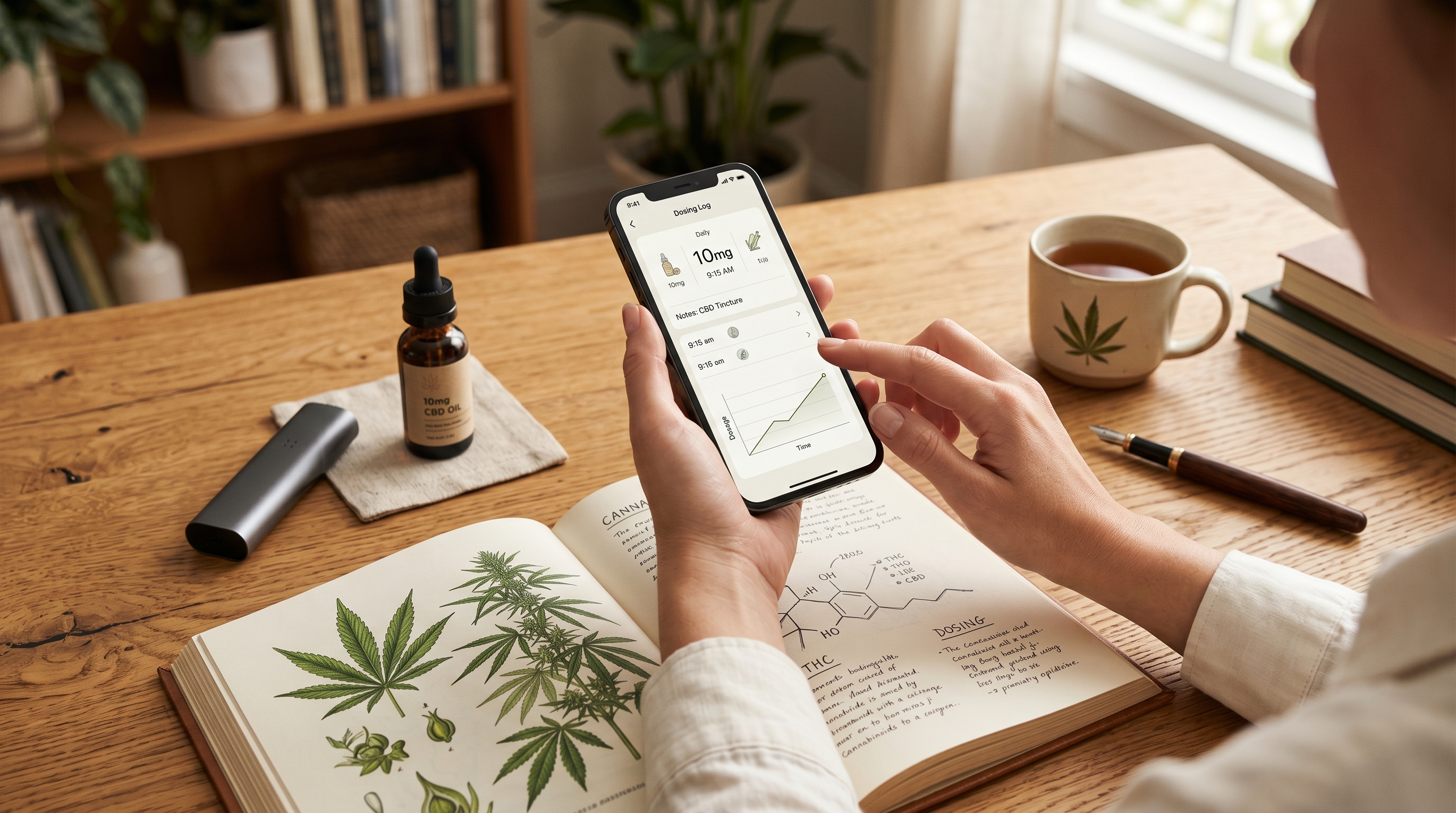
The newest frontier is gear that talks to your phone. App-connected vaporizers can log temperature, session count, and timing. Some platforms read a cartridge’s lab data, so you know the strain and cannabinoid profile in your pod. The promise is a closed loop: precise dose in, automatic record out.
The reality is more cautious. As I mentioned, PAX is retiring its app in 2026. Apple has also pulled vaporizer-control apps from the App Store before. Device-native app features can vanish without warning. The more durable approach is to separate the measurement (a device that delivers a known dose) from the tracking (a logging system you control). That is the whole philosophy behind building a cannabis journal that actually improves your experience and the case for personal cannabis intelligence. Cannabis wearables hint at where this is heading.
Accuracy Limits and Honest Caveats
No device makes cannabis perfectly predictable, and you should be skeptical of anyone who promises that. Three things still vary even with the best gear:
- Your body. Metabolism, tolerance, last meal, and genetics all shift how a fixed dose feels, which is why even a microgram-accurate inhaler produces a range of experiences. We cover this in why your dispensary labels are mostly wrong and how your genetics determine your cannabis experience.
- The product. A device can deliver exactly what is in the chamber, but if the flower or oil is mislabeled, “precise” just means precisely the wrong number. Learning to read cannabis lab results helps.
- Onset confusion. Even a perfect 5 mg edible dose can lead you astray if you do not respect the 2-hour rule. Devices fix the amount, not your patience.
None of this is medical advice, and dosing devices are not a substitute for talking to a clinician about a medical condition. What good gear does is shrink the uncertainty so the experiments you run on yourself are actually informative.
Who Should Buy What
- Medical patients with serious symptoms: A metered-dose inhaler, where legally available, is the gold standard. Otherwise, a calibrated tincture with an oral syringe.
- Microdosers and the anxiety-prone: A titration dropper or a pre-portioned vaporizer like Omura, both of which make small, repeatable doses easy. See best strains for social anxiety for strain pairing.
- Beginners: Start with low-dose tinctures or capsules and a dosing journal. Our beginner’s dosing chart and first-time users guide are the right launch pad.
- Data nerds and optimizers: A dose-control vaporizer plus a logging system you own. Pair it with knowledge of when to increase your dose and when not to.
Key Takeaways
Precise dosing removes one of the biggest variables from your cannabis experience, and the gear to do it now spans every budget. A medical metered-dose inhaler is the gold standard, hitting roughly 7 to 10% imprecision at sub-milligram doses, but it stays inside medical programs. Dose-control vaporizers trade microgram accuracy for repeatable temperature and portion size. A tested tincture with an oral syringe gives you sub-milligram titration for pennies. Keep in mind that no device can fix your body’s variability or a mislabeled product. So pair good gear with good product testing and a logging system you control. Start low, stay consistent, and let the data teach you.
FAQ
Are cannabis dosing devices worth the money? If you value consistency, manage a medical condition, or microdose, yes. If you treat cannabis casually and are happy with rough estimates, a basic vaporizer and a tincture dropper will do most of the job for a fraction of the cost.
How accurate is the most precise device? Medical metered-dose inhalers like the SyqeAir hit roughly 7 to 10% imprecision at sub-milligram doses in clinical testing, which is pharmaceutical-grade. Consumer devices are less precise but far more repeatable than freehand methods.
Can a device fix an inaccurate label? No. A device only delivers what is loaded into it. If the flower or oil is mislabeled, your “precise” dose is precisely wrong, which is why product testing still matters.
What is the cheapest way to dose precisely? A well-tested tincture plus a 1 mL oral syringe marked in 0.1 mL increments. It costs almost nothing and gives you sub-milligram titration for oral use.
Should I rely on a device’s companion app? Use it, but do not depend on it. Apps get discontinued (PAX is sunsetting its app in 2026) and pulled from stores. Keep your dosing records in a system you control.
Sources
- Eisenberg E. et al. “The pharmacokinetics, efficacy, and safety of a novel selective-dose cannabis inhaler in patients with chronic pain: A randomized, double-blinded, placebo-controlled trial.” PMC. pmc.ncbi.nlm.nih.gov/articles/PMC7496774
- “Accuracy of labeled THC potency across flower and concentrate cannabis products.” Scientific Reports, 2025. nature.com/articles/s41598-025-03854-3
- “Commercial Cannabis Product Testing: Fidelity to Labels.” PMC. pmc.ncbi.nlm.nih.gov/articles/PMC11952622
- “A comparison of advertised versus actual CBD content of oils, tinctures, e-liquids and drinks.” Journal of Cannabis Research, 2023. link.springer.com/article/10.1186/s42238-023-00183-y
- Syqe Medical. “SyqeAir Inhaler: Groundbreaking Technology.” syqe.com/groundbreaking-technology
- Omura. “Heat-Not-Burn, Convection Dry Herb Vape.” omura.com
- PAX Labs. “PAX Connected App.” pax.com/discover/mobile-app
- NY Office of Cannabis Management. “Laboratory Testing Guidance: Homogeneity.” cannabis.ny.gov


