Cannabis Salted Caramel Sauce: A Versatile Dessert Topper
Make silky cannabis salted caramel sauce with cannabutter added off-heat. Per-tablespoon dosing math, uses, and storage from Professor High.

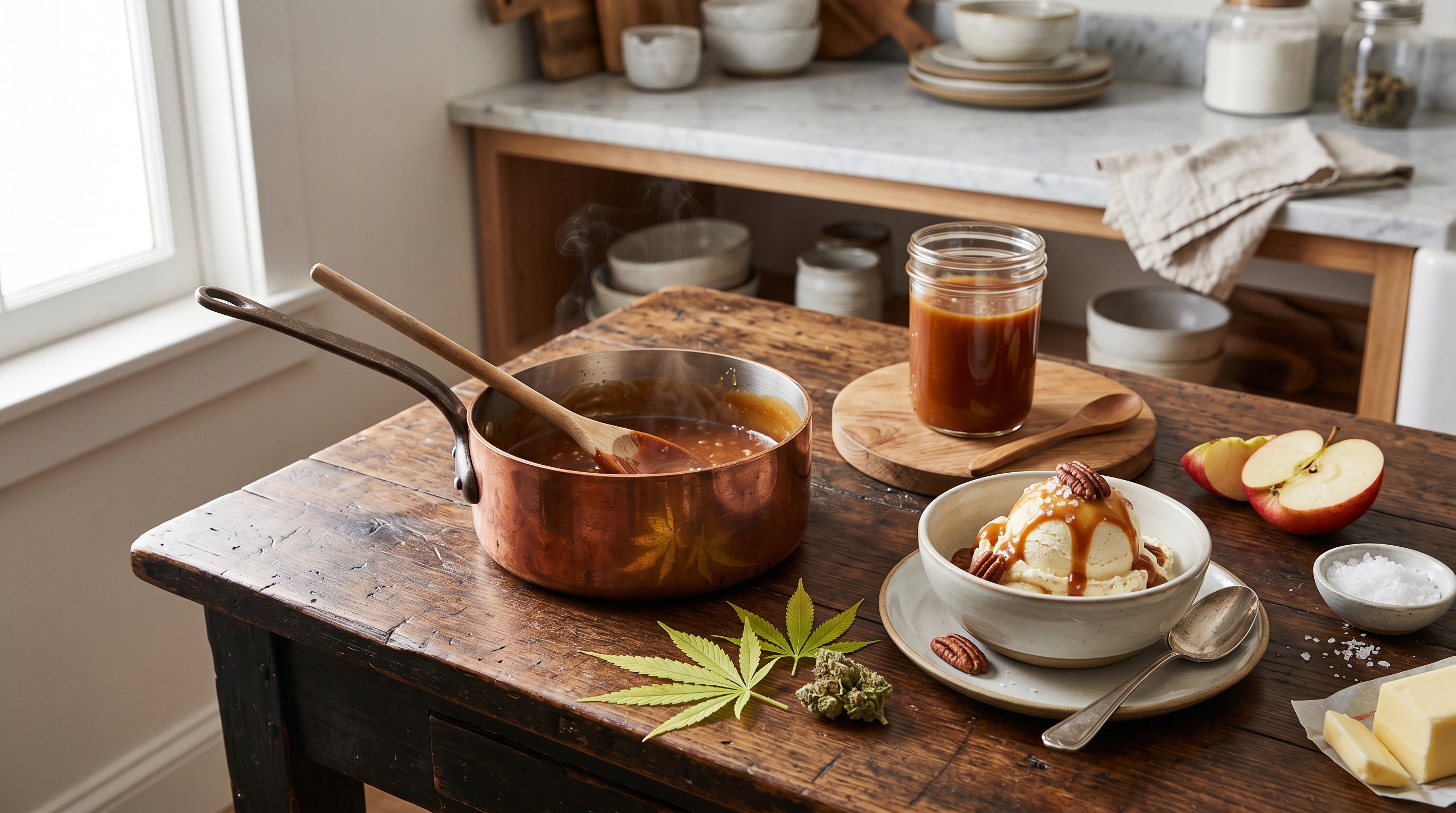
There is a particular kind of magic in a jar of homemade salted caramel. It turns plain vanilla ice cream into dessert. It makes a sliced apple feel indulgent. It disappears off the back of a spoon when nobody is looking. Now imagine that same jar gently dosed, so a single tablespoon delivers a known, repeatable amount of THC. That is the promise of cannabis salted caramel sauce. It is one of the most forgiving infused projects you can take on.
I love caramel sauce as a dosed topper for one simple reason. It carries cannabutter beautifully. Cannabinoids are fat-soluble. A rich caramel built on butter and cream gives those compounds a luxurious place to dissolve. Better still, the way we build the sauce lets us add the infused fat off the heat. That step protects the potency you worked so hard to create. Let me walk you through the science, the method, and the math.
Why caramel sauce is a great dosed topper
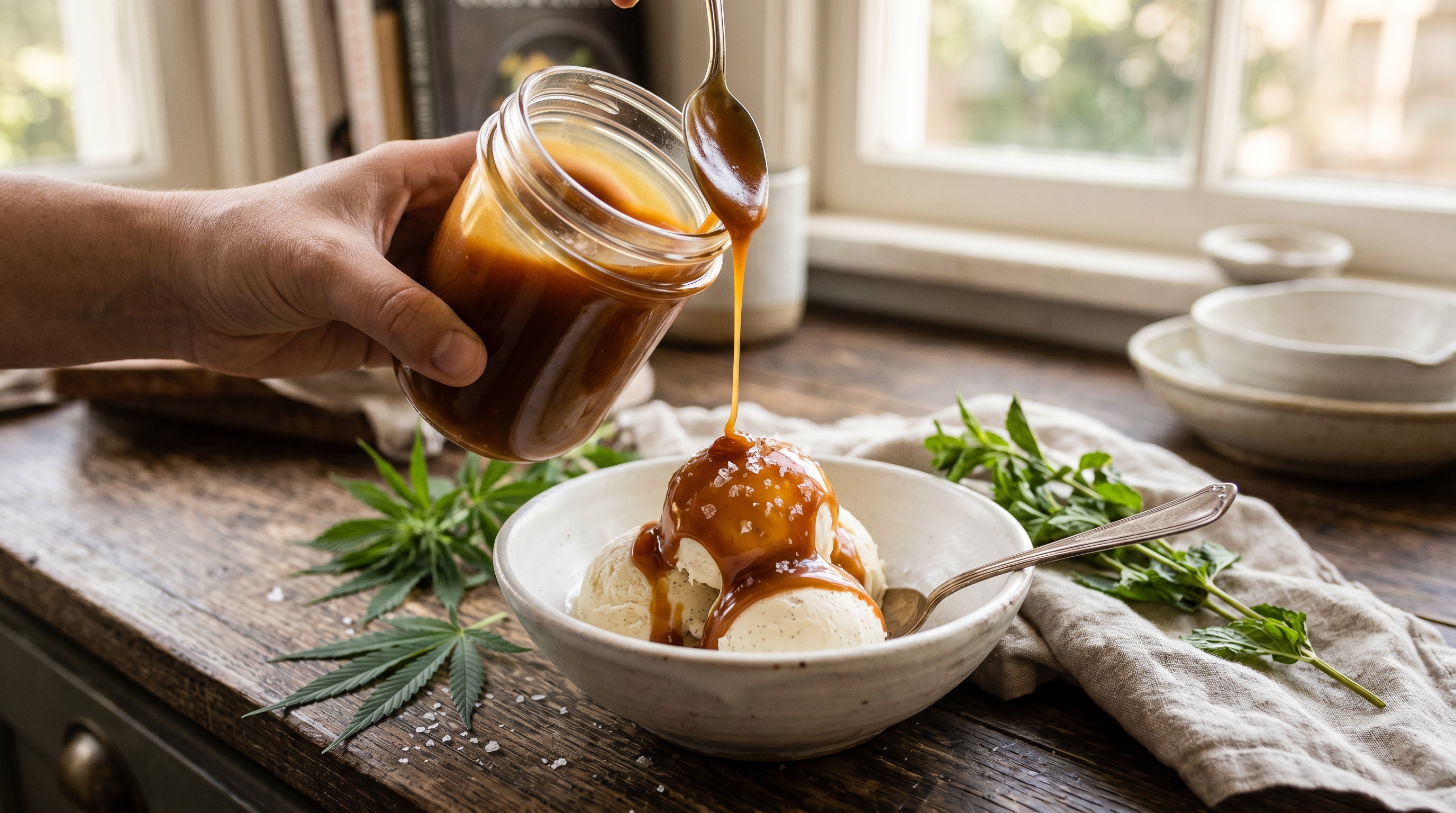
Most infused recipes ask you to commit a dose to a fixed shape, like a single brownie or one gummy. A sauce is different. It is a topper, which means you control the dose every time you reach for the spoon. Want a microdose on your morning yogurt? A teaspoon. Want a fuller experience drizzled over ice cream after dinner? A tablespoon. The format is flexible in a way that solid edibles simply are not.
The second reason caramel works so well is chemistry. THC and the other cannabinoids in your cannabutter are fat-soluble, so they need a fatty carrier to distribute evenly and to be absorbed by your body. Caramel sauce is essentially a sweet emulsion of sugar, cream, and butter, which makes it a near-perfect vehicle. If you want a deeper look at how different fats hold cannabinoids, my guide to choosing the right fat for cannabis infusions covers the trade-offs.
Here is the part I want you to remember most. Cannabutter is the carrier, and it goes in off the heat. Caramelizing sugar happens at roughly 340°F. That is far hotter than the heat we use to make cannabutter in the first place. Cannabinoids do not love prolonged high heat. So we caramelize plain sugar first. Then we stir the infused butter in after the pan comes off the burner. This keeps the hottest part of the cook away from your THC. The same logic applies to almost every infused recipe I write. That includes my cannabis-infused ice cream base and the soft, chewy cannabis caramels that share this sauce’s DNA.
A quick word on activation
Your sauce is only as potent as the butter you start with. If your cannabutter was made from raw flower that was never heated, it will do almost nothing, because raw cannabis contains THCA rather than active THC. The conversion happens through decarboxylation, the gentle heating step that activates your cannabinoids before infusion. If you are brand new to all of this, start with cannabis cooking 101 and the first-time user’s guide before you fire up the stove.
Ingredients and equipment
This is a classic “wet caramel” recipe, meaning we dissolve the sugar in water before caramelizing. The wet method is more forgiving than the dry method because the water slows everything down and gives you more margin to judge color.
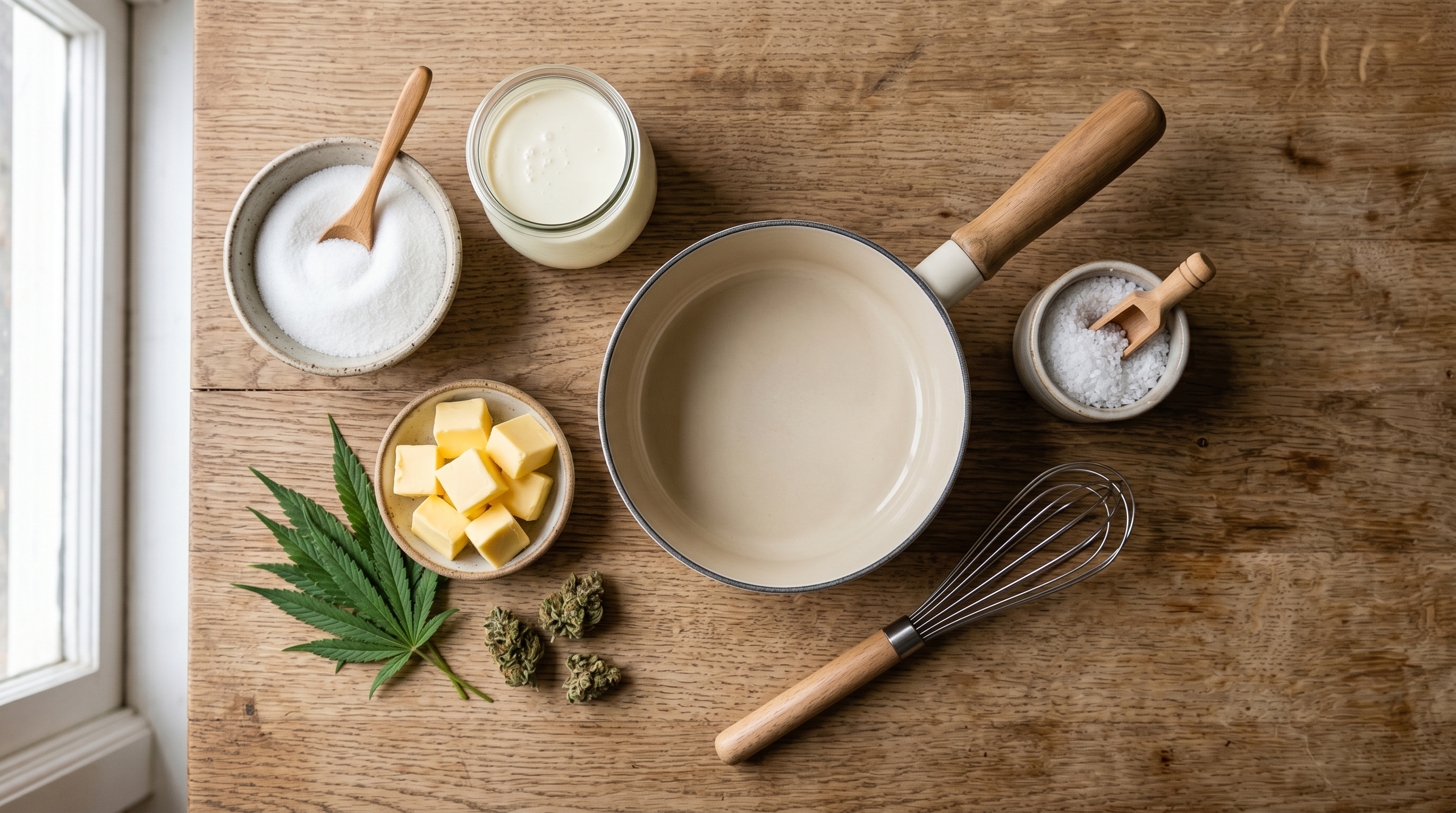
Ingredients (makes about 1 cup / 16 tablespoons):
- 1 cup (200 g) granulated sugar
- 1/4 cup (60 ml) water
- 1 tablespoon light corn syrup or honey (optional, helps prevent crystallization)
- 1 cup (240 ml) heavy whipping cream, warmed
- 4 to 6 tablespoons cannabutter, cubed and at room temperature
- 1/2 to 1 teaspoon flaky sea salt
- 1 teaspoon pure vanilla extract (optional)
Equipment:
- A heavy-bottomed, light-colored saucepan with high sides (so you can read the caramel’s color and contain the bubbling)
- A whisk and a heat-safe spatula
- A candy thermometer (optional but reassuring)
- A clean glass jar for storage
A note on the cannabutter quantity: use enough to reach your target dose (we will calculate this below), but know that the butter also adds richness. Four to six tablespoons keeps the texture silky. If your recipe needs less infused butter to hit your dose, simply make up the difference with plain butter.
Step-by-step method
Caramel moves quickly once it starts coloring, so read all the steps first and have every ingredient measured and within reach before you begin.
1. Warm the cream
Gently heat the heavy cream in a small saucepan or microwave until it is warm but not boiling. Adding cold cream to molten sugar causes violent sputtering and can shock the caramel into seizing. Warm cream blends in far more smoothly. Set it aside.
2. Make the wet caramel
Add the sugar to your saucepan, then pour the water around the edges and the corn syrup or honey on top. Stir once to hydrate the sugar, being careful not to splash crystals up the sides of the pan. Turn the heat to medium-high and let the mixture come to a boil.
Do not stir from this point on. Stirring drags sugar crystals around and can make your sauce grainy. Instead, swirl the pan gently if you need to even out the color. Watch as the syrup shifts from clear to pale gold to a rich amber, roughly the color of a copper penny. This takes about 6 to 10 minutes. If sugar crystals creep up the sides, brush them down with a wet pastry brush.
3. Add the warm cream
The moment the caramel reaches a deep amber, remove the pan from the heat. Slowly pour in the warm cream while whisking constantly. It will bubble up dramatically, so keep your hand steady and stand back a little. Keep whisking until the mixture settles into a smooth, glossy sauce.
4. Stir in the cannabutter off the heat
With the pan still off the burner, add the cubed cannabutter a piece or two at a time, whisking after each addition until fully melted and incorporated. This is the step that protects your potency, so resist the urge to put the pan back on the flame. The residual heat in the caramel is more than enough to melt the butter. Adding the infused fat last also keeps it from clumping the sugar, a problem some home cooks hit when they try to mix infused oil into the sugar too early.
5. Finish with salt and vanilla
Stir in the flaky sea salt and the vanilla. Taste a tiny cooled drop on the back of a spoon (it is hot, so be patient) and add a pinch more salt if you want that signature sweet-salty balance. Let the sauce cool for about 10 minutes; it will thicken as it sits.
Per-tablespoon dosing math
This is the part that separates a confident home cook from a nervous one. Precise dosing is not guesswork. It is arithmetic. Here is the formula:
Total mg THC in the batch ÷ number of tablespoons = mg THC per tablespoon.
This recipe yields about 1 cup, which is 16 tablespoons. So:
Total mg THC ÷ 16 = mg per tablespoon.
Let’s work an example. Say your cannabutter tests at (or you estimate it at) 10 mg THC per tablespoon, and you use 6 tablespoons of it. That is 60 mg total THC in the sauce. Divide by 16 tablespoons of finished sauce and you get about 3.75 mg of THC per tablespoon — a gentle, beginner-friendly dose. If you used a more potent butter at 25 mg per tablespoon and added 6 tablespoons, you would have 150 mg total, or roughly 9.4 mg per tablespoon.
A few honest caveats. Home infusion is not lab-precise. The real potency of homemade cannabutter varies with your flower, your decarboxylation, and your technique. Some THC is also lost to cookware and inefficiency. So treat your numbers as a careful estimate, not a guarantee. To tighten the estimate, I walk through the full process in edible dosing math for home cooks and how to test homemade edible potency at home.
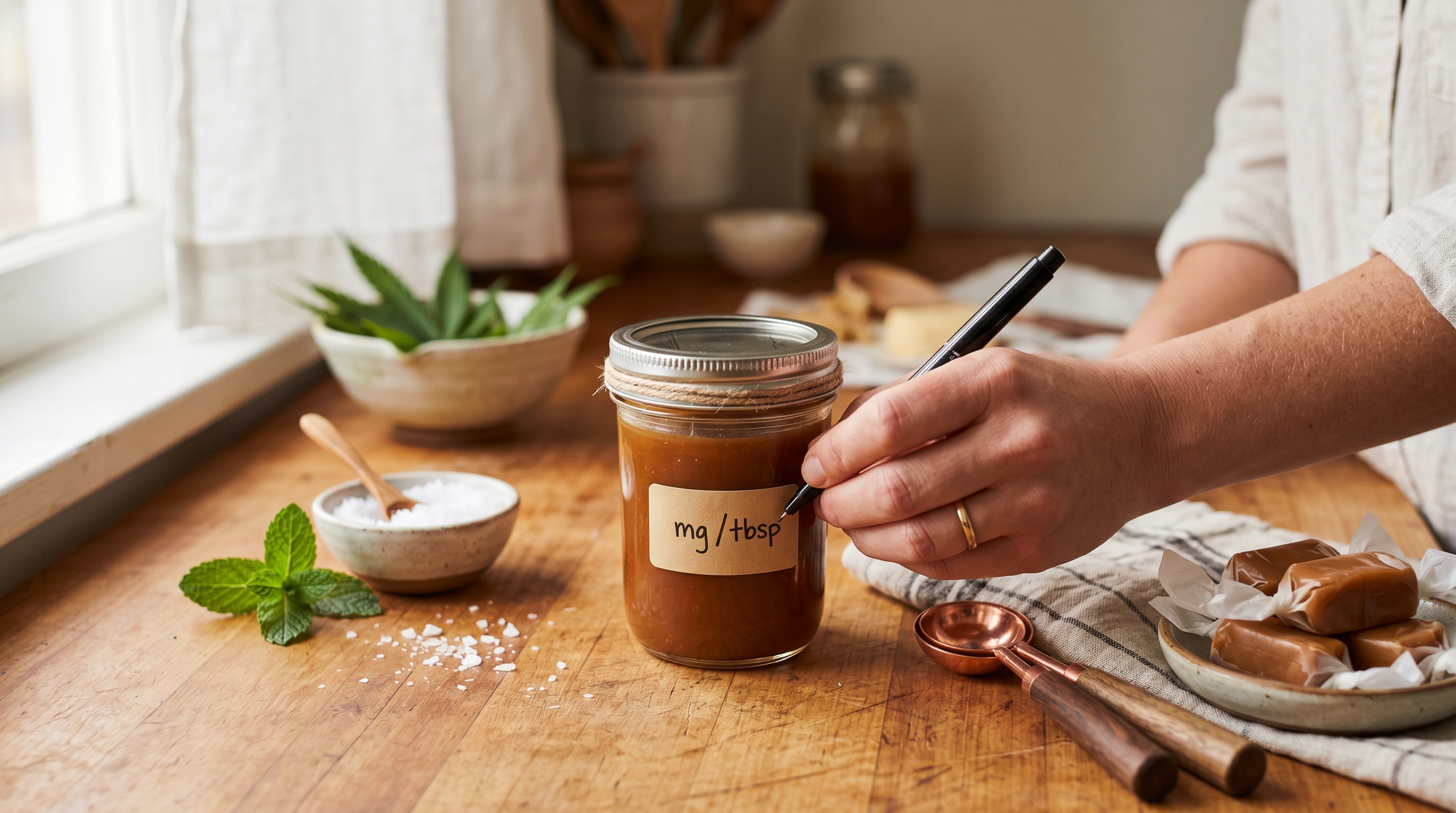
Whatever number you land on, label the jar. Write the estimated mg per tablespoon right on the lid so future-you (and anyone else in the house) knows exactly what they are reaching for.
Start low and go slow
Edibles take 30 minutes to 2 hours to set in. So patience matters more here than with any smokable. Many sources consider 5 mg a standard serving. But everyone’s body is different, and some people feel plenty from 1 to 2.5 mg. If you are new, begin with a teaspoon (one-third of a tablespoon dose), then wait. My edible dosing for beginners guide explains the 2-hour rule that saves sessions, and the beginner’s dosing chart gives you sensible starting points. If you ever overshoot, how to sober up from being too high has you covered.
It is also worth knowing why edibles feel different from inhaled cannabis. Your liver converts THC into a more potent metabolite, which is the science behind why edibles hit harder. Respect that, and you will have a far better time. For the bigger picture, see high-dose vs microdose edibles and how long a cannabis high lasts.
Delicious ways to use it
This is where the versatility shines. A dosed caramel sauce is one of the most adaptable items in your infused pantry:
- Over ice cream. The classic. Drizzle a measured tablespoon over a scoop, or layer it into my cannabis-infused ice cream base for a double-build sundae.
- On waffles or pancakes. A weekend treat — pair it with a little infused honey for layered sweetness.
- Dipping apples and pears. Sliced fruit and warm caramel is a perfect autumn ritual.
- Stirred into coffee. A spoonful turns plain coffee into a salted caramel latte; see my notes on infused coffee and tea.
- Cocktails and mocktails. Rim a glass or float a spoonful into a creamy drink.
- Spooned over brownies. Pour it across a fresh batch of no-box-mix cannabis brownies or into a holiday cookie assortment.
If sweet toppers become your thing, you will find plenty of company in my recipe library, from cannabis gummies and hard candy to savory builds like infused pasta sauce and cannabis pesto.
Storage and reheating
Cool the sauce completely, then transfer it to a clean glass jar. Stored in the refrigerator, cannabis salted caramel sauce keeps for about 2 weeks. It will firm up considerably when cold, which is normal.
To reheat, warm it gently. Set the jar in a bowl of hot water until pourable, or microwave it in short 10- to 15-second bursts, stirring between each. You can also simply let it sit at room temperature until it loosens. Avoid reheating directly in a hot pan on the stove — aggressive heat can deepen the caramel into bitterness and is unnecessarily hard on your cannabinoids. If it is too thick after chilling, whisk in a teaspoon or two of warm cream or milk to thin it back to a drizzle. For broader guidance on keeping infused goods fresh, see cannabis storage and humidity packs.
Frequently asked questions
Can I use infused coconut oil or RSO instead of cannabutter? Yes. Coconut oil works well and keeps the recipe dairy-leaning in flavor, while RSO or another concentrate lets you dose very precisely because you know the milligrams going in. With a concentrate, stir it in at the very end with the butter, just as you would with cannabutter. Calculate the total mg and divide by 16 tablespoons.
Why did my caramel turn grainy? Almost always because the sugar was stirred while caramelizing, which dragged crystals around. Swirl, don’t stir. The corn syrup or honey and a splash of lemon juice also help prevent crystallization.
Does the caramelizing heat destroy my THC? Some cannabinoid loss is possible with any heat, which is exactly why we add the cannabutter off the heat after the pan leaves the burner. The plain sugar takes the high-temperature beating; your infused fat only meets the already-cooling caramel.
Can I make it stronger or weaker? Absolutely. Adjust the ratio of cannabutter to plain butter. More infused butter raises the dose per tablespoon; swapping some for plain butter lowers it without changing the texture.
How do I figure out my ideal dose? Track it. Note how much you used and how you felt, then adjust next time. Building a simple cannabis journal is the fastest way to find your sweet spot, and knowing when to increase your dose keeps you from overshooting.
Key Takeaways
Cannabis salted caramel sauce is the rare infused project that is both easy and useful. Master the wet-caramel method. Add your cannabutter off the heat to protect potency. Do the simple per-tablespoon math. Label the jar. Do those four things and you have a versatile dessert topper that lets you decide the dose, one spoonful at a time. Start low, go slow, and enjoy the drizzle.
Sources
- The Chunky Chef [Bernard, 2022], “Salted Caramel Sauce (wet method)” — wet caramel technique and crystallization tips. https://www.thechunkychef.com/salted-caramel-sauce-wet-method/
- Scientifically Sweet [Marsigliese, 2025], “Best Easy Salted Caramel Sauce” — wet vs. dry caramel science and the warm-cream step. https://scientificallysweet.com/easy-salted-caramel-sauce/
- Food and Wine [Editors, 2025], “Salted Caramel Sauce” — pan selection, color cues, and gentle reheating guidance. https://www.foodandwine.com/salted-caramel-sauce-recipe-11847781
- IchiBanCrafter [Crafter, 2025], “Fast Canna-Caramel Sauce” — per-tablespoon dosing formula and why infused oil is added last. https://ichibancrafter.com/2025/11/17/fast-canna-caramel-sauce/
- Home Grown Apothecary [Apothecary, 2025], “Cannabutter Infused Caramel Sauce” — cannabutter caramel method, dosing, and start-low guidance. https://homegrownapothecary.com/cannabutter-caramel-sauce/


