Hemp THC Bills in Congress, Compared Side by Side
No hemp THC bill in Congress has passed. Compare all nine on the December 11 rule, buying age, serving caps, taxes and who would regulate THC drinks.

No hemp THC bill has passed the House or the Senate, and the nine bills in play make four different promises: delay the new federal hemp definition, repeal it, let states opt out of it, or replace the ban with a regulated market. Every bill we checked on Congress.gov still shows “Introduced” with a committee referral as its latest step.
Here is the detail most people miss. Four of the bills would set a minimum buying age of 21 for hemp THC products. The law that is now in effect sets no buying age at all. It draws one line, at 0.4 milligrams of total THC per container, and leaves everything else out. Public Law 119-37, section 781
So the real question for a shopper is not “Will Congress save hemp?” It is “Which version of hemp would each bill create?” This High School lesson puts every bill on the same axes, with a link to the bill text beside each claim.
Bill text and status checked October 29, 2026. Status changes fast; this is education, not legal advice.
What does the federal hemp law do right now?
Today the law is in a holding pattern. The 2026 agriculture appropriations law rewrote the federal definition of hemp. It counts total THC, including THCA, against the 0.3 percent limit. It also removes final products with more than 0.4 milligrams of total THC per container from the definition. Public Law 119-37
A September stopgap law then narrowed what applies before December 11, 2026. Until that date, only the two clauses about cannabinoids “not capable of being naturally produced” by the plant are in force. Public Law 119-103, section 2019
We walk through that split in our guide to the November 12 and December 11 dates in current law. This article stays on the bills that would change it.
Which hemp THC bills are in Congress?
The Congressional Research Service groups the proposals into delays, a repeal and new regulatory frameworks. CRS In Focus IF13136 We opened the text of each bill. Here is how the nine sort.
| Camp | Bill | Sponsor and date introduced | What it does to the December 11 rule |
|---|---|---|---|
| Delay | H.R. 7010 | Rep. Baird, Jan 12, 2026 | Changes “365 days” to “3 years” in section 781 |
| Delay | H.R. 7024, Hemp Planting Predictability Act | Rep. Baird, Jan 13, 2026 | Same text as H.R. 7010 |
| Delay | S. 3686, Hemp Planting Predictability Act | Sen. Klobuchar, with Sens. Paul and Merkley, Jan 15, 2026 | Same “3 years” text |
| Repeal | H.R. 6209, American Hemp Protection Act of 2025 | Rep. Mace, Nov 20, 2025 | Repeals section 781 |
| State opt-out | S. 4315, Hemp Safety Enforcement Act | Sen. Paul, with Sens. Klobuchar and Ernst, Apr 16, 2026 | Lets states and tribes use their own hemp definitions |
| Regulate | H.R. 7212, Hemp Enforcement, Modernization, and Protection Act | Rep. Griffith, with Rep. Veasey, Jan 22, 2026 | Text does not mention section 781 |
| Regulate | H.R. 9830, Lawful Hemp Protection Act | Rep. Barr, with Rep. Craig, Jul 22, 2026 | Repeals section 781 and writes a new definition |
| Regulate (drinks) | H.R. 10079, Beverage Regulatory Parity Act | Rep. Van Duyne, with Rep. Landsman, Aug 10, 2026 | Waives the per-container limit for drinks that meet the bill |
| Regulate | S. 3474, Cannabinoid Safety and Regulation Act | Sen. Wyden, with Sen. Merkley, Dec 15, 2025 | Text does not mention section 781 |
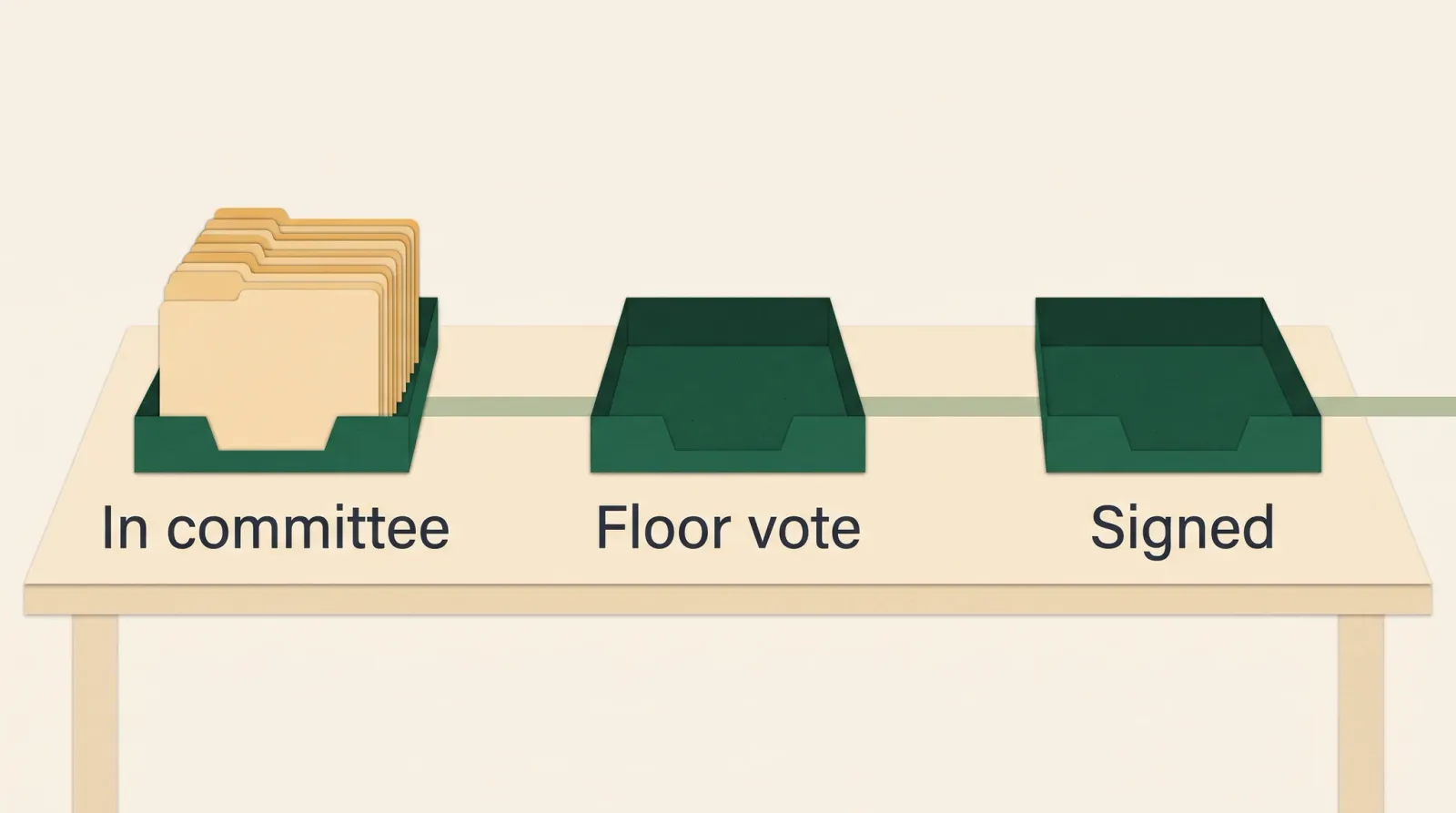
As of October 29, 2026, every bill in this comparison shows a committee referral as its latest action. None has a floor vote.
How do the bills compare on age, serving caps and drinks?
This is the table to screenshot. It covers the five bills that would put new rules on sales. The three delay bills and the repeal bill add no age, cap or regulator, so they are left out here.
| Bill | Buying age | Serving and container limits in the text | Who regulates drinks | Tax |
|---|---|---|---|---|
| H.R. 7212 (HEMP Act) | 21 | FDA sets limits by rule. If FDA misses its deadline, defaults apply: oral intoxicating products 5 mg per serving and 30 mg per package | FDA; a drink counts as an oral product | None found in the text |
| H.R. 9830 (Lawful Hemp Protection Act) | 21 to buy, possess or consume | FDA sets maximums. If late, oral products default to 5 mg per serving; no per-container default | FDA for product rules; Treasury for permits and tax; three-tier sales | 5 cents per mg of THC on drinks; percentage taxes on other products |
| H.R. 10079 (Beverage Regulatory Parity Act) | 21 to sell, buy, possess or consume | Drinks only: at most 5 mg of intoxicating THC per serving; a single-use container of 12 fl oz is one serving | Treasury’s Alcohol and Tobacco Tax and Trade Bureau, consulting FDA; three-tier sales | 8 cents per mg of intoxicating THC, paid by the producer |
| S. 3474 (Cannabinoid Safety and Regulation Act) | 21 | FDA “may” set serving sizes for states without their own: 5 mg per serving and 50 mg per container for edibles; 5 mg and 10 mg for drinks | No drink rules; orders a 60-day report on an alcohol-style framework | None |
| S. 4315 (Hemp Safety Enforcement Act) | States that opt out must set a minimum age; the text we read gives no number | No federal caps | The state | None |
Three patterns stand out.
First, 21 is the floor everywhere a framework exists. H.R. 7212 puts it in section 1007. H.R. 7212 text H.R. 9830 adds a new section of the food and drug law covering sale, possession and consumption. H.R. 9830 text Our article on hemp THC products sold to minors shows why lawmakers keep reaching for that age.
Second, “5 mg per serving” appears in all four frameworks, but the container rules differ. The HEMP Act default allows 30 mg per package. S. 3474 would allow 10 mg per drink container, but only as an optional standard. S. 3474 text H.R. 9830’s fallback sets only a per-serving number.
Third, the bills name three different drink regulators. That matters because it decides whether a THC seltzer gets sold like a soda, like a beer, or under rules nobody has written yet.
If a child eats or drinks a hemp THC product, do not wait for Congress to sort out packaging rules. Call poison control or seek medical care, and read our guide to child exposure to hemp THC. Talk to a clinician about any symptoms that worry you, in a child or an adult.
Would a delay bill push back December 11?
Yes, but the bill text does not name a new date. H.R. 7010, H.R. 7024 and S. 3686 each make one change: they strike “365 days” in section 781 and insert “3 years”. H.R. 7024 text CRS describes the three bills as delaying the change “an additional two years”. CRS IF13136
There is a wrinkle. All three were written in January, before the September law set the December 11 date in a separate section. Public Law 119-103 None of the delay bills says how its “3 years” would interact with that later date. A delay bill also adds no age limit and no serving cap. It pauses the old rules; it does not write new ones.
For flower shoppers, our guide on what happens to THCA flower on December 11 explains what is at stake in that pause.
Would the repeal bill bring back the old hemp market?
On paper, H.R. 6209 is the simplest bill on the list. Its text repeals section 781 “effective November 12, 2025”, the day the provision became law. H.R. 6209 text That would restore the earlier hemp definition, which measured delta-9 THC rather than total THC. The difference is explained in our lesson on total THC versus delta-9.
Repeal adds nothing else. No age limit, no serving cap and no regulator come with it.
What does the state opt-out bill do?
S. 4315 takes a different road. A state or tribe that opts out of the federal subtitle could use its own hemp definition, provided it requires a minimum buying age. S. 4315 text It keeps the federal exclusion for cannabinoids “not capable of being naturally produced”. That carve-out is the one that matters for many delta-8 products.
In practice, this would turn hemp into a state-by-state map, much like the patchwork in our state cannabis laws guide.
Which hemp bill would let THC drinks stay on shelves?
Only two bills address the 0.4 mg container line head-on. H.R. 10079 waives section 781’s per-container limit for drinks that meet its rules, and it takes effect on enactment “notwithstanding any effective date”. H.R. 10079 text H.R. 9830 repeals section 781 outright and writes a new hemp definition at 1 percent total THC, THCA included. H.R. 9830 text
The other two frameworks are silent. We searched the H.R. 7212 and S. 3474 texts for “781” and “Public Law 119-37” and found no hits. Neither text says how its rules would fit with the 0.4 mg container line. So it is not accurate to say either bill would “keep drinks legal”. The text simply does not say.
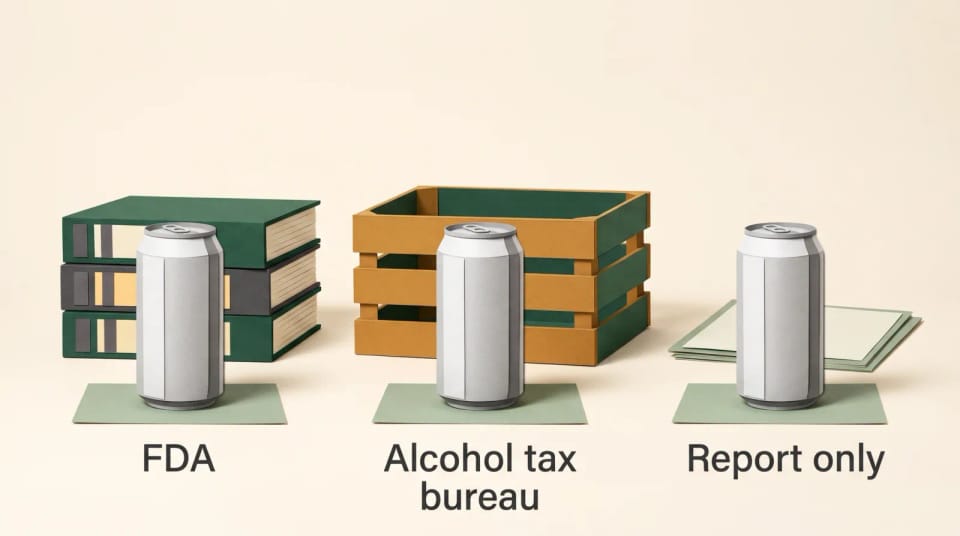
H.R. 7212 and H.R. 9830 put drink product rules under FDA. H.R. 10079 hands drinks to the alcohol tax bureau. S. 3474 asks agencies for a report on an alcohol-style system.
The regulator question splits three ways:
- FDA. The HEMP Act counts a beverage as an oral product under FDA rules. H.R. 7212 text H.R. 9830 also uses FDA for product rules, with Treasury issuing permits and collecting tax.
- The alcohol tax bureau. H.R. 10079 makes Treasury’s Alcohol and Tobacco Tax and Trade Bureau the regulator, consulting FDA. It adds permits, three-tier distribution, alcohol-style label and ad rules, and it keeps state laws in place.
- A report. Section 103 of S. 3474 asks USDA, FDA, the Justice Department and the bureau to recommend an alcohol-style drink framework within 60 days. It does not create one. S. 3474 text
For the arithmetic behind today’s line, see the 0.4 mg per-container math for drinks. For how the drinks themselves work, see how THC drinks work. Minnesota already runs a state version of a licensed drink market, covered in how Minnesota licenses THC drinks.
Who would pay a hemp THC tax?
Two bills carry a federal tax. H.R. 10079 sets 8 cents per milligram of intoxicating THC, collected at the producer level. H.R. 10079 text H.R. 9830 creates a new chapter of the tax code. It taxes drinks at 5 cents per milligram of THC and sets 5 percent rates on the sale price of other products and on manufacturer sales revenue. H.R. 9830 text
H.R. 9830 has one more condition outside the hemp aisle. Section 9 would withhold 10 percent of certain federal highway money from states that lack an impaired-driving law of the type the bill describes.
We found no Congressional Budget Office cost estimate on any of these bill pages. Any revenue figure you see quoted for them does not come from the bill text or a CBO score.
Can reconciliation carry a hemp bill before December 11?
It is being discussed, but no such bill exists yet. Rep. Griffith told Roll Call that getting a hemp framework “into a reconciliation bill before the 11th of December” would be “fabulous”. He named the Beverage Regulatory Parity Act as a tax measure his bill could pair with. Roll Call, October 26, 2026
The same report says the House adopted a budget resolution in July and the Senate has not acted on its own. Sen. Lummis called syncing the two chambers “very challenging”. Griffith also said some colleagues “just want to stop” intoxicating hemp products.
Our analysis, not a finding from any source: reconciliation is limited to measures with budget effects. That makes the tax-bearing bills (H.R. 9830 and H.R. 10079) a more natural fit than the FDA-only bills. Whether any hemp provision would meet the Senate’s test has not been tested.
What happens on December 11 if Congress does nothing?
If no bill becomes law, the full section 781 definition takes effect on December 11, including the 0.4 mg container line. Public Law 119-103 The House-passed agriculture spending bill for 2027 (H.R. 8646) contains no hemp delay, according to CRS. CRS IF13136
Two open questions remain. CRS reported that FDA had not published the cannabinoid lists that section 781 called for, as of September 28, 2026. That was the last check we could confirm. CRS has also said enforcement after the change is uncertain, and that FDA and DEA may lack resources to enforce broadly. CRS Insight IN12620 For the wider picture, see hemp versus cannabis rules in 2026.
Press reports also describe a draft from Rep. Comer and an expected Senate companion to the Barr bill. We found no bill text for either on Congress.gov, so they are not in our tables.
Key takeaways
- None of the nine hemp THC bills has passed either chamber; all show a committee referral as the latest action.
- The bills sort into four camps: delay (three bills), repeal (one), state opt-out (one) and regulate (four).
- The four regulate bills all set a buying age of 21 and use a 5 mg per-serving figure, but their container rules differ.
- Drinks would answer to FDA, to the alcohol tax bureau, or to a future report, depending on the bill.
- Only H.R. 10079 and H.R. 9830 deal directly with the 0.4 mg container line; H.R. 7212 and S. 3474 are silent on it.
FAQ
Will Congress delay the hemp THC ban before December 11?
No delay has passed as of October 29, 2026. Three bills would extend the timeline, but each sits in committee, and none names a new date. Track the “Latest Action” line on each bill’s Congress.gov page for changes.
Has any hemp THC bill passed the House or Senate?
No. Every bill in this comparison shows “Introduced” with a committee referral as its latest step. The House-passed 2027 agriculture spending bill has no hemp delay, according to CRS.
What is the minimum age to buy hemp THC under the new bills?
Four bills set it at 21: H.R. 7212, H.R. 9830, H.R. 10079 and S. 3474. S. 4315 requires opting-out states to set a minimum age without naming one. Current federal law sets no buying age.
Who would regulate hemp THC drinks, FDA or the alcohol tax bureau?
It depends on the bill. H.R. 7212 and H.R. 9830 use FDA for product rules. H.R. 10079 makes the Alcohol and Tobacco Tax and Trade Bureau the regulator. S. 3474 only orders a report on an alcohol-style system.





