Medical Cannabis Is Schedule III. Recreational Isn't. The Split Explained
The April 2026 rule moved cannabis to Schedule III only in FDA-approved drugs or under a state medical license. Adult-use stayed Schedule I.

Professor High

If you read a headline in late April that said “cannabis is now Schedule III,” you read something that isn’t true. Not slightly imprecise. Not true.
The actual rule reschedules cannabis to Schedule III in two narrow situations: when it is inside an FDA-approved drug product, or when it is subject to a state-issued license to manufacture, distribute, or dispense marijuana for medical purposes. Everything else — every adult-use dispensary, every recreational gram, every unlicensed plant — stayed in Schedule I.
That gap between what was reported and what was signed is where people get hurt. Someone who believes the federal government reclassified their recreational purchase makes different decisions about carrying it, crossing a state line, or explaining it to an employer. So here is the rule, in its own words, with the scope attached every time.
What the document actually is
The instrument is a final rule that also constitutes a final order, issued by the Acting Attorney General of the U.S. Department of Justice through the DEA. It carries AG Order No. 6754-2026 and docket DEA-2024-0059. It was published at 91 FR 22714 on April 28, 2026, and it took effect the same day — no phase-in, no grace period.
The scope sentence is worth reading slowly, because almost no coverage quoted it. From the rule’s own abstract, this action applies to marijuana as defined in the CSA, marijuana extracts, and delta-9-THC and other compounds derived from the marijuana plant that fall outside the definition of hemp —
“to the extent that any of these are included in an FDA-approved drug product or are subject to a state-issued license to manufacture, distribute, and/or dispense marijuana or products containing marijuana for medical purposes.”
“To the extent that.” Four words doing enormous work. The reclassification does not attach to the plant. It attaches to a legal context the plant is sitting in.
And the rule says the other half out loud. In its own text: “any form of marijuana other than in an FDA-approved drug product or marijuana subject to a state medical marijuana license remains a schedule I controlled substance.”

The two doors into Schedule III
Door one: an FDA-approved drug product
This door is narrower than it sounds. An FDA-approved drug product containing cannabis is a specific, finished pharmaceutical that went through clinical trials and a new drug application — like the CBD-based epilepsy medicine that changed how regulators thought about the plant, which we cover in the CBD approval that shifted federal thinking.
A jar of flower is not a drug product. A vape cart is not a drug product. Neither becomes one because a dispensary calls it medicine.
Door two: a state medical marijuana license
This is the door that actually moved the market, and it is the one being misread. The rule keys on the license, and specifically on a license “to manufacture, distribute, and/or dispense marijuana or products containing marijuana for medical purposes.”
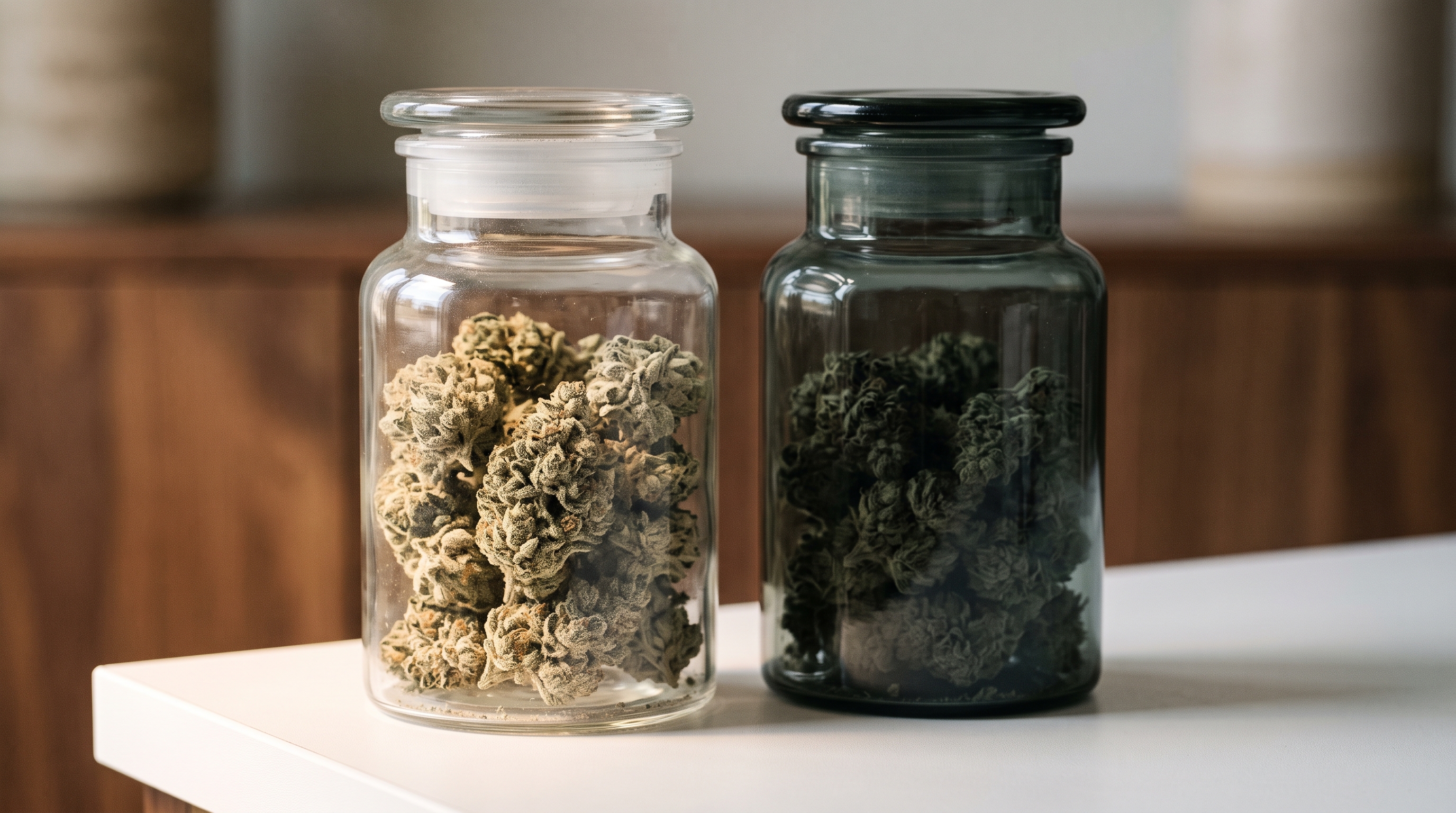
So the classification of a given quantity of cannabis under federal law now depends on the licensing status and stated purpose of the operation handling it. Two identical jars, same cultivar, same chemistry, same harvest — one moving through a state medical program and one moving through an adult-use program — sit in different federal schedules. That is not a metaphor. That is how the rule is drafted.
If you have never had to think about which of those systems you are standing in, our guide to why the medical/recreational divide is more artificial than people assume is a useful companion — with the note that as of April 28, 2026, federal law made that artificial divide load-bearing.
Which system your state runs now matters more than it did last year. If you are in a medical-only state like Florida or a limited-access state like Texas, the licensed supply chain serving you is covered. If you buy adult-use in Colorado, it is not. Our state-by-state map of where cannabis is legal and the broader 2026 legalization picture will tell you which side of the line you shop on.
What a two-tier system means in practice
Here is the shape of it.
| In an FDA-approved drug product | Under a state medical license | Adult-use / recreational | Unlicensed | |
|---|---|---|---|---|
| Federal schedule | Schedule III | Schedule III | Schedule I | Schedule I |
| Covered by the April 2026 rule | Yes | Yes | No | No |
| Expedited DEA registration path | N/A | Yes | No | No |
| Import/export permit requirement added | Yes | Yes | Unchanged | Unchanged |
Four consequences follow that are worth stating plainly.
One: the plant did not change status. A transaction did. Federal classification now tracks paperwork. This is unusual, and it is why “cannabis is Schedule III” is not a sentence that can be true on its own.
Two: most consumers are unaffected. The large majority of legal cannabis sold in the United States moves through adult-use programs. For those purchases, federal law in August 2026 is exactly what it was in March 2026.
Three: nothing about interstate movement changed. Cannabis still cannot lawfully cross a state line, medical or not, and the April rule did not touch that. We cover the mechanics in when weed can legally cross state lines — short answer, it can’t — and in the practical version, travelling with cannabis state by state.
Four: drug testing did not change. A urine test detects THC metabolites. It does not read your license, your card, or your intent. If you are trying to reason about exposure windows, start with how long THC actually stays in your system and the honest version of what does and doesn’t work on a test. Isomer questions are their own mess — see whether delta-8, delta-10, or HHC show up.
Other federal collisions are also untouched. The firearms question, for example, turns on federal prohibited-person status, which we unpack in can cannabis users own a gun. And banking access still depends on legislation that has not passed — see what the SAFER Act would actually do.
Registration is not prescription
The rule does one more thing that got compressed into nonsense: it “establishes an expedited registration process under 21 CFR part 1301 for entities holding state medical marijuana licenses, enabling such entities to engage in the manufacture, distribution, and/or dispensing of marijuana for medical purposes under federal law consistent with the requirements of the Single Convention.”
Read the nouns. Entities. Registration. Not patients, not prescriptions.
DEA registration is the licence a business or practitioner needs to handle a controlled substance at all. Every pharmacy that stocks a controlled medicine has one. What the rule created is a faster on-ramp for state-licensed medical operators to get that federal registration — a business compliance step, not a change in how you obtain cannabis.
The rule set a real clock on it. Per the text, the Administrator “shall make every effort to process all applications submitted within 60 days of the publication of this regulation in the Federal Register within six months,” and an applicant filing inside that 60-day window from the April 28 publication “may engage in the manufacture, distribution, and/or dispensing of marijuana or products containing marijuana for medical purposes in conformity with a state-issued license during the pendency of the application.” In other words: file early, keep operating while DEA reviews.
What none of this creates is a prescription pathway. Your physician cannot write you a prescription for dispensary flower because it is in Schedule III when handled under a state medical license. State medical programs still run on recommendations and cards, issued under state law, exactly as before — the process we describe in how to get a medical marijuana card, state by state. Your first visit still works the way it always did, which is more bureaucratic than clinical.
The treaty nobody mentions
The obvious question is why the two covered categories — FDA-approved drug products and state medical licensees — landed in Schedule III specifically. If the government now accepts a medical use, why not Schedule II, or nothing at all?
The answer sits in a 1961 treaty. The rule is explicit that the Attorney General’s job here is “to place a drug in the schedule he deems most appropriate to carry out United States obligations under the Single Convention on Narcotic Drugs, 1961.” The rule notes that “the enactment and enforcement of the CSA are the primary means by which the United States carries out its obligations under the Single Convention,” and that Congress “directed the Attorney General to ensure that compliance by the United States with our nation’s obligations under the Single Convention is given top consideration when it comes to scheduling determinations.”
Those obligations are concrete, and they explain why a clean deschedule was never on the table. Under the treaty, the United States must limit “exclusively to medical and scientific purposes the production, manufacture, export, import, distribution of, trade in, use and possession of such drugs.” It must run a quota system “requiring that licensed manufacturers of such drugs obtain quotas specifying the amounts of such drugs they may manufacture to prevent excessive production.” And under the national-agency provisions, DEA “must buy marijuana crops from registered manufacturers, be the seller of that marijuana to any eligible registered purchaser, and establish prices for such purchase and sale.”
That last one is the quiet reason the bulk market stayed put. The rule states that “maintaining unlicensed bulk marijuana in schedule I allows the United States to continue to meet two of its obligations under the Single Convention.” Keeping unlicensed bulk cannabis in Schedule I is how the government avoids being obliged to operate a national cannabis purchasing monopoly.
One honest caveat, since precision is the whole point of this piece: the rule does not lay out a head-to-head argument for Schedule III over Schedule II. What it says is that the Acting Attorney General exercised discretion “by choosing the option that most closely aligns to HHS’s findings and best positions the United States to carry out its obligations under the Single Convention with regard to marijuana crops.” The HHS findings it aligns to are that marijuana “has a potential for abuse less than the drugs or other substances in schedules I and II,” and that abuse “may lead to moderate or low physical dependence or high psychological dependence.” Those findings match the statutory definition of Schedule III. Anyone telling you the treaty mandated Schedule III specifically is filling in a blank the document left open.
What is still pending
On the same day, in the same issue of the Federal Register, DEA published a notice of hearing at 91 FR 22777 — docket DEA-1362, AG Order No. 6753-2026 — on the broader question: whether marijuana generally should move to Schedule III, not just the two covered categories.
The relevant facts, and only these:
- The hearing began June 29, 2026.
- Notice of intent to participate was due May 28, 2026.
- It runs off the original proposed rule published May 21, 2024.
- It is being conducted, per the notice, “in the most expeditious manner in accordance with Federal law” pursuant to Executive Order 14370.
That is a proceeding, not an outcome. As of this writing it has produced no final rule. Until it does, adult-use cannabis remains a Schedule I controlled substance. Anyone predicting the result — in either direction — is guessing, and you should discount them accordingly.
The proximate cause of all of it is Executive Order 14370, “Increasing Medical Marijuana and Cannabidiol Research,” signed December 18, 2025 and published December 23, 2025 at 90 FR 60541. Note the title. The executive order that set this chain in motion is about research and medical cannabis. The April rule is a faithful execution of that framing. Read together, the scope stops looking like an oversight and starts looking like the design.
About our own earlier coverage
We published Cannabis Rescheduled to Schedule III: What It Means for You shortly after the rule landed. It does draw the medical/adult-use line — but it was written in the first days, when most of what was available to work from was law-firm summaries rather than the rule text, and it carries tax and registration-deadline specifics we have not been able to confirm against primary sources.
So this piece is the version built only from the documents: the final rule, the hearing notice, and the executive order, linked below so you can check every quote yourself.
One deliberate omission. We are making no claims here about business taxation. Tax treatment turns on Treasury and IRS guidance, which is a separate document set with its own effective dates, and we have not verified it. When we can read it directly, we will write it up. Saying nothing beats saying something confident and wrong — which is, after all, the entire subject of this article.
Why the label was never the useful part
There is a pattern worth noticing here, and it is the reason this site exists.
A schedule number is a legal category. It tells you how a substance is regulated. It tells you nothing about what the substance will do in your body — not the dose, not the duration, not whether it will settle you or wind you up. The federal government spent five decades classifying cannabis as having no medical use while millions of people used it medically. The classification was never a description of the plant.
Strain names work the same way. “Indica” on a menu is a marketing category, not a chemical one. A cultivar name tells you very little about the chemistry in the jar, which is the argument behind why your ideal high isn’t a strain name, why THC percentage is a poor selection tool, and why dispensary labels are mostly wrong. The categories that actually predict experience are chemical ones — the cannabinoid and terpene profile — which is what our Relief High and Balance High families are built on.
Categories are convenient. Your own response data is true. If you want the second kind, the High IQ app lets you log what you actually took and how it actually landed, and read the pattern back over time.
Frequently asked questions
Is cannabis Schedule III now? Only in two situations: inside an FDA-approved drug product, or when subject to a state-issued licence to manufacture, distribute, or dispense marijuana for medical purposes. In every other situation — including all adult-use and all unlicensed cannabis — it remains Schedule I.
I buy at a recreational dispensary. Did anything change for me? Federally, no. Your purchase is still a Schedule I controlled substance under federal law. The April 2026 rule does not cover adult-use cannabis.
Can my doctor prescribe cannabis now? No. The rule created an expedited DEA registration path for state-licensed medical businesses under 21 CFR part 1301. Registration lets a business handle a controlled substance; it does not create prescribing authority. State medical programs still operate on recommendations and cards under state law.
Does having a medical card change my federal status as a consumer? The rule addresses licensed entities — manufacturers, distributors, dispensers. It reclassifies cannabis handled under a state medical licence, which covers the supply chain serving you. It does not create any federal protection for possession, transport across state lines, employment, or firearms eligibility.
Will the June 2026 hearing extend Schedule III to recreational cannabis? Unknown. The hearing on the broader rescheduling question opened June 29, 2026 under docket DEA-1362 and has not produced a final rule. Until it does, adult-use cannabis stays in Schedule I. Treat any confident prediction as speculation.
Why Schedule III instead of Schedule II or removing it entirely? The Controlled Substances Act requires the Attorney General to pick the schedule most appropriate for meeting U.S. obligations under the Single Convention on Narcotic Drugs, 1961 — which is why full descheduling was not available. The rule grounds the specific choice in HHS’s findings that marijuana’s abuse potential is lower than Schedule I and II substances. It does not publish a direct Schedule II versus Schedule III comparison.
Does this affect hemp products? Not directly — hemp is defined separately and is governed by its own statute, which is itself changing later in 2026. See the confusing 2026 hemp landscape, plus our explainers on THCA, THCA flower versus delta-9 flower, and delta-8 versus delta-9.
Sources
Every quotation above comes from one of these three primary documents. All are public and free to read.
- Schedules of Controlled Substances: Rescheduling of Food and Drug Administration Approved Products Containing Marijuana From Schedule I to Schedule III; Corresponding Change to Permit Requirements. Department of Justice / Drug Enforcement Administration. Final rule. AG Order No. 6754-2026; Docket DEA-2024-0059. 91 FR 22714. Published and effective April 28, 2026. federalregister.gov/documents/2026/04/28/2026-08176
- Schedules of Controlled Substances: Rescheduling of Marijuana. Drug Enforcement Administration. Notice of hearing. Docket DEA-1362; AG Order No. 6753-2026. 91 FR 22777. Published April 28, 2026; hearing began June 29, 2026. federalregister.gov/documents/2026/04/28/2026-08177
- Executive Order 14370, “Increasing Medical Marijuana and Cannabidiol Research.” Signed December 18, 2025; published December 23, 2025. 90 FR 60541. federalregister.gov/documents/2025/12/23/2025-23846
This article is general information, not legal advice. Federal and state cannabis law is unsettled and moving, and the consequences of getting it wrong are personal to your situation. If you have a specific question about your licence, your employment, your immigration status, or your criminal exposure, talk to a lawyer in your jurisdiction.
