25 Questions You're Too Embarrassed to Ask a Budtender
No shame, no jargon: clear answers to 25 awkward dispensary questions about IDs, privacy, labels, dosing, testing, payment, and safety.

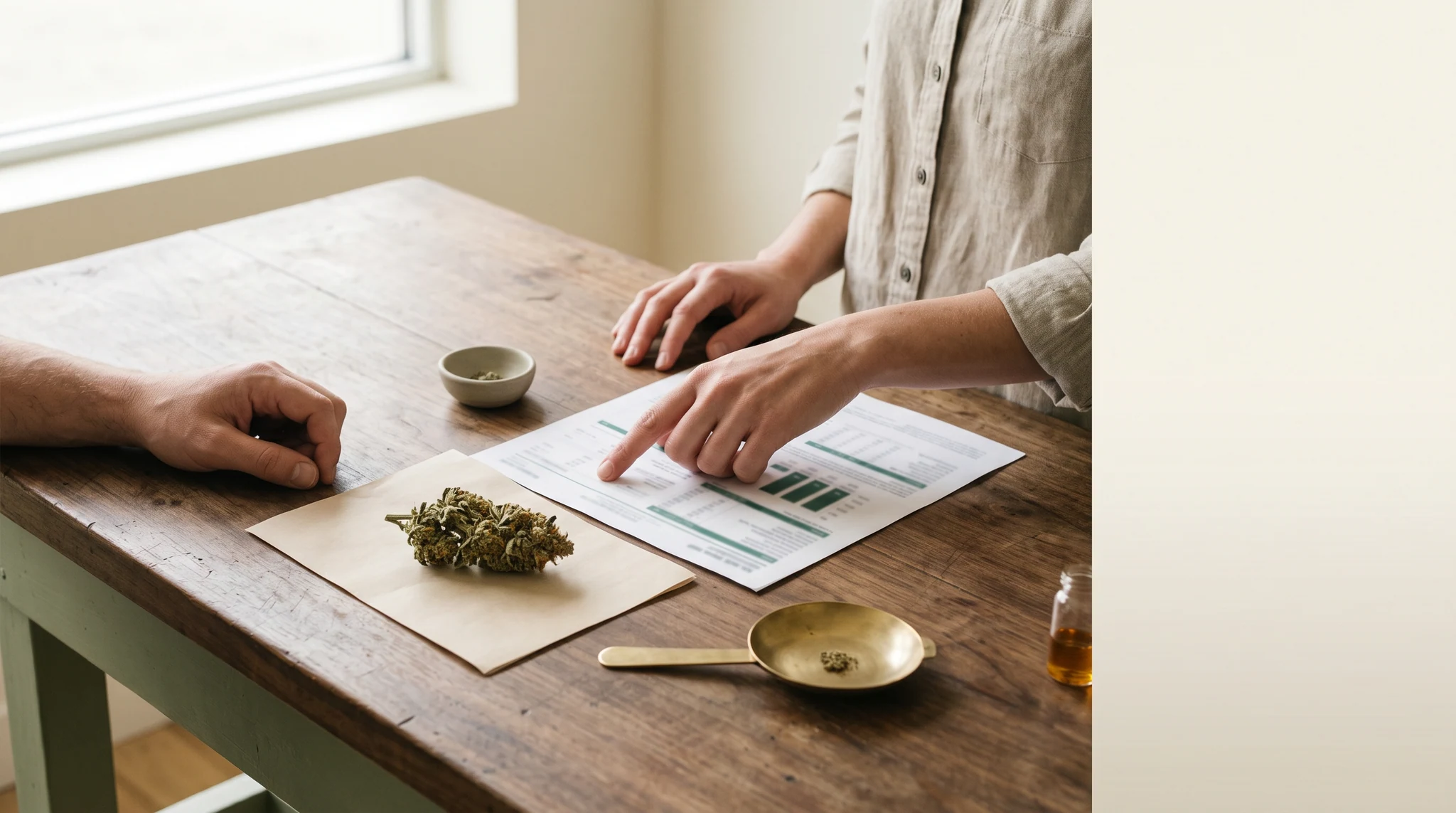
The person behind the dispensary counter has heard every version of “Is this a dumb question?” It almost never is. Unfamiliar words, tiny label print, changing laws, and a line behind you can make smart people freeze.
This is your judgment-free rehearsal: 25 questions real beginners may want to ask a budtender but hesitate to say out loud. The answers explain what a helpful retail employee can do, what belongs with a clinician, and what you should verify for yourself. They do not assume that stronger is better or that your goal is maximum intoxication.
One boundary before we walk to the counter: age, ID, purchase, label, return, delivery, tax, and possession rules vary by jurisdiction. Store policies vary too. Check your regulator and the shop’s written policy; this is not legal or medical advice.
Key Takeaways
- Saying “I am new” is useful information, not a confession. It lets staff explain products without assuming experience.
- A budtender can discuss labels, formats, onset, store inventory, and policy. They generally should not diagnose a condition, promise a cure, or replace your clinician or pharmacist.
- Read THC per unit and per package, not just the largest number on the front. Milligrams and percentages answer different questions.
- Ask to see the product’s batch-specific Certificate of Analysis (COA) where it is available, and confirm the batch or lot matches the package.
- ID checks may be legally required, while loyalty enrollment is often a separate choice. Ask what data a scanner retains before opting into anything optional.
- Returns, payment methods, discounts, and tipping are store policies. Ask before buying; do not assume cannabis retail works like a grocery store.
- Buy from a licensed retailer where lawful, avoid driving impaired, keep products locked away from children and pets, and tell a healthcare professional about medication or health concerns.
Before You Go In: The 20-Second Script
If your brain goes blank, say this:
“Hi, I am new. I want something easy to understand, I prefer a lower-THC option, and I do not want to feel rushed. Can you show me the label, explain one serving, and tell me the store’s return policy?”
That sentence gives a good budtender enough to slow down and teach. Our first dispensary visit walkthrough covers the door-to-checkout sequence; this guide handles the questions people tend to swallow.
1. “Do I have to know anything before I walk in?”
No. Bring the ID required where you live, a budget, and an honest description of your experience. “I have never used cannabis” is a complete starting point.
A good employee should translate the menu into plain language. If it is busy, ask when to return or review the online menu at home. Our first-time cannabis user guide can help you prepare.
2. “Will the staff judge me for being completely new?”
Professional staff should not. New shoppers are part of the job, and saying what you do not know helps prevent bad recommendations.
Judge the shop by its response. Helpful staff ask about format, experience, timing, sensitivity, and comfort with intoxication. Laughing at questions, pushing maximum potency, or insisting one product suits everyone are warning signs. You may leave without buying. Our dispensary buyer’s guide evaluates the business, not just its menu.
3. “Can I just say I want something mild?”
Yes, but add one or two details. “Mild” might mean low THC, a small measured serving, short duration, no inhalation, or simply a product that is easy to portion. Tell the budtender which meaning matters to you.
Try: “I want lower THC, clearly measured servings, and less rather than too much.” Ask to see the actual package label, not only the menu. Compare cannabis consumption methods and the beginner THC dosing chart to make “mild” more concrete.

4. “What ID do you need, and why are you scanning it?”
Ask both parts. Licensed adult-use retailers commonly must verify age and identity, but the accepted documents and minimum age depend on local law. For example, California’s regulator lists government photo ID, military photo ID, and passports as acceptable for its licensed retailers. Medical programs can have different age and document rules.
Scanning is not the same as looking. A scanner may validate an ID, while a business system may retain data under its rules and policies. Ask: “Is this only age verification? What is stored, for how long, and is loyalty enrollment optional?” Request the written privacy policy if the answer is unclear. Never present false ID.
5. “Will buying cannabis put me on some government list?”
An adult-use purchase is not the same as medical-program enrollment, but recordkeeping and privacy protections are not uniform. A store may keep records for compliance, receipts, inventory, or its customer program. No budtender can make a universal privacy promise.
Separate what is required from what is optional. Ask whether the store must record the transaction, whether your name is attached, and whether phone number, email, birthday rewards, or text marketing are voluntary. You can decline optional marketing and still ask to buy under the rules that apply. For employment, housing, immigration, firearms, benefits, or professional-license concerns, get advice specific to your jurisdiction before purchasing.
6. “Can I browse without buying anything?”
Usually, if you meet the entry rules, but the store controls its floor and queue. Say up front that you are researching and may not purchase today. That sets a fair expectation and lets staff decide how much time they can spend when the shop is busy.
Take notes if permitted, ask before taking photos, and do not open sealed inventory. You do not owe a purchase because someone helped. Staff may need to move on when it is busy, so ask when to return for a longer talk. Comparing labels, prices, and policies is normal shopping.
7. “What is the difference between THC and CBD on this label?”
THC is the main cannabinoid responsible for intoxication; CBD is not generally intoxicating in the same way, although it can still affect the body and interact with medications. Neither number tells the whole story, and “CBD” does not automatically mean risk-free.
Ask the budtender to point out Total THC, Total CBD, the unit, and whether each number covers one piece, activation, gram, or package. Health Canada’s 2026 guide confirms that legal labels use different expressions by product type. Our THC versus CBD guide explains the compounds without making medical promises.
8. “Why is flower labeled with a percentage but gummies use milligrams?”
A percentage describes concentration by weight; milligrams can describe an amount in a serving, unit, activation, or package. They are not interchangeable without product weight and context. A flower jar marked 20% THC is not saying a puff delivers 20 milligrams. A gummy marked 5 mg is not 5% THC.
Ask: “How many milligrams are in one piece, and how many pieces are in the package?” For flower, find Total THC and compare the menu with that batch. Label math cannot predict exact inhaled dose; device and behavior add uncertainty. See how much THC may be in a joint for the difference between package content and absorbed dose.
9. “Is the highest THC percentage the best value?”
Not automatically. A larger THC number primarily means more labeled potency, not greater freshness, better flavor, better manufacturing, a more pleasant experience, or a better match for you. It can also make a product less forgiving for a sensitive or inexperienced consumer.
Compare freshness, ingredients, serving design, batch test, condition, and out-the-door price. Why THC percentage is a poor shopping shortcut goes deeper. Choose a label and serving you understand, not a potency trophy.
10. “What does one serving actually mean?”
It means the amount the regulated label identifies as a unit or serving under the rules where it was sold. It does not prove that the amount will feel mild, comfortable, or appropriate for you. One package can contain multiple servings, and one physical piece is not always one serving.
Ask staff to show total package THC, THC per unit, unit count, and how it is divided. Choose something easier to portion if the math is unclear. For edibles, read our two-hour beginner guide and common edible mistakes. In a controlled study of 17 infrequent users, oral THC effects appeared after 30–60 minutes and peaked around 1.5–3 hours [Schlienz et al., 2020]. That is group evidence, not a timer for every person.
11. “Can you tell me exactly how much I should take?”
A budtender can explain the label and discuss general harm-reduction guidance, but they cannot know your personal ideal dose from a brief retail conversation. Response varies with prior exposure, product route, food, other substances, medications, health, and individual biology. Medical dosing belongs with a qualified healthcare professional familiar with you.
Ask: “What is the smallest measured amount, what onset does the package state, and how long should I avoid taking more?” Health Canada gives 2.5 mg THC or less as a lower starting point for edibles. Local guidance or your clinician may be more conservative. A sales target is not a treatment plan.
12. “Can I tell you about my anxiety, pain, sleep, or medications?”
You can, but know what answer belongs at the counter. A budtender may describe product formats and reported experiences. They generally should not diagnose you, tell you to replace prescribed treatment, guarantee symptom relief, or resolve a drug interaction.
If you take prescriptions, over-the-counter medicines, or supplements—or have a heart, psychiatric, liver, pregnancy, breastfeeding, or other significant health concern—ask a clinician or pharmacist before using cannabis. The FDA warns that CBD can interact with medications and has potential risks; “non-intoxicating” is not the same as medically neutral. Bring our cannabis and medication interactions guide to that conversation as a question starter, not a substitute for professional advice.
13. “Can you promise this will help my condition?”
Retail staff should be careful with disease-treatment claims. In the United States, the FDA says it has not approved cannabis itself to treat any disease or condition; it has approved a limited number of prescription drugs that are cannabis-derived or cannabis-related for specific indications. The FTC has also acted against unsupported CBD treatment claims.
A responsible budtender can explain contents, directions, labels, and customer reports without promising results. Pause at “guaranteed relief,” “replaces medication,” or “clinically proven for everything.” Ask whether the claim describes an FDA-approved prescription drug or retail marketing.
14. “What is a COA, and may I see it before I buy?”
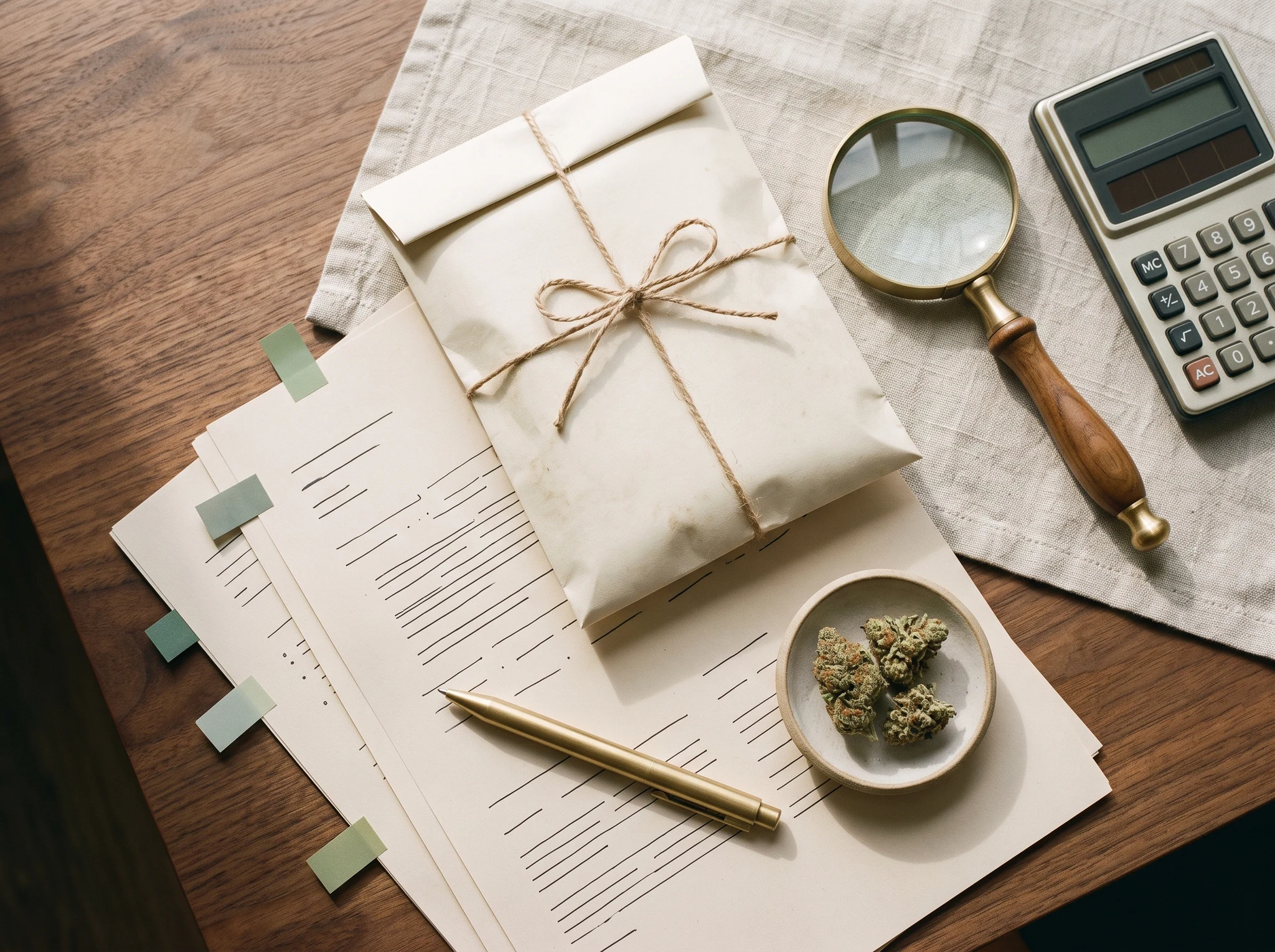
A Certificate of Analysis is the batch’s laboratory report. What appears on it depends on jurisdiction and product, but it may include cannabinoid results and contaminant testing. California’s regulator says its required testing covers categories such as pesticides, heavy metals, microbial impurities, mycotoxins, residual solvents, and foreign material. New York tells consumers that regulated products should provide a QR code or link to a batch COA.
Ask to see the COA before checkout where the store makes it available. Match the report’s brand, product, batch or lot identifier, and test date to the package. Confirm it says the batch passed the required panels; do not stop at a flashy THC figure. Our guide to reading cannabis lab results explains the columns and limitations.
15. “Does a QR code prove the product passed testing?”
No. A QR code proves only that your phone can open whatever address was encoded. It may lead to a genuine batch report, a generic brand page, an expired file, or nothing useful.
Open it before leaving if allowed. Verify the domain, batch, lab, date, pass/fail status, and required panels. A marketing homepage or another lot’s report is not batch verification. Even a real COA is sample-based, not a guarantee that every unit is identical. A historical study of 75 medical edibles from three US cities found only 17% within 10% of their THC labels; it does not represent every current regulated market [Vandrey et al., 2015]. Read why labels can disagree with reality for context.
16. “How do I know this dispensary is actually licensed?”
Use the regulator, not the store’s aesthetic. Some unlicensed shops look polished and some licensed shops look ordinary. Search the exact business name and address in the current government license database, then confirm the license status is active. California’s Department of Cannabis Control offers a daily-updated license search; New York publishes a licensed-dispensary list and verification tool.
Compare the licensed address, because familiar brands may use different entities. Licensure does not make cannabis risk-free, but it connects sales to testing, labeling, recalls, and complaints. A convenience-store product is not automatically part of your adult-use regulatory system.
17. “How can I tell whether flower is fresh or just old?”
Ask for the harvest, test, and package dates when those appear on the label or COA. Dates do not tell the entire storage history, but they are more useful than guessing from a cultivar name. The container should be sealed and intact, with no obvious moisture, visible fuzzy growth, insects, or damaged packaging.
Do not open a retail package before paying. Ask about a display sample, but do not assume it perfectly represents sealed units. Follow the label’s storage directions. Our storage and humidity guide covers quality, while mold versus trichomes covers warning signs. Do not use a product you suspect is contaminated.
18. “Which format is least intimidating for a beginner?”
The least intimidating format is the one you can measure, use correctly, store safely, and fit into your schedule—not the format with the friendliest packaging. Inhaled products tend to have faster feedback but involve respiratory exposure. Swallowed products avoid smoke but can have delayed, longer, and less predictable effects. Concentrates may carry high THC concentrations. Topicals have different intended uses and do not all behave alike.
Ask staff to compare onset, duration, serving precision, equipment, inhalation, and storage. Use flower versus edibles versus concentrates to narrow the tradeoffs. If avoiding intoxication is essential, inspect ingredients and test results; a CBD or topical label is not enough.
19. “Do topicals get you high?”
Many products intended for local application are not designed to produce the intoxication associated with inhaled or swallowed THC. But “topical” is a retail category, not a universal pharmacology guarantee. Formulation, cannabinoids, intended route, damaged skin, mucosal contact, and whether a product is transdermal can matter.
Ask whether it is for local external use or marketed as transdermal, how much THC and CBD the container holds, and where not to apply it. Follow directions and keep it from eyes, children, and pets. Read how cannabis topicals work, then discuss therapeutic use with a clinician.
20. “Can I return a product if I do not like how it feels?”
Maybe not. Cannabis returns can be restricted by regulation, inventory-control rules, safety concerns, and store policy. A shop may accept only defective, damaged, mislabeled, or recalled products; it may offer an exchange or store credit; or it may require the package and receipt. Disliking an effect is different from a leaking cartridge or wrong item.
Ask before paying what is returnable, by when, and what you must keep. Photograph the package, batch, receipt, and defect. Do not consume more to prove a problem. For contamination, mislabeling, adverse events, or illegal sales, preserve the package and contact the regulator or health authority.
21. “Why can’t I just pay the same way I pay everywhere else?”
Cannabis businesses can face banking and card-network constraints, so payment options vary by store and can change. A shop may accept cash, debit, a compliant electronic-payment service, or some combination. Each method may carry fees, rounding, holds, or refund limitations.
Ask what payment methods work today, what fees apply, and how the transaction appears on a receipt or statement. Request the total including tax before paying. Do not use a method you do not understand. Leave if fees break your budget.
22. “Am I supposed to tip my budtender?”
Tipping is optional unless a clearly disclosed service charge says otherwise. Customs differ by region and workplace. Some shops provide jars; some prohibit tips; some employees share them. A useful conversation does not create a debt you cannot afford.
If you want to tip, ask whether staff may accept it and whether tips are pooled. A sincere thank-you can also recognize good service. Do not let a tip jar rush you or break your budget. Tell a manager if an employee pressures you for gratuity.
23. “Can I buy this for my friend?”
Do not assume you can. Purchase, possession, gifting, transfer, delivery, and crossing jurisdictional or federal boundaries are separate legal questions. The fact that you may lawfully buy a product for yourself does not automatically authorize buying for another person—especially someone underage, across a border, in a restricted setting, or outside a medical program.
Ask the retailer, then verify with the regulator. Never purchase for a minor or cross an international border with cannabis. Do not take it onto federal property or into another jurisdiction based on a friend’s assurance. As of August 2026, US federal and state laws still conflict. Seek local legal advice when consequences matter.
24. “What if I take too much or have a bad reaction?”
Before use, check onset and duration, keep the package, and make a sober plan. For a responsive adult who is anxious or uncomfortable, use a calm setting, avoid more substances, and stay with a trusted sober person. Our guide for feeling too high offers support without promising an instant fix.
Severe symptoms need professional help. In the United States, CDC directs people to Poison Help at 1-800-222-1222 when someone may have used too much; call 911 for an emergency such as trouble breathing, seizure, collapse, or inability to wake. Outside the US, use your local poison center or emergency number. Be honest about the product and amount.
25. “What is the one safety question I should always ask?”
Ask: “What would make this a bad choice for me today?” That opens the door to the information sales excitement can hide: high THC, delayed onset, long duration, inhalation, allergens, difficult portioning, interactions, impaired driving, pregnancy or breastfeeding concerns, unsafe storage, and a schedule that leaves no recovery time.
Then ask yourself: Do I have a safe place, no driving or machinery, no solo caregiving, locked storage, and no unresolved health or medication concern? CDC says cannabis can impair reaction time, coordination, memory, and judgment; alcohol may add impairment. If the plan is weak, do not buy today.
What a Great Budtender Conversation Sounds Like
A strong retail conversation has boundaries. The employee shows labels, compares formats, identifies the smallest measured serving, explains store policy, and says “I do not know” when a regulator or clinician should answer.
You do your part by sharing experience honestly, naming a budget, declining pressure, and reading before paying. You are not asking the budtender to predict your brain. You are asking for enough verified product information to make your own decision.
Professor High’s rule: confidence is not knowing all the answers; it is knowing which questions deserve an answer before checkout. Save this page, choose five questions that matter for your visit, and walk away if the answers do not add up.
FAQs
What should I say to a budtender if I know nothing about cannabis?
Say, “I am new, I prefer a lower-THC option, and I need help understanding the label and one serving.” Add your budget and whether you want to avoid inhalation or long-lasting effects. You do not need to name a strain.
Can a budtender give medical advice?
A budtender can provide product and retail information, but diagnosis, medication changes, individualized medical dosing, and treatment decisions belong with a qualified healthcare professional. Be skeptical of guaranteed health outcomes.
Do dispensaries keep information from my ID?
Practices and legal duties vary. Ask whether the ID is visually checked or scanned, what data is retained, how long it is stored, and whether loyalty or marketing enrollment is optional. Review the store’s written privacy policy.
What is the most important number on an edible label?
You need a set of numbers: Total THC per unit or serving, Total THC in the whole package, and the number of units or servings. One large front-label number without its unit and context can mislead.
Should I trust a budtender’s favorite product?
Treat it as a personal anecdote, not a forecast. Ask why it fits your requested format, potency, duration, ingredients, and budget. Your response can differ from the employee’s.
Is it rude to ask to see a COA?
No. Where batch COAs are available, asking to match the report to the package is informed shopping. A good retailer should not treat basic testing questions as an insult.
Can I leave without buying after a budtender helps me?
Yes. Thank them, keep the conversation reasonable during busy periods, and leave if you need more research. No explanation creates an obligation to purchase.
How do I know whether a cannabis law in this article applies to me?
Check the current website of the regulator for the place where you will purchase, possess, and use the product. Do not import another state’s, province’s, or country’s rule into your situation.
Conclusion: Ask the Awkward Question
The costly mistake is not mispronouncing a cannabinoid. It is staying quiet about the ID scan, package math, test report, return rule, fee, medical claim, or safety plan.
A trustworthy shop would rather answer one precise question than sell a confused customer the wrong format. Lead with “I am new,” ask staff to point to the label, separate evidence from sales language, and give yourself permission to leave. Curiosity belongs at the counter. Shame does not.
Sources
- California Department of Cannabis Control: Retail—licenses, customer age verification, and tested products
- California Department of Cannabis Control: Search for a licensed cannabis business
- California Department of Cannabis Control: Required testing and Certificates of Analysis
- New York Office of Cannabis Management: Consumer guide, dispensary verification, labels, and COAs
- Health Canada: How to read and understand a cannabis product label
- Health Canada: Canada’s Lower-Risk Cannabis Use Guidelines
- Health Canada: Start low, go slow consumer guidance
- US Food and Drug Administration: Cannabis and cannabis-derived product regulation
- US Centers for Disease Control and Prevention: Cannabis frequently asked questions
- US Centers for Disease Control and Prevention: Cannabis and poisoning
- US Centers for Disease Control and Prevention: Cannabis and driving
- Congressional Research Service: Legal consequences of marijuana rescheduling
- Schlienz, N. J., Spindle, T. R., Cone, E. J., Herrmann, E. S., Bigelow, G. E., Mitchell, J. M., Flegel, R., LoDico, C., & Vandrey, R. (2020). Pharmacodynamic dose effects of oral cannabis ingestion in healthy adults who infrequently use cannabis. Drug and Alcohol Dependence, 211, 107969. PubMed · DOI
- Vandrey, R., Raber, J. C., Raber, M. E., Douglass, B., Miller, C., & Bonn-Miller, M. O. (2015). Cannabinoid Dose and Label Accuracy in Edible Medical Cannabis Products. JAMA, 313(24), 2491–2493. PubMed · DOI