Hop Latent Viroid: The Pathogen Quietly Degrading Cannabis Potency
A 256-nucleotide strand of RNA is stunting cannabis plants and thinning their trichomes—usually with no visible symptoms until harvest.

Professor High
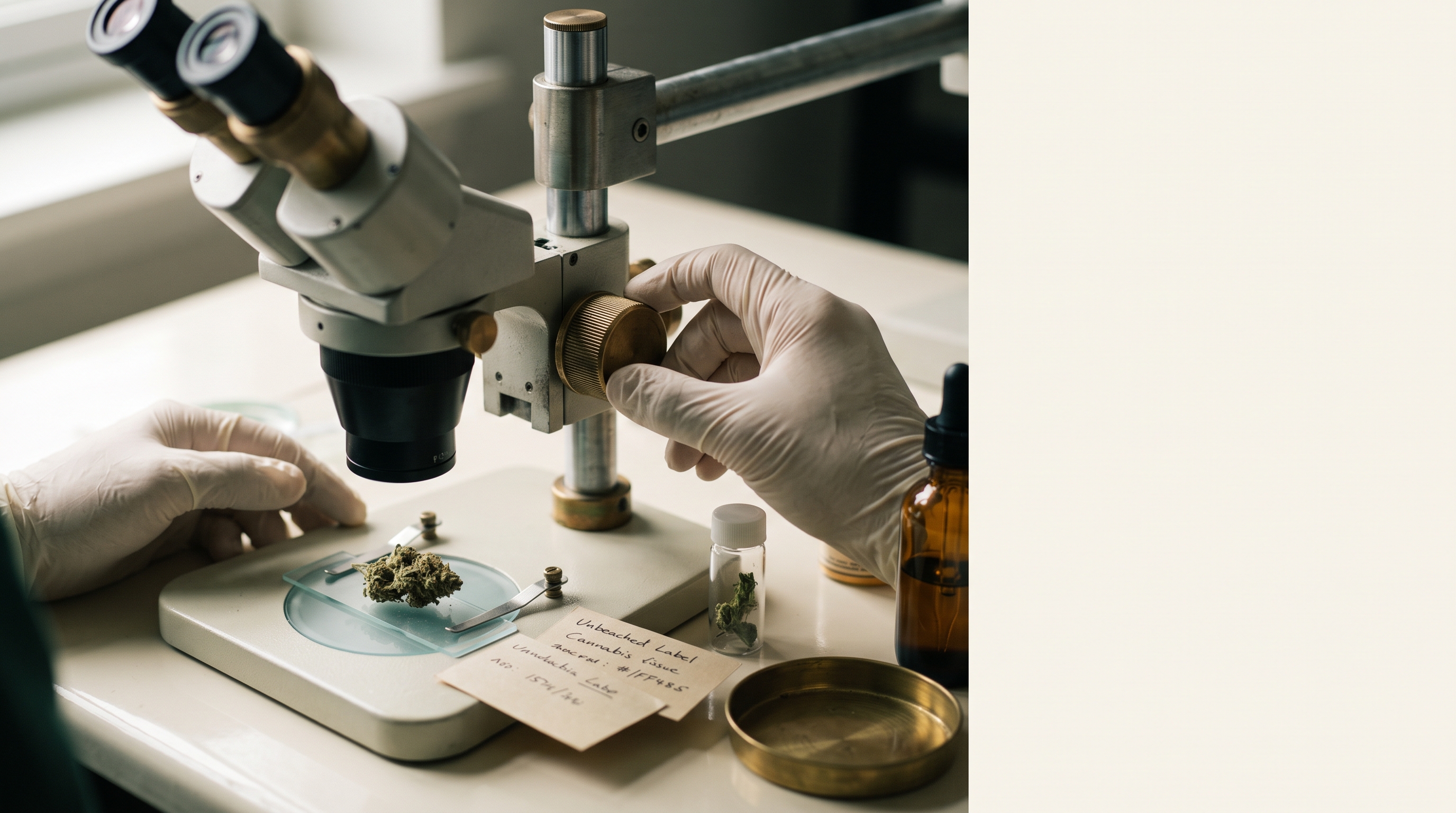
You bought the same strain twice from the same dispensary. The first jar was loud — sticky, pungent, exactly what you wanted. The second jar, six weeks later, looked fine and did almost nothing.
The usual suspects get blamed: bad cure, bad storage, your own tolerance. Those are all real, and we’ve covered them in why the same strain hits you differently each time. But there’s another explanation that almost never reaches the consumer conversation, because it lives entirely on the cultivation side of the wall: the plant that produced the second jar may have been infected.
The pathogen is hop latent viroid, or HLVd — one of the most economically significant problems in commercial cannabis, and almost invisible until the flowers come off the plant.
A Viroid Is Not a Virus, and That Matters
Start with the biology, because it’s genuinely strange.
A virus is genetic material wrapped in a protein coat. It carries genes, and those genes code for proteins — coat proteins, replication machinery, tools for hijacking a host cell. Even a small plant virus runs to several thousand nucleotides.
A viroid has none of that. Hop latent viroid is a naked circle of RNA, 256 nucleotides long, with no protein coat and no protein-coding genes at all (Punja et al., 2025). It cannot build anything. It has no enzymes of its own. It is, functionally, a piece of self-replicating information that folds into a rod through internal base pairing and then persuades the plant’s own machinery to copy it. Viroids are the smallest known infectious agents, and they infect plants and only plants.
| Virus | Viroid (HLVd) | |
|---|---|---|
| Genome size | Thousands of nucleotides | 256 nucleotides |
| Protein coat | Yes | None |
| Codes for proteins | Yes | None |
| Replication | Uses viral + host enzymes | Entirely host enzymes |
| Known hosts | Plants, animals, bacteria | Plants only |
That last row is worth holding onto: HLVd is a plant pathogen. Confirmed and experimental hosts include hops, cannabis, hemp, tomato, cucumber, chrysanthemum, tobacco and Arabidopsis (Atallah et al., 2023; Punja et al., 2025). Humans are not on the list, and there is no biological mechanism by which they would be. This is a crop-quality story, not a consumer-safety story.
Why “Latent”
The name comes from hops, where the viroid was first characterised. Puchta, Ramm and Sänger described its molecular structure in 1988 and noted it occurred worldwide in hop crops — largely without obvious symptoms. Hence latent. Growers had it, spread it, and mostly didn’t know or didn’t care.
Cannabis turned out to be a much less forgiving host. In 2019, two independent groups reported HLVd in Californian cannabis showing what the industry had already nicknamed “dudding”: Bektaş, Hardwick, Waterman and Kristof documented it in plants with cannabis stunting disease symptoms, and Warren, Mercado and Grace reported it causing disease in Cannabis sativa in the same state. Both papers appeared in Plant Disease within weeks of each other. The pathogen was old; its relevance to cannabis was new.
What Dudding Actually Does
The most rigorous picture comes from a Canadian survey by Punja, Wang, Lung and Buirs, published in the Canadian Journal of Plant Pathology in 2023. They ran RT-PCR on 15,947 samples from licensed facilities across nine provinces between 2020 and 2023.
- Symptoms depended entirely on growth stage. Stock (mother) and vegetative plants ranged from completely asymptomatic to mild leaf curl and mottling. Flowering plants showed extreme stunting, reduced inflorescence development, and yellowing or darkening of the small leaves surrounding the pistillate flowers.
- Growth losses of 12–42% in inflorescence stem length, fresh weight and plant height compared to uninfected plants, with the size of the loss depending on genotype.
- THC and terpene levels in diseased inflorescences were significantly lower. The paper reports direction and statistical significance; it does not put a single headline percentage on it, and neither will I.
- Trichome development was the mechanism. Glandular trichomes were greatly reduced. Those that did form had shorter stalks and smaller glandular heads, and shrivelled when the flowers were dried.
That last point connects directly to your jar. Cannabinoids and terpenes are manufactured and stored in glandular trichomes. Fewer of them, smaller, on shorter stalks, collapsing on the dry — that is a chemically weaker flower, grown from the same genetics and sold under the same name as the healthy one next to it.

The Asymptomatic Carrier Problem
Here is what makes HLVd genuinely nasty rather than merely inconvenient. Punja and colleagues detected the viroid in asymptomatic stock plants and in rooted vegetative cuttings (2025). A mother plant can be the healthiest-looking plant in the room, and every cutting taken from it still inherits the infection.
Commercial cannabis runs almost entirely on cloning: a cultivar is maintained as a genetically identical line propagated from mother plants, sometimes for years. That system is superb at preserving a chemotype and equally superb at preserving a pathogen. One infected mother, taken as a keeper during phenotype hunting, can seed an entire facility before anyone runs a test — and the first hard evidence arrives months later, as a disappointing harvest.
This is why HLVd resists the ordinary feedback loop of growing. Most problems announce themselves: powdery mildew and bud rot are visible, and nutrient issues show on the leaf, which is the whole premise of diagnosing common growing problems. Dudding hides in the one stage where you’d catch it and declares itself in the stage where it’s too late to act.
How It Moves
Punja’s 2025 paper in Plants is the most complete transmission study to date, and it is worth walking through route by route.
Mechanical — the main one. The viroid survived 7 days in crushed leaf sap at room temperature and 4 weeks in dried leaves and roots. Pruning shears, trimming scissors, hands, and any surface that contacted infected sap can move it. Following stem inoculation with infectious sap, HLVd showed up in root tissue within 2–3 weeks and in the foliage within 4–6 weeks.
Cuttings. Covered above. Vegetative propagation transmits it reliably.
Root-to-root through nutrient solution. The team detected HLVd in recirculated nutrient solution sampled from propagation tables and nozzles, and demonstrated plant-to-plant spread through root infection in hydroponic cultivation. A shared reservoir is a shared infection.
Pollen and seed — the part that changed. Be careful what you read here, because the consensus genuinely moved. The 2023 review by Adkar-Purushothama, Sano and Perreault summarised the position inherited from decades of hop research: HLVd transmission by pollen or seed had been “reported as being either low or non-existing.”
Cannabis and hemp data since then say otherwise. Atallah, Yassin and Verchot (2023) found HLVd transmissible through hemp seeds at rates of 58 to 80%. Punja and colleagues (2025) detected it in anthers and pollen from infected males and in seeds from infected females, with up to 100% of resulting seedlings testing positive. That complicates the standard advice that starting from seed rather than clones guarantees a clean start.
Insects — unresolved. Ong, Munz, Feng, Yaqub, Buirs and Gries (2025) found that aphids do pick the viroid up: one of eight rice root aphid groups and four of eight cannabis aphid groups tested positive after feeding on infected plants. But the authors found no evidence that infected aphids transmitted it to clean plants. Acquisition is not transmission, and anyone telling you aphids spread HLVd is ahead of the data.
| Route | Evidence | Confidence |
|---|---|---|
| Contaminated tools and sap | Punja et al., 2025 | Strong |
| Vegetative cuttings | Punja et al., 2025 | Strong |
| Recirculated nutrient solution | Punja et al., 2025 | Strong |
| Seed | Atallah et al., 2023; Punja et al., 2025 | Strong, and revised upward since 2023 |
| Pollen | Punja et al., 2025 | Detected in anthers and pollen |
| Aphids | Ong et al., 2025 | Acquisition shown; transmission not demonstrated |
How Common Is It? Read the Source, Not the Headline
You will encounter two very different sets of numbers, and they deserve very different levels of trust.
The peer-reviewed number. Punja et al. (2023), from 15,947 RT-PCR tests across nine Canadian provinces: positive detection ranged from 5.3% to 92% of samples depending on province and year, with a country-wide average incidence of 25.6%. That is a large, published, methodologically described dataset — and note the enormous spread. Prevalence is not one number. It is a facility-by-facility number.
The number you’ll see quoted everywhere else. In 2021, Dark Heart Nursery announced results from roughly 200,000 tissue tests: around 90% of California cultivation sites testing positive, more than 33% of individual tests positive, and an estimated $4 billion in annual losses to US growers.
Those figures get repeated constantly, including inside peer-reviewed reviews. They may well be directionally right. But they came from a company press release, not a published study — and the company sells clean stock and diagnostic testing. That is not an accusation of dishonesty; it is a statement about verifiability. There is no methods section to check, no sampling frame, no independent replication. The $4 billion figure in particular is a modelled estimate, not a measurement.
A third number deserves specific flagging. You will see claims that infection causes a 50–70% loss in THC. Tracing it back, the 2023 Viruses review attributes that range to a cannabis trade publication, not to primary research — it is a report of a report. Peer-reviewed work confirms THC and terpenes drop significantly; it does not support that specific range. Treat it with the same skepticism we apply to dispensary labels and the potency arms race generally.
Detection: RT-qPCR, and Where to Sample
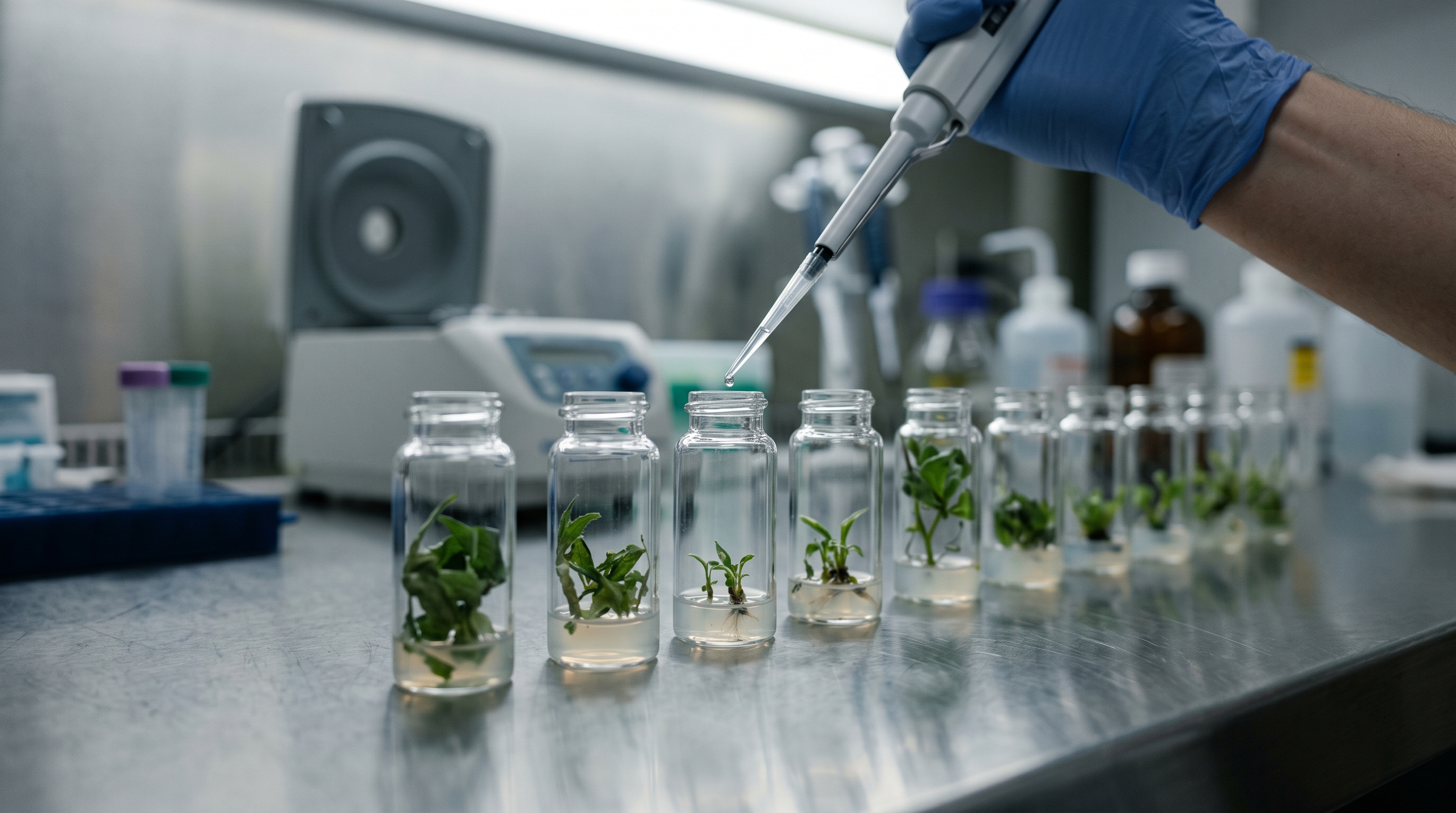
Because infection is often invisible, the only reliable answer is molecular testing. Reverse-transcription PCR and quantitative RT-PCR are the standard, and sensitivity is not the limiting factor — Atallah et al. (2023) detected HLVd in as little as 5 picograms of total RNA.
Sampling is the limiting factor, because the viroid is distributed unevenly through the plant.
- The 2023 Viruses review recommends taking multiple leaf samples from lower to upper stem, covering both old and new growth, precisely because distribution is uneven.
- Punja et al. (2025) went further: “the most consistent source of tissue in which HLVd was detected in all genotypes tested was the roots.” Roots are more uniformly infected than foliage — and after stem inoculation they tested positive at 2–3 weeks, against 4–6 weeks for foliage.
A single negative leaf test on a mother plant is weak evidence. A root sample, or a set of leaf samples spanning the canopy, is much stronger. Same principle as reading a certificate of analysis: the number is only as good as what got sampled.
Management: Clean Stock, Clean Tools, Ruthless Culling
There is no spray for a viroid. No fungicide, no biological control, no rescue. Management is entirely exclusion and elimination.
Test mothers on a schedule — not once, and with root or multi-site sampling.
Sterilise between cuts. Punja et al. (2025) tested disinfectants against infectious sap. 5–10% bleach (0.825% sodium hypochlorite) or 1,000 ppm hypochlorous acid left no amplifiable HLVd RNA; several commonly used commercial products were far less effective. One caveat the authors are careful about and so am I: no RT-PCR band means the RNA was degraded, which strongly suggests loss of infectivity but is not the same measurement.
Heat and UV do not work. Infected tissue treated with UV-C for 3–5 minutes, or held at 70–90°C for 30 minutes, still contained amplifiable HLVd RNA. Flame-sterilising your shears is not a solution.
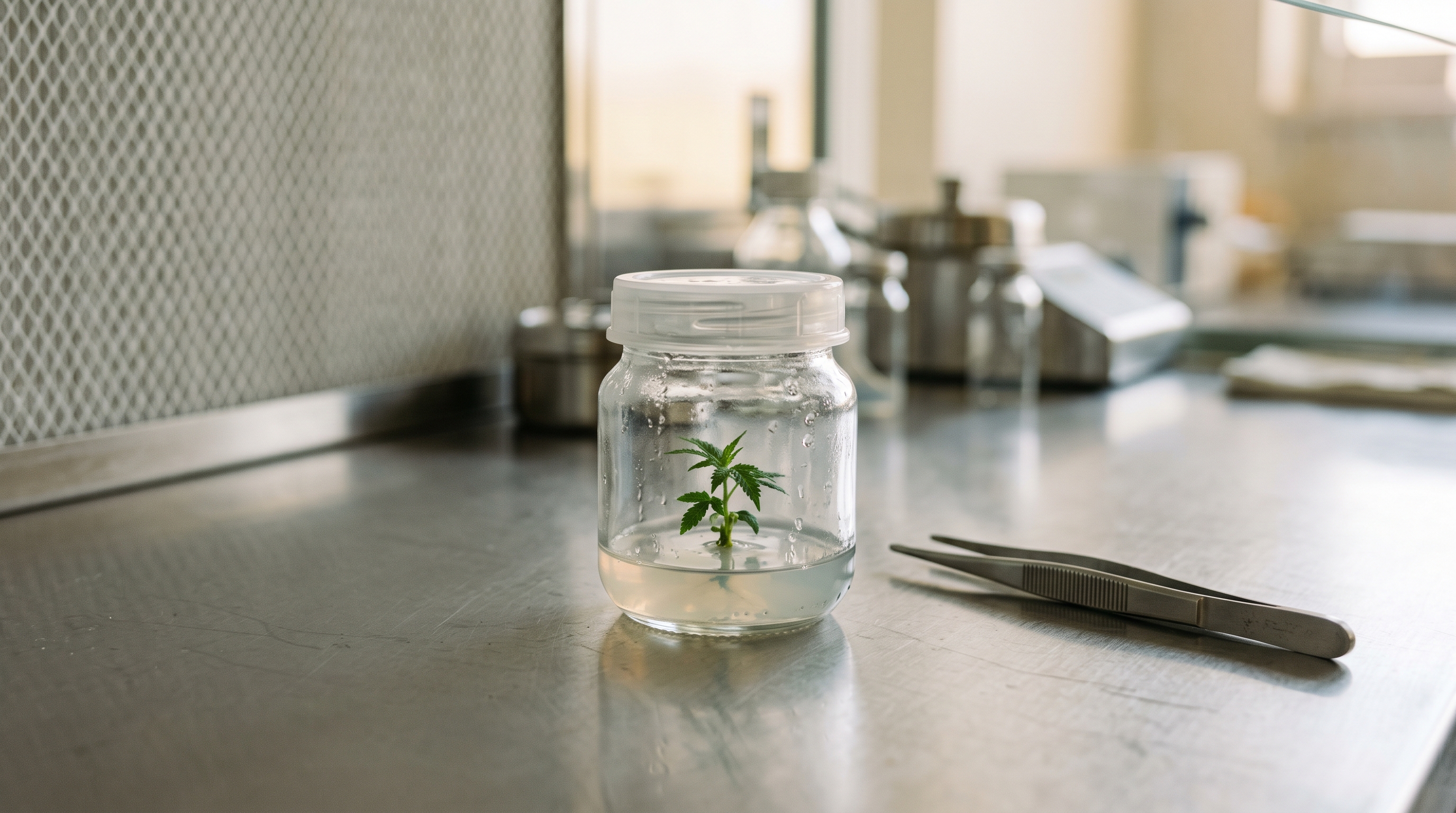
Meristem tissue culture to rebuild clean stock. This is the real fix, and it’s old technology — Adams, Barbara, Morton and Darby demonstrated HLVd elimination in hops via low-temperature treatment and meristem culture in 1996. The tiny dome of actively dividing cells at a shoot tip often outruns the viroid, so a small enough excised meristem can regenerate a clean plant.
It works, but it is not a magic wand. Across 91 meristems from eight cannabis genotypes, Punja et al. (2025) recovered HLVd-negative plants at an average frequency of 40.66%, ranging from 0% to 100% depending on genotype. Some cultivars clean up easily; some resist entirely. Torres, Pauli, Sarmiento, Zalewski and Gaudino (2025) have since examined how gene expression shifts in cannabis after this kind of eradication therapy.
Cull what you can’t clean. Infected plants aren’t only weaker in themselves. Punja (2026) reports that HLVd-infected cannabis shows enhanced susceptibility to Fusarium root and stem rot and to powdery mildew — so a hidden viroid problem tends to arrive dressed as a fungal problem.
Why This Should Change How You Shop
Here is the part that matters at the counter.
You cannot test for HLVd. You cannot see it in a jar. No state requires disclosure of it, and no COA reports it. You have no direct lever at all. What you have is a better model of why the same name keeps producing different products.
We argue constantly on this site that a strain name is not a chemical profile — that strain names are marketing artifacts layered over genetics that were never standardised, which is exactly what the German chemovar study found when researchers measured what was actually in the jars. Usually that’s about genetic drift: OG Kush from one breeder is not OG Kush from another, and Blue Dream covers wide chemical territory.
HLVd adds a sharper second layer. Even holding genetics perfectly constant — same cultivar, same facility, same mother line, same Gelato or Wedding Cake or Gorilla Glue #4 — infection status can differ between rooms and between runs. Two batches, genetically identical, with materially different trichome density and therefore different myrcene, limonene and caryophyllene content. Same name on the label; functionally a different plant.
That’s part of why experienced consumers gravitate toward a consistent daily driver from a grower they trust rather than a cultivar they trust. Producer consistency is a proxy for cultivation discipline — clean stock programmes included — and cultivation discipline is what you’re actually buying.
Practically: buy by measured chemistry rather than by name where a full terpene panel exists; treat every COA as belonging to that batch and no other; and keep your own record. Two jars of the same cultivar that landed differently is data. Over enough entries, your own log tells you more than any label does — which is the entire reason we built response tracking into the High IQ app.
FAQ
Is HLVd dangerous to smoke? There is no evidence that it poses a risk to people. Viroids replicate only inside plant cells, and every confirmed host is a plant. HLVd has been detected in dried flower and in resin extracts, but detection is not infection — it means the RNA is present, not that it does anything in you. The damage is to the crop.
Can I tell if flower came from an infected plant? Not reliably. Weak aroma, low trichome coverage and airy structure are consistent with infection — and equally consistent with a rushed harvest, a bad cure, poor storage, or a low-vigour phenotype. A loupe tells you about trichome density, not about cause.
Does organic, sun-grown or outdoor production avoid it? No. HLVd moves through cuttings, tools and sap, so it follows genetics rather than growing method. Indoor, greenhouse and outdoor operations are all exposed if their stock plants are infected — though shared recirculating hydroponics adds one route that soil-based outdoor grows don’t have.
Is this why potency numbers keep drifting? It’s one contributor among several. Label inflation, inconsistent lab standards, harvest timing and post-harvest storage all move the number too. HLVd is the one that operates before the flower ever reaches a lab.
Are older or landrace genetics more resistant? Susceptibility clearly varies by genotype — both infection incidence and meristem clean-up success differed sharply between cultivars in Punja’s work. But no cannabis genetics have been shown to be immune, and that includes landrace lines and newer triploid material. Resistance breeding is a live research question, not a solved one.
Sources
Each of the following was verified against Crossref or PubMed. Trade-press and company figures discussed in the article are labelled as such in the text and are deliberately not listed here as evidence.
- Puchta, H., Ramm, K., & Sänger, H. L. (1988). The molecular structure of hop latent viroid (HLV), a new viroid occurring worldwide in hops. Nucleic Acids Research. doi:10.1093/nar/16.10.4197
- Adams, A. N., Barbara, D. J., Morton, A., & Darby, P. (1996). The experimental transmission of hop latent viroid and its elimination by low temperature treatment and meristem culture. Annals of Applied Biology. doi:10.1111/j.1744-7348.1996.tb07087.x
- Bektaş, A., Hardwick, K. M., Waterman, K., & Kristof, J. (2019). Occurrence of Hop Latent Viroid in Cannabis sativa with Symptoms of Cannabis Stunting Disease in California. Plant Disease. doi:10.1094/PDIS-03-19-0459-PDN
- Warren, J. G., Mercado, J., & Grace, D. (2019). Occurrence of Hop Latent Viroid Causing Disease in Cannabis sativa in California. Plant Disease. doi:10.1094/PDIS-03-19-0530-PDN
- Adkar-Purushothama, C. R., Sano, T., & Perreault, J.-P. (2023). Hop Latent Viroid: A Hidden Threat to the Cannabis Industry. Viruses, 15(3), 681. doi:10.3390/v15030681
- Punja, Z. K., Wang, K., Lung, S., & Buirs, L. (2023). Symptomology, prevalence, and impact of Hop latent viroid on greenhouse-grown cannabis (Cannabis sativa L.) plants in Canada. Canadian Journal of Plant Pathology. doi:10.1080/07060661.2023.2279184
- Atallah, O. O., Yassin, S. M., & Verchot, J. (2023). New Insights into Hop Latent Viroid Detection, Infectivity, Host Range, and Transmission. Viruses, 16(1), 30. doi:10.3390/v16010030
- Punja, Z. K., Scott, C., Tso, H. H., Munz, J., & Buirs, L. (2025). Transmission, Spread, Longevity and Management of Hop Latent Viroid, a Widespread and Destructive Pathogen Affecting Cannabis (Cannabis sativa L.) Plants in North America. Plants, 14(5), 830. doi:10.3390/plants14050830 · PMID 40094815
- Ong, M., Munz, J., Feng, A., Yaqub, S., Buirs, L., & Gries, G. (2025). Acquisition of hop latent viroid from viroid-infected cannabis plants by rice root aphids and cannabis aphids. Archives of Virology. doi:10.1007/s00705-025-06422-2
- Torres, A., Pauli, C., Sarmiento, C., Zalewski, C., & Gaudino, R. (2025). Differential gene expression analysis of Cannabis sativa following Hop Latent Viroid (HLVd) eradication therapy in micropropagation tissue culture. Plant Cell, Tissue and Organ Culture. doi:10.1007/s11240-025-03057-8
- Punja, Z. K. (2026). Hop latent viroid-infected cannabis (Cannabis sativa L.) plants show enhanced susceptibility to Fusarium root and stem rot and powdery mildew infection. Canadian Journal of Plant Pathology. doi:10.1080/07060661.2026.2649769
The plant is a variable, not a constant. Genetics set a range; health, environment and handling decide where inside that range a given harvest lands — which is why terpene chemistry and your own tracked response beat a name on a label every time.
