The History of the Bong: From Ancient Pipes to Borosilicate Art Glass
Golden Scythian bongs, medieval Ethiopian water pipes, a Thai loanword, and a Deadhead with a torch. The real object history, myths removed.

Professor High
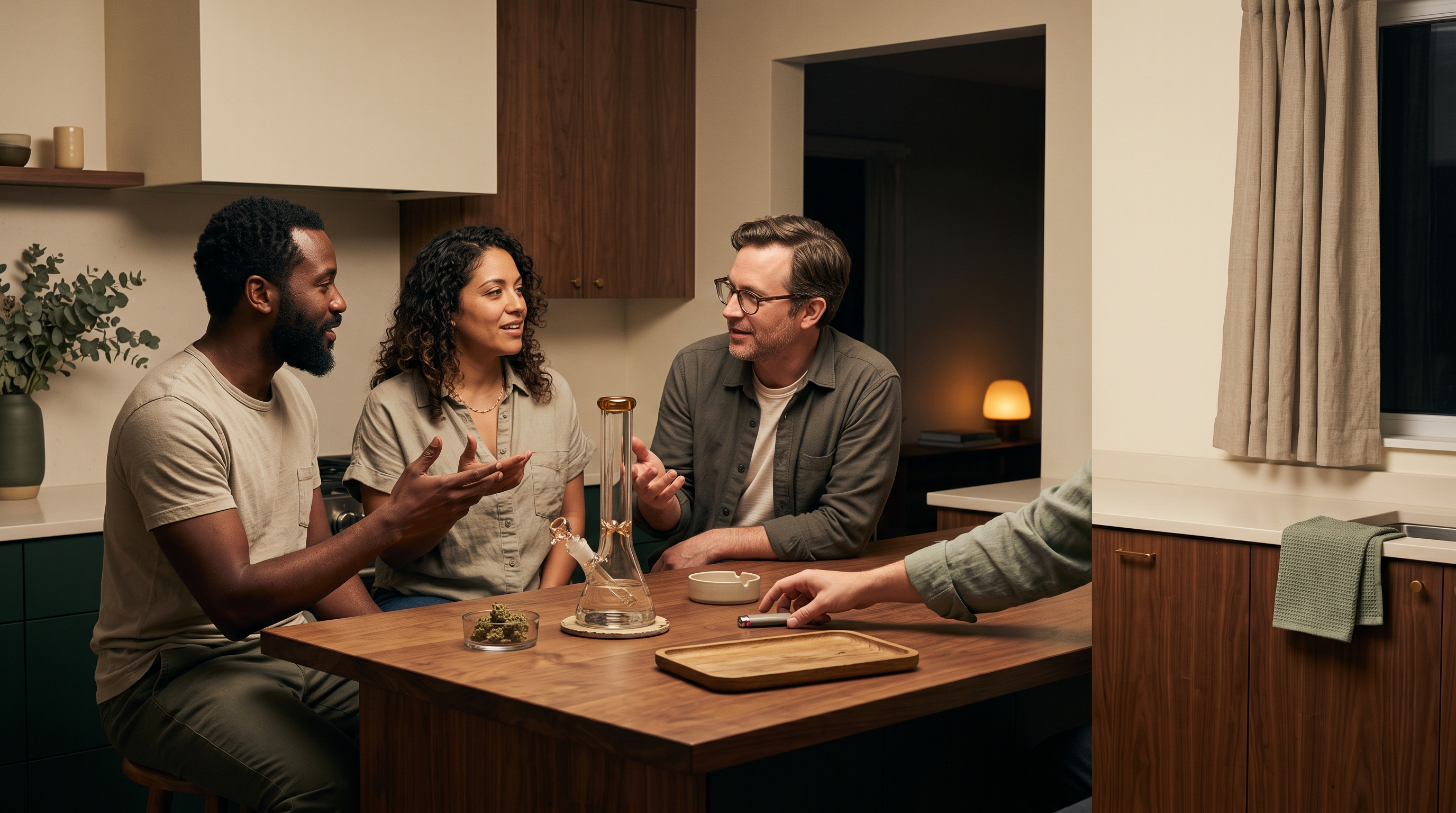
Search for the history of the bong and you will hit the same sentence within about four seconds: “Archaeologists found 2,400-year-old solid gold bongs in a Scythian burial mound.” It is on head shop blogs, in listicles, and in more than one otherwise-careful cannabis history.
It is also wrong — or at least, wrong in the specific way that matters. Something remarkable really was found in that burial mound. It was not a bong.
Object histories get repeated more than they get checked, and cannabis object histories get repeated more than most. So this is a history of the water pipe with the citations attached: what the archaeology actually shows, where the word came from, how German laboratory glass ended up defining an American folk art movement, and why a federal sting in 2003 still shapes what you can buy today.
The engineering question — whether water filters anything useful out of smoke — lives in our separate breakdown of bong vs. dry pipe filtration. This piece is about the object.
The gold “bongs” that were not bongs
In the summer of 2013, road crews clearing land for a power line in the Caucasus foothills near Stavropol, Russia, exposed a kurgan — a Scythian burial mound — catalogued as Sengileevskoe-2. Under a thick clay cap, archaeologist Andrei Belinski’s team found a stone-lined chamber holding roughly seven pounds of solid gold: two bucket-shaped vessels inverted over three cups, plus rings and a bracelet.
The vessels had a black residue inside. Before cleaning the gold, Belinski sent samples to the criminal forensics lab in Stavropol. The results came back positive for opium, and microscopy identified cannabis particles as well.
Here is the part the headlines dropped. As reported in Archaeology magazine’s 2016 feature on the site, there was no charring or burning on the vessels. Belinski’s reading is that the opium was consumed as a concentrated drink, quite possibly while cannabis burned nearby. That is a ritual chalice next to a fire. It is not a water pipe, and nobody at the site said it was.
Two other honesty notes. The residue analysis was run by a police crime lab, not published as a peer-reviewed archaeochemistry paper — it is credible, but it is not the same tier of evidence as a lab study with a methods section. And “Scythian” is a broad label for a lot of steppe peoples across a lot of centuries.
What the Scythians actually did
We have a decent picture, and it comes from two directions that agree with each other.
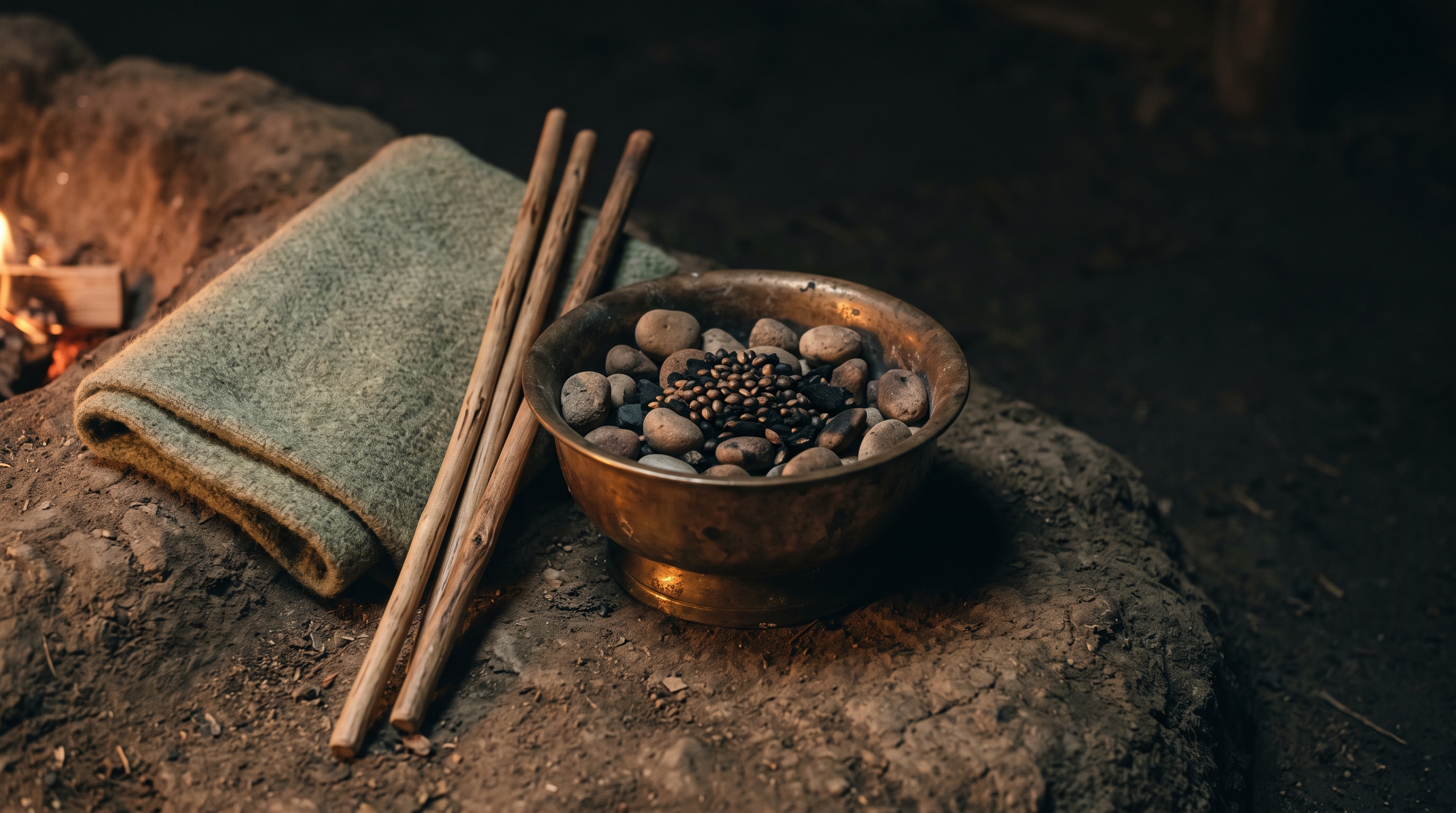
Herodotus, writing in the fifth century BCE, described Scythians erecting small felt tents over a frame of poles, heating stones inside, and throwing hemp onto them — producing a vapour, he said, that no Greek steam bath could surpass, at which point the participants howled with pleasure.
Then the archaeology caught up. In the frozen Pazyryk kurgans of the Altai Mountains, excavated by Sergei Rudenko across the mid-twentieth century, permafrost preserved exactly that setup: small bronze braziers packed with stones and charred hemp seeds, alongside the poles and felt of the little tents. Pazyryk Barrow 2 dates to roughly 300 BCE.
So the Scythian method was hot-rock vapour in an enclosed tent — closer in spirit to a sauna than to a pipe. Impressive, communal, and completely without water filtration.
The oldest chemically verified evidence of deliberately burning high-THC cannabis comes from further east. Ren and colleagues, publishing in Science Advances in 2019, analysed wooden braziers from the Jirzankal Cemetery in the Pamir Mountains of western China, dated to around 500 BCE. Residues showed elevated levels of cannabinol — a breakdown product of THC — which points to plants selected for potency rather than the low-THC fibre types common at the time. That is a landmark result for the history of getting high. It is still a brazier.
If you want the wider arc of the plant itself rather than the hardware, our history of cannabis from ancient medicine to modern science covers that ground.
Where the water actually shows up: Ethiopia
The earliest credible physical evidence for cannabis smoked through water points not to the steppe, and not to Persia, but to the Ethiopian highlands.
In 1971, a Boston University doctoral student named J.C. Dombrowski excavated pipe fragments from caves near Lalibela. The archaeological chemist Nikolaas van der Merwe published the analysis in 1975 in the volume Cannabis and Culture. Two ceramic bowls from the site were associated with radiocarbon dates around 1320 AD ± 80 years. Thin-layer chromatography of the residues returned positive for cannabis-derived compounds. THC, CBD and cannabinol degrade too fast to survive seven centuries, but two longer-lived cannabinoids were present.
Crucially, van der Merwe described the bowls’ construction: an aperture at the base allowed a vertical stem to be attached, which would have descended into a water container. In other words, these are water pipe components, and they were used for cannabis.
Now the caveat, because it is a real one. John Edward Philips reviewed the African pipe literature in The Journal of African History in 1983 and was blunt about the limits: the dates were not taken from the pipes themselves. Pipes and dated material came from the same disturbed levels, and those levels showed contamination from later pit-digging. Philips still concluded that cannabis was most likely smoked in water pipes in eastern and southern Africa before tobacco arrived from the Americas, and that Ethiopia is the most likely birthplace of the water pipe — possibly spreading along the same medieval routes as coffee, another Ethiopian export. He was explicit that this is far from proven.
That is where the evidence sits. Ethiopia is the leading candidate, not a settled fact, and anyone who tells you otherwise has not read the footnotes.
The hookah lineage, and where it splits off
The other major water pipe family is the hookah — shisha, narghile, ḡalyān — and its story is tangled with the same uncertainty.
The most-repeated account credits a physician named Abu’l-Fath Gilani at the court of the Mughal emperor Akbar in late sixteenth-century India, who is said to have routed tobacco smoke through a water vessel on the theory that water would render it harmless. The theory was wrong; the device stuck.
But the Persian poet Ahlī Shirazi, who died in 1535, already refers to a ḡalyān — which puts water pipes in Safavid Persia decades before Akbar’s court physician supposedly invented one. Combined with the African evidence, the honest reading is that water filtration was probably arrived at more than once, in more than one place, and the “single inventor” story is folklore.
The hookah and the bong then diverge along social lines more than technical ones:
| Hookah lineage | Bong lineage | |
|---|---|---|
| Typical use | Shared, multiple hoses, long sessions | Single user, one hit at a time |
| Combustion | Indirect — charcoal above the bowl | Direct — flame on the material |
| Material burned | Flavoured tobacco molasses (mu’assel) | Dry herb |
| Smoke path | Long hose, large water volume | Short downstem, small chamber |
| Cultural setting | Café, hospitality, conversation | Private, functional, personal |
Different objects for different rooms. Both send smoke through water; almost nothing else about them is the same.
The word: from Thai bamboo to American slang
The English word is a loanword, and a fairly recent one.
Thai บ้อง (baung) means a cylindrical tube or container cut from bamboo. The McFarland Thai-English Dictionary of 1944 already lists one sense of the word as “a bamboo waterpipe for smoking kancha, tree, hashish, or the hemp-plant” — which means the specific meaning existed in Thai, in print, in English-language reference work, decades before American consumers picked it up.
The crossing into English slang is generally dated to the late 1960s and early 1970s and attributed to Vietnam-era servicemen, who encountered both the device and Southeast Asian cannabis on deployment. The word appears in a January 1971 issue of the Marijuana Review. That timeline lines up with the era when Southeast Asian landrace genetics — the lineage behind Thai and Chocolate Thai — entered American circulation. Our guide to landrace strains covers those imports alongside Durban Poison, Malawi, Panama Red, Acapulco Gold and the Hindu Kush stock — Afghani and Hindu Kush — that would later underwrite Northern Lights.
Worth naming plainly: an English word for the object arrived on the same boats and planes as the material, in the middle of an unpopular war, into a country that had already criminalised the plant twice over. See the Marihuana Tax Act of 1937 and the 1970 Controlled Substances Act for how that legal architecture got built.
The head shop era: acrylic, ceramic, and cheap
Through the 1970s the American water pipe was mostly not a beautiful object. Head shops sold acrylic tubes with rubber grommets, ceramic novelty pieces, and soda-lime glass that cracked if you looked at it wrong. Function over form, cheap over durable, and design vocabulary borrowed from psychedelic poster art.
This was the water pipe as counterculture accessory, part of the same material world as rolling papers, patchouli and Zig-Zag iconography. Our histories of cannabis and the counterculture, cannabis in music from jazz clubs to hip-hop, Rastafari and how weed culture went mainstream all pass through this period, as does the origin story of 4/20.
Then the Reagan-era drug war made selling the hardware genuinely risky, head shops thinned out, and the whole category went quiet for a decade.
Borosilicate: the German glass that changed everything
The single most important technical event in bong history happened in a laboratory in Jena, Germany, and had nothing to do with cannabis.
Otto Schott, working with Ernst Abbe and Carl Zeiss, discovered in the 1880s that adding boric acid to a silica melt produced a glass that barely expanded when heated. By the summer of 1893, laboratory glassware made from this borosilicate formula — marketed as “Jena glass” — was on the market. Corning Glass Works developed its own low-expansion borosilicate in 1908 and launched it publicly in 1915 under the name Pyrex.
Two properties made borosilicate the right material for pipes, though it took decades for anyone to notice:
- Thermal shock resistance. It survives a flame on one end and cold water on the other without cracking. Soda-lime glass does not.
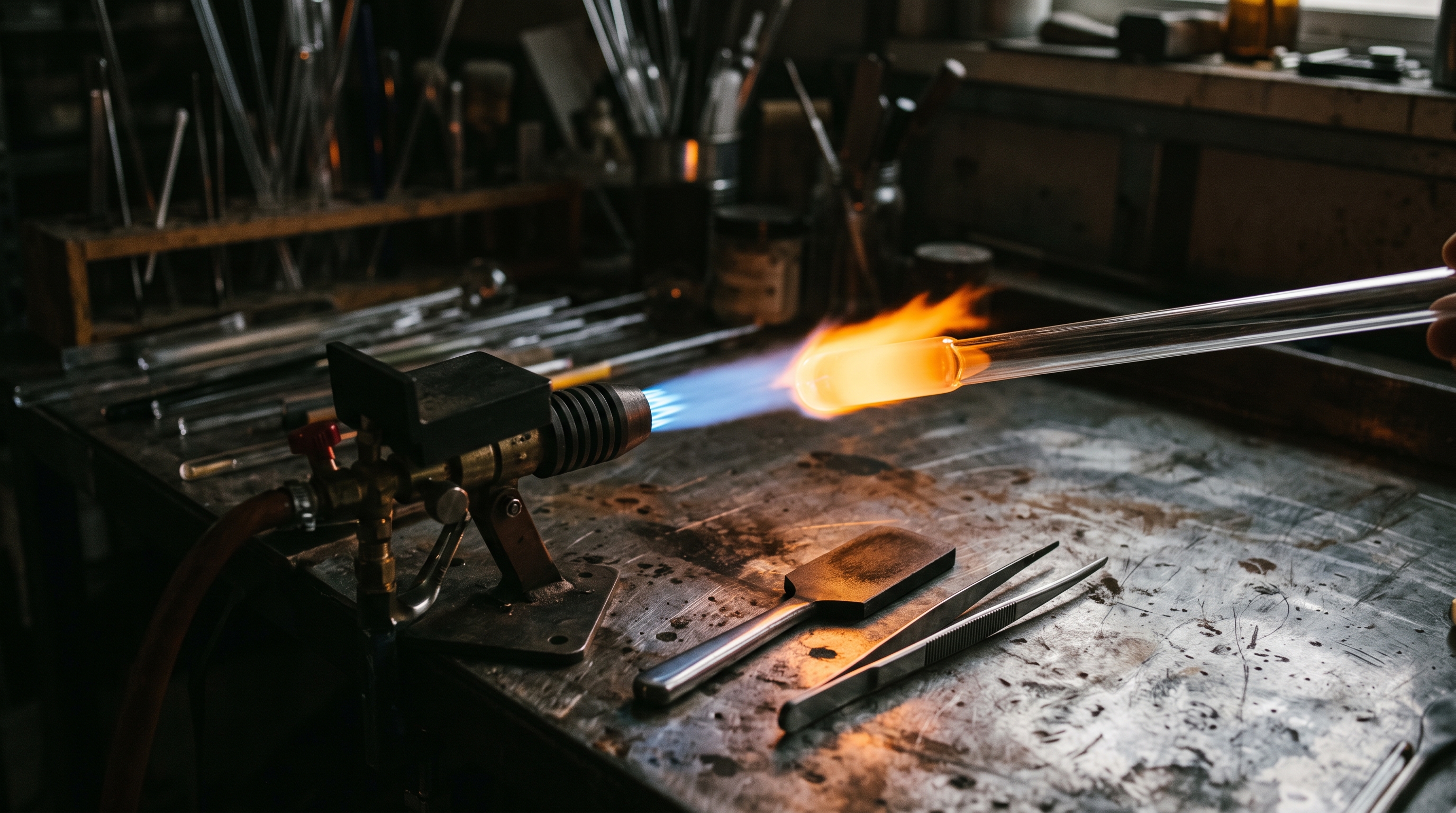
- Workability in a bench torch. Its viscosity curve lets a lampworker shape it by hand at the flame rather than in a furnace. That means one person, one torch, one table — no factory required.
That second property is the one that mattered culturally. Borosilicate turned pipe making into a craft that a single artist could practise anywhere, including in the parking lot of a concert. Material choice still shapes the experience today; see glass vs. silicone vs. wood and the general cannabis gear guide for the practical trade-offs.
Snodgrass, fuming, and the parking lot studio
Bob Snodgrass started lampworking in 1971, learning alongside Chuck Murphy. In 1986 he moved his family into a bus. On Easter weekend 1987 he went to his first Grateful Dead show at Irvine, and then he simply kept going — setting up a mobile torch in venue parking lots, drawing a crowd, selling enough pieces to reach the next city.
His signature discovery is called fuming. Vaporising silver or gold in the flame deposits an ultra-thin metallic layer on the glass. On its own that gives a faint iridescence. The clever part comes later: as resin builds up inside a fumed pipe, the metal layer refracts differently and the glass gradually shifts colour. The object visibly records its own use. A fumed piece smoked for a year does not look like the one that left the torch.
Snodgrass settled in Eugene, Oregon around 1990 and taught apprentices, who taught apprentices. Eugene became the centre of gravity for American pipe glass. The 2012 documentary Degenerate Art: The Art and Culture of Glass Pipes, by pipe maker Aaron Golbert, is the standard record of that scene.
By the 2010s a genuine collector market existed. Work by artists such as Banjo trades in the tens of thousands of dollars, with elaborate collaborations reaching well past that — an economy that looks less like head shop retail and more like studio glass, with named artists, provenance and secondary sales. If you find the idea of connoisseurship in cannabis odd, our pieces on cannabis connoisseurship and the cannabis sommelier argue it was always coming.
Operation Pipe Dreams, 2003
On 24 February 2003, the Department of Justice and DEA announced the results of a nationwide sting called Operation Pipe Dreams. Fifty-five individuals were charged. Reported figures put the operation at over twelve million dollars and around two thousand law enforcement officers.
The legal hook was federal paraphernalia law — now codified at 21 U.S.C. § 863 — which prohibits using the mails or any other facility of interstate commerce to transport drug paraphernalia, and names water pipes and bongs explicitly. That interstate-commerce framing is what let federal prosecutors move in states where local authorities had no appetite for the cases. Penalties run up to three years.
The most famous defendant was Tommy Chong, who ran Chong Glass Works and Nice Dreams with his son and pleaded guilty to one conspiracy count to keep his family out of it. On 11 September 2003 he was sentenced to nine months in federal prison, a 20,000 dollar fine, and 103,000 dollars in forfeiture. Of all fifty-five people charged, he was the only one who served time. Jason Harris of Jerome Baker Designs, one of the most visible glass brands of the era, was also swept up.
The chilling effect outlasted the prosecutions. It is why so much smoking hardware is still sold with a straight face as “for tobacco use only,” why some retailers refuse to ship to certain states, and why a generation of glass artists learned to be careful in public. A federal paraphernalia statute is still shaping product listings in a country where most people live somewhere cannabis is legal in some form — one more entry in the ledger our piece on prohibition’s eighty lost years tries to total up.
The modern era: percolators, recyclers, and diminishing returns
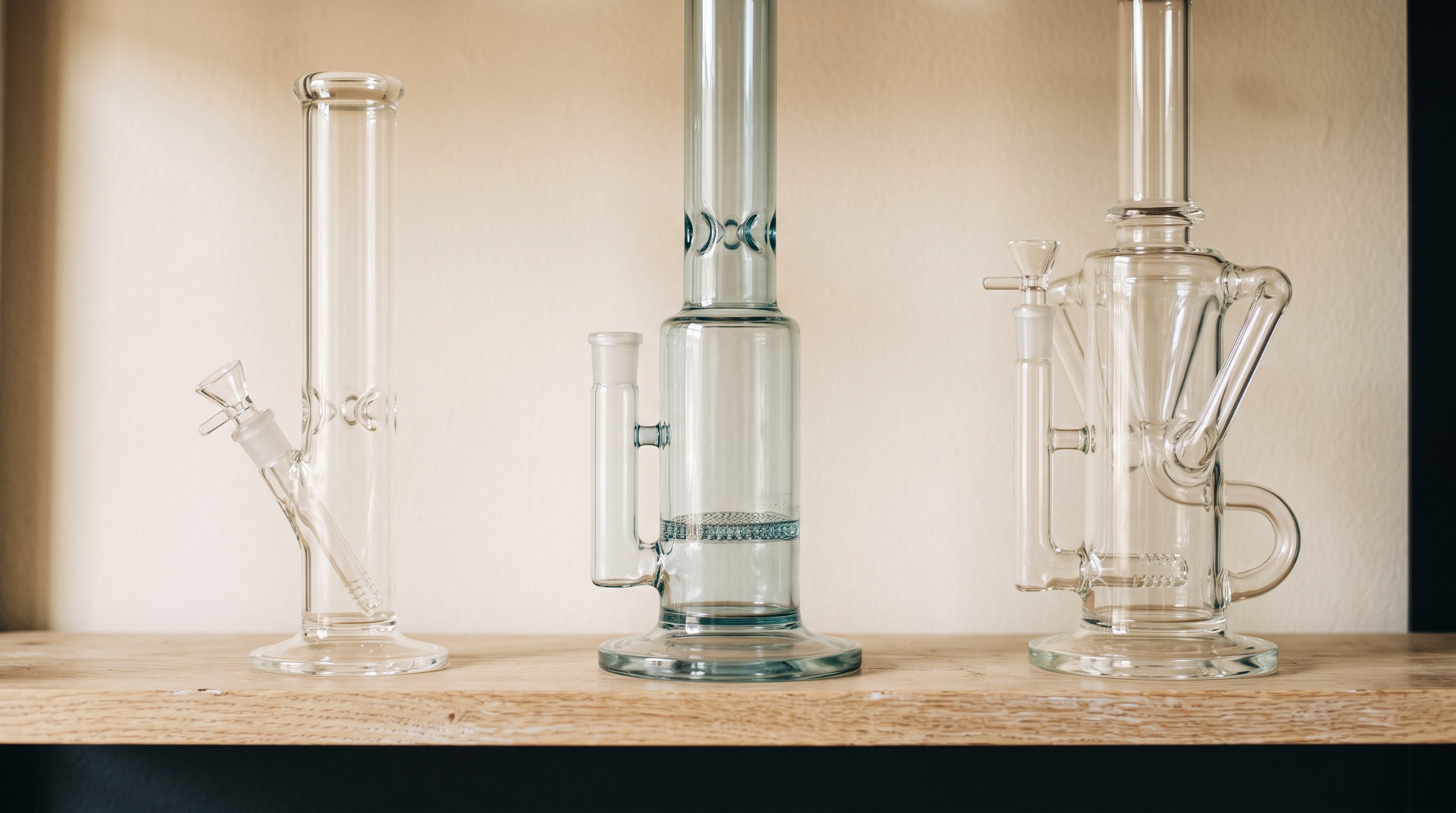
Post-2010, water pipe design got genuinely inventive. The vocabulary is worth knowing:
| Feature | What it does |
|---|---|
| Percolator | A submerged chamber (tree, honeycomb, showerhead, inline) that breaks smoke into many small bubbles, increasing contact with water |
| Recycler | Loops water and smoke between two chambers so the water never sits still and the draw stays smooth |
| Ice catch | Notches that hold ice above the water line for a colder hit |
| Ash catcher | A removable pre-chamber that keeps ash and most resin out of the main piece |
| Splash guard | A flared or slotted barrier that stops water reaching your mouth |
The same logic crossed into concentrates, where small-volume dab rigs prioritise flavour over volume and the conversation shifts to bangers and nails and terp pearls. Joints and blunts, one-hitters, small pipes, vaporizers and concentrates all sit at different points on the same trade-off curve.
One caution, since this is where history meets marketing: more percolation is not automatically better, and smoother is not the same as safer. Every extra chamber costs terpenes to the water and adds draw resistance, and combustion is still combustion — vaping vs. smoking and secondhand smoke matter far more to your lungs than bubble count. The filtration evidence is laid out in bong vs. dry pipe.
What the object cannot tell you
Here is the thread running through all of it. For seven hundred years, people have redesigned the container in pursuit of a better experience — hot stones and felt, a stem into a gourd, a hose and a charcoal, a fumed borosilicate tube, a recycler with four chambers. Each generation was convinced the hardware was the variable.
It isn’t. What you put in it is — and beneath that, how your endocannabinoid system responds to that chemistry. Two people can pull identical hits from the same tube and end up in different places.
Which is also why the name on the jar tells you so little. A Blue Dream grown by one cultivator can differ more from another grower’s Blue Dream than either differs from Jack Herer — a problem we unpack in strain names decoded. What is reproducible is chemistry: whether myrcene or limonene leads, whether pinene and caryophyllene are present, whether the profile clusters toward Relax High or Uplift High, and whether that reliably leaves you relaxed or cerebral. Cultures worldwide reached that conclusion by different routes, as our look at global cannabis culture and older lineages like Lamb’s Bread shows.
The one thing seven centuries of glassblowers could never build for you is a record of your own responses. That is what the High IQ app is for: log what you consumed, in what, and how it landed, and your own patterns start to surface. Buy the beautiful piece — just don’t expect it to do the thinking.
FAQ
Were the Scythian gold vessels really bongs?
No. They were ceremonial vessels found in the Sengileevskoe-2 kurgan in 2013 with opium and cannabis residue inside, but with no charring or burning. The excavating archaeologist’s interpretation is that opium was drunk from them, possibly while cannabis burned nearby. The “gold bong” framing was added by headline writers.
What is the oldest evidence of cannabis being smoked?
The strongest chemically verified evidence comes from wooden braziers at the Jirzankal Cemetery in the Pamir Mountains, dated to around 500 BCE and published by Ren and colleagues in 2019. Residues showed elevated cannabinol, consistent with deliberately selecting potent plants. Those were braziers, not water pipes.
So where did the water pipe come from?
The leading candidate is the Ethiopian highlands. Ceramic water pipe bowls from caves near Lalibela, associated with dates around 1320 AD, tested positive for cannabis compounds. But the dating is indirect and the site was disturbed, so Philips’s 1983 review of the literature called it the most likely hypothesis rather than a proven fact. Persia and India have competing claims for the hookah line.
Why is the word “bong” Thai?
Thai baung means a cylindrical bamboo tube. A 1944 Thai-English dictionary already defined one sense as a bamboo water pipe for smoking cannabis. American servicemen in the Vietnam era brought the word home, and it appears in English print by January 1971.
Why is borosilicate glass such a big deal for pipes?
Two reasons. It resists thermal shock, so a flame on one end and water in the middle will not crack it. And it can be shaped by hand at a bench torch, which means a single artist can make a finished piece without a factory. That is what made the American studio pipe movement possible.
Is Operation Pipe Dreams still relevant?
The prosecutions ended, but the statute behind them — 21 U.S.C. § 863 — is still federal law and still names water pipes. That is why so much hardware is marketed “for tobacco use only” and why some sellers restrict shipping, even now.
Sources
Verified studies
- Ren, M., Tang, Z., Wu, X., Spengler, R., Jiang, H., Yang, Y., & Boivin, N. (2019). “The origins of cannabis smoking: Chemical residue evidence from the first millennium BCE in the Pamirs.” Science Advances, 5(6). doi:10.1126/sciadv.aaw1391
- van der Merwe, N. J. (1975). “Cannabis Smoking in 13th-14th Century Ethiopia: Chemical Evidence.” In Cannabis and Culture. doi:10.1515/9783110812060.77
- Philips, J. E. (1983). “African Smoking and Pipes.” The Journal of African History, 24(3), 303-319. doi:10.1017/S0021853700022039
Primary and reference sources
- U.S. Department of Justice, press release #106, 24 February 2003, announcing Operation Pipe Dreams.
- 21 U.S.C. § 863, “Drug paraphernalia” (U.S. House Office of the Law Revision Counsel).
- Archaeology magazine, “Rites of the Scythians,” July/August 2016 — Belinski’s account of the Sengileevskoe-2 residue analysis.
- Herodotus, Histories, Book 4, on Scythian hemp vapour tents; corroborated by Sergei Rudenko’s excavation of the Pazyryk kurgans.
