Cannabis-Infused Cooking Oils: Coconut, Olive, Avocado and MCT
Compare fat composition, smoke points, shelf life and flavour across six infusion oils, then infuse, strain, store and dose a batch properly.

Professor High
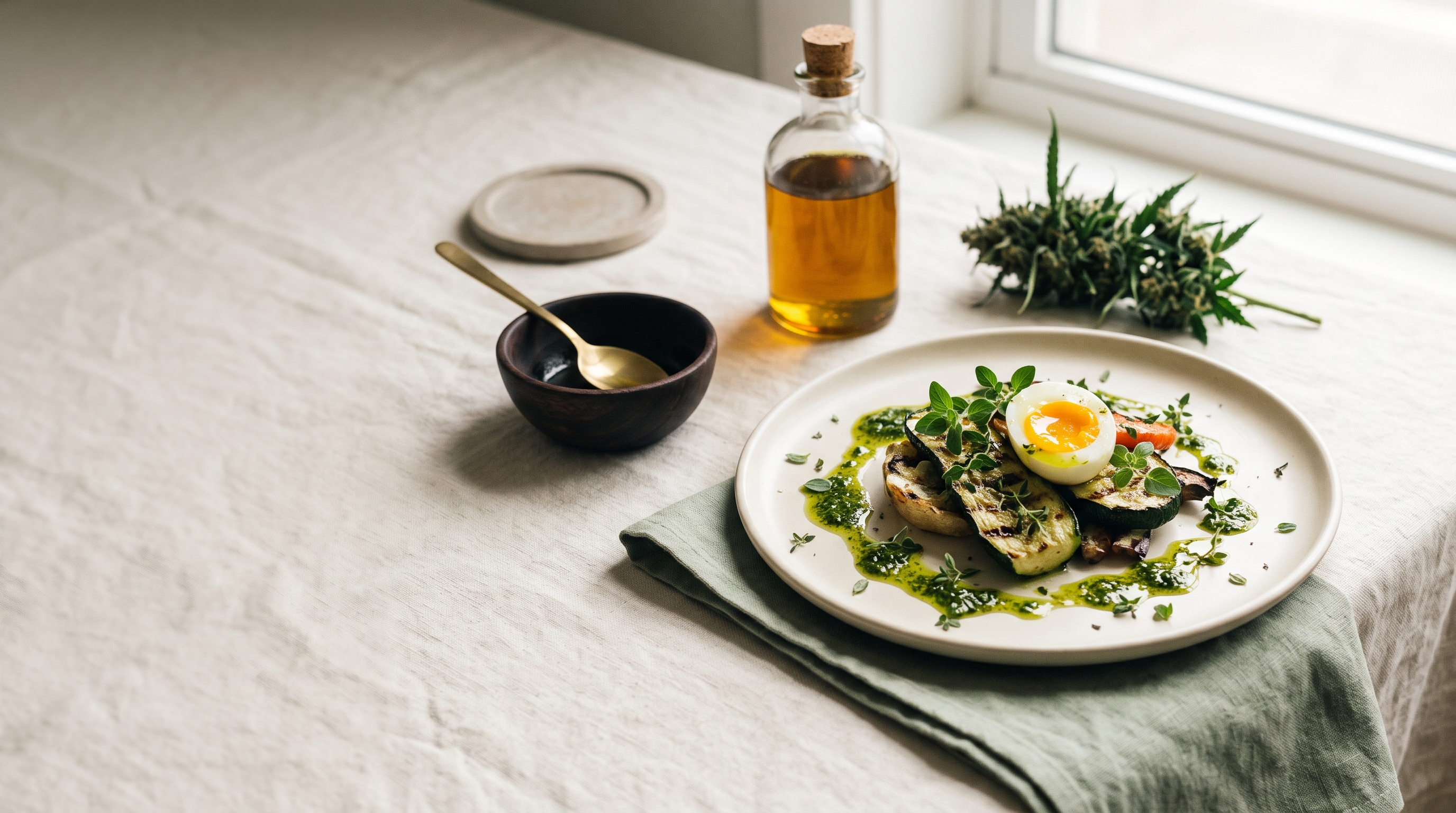
You followed the recipe. You decarbed properly, kept the heat low, strained through cheesecloth like the video said. Six weeks later the jar in your cupboard smells faintly of old crayons, the dressing you made from it tastes bitter in a way that isn’t the cannabis, and the batch feels weaker than the last one.
None of that is a technique failure. It’s an oil failure. Most infusion guides treat the fat as an inert bucket you pour cannabinoids into, and it isn’t. The oil you pick decides how hot you can cook, how long the jar lasts before it turns, which terpenes survive, and what the finished thing tastes like.
Here is how the common oils actually differ, and how to make, strain, store and dose a batch that holds up.
Your oil has three jobs, not one
Any real dietary fat will pull cannabinoids out of plant material. That part is nearly foolproof. What separates the oils is everything afterwards.
- Solvent. It has to dissolve cannabinoids, which are strongly fat-loving. Every oil below does this well enough that you won’t notice a difference.
- Cooking medium. It has to survive whatever you do next. A finishing drizzle and a 425°F sheet-pan roast are completely different asks.
- Storage container. It has to not go rancid while it sits. Almost nobody thinks about this one, and it’s where most home infusions quietly fail.
Job one is where the internet spends all its attention. Jobs two and three are where your batch lives or dies.
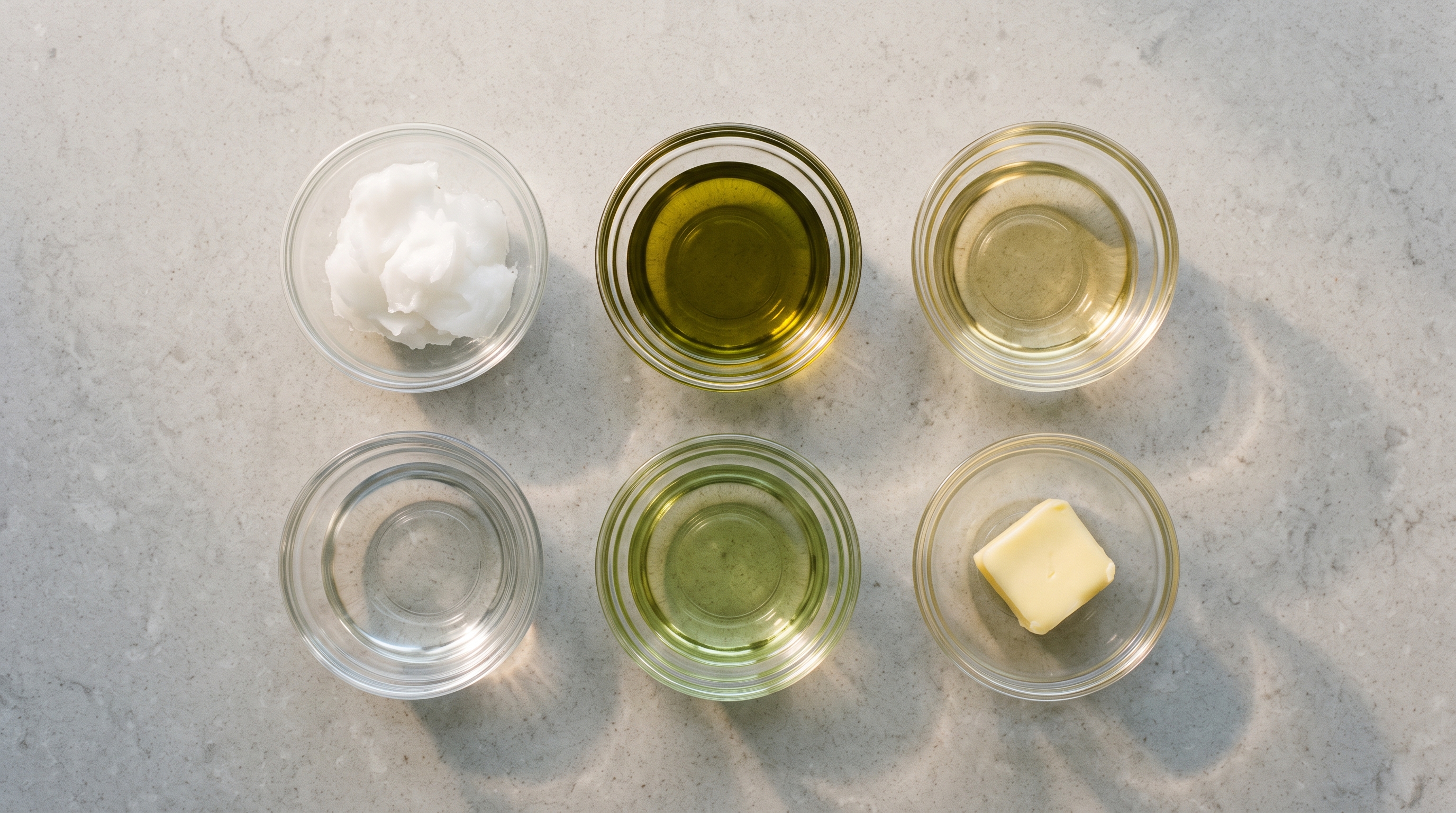
What is actually in each oil
Below are fatty-acid figures from the USDA FoodData Central database, converted to a percentage of total fatty acids so the oils are directly comparable. I’ve flagged the polyunsaturated column, because that is the number that predicts rancidity.
| Oil | Saturated | Monounsaturated | Polyunsaturated | Keeps well? |
|---|---|---|---|---|
| Coconut | ~91% | ~7% | ~2% | Excellent |
| MCT (fractionated) | ~100% | trace | trace | Excellent |
| Butter (unsalted) | ~66% | ~30% | ~4% | Good, but watery |
| Olive (extra virgin) | ~16% | ~74% | ~10% | Good |
| Avocado | ~12% | ~74% | ~14% | Moderate |
| Grapeseed | ~10% | ~17% | ~73% | Poor |
Polyunsaturated fats have multiple double bonds, and every double bond is a place oxygen can attack. That is the whole of rancidity in one sentence. Grapeseed is roughly 73% polyunsaturated, which is why it is a fine oil for a stir-fry you cook tonight and a bad oil for a jar of infusion you will nibble at for three months. Coconut, at around 2%, is chemically boring in exactly the way a storage medium should be.
The coconut and MCT mix-up
Coconut oil gets described everywhere as an MCT oil. That is only about a seventh true, and the distinction has practical consequences.
Medium-chain triglycerides are fats with 6 to 12 carbon atoms. In coconut oil, the genuinely medium-chain caprylic (C8) and capric (C10) acids together make up roughly 13% of the fatty acids. The dominant fat, at about 46%, is lauric acid (C12), which sits right at the boundary and does not behave like a classic MCT in digestion.
Commercial MCT oil is coconut oil with the lauric and long-chain fractions stripped out, leaving essentially pure C8 and C10. That is why it stays liquid in the fridge and tastes of nothing. It is a genuinely different ingredient from the jar of virgin coconut oil next to it, not a premium version of it. If a recipe wants coconut oil to set firm, MCT will never do it.
Does the oil change how strongly you feel it?
Possibly, and this is the most over-claimed area in edible cooking, so let me be careful about what is actually known.
That fat in general matters is well established. In rats, co-administering cannabinoids with lipids raised systemic exposure to THC about 2.5-fold and CBD about 3-fold compared with fat-free formulations, and more than 30% of the dose ended up in the absorbable micellar fraction [Zgair, 2016]. In humans, a small crossover trial in 11 healthy volunteers found that a standardised high-fat meal dramatically raised CBD bioavailability from a CBD-rich extract versus fasting, with a geometric mean ratio of 17.4 for peak concentration and 9.7 for total exposure [Saals, 2025]. Eleven people is a small study and two co-authors worked for the extract manufacturer, so hold the exact numbers loosely. The direction of the effect is not really in doubt.
Whether one type of oil beats another is far shakier. A 2022 rat study compared sesame, sunflower, peanut, soybean, olive and coconut oils as CBD vehicles and found olive oil produced the highest CBD concentrations in both the lymphatic system and the bloodstream [Feng, 2022]. A review of lipid bioavailability in edibles makes the mechanistic case that long-chain fats, which drive chylomicron formation and lymphatic transport, may be advantageous for potency [McClements, 2020].
So there is a reasonable argument for olive and avocado on absorption grounds. It rests on animal work and mechanism, not human head-to-head trials, and I would not reorganise your kitchen around it. My deeper piece on choosing the right fat for cannabis infusions covers the lipid pharmacology, and why edibles hit harder explains what your liver does to the dose regardless of which oil delivered it.
Smoke point is the wrong number to obsess over
Every oil comparison chart leads with smoke point, and it is a weaker guide than it looks.
Smoke point is the temperature at which an oil visibly smokes. It shifts with refinement, with age, and with free fatty acid content, which is why published figures for the same oil disagree by 50°F or more. Treat the numbers below as rough ranges, not specifications.
More importantly, smoking is not the same as degrading. When researchers deep-fried in various olive oils and a commercial vegetable oil blend until each hit the legal 25% limit for total polar compounds, the olive oils lasted 24 to 27 hours and the vegetable blend lasted 15 [Casal, 2010]. Extra virgin olive oil, with the modest smoke point everyone warns about, outlasted a higher-smoke-point blend by a wide margin, because its natural antioxidants slowed oxidation.
For infused oil, there’s a second ceiling that matters more than either: cannabinoids and terpenes start degrading long before any of these fats start smoking. Terpenes are volatile and light, and a fair share of them leave during a long simmer. No oil protects you from cooking too hot for too long.
| Oil | Approx. smoke point | Infuse at | Best cooking use |
|---|---|---|---|
| Coconut, refined | ~400°F | 160–200°F | Baking, sauteing, anything that must set firm |
| Coconut, virgin | ~350°F | 160–190°F | Baking, gummies, capsules, topicals |
| Avocado, refined | ~500°F+ | 160–200°F | Roasting, searing, genuinely high heat |
| Olive, extra virgin | ~375°F | 160–180°F | Dressings, drizzles, moderate savoury cooking |
| MCT | ~320°F | 150–180°F | Tinctures, drinks, capsules. Not for the pan |
| Grapeseed | ~400°F | 160–190°F | Same-week cooking only. Poor keeper |
| Butter | ~300°F (~350°F clarified) | 160–185°F | Baking. See the cannabutter guide |
Butter deserves its own note, and it has one: the full method lives in the cannabutter foundation guide, and there’s a vegan butter alternative if dairy is out. The reason I’m keeping it at arm’s length here is that butter is only about 81% fat by weight. The rest is water and milk solids. That changes the dosing maths, the burning behaviour and the shelf life enough that it really is a separate technique.
Flavour: the oil talks back
Cannabis contributes a green, herbal, slightly grassy note to anything you infuse. Your oil either hides it, complements it, or fights it.
Virgin coconut brings sweetness and a tropical note. Lovely in chocolate and baking, wrong in a savoury pan sauce. Refined coconut is nearly neutral if you want the texture without the flavour.
Extra virgin olive oil is the interesting case. Its peppery bitterness comes from polyphenols, and those same compounds are why it resists oxidation. Paired with a citrus-forward chemovar high in limonene, it reads as intentional. Paired with heavily myrcene-dominant flower, the earthiness compounds into something muddy. Excellent in an infused vinaigrette, a basil pesto, or a slow marinara.
Refined avocado oil is the most useful neutral cooker here: buttery, mild, and it takes real heat.
MCT tastes of essentially nothing, which is the entire point for homemade tinctures and infused beverages.
There’s also evidence the carrier changes which aromatics survive storage. Researchers comparing pharmaceutical-grade olive oil and MCT oil for medical cannabis preparations found cannabinoid content held up similarly in both over 90 refrigerated days, but MCT extracted a significantly higher concentration of terpenes and held onto them, while terpenes in the olive oil preparations dropped noticeably after 15 to 30 days [Ramella, 2020]. If aroma and the entourage effect matter to you, that’s a real argument for MCT as a storage medium. If you want to keep the grassiness down instead, the no-weedy-taste guide has the technique.
The method
This works for every oil in the table. The only thing that changes is the temperature ceiling.
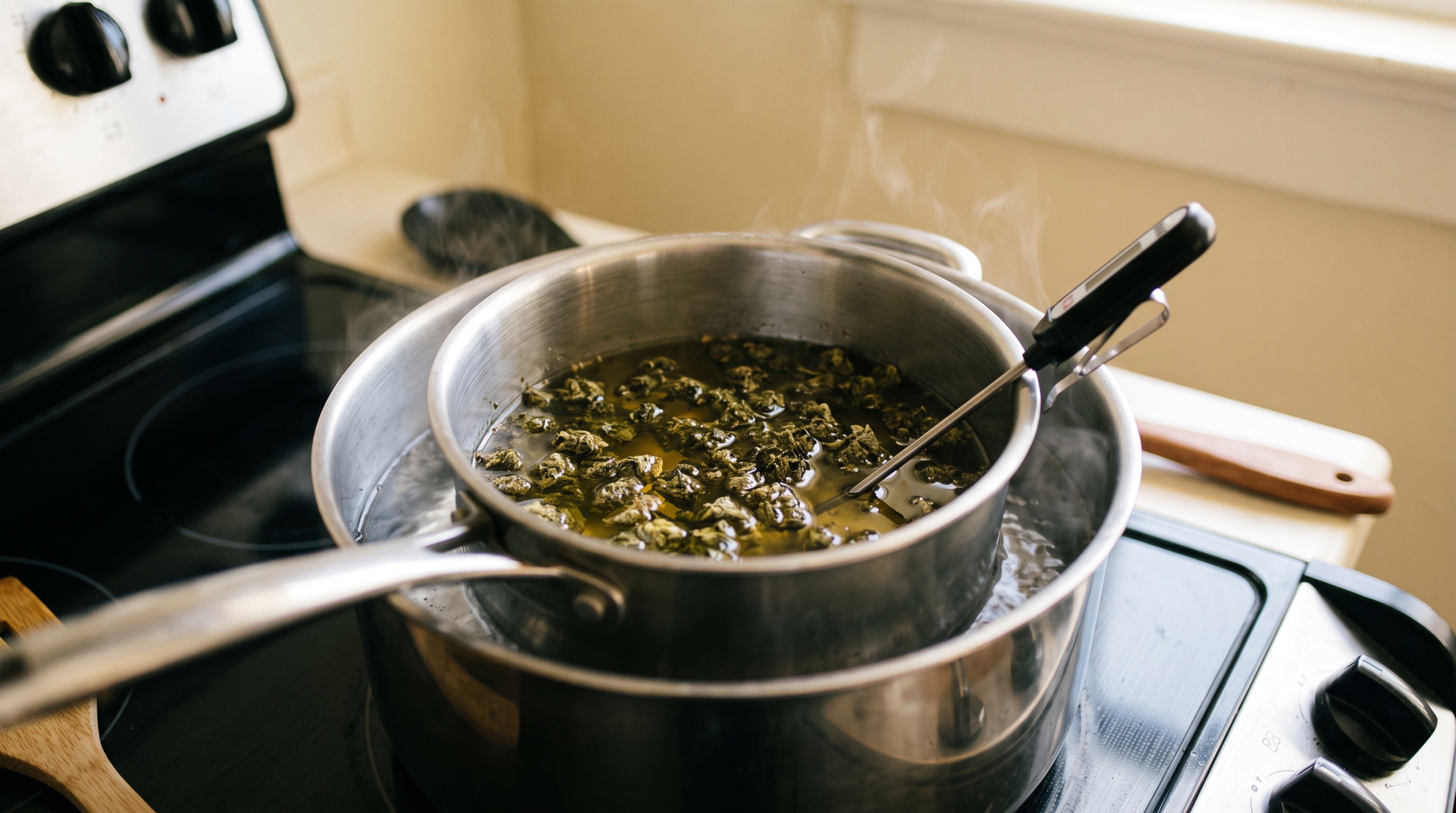
You will need: 1 cup (about 240 mL) of your chosen oil, 7 to 10 grams of ground flower, a saucepan set inside a larger pan of water, a probe thermometer, and a fine mesh strainer.
Step 1: Decarboxylate. Raw flower contains THCA, not THC, and heat is what converts it. Kinetic work across 80°C to 145°C found the reaction follows first-order kinetics, with THCA converting roughly twice as fast as CBDA and CBGA [Wang, 2016]. In practice: 240°F for 30 to 40 minutes, spread thin on a lined tray. The perfect decarb walkthrough and the science of decarboxylation cover the variations. Skip this step and your oil will be dramatically weaker than your maths predicts.
Step 2: Infuse in a water bath. Combine oil and decarbed flower in the inner pan. Because water can’t exceed 212°F at sea level, a bath makes overheating almost impossible, which matters more than any other single choice here. Hold 160–200°F, staying at the lower end for extra virgin olive oil and MCT, for 2 to 4 hours. Stir occasionally. Longer is not better past about four hours: you stop gaining cannabinoids and keep losing terpenes.
If you’d rather not babysit a pan, a countertop appliance handles the whole cycle. The infusion machines buyer’s guide compares them honestly.
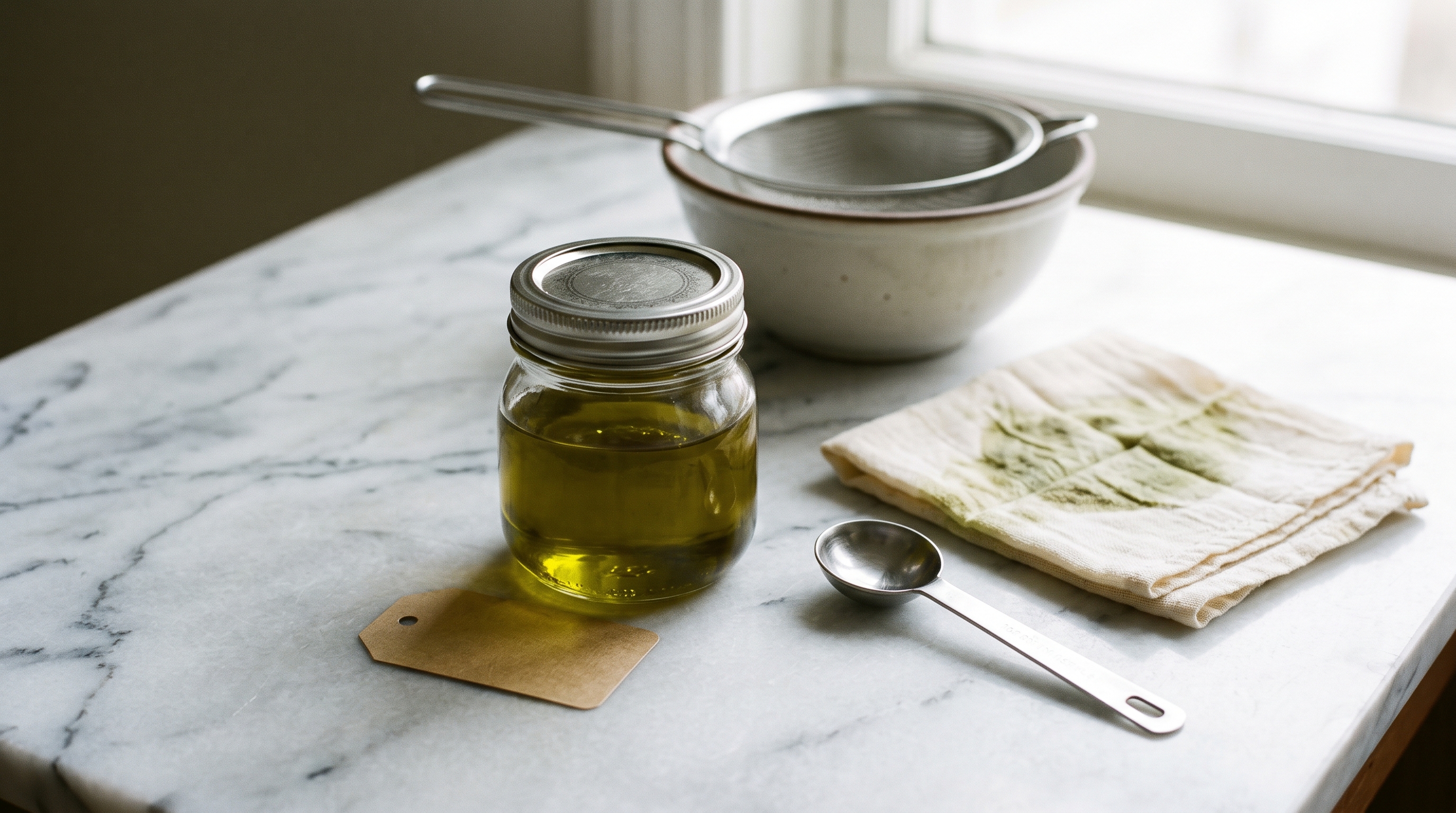
Step 3: Strain, and do it properly. This is where most people leave potency on the table.
- Let the oil cool to warm, not hot. Hot oil is thin and pours fast, and fast is how sediment gets through the mesh.
- Pour through a fine mesh strainer lined with cheesecloth into a clean jar.
- Gather the cloth and squeeze firmly. Squeezing pushes through a little chlorophyll and a greener taste, and it recovers meaningful oil. My take: squeeze. The taste cost is small and the yield gain isn’t.
- Don’t rinse the spent material with more oil to “get the rest.” You’ll dilute the batch and wreck your dosing maths.
Step 4: Store it like it can spoil, because it can. Airtight glass, dark, cool. Oxygen, light and heat degrade the fat and the cannabinoids alike. Coconut and MCT will comfortably do six months to a year; olive and avocado three to six; grapeseed, use within a month or two. Refrigerate anything you won’t finish quickly, and label the jar with the date and the potency estimate you’re about to calculate. The edibles shelf life guide covers the finished goods.
Rancid oil announces itself: a crayon or stale-nut smell, a bitter metallic aftertaste, stickiness on the neck of the bottle. Trust your nose. It won’t hurt you in small amounts, but the food will taste bad and the batch has been oxidising for a while.
Dosing maths for a finished oil
Four multiplications, and one honest caveat.
Take 7 grams of flower testing at 20% THCA:
- Total THCA: 7 g × 20% = 1.4 g = 1,400 mg THCA
- Convert to THC. THCA sheds a carboxyl group during decarb and loses mass. Multiply by 0.877 → 1,228 mg. If your label already says “Total THC,” it has done this step for you. Don’t apply it twice.
- Decarb efficiency. A good home decarb lands around 90%. → 1,105 mg
- Extraction efficiency. Home infusions typically transfer somewhere between 40% and 70% into the oil. Use 60% as a working estimate. → 663 mg THC in the batch
Now divide by volume. In 2 cups (about 473 mL):
- Per mL: ~1.4 mg
- Per teaspoon: ~7 mg
- Per tablespoon: ~21 mg
And this is the number that catches people out: if that whole batch goes into 24 cookies, each cookie carries roughly 28 mg. That is a large dose for most people and an enormous one for a beginner. A homemade cookie is not a 5 mg dispensary gummy.
The caveat: steps 3 and 4 are estimates, not measurements. Your real yield depends on grind, time, temperature and how hard you squeezed. Treat the result as an upper-bound guess, start with a quarter of what the maths suggests, and wait. The 2-hour rule exists because onset is slow and unforgiving. If you want real numbers instead of estimates, home potency testing is the only way to get them, and edible dosing math for home cooks works through more scenarios. Beginners should start at the dosing chart rather than at a cookie.
Quick decisions
- Baking, or anything that must set firm: coconut. Nothing else gives you room-temperature solidity.
- Roasting and searing: refined avocado. The only one here with genuine heat headroom.
- Dressings and savoury finishing: extra virgin olive, added off the heat.
- Drinks, tinctures, capsules: MCT. Neutral, liquid, best terpene keeper. Also good for infused coffee and tea.
- Comfort food: butter or refined coconut. See mac and cheese or guacamole.
- Low-carb: coconut or MCT. The keto edibles guide has recipes.
- Gummies: coconut, with an emulsifier.
- Skin, not food: coconut. DIY salves work by a different mechanism entirely.
New to this? Start at cannabis cooking 101 and read high dose versus microdose before you commit an eighth to a pan.
The part nobody tells you about the flower
Here’s where I’ll be blunt. You can optimise the oil perfectly and still get an inconsistent result, because the more variable ingredient is the flower.
A jar labelled Blue Dream from two growers can differ substantially in terpene profile, and terpene profile is most of what you taste in the finished oil. Citrus-forward flower like Lemon Haze or Jack Herer gives you something bright for a dressing. Earthy, myrcene-heavy Granddaddy Purple or Northern Lights leans towards a heavier flavour and a relaxed, body-high evening dish. Sour Diesel brings fuel notes that fight most sweet applications. OG Kush and Wedding Cake sit in between, with caryophyllene lending a peppery edge that suits savoury cooking.
But the name on the jar is a marketing label, not a specification. What predicts your result is the chemistry in that specific batch and how your body responds to it. Two people can eat identical cookies from the same pan and have genuinely different evenings, which is why strain selection for cooking is a starting point rather than an answer.
The fix is unglamorous: write down what you used, what you made, what you took, and how it went. A dozen entries in, you’ll have something no chart can give you, which is your own response data. That’s what the High IQ app is for if you’d rather not keep a notebook.
Frequently asked questions
Can I mix two oils in one infusion? Yes. A common blend is coconut for stability plus some olive or avocado for flavour and long-chain fat. Calculate your dose against the total finished volume, and remember the blend keeps only as well as its least stable component.
Does adding lecithin make it stronger? It makes the oil emulsify better, which helps it mix evenly into batters and drinks. The claim that it meaningfully increases how much THC you absorb is not well supported by human evidence. It’s a texture tool. Treat it as one.
Why did my olive oil infusion turn bitter? Two likely culprits: extra virgin olive oil is naturally peppery from its polyphenols, which concentrates in an infusion, or you squeezed a lot of chlorophyll through while straining. A milder refined olive oil, or a gentler squeeze, fixes it.
Can I reuse the strained plant material? Very little worth extracting is left. Some people simmer it into a weak tea. The yield rarely justifies the effort, and it makes your dosing maths harder to trust.
Is grapeseed oil ever the right choice? For a dish you’re eating this week, sure. Neutral flavour, handles moderate heat fine. As a jar you’ll keep for months, no. At roughly 73% polyunsaturated fat it oxidises faster than anything else here.
How do I know if my oil went bad rather than just weak? Smell it. Rancidity smells like crayons, putty or stale nuts, and it’s unmistakable once you’ve met it. Lost potency has no smell at all. If it smells fine but feels weak, the problem is your infusion or storage temperature, not spoilage.
Sources
- Zgair, A., Wong, J. C., Lee, J. B., Mistry, J., Sivak, O., Wasan, K. M., Hennig, I. M., Barrett, D. A., et al. (2016). Dietary fats and pharmaceutical lipid excipients increase systemic exposure to orally administered cannabis and cannabis-based medicines. American Journal of Translational Research. PubMed 27648135
- Saals, B. A. D. F., De Bie, T. H., Osmanoglou, E., van de Laar, T., Tuin, A. W., van Orten-Luiten, A. C. B., & Witkamp, R. F. (2025). A high-fat meal significantly impacts the bioavailability and biphasic absorption of cannabidiol (CBD) from a CBD-rich extract in men and women. Scientific Reports. doi:10.1038/s41598-025-87621-4
- Feng, W., Qin, C., Abdelrazig, S., Bai, Z., Raji, M., Darwish, R., Chu, Y., Ji, L., et al. (2022). Vegetable oils composition affects the intestinal lymphatic transport and systemic bioavailability of co-administered lipophilic drug cannabidiol. International Journal of Pharmaceutics. doi:10.1016/j.ijpharm.2022.121947
- McClements, D. J. (2020). Enhancing Efficacy, Performance, and Reliability of Cannabis Edibles: Insights from Lipid Bioavailability Studies. Annual Review of Food Science and Technology. doi:10.1146/annurev-food-032519-051834
- Ramella, A., Roda, G., Pavlovic, R., Dei Cas, M., Casagni, E., Mosconi, G., Cecati, F., Minghetti, P., & Grizzetti, C. (2020). Impact of Lipid Sources on Quality Traits of Medical Cannabis-Based Oil Preparations. Molecules. doi:10.3390/molecules25132986
- Casal, S., Malheiro, R., Sendas, A., Oliveira, B. P., & Pereira, J. A. (2010). Olive oil stability under deep-frying conditions. Food and Chemical Toxicology. doi:10.1016/j.fct.2010.07.036
- Wang, M., Wang, Y. H., Avula, B., Radwan, M. M., Wanas, A. S., van Antwerp, J., Parcher, J. F., ElSohly, M. A., & Khan, I. A. (2016). Decarboxylation Study of Acidic Cannabinoids: A Novel Approach Using Ultra-High-Performance Supercritical Fluid Chromatography/Photodiode Array-Mass Spectrometry. Cannabis and Cannabinoid Research. doi:10.1089/can.2016.0020
- Fatty acid composition data: USDA FoodData Central, SR Legacy and Foundation Foods. fdc.nal.usda.gov
